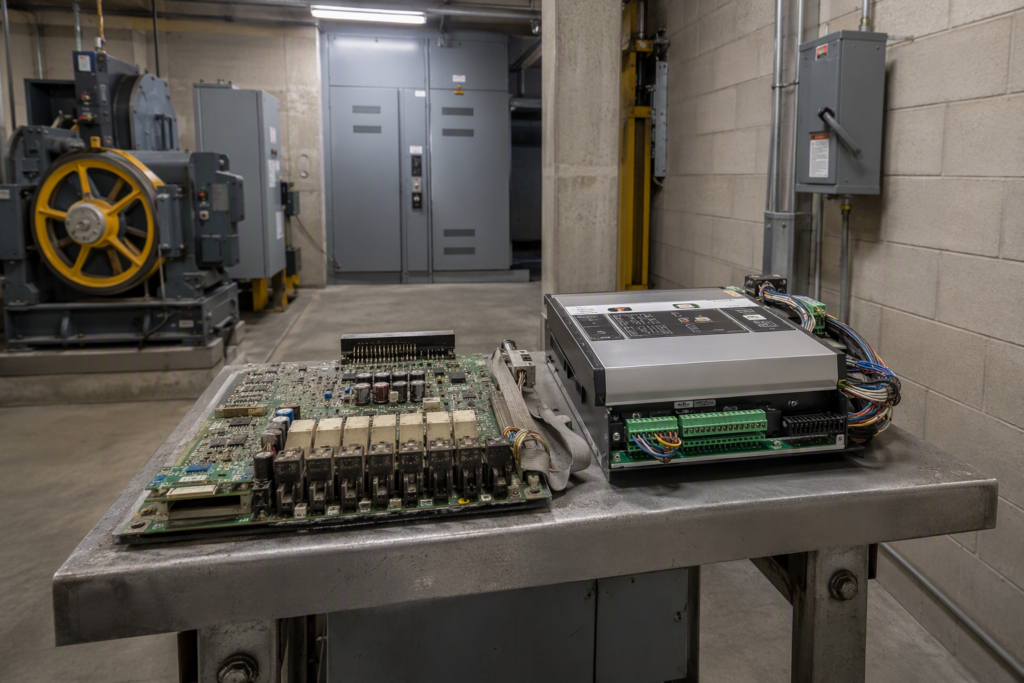
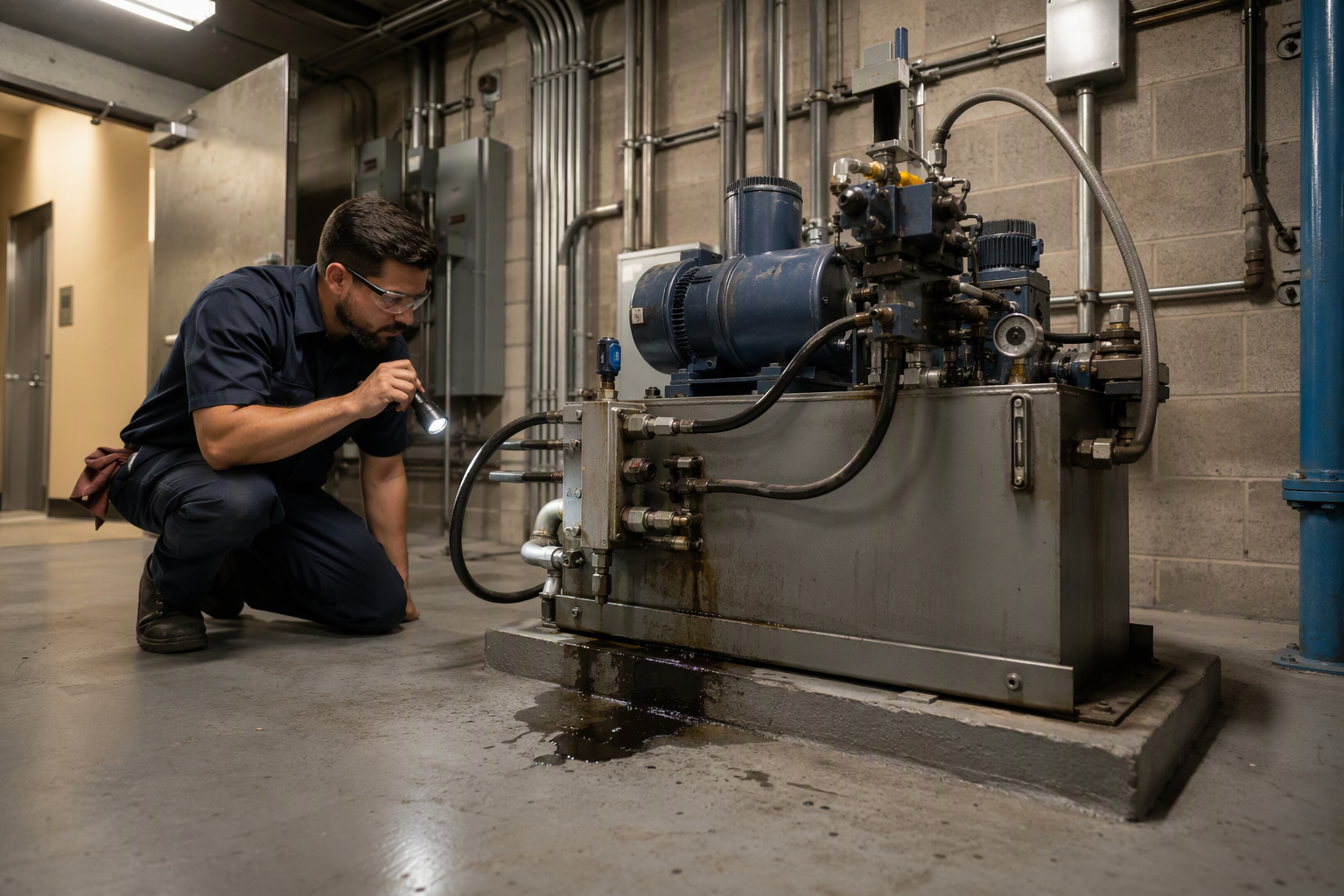
Yes, you can get an estimate to repair a leaking hydraulic unit on a hydro elevator. A qualified elevator service contractor will inspect the hydraulic power unit, identify the source of the leak — whether the cylinder seal, pump, valve assembly, or hydraulic lines — and provide a written scope of work with associated costs before any repairs begin.
Can I Get an Estimate to Repair a Leaking Hydraulic Unit on a Hydro Elevator? A Complete FAQ Guide
What exactly is a hydraulic elevator and how does its hydraulic unit work?
A hydraulic elevator uses a pressurized fluid system — typically a petroleum-based or biodegradable hydraulic oil — to raise and lower the car by extending or retracting a hydraulic cylinder.
The hydraulic power unit is the heart of this system. It consists of a fluid reservoir (tank), an electric motor, a pump, a control valve assembly, and the associated hydraulic lines that carry pressurized fluid to the cylinder. When the elevator is called to go up, the motor drives the pump, which forces fluid from the tank through the valve and into the cylinder, extending the piston and lifting the car. When the elevator descends, the valve releases fluid back into the tank under controlled pressure, lowering the car smoothly.
There are two primary configurations: direct-acting hydraulic elevators, where the cylinder is located directly below the car pit, and holeless or roped hydraulic elevators, which use above-ground cylinders and roping arrangements to reduce the required pit depth. Both types share the same fundamental power unit design, meaning both are vulnerable to similar hydraulic leak failure points.
What causes a hydraulic unit to leak on a hydro elevator?

Hydraulic leaks on elevator power units typically originate from worn seals, degraded hoses, loose fittings, corroded cylinder walls, or a failing pump.
The most common sources of hydraulic leaks include:
- Cylinder packing seals: The seals around the hydraulic cylinder rod wear over time, especially in systems that run frequently or in environments with temperature extremes — a relevant concern in the Phoenix and Scottsdale, AZ climates where ambient heat accelerates fluid viscosity breakdown.
- Power unit tank fittings and gaskets: Vibration from the motor and pump can loosen threaded fittings and compress gaskets beyond their service life.
- Hydraulic hoses and flexible connectors: Rubber hoses degrade from pressure cycles, UV exposure, and age, leading to cracking, pinhole leaks, or full line failures.
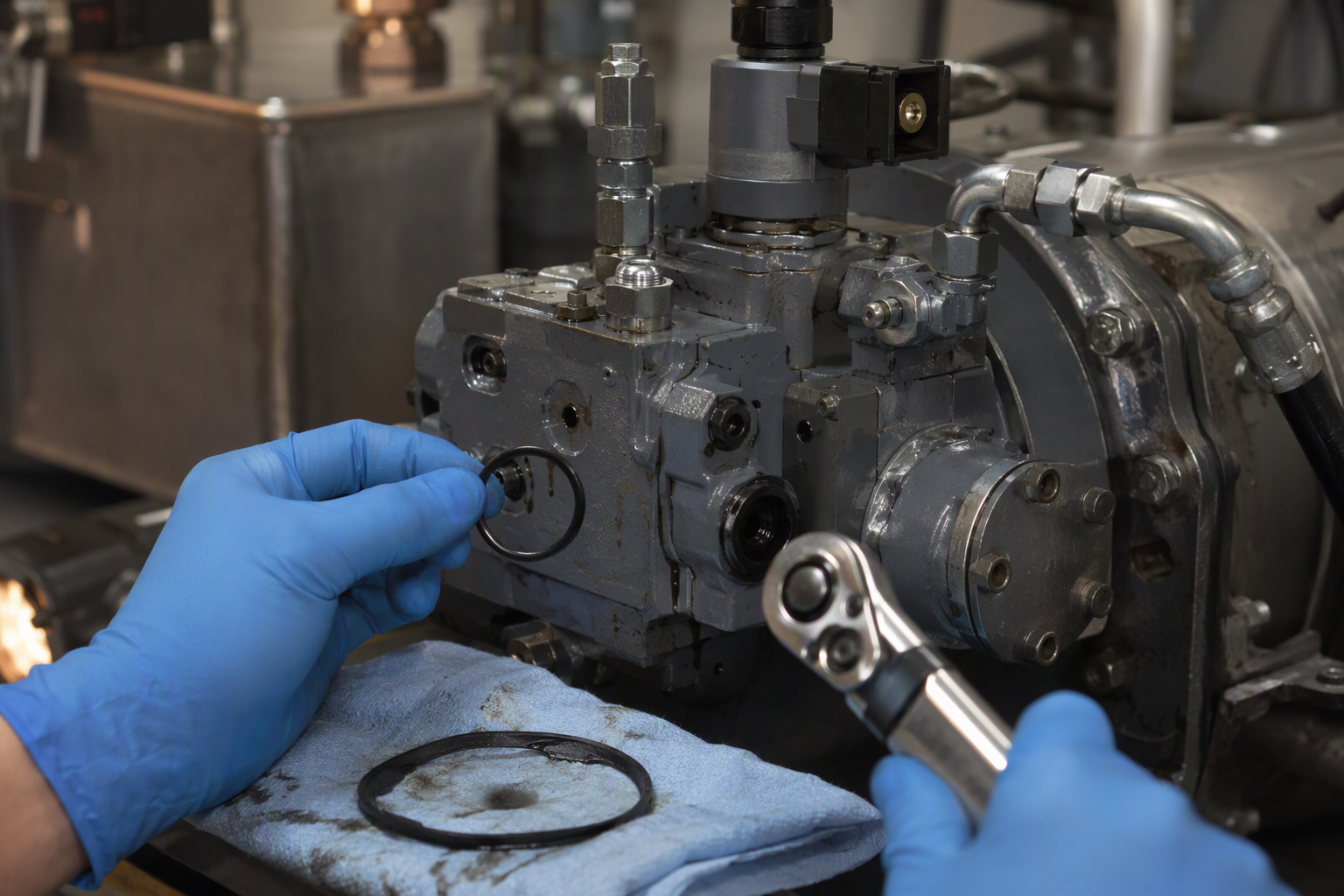
- Control valve body: Internal valve seals and O-rings can fail, allowing fluid to bypass internally or weep externally at valve body joints.
- Pump shaft seal: The seal where the motor shaft connects to the pump body can fail, causing fluid to leak along the shaft.
- Underground cylinder leaks: In older direct-acting systems, the buried steel cylinder can corrode and develop cracks that allow hydraulic fluid to seep into the surrounding soil — a more serious and costly failure mode.
Each failure point presents its own repair complexity and cost profile, which is why a thorough on-site inspection is an essential first step before any estimate can be finalized.
Why is a leaking hydraulic unit considered a serious problem that needs immediate attention?
A hydraulic leak is not just a maintenance nuisance — it is a code-compliance, environmental, and safety issue that can result in elevator shutdown, fines, and liability exposure.
From a safety standpoint, hydraulic fluid loss reduces system pressure, which can cause the elevator car to drift downward unexpectedly — a condition known as cylinder slip or pressure loss settling. This creates an immediate slip, fall, and entrapment hazard for passengers. Under the ASME A17.1 Safety Code for Elevators and Escalators, hydraulic elevators are required to meet specific requirements for pressure integrity, and any system that cannot maintain rated working pressure must be taken out of service.
From a compliance standpoint, Arizona’s A.R.S. §§ 23-491 through 23-491.16 require that all conveyances operating in the state maintain a current annual certificate of inspection. A leaking hydraulic unit that triggers a failed inspection will void that certificate, making continued elevator operation unlawful until repairs are completed and the unit passes re-inspection.
From an environmental standpoint, hydraulic oil is a regulated substance. An underground cylinder leak can contaminate soil and groundwater, triggering environmental remediation obligations that far exceed the cost of the repair itself. Owners who delay addressing a suspected underground leak risk significantly escalating their total liability.
What does the hydraulic elevator repair estimation process look like step by step?
The estimation process follows a structured diagnostic sequence that allows the contractor to accurately scope the repair before committing to a price.
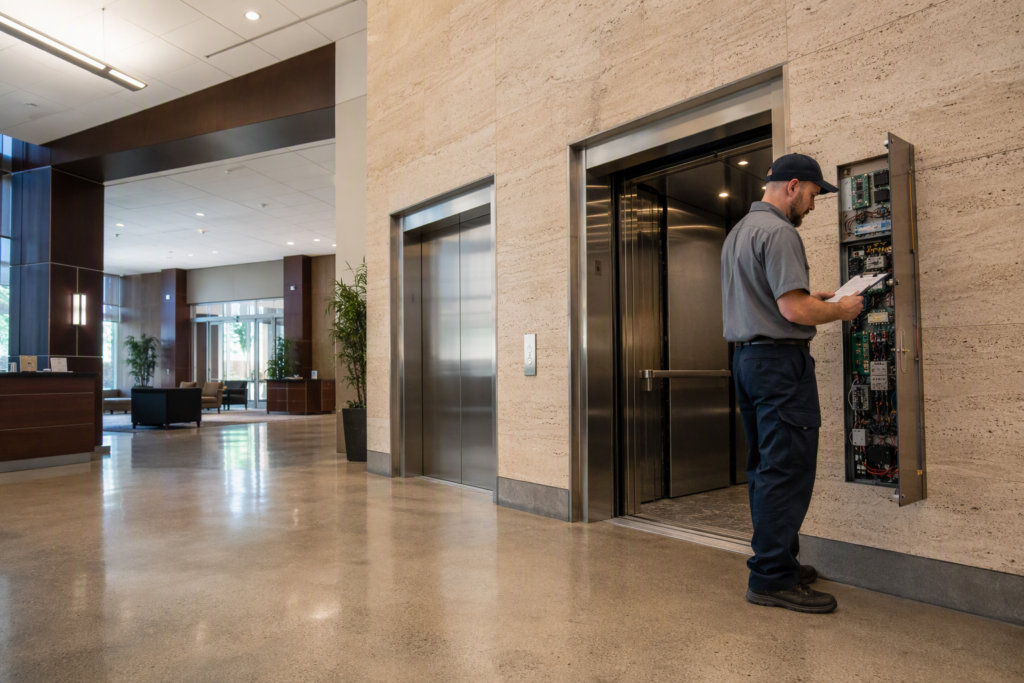
- Initial service call and visual inspection: A licensed elevator contractor visits the site, reviews the equipment room, and performs a visual inspection of the power unit, hydraulic lines, pit, and cylinder interface.
- Pressure and leak-down testing: The technician tests system pressure and performs a leak-down test to measure how rapidly pressure drops when the pump is off — confirming the severity and approximate location of the leak.
- Pit and cylinder inspection: The pit is checked for pooled hydraulic fluid and signs of active dripping. If a buried cylinder is present, a dye or pressure test may be performed to determine whether the cylinder itself is leaking underground.
- Fluid sample analysis (as applicable): In some cases, a hydraulic fluid sample may be collected to assess contamination levels and determine whether a full fluid flush and replacement is warranted alongside the seal or component repair.
- Parts and scope identification: The contractor identifies every component requiring replacement — seals, hoses, fittings, valve O-rings, or in extreme cases the entire power unit or cylinder — and sources current parts pricing.
- Written estimate preparation: The contractor prepares a detailed written estimate itemizing labor, parts, hydraulic fluid disposal and replacement, and any required post-repair testing or inspection fees.
- Regulatory notification review: If the repair constitutes an alteration under Arizona Administrative Code R20-5-502 through R20-5-515, the contractor advises the owner of any required notifications to the Industrial Commission of Arizona’s Elevator Division before work begins.
- Owner approval and work scheduling: The owner reviews and approves the estimate, and the repair is scheduled to minimize downtime.
What factors influence the total cost of repairing a leaking hydraulic unit?
Repair costs vary widely depending on the leak source, the age and configuration of the equipment, local parts availability, and whether the repair triggers regulatory re-inspection requirements.
The table below summarizes the primary repair scenarios and the key variables that affect their complexity and cost range:
| Leak Source | Typical Repair Scope | Complexity | Regulatory Re-inspection Likely? |
|---|---|---|---|
| Power unit tank fitting or gasket | Fitting tightening or replacement, gasket swap, fluid top-off | Low | Generally no, if no alteration occurs |
| Hydraulic hose or flexible line | Hose section replacement, pressure test | Low to Moderate | Generally no, for like-for-like replacement |
| Control valve O-rings or seals | Valve disassembly, O-ring/seal kit replacement, valve reassembly and calibration | Moderate | Possible, if valve specification changes |
| Pump shaft seal | Motor-pump separation, seal replacement, reassembly, system purge | Moderate to High | Possible depending on scope |
| Above-ground cylinder packing seal | Cylinder depressurization, packing removal and replacement, pressure test | High | Yes, in most cases |
| Full power unit replacement | Old unit removal, new unit installation, fluid fill, system calibration | Very High | Yes — alteration notification required |
| Underground cylinder leak | Excavation or liner insertion, cylinder replacement or in-situ lining, environmental assessment | Extremely High | Yes — alteration and possible environmental reporting |
Owners in Phoenix, Tucson, Mesa, and Scottsdale should request an itemized written estimate that separates labor, parts, hydraulic fluid, and inspection-related costs so each line item can be evaluated independently.
Are there Arizona-specific regulations that affect hydraulic elevator repairs?
Yes — Arizona has a comprehensive statutory and administrative framework that governs all elevator repairs, alterations, and inspections.
Under A.R.S. §§ 23-491 through 23-491.16, as amended by Laws 2026, Ch. 73, the Industrial Commission of Arizona’s Elevator Division (formerly the ADOSH Elevator Safety Section) serves as the state elevator regulator for all elevators outside the City of Phoenix. Within Phoenix city limits, the City of Phoenix Elevator Section (Planning and Development Department) handles inspections of elevators, escalators, moving walks, dumbwaiters, and chair lifts.
The Arizona Administrative Code R20-5-502 through R20-5-515 establishes the technical rules for elevator safety, and Arizona has adopted ASME A17.1-2019 as the applicable safety code for equipment installed, repaired, or altered on or after January 1, 2023, effective January 9, 2023. This means that hydraulic elevator repairs performed today must conform to the 2019 edition of ASME A17.1.
Critically, Arizona owners must notify the state at least 90 days before installing, relocating, or altering a conveyance. Depending on the scope of a hydraulic repair — particularly power unit replacement or cylinder work — the contractor must advise the owner whether the work constitutes an alteration that triggers this pre-notification requirement. Additionally, contractors performing elevator installation and repair work in Arizona must hold an R-12 or C-12 elevator license classification issued by the Arizona Registrar of Contractors.
What happens to the elevator’s certificate of inspection after a hydraulic repair?
If the repair constitutes a repair only (not an alteration), the existing certificate typically remains valid pending the next annual inspection; however, if the repair is classified as an alteration, a new inspection is required before the elevator returns to service.
Under Arizona law, no conveyance may operate without a current annual certificate of inspection issued by the state. The owner is required to keep the certificate at the same location as the conveyance and make it available on request. The state serial number or certificate must also be posted in or near the conveyance in an easily accessible location.
If a hydraulic repair rises to the level of an alteration — for example, replacing a power unit with a different model, changing cylinder specifications, or modifying the valve configuration — Arizona owners must notify the Industrial Commission of Arizona’s Elevator Division and arrange for a post-alteration inspection before the elevator is placed back in service. Arizona owners may hire a private elevator inspector authorized by the Industrial Commission to perform this inspection, provided the inspector is not affiliated with the company that performed the repair.
Arizona Elevator Solutions helps owners navigate this compliance process by clearly identifying, at the estimate stage, whether a planned repair is likely to trigger alteration classification and inspection requirements.
What is the difference between a hydraulic repair and a hydraulic alteration under ASME A17.1?
Under ASME A17.1, a repair restores a component to its original design specification, while an alteration changes the original design, capacity, speed, or control system of the conveyance.
In practical terms, replacing a failed pump seal with an identical specification seal is a repair. Replacing the entire hydraulic power unit with a unit of a different make, model, or capacity is generally classified as an alteration. Similarly, replacing a hydraulic control valve with a valve of a different flow rating or pressure specification moves the work into alteration territory.
This distinction matters because alterations in Arizona require pre-notification to the Industrial Commission of Arizona’s Elevator Division at least 90 days before work begins, and they require a post-alteration inspection before the elevator can return to service. Repairs classified as maintenance or like-for-like replacement generally do not carry the same pre-notification burden, though post-repair testing and documentation are still expected under good maintenance practice and the adopted code.
Property managers and building owners should ask their contractor to explicitly state in the written estimate whether the proposed work is classified as a repair or an alteration, along with any associated regulatory obligations.
How do I find a licensed contractor to perform hydraulic elevator repairs in Arizona?
In Arizona, contractors performing elevator installation and repair must hold an R-12 (residential) or C-12 (commercial) elevator license classification issued by the Arizona Registrar of Contractors.
Building owners can verify a contractor’s license status through the Arizona Registrar of Contractors before authorizing any repair work. This step protects the owner against liability exposure that can arise from unlicensed work, including voided insurance coverage and potential regulatory penalties under A.R.S. §§ 23-491 through 23-491.16.
In addition to verifying licensure, owners should confirm that the contractor carries general liability and workers’ compensation insurance, has experience with the specific type of hydraulic elevator system in question (holeless versus direct-acting, for example), and can provide references from comparable commercial or residential projects in Arizona.
Arizona Elevator Solutions serves building owners and property managers across Phoenix, Scottsdale, Mesa, and Tucson, providing licensed hydraulic elevator repair and maintenance services under Arizona’s regulatory framework.
What should I do immediately if my hydraulic elevator is actively leaking?
If a hydraulic elevator is actively leaking fluid, the owner or building manager should take the following steps immediately to protect passengers, limit liability, and preserve compliance status.
- Take the elevator out of service: Lock out the elevator controls and post an out-of-service notice. Do not allow passengers to use an elevator with a confirmed hydraulic leak, as pressure loss can cause the car to drift or fail to hold position.
- Secure the machine room and pit: Restrict access to the machine room and elevator pit. Hydraulic oil creates a serious slip hazard, and pit accumulation can become a fire or ignition risk.
- Contact a licensed elevator contractor: Call a licensed elevator contractor to arrange an emergency inspection and estimate. Do not attempt to assess or repair the hydraulic system without licensed elevator personnel.
- Document the condition: Photograph the leak location, the quantity of fluid pooled in the pit, and any visible damage to hoses, fittings, or the power unit. This documentation supports the insurance claim and contractor assessment process.
- Notify the appropriate authority if required: Under Arizona law, owners must notify the state within 24 hours of any accident that injures a person or disables a conveyance. If the leak has caused the elevator to become disabled, confirm with your contractor whether notification to the Industrial Commission of Arizona’s Elevator Division is required.
- Do not top off the hydraulic fluid without diagnosis: Adding fluid to a leaking system without first identifying and correcting the leak source only delays the repair, masks the severity of the failure, and may create additional environmental liability if fluid continues to escape into the soil.
- Arrange for fluid containment and cleanup: Hydraulic oil in the pit must be cleaned up and disposed of properly as a regulated material. Confirm with your contractor that they are addressing fluid disposal as part of their repair scope.
How long does a hydraulic elevator repair typically take?
Repair duration depends entirely on the leak source, parts availability, and whether the work is classified as a repair or an alteration requiring pre-notification and post-inspection.
Minor repairs such as replacing a hydraulic hose, tightening fittings, or swapping out valve O-rings may be completed in a single service visit if parts are available on the technician’s truck or from a local supplier. Moderate repairs such as cylinder packing replacement typically require the elevator to be taken out of service for at least a full day to allow for system depressurization, packing removal and installation, fluid restoration, and leak-down testing.
Complex repairs such as full power unit replacement or underground cylinder remediation can take days to weeks depending on lead times for major components, the need to excavate or insert a cylinder liner, and the scheduling of post-alteration inspections by an authorized inspector.
For projects in the Phoenix, Mesa, Scottsdale, and Tucson markets, owners should ask contractors to identify parts lead times at the estimate stage so they can plan for elevator downtime and arrange alternative access provisions — an obligation that intersects with ADA requirements if the building must remain accessible to individuals with disabilities during the repair period.
Does ADA require me to provide alternative access while my hydraulic elevator is out of service for repair?
The Americans with Disabilities Act requires that buildings subject to ADA maintain accessible routes, and a prolonged elevator outage can create a compliance exposure if no alternative accessible path exists.
ADA does not impose a specific maximum outage duration for elevator repairs, but it does require covered entities to ensure that programs, services, and facilities remain accessible to people with disabilities. If a hydraulic elevator is the sole means of accessible vertical access in a building, an extended outage without any accommodation plan — such as temporary service arrangements or scheduling support — may constitute a barrier to access under ADA Title II or Title III depending on building type.
Building owners in Phoenix, Tucson, Scottsdale, and Mesa should consult their ADA compliance advisor and ask their elevator contractor to provide a realistic repair timeline at the estimate stage so that any necessary accessibility accommodations can be arranged in advance. The ADA National Network at ADA.gov provides guidance on accessible facility obligations.
What questions should I ask when comparing hydraulic elevator repair estimates?
Comparing estimates effectively requires asking the same structured questions of every contractor to ensure you are evaluating equivalent scopes of work.
- Is the leak source confirmed or estimated? Some contractors will provide a firm estimate after a diagnostic visit; others provide a preliminary range before full diagnosis. Understand which you are receiving.
- Does the estimate include hydraulic fluid disposal and replacement? Fluid costs and regulated disposal fees can be significant and are sometimes quoted separately.
- Is this repair or alteration? Confirm whether the work triggers Arizona pre-notification and post-alteration inspection requirements, and whether those inspection fees are included in the estimate.
- What is the warranty on parts and labor? Ask for the warranty period in writing.
- What is the contractor’s R-12 or C-12 license number? Verify it against the Arizona Registrar of Contractors database.
- Are underground cylinder risks assessed? If the elevator has a buried cylinder, ask whether a cylinder leak test is included in the diagnostic scope.
- What is the realistic parts lead time? For major components such as power units or cylinder packing kits, lead times vary and directly affect downtime.
- Does the estimate include post-repair testing documentation? Pressure test results and leak-down test documentation support future inspection compliance records.
What is an underground cylinder leak and how is it different from a power unit leak?
An underground cylinder leak occurs when the buried steel cylinder in a direct-acting hydraulic elevator corrodes through its wall and releases hydraulic fluid into the surrounding soil, rather than into the visible pit area.
Unlike a power unit leak — where hydraulic fluid is visible in the machine room or accumulates in the pit — an underground cylinder leak may produce no visible fluid at the elevator level. Instead, the signs are subtle: gradual loss of hydraulic fluid from the reservoir tank over time without any visible pit accumulation, a system that requires increasingly frequent fluid top-offs, or a pressure leak-down test that shows pressure loss inconsistent with any identifiable above-ground leak.
Underground cylinder leaks are among the most costly hydraulic elevator failures because remediation may require excavation, cylinder removal and replacement, or in-situ cylinder relining using a stainless steel or HDPE liner system. Additionally, escaped hydraulic fluid that has contaminated surrounding soil may trigger environmental assessment and remediation obligations depending on the soil conditions, proximity to groundwater, and the type of hydraulic fluid involved. The regulatory notification obligations under Arizona law — including potential environmental agency involvement — make early diagnosis of suspected underground leaks critically important.
A qualified elevator contractor should perform a formal cylinder pressure test whenever a hydraulic system shows unexplained fluid loss without a visible above-ground source.
How often should a hydraulic elevator power unit be inspected to prevent leaks?
Annual inspections are the legal minimum in Arizona, but proactive maintenance programs typically schedule hydraulic power unit inspections on a more frequent basis to catch developing leaks before they become failures.
Under Arizona law, every conveyance must be inspected before it first goes into service, after any modification or alteration, and annually thereafter. No conveyance may operate without a current annual certificate of inspection. However, the annual state inspection is a safety code compliance check, not a substitute for a comprehensive maintenance program.
A well-structured preventive maintenance program for hydraulic elevators typically includes periodic checks of fluid level and condition, visual inspection of hoses and fittings, pump and motor performance monitoring, valve seat and seal condition assessment, and cylinder seal performance review. The frequency of these maintenance visits depends on elevator usage, age, and the specific maintenance contract in place. Arizona Elevator Solutions provides maintenance planning guidance tailored to the specific hydraulic systems installed in Arizona’s commercial and residential buildings.
What type of hydraulic fluid is used in elevator systems and does it affect the repair?
Hydraulic elevators use either petroleum-based hydraulic oil or biodegradable synthetic fluid, and the fluid type affects compatibility requirements for seals, hoses, and fittings used in the repair.
Petroleum-based hydraulic oil was the historical standard and remains common in older systems. Biodegradable or fire-resistant hydraulic fluids have become more prevalent in newer installations and in buildings where environmental spill risk is a concern — particularly relevant for direct-acting systems with buried cylinders where an underground leak could contaminate soil.
The repair estimate should specify the type and quantity of hydraulic fluid required for the system, the cost of fluid disposal for any contaminated fluid removed during the repair, and confirmation that all replacement seals, O-rings, and hoses are compatible with the fluid type in the system. Mixing incompatible seal materials with a specific fluid type accelerates seal degradation and can cause premature repeat failures — an important detail that owners should confirm is addressed in the scope of work.
Does my building’s insurance cover hydraulic elevator repairs?
Whether a hydraulic elevator repair is covered by building insurance depends on the specific policy language, the cause of the leak, and whether the damage is classified as a maintenance failure, sudden mechanical breakdown, or covered casualty loss.
Standard commercial property insurance policies often exclude gradual mechanical breakdown and normal wear-and-tear deterioration, meaning a cylinder seal that has worn out over time may not be a covered claim. Equipment breakdown coverage — sometimes called boiler and machinery coverage — is a separate policy endorsement that specifically covers sudden mechanical or electrical failure of covered equipment, including elevator hydraulic systems, and is more likely to apply to hydraulic elevator repair scenarios.
Owners should review their policy with their insurance broker before requesting a repair estimate, as documentation of the cause of failure — particularly whether it was sudden or gradual — may affect coverage eligibility. A written diagnostic report from the elevator contractor documenting the failure mode and condition of failed components provides valuable evidence for the insurance claim process. Arizona Elevator Solutions provides written inspection and diagnostic reports that building owners can submit to their insurance carriers as part of the claims process.
What OSHA requirements apply to workers performing hydraulic elevator repairs?
Workers performing hydraulic elevator repairs are subject to OSHA standards, particularly those governing confined space entry, lockout/tagout, and general industry safety requirements applicable to elevator equipment rooms and pits.
Elevator pits are typically classified as permit-required confined spaces under OSHA standards, requiring specific entry procedures, atmospheric testing, and attendant monitoring before workers enter. Machine rooms also carry specific electrical safety requirements under OSHA’s lockout/tagout standard, which requires that energy sources — including hydraulic pressure — be isolated and de-energized before maintenance work begins on hydraulic components.
Licensed elevator contractors operating in Arizona are expected to comply with applicable OSHA standards as part of their standard operating procedures. When evaluating repair bids, owners should confirm that the contractor’s scope includes proper lockout/tagout procedures and confined space protocols, as inadequate safety compliance on a repair project can create liability exposure for the building owner as well as the contractor.
What warranty should I expect on a hydraulic elevator repair?
Warranty terms vary by contractor and by the type of repair performed, but a professional repair should include a written warranty covering both parts and labor for a defined period.
Parts warranties are frequently tied to the manufacturer’s own warranty terms for the specific components installed — seal kits, hoses, valve assemblies, and complete power units each carry different manufacturer warranty periods. Labor warranties, which cover the contractor’s workmanship, are set by the contractor independently.
When reviewing a repair estimate, owners should confirm that the warranty is documented in writing, specifies the covered components, states the warranty period clearly, and describes the process for making a warranty claim. A contractor who does not offer any written warranty on repair work is a red flag in the evaluation process. Owners in Phoenix, Scottsdale, Mesa, and Tucson should request warranty documentation as a standard part of the estimate and approval process.
How do I get a hydraulic elevator repair estimate from Arizona Elevator Solutions?
Arizona Elevator Solutions provides on-site diagnostic inspections and written hydraulic elevator repair estimates for building owners and property managers throughout Phoenix, Scottsdale, Mesa, and Tucson.
The process begins with scheduling a site visit, during which a licensed elevator professional inspects the power unit, hydraulic lines, cylinder interface, and pit condition to identify all sources of the leak and assess overall system condition. Following the diagnostic visit, Arizona Elevator Solutions prepares a detailed written estimate that itemizes the repair scope, parts required, labor, hydraulic fluid disposal and replacement, and any regulatory compliance steps — including notation of whether the work constitutes a repair or an alteration requiring pre-notification to the Industrial Commission of Arizona’s Elevator Division.
Building owners can reach Arizona Elevator Solutions directly to schedule a diagnostic visit and begin the estimate process. No hydraulic elevator leak is too straightforward or too complex to warrant a professional assessment before committing to a repair scope.
Contact Arizona Elevator Solutions for a free elevator assessment at 480-557-7600.
Need elevator service you can rely on? Arizona Elevator Solutions is ready to help.