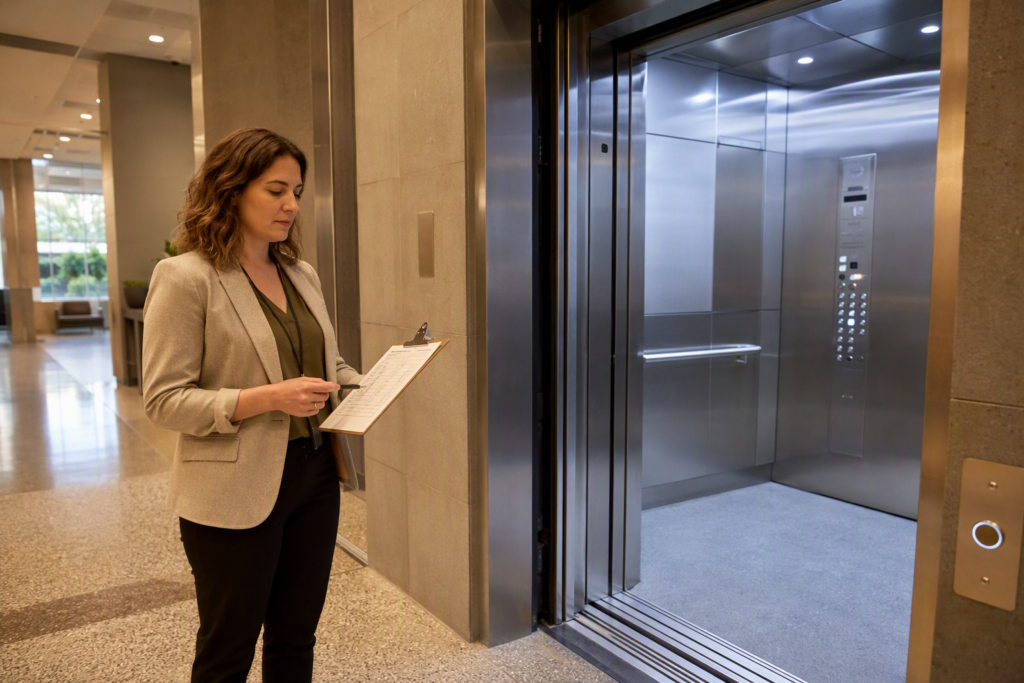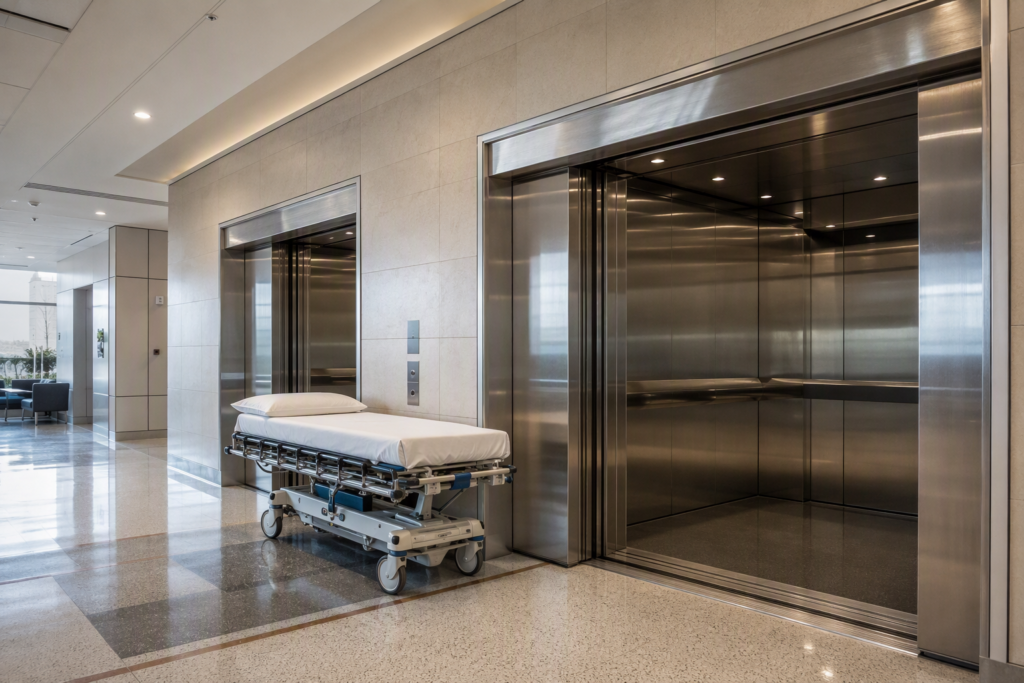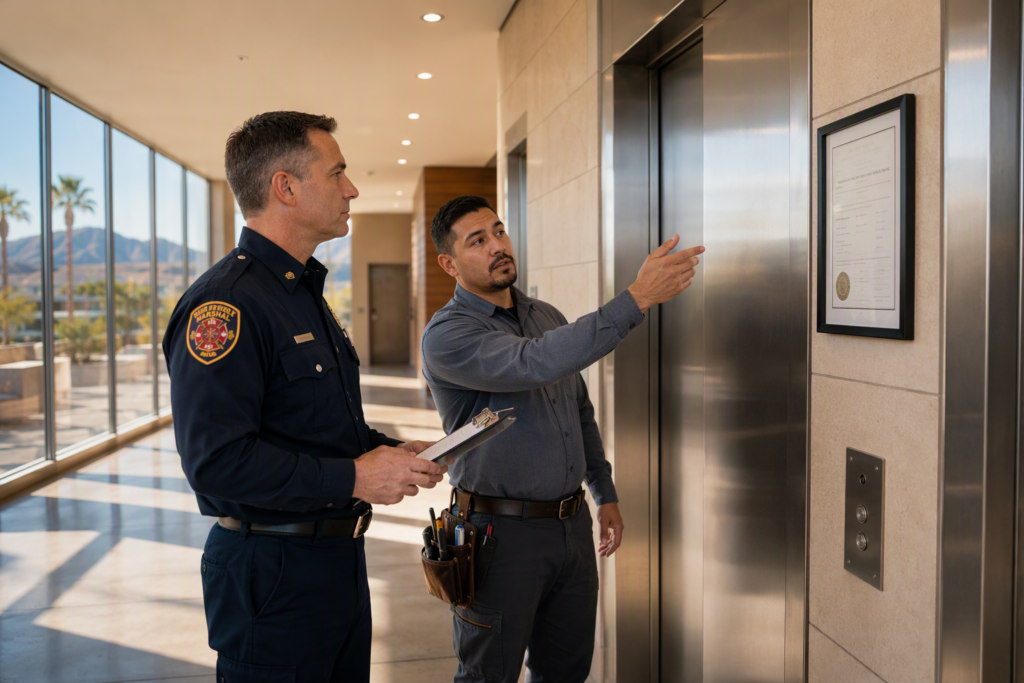
When an elevator problem arises and a qualified local contractor is not immediately available, property owners and facility managers often reach out to any knowledgeable elevator service company they can find. Arizona Elevator Solutions regularly receives inquiries from property owners outside its primary service markets — Phoenix, Tucson, Scottsdale, and Mesa — asking whether remote technical guidance is possible. The short answer is yes, within defined limits, and understanding those limits is critical for safety and legal compliance.
What kind of remote technical guidance can an elevator company realistically provide?
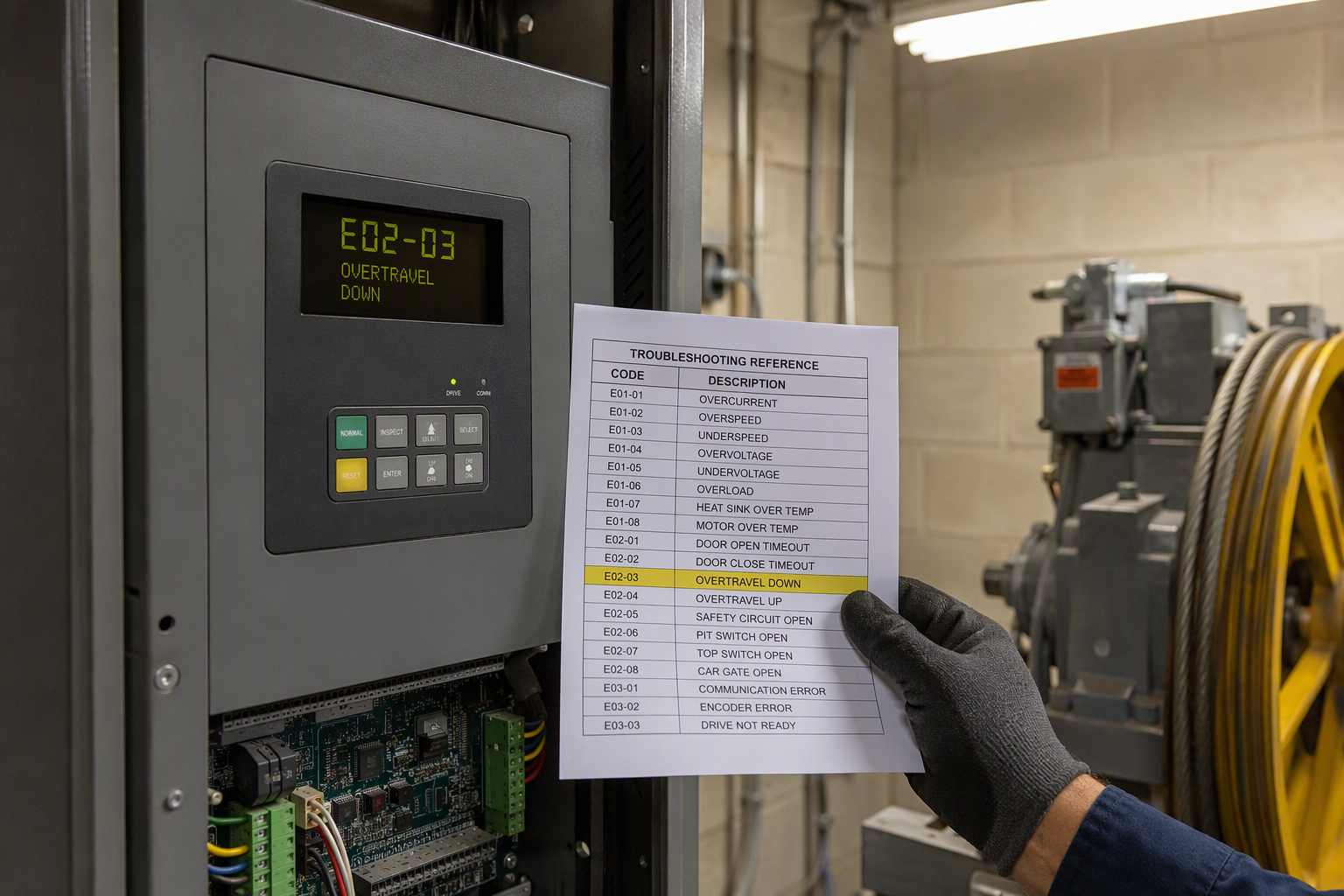
A qualified elevator service company can offer general diagnostic guidance, code-reference information, and troubleshooting frameworks remotely, but cannot legally authorize repairs, certify equipment, or substitute for an on-site licensed inspection.
Remote technical guidance typically falls into several categories: helping a facilities team interpret an error code displayed on a controller, explaining what a symptom pattern may indicate, advising on safe shutdown procedures, clarifying what documentation a property owner should have on hand before contacting their local authority having jurisdiction (AHJ), and explaining how relevant federal codes such as the ASME A17.1 Safety Code for Elevators and Escalators define maintenance obligations. What remote guidance cannot do is replace a physical inspection, verify mechanical or electrical conditions, or produce a certificate of inspection — all of which require an authorized professional on-site.
Why can’t an out-of-area elevator company perform the actual repair or inspection?

Elevator contractors must hold active licenses in the jurisdiction where work is performed, and operating without those credentials exposes both the contractor and the property owner to legal and safety liability.
In Arizona, for example, the Arizona Registrar of Contractors issues R-12 (residential) and C-12 (commercial) elevator license classifications that specifically authorize the installation and repair of elevators, dumbwaiters, escalators, and moving walks. Performing that work without the appropriate classification is a violation of state contracting law. Other states and municipalities have their own parallel licensing frameworks. When a property is located outside a contractor’s licensed territory, the contractor’s insurance, bonding, and legal authorization to work simply do not extend there. This is not a matter of preference — it is a matter of regulatory compliance designed to protect the public.
What immediate steps should a property owner take when an elevator becomes unsafe or disabled?
Taking the correct sequence of actions after an elevator malfunction protects building occupants, preserves compliance standing, and sets the stage for an efficient repair.
- Take the elevator out of service immediately. If the equipment shows signs of unsafe operation — abnormal sounds, leveling problems, door malfunctions, or any passenger entrapment — shut it down and post clear “Out of Service” signage at every landing.
- Ensure no persons are trapped. If passengers are inside, contact emergency services (911) rather than attempting an untrained rescue. Do not attempt to force doors or manually lower a cab without proper training and authorization.
- Contact your licensed local elevator service contractor. Every property with an elevator should maintain a service agreement with a contractor licensed in that jurisdiction. Locate that contractor’s emergency contact information.
- Notify your authority having jurisdiction (AHJ). In Arizona, A.R.S. § 23-491 through 23-491.16 requires owners to notify the state within 24 hours of any accident that injures a person or disables a conveyance. Confirm your own jurisdiction’s parallel requirement with your local AHJ.
- Document the incident. Record the date, time, symptoms, any error codes displayed, and the names of anyone involved. This documentation supports the repair process and satisfies regulatory reporting obligations.
- Do not restore service until cleared. The elevator should not be returned to passenger service until an authorized inspector or licensed service technician confirms it is safe and compliant.
- Obtain updated inspection certification if required. Depending on the nature of the malfunction and any repairs made, your AHJ may require a new inspection certificate before the unit returns to service.
What federal codes apply universally regardless of which state a property is in?
The ASME A17.1 Safety Code for Elevators and Escalators and the Americans with Disabilities Act (ADA) establish baseline requirements that apply across the United States, though the specific edition adopted and enforcement mechanisms vary by state.
ASME A17.1 covers design, construction, installation, operation, inspection, testing, maintenance, alteration, and demolition of elevators and escalators. ASME A17.3, the Safety Code for Existing Elevators and Escalators, addresses retroactive requirements for equipment already in service. The ADA establishes accessibility requirements for elevators in public accommodations and commercial facilities, administered federally but enforced through building permits, complaints, and litigation. OSHA regulations also govern worker safety during elevator construction and maintenance. Regardless of where a property is located, these federal frameworks form the baseline against which any technical guidance should be evaluated.
How do Arizona’s elevator regulations compare to typical industry benchmarks?
Arizona’s regulatory framework aligns closely with national best practices and adopts current ASME standards, providing a solid compliance baseline for properties within the state.
| Compliance Factor | Arizona Requirement (2026) | ASME / Federal Benchmark |
|---|---|---|
| Adopted equipment code | ASME A17.1-2019 (for equipment installed, repaired, or altered on or after January 1, 2023) | ASME A17.1 (edition varies by adopting jurisdiction) |
| Inspection frequency | Annual certificate of inspection required; also required before first use and after any modification or alteration | ASME A17.1 mandates periodic inspections; frequency set by AHJ |
| Certificate posting | State serial number or certificate must be posted in or close to the conveyance in an easily accessible location | Varies by jurisdiction; AHJ typically determines posting requirements |
| Accident reporting | Owner must notify the state within 24 hours of injury or conveyance disablement | OSHA requires prompt reporting of work-related incidents; AHJ sets elevator-specific deadlines |
| Pre-installation notice | Owner must notify state at least 90 days before installing, relocating, or altering a conveyance | Permit required before alterations; lead time varies by AHJ |
| Private inspector option | Owners may hire ICA-authorized private inspectors; inspectors must register annually and complete at least 8 hours of approved continuing education | Many jurisdictions allow owner-hired third-party inspectors under AHJ oversight |
| Firefighters’ emergency operation key | Must use the Arizona Firefighters Service (AZFS) key | ASME A17.1 requires firefighters’ emergency operation; key specification set by local AHJ |
| Platform lifts and stairway chairlifts | ASME A18.1-2020 applies for equipment installed, repaired, or altered on or after January 1, 2023 | ASME A18.1 is the nationally recognized standard for platform lifts |
| Regulator | Industrial Commission of Arizona (ICA), Elevator Division (formerly the ADOSH Elevator Safety Section until September 12, 2026) | State-level AHJ varies; some states delegate to local municipalities |
| Contractor licensing | Arizona Registrar of Contractors R-12 / C-12 elevator license classifications | Most states require licensed elevator contractors; classification names vary |
Who is the authority having jurisdiction (AHJ) for elevators in Arizona?
In Arizona, the Industrial Commission of Arizona (ICA), Elevator Division is the statewide regulator for elevators and similar conveyances, with an important exception for the City of Phoenix.
Under A.R.S. §§ 23-491 through 23-491.16, the ICA Elevator Division oversees inspection, certification, and safety enforcement for conveyances throughout Arizona. However, the City of Phoenix maintains its own Elevator Section within the Planning and Development Department, which inspects elevators, escalators, moving walks, dumbwaiters, and chair lifts located inside Phoenix city limits. For equipment outside Phoenix, the state handles oversight. Property owners and facility managers should confirm which body has jurisdiction over their specific address before submitting permits, scheduling inspections, or reporting incidents.
What information should a property owner have ready before calling any elevator technical resource?
Having key documentation and equipment details organized before making a call dramatically improves the quality and speed of any technical guidance received.
At minimum, a caller should be prepared to provide: the elevator manufacturer and model, the approximate year of installation or last major modernization, the current maintenance agreement status and name of the service contractor (if any), any error codes or fault indicators displayed on the controller, a description of the symptoms observed (unusual sounds, leveling issues, door behavior, speed anomalies), the building type and number of floors served, and — for Arizona properties — the state serial number assigned by the Industrial Commission of Arizona, which is affixed on a tag to the controller or mainline disconnect. The more complete this information, the more targeted the guidance can be.
Can remote technical guidance help identify whether an issue is a code-compliance violation?
Remote guidance can help a property owner understand whether a described condition is likely to implicate federal or state code requirements, but a definitive compliance determination requires on-site inspection by an authorized professional.
For instance, if a property owner describes a door that does not fully close before the cab moves, a knowledgeable technical resource can explain that ASME A17.1 contains specific requirements for door interlock systems and that the described behavior likely warrants immediate shutdown. However, identifying the precise mechanical cause, determining whether the condition constitutes a code violation versus a maintenance deficiency, and issuing any compliance determination all require eyes on the equipment. Remote guidance narrows the diagnostic field and helps owners ask the right questions of their on-site contractor — it does not replace that contractor.
What types of elevator problems are most appropriate for remote technical consultation?
Remote consultation is best suited for controller error-code interpretation, maintenance scheduling questions, code-reference inquiries, documentation guidance, and pre-inspection preparation — not for active safety emergencies or hands-on diagnostics.
Common scenarios where remote technical input adds genuine value include: understanding what a specific fault code means on a particular controller platform, determining whether a described symptom is consistent with a hydraulic, traction, or electrical system issue, understanding what documentation is required for a pending inspection, clarifying the difference between a repair and an alteration (which triggers different regulatory obligations under Arizona Administrative Code R20-5-502 through R20-5-515), and preparing questions for a local service contractor. These are areas where the expertise of a seasoned elevator service company translates across geographic boundaries.
What are the limitations of remote elevator diagnostics from a safety standpoint?
Remote diagnostics cannot substitute for physical observation, measurement, or testing, and acting on remote guidance without on-site verification introduces risks that outweigh the convenience.
Elevator safety systems are interdependent. A symptom that sounds benign in description — for example, occasional slow door closing — can be a surface manifestation of a failing interlock, a worn door clutch, or a misadjusted closer speed that could progress to a more serious condition. Without physical access to the equipment, no technical resource can measure voltage, test safety circuit continuity, assess the condition of guide rail lubrication, verify buffer clearances, or inspect governor rope condition. OSHA and ASME A17.1 both establish that elevator maintenance and inspection are hands-on disciplines requiring qualified personnel physically present at the equipment.
What should a property owner outside Arizona do if they cannot find a local licensed elevator contractor quickly?
The first step is to contact the local AHJ — typically a state labor department, building department, or dedicated elevator safety office — which can provide a registry of licensed contractors authorized to work in that jurisdiction.
National elevator contractor associations also maintain directories of member companies organized by geography. While Arizona Elevator Solutions serves Phoenix, Tucson, Scottsdale, and Mesa and does not perform on-site work outside Arizona, the team can assist callers in understanding what questions to ask prospective local contractors, what credentials to verify, and what code standards should be referenced during the hiring conversation. This kind of guidance helps property owners make informed decisions even when the immediate practical help must come from a local source.
How does the ADA affect elevator technical requirements for properties in any state?
The Americans with Disabilities Act requires that elevators serving public accommodations and commercial facilities meet specific accessibility standards, and those requirements apply federally regardless of which state a property is in.
ADA Standards for Accessible Design specify requirements for elevator cab dimensions, door width, call button placement and height, floor designation signage (including Braille), audible signals, and leveling accuracy. For existing facilities, the ADA requires removal of accessibility barriers where readily achievable. When an elevator is being repaired or modernized, the scope of work may trigger an obligation to bring accessibility features into compliance. Property owners receiving remote technical guidance should always include ADA accessibility considerations as part of the conversation, since a repair that restores mechanical function but leaves an ADA-noncompliant cab creates a separate category of legal exposure.
What role does an elevator service agreement play in managing issues at any property?
A comprehensive elevator service agreement with a licensed local contractor is the single most important risk-management tool available to a property owner, providing defined response protocols, documented maintenance records, and clear responsibility allocation.
Without a service agreement, a property owner facing an elevator malfunction must identify, vet, and engage a contractor under time pressure — a scenario that often results in delayed repairs and higher costs. A well-structured agreement typically defines the scope of preventive maintenance, parts coverage, response expectations for emergency calls, and documentation procedures. In Arizona, proper maintenance records also support compliance with the annual inspection and certification requirements under A.R.S. § 23-491 through 23-491.16. For properties within Phoenix, Tucson, Scottsdale, or Mesa, Arizona Elevator Solutions provides service agreement options tailored to the regulatory environment administered by the Industrial Commission of Arizona.
How should a property owner evaluate whether remote technical guidance they’ve received is reliable?
Reliable remote technical guidance should be grounded in named, verifiable codes and standards, should acknowledge the limits of what can be determined without on-site access, and should never encourage bypassing safety systems or returning an unsafe elevator to service.
Red flags in remote technical advice include: guidance that suggests overriding or bypassing a safety relay, interlock, or governor without verification; claims that a problem can be definitively diagnosed without physical inspection; advice that contradicts the recommendations of the equipment manufacturer’s documentation; and any suggestion that returning a malfunctioning elevator to service before proper repair is acceptable. Reputable technical resources — including Arizona Elevator Solutions when fielding inquiries from outside its service territory — will be explicit about the boundaries of remote guidance and will consistently direct property owners toward on-site qualified professionals for any work that affects the safety of the equipment.
What documentation should always be on file at a property with an elevator?
Every property with an elevator should maintain a complete documentation package that supports both regulatory compliance and efficient service delivery, regardless of which state or jurisdiction the property is in.
For Arizona properties specifically, required and recommended documentation includes: the current annual certificate of inspection issued by the state (which must be kept at the same location as the conveyance and made available on request), the state serial number tag affixed to the controller or mainline disconnect, the maintenance log maintained by the service contractor, the elevator manufacturer’s original equipment documentation, records of any modernization or alteration work with associated permits and inspection sign-offs, and a copy of the service agreement with the licensed maintenance contractor. Outside Arizona, the specific documents required vary by jurisdiction, but the general categories — certificate of inspection, maintenance records, permit history, and manufacturer documentation — are consistent industry-wide.
What is the difference between an elevator repair and an elevator alteration, and why does it matter for compliance?
An alteration changes the configuration, capacity, speed, operation, or safety features of an elevator, triggering more extensive regulatory requirements than a standard repair, which simply restores a component to its original condition.
Under Arizona Administrative Code R20-5-502 through R20-5-515 and the adopted ASME A17.1-2019, alterations require owner notification to the state at least 90 days in advance, new permits, and a post-alteration inspection before the equipment returns to service. A repair that replaces a failed component with an identical replacement is generally not an alteration. However, substituting a component of a different specification, adding a new control feature, or changing the rated capacity typically crosses the line into alteration territory. Misclassifying an alteration as a routine repair is a common compliance error that remote technical guidance can help property owners avoid — though the final determination should always involve the AHJ and the licensed contractor performing the work.
How should facilities teams handle elevator questions when their property management company operates across multiple states?
Multi-state property managers should establish a jurisdiction-by-jurisdiction compliance map that identifies the specific AHJ, adopted code edition, inspection interval, and licensed contractor for each property, rather than applying a single standard across all locations.
Because elevator safety regulations are primarily state and local in nature — layered on top of the federal baseline of ASME A17.1 and ADA — requirements can differ materially from one location to the next even within the same metropolitan area that crosses state lines. For Arizona properties within the Phoenix, Tucson, Scottsdale, and Mesa markets, Arizona Elevator Solutions can serve as the compliance anchor, providing maintenance, inspection coordination, and technical guidance within the framework established by the Industrial Commission of Arizona. For locations outside Arizona, the company can provide general technical orientation and help facilities teams frame the right questions for local service providers.
What should a property owner ask a prospective elevator contractor before hiring them for out-of-territory work?
Before engaging any elevator contractor, a property owner should verify that the contractor holds current, jurisdiction-specific licensing, carries appropriate insurance, and can demonstrate familiarity with the adopted code edition in force at the property’s location.
Specific questions to ask include: What license classification do you hold in this state or municipality, and can you provide the license number for verification? Which edition of ASME A17.1 is currently adopted here, and are your technicians familiar with it? Are you registered with the local AHJ, and can you pull permits under your company’s license? Does your general liability and workers’ compensation insurance cover work performed at this location? Can you provide references from properties of similar type and size in this jurisdiction? A contractor who is unable or unwilling to answer these questions clearly should not be engaged for elevator work regardless of how competitive their pricing may appear.
Are platform lifts and stairway chairlifts subject to the same regulatory framework as elevators?
Platform lifts and stairway chairlifts are regulated under a separate standard — ASME A18.1 — but in Arizona they are subject to the same owner obligations, inspection requirements, and state oversight that govern elevators.
In Arizona, platform lifts and stairway chairlifts installed, repaired, or altered on or after January 1, 2023 must comply with ASME A18.1-2020. Like elevators, these conveyances require an annual certificate of inspection, must carry a state serial number, and are overseen by the Industrial Commission of Arizona Elevator Division. ADA accessibility requirements under federal law also apply to platform lifts used in public accommodations. Property owners frequently overlook chairlifts and platform lifts when auditing their compliance posture, treating them as minor amenities rather than regulated conveyances — an assumption that can lead to significant regulatory exposure.
What is the process for getting an elevator back into service after an extended shutdown?
Returning an elevator to service after an extended shutdown requires a systematic assessment of mechanical and electrical condition, verification of current certification status, and in many cases a new inspection by an authorized inspector before passengers may use the equipment.
In Arizona, no conveyance may operate without a current annual certificate of inspection issued under A.R.S. §§ 23-491 through 23-491.16. If the certificate has lapsed during a shutdown, a new inspection must be completed and the certificate renewed before service resumes. Mechanically, a shut-down elevator should be evaluated for hydraulic fluid condition (for hydraulic units), rope and governor condition, lubrication status, battery backup function, controller integrity, and door system operation. The licensed service contractor returning the unit to service should document the recommissioning process. For Arizona properties in the Phoenix, Tucson, Scottsdale, and Mesa markets, Arizona Elevator Solutions can coordinate this recommissioning process within the regulatory framework administered by the Industrial Commission of Arizona.
Ready to Resolve Your Elevator Issue the Right Way?
Whether you manage a property in Phoenix, Tucson, Scottsdale, or Mesa — or simply need expert technical orientation before engaging a local contractor elsewhere — working with a knowledgeable, code-grounded elevator service company makes a measurable difference in safety outcomes and compliance standing.
Arizona Elevator Solutions is certified to serve properties throughout the Phoenix, Tucson, Scottsdale, and Mesa markets, operating within the regulatory framework established by the Industrial Commission of Arizona, Elevator Division and in accordance with ASME A17.1-2019 and applicable ADA accessibility standards. For properties outside Arizona, the team can provide general technical guidance to help owners and facility managers take the right next step with confidence.
Contact Arizona Elevator Solutions for a free elevator assessment.
Call us today at 480-557-7600 to speak with a member of the Arizona Elevator Solutions team about your elevator’s maintenance, compliance, or technical needs.
Need elevator service you can rely on? Arizona Elevator Solutions is ready to help.