Elevator Modernization Cost Breakdown: Complete FAQ Guide
Elevator modernization costs depend on the scope of the project, the age and type of the equipment, local code requirements, and building-specific conditions. A targeted component upgrade addresses one system, while a full modernization replaces controls, mechanical parts, cab finishes, and brings the unit into compliance with current ASME A17.1 Safety Code for Elevators and Escalators and ADA accessibility standards. Understanding how each cost layer is built helps building owners in Phoenix, Tucson, Scottsdale, and Mesa make informed investment decisions.
What is elevator modernization and why does it affect cost?
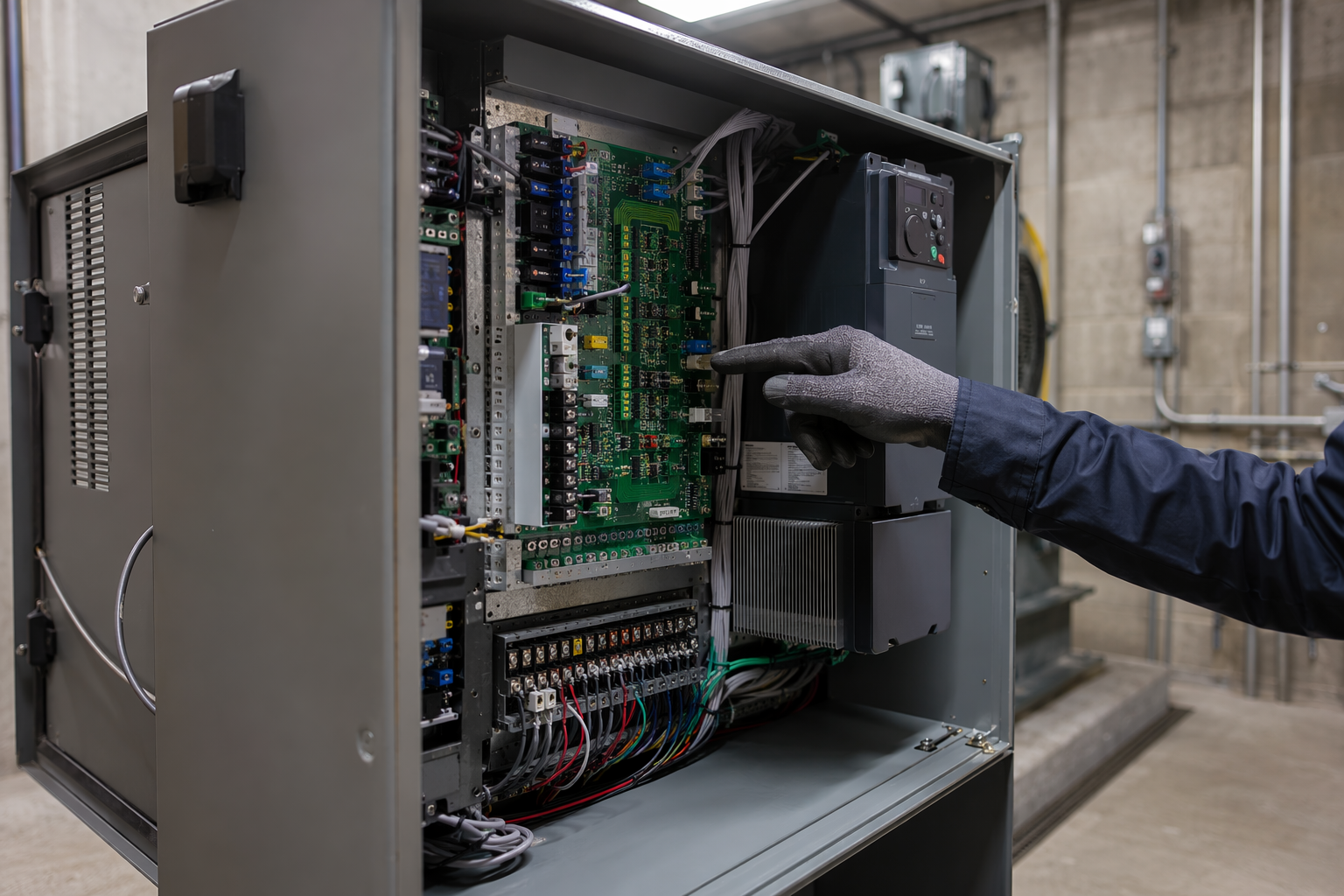
Elevator modernization is the process of replacing or upgrading aging elevator components — ranging from a single system to the entire unit — to improve safety, reliability, energy efficiency, and code compliance.
Unlike a full elevator replacement, which involves removing the hoistway equipment and reinstalling from scratch, modernization preserves the structural shaft while updating the functional systems inside it. The scope of modernization is the single largest driver of cost. A controls-only upgrade targets the relay logic panels and digital dispatching systems. A full modernization replaces controls, drives, motors, door operators, cab interiors, and all safety devices simultaneously.
Building owners should understand that modernization is not one-size-fits-all. A 1970s hydraulic elevator in a Tucson office building has different needs and cost exposures than a 1990s traction elevator in a Phoenix high-rise. Age of the equipment, parts availability, and local inspection history all shape the final investment.
What are the four primary cost categories in elevator modernization?
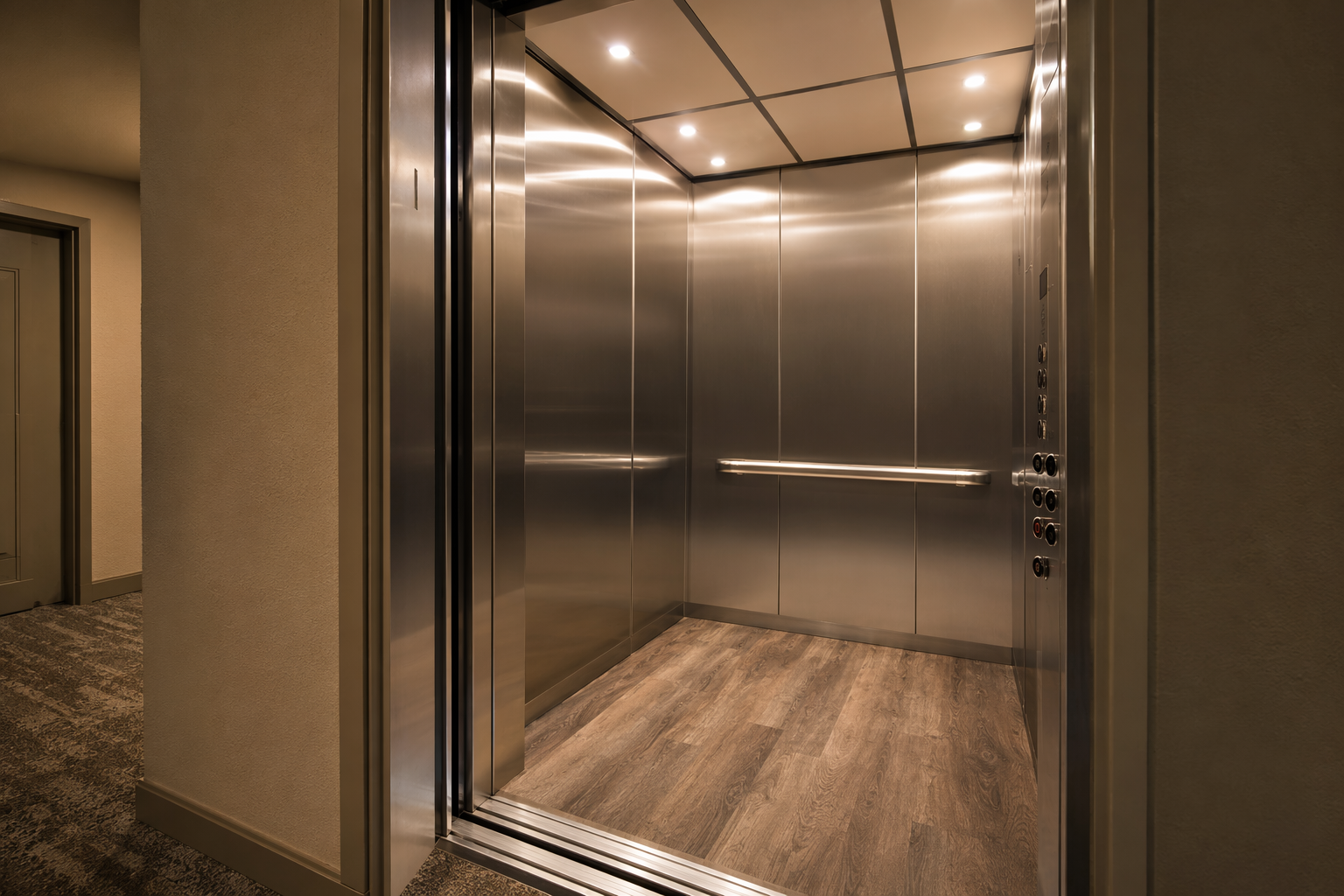
The four primary cost categories are: (1) electrical controls and drive systems, (2) mechanical components, (3) cab interior and door finishes, and (4) code-compliance and safety upgrades.
Each category represents a distinct layer of the modernization project, and most proposals itemize them separately so building owners can evaluate partial versus full modernization options.
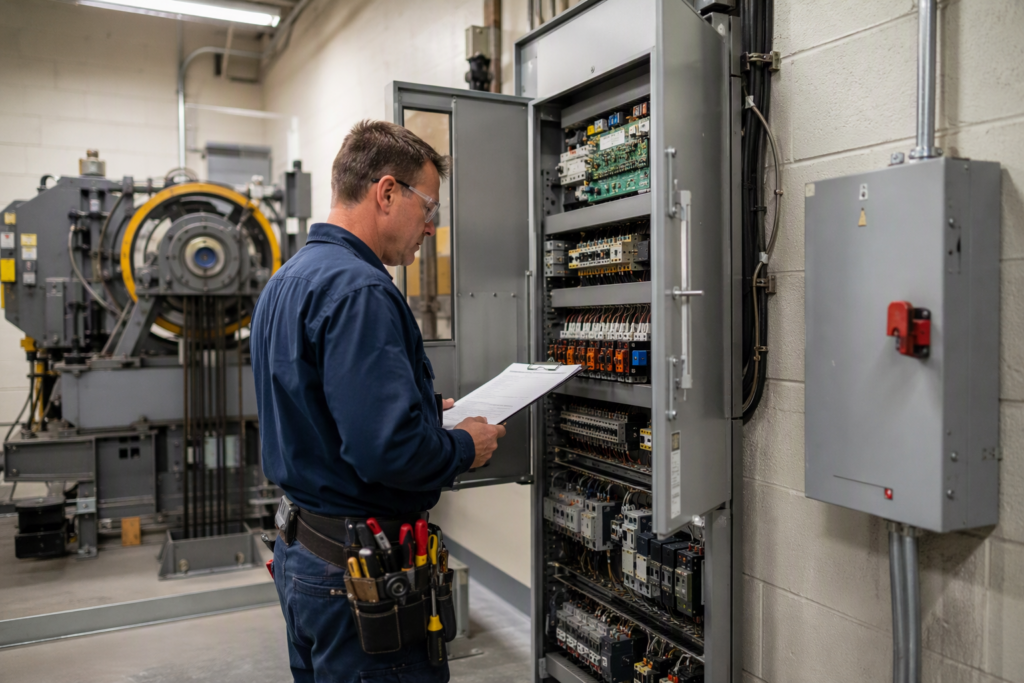
- Electrical Controls and Drive Systems: This includes the replacement of outdated relay-based controllers with microprocessor-based solid-state controls, variable-voltage variable-frequency (VVVF) drives, and modern dispatching software. Controls modernization alone is often the most technically complex portion of the project.
- Mechanical Components: Motor, gearbox, sheaves, ropes or hydraulic pump and cylinder, guide rails, and buffers fall under this category. Hydraulic units may also require valve assemblies and cylinder liners.
- Cab Interior and Door Finishes: Flooring, wall panels, lighting, ceiling fixtures, handrails, and door equipment including operators, sills, and hanger assemblies are finished goods costs that vary with material selection.
- Code-Compliance and Safety Upgrades: Fire service operation, emergency lighting, door reopening devices, pit ladders, seismic restraints (particularly relevant in Arizona), and ADA-required signage and controls are non-negotiable compliance items that must be included in any permitted modernization.
How does elevator type influence modernization cost?
Elevator type — hydraulic, geared traction, or gearless traction — directly influences which mechanical components need replacement, how labor-intensive the work is, and what compliance items apply.
Hydraulic elevators, common in low-rise buildings throughout Phoenix and Mesa, involve unique costs related to the pump unit, hydraulic fluid, and underground cylinder condition. Older in-ground cylinders may require a liner installation to prevent soil contamination, which is a significant added cost and a regulatory concern under environmental codes.
Geared traction elevators, common in mid-rise buildings, typically require gearbox inspection and potential replacement alongside motor and control work. Gearless traction systems found in taller buildings carry higher mechanical costs but often deliver better long-term energy performance after modernization with a VVVF drive.
What does a modernization cost benchmark table look like for common scope levels?
A benchmark comparison table helps building owners understand the relative investment scale for different modernization scopes before requesting formal proposals.
The table below represents general scope descriptions and relative cost tiers for illustrative purposes. Actual costs vary by market, site conditions, equipment age, and specification. Building owners should obtain itemized proposals from qualified elevator contractors for accurate figures.
| Modernization Scope | Typical Components Addressed | Relative Cost Tier | Common Drivers |
|---|---|---|---|
| Controls-Only Upgrade | Controller, drive, dispatching software | Lower | Outdated relay logic, parts obsolescence |
| Partial Modernization | Controls + door operators + safety devices | Moderate | Reliability issues, repeated door failures |
| Mid-Scope Modernization | Controls + mechanicals + cab interior | Moderate-High | Aging motor/drive, cab aesthetics, tenant requirements |
| Full Modernization | All systems including compliance upgrades | High | Equipment age 20+ years, full code alignment, building sale or renovation |
| Hydraulic Cylinder Liner Addition | Cylinder relining, valve, pump | Moderate-High Add-On | Environmental compliance, older in-ground cylinders |
What code compliance requirements add to modernization costs in Arizona?
Arizona elevator modernization projects must comply with the ASME A17.1 Safety Code for Elevators and Escalators as adopted by the Arizona Department of Occupational Safety and Health (ADOSH), as well as ADA Title III requirements for public accommodations.
When a modernization permit is pulled in Arizona, inspectors evaluate the entire elevator against the currently adopted code edition — not just the components being replaced. This means a controls-only modernization may trigger requirements for door reopening devices, pit lighting, seismic switches, or emergency communication systems that were not part of the original project scope.
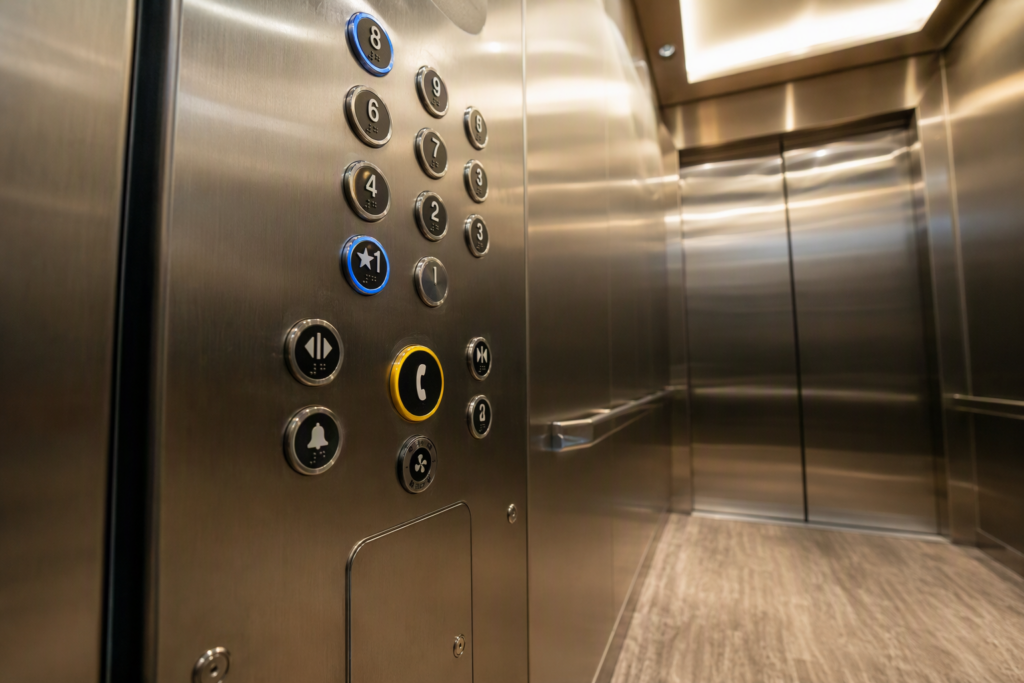
ADA compliance items that commonly appear as cost additions include: tactile raised characters and Braille on hall and car operating panels, audible and visual position indicators, accessible cab dimensions, and compliant control button heights. While these items are individually modest in cost, collectively they can represent a meaningful portion of the total project budget on older equipment that has not been previously updated.
Building owners should also consult OSHA standards related to hoistway construction and worker safety during the modernization installation period, as these may impose staging and access requirements that affect labor costs.
How does the age of elevator equipment affect modernization cost?
Older equipment generally increases modernization costs because parts availability decreases, more systems fall below current code thresholds simultaneously, and structural or hoistway conditions may need remediation before new equipment can be installed.
An elevator installed before 1990 may use relay-logic controllers for which replacement parts are no longer manufactured. In these situations, controls modernization is not optional — it becomes necessary simply to maintain operation. When multiple systems on an elevator reach end-of-life concurrently, bundling them into a single modernization project is typically more cost-effective than addressing each failure reactively over several years.
Hoistway conditions also matter. Corrosion on guide rail brackets, deteriorated pit concrete, or outdated buffer stops may require remediation work that adds to the base modernization scope. A thorough pre-modernization assessment by a qualified elevator contractor is essential for accurate budgeting.
What is the cost difference between partial and full elevator modernization?
A partial modernization addresses one or two system categories and carries a lower upfront cost, but a full modernization typically delivers better long-term value by eliminating piecemeal service calls, aligning the entire unit with current code, and extending the useful equipment life substantially.
Building owners sometimes pursue partial modernization to manage capital expenditures, addressing controls first, then mechanical components in a subsequent budget cycle. This approach can be practical for buildings with newer cabs or recently replaced door equipment. However, each permitted scope of work triggers a code compliance review, meaning the building may pay inspection and compliance upgrade costs multiple times rather than once.
For buildings in Phoenix, Scottsdale, and other Arizona markets undergoing major renovations or ownership transitions, a full modernization at the time of the broader project often achieves economies of scale in contractor mobilization and reduces disruption to building tenants.
How do door systems and operators contribute to modernization costs?
Door operators and associated components — including hanger assemblies, sills, gibs, and reopening devices — are among the most frequent sources of elevator downtime and represent a meaningful line item in most modernization proposals.
Modern door operators provide smoother, quieter operation and incorporate electronic door safety edges that meet current ASME A17.1 requirements for obstruction detection. Older mechanical safety edges or light curtains may not satisfy current code provisions, making door operator replacement both a reliability and compliance decision.
Landing door equipment at each floor — including frames, panels, sills, and interlock mechanisms — adds cost proportional to the number of stops served by the elevator. A multi-story building with many openings will see door system costs scale accordingly.
What role does energy efficiency play in modernization cost calculations?
Energy efficiency upgrades — particularly variable-voltage variable-frequency (VVVF) drive systems and LED cab lighting — represent an upfront cost component that can offset long-term operating expenses over the life of the modernized equipment.
VVVF drives replace older single-speed or two-speed motor controls, delivering smoother starts and stops while consuming less electrical energy during operation. In commercial buildings where elevators run continuously during business hours, the reduction in motor energy consumption is a legitimate factor in long-term cost-benefit analysis.
LED lighting packages for cabs and machine rooms are standard in contemporary modernizations and consume significantly less energy than fluorescent or incandescent fixtures they replace. While the cost offset from lighting alone is modest, it contributes to the overall operating cost picture that building owners and property managers should evaluate.
How does the number of stops affect elevator modernization cost?
The number of floors served directly multiplies several cost line items, including landing door equipment, hall call fixtures, position indicators, and wiring runs, making stop count a fundamental factor in any modernization estimate.
Each floor served by the elevator requires its own set of hall call buttons, position indicators, door equipment, and wiring connections back to the controller. A two-stop elevator and a ten-stop elevator using identical controller and cab specifications will carry very different total costs simply because of the hardware and labor associated with each additional landing.
This is why modernization proposals should always specify the exact number of stops being serviced, and building owners should confirm that proposals from competing contractors are scoped identically before making cost comparisons.
What is the process for getting an accurate elevator modernization quote?
An accurate elevator modernization quote requires a thorough on-site assessment of the existing equipment, a review of current inspection and violation records, and a clear scope specification that aligns with the building owner’s compliance and operational goals.
- Gather existing documentation: Collect the elevator’s maintenance history, recent inspection reports, any outstanding violation notices from Arizona elevator inspectors, and the original installation records if available.
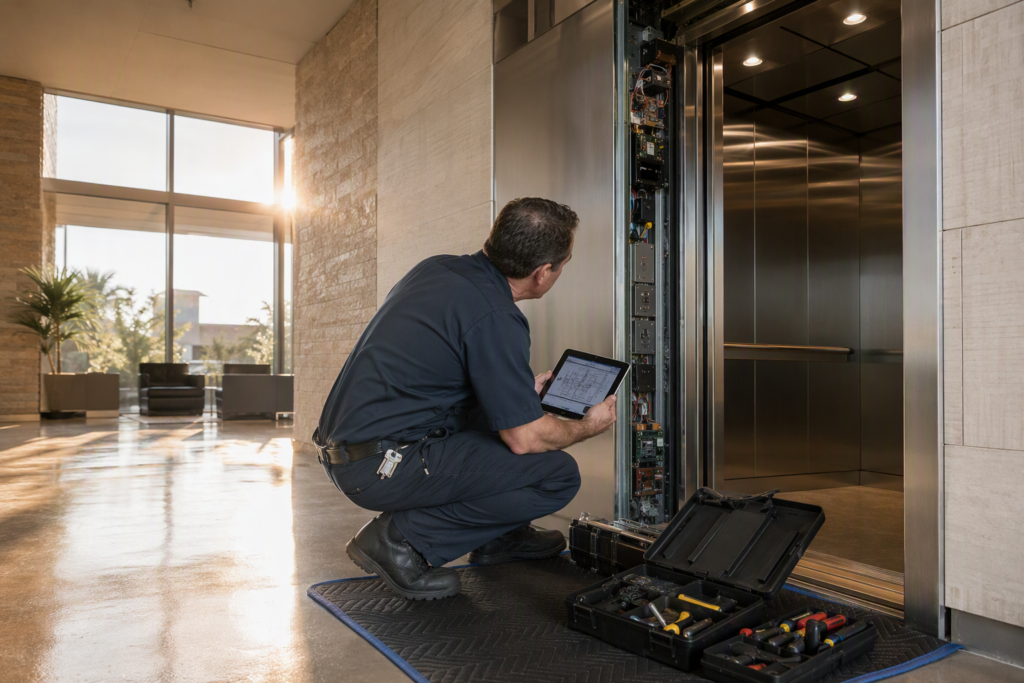
- Schedule a qualified site assessment: A certified elevator contractor conducts a physical inspection of the machine room, hoistway, pit, and cab to document equipment age, condition, and deficiencies.
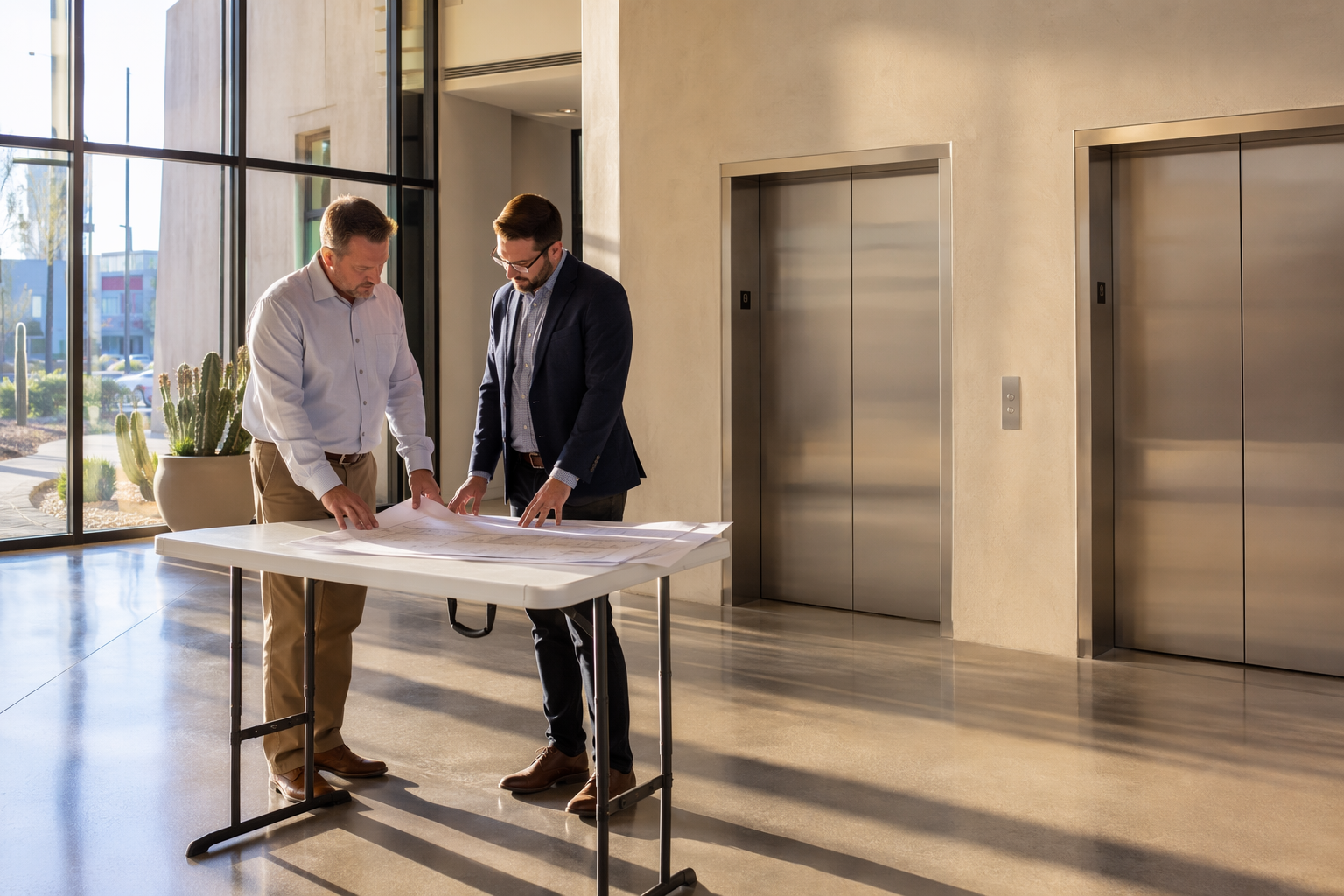
- Define the modernization scope: Based on the assessment findings and the building owner’s budget and goals, the contractor outlines whether a partial or full modernization is appropriate.
- Request an itemized written proposal: The proposal should break down costs by system category (controls, mechanical, cab, compliance) and identify all permit fees, testing requirements, and inspection coordination costs.
- Compare proposals on equal scope: When gathering multiple bids, confirm each contractor is quoting identical scope, components, and compliance items to ensure a valid cost comparison.
- Confirm permit and inspection logistics: Verify that the contractor will manage the permit application, coordinate the required acceptance inspection with Arizona authorities, and provide all required documentation upon project completion.
Arizona Elevator Solutions provides comprehensive on-site assessments for building owners in Phoenix, Tucson, Scottsdale, and Mesa, generating itemized proposals that clearly delineate each cost category and compliance obligation.
How long does elevator modernization take, and how does project duration affect cost?
Project duration varies with modernization scope and can range from a few days for a targeted component upgrade to several weeks for a full modernization, with extended downtime having indirect cost implications for building tenants and operations.
Controls-only modernizations may be completed in a shorter window because the mechanical systems remain in place. Full modernizations that replace the motor, drive, cab interior, and all door equipment require more sequential installation phases and corresponding inspection hold points.
Building owners should account for tenant impact when planning modernization timelines. Multi-elevator buildings can stagger modernizations to keep at least one unit operational at all times. Single-elevator buildings face unavoidable downtime and may need to consider temporary accessibility accommodations under ADA obligations.
Permit processing timelines in Arizona jurisdictions also influence the overall project schedule. Experienced contractors familiar with Phoenix, Tucson, Scottsdale, and Mesa permit offices can anticipate processing windows and build them into the project timeline accurately.
What hidden costs should building owners watch for in modernization proposals?
Common hidden costs in elevator modernization include permit fees, third-party inspection fees, electrical service upgrades in the machine room, asbestos abatement in older buildings, and freight or staging logistics for equipment delivery.
Electrical service upgrades are frequently overlooked. Older machine rooms may have electrical panels that cannot support the power requirements of modern VVVF drives. A dedicated circuit upgrade or electrical panel replacement may be required by the building’s electrician before the elevator contractor can complete the controls installation.
In buildings constructed before the mid-1980s, insulation materials or flooring in machine rooms may contain asbestos. Abatement is required before any work disturbing those materials, and it must be performed by a licensed abatement contractor — a separate cost outside the elevator contractor’s scope.
Permit fees vary by municipality. Phoenix, Scottsdale, Tucson, and Mesa each maintain separate fee schedules for elevator permits, and these costs should be explicitly itemized in any proposal rather than bundled into a general “project costs” line.
How should building owners evaluate competing modernization proposals?
Competing proposals should be evaluated on equal scope, component specifications, warranty terms, permit management responsibilities, and the contractor’s demonstrated familiarity with Arizona inspection requirements — not price alone.
A lower-priced proposal may exclude critical compliance items, use lower-specification components, or shift permit coordination responsibility to the building owner. Reviewing proposals line by line against a consistent checklist prevents misleading comparisons.
Key evaluation criteria include: whether the controller is a branded microprocessor system with available long-term parts support, the warranty period for parts and labor, whether the contractor carries all required Arizona licenses and insurance, and whether the proposal explicitly addresses all outstanding inspection violations.
Arizona Elevator Solutions approaches every proposal with full transparency, itemizing each scope element and identifying compliance obligations upfront so building owners can make informed decisions without encountering unexpected change orders mid-project.
What warranties are typically associated with elevator modernization work?
Elevator modernization warranties generally cover parts and labor for a defined period following project completion, with manufacturer warranties on major components such as controllers and drives extending beyond the contractor’s workmanship warranty.
Controller and drive manufacturers typically provide multi-year warranties on their equipment when installed by certified contractors. Building owners should request copies of the manufacturer warranty documentation as part of project closeout, along with all as-built wiring diagrams, component manuals, and inspection certificates.
Workmanship warranties from the elevator contractor cover installation quality and typically require the same contractor to perform any post-modernization maintenance to remain in effect. Building owners should review warranty terms carefully before signing contracts, paying attention to conditions that could void coverage.
Does elevator modernization require a building permit in Arizona?
Yes — elevator modernization in Arizona requires a permit, and the completed work must pass an acceptance inspection by a qualified elevator inspector before the unit is returned to service.
The Arizona Department of Occupational Safety and Health (ADOSH) Elevator Safety Section oversees elevator permitting and inspection statewide. Individual municipalities including Phoenix, Tucson, Scottsdale, and Mesa coordinate with this state oversight framework. Permit applications require specification submittals, and inspectors verify that the completed installation conforms to the submitted plans and to the currently adopted edition of the ASME A17.1 Safety Code for Elevators and Escalators.
Returning an elevator to service without passing the required acceptance inspection is a violation of Arizona law and can expose building owners to significant liability. Reputable contractors manage the permit and inspection process as an integrated part of every modernization project.
How does elevator modernization compare in cost to full elevator replacement?
Modernization is generally less costly than full elevator replacement because it preserves the existing hoistway structure, avoiding the significant expense of structural demolition, reconstruction, and new equipment installation from the ground up.
Full replacement becomes the more appropriate choice when the hoistway itself has structural deficiencies, when the building’s traffic demands require a fundamentally different elevator configuration, or when the cumulative cost of bringing severely deteriorated equipment up to code approaches or exceeds replacement cost. A qualified elevator contractor can provide a comparative analysis that helps building owners determine which path delivers the better long-term value for their specific situation.
For most commercial buildings in Arizona with functional hoistways and equipment aged between 20 and 40 years, modernization represents a cost-effective path to extending service life while achieving current performance and compliance standards.
What financing or capital planning approaches are available for elevator modernization?
Building owners typically fund elevator modernization through capital reserve funds, building improvement loans, lease provisions, or in multi-tenant buildings through special assessments — with phased modernization providing a way to spread costs across multiple budget cycles.
Condominium and homeowner associations with elevator equipment often fund modernization through reserve studies that identify and plan for major capital expenditures on a long-range schedule. A reserve study that correctly identifies elevator modernization as a near-term obligation allows associations to accumulate funds without emergency assessments.
Commercial property owners should coordinate with their tax advisor regarding the potential treatment of modernization expenditures, as certain improvements may qualify for different capital versus expense treatment depending on scope and applicable tax regulations.
How does elevator modernization affect ongoing maintenance costs?
A properly executed elevator modernization typically reduces ongoing maintenance costs by replacing worn, obsolete components with modern equipment that has better parts availability, lower failure rates, and more accessible diagnostic capabilities.
Relay-based controllers require specialized knowledge and increasingly scarce replacement relays for repair. Microprocessor controllers generate diagnostic fault codes that speed up troubleshooting and reduce labor time per service call. Modern door operators with electronic safety edges experience fewer nuisance trips and door-related callbacks than older mechanical systems.
Building owners should factor projected maintenance cost reductions into the total cost-benefit analysis of a modernization project, not evaluate the investment solely on upfront capital outlay. A qualified service contractor can provide historical maintenance data on similar equipment to inform this analysis.
When should a building owner in Arizona prioritize elevator modernization?
Elevator modernization should be prioritized when equipment exceeds 20 years of age, when recurring failures are increasing service disruptions, when outstanding inspection violations remain unresolved, or when a building renovation or ownership change triggers a full code compliance review.
Buildings in Phoenix, Tucson, Scottsdale, and Mesa that are undergoing lobby renovations, major mechanical system upgrades, or changes of occupancy should treat elevator modernization as an integrated part of the broader capital improvement plan rather than a standalone deferred project. Coordinating elevator work with other construction activity reduces mobilization costs and minimizes cumulative tenant disruption.
Proactive modernization before equipment failure also preserves scheduling flexibility. Emergency replacement of failed components under operational pressure often results in higher costs, longer lead times for equipment, and reduced ability to negotiate favorable contract terms. Arizona Elevator Solutions helps building owners in all four service markets develop modernization timelines that align with their operational and financial planning cycles.
Need elevator service you can rely on? Arizona Elevator Solutions is ready to help.