Elevator Service Provider Comparison: How to Choose the Right Company

Choosing an elevator service provider is one of the most consequential facility management decisions a building owner or property manager can make. The wrong choice can lead to compliance gaps, unexpected downtime, and escalating costs. This guide breaks down every key comparison point so decision-makers can evaluate providers with confidence.
—
What Are the Key Factors When Comparing Elevator Service Providers?

Not all elevator service companies operate the same way. Providers generally fall into three categories: original equipment manufacturer (OEM) service divisions, large national independent contractors, and local independent service companies. Each model has meaningful trade-offs across cost, responsiveness, and contract flexibility.
The primary factors to evaluate include:
- Licensing and compliance with applicable codes and regulations
- Contract structure and exit terms
- Parts sourcing and availability
- Response and repair approach
- Local market knowledge and geographic coverage
- Transparency in invoicing and scope of work
- Alignment with current code editions such as the ASME A17.1 Safety Code for Elevators and Escalators
—
How Do OEM Providers, National Independents, and Local Independents Compare?
| Criteria | OEM Service Division | National Independent | Local Independent (e.g., Arizona Elevator Solutions) |
|---|---|---|---|
| Parts Access | Proprietary parts priority; may limit multi-brand support | Broad parts network; some proprietary limitations | Multi-brand, open-market parts sourcing |
| Contract Flexibility | Typically long-term, difficult to exit | Moderate flexibility; varies by region | Generally shorter terms with clearer exit clauses |
| Code Compliance Expertise | Strong for own equipment lines | Variable across regions | Locally focused; familiar with Arizona AHJ requirements |
| Local Responsiveness | Dependent on regional dispatch coverage | Dependent on regional staffing density | Locally based; community accountability |
| Billing Transparency | Can include bundled or opaque pricing | Variable by contract type | Typically itemized and straightforward |
| Objectivity of Recommendations | May favor own equipment upgrades | Moderate; volume-driven incentives possible | Manufacturer-neutral recommendations |
—
What Are the Pros and Cons of Each Provider Type?
OEM Service Divisions
| Pros | Cons |
|---|---|
| Deep knowledge of their own equipment models | Proprietary lock-in limits competitive pricing |
| Access to OEM-specific diagnostic tools | Long-term contracts with steep exit penalties |
| Manufacturer warranty alignment | Less incentive to recommend cost-effective third-party parts |
National Independent Contractors
| Pros | Cons |
|---|---|
| Broad multi-brand capability | Local responsiveness varies by region and staffing |
| Established infrastructure and reporting systems | May deprioritize smaller accounts in favor of large portfolios |
| Nationwide footprint for multi-site portfolios | Corporate decision-making can slow local problem resolution |
Local Independent Providers
| Pros | Cons |
|---|---|
| Community accountability and relationship-driven service | May not suit multi-state portfolios requiring unified coverage |
| Manufacturer-neutral and cost-objective | Smaller companies may have narrower specialty capacity for complex modernizations |
| Flexible contracts and transparent billing | Brand recognition may be lower than national firms |
| Deep knowledge of local authority having jurisdiction (AHJ) expectations |
—
What Should a Maintenance Contract Include to Be Code-Compliant?
A compliant elevator maintenance contract must address the requirements outlined in the ASME A17.1 Safety Code for Elevators and Escalators, which governs inspection intervals, safety device testing, and maintenance documentation standards. In 2026, compliance with the current adopted edition of this code is a baseline expectation in most jurisdictions, including Arizona.
A well-structured contract should specify:
- Scope of preventive maintenance tasks and their frequency
- Which components are covered versus billed separately
- Lubrication, adjustment, and cleaning schedules
- Safety device testing schedules aligned with the applicable code edition
- Documentation and reporting requirements for inspections
- Clear definitions of emergency versus non-emergency service
- Parts pricing methodology and authorization thresholds
- Compliance coordination with state and local inspection authorities
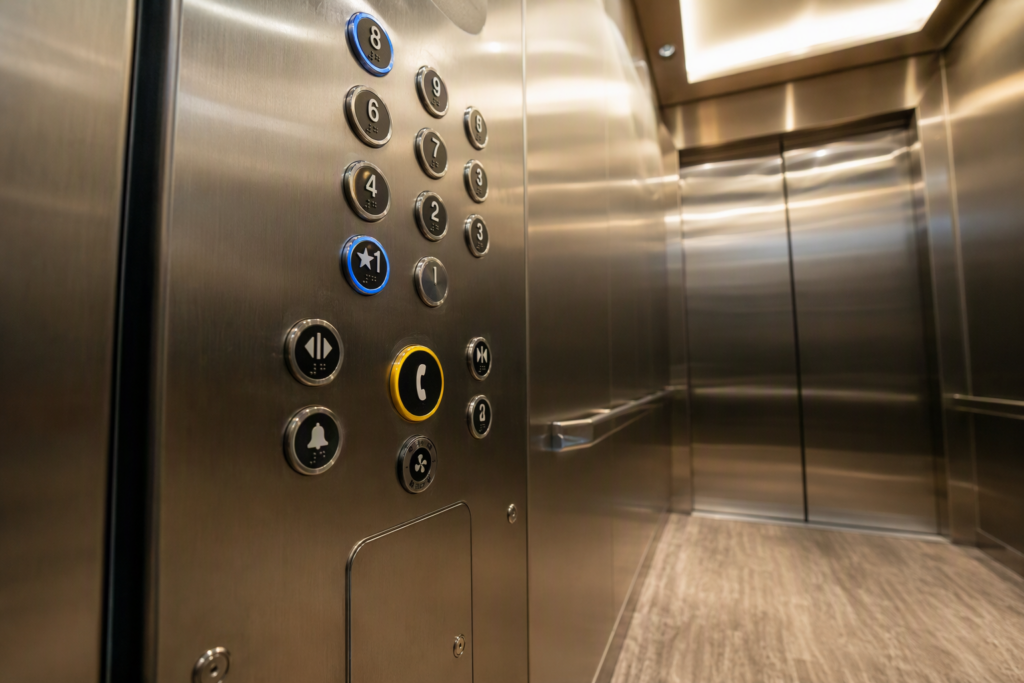
Facilities that serve the public must also ensure elevator accessibility features comply with the Americans with Disabilities Act (ADA), including door timing, cab dimensions, and control panel specifications. A qualified service provider should flag ADA compliance gaps during assessments.
—
How Do Elevator Service Contract Types Differ?
| Contract Type | What’s Covered | Best For | Key Consideration |
|---|---|---|---|
| Oil-and-Grease (Basic) | Lubrication and minor adjustments only | Newer equipment under warranty | All parts and labor billed separately; lowest monthly cost but highest variable exposure |
| Examination and Lubrication | Routine inspection plus lubrication | Low-traffic, low-risk installations | Does not cover parts or callbacks |
| Parts-Included | Routine maintenance plus specified parts | Mid-age equipment | Review exclusion lists carefully — major components are often excluded |
| Full-Maintenance (Comprehensive) | Labor, parts, callbacks, and most repairs | High-traffic, older, or mission-critical equipment | Highest monthly cost but most predictable budget; review exclusions for modernization items |
—
What Questions Should Building Owners Ask Before Signing a Service Agreement?
- Is the company licensed in Arizona, and can they provide documentation? State licensing verifies that technicians meet minimum competency requirements under Arizona statutes.
- What edition of ASME A17.1 does your maintenance program reference? The answer should align with the currently adopted edition in Arizona’s jurisdiction.
- What is the exact scope of parts included, and which are excluded? Vague “exclusions apply” language is a warning sign.
- How are emergency calls dispatched, and is there a defined process? Understand the escalation path for entrapments or safety-critical failures.
- What is the contract term and early termination process? Avoid contracts with multi-year automatic renewals and no reasonable exit provisions.
- Will the provider coordinate directly with the state elevator inspector? Local providers familiar with Arizona authorities having jurisdiction (AHJ) can streamline the inspection process.
- Are modernization recommendations manufacturer-neutral? An independent provider has no financial incentive to recommend a specific brand of controller or drive.
- Can the provider supply references from similar building types in Arizona? Local references are more verifiable and contextually relevant.
—
How Does Provider Choice Affect Long-Term Elevator ROI?
The return on investment from elevator service is realized through three levers: downtime reduction, extended equipment life, and compliance cost avoidance. Provider choice directly affects all three.
Providers that defer maintenance to reduce contract costs may lower monthly expenses in the short term but increase major repair frequency and shorten equipment service life. Conversely, comprehensive preventive maintenance programs — when correctly scoped — reduce the frequency of emergency callbacks and unplanned shutdowns.
From a compliance standpoint, missed inspections or failed safety tests can result in elevator shutdowns ordered by the authority having jurisdiction, which creates immediate revenue impact for commercial buildings dependent on vertical transportation. Selecting a provider with demonstrated AHJ coordination capability reduces this risk.
| Decision Factor | Short-Term Impact | Long-Term Impact |
|---|---|---|
| Preventive maintenance frequency | Higher recurring cost | Reduced major repairs; extended equipment lifespan |
| Contract type (basic vs. comprehensive) | Lower monthly outlay on basic contracts | Higher unpredictable repair bills on basic contracts |
| Local vs. national provider | Similar or lower cost with local providers | Stronger AHJ relationships; faster resolution of compliance issues |
| OEM vs. independent parts sourcing | OEM parts may carry higher unit cost | Independent sourcing can reduce modernization costs significantly |
—
What Are the Workplace Safety Obligations Related to Elevator Maintenance?
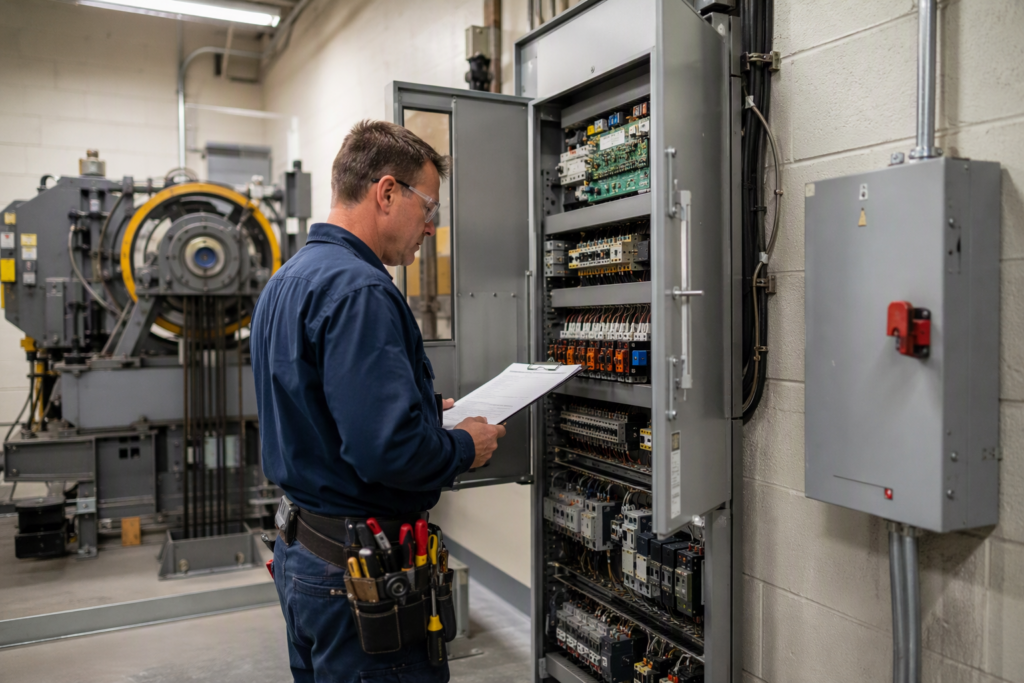
Building owners and facility managers share responsibility for ensuring that elevator maintenance work is performed safely. The Occupational Safety and Health Administration (OSHA) establishes general industry standards that apply to elevator maintenance environments, including lockout/tagout procedures, confined space entry protocols where applicable, and fall protection requirements in machine rooms.
When vetting a service provider, verify that the company maintains documented safety programs for its technicians and that those programs are consistent with applicable OSHA standards. A provider that cannot produce evidence of a safety program introduces liability exposure for the property owner in the event of a maintenance-related incident.
—
How Should a Building Owner Switch Elevator Service Providers?
- Review the existing contract’s termination clause. Identify the notice period required and any financial penalties for early exit.
- Request a complete equipment history file from the current provider. This includes maintenance logs, inspection reports, callback records, and parts replacement history.
- Commission an independent assessment. Before signing with a new provider, have the equipment independently evaluated to establish a documented baseline condition.
- Obtain bids from at least two to three providers. Compare scope, not just price — a lower monthly figure on a basic contract may cost more in aggregate than a comprehensive contract.
- Verify the new provider’s Arizona licensing status. Confirm directly with the relevant state authority before execution.
- Schedule a transition overlap period if possible. Avoid gaps in coverage, particularly for high-traffic or ADA-critical elevators.
- Notify the authority having jurisdiction of the provider change if required by local jurisdiction rules.
- Ensure all documentation transfers. Inspection certificates, test records, and safety device documentation should be on file with the new provider before the first scheduled maintenance visit.
—
Why Is Arizona-Specific Expertise Important When Choosing a Provider?
Arizona’s climate creates specific maintenance challenges that providers without local experience may underestimate. Extreme heat affects hydraulic fluid viscosity, accelerates wear on electrical components, and demands more frequent monitoring of ventilation systems in machine rooms. Dust and particulate matter common to desert environments can affect door operator mechanisms and sensitive control systems.
Beyond environmental factors, Arizona’s authority having jurisdiction enforces specific inspection protocols and adopts code editions on its own timeline. A provider familiar with local inspectors, local adopted code editions, and Arizona-specific permit processes can navigate these requirements more efficiently than a nationally standardized service operation applying generic protocols.
Arizona Elevator Solutions operates as a locally based, certified independent elevator service company serving Arizona building owners and property managers. As an independent provider, Arizona Elevator Solutions offers manufacturer-neutral assessments, flexible service agreements, and compliance guidance aligned with current Arizona AHJ expectations and the ASME A17.1 Safety Code for Elevators and Escalators.
—
What Is the Recommended Evaluation Process for Selecting an Elevator Service Provider?
- Define the building’s specific needs. Consider elevator age, traffic volume, ADA obligations, and budget parameters.
- Create a short list of licensed, locally present providers. Prioritize companies that can demonstrate Arizona licensing and local references.
- Request detailed written proposals. Proposals should specify contract type, covered components, exclusions, and inspection coordination commitments.
- Evaluate code compliance posture. Ask each provider which ASME A17.1 edition their maintenance program references and how they handle ADA gap identification.
- Compare total cost of ownership, not monthly price alone. Factor in callback costs, parts pricing methodology, and the cost implications of each contract type over a three-to-five year horizon.
- Check references and licensing. Contact provided references and verify licensing status independently.
- Negotiate contract terms. Pay particular attention to exit clauses, automatic renewal language, and dispute resolution provisions.
- Execute and document the transition. Follow the provider-switching steps outlined above to ensure continuity of compliance documentation.
—
Ready to Compare Your Options With an Independent Expert?
Arizona Elevator Solutions provides manufacturer-neutral elevator assessments for building owners and property managers across Arizona. An independent assessment establishes a clear picture of equipment condition, compliance status, and the contract structure best suited to the building’s needs — with no obligation to any equipment manufacturer or service agenda.
Contact Arizona Elevator Solutions for a free elevator assessment: 480-557-7600
Need elevator service you can rely on? Arizona Elevator Solutions is ready to help.