Emergency Elevator Repair in Phoenix: Complete FAQ Guide
Elevator emergencies don’t follow business hours. Whether a cab has stopped mid-floor, passengers are trapped, or a critical safety component has failed, knowing exactly who to call — and what to expect — can make the difference between a resolved situation and a costly, dangerous delay. This comprehensive FAQ hub covers every angle of emergency elevator repair in Phoenix, from the moment something goes wrong through long-term compliance and prevention.
Who should I contact for emergency elevator repair in Phoenix?
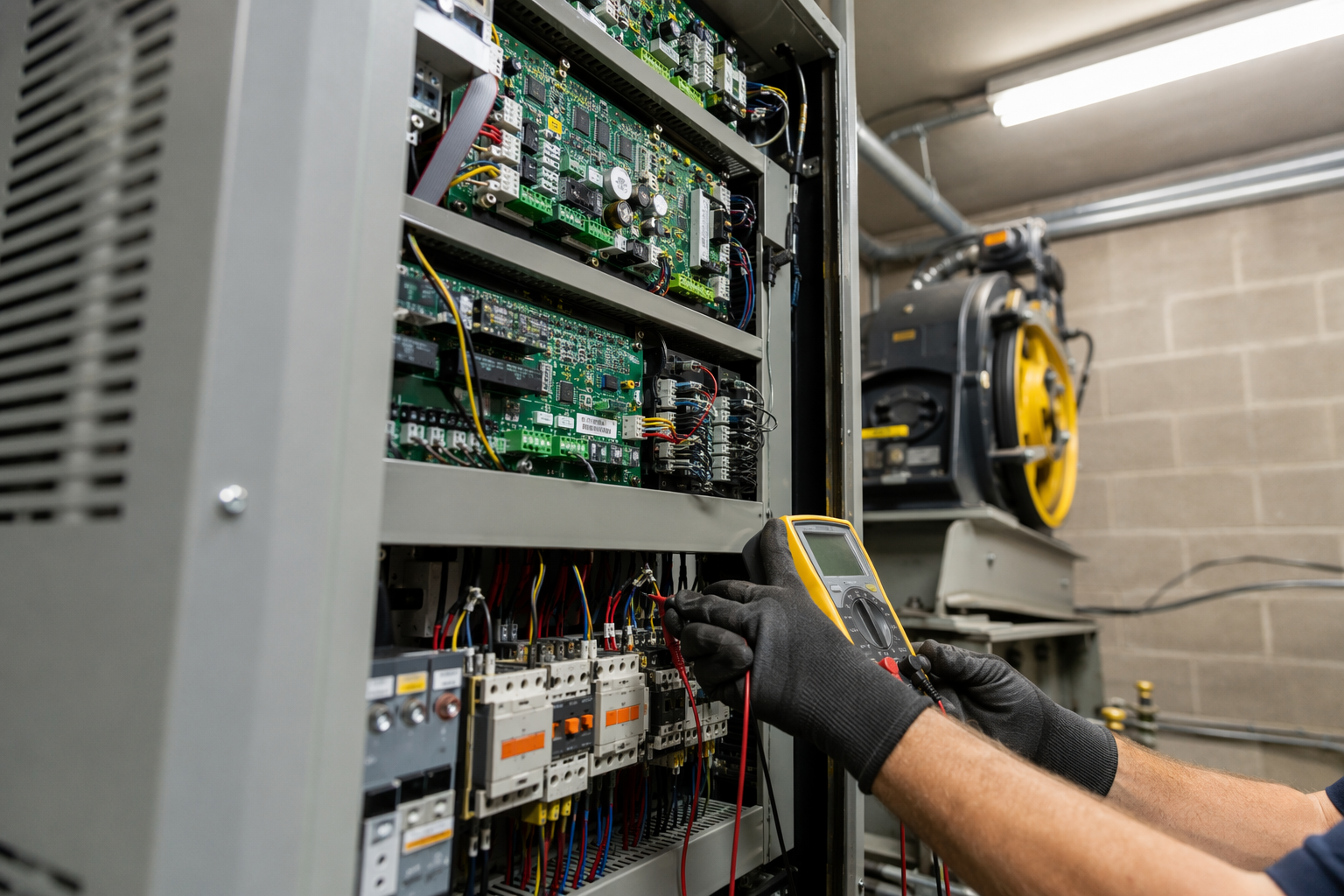
Contact a licensed, Arizona-certified elevator service company that specializes in emergency response — Arizona Elevator Solutions serves Phoenix and surrounding areas and can be reached directly at 480-319-7157 for urgent repair needs.
In any elevator emergency, the contact hierarchy matters. First, if passengers are trapped, contact local emergency services (911) so trained first responders can assist with safe extraction when needed. Simultaneously, contact your elevator service company. Building managers and property owners in Phoenix should have their elevator contractor’s emergency line posted visibly in the machine room and at the elevator cab entrance.
Not every HVAC or general contractor has the specialized knowledge, tools, or Arizona licensing to work on elevator systems. Elevator mechanics are trained under a distinct trade classification, and Arizona requires that elevator work be performed by qualified contractors operating under the appropriate state oversight framework. Using an uncertified vendor during an emergency can void insurance coverage and create additional liability.
What qualifies as an elevator emergency?
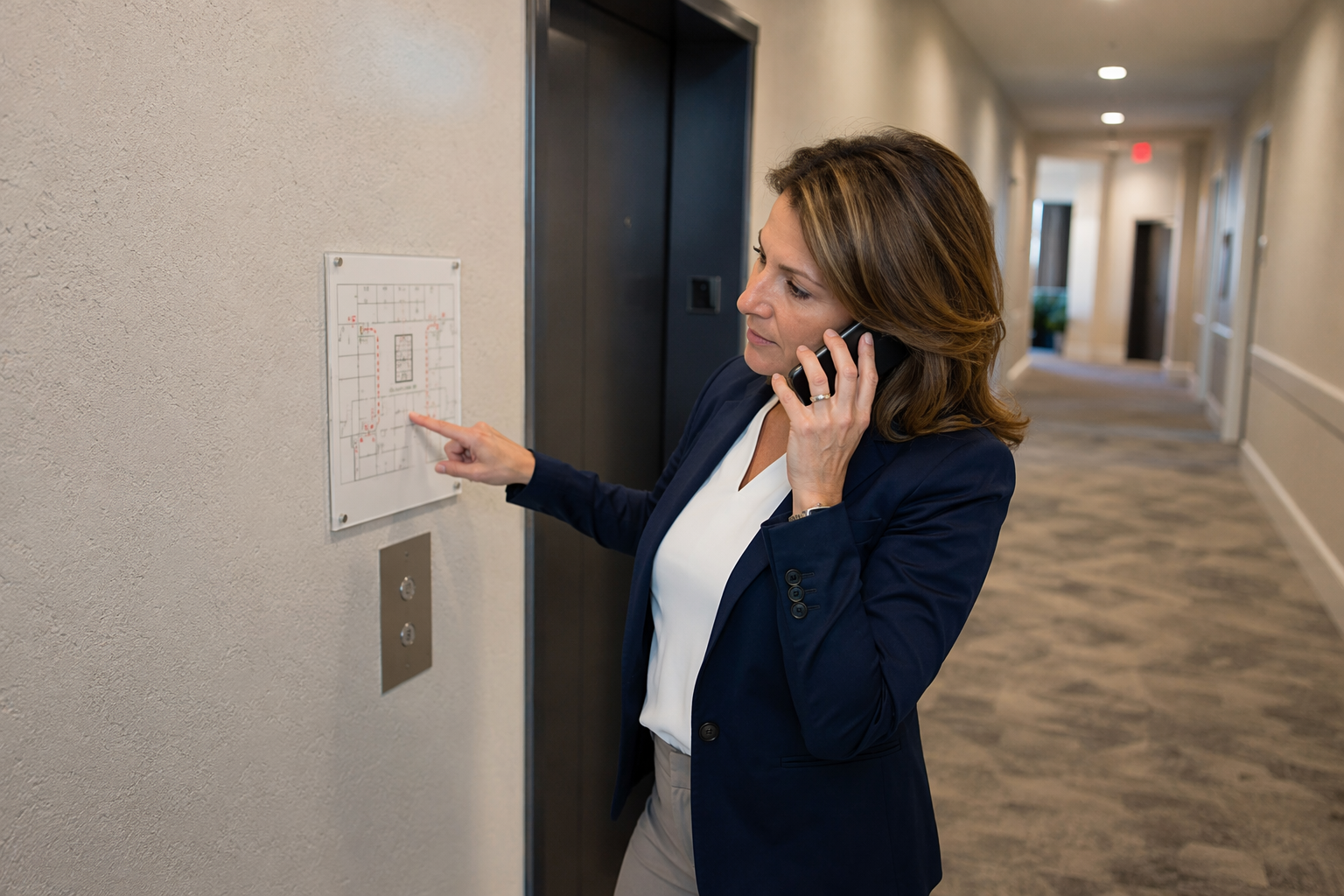
An elevator emergency is any situation involving passenger entrapment, uncontrolled movement, structural failure, fire interaction, flooding of the pit, or any condition that poses an immediate risk to life safety.
The ASME A17.1 Safety Code for Elevators and Escalators establishes clear criteria for conditions that require equipment to be taken out of service immediately. These include safety device failures, door malfunction that prevents safe exit, and any condition where the elevator moves unexpectedly. Building operators should err on the side of caution: if there is any doubt about the safety of continued operation, the unit should be shut down and the service provider contacted before passengers are allowed back on.
Common emergency scenarios in Phoenix include:
- Passenger entrapment between floors
- Door that will not open or close properly during operation
- Elevator stopping outside of the floor landing zone
- Unusual noises, jolts, or vibrations during travel
- Complete power failure affecting the elevator cab
- Water intrusion into the pit — a particular concern during monsoon season in Arizona
- Fire service recall failure
- Overheating of machine room equipment during Phoenix’s extreme summer temperatures
What should I do immediately when an elevator emergency occurs?
The immediate priority in any elevator emergency is ensuring passenger safety, communicating clearly, and preventing further equipment damage through the correct shutdown procedure.
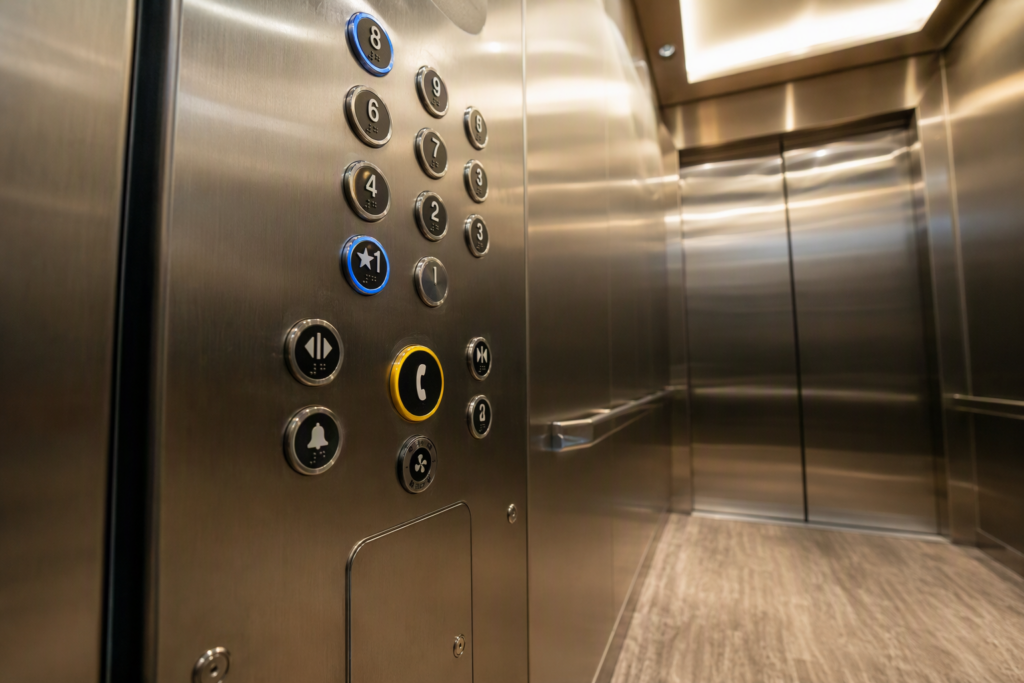
- Activate the cab emergency phone or intercom. Federal regulations under the Americans with Disabilities Act (ADA) require a two-way communication system in every elevator cab. Use it to communicate with any trapped passengers and reassure them help is on the way.
- Call 911 if passengers are physically trapped and cannot safely exit on their own. Do not attempt to force open elevator doors manually without trained personnel present.
- Contact your licensed elevator service provider at their emergency line — in the Phoenix area, this means calling Arizona Elevator Solutions at 480-319-7157.
- Do not attempt self-rescue. Instruct trapped passengers to remain calm, stay inside the cab, and avoid attempting to pry doors open or exit between floors.
- Shut down the elevator using the machine room disconnect switch if there is active danger (flooding, fire, burning smell) and it is safe to access the machine room.
- Secure the elevator lobbies on all floors to prevent additional passengers from attempting to board.
- Document the incident. Note the time, floor location, number of passengers involved, and any observable symptoms (sounds, smells, error codes on the controller display).
- Notify your building management and insurance carrier as soon as the immediate safety situation is resolved.
Are elevator service companies in Arizona required to be licensed?
Yes — Arizona requires elevator contractors and mechanics to hold the appropriate state certification; any company performing elevator repair, installation, or maintenance in Phoenix must operate within this regulatory framework.
Arizona’s elevator safety program falls under the jurisdiction of the Industrial Commission of Arizona (ICA), which oversees elevator inspections and contractor licensing in the state. Building owners should always verify that any elevator service company they contact — particularly during an emergency when there may be pressure to act quickly — holds current Arizona credentials. Hiring an unlicensed contractor creates significant liability exposure for property owners and may invalidate insurance claims related to any subsequent incident.
When evaluating a vendor, ask directly for their Arizona contractor license number and verify it with the Industrial Commission. Reputable companies like Arizona Elevator Solutions operate in full compliance with state licensing requirements across Phoenix, Tucson, Scottsdale, and Mesa.
How quickly should an emergency elevator repair be addressed?
Emergency elevator repairs — especially those involving passenger entrapment or active safety failures — should be addressed as rapidly as possible, and any unit with a known safety defect must be taken out of service immediately under ASME A17.1 requirements.
The ASME A17.1 Safety Code for Elevators and Escalators is unambiguous: when an elevator is found to be unsafe, it must not be returned to service until the condition is corrected and verified by a qualified mechanic. There is no grace period for operating equipment with a known safety defect.
For commercial buildings in Phoenix — particularly those serving the public or ADA-accessible populations — extended elevator downtime also creates compliance obligations under the ADA. If the elevator is the only accessible route for individuals with disabilities, building operators may be required to provide alternative accessible service or notify affected users of the outage and its anticipated resolution.
What are the most common causes of emergency elevator breakdowns in Phoenix?
In the Phoenix climate, the most frequent drivers of emergency elevator failures include extreme heat stress on hydraulic fluid and electrical components, power surge damage, door system failures, and deferred maintenance on aging equipment.
Phoenix’s summer temperatures — which regularly exceed 110°F — create unique stress on elevator systems that properties in cooler climates do not experience. Hydraulic elevators are particularly vulnerable: hydraulic fluid viscosity changes significantly with temperature, and machine room temperatures can reach dangerous levels without proper ventilation. Traction elevator motors and controllers are also susceptible to heat-related failures.
Additional Phoenix-specific risk factors include:
- Monsoon season power surges that can damage elevator controllers and drive systems
- Dust and particulate intrusion into motor rooms and control panels during haboob events
- Hard water scale buildup in hydraulic systems
- Aging equipment in the large inventory of commercial buildings constructed during Phoenix’s rapid growth periods
What types of elevators require emergency repair services in Phoenix?
Emergency repair needs apply to all elevator types found in Phoenix commercial and residential properties, including hydraulic elevators, traction elevators, machine-room-less (MRL) systems, and limited-use/limited-application (LULA) lifts.
| Elevator Type | Common Emergency Issues | Key ASME A17.1 Consideration | Phoenix Climate Risk Factor |
|---|---|---|---|
| Hydraulic (in-ground & holeless) | Fluid leaks, jack failures, pump motor overheating | Pressure relief valve testing requirements | High — fluid viscosity changes with extreme heat |
| Geared Traction | Brake failures, sheave wear, controller faults | Safety device testing intervals | Medium — motor room cooling critical |
| Gearless Traction (MRL) | Drive unit faults, rope wear, landing accuracy | Rope and sheave inspection standards | Medium — electronics sensitive to heat |
| LULA Lifts | Door interlock failures, drive system faults | ASME A17.1 Part 5 provisions | Low to Medium |
| Dumbwaiters | Door and gate interlock failures | ASME A17.1 Part 7 provisions | Low |
What safety codes govern elevator emergency repairs in Arizona?
Elevator emergency repairs in Arizona are governed primarily by the ASME A17.1 Safety Code for Elevators and Escalators, along with applicable ADA accessibility requirements and OSHA standards for worker safety during repair operations.
Arizona has adopted ASME A17.1 as the foundational code for elevator safety, administered through the Industrial Commission of Arizona. The 2019 and subsequent editions of ASME A17.1 contain specific provisions for emergency situations, including requirements for firefighters’ emergency operations (Phase I and Phase II recall), seismic provisions, and the mandatory two-way communication systems referenced by ADA regulations.
Workers performing emergency repairs must also operate in compliance with OSHA standards, including lockout/tagout (LOTO) procedures (OSHA 29 CFR 1910.147) that are critical when working on powered elevator equipment. Property owners should confirm that any emergency service provider follows documented LOTO procedures — this protects both the technicians and the building’s liability standing.
How does ADA compliance factor into emergency elevator situations?
When an elevator serving as an ADA-required accessible route is out of service for emergency repairs, building operators have specific obligations under the Americans with Disabilities Act to maintain accessible pathways or provide equivalent facilitation.
The ADA requires that public accommodations and commercial facilities maintain their accessible features in working order. Temporary outages due to maintenance are recognized, but building operators are expected to minimize downtime and take reasonable steps to ensure individuals with disabilities are not excluded from services during the repair period. This may include posting clear notices, providing staff assistance, or making alternative arrangements for accessing the building’s services.
Emergency elevator repairs that restore ADA-compliant functionality should be documented thoroughly, including the nature of the failure, the corrective action taken, and the date/time of restoration to service. This documentation can be critical in any subsequent ADA compliance inquiry.
Can a building legally operate an elevator during an emergency repair situation?
No — under ASME A17.1, an elevator with a known unsafe condition must be removed from service immediately and cannot be returned to operation until a qualified mechanic certifies the repair and the safety condition has been corrected.
Arizona property owners sometimes face pressure to keep elevators running — particularly in high-traffic commercial buildings, hospitals, or senior living facilities where vertical transportation is critical. However, operating a unit with a known defect exposes the building owner to substantial liability in the event of an injury, and may result in citation by the Industrial Commission of Arizona during the next inspection cycle.
When an elevator must be taken out of service, building operators should immediately post clear out-of-service signage on all affected floors, notify building occupants and tenants, and coordinate with emergency repair services to minimize the outage window.
What information should I have ready when I call for emergency elevator repair in Phoenix?
Having key information ready when you call your elevator service provider will accelerate the dispatch process and help the responding technician arrive prepared with the right tools and parts.
Before calling Arizona Elevator Solutions or any elevator service provider, gather the following:
- Building address and specific elevator location (e.g., “south lobby elevator, 3rd floor”)
- Elevator manufacturer and model number — typically found on a data plate inside the cab or in the machine room
- Unit serial number — also on the data plate
- Description of the problem — what the elevator is doing or not doing, any error codes displayed on the controller
- Number of passengers involved if entrapment has occurred
- Last inspection date and contractor if known
- Machine room location and access instructions
- Any recent maintenance work performed on the unit
How do I choose between emergency elevator repair companies in Phoenix?
Evaluate emergency elevator repair providers in Phoenix based on their Arizona licensing status, the scope of equipment they service, their technical certifications, and their documented compliance with ASME A17.1 safety standards.
Key criteria to apply when comparing providers:
- Arizona licensing: Verify current credentials with the Industrial Commission of Arizona before any work begins.
- Equipment coverage: Confirm the provider can service your specific elevator type and brand — not all companies service all manufacturers’ proprietary systems.
- Compliance knowledge: The provider should be conversant with current ASME A17.1 code requirements and Arizona-specific amendments.
- Parts availability: Ask about their access to OEM and quality replacement parts for your equipment type.
- References and service history: A provider with a documented history of commercial elevator work in the Phoenix market will have relevant local experience with the climate factors that drive failures in the region.
Arizona Elevator Solutions serves Phoenix, Scottsdale, Mesa, and Tucson and maintains expertise across the range of elevator systems commonly found in Arizona commercial, residential, and healthcare properties.
What happens during an emergency elevator repair visit?
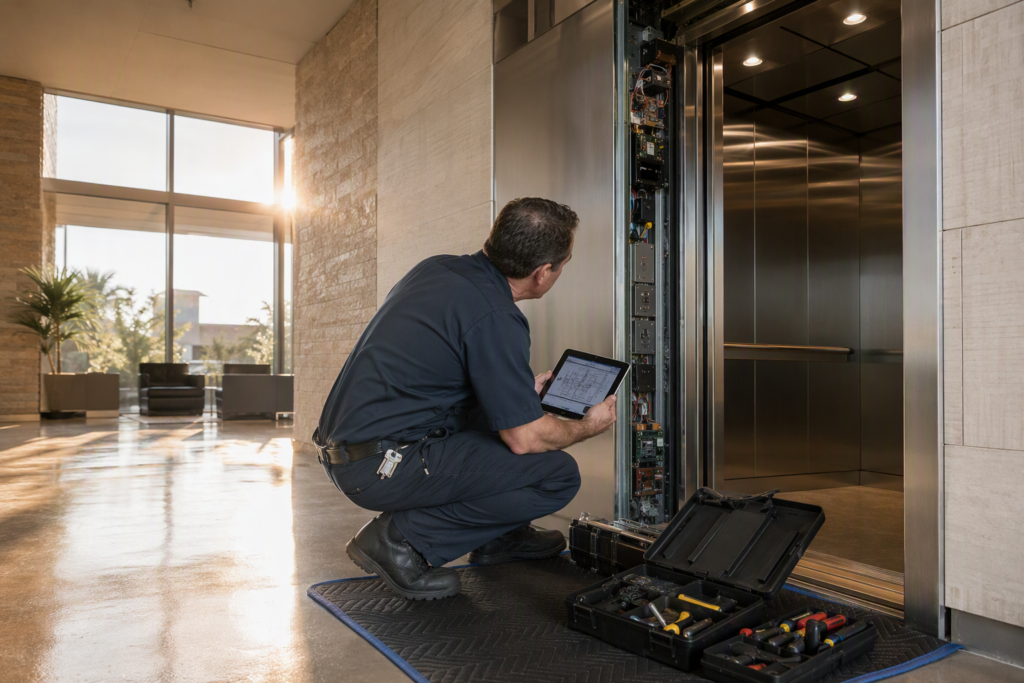
A qualified elevator mechanic responding to an emergency call will conduct a systematic safety assessment, identify the root cause of the failure, make necessary repairs or take the unit safely out of service, and document all findings in compliance with ASME A17.1 requirements.
The typical emergency visit process includes:
- Initial safety assessment: The mechanic evaluates the immediate safety situation, including whether passengers require assisted extraction.
- Equipment lockout/tagout: Following OSHA-compliant LOTO procedures before beginning any diagnostic or repair work.
- Diagnostic evaluation: Systematic inspection of the reported failure point and related systems to identify root cause versus symptoms.
- Repair or controlled shutdown: Either completing the necessary repair if parts and conditions allow, or placing the unit in a controlled out-of-service state if a full repair cannot be safely completed on the initial visit.
- Safety system verification: Testing all relevant safety devices after any repair to confirm they meet ASME A17.1 operational standards before the unit is returned to service.
- Documentation: Recording all findings, actions taken, and parts replaced in the service record maintained for the unit.
- Owner/operator briefing: Advising the building contact on the nature of the failure, the repair performed, and any recommended follow-up maintenance or monitoring.
How can I prevent elevator emergencies in my Phoenix building?
The most effective way to prevent elevator emergencies is adherence to a documented preventive maintenance program aligned with ASME A17.1 requirements and tailored to the specific demands of Phoenix’s climate.
Arizona’s extreme heat places above-average stress on elevator mechanical and electrical systems. A proactive maintenance schedule should include more frequent inspection of hydraulic fluid condition, machine room cooling system performance, door system components (which are subject to thermal expansion), and controller electronics during peak summer months.
Under ASME A17.1, elevators must undergo periodic inspections and testing at intervals specified in the code — including annual inspections and periodic full-load safety tests. Buildings that defer maintenance or allow inspections to lapse are statistically more likely to experience emergency failures. Arizona Elevator Solutions provides scheduled maintenance programs across Phoenix, Scottsdale, Mesa, and Tucson designed to keep equipment in code-compliant condition and minimize unplanned downtime.
How often must elevators be inspected in Arizona?
Arizona requires elevators to be inspected on a regular basis consistent with ASME A17.1 standards, with the Industrial Commission of Arizona overseeing the inspection program and certificate of operation requirements.
Under the ASME A17.1 Safety Code for Elevators and Escalators, routine inspections and periodic tests are required at defined intervals based on elevator type and usage. Building owners in Phoenix must maintain a current certificate of operation, which is issued following a satisfactory inspection. Operating an elevator without a valid certificate is a violation that can result in enforcement action by the Industrial Commission of Arizona.
Property managers should maintain a compliance calendar that tracks inspection due dates, safety test intervals (such as the required periodic testing of car safeties, buffers, and pressure relief valves on hydraulic units), and the expiration date of the current operating certificate.
What is the role of the machine room in an elevator emergency?
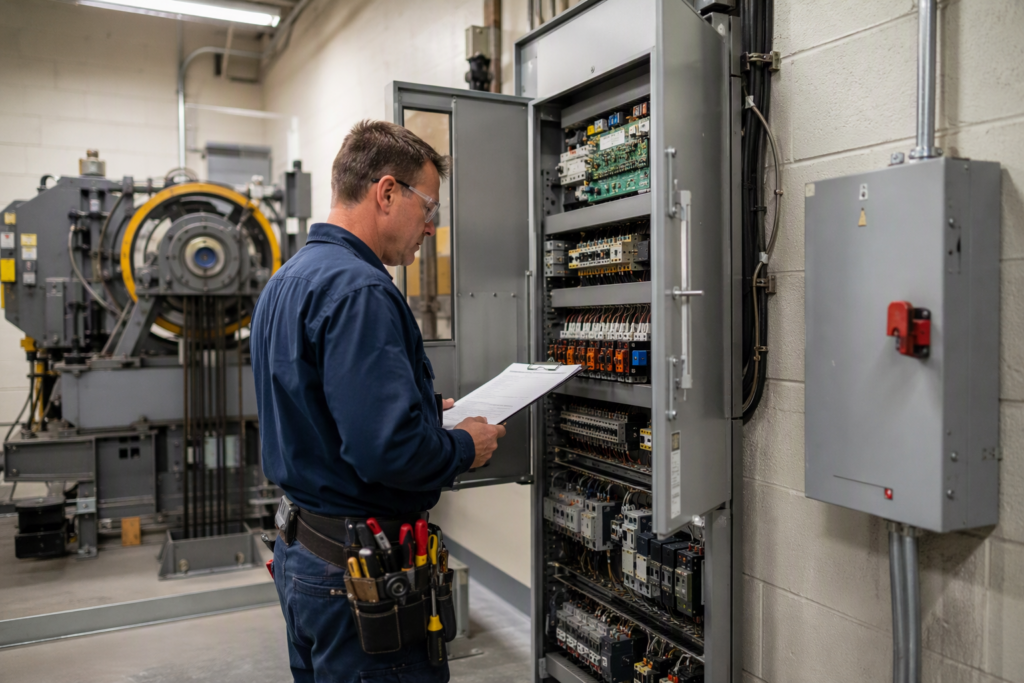
The machine room is the control center for elevator operations, housing the drive system, controller, and main disconnect — and access to this space is critical for emergency response and shutdown procedures.
Building operators should ensure that machine room keys are accessible to authorized personnel at all times, that the room is kept clear of storage and debris, and that the main disconnect is clearly labeled. In Phoenix’s climate, machine room temperature control is also an emergency factor — extreme heat can cause controller and drive system failures that would not occur in more temperate locations. ASME A17.1 contains specific provisions regarding machine room ventilation and environmental controls.
During any elevator emergency, providing the responding technician immediate and unobstructed access to the machine room is essential. Delays caused by locked, inaccessible, or cluttered machine rooms can extend emergency response time and worsen outcomes for trapped passengers.
Does my building’s insurance cover emergency elevator repairs?
Coverage for emergency elevator repairs depends on the specific terms of your commercial property and equipment breakdown policies — but documentation of code-compliant maintenance and use of licensed contractors is typically required to support a valid claim.
Most commercial property insurance policies in Arizona include some form of equipment breakdown or boiler and machinery coverage that may apply to elevator failures. However, insurers typically require evidence that the equipment was maintained in accordance with applicable codes and that repairs were performed by licensed contractors. Claims arising from work performed by unlicensed or uncertified vendors may be denied.
Property owners should review their insurance documentation with their broker specifically regarding elevator coverage, including whether the policy covers emergency labor, replacement parts, and any business interruption losses associated with elevator downtime. Maintaining complete service records — including all maintenance visits, inspection certificates, and repair documentation — is essential for supporting insurance claims.
What are the signs that an elevator needs emergency attention versus routine repair?
Indicators requiring immediate emergency response include passenger entrapment, unintended movement, burning smells, electrical faults, door failures preventing exit, and any condition where the cab is not level with the floor landing.
Distinguishing emergency from non-emergency conditions helps building operators respond appropriately without either under-reacting to dangerous situations or unnecessarily alarming occupants. The table below provides a practical reference:
| Observed Condition | Classification | Immediate Action |
|---|---|---|
| Passengers trapped in cab | Emergency | Call 911 + emergency elevator line immediately |
| Elevator stops outside floor level | Emergency | Take out of service; call emergency repair |
| Burning smell or smoke from machine room | Emergency | Call 911; activate fire service recall if safe |
| Door won’t open with passengers inside | Emergency | Call emergency repair; do not force doors |
| Unusual jerking or vibration during travel | Emergency/Urgent | Take out of service; call service provider |
| Slow door operation (no entrapment) | Routine | Schedule service call; monitor operation |
| Minor floor leveling inaccuracy | Routine | Schedule service call |
| Intermittent lighting flicker in cab | Routine | Schedule service call |
| Water in elevator pit (minor seepage) | Urgent | Contact service provider promptly; monitor |
| Complete power loss to elevator | Emergency/Urgent | Verify no entrapment; call service provider |
What should building managers in Phoenix do to prepare for elevator emergencies before they happen?
Proactive preparation — including maintaining updated emergency contact lists, training staff on proper emergency procedures, and ensuring machine room access — dramatically improves outcomes when an elevator emergency does occur.
Recommended preparedness steps for Phoenix building managers:
- Post the elevator service company’s emergency phone number in the machine room, the management office, and the building security station.
- Ensure all facilities staff know the location of the machine room and have key access.
- Train front desk and security personnel on how to communicate with trapped passengers using the cab intercom and how to guide emergency responders to the machine room.
- Keep a copy of the current inspection certificate and the elevator data plate information (manufacturer, model, serial number) in the management office for rapid reference during a service call.
- Review and update emergency protocols annually, particularly before Phoenix’s monsoon season and peak summer heat period when failure rates are elevated.
- Maintain a current maintenance agreement with a licensed elevator service provider — companies like Arizona Elevator Solutions serving Phoenix, Scottsdale, Mesa, and Tucson can provide both scheduled maintenance and emergency response under a single service relationship.
Ready to protect your building with expert elevator service?
Whether you are responding to an active elevator emergency, planning preventive maintenance, or need a compliance assessment, the right partner makes all the difference. Arizona Elevator Solutions serves commercial, residential, and institutional properties across Phoenix, Scottsdale, Mesa, and Tucson with licensed elevator expertise and a commitment to ASME A17.1 and ADA compliance.
Contact Arizona Elevator Solutions for a free elevator assessment: 480-319-7157
Don’t wait for an emergency to find out your elevator isn’t protected. Call now and speak directly with a licensed elevator professional serving the Phoenix metro area.