Emergency Elevator Repair in Scottsdale: Complete FAQ Guide
What counts as an elevator emergency in Scottsdale, AZ?
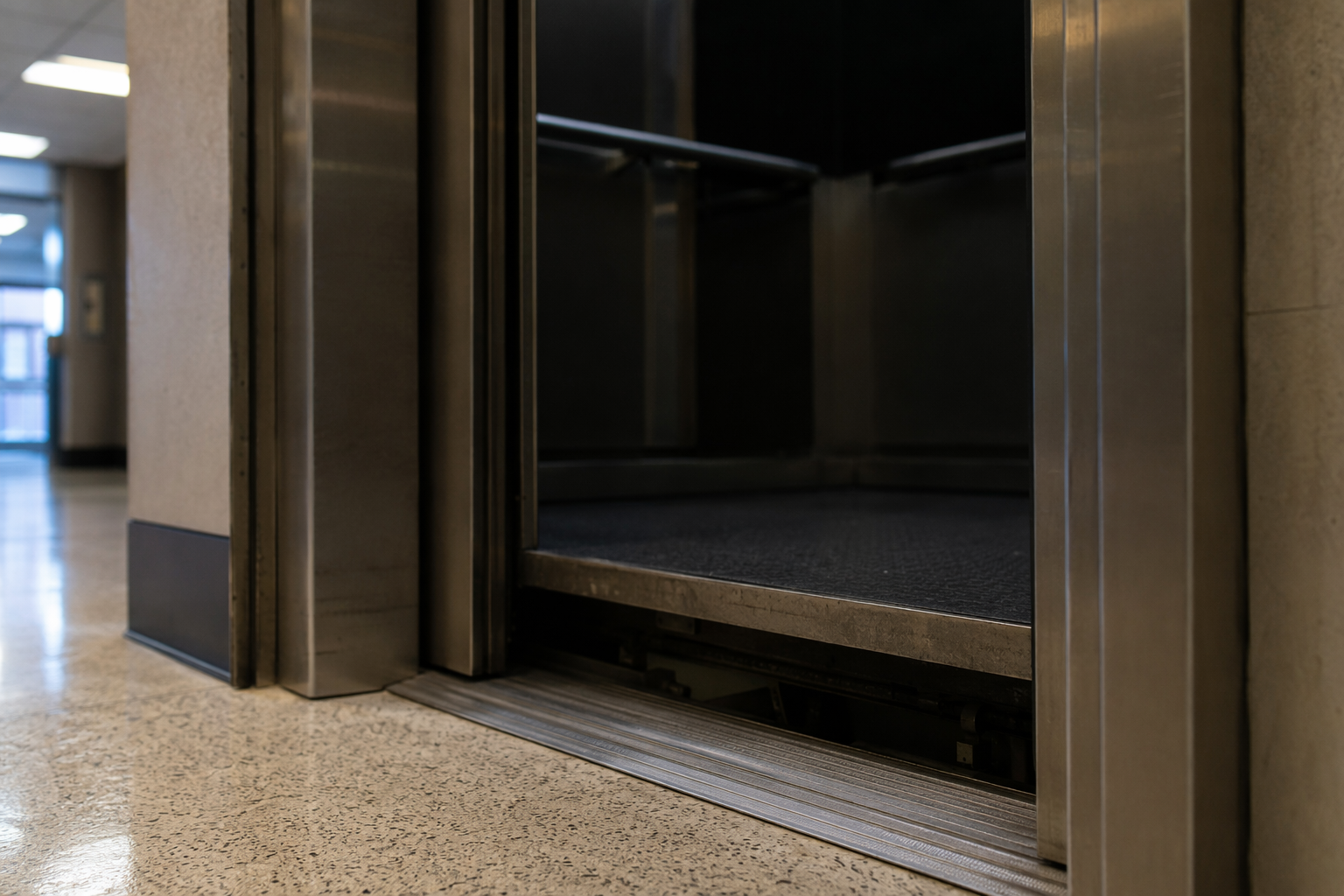
An elevator emergency is any condition that poses an immediate risk to passenger safety, results in an entrapment, or renders a building’s required vertical access non-functional in violation of applicable codes.
Emergency situations typically include passengers trapped between floors, doors that fail to open or close properly, unusual noises such as grinding or banging during operation, visible sparks or the smell of burning from the machine room, sudden free-fall or uncontrolled movement, and flooding of the elevator pit. Under ASME A17.1 Safety Code for Elevators and Escalators, elevators must be taken out of service immediately when any condition creates a hazard to life safety. Scottsdale building owners and property managers should not attempt to restore service independently when any of these conditions are present.
Secondary emergency conditions — those that may not endanger lives immediately but require urgent repair — include failed lighting inside the cab, non-functional emergency phones, malfunctioning leveling systems that create tripping hazards, and out-of-service hydraulic systems. Under ADA (Americans with Disabilities Act) requirements, an elevator that provides the only accessible path of travel to a floor must be repaired promptly to restore accessibility compliance.
What should building managers do immediately during an elevator emergency in Scottsdale?

The first priority is passenger safety — contact emergency services if anyone is trapped, then call a certified elevator repair company to dispatch a qualified technician.
- Call 911 if passengers are trapped. Scottsdale Fire Department is equipped to manage elevator entrapments and should be contacted before attempting any manual release without a licensed technician present.
- Do not force the doors open. Forcing elevator doors can dislodge a stranded car from a safe position and create a fall hazard into the hoistway.
- Communicate with trapped passengers. Use the building intercom or elevator emergency phone to reassure occupants, confirm help is on the way, and instruct them to stay calm and remain inside the car.
- Post the elevator out of service. Place visible signage on all floor landings to prevent other occupants from attempting to use the unit.
- Shut down the elevator if safely possible. If the machine room is accessible and conditions are safe, a trained building engineer may shut down power to prevent further mechanical damage — but only if no passengers are aboard.
- Call a certified elevator repair company. Contact Arizona Elevator Solutions or another licensed elevator contractor to dispatch a qualified technician for emergency repair.
- Document the incident. Record the time the failure occurred, any error codes displayed, and statements from witnesses — this supports regulatory reporting and insurance claims.
- Report to the Arizona Department of Occupational Safety and Health (ADOSH) if required. Certain elevator incidents involving injuries or entrapments may require formal incident reporting under OSHA and Arizona state regulations.
Who regulates elevator safety and emergency repairs in Arizona?
In Arizona, elevator safety and repair work is regulated by the Industrial Commission of Arizona (ICA) through its Elevator Safety Unit, which enforces compliance with the ASME A17.1 Safety Code.
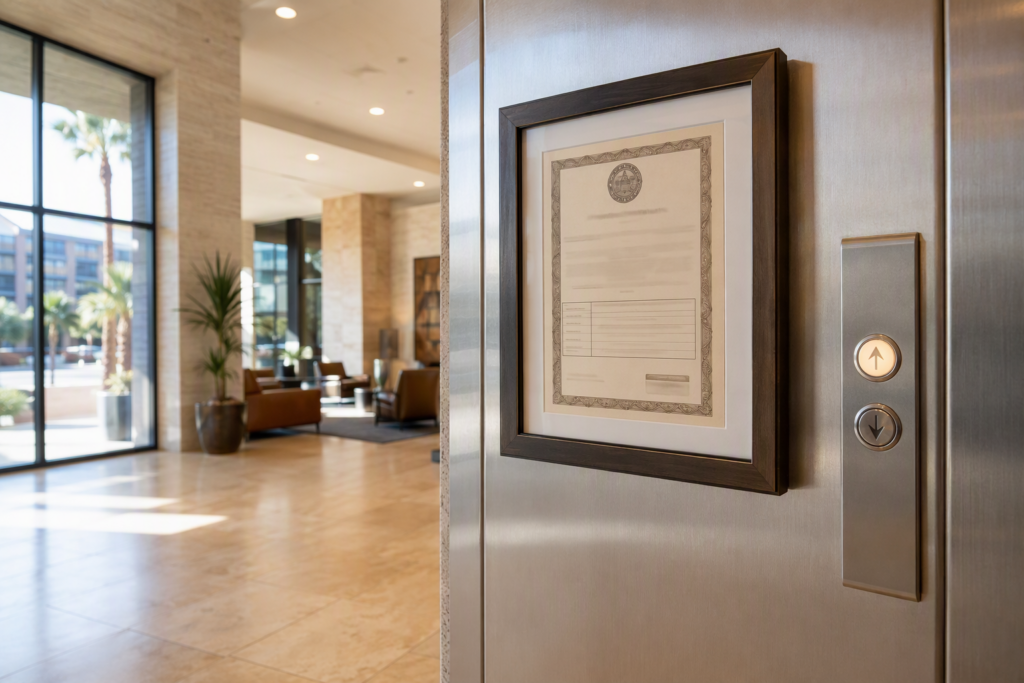
The Industrial Commission of Arizona requires that all elevator installation, alteration, and maintenance work be performed by licensed elevator contractors and qualified elevator mechanics. The state adopts ASME A17.1 Safety Code for Elevators and Escalators as its foundational technical standard for all vertical transportation equipment. In Scottsdale, the city may also conduct inspections through its Development Services Department, and certificates of inspection must be current and posted inside every elevator cab.
When an elevator is removed from service due to an emergency, the elevator contractor performing repairs must ensure the unit passes re-inspection before being returned to passenger service. Building owners who operate elevators without a valid certificate of inspection may face fines and liability exposure.
What are the most common causes of elevator emergencies in Scottsdale?
The most common causes of elevator emergencies in the Scottsdale area include door system failures, hydraulic fluid leaks, control system faults, and heat-related mechanical stress associated with Arizona’s extreme summer temperatures.
Scottsdale’s desert climate creates conditions that accelerate certain types of elevator wear. Prolonged high ambient temperatures — regularly exceeding 110°F in summer — can cause hydraulic fluid to thin and lose viscosity, lead to overheating of motor controllers and drive units, and accelerate degradation of rubber seals and buffers. Dust and airborne particulates common in the Phoenix metro region can infiltrate door tracks, sensors, and machine room ventilation systems, contributing to mechanical failures that become emergencies if left unaddressed.
Other frequent causes include aging equipment that has exceeded recommended maintenance intervals, deferred repair of known deficiencies, power surges and outages, and water intrusion into pits during monsoon season — a uniquely Arizona hazard that can damage hydraulic systems and create electrical hazards.
How quickly must an elevator be repaired after an emergency shutdown in Arizona?
There is no single statutory timeline mandating a specific number of hours for emergency elevator repair in Arizona, but building owners must act with reasonable urgency to restore safe operation and maintain ADA accessibility compliance.
Under ADA Title III requirements for places of public accommodation, temporary elevator outages are permitted only when repair is undertaken promptly and other means of access are provided where feasible. For multi-story commercial buildings in Scottsdale where an elevator is the only accessible route to upper floors, extended downtime creates legal risk under the ADA and potential civil liability. The Industrial Commission of Arizona may also require a reinspection before the unit returns to service, meaning emergency repairs must be completed by a licensed contractor who can coordinate that process.
Practically, building owners should contact a licensed elevator repair company such as Arizona Elevator Solutions as soon as an emergency condition is identified to minimize downtime and ensure all regulatory steps are completed correctly before the elevator resumes service.
What elevator components most often require emergency repair?
Door operators, hydraulic power units, safety devices, and control boards are the components most frequently involved in emergency elevator repairs.
| Component | Failure Mode | Risk Level | Relevant Standard |
|---|---|---|---|
| Door Operator / Safety Edge | Doors fail to open, close, or re-open on obstruction | High — entrapment and shear hazard | ASME A17.1 |
| Hydraulic Power Unit (HPU) | Fluid leak, pump failure, valve malfunction | High — uncontrolled descent risk | ASME A17.1 |
| Governor / Safety Device | Fails to arrest overspeed condition | Critical — free-fall hazard | ASME A17.1 |
| Control Board / Drive Unit | Fault codes, erratic movement, failure to respond | Medium-High — unpredictable operation | ASME A17.1 |
| Emergency Phone / Lighting | Non-functional communication or lighting in cab | Medium — life safety code violation | ASME A17.1 / ADA |
| Pit Sump / Waterproofing | Water intrusion, electrical short in pit | High — electrical hazard, corrosion | ASME A17.1 |
| Leveling System | Misleveling at floor — tripping hazard | Medium-High — slip/fall/ADA violation | ASME A17.1 / ADA |
| Buffers | Degraded or missing buffer — no deceleration at pit | Critical — impact hazard | ASME A17.1 |
Does Arizona require a licensed contractor for emergency elevator repair?
Yes — Arizona law requires that all elevator repair work, including emergency repairs, be performed by a licensed elevator contractor using qualified elevator mechanics; building staff and general maintenance personnel are not authorized to perform this work.
The Industrial Commission of Arizona enforces these licensing requirements under Arizona Revised Statutes. Performing elevator repair work without the appropriate license exposes the contractor and the building owner to significant legal and insurance liability. Under ASME A17.1 Safety Code for Elevators and Escalators, maintenance and repair work must be performed by individuals with specific training and knowledge of elevator systems. Arizona Elevator Solutions operates as a certified elevator service contractor serving Scottsdale, Pheonix, Tucson, and Mesa, ensuring all repair work meets state licensing and code requirements.
What is the difference between emergency elevator repair and routine maintenance?
Emergency elevator repair addresses sudden failures, safety hazards, or entrapments that require immediate intervention, while routine maintenance is scheduled preventive work performed to reduce the likelihood of failures occurring in the first place.
Routine maintenance under a comprehensive elevator service contract typically includes lubrication of moving parts, inspection and adjustment of door systems, testing of safety devices, examination of ropes or hydraulic components, and functional testing of emergency systems. This work is performed on a scheduled basis — monthly, quarterly, or annually — depending on the scope of the maintenance agreement and the type of equipment.
Emergency repair, by contrast, is reactive. A technician responds to a specific failure event, diagnoses the root cause, and restores the unit to safe operation. Emergency repairs may be covered under a full-service maintenance contract, or billed separately under a time-and-materials arrangement depending on the service agreement in place. Building owners in Scottsdale who do not have an active maintenance contract often face higher costs and longer resolution times for emergency situations because there is no pre-established service relationship or parts inventory associated with their specific unit.
Can a hydraulic elevator that has leaked fluid be repaired on an emergency basis?
Yes — hydraulic elevator fluid leaks are one of the most common emergency repair scenarios in Arizona, and a licensed elevator contractor can perform same-visit diagnosis and, in many cases, component-level repairs to restore safe operation.
Hydraulic elevators use a pressurized system in which fluid drives a piston or jack assembly to raise and lower the cab. When a leak occurs — whether at the power unit, underground jack, or above-ground cylinder — the elevator may lower slowly to the bottom floor (a condition sometimes called “bleeding down”), become trapped at an intermediate level, or refuse to travel upward. ASME A17.1 requires hydraulic systems to maintain proper fluid levels and mandates leak detection systems on many underground installations.
Arizona’s extreme heat accelerates fluid degradation and seal wear, making hydraulic leaks a recurring concern in the Scottsdale market. Emergency repair of a hydraulic elevator may involve resealing the power unit, replacing valve cartridges, repairing above-ground cylinder seals, or — in cases involving underground jack failure — a more extensive remediation process that requires additional planning and permitting. The elevator must pass a pressure test and functional inspection before returning to service.
What safety codes govern elevator emergency phone and lighting requirements?
Under ASME A17.1, every elevator cab must be equipped with a means of two-way communication and emergency lighting that activates automatically upon loss of normal power — these are not optional features and their failure constitutes a life safety code violation.
Specifically, ASME A17.1 Safety Code for Elevators and Escalators requires that elevator emergency phones connect to a location that is continuously staffed or uses an answering service capable of summoning assistance. The emergency phone must not require a coin to operate. Emergency lighting must provide sufficient illumination to allow passengers to safely use the elevator and must remain functional for a minimum duration upon power failure as specified in the code edition adopted by Arizona.
Additionally, ADA accessibility guidelines reference the need for visual and audible signals in elevator cabs to serve passengers with hearing or vision disabilities. When an emergency phone or lighting system fails, the elevator should be taken out of service and the deficiency corrected before passengers resume use.
How do Scottsdale’s extreme temperatures affect elevator reliability and emergency risk?
Phoenix metro and Scottsdale’s desert climate — with sustained summer temperatures exceeding 110°F — places elevated thermal stress on elevator mechanical and electronic systems, increasing the probability of heat-related failures compared to more temperate regions.
Machine rooms that lack adequate climate control are particularly vulnerable. When machine room temperatures rise, motor windings can overheat, drive units may trigger thermal shutdowns, and hydraulic fluid viscosity changes in ways that affect valve function and system pressure. Electronic control boards are sensitive to sustained heat exposure and may experience shortened service life or intermittent faults under high-temperature conditions.
Additionally, monsoon season — typically July through September in the Scottsdale area — introduces the risk of rapid pit flooding, which can damage hydraulic systems, corrode steel components, and create electrical hazards that trigger emergency shutdowns. Proactive maintenance scheduling around Arizona’s seasonal weather patterns is a recognized best practice for reducing emergency repair frequency. Arizona Elevator Solutions is familiar with the specific environmental challenges facing elevator equipment in the Scottsdale and greater Phoenix metro area.
What documentation is required after an emergency elevator repair in Arizona?
After completing emergency elevator repairs in Arizona, the licensed contractor must provide documentation of the work performed, and the elevator may require a state reinspection before returning to service depending on the nature of the repairs.
At minimum, the elevator repair contractor should provide a written service record describing the failure mode, the components repaired or replaced, the work performed, and confirmation that the unit was tested and found safe prior to return to service. This documentation supports the building owner’s maintenance log — which must be retained and made available to inspectors — as required under Arizona’s elevator safety regulations and consistent with ASME A17.1 record-keeping provisions.
If the emergency repair involved alterations to safety devices, replacement of major components, or any work that would be classified as an alteration under ASME A17.1, the elevator must be formally re-inspected and a new certificate of inspection issued by the Industrial Commission of Arizona before the unit is returned to service. Building owners should request written confirmation from their elevator contractor as to whether reinspection is required for the specific repairs performed.
How does ADA compliance factor into emergency elevator repair timelines?
When an elevator provides the only accessible means of reaching a floor in a Scottsdale building, the ADA requires that the building owner take prompt action to repair the elevator and, where possible, provide an interim accessible alternative during the outage.
Under ADA Title III, places of public accommodation must maintain accessible features in operable condition. While temporary outages for maintenance and repair are recognized, the law requires that these outages be addressed promptly. Extended elevator downtime in a building where the elevator is the sole accessible route to program areas or services can expose building owners to complaints filed with the U.S. Department of Justice or civil litigation by individuals with disabilities.
In Scottsdale’s commercial real estate environment — where medical offices, multi-story retail, and professional services buildings serve a broad cross-section of residents — elevator accessibility is a significant compliance concern. Engaging Arizona Elevator Solutions for prompt emergency repair helps building owners address both the technical and compliance dimensions of an elevator outage efficiently.
What questions should building owners ask an elevator repair company before authorizing emergency work?
Before authorizing emergency elevator repair work, building owners should verify that the contractor is licensed in Arizona, confirm the scope and cost structure of the proposed repair, and understand whether reinspection will be required before the elevator returns to service.
Key questions to ask include: Is your company licensed as an elevator contractor by the Industrial Commission of Arizona? Are your mechanics qualified under ASME A17.1 standards? Can you provide a written scope of work and parts list before beginning? Will this repair require a state reinspection, and will you coordinate that process? Is this repair covered under an existing maintenance contract or will it be billed on a time-and-materials basis? Do you carry liability insurance for elevator repair work?
Building owners should be cautious of any contractor who cannot answer these questions directly or who proposes to begin work without providing written authorization documents. Emergency situations create pressure to act quickly, but a few minutes spent verifying contractor credentials and scope of work can prevent significant problems down the line.
What is the process for returning an elevator to service after emergency repairs in Arizona?
After emergency repairs, the elevator contractor must perform a systematic functional test of all safety devices and operating systems, and — depending on the scope of work — coordinate a state inspection before the unit resumes passenger service.
- Complete all repairs. The licensed elevator mechanic completes the identified repair work in accordance with ASME A17.1 requirements and manufacturer specifications.
- Perform a no-load test. The technician runs the elevator through its full range of travel without passengers to verify basic mechanical function.
- Test all safety devices. Safety circuits, door reopening devices, emergency stop, emergency lighting, and emergency phone are all functionally tested.
- Conduct a load test if required. Depending on the nature of repairs, a load test may be required to verify structural and mechanical integrity under operational conditions.
- Review repair documentation. The contractor completes the service record and maintenance log entries.
- Determine reinspection requirement. The contractor advises the building owner whether the repair scope triggers a mandatory state reinspection under Arizona ICA rules.
- Schedule state reinspection if required. If reinspection is needed, the contractor or building owner contacts the Industrial Commission of Arizona to schedule the inspection before passengers use the elevator.
- Return the elevator to service. Once all tests are satisfactory and any required inspection has been passed, the elevator is returned to normal service and out-of-service signage is removed.
How can building owners in Scottsdale reduce the risk of elevator emergencies?
The most effective strategy for reducing elevator emergencies in Scottsdale is maintaining a comprehensive preventive maintenance contract with a licensed elevator service company, combined with proactive monitoring and seasonal preparation for Arizona’s extreme climate conditions.
Preventive maintenance conducted according to a structured schedule — and aligned with ASME A17.1 Safety Code for Elevators and Escalators requirements — allows technicians to identify and correct developing faults before they become emergency failures. Items such as worn door contacts, fraying ropes, degraded hydraulic seals, and overheating drive units can often be detected and addressed during routine service visits.
Building owners in Scottsdale should also ensure that machine rooms are climate-controlled and maintain appropriate ventilation, that elevator pits have functional sump systems ahead of monsoon season, and that all emergency systems — phones, lighting, and backup power — are tested regularly. Staff should be trained to recognize early warning signs of elevator problems and to report concerns to their elevator service provider promptly rather than waiting for a failure to occur.
Are there specific ASME A17.1 inspection intervals that apply to Scottsdale elevators?
Yes — ASME A17.1 establishes required inspection and testing intervals for various elevator types and safety components, and Arizona adopts these as the regulatory baseline for all elevator equipment in the state, including Scottsdale.
Under ASME A17.1 Safety Code for Elevators and Escalators, periodic inspections of elevator equipment are required at intervals specified by the code edition in force in the jurisdiction. Arizona’s regulatory framework, administered by the Industrial Commission of Arizona, establishes inspection frequency requirements for different elevator types and mandates specific testing cycles for safety components such as governors, safeties, oil buffers, and pressure-relief valves. These tests must be performed by or witnessed by a qualified elevator inspector and documented in the elevator’s maintenance records.
Building owners who are uncertain about the current inspection status of their elevator equipment should verify that a valid certificate of inspection is posted inside the cab and contact their elevator service provider to review their maintenance records. Operating an elevator with an expired inspection certificate in Arizona is a violation that carries potential fines and liability consequences.
What types of buildings in Scottsdale are most dependent on emergency elevator repair services?
Medical facilities, multi-story hotels, senior living communities, commercial office buildings, and multi-family residential properties in Scottsdale are among the building types most critically dependent on rapid emergency elevator repair due to occupancy needs and ADA accessibility obligations.
Medical office buildings and outpatient facilities often serve patients with limited mobility for whom stairs are not a viable alternative — an elevator outage in these settings creates an immediate patient access crisis. Senior living communities face similar challenges, as many residents are wholly dependent on elevator access for daily function within their building.
High-occupancy hotels and resorts — a significant segment of the Scottsdale commercial real estate market — face reputational and operational consequences from elevator outages that affect guest experience. Multi-tenant commercial office buildings must consider the ADA accessibility implications of elevator downtime for tenants and their clients. In all of these settings, having a relationship with a responsive, licensed elevator service contractor before an emergency occurs is essential to managing incidents effectively.
What is the difference between a full-service elevator maintenance contract and a time-and-materials emergency repair arrangement?
A full-service maintenance contract typically covers scheduled preventive maintenance visits and many repair situations under a fixed monthly or annual fee, while a time-and-materials arrangement bills emergency repair labor and parts at prevailing rates without a pre-negotiated scope.
Under a comprehensive full-service contract, the elevator service company performs scheduled maintenance visits, maintains familiarity with the specific equipment installed in the building, and may include certain repair labor and common parts within the contract scope. This arrangement generally results in faster response for emergencies because the service provider already has equipment history and parts familiarity for that unit.
Time-and-materials arrangements, sometimes used by building owners who do not have a maintenance contract in place, involve billing for technician labor hours and the cost of parts consumed during the repair visit. While this model provides flexibility, it typically results in higher costs for emergency situations and may involve longer diagnostic time if the technician is unfamiliar with the equipment. Building owners evaluating their elevator service arrangements should weigh these trade-offs in the context of their equipment age, usage volume, and occupancy profile. Arizona Elevator Solutions offers service arrangements designed to fit the needs of commercial and multi-family properties across Scottsdale and the greater Phoenix metro area.
How does Arizona Elevator Solutions approach emergency elevator repair in Scottsdale?
Arizona Elevator Solutions is a certified elevator service company serving Scottsdale, Phoenix, Tucson, and Mesa, providing emergency repair services performed by qualified elevator mechanics in compliance with ASME A17.1 and Arizona state licensing requirements.
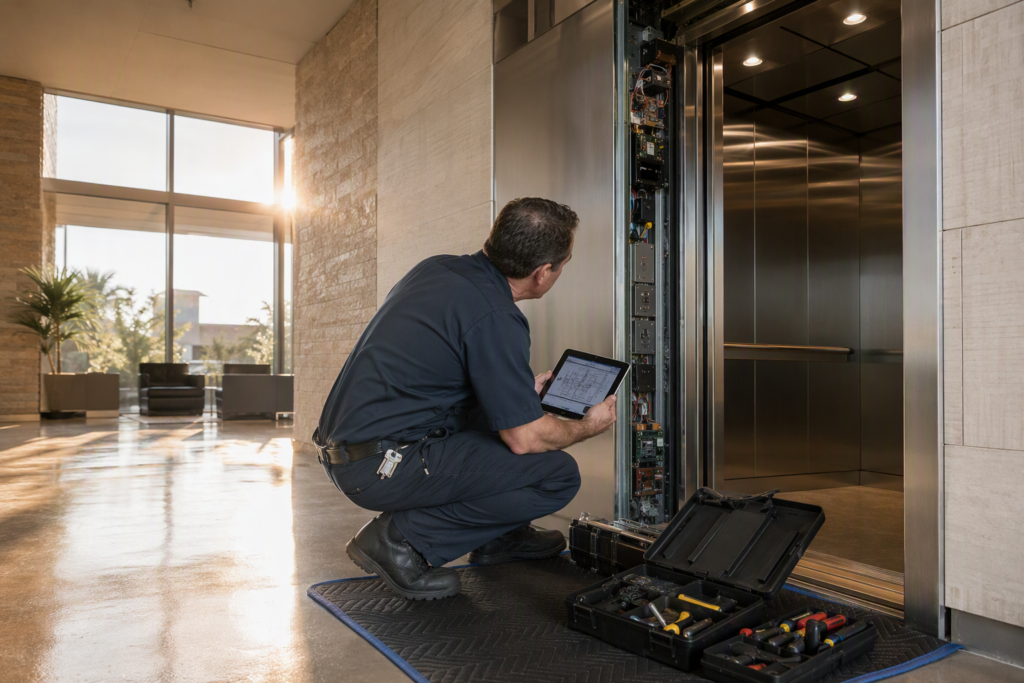
The company’s approach to emergency elevator repair prioritizes accurate diagnosis, code-compliant repair methods, and clear communication with building owners and property managers throughout the repair process. Technicians dispatched for emergency calls are trained to work safely in elevator hoistways and machine rooms, carry documentation of applicable licensing, and follow established protocols for returning elevators to service safely. Arizona Elevator Solutions coordinates with the Industrial Commission of Arizona for any reinspection requirements that arise from emergency repair work, reducing the administrative burden on building owners.
Building owners and property managers in Scottsdale who want to establish a service relationship before an emergency occurs — rather than searching for a contractor in a crisis — are encouraged to contact Arizona Elevator Solutions to discuss maintenance and emergency service arrangements for their specific equipment.
Need elevator service you can rely on? Arizona Elevator Solutions is ready to help.