Top Rated Elevator Maintenance Company in Scottsdale: Complete FAQ Guide
Finding a reliable, code-compliant elevator maintenance provider in Scottsdale requires more than a quick online search. This comprehensive FAQ guide answers the most common questions building owners, property managers, HOA boards, and facility directors ask when evaluating elevator service companies — covering compliance codes, inspection schedules, maintenance contracts, equipment types, and what separates a top-rated provider from an average one.
What makes an elevator maintenance company “top rated” in Scottsdale, AZ?
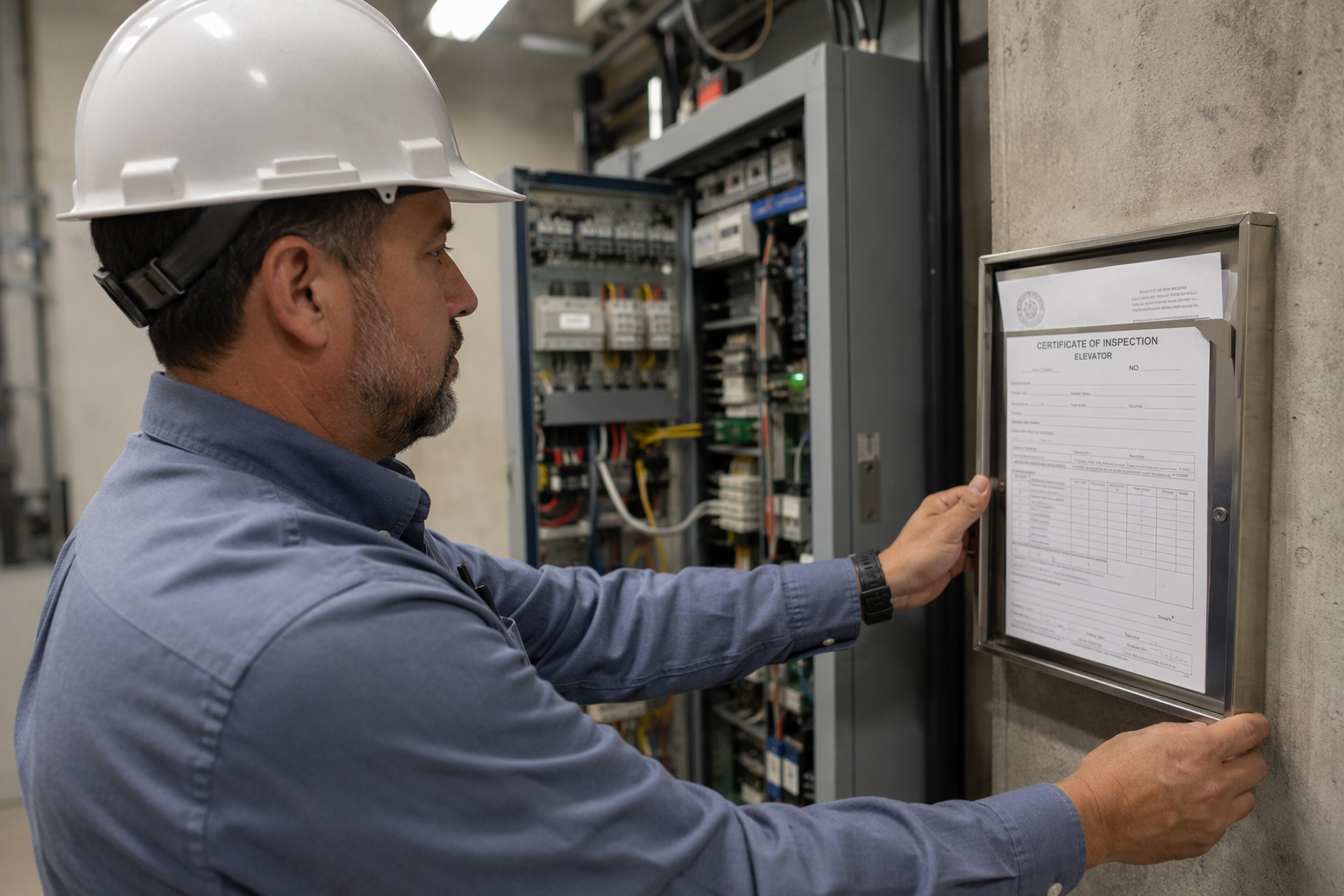
A top-rated elevator maintenance company in Scottsdale demonstrates verified code compliance, comprehensive preventive maintenance programs, transparent service documentation, and a deep understanding of Arizona-specific inspection requirements and the desert climate conditions that affect elevator components.
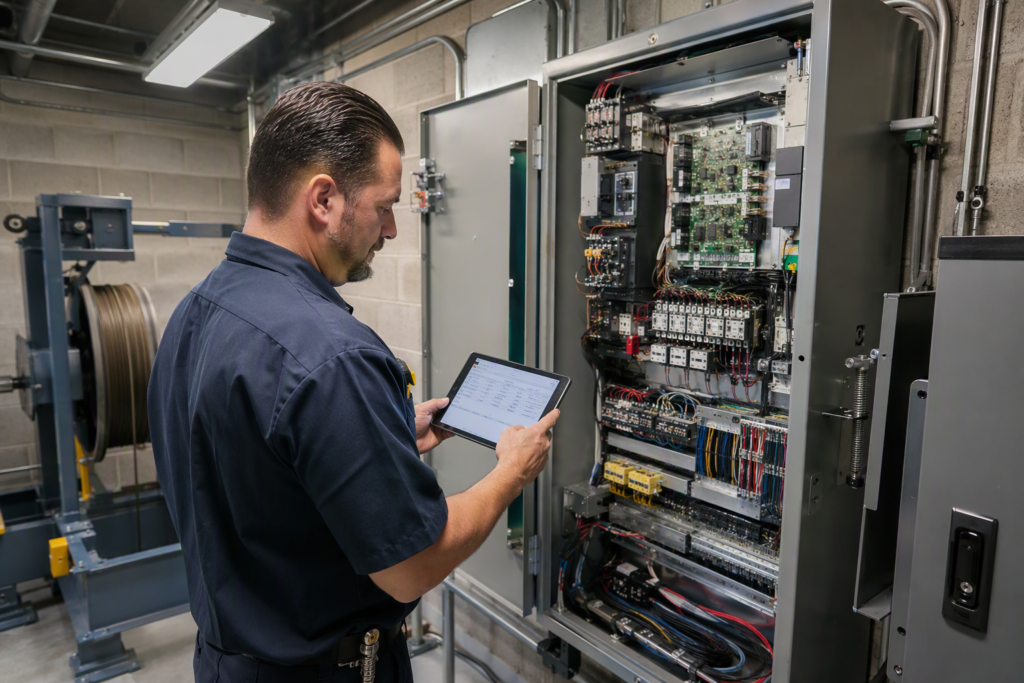
Top-rated providers go beyond reactive repair. They offer structured preventive maintenance agreements (PMAs) that address lubrication, safety device testing, controller diagnostics, and hydraulic fluid management on a defined schedule. They also maintain familiarity with ASME A17.1 Safety Code for Elevators and Escalators requirements and communicate clearly with property owners about upcoming code changes, inspection deadlines, and repair priorities.
Arizona Elevator Solutions is recognized in Scottsdale for combining technical expertise with detailed service reporting, ensuring every client understands exactly what work was performed and why.
How often do elevators in Scottsdale need to be inspected?
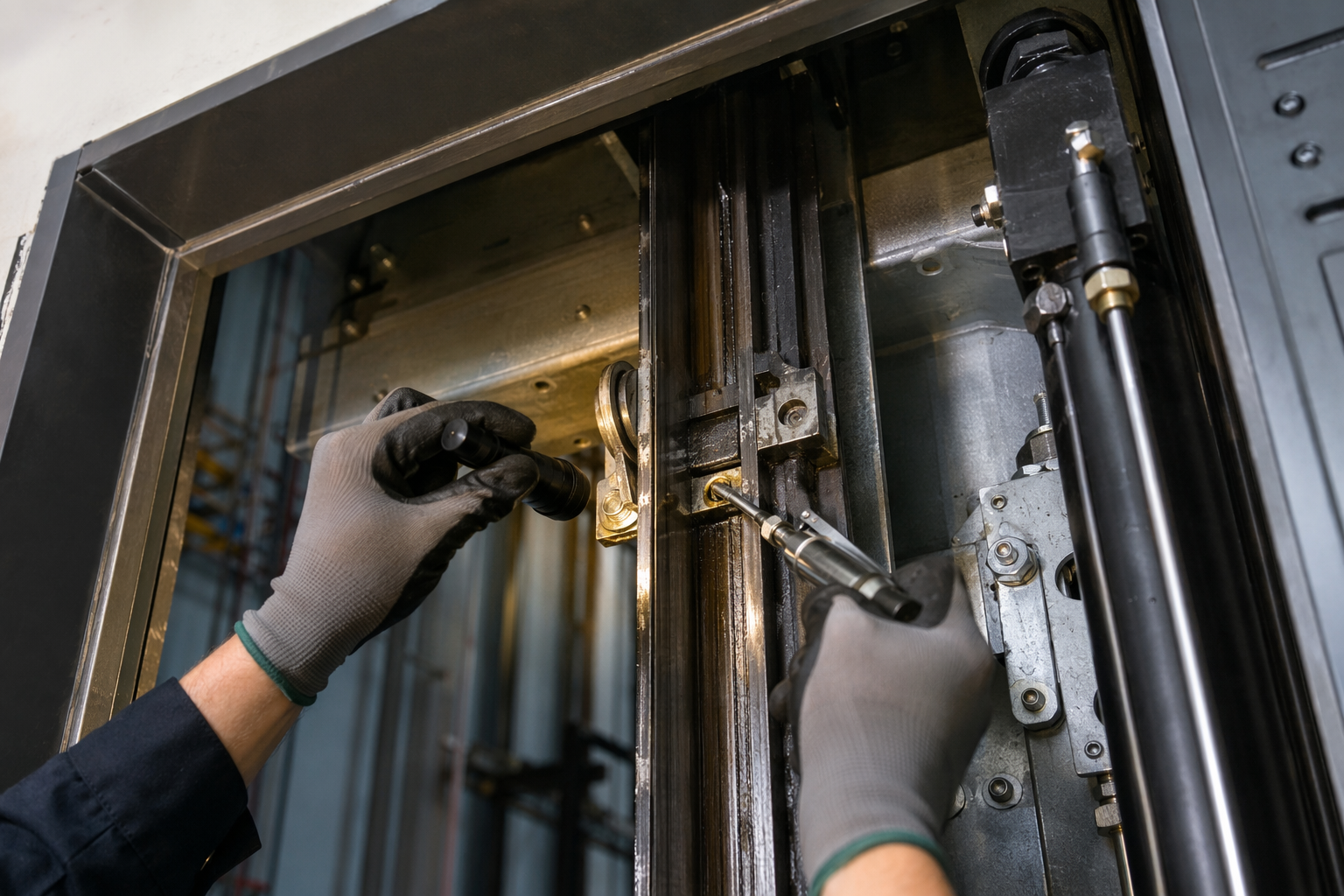
In Arizona, elevators are required to undergo periodic inspections as mandated by state regulations and aligned with ASME A17.1 Safety Code for Elevators and Escalators, which specifies routine inspection and testing intervals for different elevator categories.
Arizona falls under state-level elevator safety oversight, and most commercial and public-use elevators require annual safety inspections at minimum. Hydraulic elevators, traction elevators, and limited-use/limited-application (LULA) elevators may have differing testing requirements — for example, full-load pressure tests and safety device checks occur on cycles defined within ASME A17.1. Property managers in Scottsdale should maintain a current Certificate of Inspection posted in or near the elevator cab, which is the visible proof of compliance.
Preventive maintenance visits between inspections — typically monthly or quarterly depending on the unit’s usage volume — are essential to keep elevators in safe operating condition and to avoid deficiency citations during official inspections.
What is covered in a standard elevator preventive maintenance agreement?
A standard elevator preventive maintenance agreement (PMA) covers systematic inspection and servicing of all major mechanical, electrical, hydraulic, and safety systems to prevent failures and maintain code compliance.
Typical scope of a well-structured PMA includes:
- Lubrication of guide rails, roller guides, and mechanical linkages
- Inspection and adjustment of door operators, door contacts, and safety edges
- Controller diagnostics and fault code review
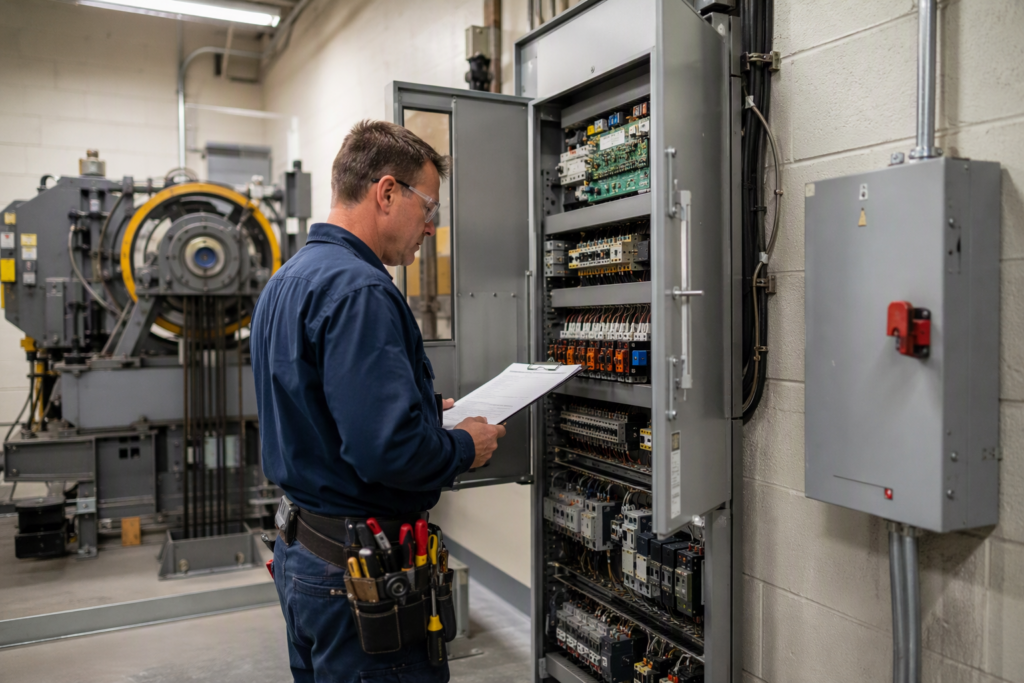
- Hydraulic fluid level checks, pump unit inspection, and seal condition assessment
- Safety device testing including governor, safeties, buffers, and overspeed devices
- Pit sump pump inspection and pit condition review
- Emergency lighting, phone, and alarm system testing
- Leveling accuracy and ride quality adjustment
- Review of all code-required signage and capacity placards
PMAs from quality providers also include written service reports after every visit, giving property owners documentation for their records and a clear audit trail for inspectors.
What elevator safety codes apply to buildings in Scottsdale, AZ?
Buildings in Scottsdale must comply with the ASME A17.1 Safety Code for Elevators and Escalators, ADA (Americans with Disabilities Act) accessibility standards, and Arizona state elevator safety statutes administered through the Arizona Office of Occupational Safety and Health (ADOSH), which operates under OSHA guidelines for workplace safety.
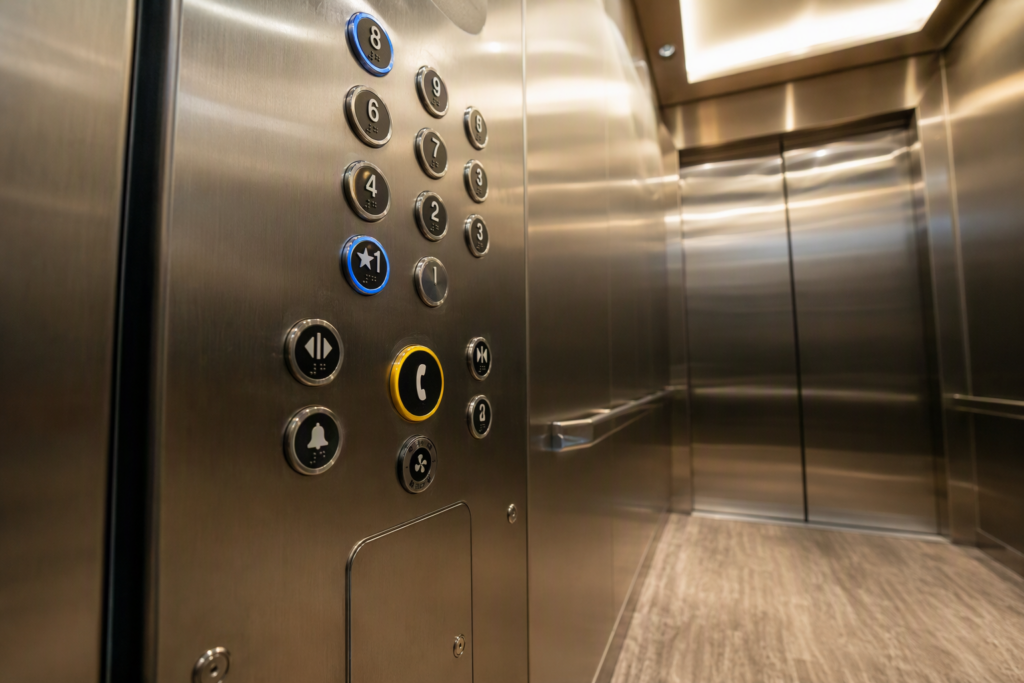
ASME A17.1 is the primary technical standard governing elevator design, construction, installation, operation, inspection, testing, maintenance, alteration, and repair. The 2022 edition (current as of 2026) establishes requirements that Arizona’s adopted code references. ADA standards require that elevators in multi-story buildings serving the public meet specific cab dimensions, control panel heights, braille signage, audible signals, and door timing requirements. ADOSH has authority over elevator safety in Arizona workplaces and requires that elevators be maintained in compliance with adopted codes.
Building owners who fail to maintain current inspections or address cited deficiencies risk fines, mandatory shutdowns, and liability exposure in the event of an incident.
How does Scottsdale’s desert climate affect elevator maintenance needs?
Scottsdale’s extreme heat, low humidity, dust, and monsoon-season particulate conditions accelerate wear on elevator components including hydraulic seals, lubricants, electrical insulation, and door tracks, making climate-aware maintenance protocols essential for reliable operation.
Hydraulic elevator systems are particularly sensitive to temperature extremes. High ambient temperatures can cause hydraulic fluid viscosity to drop, increasing internal leakage past cylinder seals and reducing stopping accuracy. Lubricants on guide rails and mechanical components can thin or oxidize more rapidly in sustained high heat. Dust infiltration — especially during haboob events — can contaminate pit environments, foul safety sensors, and accelerate wear on rollers and contacts. A maintenance provider experienced in the Scottsdale market understands these local factors and adjusts service intervals, fluid specifications, and component inspection priorities accordingly.
What types of elevators does a full-service Scottsdale maintenance company service?
A full-service elevator maintenance company in Scottsdale should be equipped to service hydraulic elevators, traction (cable) elevators, machine-room-less (MRL) traction systems, LULA elevators, and residential platform lifts and vertical platform lifts (VPLs).
| Elevator Type | Common Application | Key Maintenance Considerations | Applicable Code Standard |
|---|---|---|---|
| Hydraulic (In-Ground) | Low-rise commercial, retail | Cylinder integrity, fluid leaks, seal condition, heat effects | ASME A17.1 |
| Hydraulic (Holeless) | Mid-rise residential, office | Telescoping jack inspection, oil management, pit conditions | ASME A17.1 |
| Traction (Geared) | Mid-rise commercial | Gearbox lubrication, sheave wear, rope tension, brake adjustment | ASME A17.1 |
| Traction (Gearless/MRL) | High-rise, modern buildings | PMSM motor diagnostics, VFD controller, remote monitoring | ASME A17.1 |
| LULA Elevator | Small commercial, churches, schools | Limited travel safety devices, door sensitivity, ADA clearances | ASME A17.1 / ADA |
| Vertical Platform Lift (VPL) | Residential, accessibility compliance | Mechanical actuator, platform safety, environmental exposure | ASME A17.1 / ADA |
What questions should a Scottsdale property manager ask when hiring an elevator maintenance company?
Property managers should ask prospective elevator maintenance companies about their familiarity with Arizona state inspection requirements, the structure of their maintenance agreements, documentation practices, parts availability, and how they handle code-required safety device testing.
A thorough vetting conversation should include:
- What maintenance agreement tiers do you offer, and what is explicitly included versus excluded?
- Do you provide written service reports after every visit?
- How do you handle inspection scheduling and coordination with state inspectors?
- What is your process when a safety deficiency is found during maintenance?
- Are your technicians trained and familiar with the specific makes and models installed in our building?
- How do you manage parts sourcing and what is your process for hard-to-find components?
- Do you offer any form of remote monitoring or predictive maintenance capability?
Arizona Elevator Solutions welcomes this level of scrutiny and encourages prospective clients to compare service scope carefully before committing to a maintenance contract.
How do I know if my Scottsdale building’s elevator is out of compliance?
An elevator is likely out of compliance if the posted Certificate of Inspection is expired, if the state inspection has identified uncorrected deficiencies, if ADA-required features such as accessible controls or audible signals are missing or non-functional, or if safety devices have not been tested within required intervals.
Common compliance gaps found in Scottsdale commercial buildings include expired inspection certificates, inoperable emergency lighting or emergency communication systems (required under ASME A17.1), non-compliant door reopening device sensitivity, and outdated or missing accessibility features required under the ADA. Building owners who have purchased a property or inherited an elevator maintenance situation should commission a full compliance audit before signing a maintenance agreement, so all baseline deficiencies are identified and assigned clear responsibility.
What is the difference between a full-maintenance contract and a lubrication-and-examination (oil and grease) contract?
A full-maintenance contract covers virtually all parts and labor required to keep an elevator operational, while a lubrication-and-examination contract covers only routine servicing visits — leaving the building owner responsible for all parts and repair costs when components fail.
The distinction is critical for budget planning. Under a full-maintenance (or “comprehensive”) agreement, the service company absorbs the cost of most replacement parts and corrective labor when components wear out or fail, incentivizing the provider to perform thorough preventive work. Under an oil-and-grease or examination-only contract, every repair beyond basic lubrication is billed separately, which can result in unpredictable and significant expenses. Mid-tier agreements — sometimes called “parts included” contracts — fall between these extremes and specify exactly which parts categories are covered. Property owners should review contract language carefully and request a clear list of what is and is not included.
What happens during an Arizona state elevator inspection?
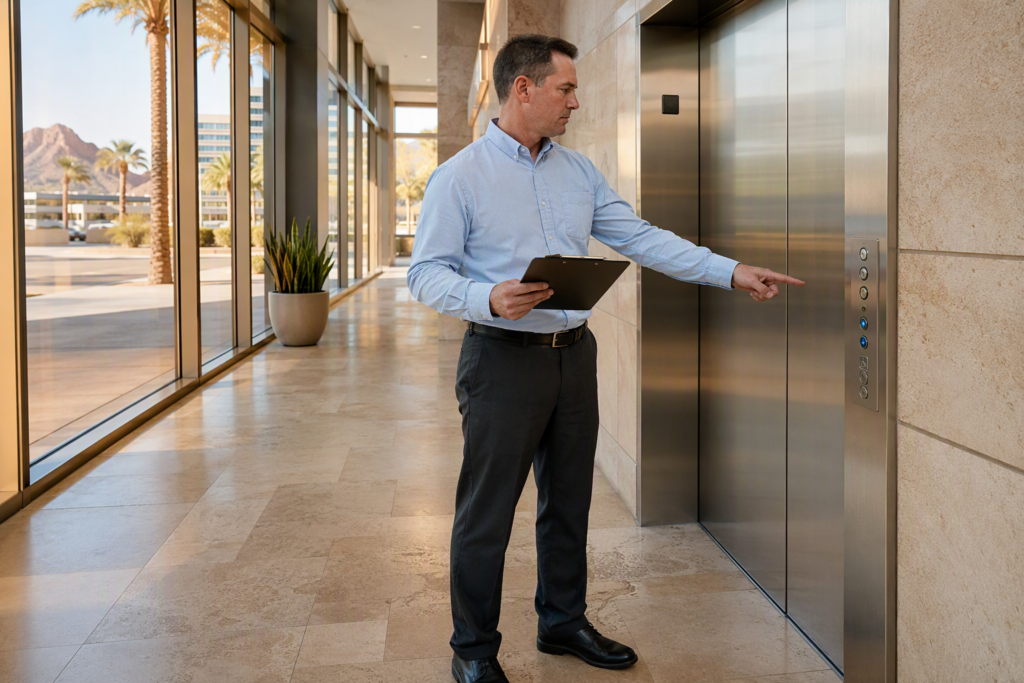
During an Arizona state elevator inspection, a licensed inspector verifies that the elevator’s installation, operation, and safety systems conform to the adopted edition of ASME A17.1 and conducts operational tests of all required safety devices, door systems, and emergency features.
The inspector will typically review machine room conditions, examine the pit for proper clearances, standing water, and lighting, test the governor and safety mechanisms, verify emergency communication function, check door reopening device operation, and confirm that all required signage and capacity placards are posted and legible. Upon passing inspection, a new Certificate of Inspection is issued and must be posted in the elevator cab or immediately adjacent to it. If deficiencies are found, the inspector issues a written notice specifying the required corrections and a deadline for compliance — after which a follow-up inspection confirms the items have been addressed.
How should building management respond if an elevator breaks down or traps passengers?
When a breakdown or entrapment occurs, building management should immediately contact emergency services if passengers are trapped, then follow a defined protocol to secure the area, notify the elevator service company, and document the incident for compliance and liability purposes.
- If passengers are reported or believed to be trapped in the cab, call 911 immediately. Only trained rescue personnel or elevator technicians should attempt to free trapped passengers.
- Place the elevator out of service by disabling access at each landing — use barrier tape, cones, or locked corridor doors to prevent others from attempting to use the unit.
- Contact your elevator maintenance company to report the breakdown and request a service call, providing the elevator’s location, nature of the malfunction, and any error codes displayed on the controller panel if accessible.
- Do not allow untrained building staff to enter the pit, machine room, or hoistway for any reason.
- Document the time of failure, circumstances, and any witness accounts in writing.
- Once the technician has assessed and repaired the unit, obtain a written description of the cause and the corrective action taken before returning the elevator to service.
- Evaluate whether the incident indicates a systemic issue that warrants increased maintenance frequency or a component replacement.
What should I expect to pay for elevator maintenance in Scottsdale?
Elevator maintenance costs in Scottsdale vary based on elevator type, age, usage volume, number of stops, contract tier, and current condition — making direct price comparisons difficult without a site assessment.
Rather than quoting figures that may not apply to a specific installation, property owners are best served by requesting detailed proposals from multiple providers that specify exactly what is included. Key cost drivers include the elevator’s drive type (hydraulic vs. traction), the number of landings served, equipment age and parts availability, and whether the building requires compliance remediation work before a maintenance agreement can begin. A provider offering an unusually low price should be scrutinized carefully — the savings often reflect reduced visit frequency, exclusions on parts, or less thorough safety device testing. Arizona Elevator Solutions offers transparent, itemized proposals so clients can make informed comparisons.
How does remote monitoring technology improve elevator maintenance outcomes?
Remote monitoring systems provide continuous real-time data on elevator performance, fault codes, door cycle counts, and system anomalies, enabling maintenance providers to identify developing problems before they become failures — reducing unplanned downtime and improving safety outcomes.
Modern elevator controllers in traction and MRL systems often include built-in connectivity or can be retrofitted with IoT monitoring modules. These systems log fault events, track component operational cycles, and in some configurations can alert technicians automatically when pre-defined thresholds are exceeded. For high-traffic buildings in Scottsdale — such as medical offices, luxury residential towers, or hospitality properties — remote monitoring is increasingly considered a best practice. When evaluating maintenance providers, ask whether remote monitoring integration is available and how fault data is incorporated into their maintenance decision-making process.
What ADA requirements apply to existing elevators in Scottsdale commercial buildings?
Existing elevators in commercial buildings must meet ADA accessibility requirements as a condition of the Act’s barrier removal obligations, including specific cab dimensions, control button specifications, braille and raised character signage, audible and visible floor indicators, and door timing standards.
ADA Title III requires places of public accommodation to remove barriers to accessibility where doing so is readily achievable. For elevators, this means ensuring that call buttons are within accessible reach ranges, that cab controls comply with mounting height and tactile labeling requirements, that floor arrival chimes and visual indicators function properly, and that door reopening devices respond to obstruction without excessive force. Elevators installed or significantly altered after specific ADA effective dates are held to more stringent new construction standards. Property owners unsure of their current ADA compliance status should commission a documented accessibility audit as part of any maintenance program review.
How do I evaluate elevator maintenance proposals from competing companies in Scottsdale?
Evaluating competing elevator maintenance proposals requires comparing scope of included services, visit frequency, parts coverage, documentation practices, emergency response provisions, and contract termination terms — not simply comparing the quoted price.
A structured evaluation should examine each proposal against these criteria:
- Visit frequency: How many maintenance visits per year are included, and what work is performed at each?
- Parts coverage: Which parts categories are included, and which are explicitly excluded?
- Safety testing: Does the proposal specify testing of governor, safety devices, buffers, and other ASME A17.1-required tests?
- Documentation: Are written service reports provided after each visit?
- Inspection coordination: Does the company assist with state inspection scheduling and compliance documentation?
- Contract terms: What are the cancellation terms, automatic renewal clauses, and provisions for price escalation?
- Emergency provisions: What is the protocol when an elevator fails outside of normal business hours?
What is the typical process for elevator modernization versus ongoing maintenance?
Elevator modernization involves replacing outdated mechanical, electrical, or safety systems with current-code compliant components, while ongoing maintenance preserves and extends the operational life of existing systems — with modernization often triggered when maintenance costs escalate or systems can no longer be brought into compliance.
Signs that modernization may be warranted rather than continued maintenance investment include: frequent recurring failures in the same system components, inability to source replacement parts for obsolete controllers or drives, persistent code deficiencies that cannot be corrected on existing equipment, and ride quality or leveling performance that cannot be improved through adjustment alone. Modernization projects must comply with the edition of ASME A17.1 and ADA requirements in force at the time of the alteration. A qualified maintenance provider can help building owners assess whether investment in modernization delivers better long-term value than continued repair of aging systems.
How can Scottsdale HOAs and multi-family property managers best manage elevator compliance?
Scottsdale HOAs and multi-family property managers can best manage elevator compliance by establishing a structured maintenance agreement with a qualified provider, maintaining organized records of all inspections and service visits, budgeting for periodic modernization, and assigning a designated compliance contact responsible for tracking certificate expiration dates.
Multi-family communities with elevators — including high-rise condominiums, senior living communities, and mid-rise apartment complexes — often carry elevated liability exposure because the elevator serves a large and potentially vulnerable resident population. Boards and property managers should treat elevator maintenance not merely as a mechanical service but as a core risk management function. Key administrative best practices include keeping copies of all Certificates of Inspection and service reports in a dedicated facility file, setting calendar reminders for inspection renewal dates, and ensuring that any change of management vendor includes a documented elevator file handoff. Arizona Elevator Solutions works with HOA boards and property management firms throughout Scottsdale and the greater Phoenix metro to establish sustainable compliance programs.
What role does elevator maintenance play in building insurance and liability management?
Documented, consistent elevator maintenance is a material factor in building insurance underwriting and is often a prerequisite for liability coverage, as insurers assess elevator condition and compliance history when evaluating risk for commercial and multi-family properties.
In the event of an elevator-related injury or incident, the building owner’s ability to demonstrate a consistent record of professional maintenance, timely correction of deficiencies, and current state inspection certification is critical to a defensible liability position. Gaps in maintenance records, expired inspection certificates, or documented deficiencies left uncorrected are significant liabilities in litigation. Property owners should ensure their maintenance agreement includes service report documentation and retain all records for a period consistent with their legal counsel’s guidance. Some insurers require evidence of a current, active maintenance agreement as a policy condition for coverage of elevator-related claims.
How does Arizona Elevator Solutions approach new client onboarding in Scottsdale?
A reputable elevator maintenance company typically begins new client relationships with a thorough baseline assessment of the elevator’s current mechanical condition, code compliance status, and documentation history before proposing a maintenance agreement.
Arizona Elevator Solutions approaches new Scottsdale clients by conducting a detailed on-site evaluation of each elevator unit to identify existing deficiencies, assess component wear, and review available service history. This allows the company to propose a maintenance agreement that accurately reflects the unit’s needs rather than a one-size-fits-all package. The assessment also establishes a documented baseline condition that protects both the client and the service company by clearly delineating pre-existing issues from those that arise during the maintenance relationship. Clients receive a written summary of findings and a clear explanation of any compliance items that require attention prior to or alongside the maintenance program.
What distinguishes Arizona Elevator Solutions from other elevator maintenance companies serving Scottsdale?
Arizona Elevator Solutions distinguishes itself through a combination of comprehensive service scope, transparent documentation, familiarity with Arizona regulatory requirements, and a regional focus on Phoenix, Scottsdale, Tucson, and Mesa that enables consistent, accountable service delivery across each market.
While many national elevator service companies serve Scottsdale through regional dispatch centers, Arizona Elevator Solutions operates with a concentrated focus on the Arizona market, meaning technicians are familiar with local inspection authority requirements, regional climate factors, and the specific building stock common to Scottsdale’s commercial corridors, resort properties, medical campuses, and luxury residential communities. The company’s service model emphasizes preventive work over reactive repair, detailed written reporting, and proactive communication with property owners about code developments and equipment aging trends. For building owners evaluating providers, Arizona Elevator Solutions welcomes side-by-side comparison of service scope, documentation standards, and client references.
Get a Free Elevator Assessment for Your Scottsdale Property
Whether you manage a commercial office building, a multi-family residential community, a hospitality property, or a medical facility in Scottsdale, maintaining your elevator to current code standards is a non-negotiable responsibility. Deferred maintenance, expired inspections, and unaddressed deficiencies create safety risks, liability exposure, and the potential for costly emergency repairs.
Contact Arizona Elevator Solutions for a free elevator assessment. A qualified representative will evaluate your elevator’s current condition, review your compliance documentation, and provide a clear, transparent maintenance proposal tailored to your specific equipment and usage requirements. Arizona Elevator Solutions serves Scottsdale, Phoenix, Tucson, and Mesa, AZ.
Call today: 480-557-7600
Need elevator service you can rely on? Arizona Elevator Solutions is ready to help.