Failed an Elevator Inspection in Arizona? Here’s How to Get Back into Compliance
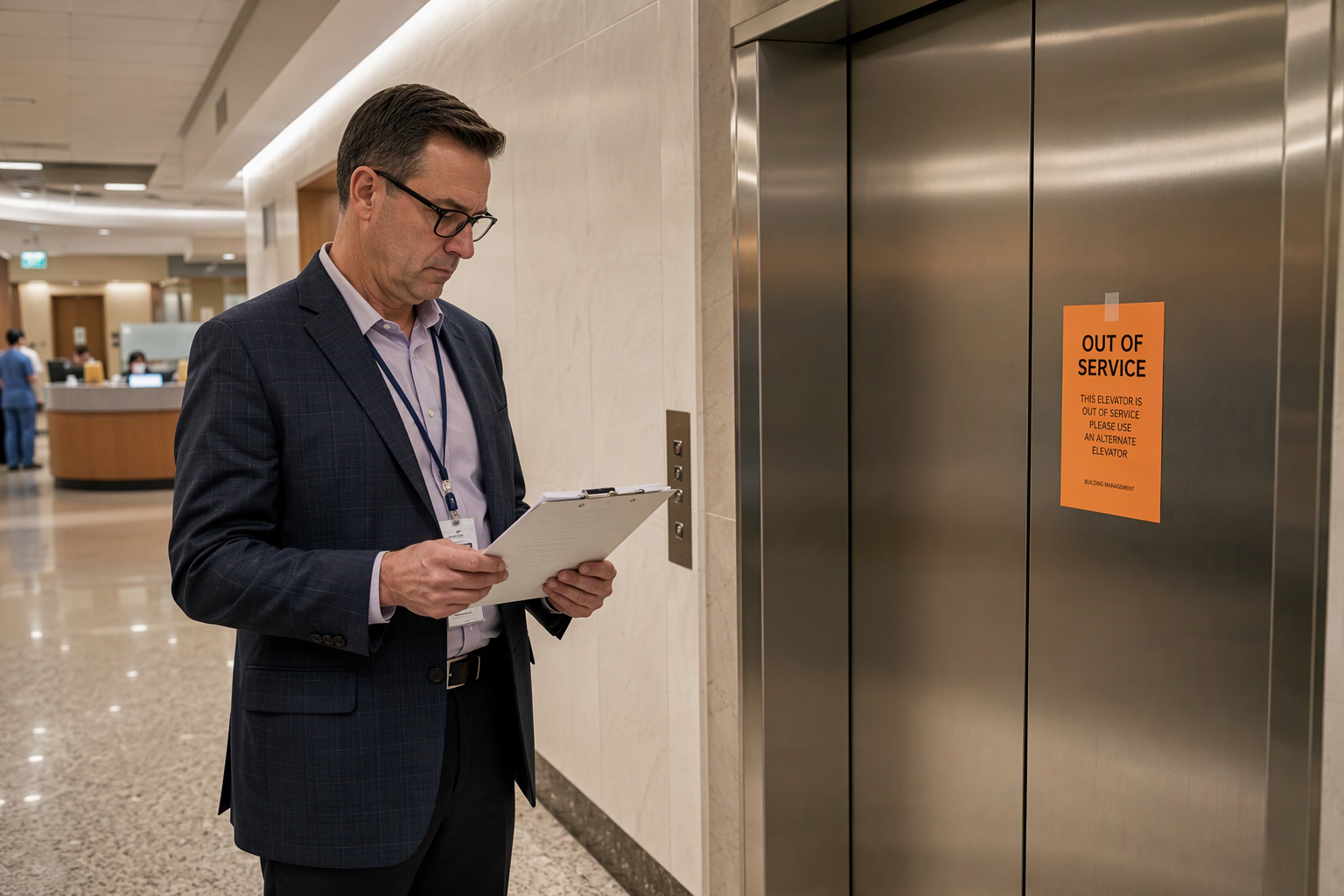
For healthcare facilities in Phoenix, Tucson, Scottsdale, and Mesa, a failed elevator inspection creates an urgent compliance and patient-safety problem. Hospitals, medical office buildings, outpatient surgery centers, and skilled nursing facilities depend on vertical transportation for patients who cannot use stairs. Understanding exactly what Arizona law requires—and what happens next—helps administrators move quickly and confidently.
What Does a Failed Elevator Inspection Mean in Arizona?
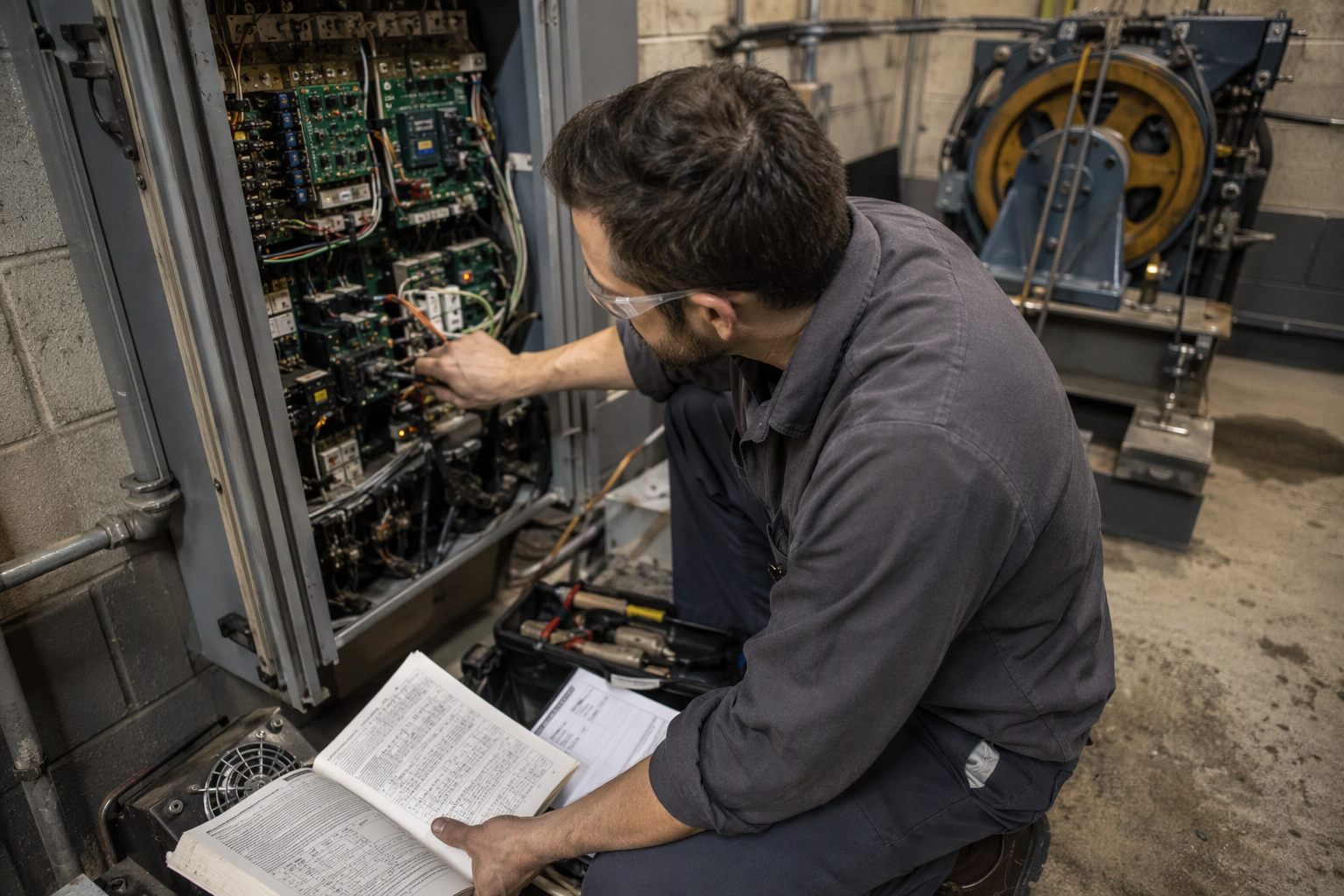
Under A.R.S. §§ 23-491 through 23-491.16 (Safety Conditions for Elevators and Similar Conveyances), no conveyance may legally operate in Arizona without a valid annual certificate of inspection issued by the state. When an inspector finds violations serious enough to withhold or revoke that certificate, the elevator may not be used until deficiencies are corrected and a passing re-inspection is recorded.
In Arizona, inspections are carried out either by the Industrial Commission of Arizona (ICA), Elevator Division, or by a private elevator inspector authorized by that agency. Either way, the legal obligation rests entirely with the building owner or operator—using a private inspector does not shift that responsibility.
Healthcare facilities face an additional layer of accountability. Patient-transport elevators, bariatric-capacity units, and stretcher-compliant cars are frequently cited in ADA compliance reviews, and deficiencies can trigger regulatory findings from facility licensing bodies as well as the elevator authority.
What Are the Most Common Reasons Healthcare Elevators Fail Inspection in Arizona?
Inspection failures in healthcare settings tend to cluster around several recurring issues:
- Code-compliance gaps for equipment altered after January 1, 2023. Arizona adopted ASME A17.1-2019 (Safety Code for Elevators and Escalators) for all equipment installed, repaired, or altered on or after that date. Work done during a renovation or repair that did not bring the affected components up to this edition can produce inspection failures.
- Firefighters’ emergency operation key non-compliance. Arizona requires conveyances with firefighters’ emergency operation to use the Arizona Firefighters Service (AZFS) key. Healthcare facilities often upgrade controls without confirming this requirement is met.
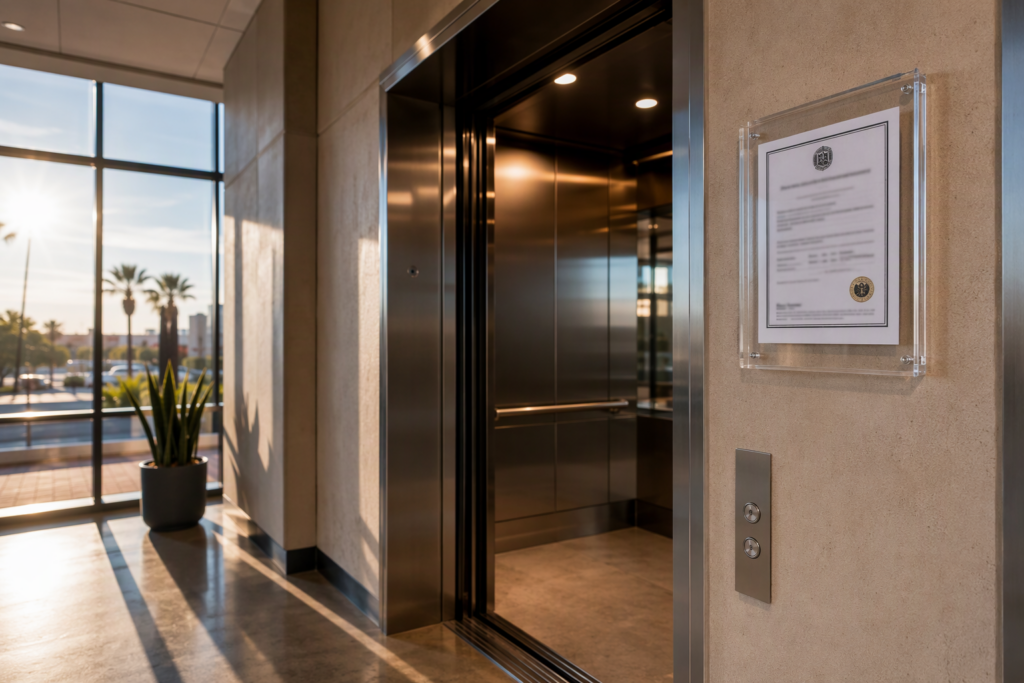
- Missing or improperly posted certificate. Arizona law requires the state certificate to be kept at the same location as the conveyance and the state serial number or certificate to be posted in or close to the car. Missing paperwork alone can produce a deficiency notice.
- ADA dimensional and signage violations. Car dimensions, door-open timing, Braille signage, and audible signals are measured against ADA Standards for Accessible Design.
- Deferred maintenance on safety components. Governor overspeed devices, door safety edges, pit lighting, and emergency lighting are common deficiency areas when preventive maintenance has been delayed.
- Platform lift and stairway chairlift code gaps. Units installed, repaired, or altered on or after January 1, 2023 must meet ASME A18.1-2020. Many older healthcare campuses discover compliance gaps when these units are finally inspected.
What Happens Immediately After a Failed Inspection?
- The inspector issues a written deficiency report identifying each violation and the applicable code section.
- The conveyance must be taken out of service. In a healthcare facility, this means activating your patient-transport continuity plan immediately.
- The owner or operator notifies the facility’s compliance officer, risk management team, and—if applicable—the facility licensing agency.
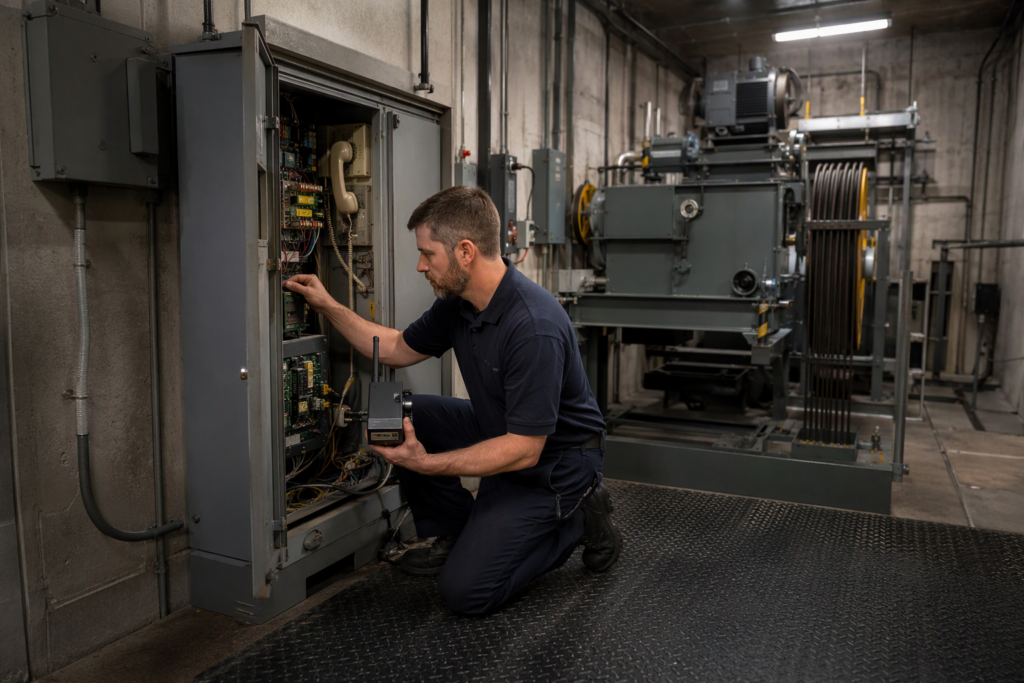
- A licensed elevator contractor holding an R-12 or C-12 license from the Arizona Registrar of Contractors is engaged to review the deficiency list and provide a scope of corrective work.
- The contractor completes all required repairs or alterations. If any alteration triggers re-engineering, Arizona owners must notify the ICA Elevator Division at least 90 days before the alteration begins.
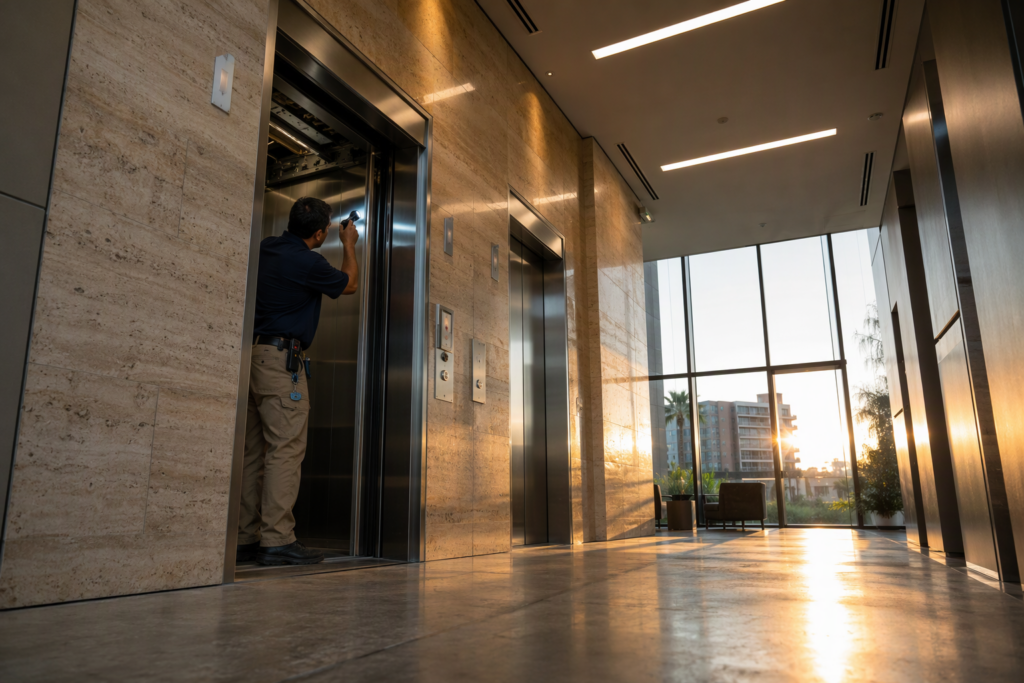
- A re-inspection is scheduled—either with the ICA Elevator Division or an authorized private inspector who has no conflict of interest with the owner or the servicing contractor.
- Once all items pass, the Elevator Division issues a new certificate of inspection. The certificate is posted as required by Arizona law, and the unit returns to service.
How Long Does It Take to Get Back into Compliance?
Timeline depends on the nature of the deficiencies. Minor violations—such as a missing certificate posting or a faulty door sensor—can often be corrected and re-inspected within days. Violations requiring parts procurement, control system upgrades, or structural modifications take longer. For healthcare administrators planning a corrective action timeline, the safest approach is to obtain a written scope and schedule from the licensed contractor before communicating any re-opening date to clinical staff or accreditation bodies.
If the alteration is significant enough to require advance notification, Arizona’s 90-day notice requirement to the ICA Elevator Division must be factored into the schedule.
Who Is Responsible for the Elevator in a Healthcare Facility?
Arizona law places the compliance obligation squarely on the owner or operator of the building. For leased healthcare space, the lease agreement may assign maintenance responsibilities differently, but neither a lease term nor the use of a third-party inspection service relieves the owner or operator of legal obligations under A.R.S. § 23-491 et seq. Healthcare facility administrators should confirm in writing which party holds the statutory owner-operator duty before an inspection occurs—not after a failure.
Does Arizona Have Healthcare-Specific Elevator Requirements Beyond the State Code?
Arizona adopts the ASME A17.1-2019 Safety Code for Elevators and Escalators as its baseline technical standard. Healthcare facilities must also satisfy ADA requirements for accessible vertical transportation, which include minimum car dimensions for stretcher access in hospitals and certain outpatient facilities. Accreditation bodies and state health facility licensing agencies may impose additional operational requirements—such as backup power for elevators in inpatient settings—that go beyond elevator safety code alone. Arizona Elevator Solutions recommends that healthcare facility managers coordinate elevator compliance with both their elevator contractor and their facility compliance officer to address all applicable requirements in a single corrective action plan.
What Are the Requirements for Private Elevator Inspectors in Arizona?
Arizona owners may hire a private elevator inspector authorized by the Industrial Commission of Arizona rather than waiting for a state inspection slot. However, the rules governing those inspectors are strict:
- The inspector must register with the ICA Elevator Division every year.
- The inspector must demonstrate at least eight hours of approved continuing education annually.
- The inspector may not inspect a conveyance owned, operated, or last serviced by the inspector, a company the inspector owns, or the inspector’s employer.
These conflict-of-interest rules are especially relevant in healthcare settings, where long-term service contracts sometimes blur the line between maintenance provider and inspection authority.
What Is the Role of the City of Phoenix Elevator Section in a Failed Inspection?
Healthcare facilities located within the City of Phoenix fall under the jurisdiction of the City of Phoenix Elevator Section (Planning and Development Department) for inspections of elevators, escalators, moving walks, dumbwaiters, and chair lifts. Equipment outside Phoenix city limits is handled by the state ICA Elevator Division. After a failed inspection, the corrective action process and the authority issuing the new certificate of inspection will correspond to whichever jurisdiction governs the facility’s location. Arizona Elevator Solutions serves healthcare clients across Phoenix, Tucson, Scottsdale, and Mesa and can confirm the applicable authority for each facility location.
What If a Patient Is Injured During a Period of Non-Compliance?
Arizona owners must notify the ICA Elevator Division within 24 hours of any accident that injures a person or disables a conveyance. In a healthcare setting, the notification obligations compound: the facility’s risk management protocol, liability insurer, and potentially the state health facility licensing agency each have their own reporting requirements. A documented and prompt corrective action plan—initiated the moment the inspection failure is identified—is the strongest risk-management posture available to healthcare operators.
How Should Healthcare Facilities Prevent Future Inspection Failures?
Proactive compliance is far less disruptive than emergency corrective action. Facilities that maintain a consistent preventive maintenance program, track the annual inspection certificate expiration date, and audit posted certificate and serial number compliance between inspections are significantly less likely to face an unexpected out-of-service event. Arizona Elevator Solutions works with healthcare facilities across the Phoenix metro and southern Arizona markets to establish maintenance schedules aligned with the annual certificate cycle and the requirements of ASME A17.1-2019.
Questions Your Inspector Will Ask
Being prepared for the following questions helps healthcare facility managers respond efficiently during an inspection—and during the corrective action process after a failure.
- Where is the current certificate of inspection for this conveyance? Arizona law requires the certificate to be kept at the same location as the conveyance and available on request.
- Is the state serial number posted in or close to the car? The state serial number or certificate must be in an easily accessible location.
- What is the date of the last alteration or repair, and was the ICA Elevator Division notified? Any installation, relocation, or alteration requires 90-day advance notice to the state.
- Does the firefighters’ emergency operation system use the Arizona Firefighters Service (AZFS) key? This is an Arizona-specific requirement that inspectors verify on every applicable unit.
- Who is the licensed elevator contractor of record for this equipment? The contractor must hold an R-12 or C-12 license from the Arizona Registrar of Contractors.
- Has any work been performed on this conveyance since the last certificate was issued? If so, by whom and when? Undocumented repairs are a common source of additional deficiencies.
- For platform lifts and stairway chairlifts: when was this unit installed or last altered? Units installed, repaired, or altered on or after January 1, 2023 must comply with ASME A18.1-2020.
- Has any incident or accident occurred involving this conveyance since the last inspection? Any injury or disabling event must be reported to the ICA Elevator Division within 24 hours.
Can Healthcare Facilities Use Interim Arrangements While an Elevator Is Out of Service?
There is no provision in Arizona law for a temporary operating variance for a conveyance that has failed inspection. The unit must remain out of service until a passing re-inspection is completed and a new certificate is issued. Healthcare facilities should maintain a written patient-transport contingency plan that identifies alternative routes, portable patient-lift resources, and staffing protocols for extended out-of-service periods. This plan is best developed before an inspection failure, not during one.
Arizona Elevator Solutions provides corrective maintenance and re-inspection coordination for healthcare facilities in Phoenix, Tucson, Scottsdale, and Mesa. When an elevator failure is identified, the team can review the deficiency report and help facility managers understand which items require immediate correction and what the path to re-inspection looks like under Arizona Administrative Code R20-5-502 through R20-5-515.
Contact Arizona Elevator Solutions for a free elevator assessment at 480-557-7600.
Need elevator service you can rely on? Arizona Elevator Solutions is ready to help.