University Elevator ADA Compliance: What Campus Facilities Teams Need to Know
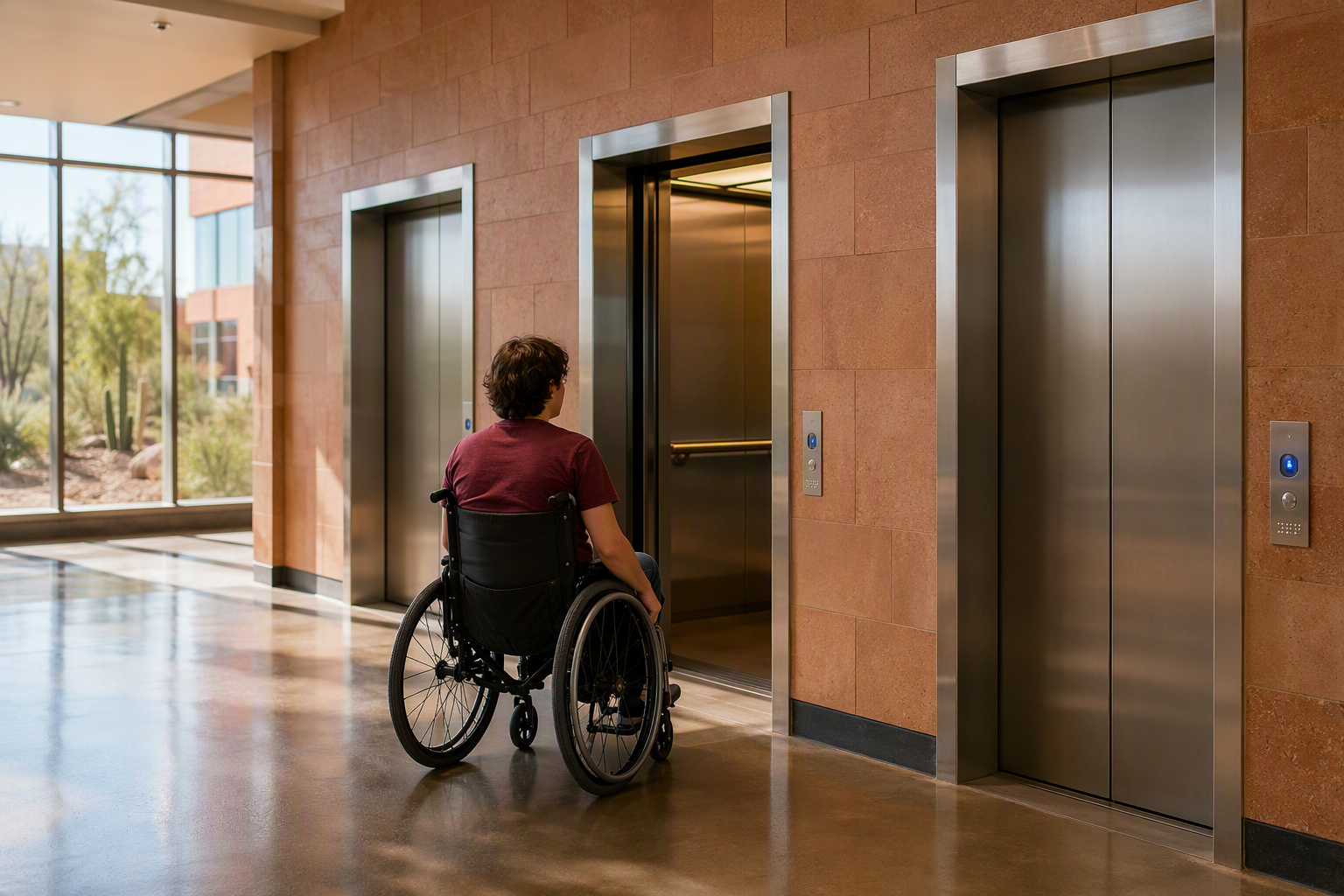
University campuses are among the most complex vertical transportation environments in any industry. A single building may serve students with mobility devices, faculty, delivery personnel, and emergency responders — all with different accessibility needs and all protected under federal law. For facilities directors in Phoenix, Tucson, Scottsdale, and Mesa, understanding the intersection of ADA requirements, ASME codes, and Arizona state elevator regulations is essential to avoiding violations, protecting students, and maintaining uninterrupted campus life.
—
What ADA Requirements Apply to University Elevators?
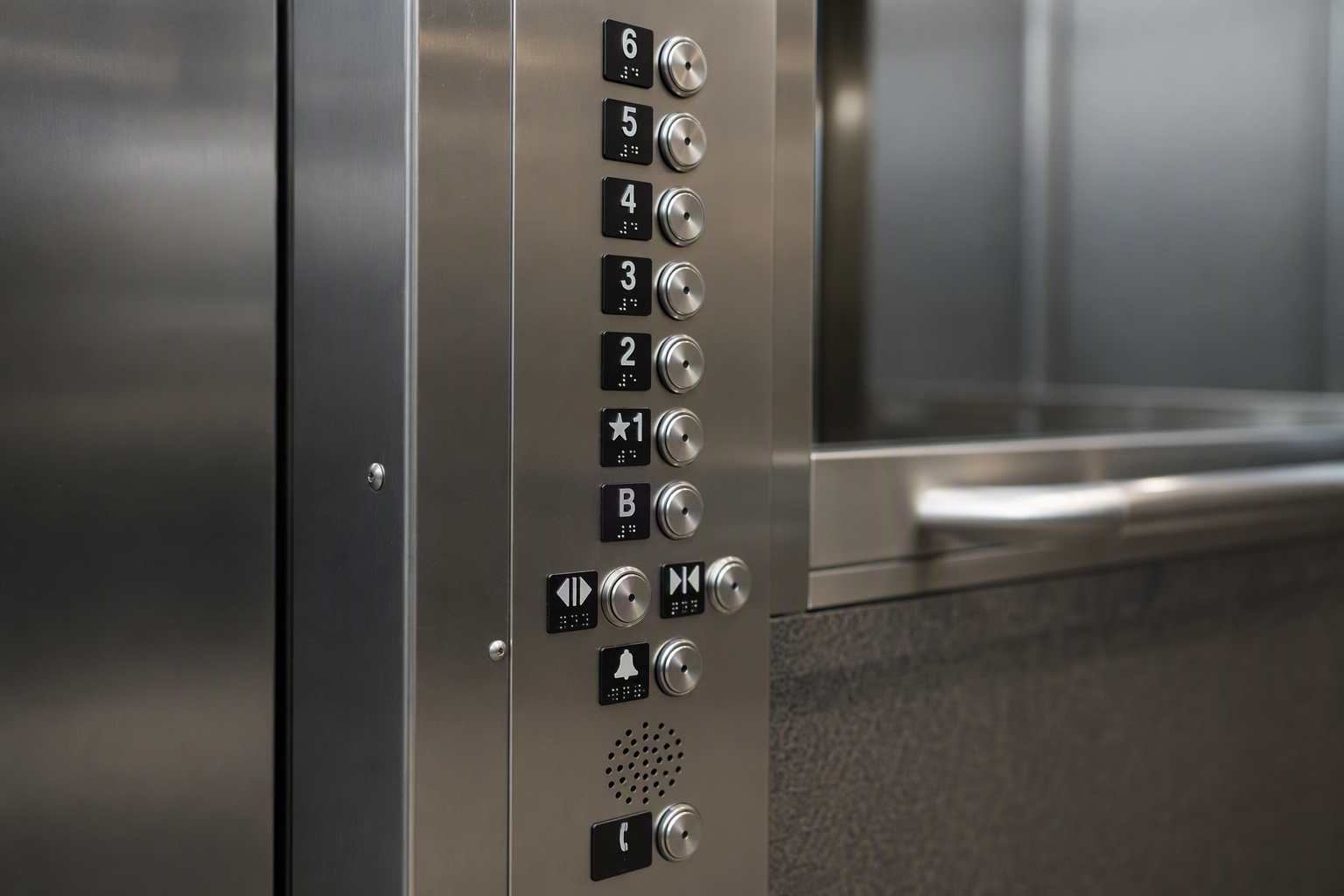
The Americans with Disabilities Act establishes accessibility standards that apply to virtually every elevator on a university campus. Under ADA Standards for Accessible Design, elevators serving multiple floors in a public university building are generally required — not optional — unless a specific exemption applies (such as a two-story building meeting the elevator exemption criteria).
Key ADA requirements for university elevators include:
- Car dimensions: The elevator car must provide adequate floor space to allow a wheelchair user to enter, turn, and exit — minimum inside dimensions are specified in the ADA Standards for Accessible Design.
- Door clear width: Doors must provide a clear opening wide enough to accommodate mobility devices.
- Call buttons: Hall call buttons must be located at a height accessible from a wheelchair, with raised and Braille characters.
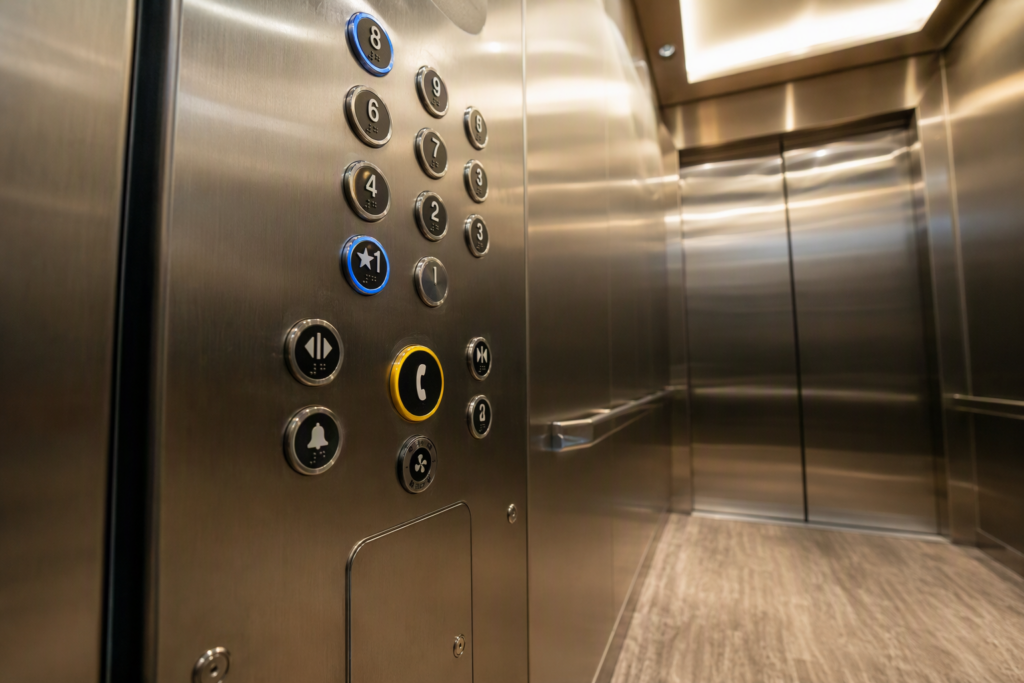
- Car controls: Control panels must be mounted within accessible reach ranges, with raised characters and Braille designations beside each button.
- Audible and visual signals: Each floor arrival must be announced audibly and signaled visually.
- Two-way emergency communication: A hands-free, two-way communication system must be installed and operational in every cab.
- Floor designations: Raised and Braille floor designations must appear on both jambs of elevator hoistway entrances.
Universities receiving federal funding — which includes nearly every public and most private institutions — face heightened scrutiny, as the Department of Education’s Office for Civil Rights enforces ADA accessibility in educational settings.
—
How Does ASME A17.1 Apply to Campus Elevators?
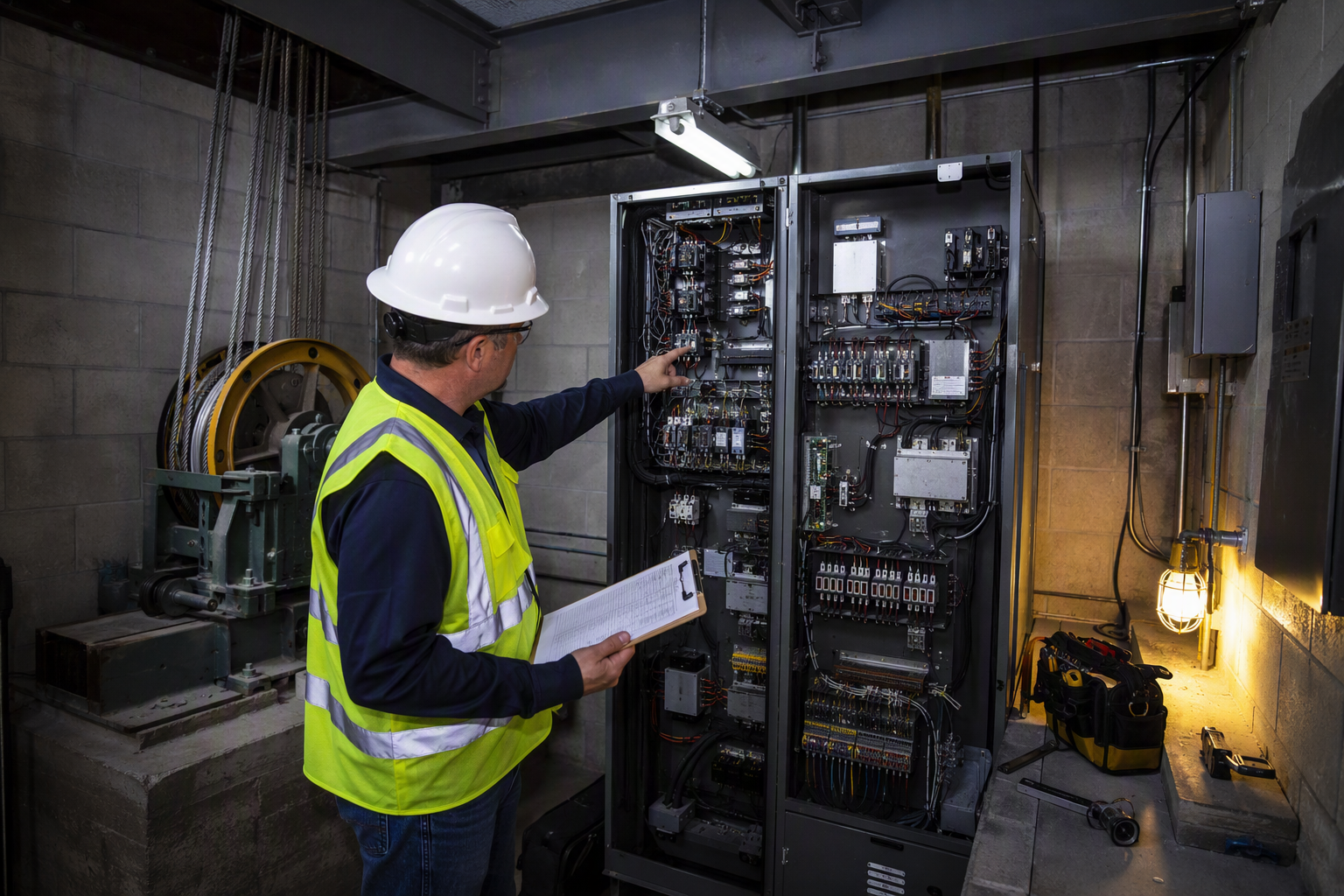
The ASME A17.1 Safety Code for Elevators and Escalators is the foundational technical standard governing elevator installation, maintenance, and inspection across the United States. In Arizona, state elevator safety regulations adopt ASME A17.1 as the reference code, making compliance mandatory for all university elevator equipment — including traction elevators, hydraulic elevators, platform lifts, and escalators.
ASME A17.1 governs critical safety systems including:
- Safeties, buffers, and governor systems
- Door locking and interlock mechanisms
- Firefighters’ emergency operation (FEO) protocols
- Seismic protection requirements
- Pit safety systems and lighting
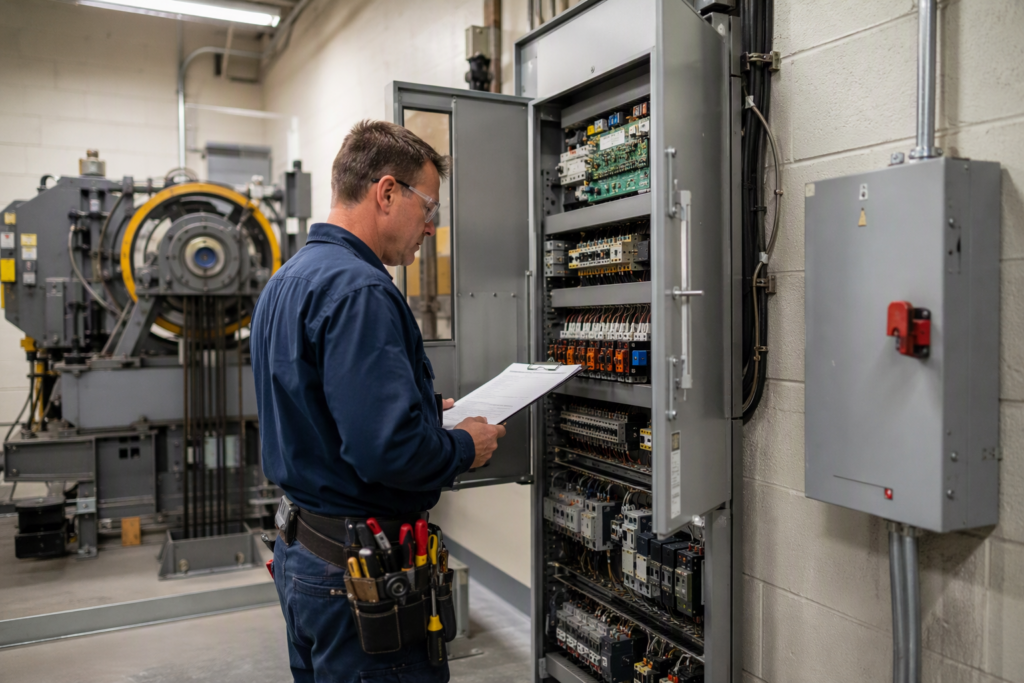
- Machine room environmental and access requirements
- Periodic inspection and testing intervals
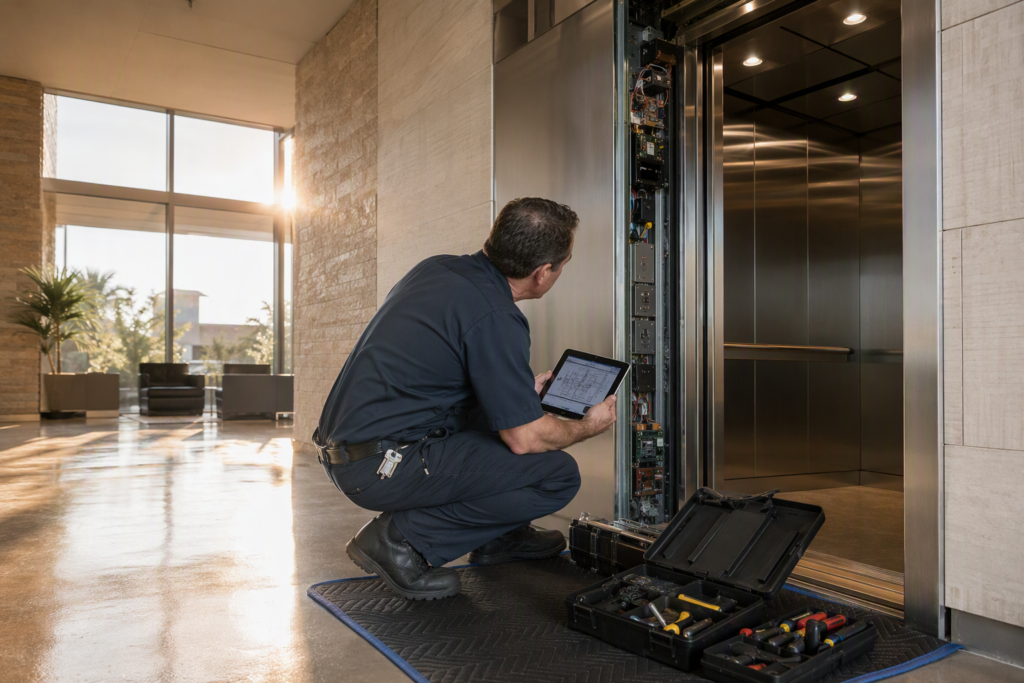
For university facilities in Arizona, compliance with the current edition of ASME A17.1 is verified through state-required periodic inspections. Arizona Elevator Solutions performs these inspections and provides detailed reports that document compliance status against current code requirements.
—
Are Platform Lifts and Limited-Use/Limited-Application Elevators Subject to Different Rules?
Yes. Many universities install platform lifts or Limited-Use/Limited-Application (LU/LA) elevators in older buildings where full-sized elevator installation is cost-prohibitive. These units are governed by ASME A18.1 Safety Standard for Platform Lifts and Stairway Chairlifts rather than A17.1 — but they must still meet ADA accessibility requirements where they serve as the accessible route.
LU/LA elevators have specific limitations on travel distance, speed, and capacity. Facilities directors should confirm that any LU/LA unit on campus is not being used beyond its rated parameters and that the ADA accessible route it serves remains compliant. Arizona Elevator Solutions regularly assesses platform lifts and LU/LA units at university and healthcare campuses throughout the Phoenix, Tucson, Scottsdale, and Mesa areas.
—
What Is the Inspection Schedule for University Elevators in Arizona?
Arizona requires periodic inspection and testing of elevators by a certified elevator inspector. Inspection intervals and test types are defined in the adopted edition of ASME A17.1 and enforced by the Arizona Department of Occupational Safety and Health (ADOSH). Universities must maintain current certificates of inspection for each unit and ensure all violations identified during inspection are corrected within the required timeframe.
There are two primary periodic tests universities should track:
- Category 1 tests: Annual no-load safety tests covering safeties, buffers, and other mechanical components.
- Category 5 tests: Full-load, full-speed safety tests conducted on a five-year cycle, requiring advance scheduling and temporary elevator downtime.
Proactive scheduling of Category 5 tests is particularly important on university campuses, where elevator downtime must be coordinated around academic calendars to minimize accessibility disruption.
—
What Are the Most Common ADA Violations Found on University Campuses?
University elevators frequently accumulate accessibility deficiencies over time — particularly in older campus buildings constructed before ADA requirements were codified. Common violations identified during assessments include:
- Worn or missing Braille designations on control panels and hoistway entrance jambs
- Inoperative or inadequate audible floor announcement systems
- Non-functioning two-way emergency communication systems
- Call buttons mounted at heights that no longer meet current reach-range requirements following renovations
- Door timing settings that close too quickly for users with mobility devices
- Inadequate lighting levels within the cab
- Outdated or non-compliant door reopening devices
Each of these deficiencies can form the basis of an ADA complaint filed with the Department of Justice or the Department of Education, making routine compliance assessments an important risk management tool.
—
How Should Universities Prioritize Elevator ADA Upgrades?
When a compliance assessment identifies multiple deficiencies, a structured remediation approach helps facilities teams allocate budgets effectively. The following steps outline a recommended prioritization process:
- Conduct a full portfolio assessment. Document every elevator, lift, and escalator on campus against current ADA Standards and ASME A17.1 requirements, noting the severity and risk level of each deficiency.
- Classify deficiencies by risk. Separate life-safety issues (e.g., non-functional emergency communication) from accessibility deficiencies (e.g., worn Braille) and cosmetic issues.
- Address life-safety items immediately. Items that create immediate physical danger or that would cause an elevator to fail inspection must be remediated before other work proceeds.
- Develop an ADA transition plan. Under ADA regulations, public entities may document a multi-year transition plan for barrier removal. Work with legal counsel and your elevator service partner to create a defensible timeline.
- Schedule upgrades around the academic calendar. Plan elevator downtime during semester breaks or low-occupancy periods to limit impact on students, particularly those dependent on elevators for access.
- Document all completed work. Retain records of every repair, modification, and inspection — these are critical in any compliance dispute.
—
What Role Does Elevator Modernization Play in ADA Compliance?
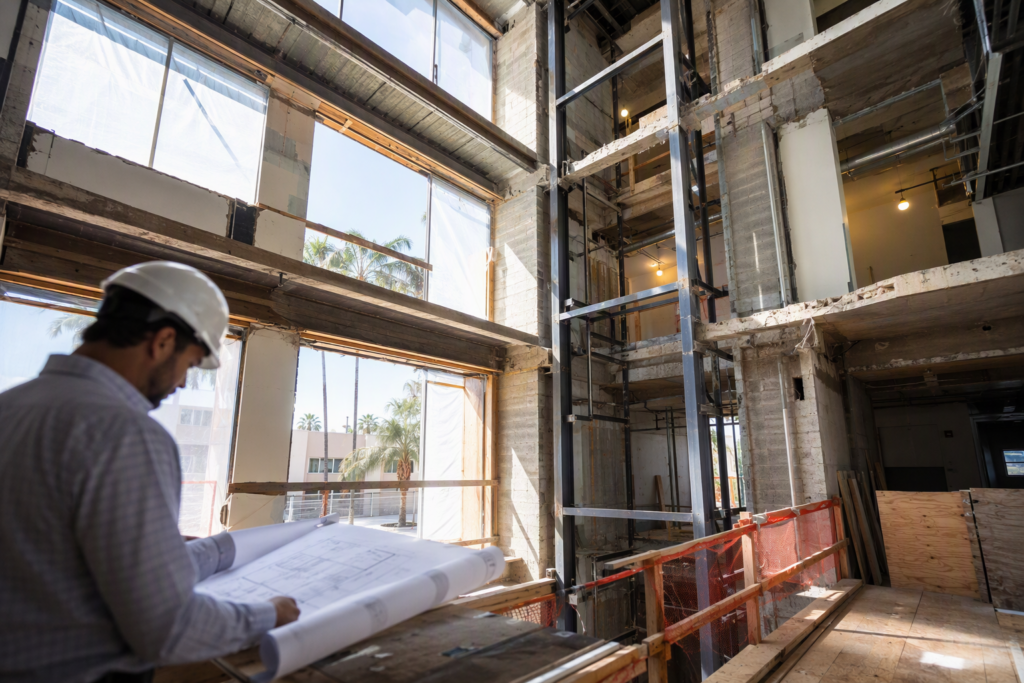
Older university elevators — particularly those installed before ADA became law — may require modernization rather than incremental repairs to achieve full compliance. Modernization projects can address mechanical reliability, energy efficiency, and accessibility simultaneously. Typical modernization scope includes replacement of control systems, cab interiors, door operators, and communication equipment.
Importantly, when a modernization project is undertaken, the entire elevator installation may be required to meet current code editions under the “altered element” provisions of ADA Standards. Arizona Elevator Solutions advises university facilities teams on the compliance implications of modernization scope before work begins, helping campuses avoid inadvertently triggering broader upgrade obligations than anticipated.
—
How Do Firefighters’ Emergency Operation Requirements Affect Campus Buildings?
University buildings — many of which exceed four stories — must comply with Firefighters’ Emergency Operation (FEO) requirements under ASME A17.1. FEO ensures that in a fire emergency, designated elevators can be recalled to the lobby and operated by emergency personnel to reach upper floors safely.
FEO systems must be tested periodically, and many older campus elevators require upgrades to Phase I (automatic recall) and Phase II (in-car firefighter operation) systems to meet current requirements. These systems also intersect with campus fire alarm infrastructure, making coordination between elevator contractors and fire protection engineers essential.
—
Questions Your Inspector Will Ask
When an Arizona state elevator inspector visits a university campus, facilities teams should be prepared to address the following questions. Having documentation ready before the inspection demonstrates proactive compliance management.
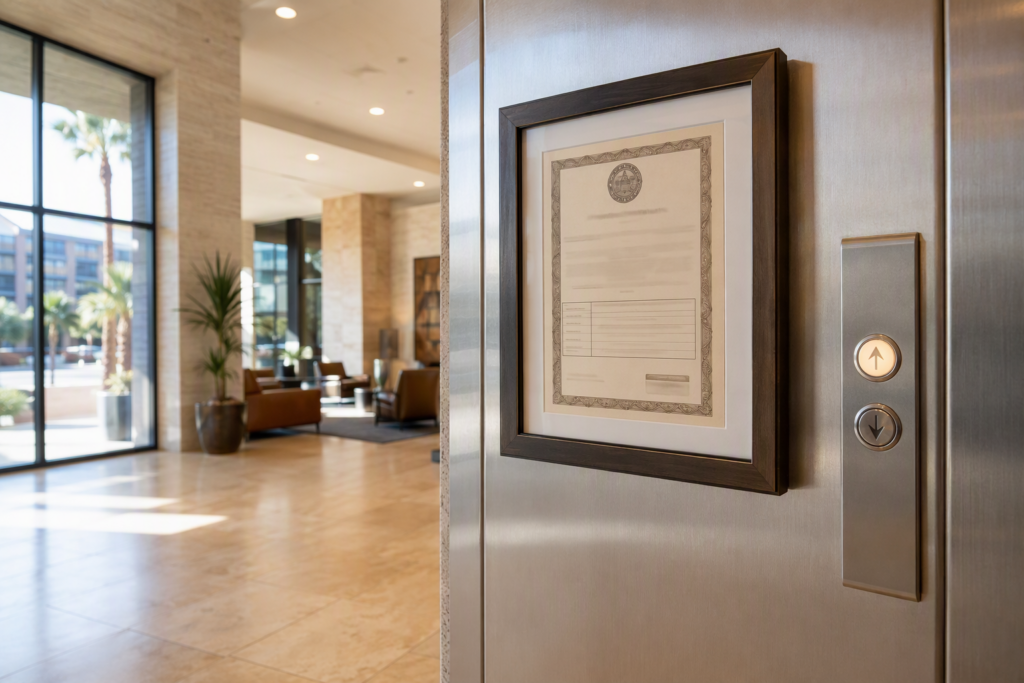
- Where is the current certificate of inspection for each unit? Certificates must be posted in the elevator cab or immediately accessible.
- When was the last Category 1 annual test completed, and who performed it? Inspection records must be available on request.
- Is a Category 5 test due, and has it been scheduled? Overdue five-year tests are a common finding on large campuses.
- Is the two-way emergency communication system functional in every cab? Inspectors will test this directly.
- Are all Braille designations on control panels and entrance jambs legible and intact? Damaged Braille is a frequent ADA deficiency.
- Are machine room access controls and environmental conditions within code requirements? Temperature, lighting, and restricted access are all inspected.
- Has any work been performed on this elevator since the last inspection, and was it permitted? Unpermitted work can void certificates and trigger enforcement action.
- Are pit lighting, pit stop switches, and pit ladder access compliant? Pit safety is a frequent ASME A17.1 finding in older campus buildings.
—
Why Do Universities in Arizona Work With a Certified Elevator Service Company?
The complexity of university elevator portfolios — spanning multiple buildings, elevator types, ages, and use patterns — requires a service partner with broad code knowledge and experience across diverse equipment types. A certified elevator service company can provide documented maintenance records, perform state-required inspections, manage modernization planning, and serve as a knowledgeable resource when compliance questions arise.
Arizona Elevator Solutions serves university, healthcare, and institutional clients across Phoenix, Tucson, Scottsdale, and Mesa, providing code-compliant maintenance, inspection support, and modernization consulting aligned with current ASME A17.1 and ADA requirements. For campus facilities teams managing large elevator portfolios, having a consistent service partner familiar with each unit’s history is a practical compliance advantage.
—
What Should Universities Do After Receiving an ADA Complaint Related to Elevator Access?
- Document the complaint in full. Record the date, specific location, nature of the barrier reported, and the individual or office receiving the complaint.
- Conduct an immediate site inspection. Verify the reported condition firsthand and assess whether a safety or accessibility risk is present.
- Engage legal counsel. ADA complaints can escalate to federal investigation; legal guidance should be sought promptly.
- Contact your elevator service provider. Arizona Elevator Solutions can assess the reported deficiency and provide documentation of existing conditions and remediation options.
- Develop a written remediation plan with a timeline. A documented, good-faith remediation plan demonstrates compliance intent and can be a mitigating factor in federal review.
- Implement corrections and document completion. Retain all work orders, inspection reports, and correspondence related to the complaint and resolution.
—
How Can Universities Stay Ahead of Elevator Code Changes in 2026 and Beyond?
ASME periodically updates the A17.1 Safety Code for Elevators and Escalators, and states including Arizona adopt new editions on a rolling basis. Universities that rely solely on reactive maintenance risk being caught off-guard when a new edition introduces revised requirements for existing equipment. Proactive code monitoring — ideally in partnership with a certified elevator service provider — allows campuses to plan capital expenditures and schedule compliance upgrades before regulatory deadlines arrive.
Arizona Elevator Solutions monitors code developments affecting elevator equipment throughout Arizona and advises institutional clients on how upcoming changes may affect their campus portfolios. Facilities directors in the Phoenix metropolitan area and Tucson region are encouraged to schedule periodic compliance reviews as part of their annual facilities planning cycle.
—
Contact Arizona Elevator Solutions for a Free Elevator Assessment
University facilities teams across Phoenix, Tucson, Scottsdale, and Mesa rely on certified elevator service providers to navigate the intersection of ADA compliance, ASME A17.1 requirements, and Arizona state inspection obligations. Whether your campus needs a portfolio-wide compliance assessment, Category 5 test scheduling, modernization planning, or help preparing for an upcoming state inspection, Arizona Elevator Solutions is available to help.
Contact Arizona Elevator Solutions for a free elevator assessment: 480-557-7600
Need elevator service you can rely on? Arizona Elevator Solutions is ready to help.