Hospital Elevator Requirements and Maintenance: A Complete Compliance Guide
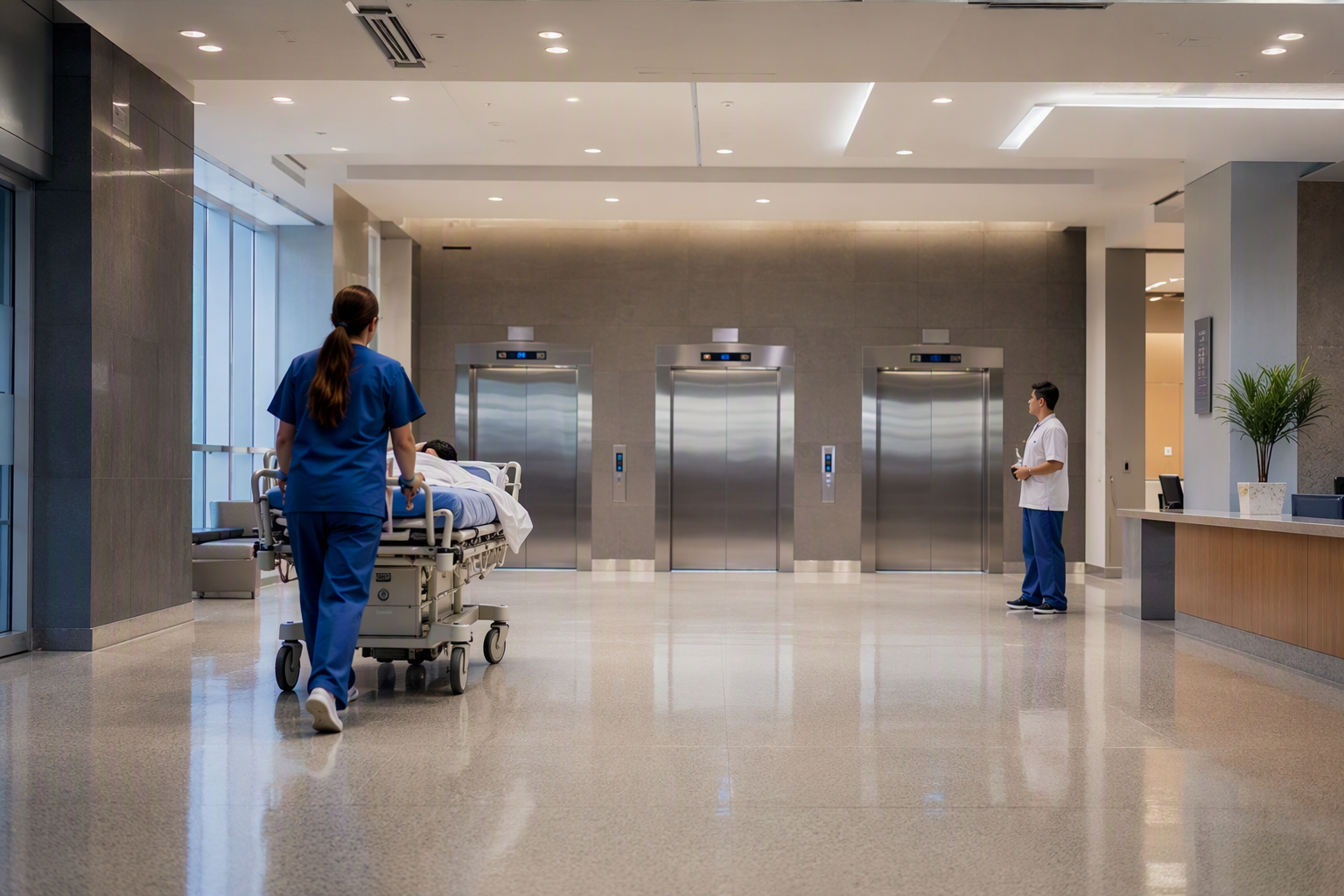
Healthcare facilities operate under some of the most demanding elevator usage conditions of any building type. Patients on gurneys, medical staff transporting critical equipment, and visitors moving through multi-story hospital towers all depend on reliable vertical transportation. A single elevator outage in a hospital is not merely an inconvenience — it can directly affect patient care and life-safety outcomes. This guide covers every dimension of hospital elevator compliance and maintenance that facility managers in Phoenix, Tucson, Scottsdale, and Mesa need to understand heading into 2026.
What Codes Govern Hospital Elevator Requirements?
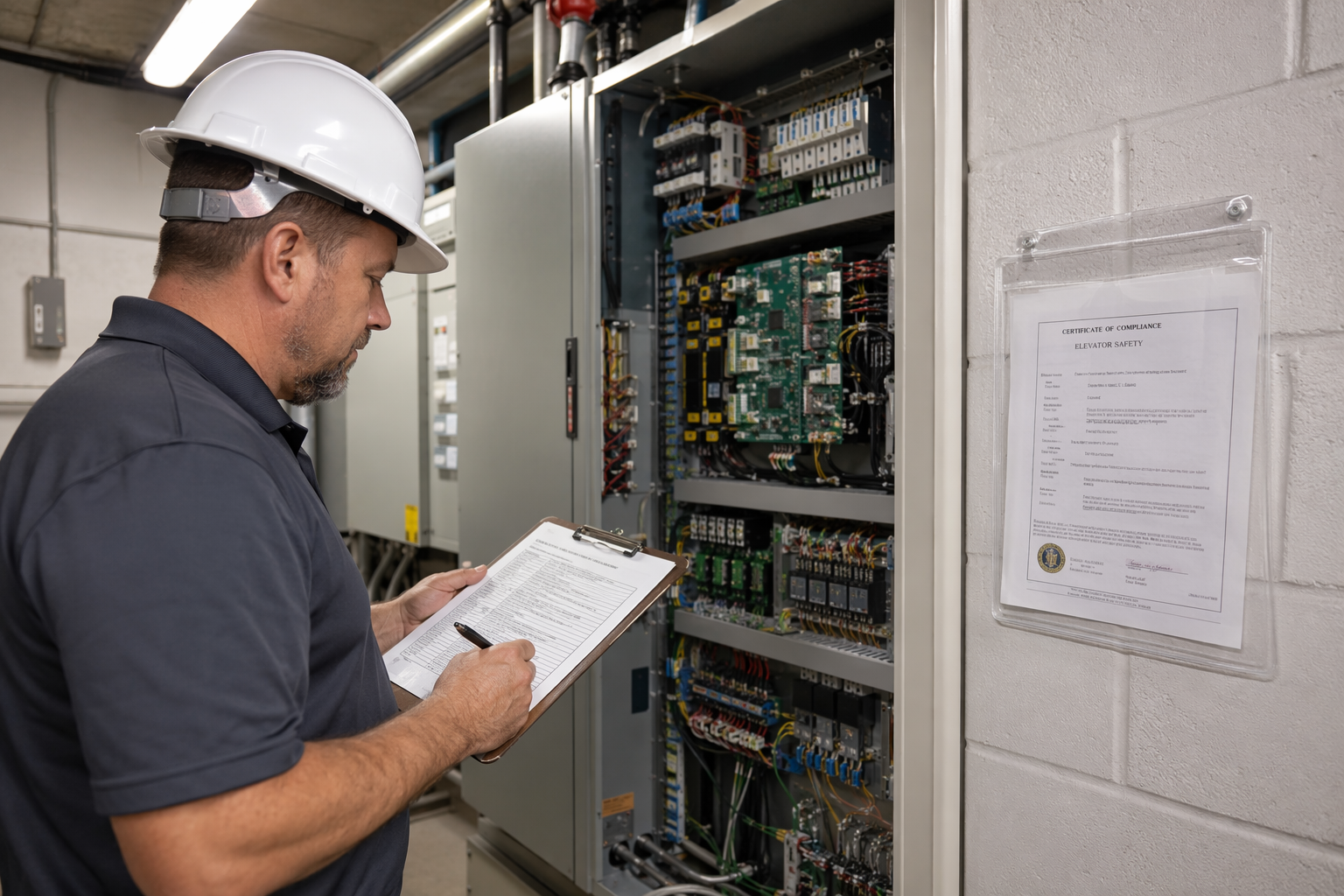
Hospital elevators in Arizona are governed by a layered framework of national codes and state-level adoption. The primary standards include:
- ASME A17.1 Safety Code for Elevators and Escalators: The foundational national safety code covering design, construction, operation, inspection, testing, maintenance, alteration, and repair of elevators. Arizona adopts this code at the state level through the Industrial Commission of Arizona.
- Americans with Disabilities Act (ADA): Requires that elevators in multi-story healthcare facilities be accessible to all users, including those with mobility limitations. This includes cab dimensions, door timing, tactile controls, and audible floor announcements.
- The Joint Commission (TJC) Standards: Hospitals seeking or maintaining Joint Commission accreditation must demonstrate that vertical transportation equipment is included in their Environment of Care (EC) management plans. Elevators are typically categorized as high-risk life-safety equipment.
- NFPA 101 (Life Safety Code): Addresses elevator recall, smoke and fire control features, and emergency power requirements in healthcare occupancies.
- FGI Guidelines for Design and Construction of Hospitals: Although not a code itself, these guidelines are widely adopted by state health departments and define minimum elevator quantities, sizes, and performance benchmarks for new hospital construction and major renovations.
Arizona Elevator Solutions works with hospital facility directors across the Phoenix metro and Southern Arizona to map each of these requirements to the specific equipment installed in their buildings, ensuring nothing falls through the gap between federal mandates and state enforcement.
What Are the Minimum Elevator Size Requirements for Hospitals?
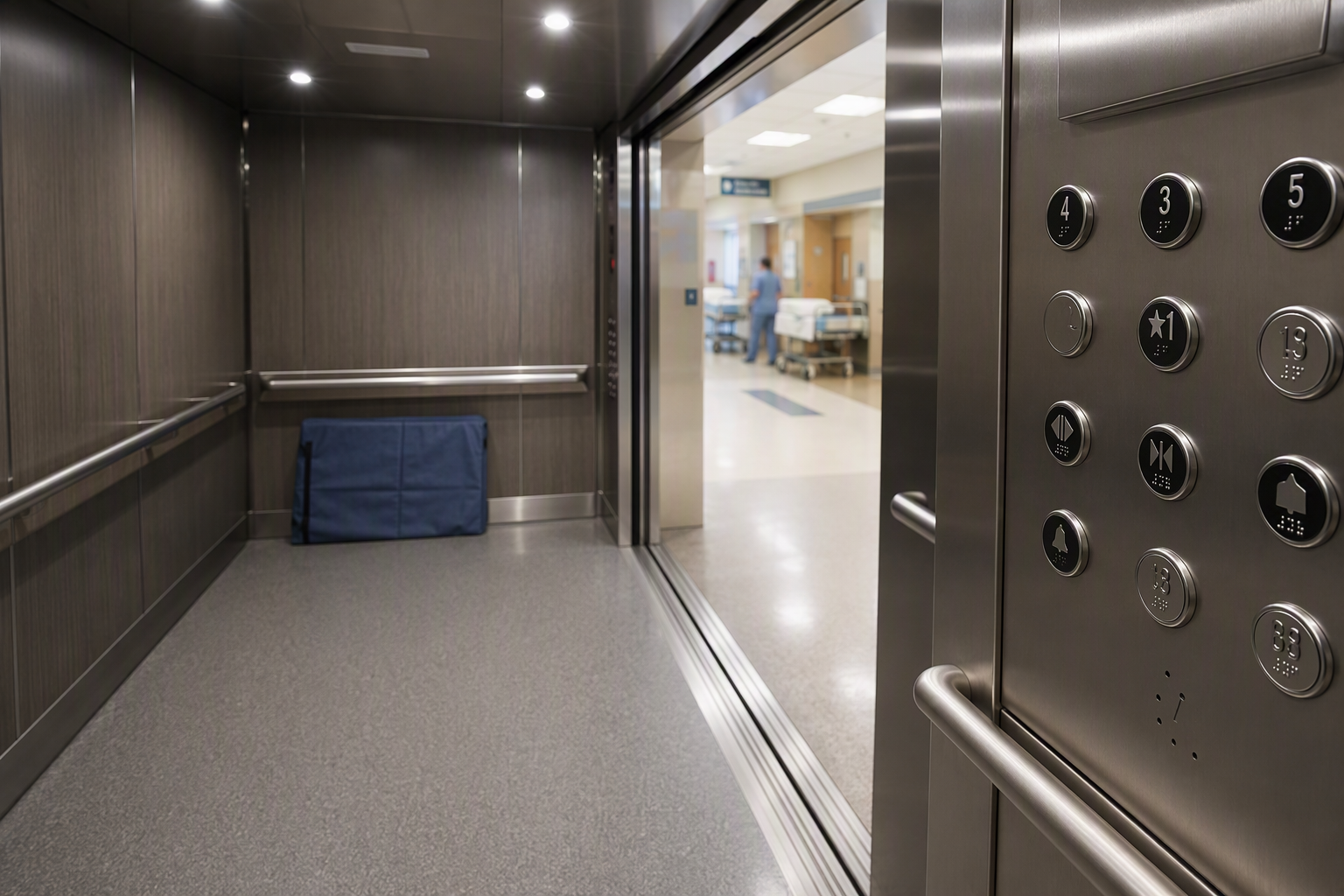
Healthcare elevator size requirements are among the most stringent in any industry. Hospitals must accommodate stretchers, wheelchairs, medical carts, and large imaging equipment. The FGI Guidelines and most state-adopted healthcare construction standards specify that at least one elevator serving patient floors must accommodate a standard hospital stretcher with attendants — typically requiring a cab interior of at least 80 inches deep by 54 inches wide, though larger dimensions are common in modern facilities.
Cab door width minimums under ADA standards require clear openings sufficient for wheelchair passage, with healthcare-specific applications often exceeding those minimums to allow bariatric stretchers and isolation transport equipment. Facility managers planning renovations or new installations should confirm current Arizona Department of Health Services requirements alongside the federal baseline.
How Often Do Hospital Elevators Need to Be Inspected?
Under ASME A17.1, elevators require periodic inspection and testing at intervals defined by the code — with the frequency varying based on elevator type and usage classification. Arizona enforces these inspection requirements through state-licensed inspectors. For hospital environments, the high-cycle nature of the equipment means that routine maintenance visits should occur more frequently than the minimum inspection interval, often on a monthly or quarterly schedule, to catch wear before it becomes a compliance or safety issue.
The distinction matters: a state-mandated periodic inspection confirms the elevator meets minimum safety thresholds at a point in time. A proactive maintenance program — the kind structured by Arizona Elevator Solutions for healthcare clients — is designed to prevent those thresholds from ever being at risk.
What Is Emergency Power and Elevator Recall in a Hospital Setting?
Hospitals are required to maintain elevator function during power interruptions. Key requirements include:
- Emergency Power: At least one elevator serving each patient floor must be connected to the facility’s emergency power system and able to operate on generator power. This ensures patient transport continues during outages.
- Phase I and Phase II Fire Service (Elevator Recall): NFPA 101 and ASME A17.1 require that hospital elevators respond correctly to smoke detector activation — returning automatically to a designated floor (Phase I) and permitting firefighter-controlled operation (Phase II). These systems must be tested regularly and documented.
- Seismic Requirements: Arizona’s seismic risk varies by region, and elevators in higher-risk zones may require additional engineering considerations under ASME A17.1 seismic provisions.
What Are the Most Common Elevator Compliance Failures Found in Hospitals?
Facility managers should be aware of the compliance gaps most frequently identified during healthcare elevator inspections:
- Door timing that no longer meets ADA requirements for dwell time, particularly affecting patients using mobility devices
- Emergency lighting failures inside the cab
- Phase I fire recall systems not tested or documented at required intervals
- Worn door sills that create a tripping hazard for stretchers or wheelchairs
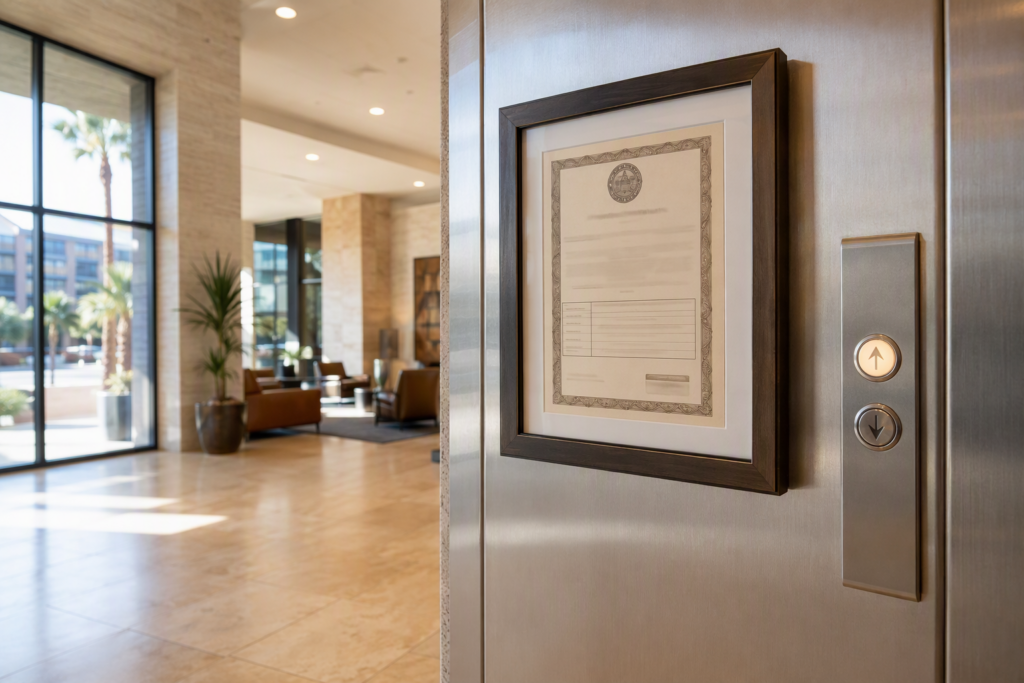
- Outdated or illegible inspection certificates not posted in the cab as required by Arizona law
- Emergency communication systems (two-way) that do not function correctly — a direct ADA requirement
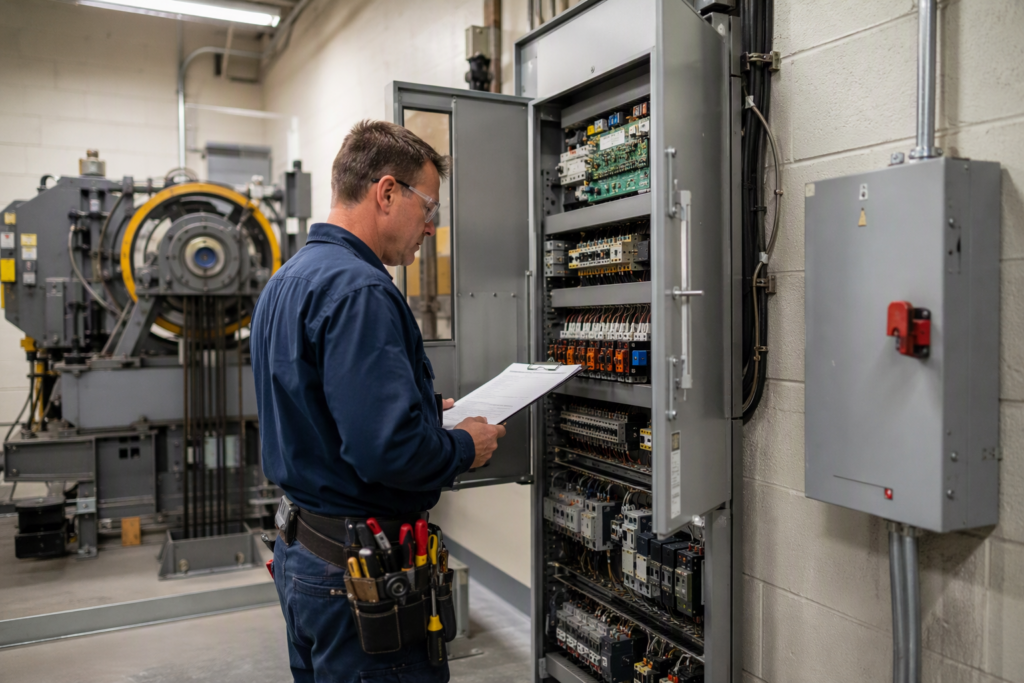
- Machine room temperature controls out of specification, leading to overheating
What Should a Hospital Elevator Maintenance Program Include?
A compliant and operationally effective hospital elevator maintenance program should address the following components on a documented, recurring schedule:
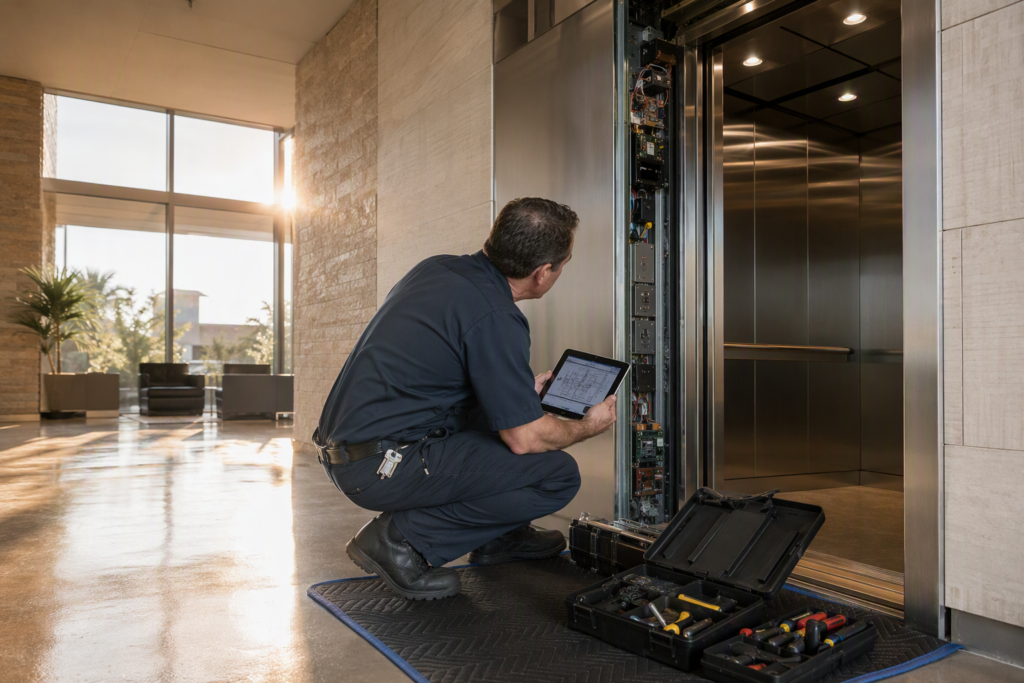
- Monthly visual and operational inspection: Check cab interior, doors, lighting, emergency phone, and control panel for visible damage or malfunction.
- Lubrication of moving components: Rails, guide shoes, door operators, and hoisting machinery require scheduled lubrication per manufacturer specifications.
- Door force and timing tests: Verify that door closing force and timing remain within ASME A17.1 and ADA parameters — critical in a healthcare setting where patients and staff frequently hold doors.
- Safety device testing: Governors, buffers, and safeties must be tested at code-required intervals with results documented.
- Emergency power transfer test: Confirm the elevator switches correctly to generator power and performs the required Phase I recall sequence.
- Two-way communication test: Verify the in-cab emergency phone connects reliably to a monitored station at all hours.
- Full load and no-load leveling tests: Ensure the cab levels accurately at each floor under varying load conditions — essential for safe gurney transfers.
- Documentation and recordkeeping: Maintain a complete log of all maintenance, tests, and repairs accessible for state inspectors and Joint Commission surveyors.
Arizona Elevator Solutions structures maintenance agreements for healthcare clients to align these tasks with both ASME A17.1 requirements and the operational realities of a 24/7 facility, minimizing downtime and maximizing documentation readiness.
How Does Elevator Downtime Affect Hospital Operations?
In a hospital, elevator unavailability creates cascading operational problems. Patient transport between floors is delayed. Surgical and emergency departments that rely on vertical movement of staff and equipment face workflow disruption. In multi-building campuses, a single out-of-service cab can create bottlenecks that affect an entire shift. Beyond operations, extended outages may trigger compliance reviews from accrediting bodies if the facility cannot demonstrate that its Environment of Care plan was followed.
Proactive maintenance — rather than reactive repair — is the standard of care for hospital elevator programs. Facilities in Phoenix, Tucson, Scottsdale, and Mesa that work with Arizona Elevator Solutions benefit from scheduled service designed to catch component wear before it results in an unplanned shutdown.
What Are the ADA Requirements Specific to Healthcare Elevator Users?
The ADA sets baseline requirements for elevator accessibility that apply across all public buildings, but healthcare facilities serve populations with elevated rates of mobility limitations, making compliance especially consequential. Key ADA requirements for hospital elevators include:
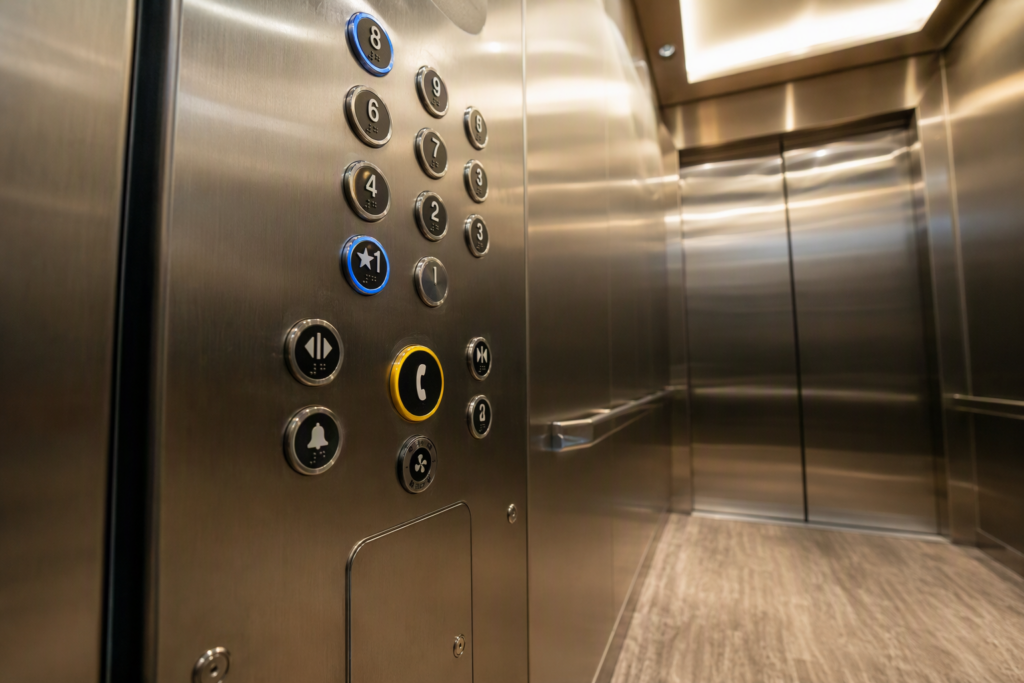
- Tactile and Braille floor designations on hoistway entrance jambs and inside the cab
- Audible floor announcements and visible floor indicators
- Call button placement within reach range for wheelchair users
- Door reopening devices that remain effective for the full required dwell period without requiring physical contact
- Two-way emergency communication that does not require voice — allowing patients who cannot speak to signal for help
- Cab interior dimensions sufficient for turning radius and attendant space
What Qualifications Should an Elevator Service Company Have to Work in Hospitals?
Hospitals should verify that any elevator service provider holds current state licensure through the Industrial Commission of Arizona, employs technicians who are qualified under applicable trade standards, and can provide full documentation of all work performed. Experience with healthcare-specific compliance requirements — including Joint Commission documentation standards and infection control protocols for work performed in clinical areas — is essential. Arizona Elevator Solutions serves healthcare clients across the Phoenix, Tucson, Scottsdale, and Mesa markets with service protocols designed for clinical environments.
How Should a Hospital Respond When an Elevator Fails?
When a hospital elevator goes out of service, the facility’s Environment of Care plan should dictate an immediate, documented response. The following steps reflect best practice protocol:
- Confirm the elevator is safely taken out of service and no passengers are trapped. If entrapment occurs, follow established emergency procedures and contact emergency services and a licensed elevator technician immediately.
- Notify facility operations and nursing leadership on all affected floors so patient transport can be redirected.
- Post clear out-of-service signage at every landing to prevent further use.
- Document the time, nature, and initial observations of the failure for compliance recordkeeping.
- Contact a licensed elevator service provider to perform a diagnostic evaluation and repair.
- Do not return the elevator to service until the licensed technician has cleared it and any required inspection has been completed.
- Record the incident, repair actions, and return-to-service date in the facility’s elevator maintenance log for Joint Commission and state inspection readiness.
Questions Your Inspector Will Ask
When a state elevator inspector or Joint Commission surveyor reviews your hospital’s vertical transportation program, expect questions in these areas:
- Is the current inspection certificate posted inside the cab? Arizona law requires the certificate to be displayed and current.
- When was the last full load safety test performed, and where is the documentation? Test records must be available on request.
- Has the Phase I and Phase II fire recall been tested within the required interval? Results must be logged with dates and outcomes.
- Is the two-way emergency communication functional and connected to a monitored station? Inspectors will test this in person.
- Has the elevator been connected to emergency power and tested under generator load? Documentation of this test is required.
- Are maintenance records available for the past inspection cycle? Incomplete logs are a common citation source.
- Have any alterations been made to the elevator since the last inspection? Alterations require permits and inspection under ASME A17.1.
- Is the machine room maintained within the required temperature and access-control parameters? Unauthorized access or HVAC failures are common findings.
- Are door timing and force within code limits? Inspectors measure both and compare against ASME A17.1 tables.
- Does the facility have a documented process for taking an elevator out of service and notifying affected departments? This is part of the Joint Commission Environment of Care review.
How Do Hospitals in Arizona Budget for Elevator Maintenance and Upgrades?
Healthcare facility budgets for elevator maintenance should account for both recurring service costs and capital expenditure planning for major component replacement and modernization. Aging elevator systems in hospitals face increasing parts obsolescence, which can extend repair times and affect patient care continuity. Facility managers are advised to obtain a condition assessment of all elevator equipment — covering mechanical, electrical, and code-compliance status — and use that assessment to build a multi-year capital plan.
The cost of a proactive maintenance agreement is consistently lower than the combined cost of emergency repairs, unplanned downtime, and potential regulatory findings. A free elevator assessment from Arizona Elevator Solutions gives hospital facility teams a documented baseline from which to plan.
Need elevator service you can rely on? Arizona Elevator Solutions is ready to help.