How to Pass Elevator Inspection: A Complete Comparison and Decision Guide
Elevator inspections protect the safety of every passenger who steps into a cab. They are also a legal requirement for most commercial and residential multi-story buildings. This guide explains exactly what inspectors look for, how to prepare, what happens when you fail, and how to choose the right service partner — so your elevator passes on the first attempt.
What Does an Elevator Inspection Actually Cover?
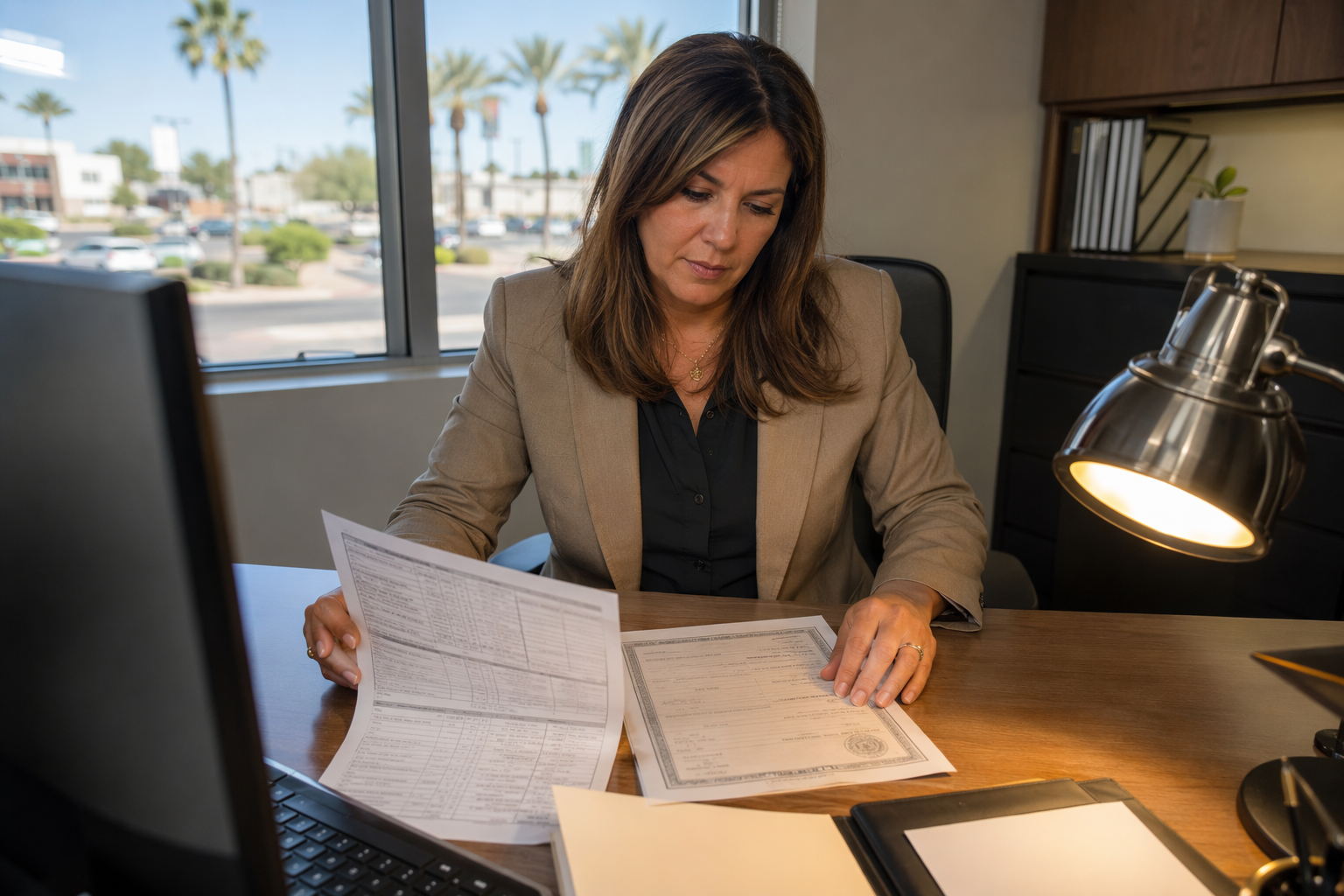
A certified elevator inspector evaluates the entire system against the applicable edition of the ASME A17.1 Safety Code for Elevators and Escalators, which is adopted (sometimes with local amendments) by most U.S. jurisdictions including Arizona. Inspections generally fall into two categories:
| Inspection Type | Typical Trigger | Key Areas Evaluated | Outcome If Passed |
|---|---|---|---|
| Periodic / Annual Inspection | Scheduled by jurisdiction (often annually) | Safety devices, door operation, drive system, hoistway, machine room, emergency communications | Certificate of operation renewed |
| Witnessing Inspection (Category Test) | Required after major repairs or modernization | Full load tests, safety governor, buffers, pressure-relief devices | Permit to return to service |
| New Installation Inspection | Before any new elevator enters service | Complete code compliance from pit to penthouse | Certificate of occupancy / initial operating permit |
| Complaint / Accident Inspection | Following a reported incident or public complaint | Targeted to the reported deficiency | Return-to-service order or continued shutdown |
What Are the Most Common Reasons Elevators Fail Inspection?
Understanding failure points is the fastest way to build a passing preparation checklist. The most frequently cited deficiencies relate to safety devices, documentation, and deferred maintenance — not catastrophic mechanical failures.
| Deficiency Category | Common Examples | Severity | Preventable With Maintenance? |
|---|---|---|---|
| Door Safety Devices | Worn door gibs, slow closing speed, faulty reopening device | High — may cause immediate shutdown | Yes |
| Emergency Lighting & Communication | Dead backup battery, inoperative phone or intercom | High | Yes |
| Machine Room Conditions | Improper storage, missing fire suppression, poor lighting | Medium–High | Yes |
| Pit Conditions | Water intrusion, missing pit stop switch, inadequate lighting | High | Yes |
| Safety Governor & Buffers | Out-of-test date, improper oil level | High — Category 1 or 5 test failure | Yes, with scheduled load testing |
| Documentation Gaps | Missing maintenance log, no posted certificate, outdated permits | Medium — administrative violation | Yes |
| ADA Compliance Items | Non-compliant cab controls, missing Braille, inadequate door timing | Medium (civil liability risk) | Yes, with targeted modernization |
Accessibility requirements are governed separately by the Americans with Disabilities Act (ADA). While ADA compliance is not always enforced during a state safety inspection, violations create independent legal exposure for building owners.
How Do You Prepare for an Elevator Inspection Step by Step?
The following protocol is recommended for building owners and facilities managers in the weeks before a scheduled inspection.
- Confirm the inspection date and applicable code edition. Contact your state or local elevator authority to verify which edition of the ASME A17.1 Safety Code for Elevators and Escalators is enforced in your jurisdiction for 2026.
- Pull all maintenance records and permits. Gather the maintenance logbook, previous inspection certificates, repair invoices, and the current operating permit. Organize them in a folder that can be handed to the inspector on arrival.
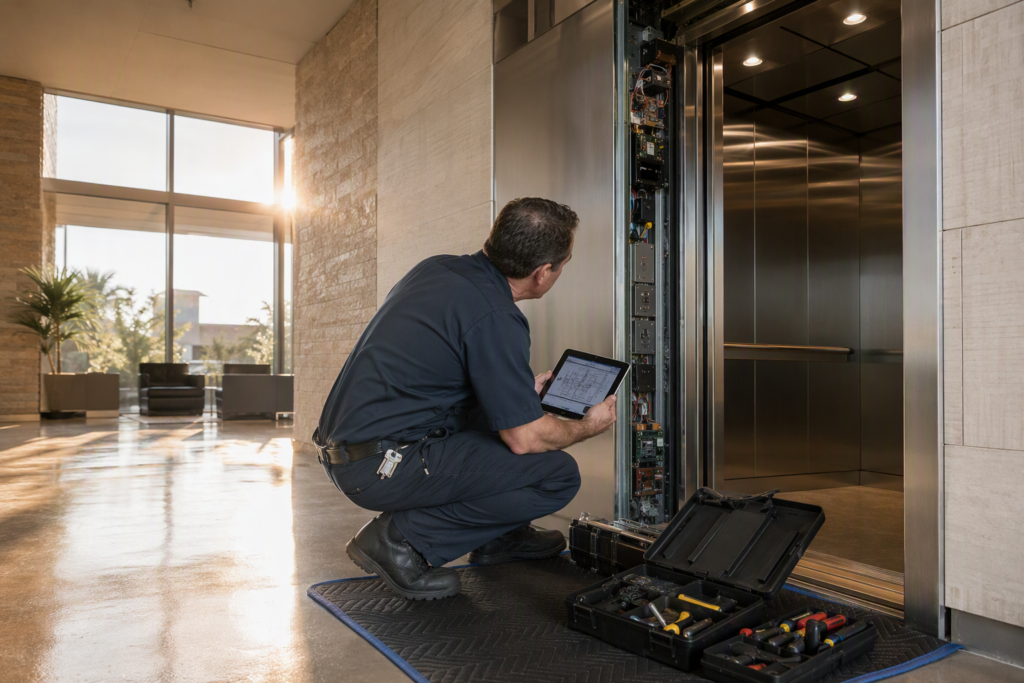
- Schedule a pre-inspection service visit. Engage a qualified elevator contractor — such as Arizona Elevator Solutions — to conduct a thorough pre-inspection walkthrough at least two to four weeks before the official date. This allows time to source parts and complete repairs.
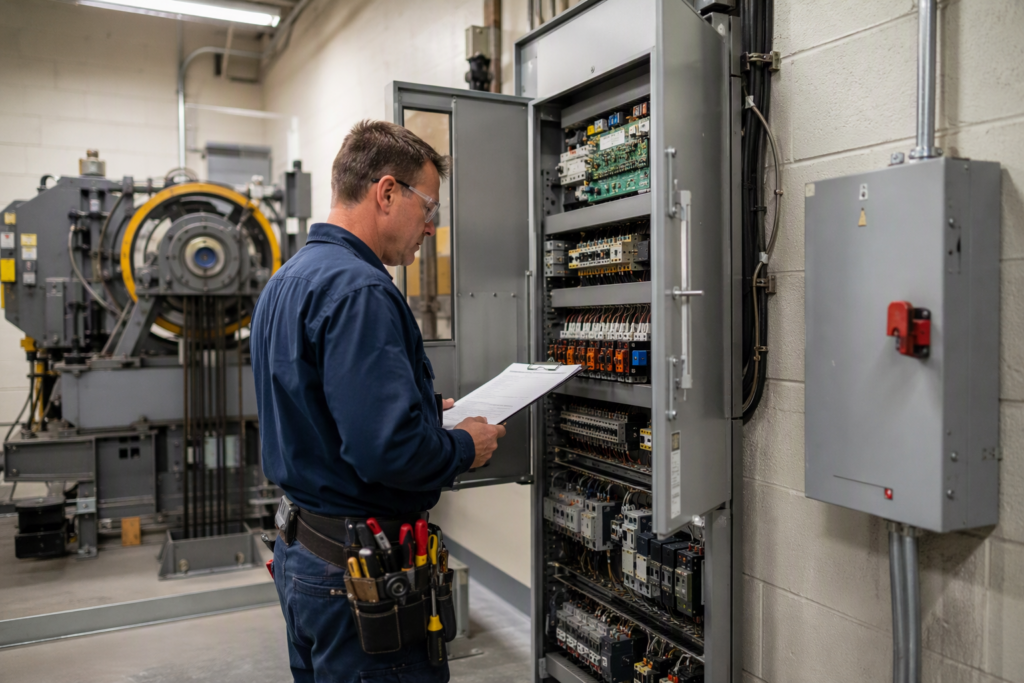
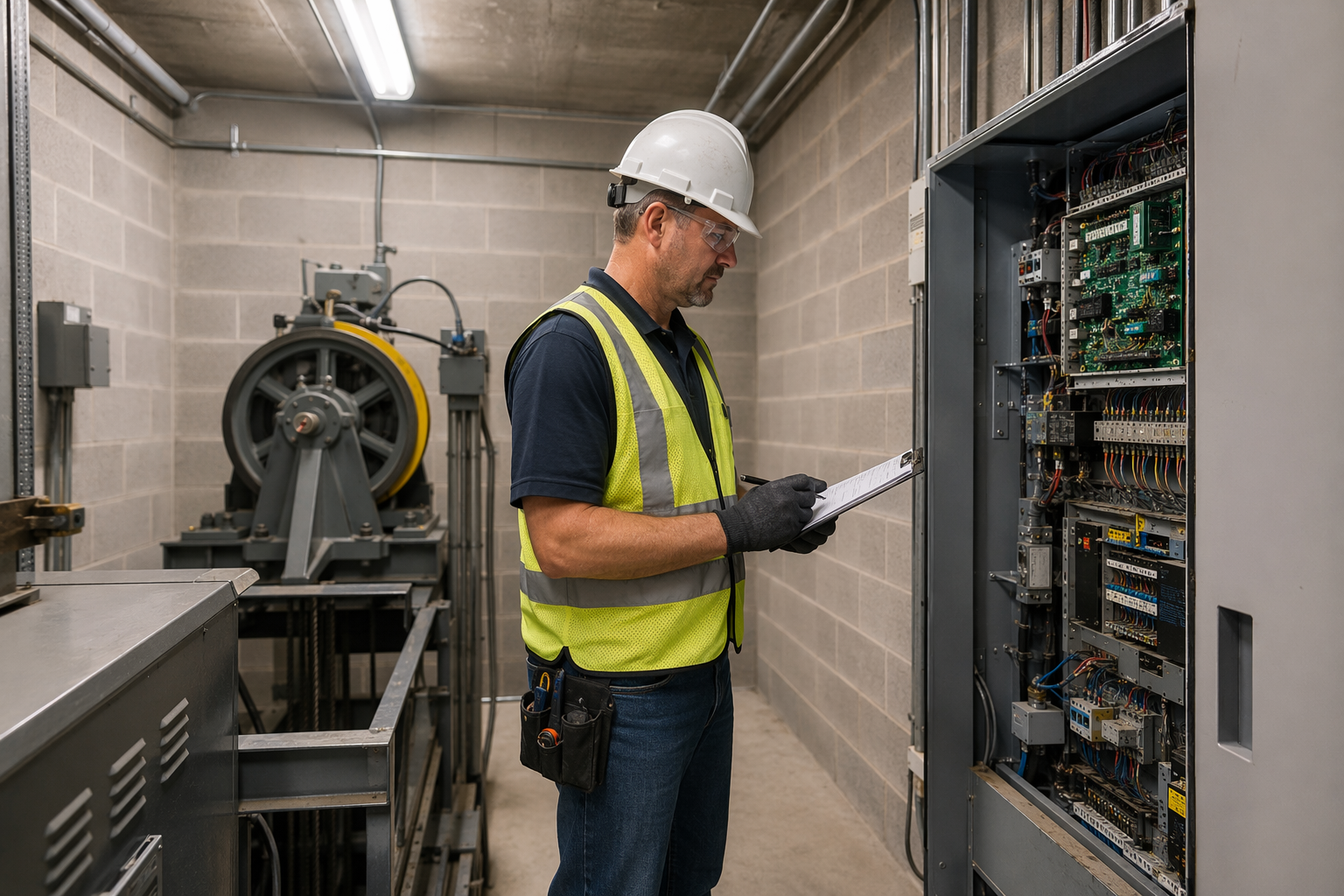
- Audit the machine room. Remove all non-elevator-related storage, verify lighting is functional, confirm the room is locked and accessible only to authorized personnel, and check that fire suppression equipment is current.
- Inspect the pit. Ensure the pit is dry, the pit ladder is secure, the pit stop switch is accessible and operable, and lighting functions properly.
- Test all safety devices. Verify the operation of door safety edges or light curtains, car top and pit stop switches, governor rope, and oil buffers. Confirm that Category 1 and Category 5 test intervals have been met per ASME A17.1.
- Test emergency systems. Run the emergency lighting on battery backup, test the two-way emergency communication device, and confirm the emergency lowering system operates correctly.
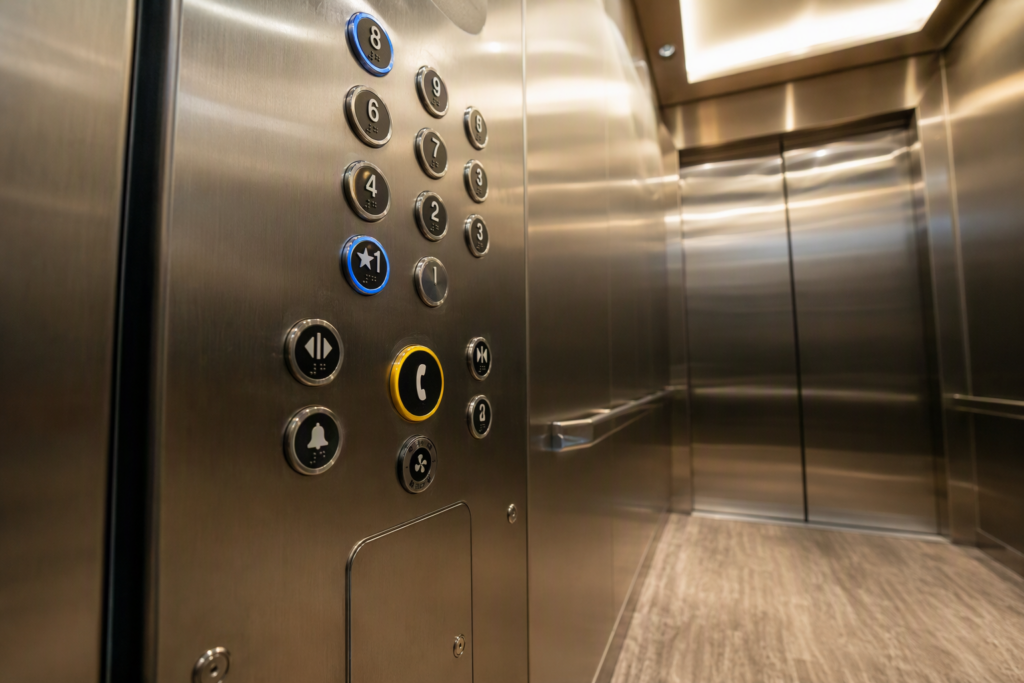
- Verify ADA-compliant features. Check cab interior controls for correct height and Braille markings, confirm door open times meet requirements under the ADA, and verify the audible and visual floor indicators function.
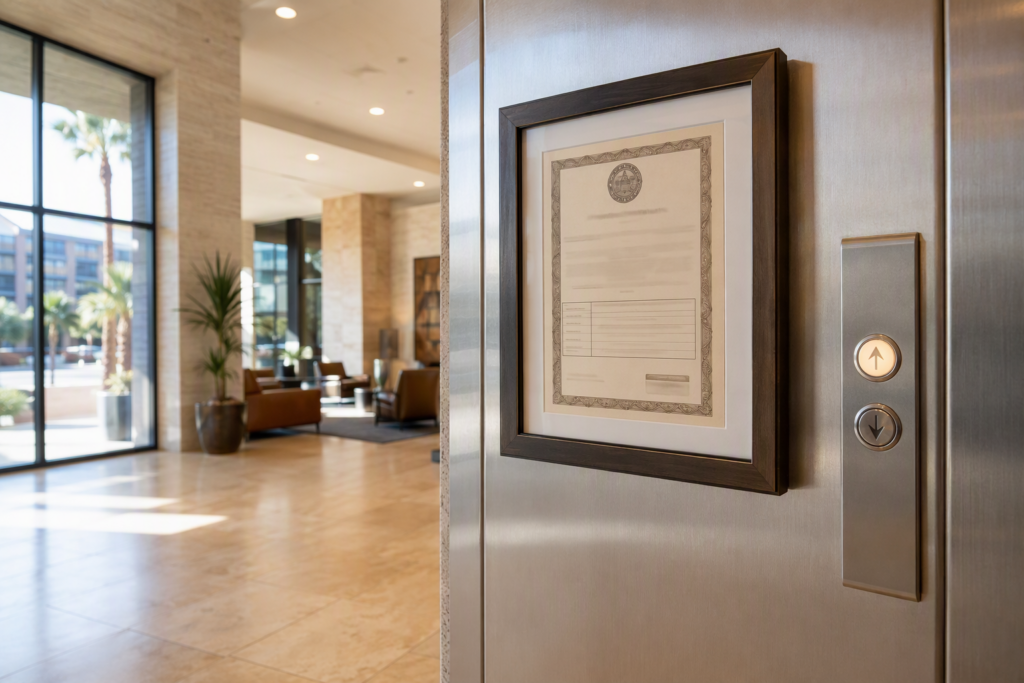
- Post the current certificate of inspection. Ensure the most recent certificate is displayed in the elevator cab or lobby as required by local ordinance.
- Brief your facilities staff. Make certain that the person who will accompany the inspector knows how to access the machine room, start and stop the elevator, and retrieve all documentation.
What Is the Cost of Failing an Elevator Inspection vs. Preventive Maintenance?
The financial case for proactive maintenance is straightforward. Specific costs vary by market, building type, and the scope of deficiencies, but the categories below illustrate why prevention is less expensive than remediation.
| Scenario | Typical Cost Drivers | Downtime Impact | Regulatory Risk |
|---|---|---|---|
| Proactive Pre-Inspection Service | Labor for inspection walk-through, minor parts replacement, documentation review | Minimal — scheduled during low-traffic hours | Low — issues resolved before inspector arrives |
| Minor Violation Repair After Failure | Emergency labor rate, expedited parts, re-inspection fee | Days to weeks depending on part availability | Medium — potential fines, certificate suspended |
| Major Violation / Safety Shutdown | Extensive repairs or modernization, legal fees, lost tenant revenue | Weeks to months | High — operating permit revoked, potential OSHA involvement |
| ADA Non-Compliance Lawsuit | Attorney fees, settlement costs, mandated retrofits | Variable — retrofit work required | Very High — federal civil penalty exposure |
How Does an Independent Service Provider Compare to an OEM Contract for Inspection Readiness?
| Factor | OEM / Manufacturer Contract | Independent Certified Contractor (e.g., Arizona Elevator Solutions) |
|---|---|---|
| Multi-Brand Capability | Limited to own equipment lines | Services most major brands and legacy equipment |
| Parts Sourcing | Proprietary parts, longer lead times possible | Access to OEM and compatible aftermarket parts |
| Pricing Flexibility | Fixed contract tiers, limited negotiation | Tailored service agreements |
| Code Expertise | Strong on own product line | Broad ASME A17.1 and local code knowledge |
| Inspection Representation | Available but may prioritize large accounts | Dedicated client representation during inspections |
| Pre-Inspection Audits | Varies by contract tier | Standard offering with service agreement |
Arizona Elevator Solutions operates as an independent certified elevator service provider, meaning technicians are trained across multiple equipment brands and are not limited to a single manufacturer’s product line. This broad expertise is particularly valuable for buildings with mixed elevator fleets or older legacy equipment that OEM contracts may deprioritize.
What Happens If Your Elevator Fails Inspection?
A failed inspection does not always mean an immediate shutdown, but it does trigger a formal corrective action process. The typical sequence is:
- The inspector issues a written violation notice identifying each deficiency and its code reference.
- Depending on severity, the elevator is either placed out of service immediately or given a correction deadline.
- The building owner engages a licensed contractor to complete all required repairs.
- A re-inspection is scheduled. Some jurisdictions charge an additional fee for follow-up inspections.
- Once the inspector confirms all deficiencies are resolved, the certificate of operation is renewed or reinstated.
Operating an elevator under a suspended certificate can expose building owners to liability under OSHA general duty clause obligations, as well as state-level enforcement actions. Prompt corrective action is always advisable.
What Are the Arizona-Specific Elevator Inspection Requirements?
Arizona adopts the ASME A17.1 Safety Code for Elevators and Escalators as its base standard, administered through the Arizona Department of Occupational Safety and Health (ADOSH) under the broader Arizona Division of Occupational Safety and Health framework. Buildings must obtain an annual operating certificate, and inspections are conducted either by state inspectors or by approved third-party inspection agencies. Owners are responsible for ensuring their equipment is ready before the inspector arrives — the state does not provide advance advisory visits.
This regulatory structure means Arizona building owners benefit significantly from working with a locally knowledgeable service provider. Arizona Elevator Solutions is familiar with the specific code amendments and procedural expectations of ADOSH inspectors, making preparation more targeted and efficient.
How Long Does an Elevator Inspection Take?
Inspection duration depends on elevator type, the number of units in a building, and whether any preliminary violations are found. A straightforward periodic inspection of a single-unit commercial elevator typically takes less than two hours. A full Category 5 witnessing test — which involves running the elevator at full load and testing safety governors — requires considerably more time and advance coordination with both the inspector and the service contractor.
Pre-inspection service visits by a contractor like Arizona Elevator Solutions take additional time proportional to the equipment’s age and condition. Scheduling these visits with adequate lead time avoids last-minute delays.
What Documentation Must Be On-Site During an Elevator Inspection?
Inspectors routinely request the following records. Missing documentation is one of the most easily preventable reasons for a violation citation:
- Current certificate of inspection (must be posted in or near the cab in most jurisdictions)
- Maintenance logbook showing dates, technician entries, and work performed
- Records of Category 1 and Category 5 tests with dates and witnessing credentials
- Permits for any repairs or modernizations completed since the last inspection
- Emergency action plan and building owner contact information
- Hydraulic elevator: fluid type documentation and any spill containment records
When Should a Building Owner Consider Elevator Modernization Before an Inspection?
Modernization becomes a practical consideration when an elevator repeatedly fails inspection on the same systems, when parts for aging equipment are no longer available, or when the cost of ongoing repairs approaches the cost of a targeted upgrade. Common modernization triggers related to inspection compliance include:
- Obsolete door operator systems that cannot reliably meet current safety device requirements
- Control systems that lack the capacity to support required safety monitoring functions
- Hydraulic units with underground cylinders that are past their evaluated service life
- Cab interiors and controls that do not meet current ADA standards
A modernization assessment from Arizona Elevator Solutions can help building owners evaluate whether targeted upgrades or a full replacement delivers the better long-term compliance value.
Can a Building Owner Be Present During an Elevator Inspection?
Yes, and it is strongly recommended. The building owner or a designated representative — often a facilities manager or the elevator service contractor — should be present throughout the inspection. This allows the owner to ask clarifying questions, understand the basis for any citations, and communicate directly with the inspector about timelines for correction. Having the service contractor present simultaneously is best practice, as technicians can address minor findings on the spot and provide expert context for any technical discussions.
Pros and Cons: Handling Inspection Prep In-House vs. Hiring a Certified Contractor
| Approach | Pros | Cons | Best For |
|---|---|---|---|
| In-House Facilities Staff Only | No additional contractor cost; staff knows the building | Limited technical code knowledge; cannot perform mechanical safety tests; high risk of missed deficiencies | Documentation organization only |
| Certified Independent Contractor (e.g., Arizona Elevator Solutions) | Full mechanical, electrical, and code expertise; identifies hidden deficiencies; can repair on the spot | Service fee for pre-inspection visit | All buildings seeking first-attempt pass rates |
| OEM Service Contract with Pre-Inspection Tier | Familiarity with own equipment | Higher contract costs; limited to own brand; may not prioritize smaller accounts | Single-brand new installations under warranty |
Summary: Key Factors for Passing an Elevator Inspection
- Code alignment: Verify your elevator meets the current adopted edition of ASME A17.1 and any Arizona-specific amendments.
- Proactive maintenance: Address deficiencies before — not after — the inspector arrives.
- Complete documentation: Organized records prevent administrative violations that are entirely avoidable.
- Pre-inspection service visit: A qualified contractor walkthrough is the single highest-value preparation step.
- ADA awareness: Track accessibility requirements separately under the ADA to avoid parallel legal exposure.
- Right service partner: An independent certified contractor with local code knowledge offers the broadest and most flexible preparation support.
Get Your Elevator Inspection-Ready with Arizona Elevator Solutions
Arizona Elevator Solutions is an independent certified elevator service company serving building owners and property managers throughout Arizona. The team provides pre-inspection audits, maintenance services, code compliance assessments, and full modernization evaluations — helping clients achieve compliance with the ASME A17.1 Safety Code for Elevators and Escalators and applicable local regulations.
Do not wait for a failed inspection to take action. Contact Arizona Elevator Solutions for a free elevator assessment by calling 480-557-7600 today.
Need elevator service you can rely on? Arizona Elevator Solutions is ready to help.