State Elevator Inspection Frequency: What Building Owners and Facility Managers Need to Know
Elevator inspection frequency is one of the most consequential compliance variables a building owner or facility manager faces. Miss a required inspection cycle and the consequences range from fines and operational shutdowns to serious liability exposure. This authority page breaks down how inspection intervals are determined, what drives variation across states, and what building owners should track to stay continuously compliant in 2025 and 2026.
—
What Is the Standard Elevator Inspection Frequency?
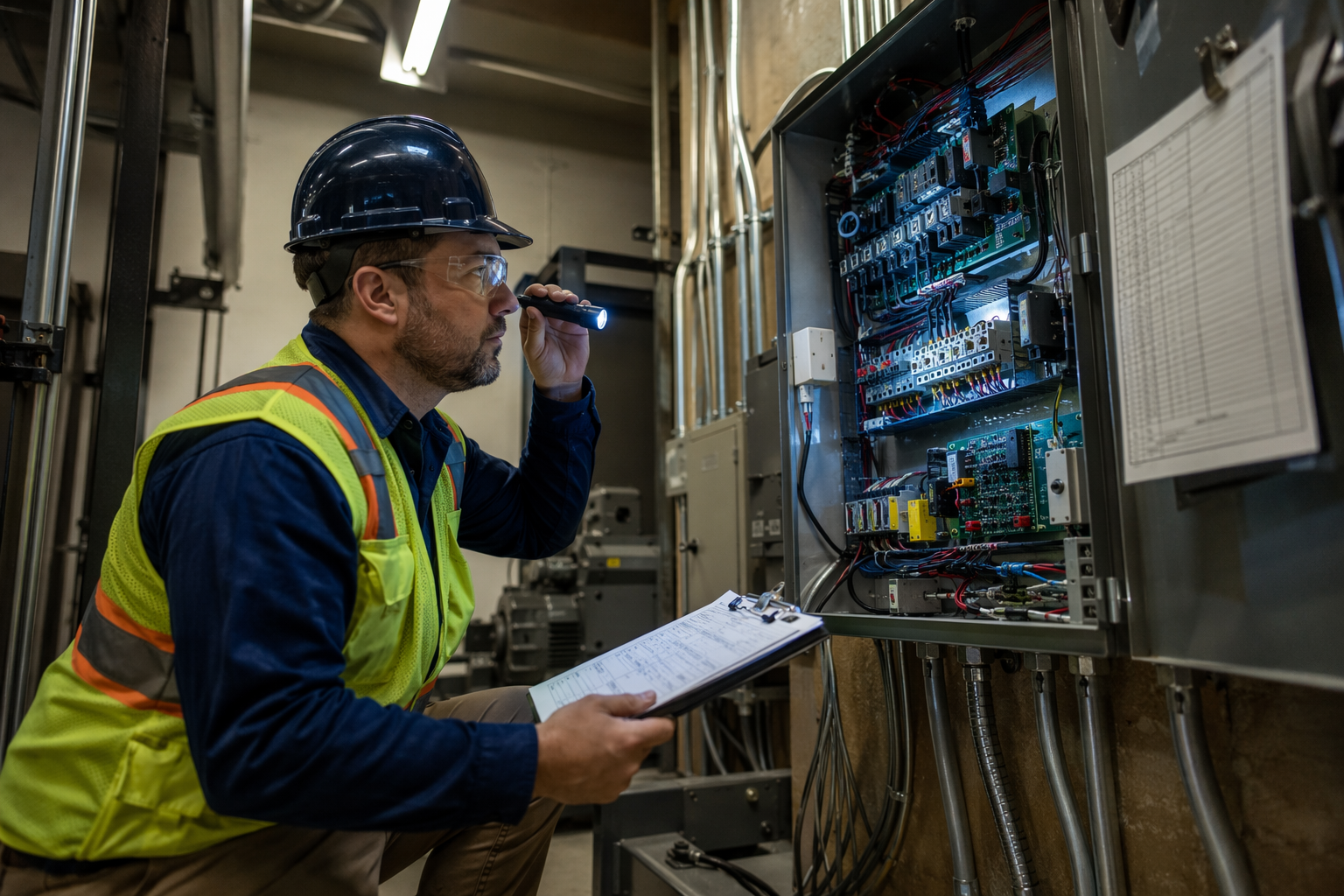
The foundational reference for elevator inspection intervals in the United States is the ASME A17.1 Safety Code for Elevators and Escalators. This code, which most state jurisdictions adopt in whole or in part, establishes minimum inspection and testing intervals as a baseline framework. Under ASME A17.1, periodic inspections and tests are categorized by type — with routine periodic inspections typically required on an annual basis and more rigorous category tests (such as Category 1 and Category 5 tests for hydraulic and traction systems) scheduled over multi-year cycles depending on equipment class.
Because elevator regulation is ultimately a state-level function in the U.S., individual states adopt, amend, or supplement ASME A17.1 requirements. This means:
- Annual inspections are the most common baseline requirement across states.
- Some states mandate semi-annual inspections for certain occupancy types (hospitals, schools, high-rise buildings).
- Category testing schedules can range from every one to five years depending on equipment type and state amendments.
- A handful of states have not fully adopted ASME A17.1 and operate under their own independent codes.
Because no single federal statute mandates a universal inspection frequency for all elevators across all states, building owners must verify requirements with the specific authority having jurisdiction (AHJ) — typically a state labor department, building department, or dedicated elevator safety bureau.
—
How Does Arizona’s Elevator Inspection Frequency Compare?

Arizona operates its elevator safety program through the Arizona Department of Occupational Safety and Health (ADOSH) and aligns its requirements with the ASME A17.1 Safety Code for Elevators and Escalators. In Arizona, most elevators in public or commercial use are subject to annual periodic inspections conducted by a qualified elevator inspector. Equipment-specific tests — including category tests for hydraulic and traction elevators — follow the intervals established under the adopted edition of ASME A17.1 as enforced by ADOSH.
Arizona Elevator Solutions works with building owners and facility managers across the state to help them understand precisely which inspection cycle applies to their equipment, which category tests are coming due, and how to prepare documentation that satisfies the AHJ. The firm’s approach is grounded in current code editions and state-specific enforcement guidance rather than generalized assumptions.
—
What Types of Elevator Inspections Are Required?
Inspection requirements under ASME A17.1 are not a single event — they comprise a layered system of inspections and tests, each with its own interval:
- Periodic Inspection: A visual and operational inspection of all elevator components. Typically required annually, though some jurisdictions require it more frequently for high-occupancy or high-risk settings.
- Category 1 Test: A no-load safety test of the elevator’s safeties, buffers, and other devices. Typically required annually for most traction and hydraulic equipment.
- Category 3 Test: Applies to certain escalators and moving walks; intervals vary by state adoption.
- Category 5 Test: A full-load, full-speed safety test — the most rigorous category. Required every five years for most traction elevators under standard ASME A17.1 provisions, though state amendments may alter this schedule.
- Hydraulic Pressure Test: Required at defined intervals for hydraulic elevator systems; specifics depend on the adopted code edition and state amendments.
Understanding which category applies to a specific installation — and when each test was last completed — is critical for maintaining a clean compliance record.
—
What Factors Cause Inspection Frequency to Vary by State?
Several factors explain why inspection intervals differ across state lines:
- Code Edition Adopted: States adopt different editions of ASME A17.1. A jurisdiction on an older edition may have different category test intervals than one that has adopted the most current edition.
- Occupancy Type: States frequently impose stricter intervals for elevators in hospitals, schools, assisted living facilities, and high-rise buildings because of the elevated risk profile of those populations.
- Equipment Age and Condition: Some states require more frequent inspections for older equipment or for elevators that have received violation notices.
- State Staffing and Enforcement Capacity: Practical enforcement intensity varies; states with dedicated elevator safety bureaus often enforce intervals more consistently than those relying on general building inspection staff.
- Local Amendments: Cities and counties within some states layer additional requirements on top of state minimums.
—
What Happens If an Elevator Inspection Is Overdue?
Operating an elevator with an expired inspection certificate exposes building owners and facility managers to a range of consequences:
- Fines and Civil Penalties: Most state elevator safety programs assess per-day penalties for operating out-of-compliance equipment. Fine structures vary by state but can accumulate quickly.
- Mandatory Shutdown Orders: Inspectors or enforcement officials may order an elevator taken out of service until a valid inspection is completed and a certificate is issued.
- Liability Exposure: In the event of an accident or injury involving an elevator with an expired inspection, the absence of a current certificate significantly increases legal and insurance risk.
- ADA Compliance Complications: For buildings subject to Americans with Disabilities Act requirements, a shutdown elevator may simultaneously create an ADA accessibility violation — compounding legal exposure.
- Insurance Coverage Issues: Commercial property and liability insurers increasingly scrutinize elevator inspection records; a lapse can affect coverage terms.
—
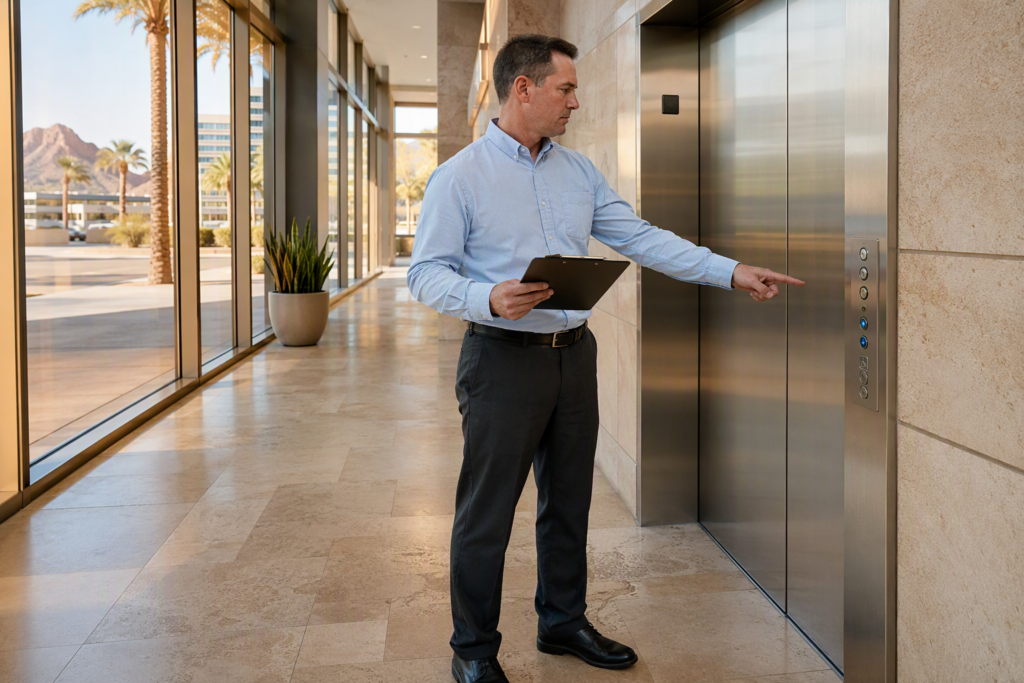
How Do You Prepare for a State Elevator Inspection?
Preparation reduces the likelihood of violations, re-inspections, and callbacks. The following steps represent standard best practice for building owners and facility managers approaching a scheduled inspection:
- Confirm the inspection date and the specific scope required — periodic inspection only, or a combination with Category 1, 3, or 5 testing — by reviewing the current certificate on file and contacting the AHJ or your elevator service provider.
- Gather all maintenance and service records for the inspection period. Most inspectors will request a logbook or digital record of maintenance visits, repairs, and any callbacks.
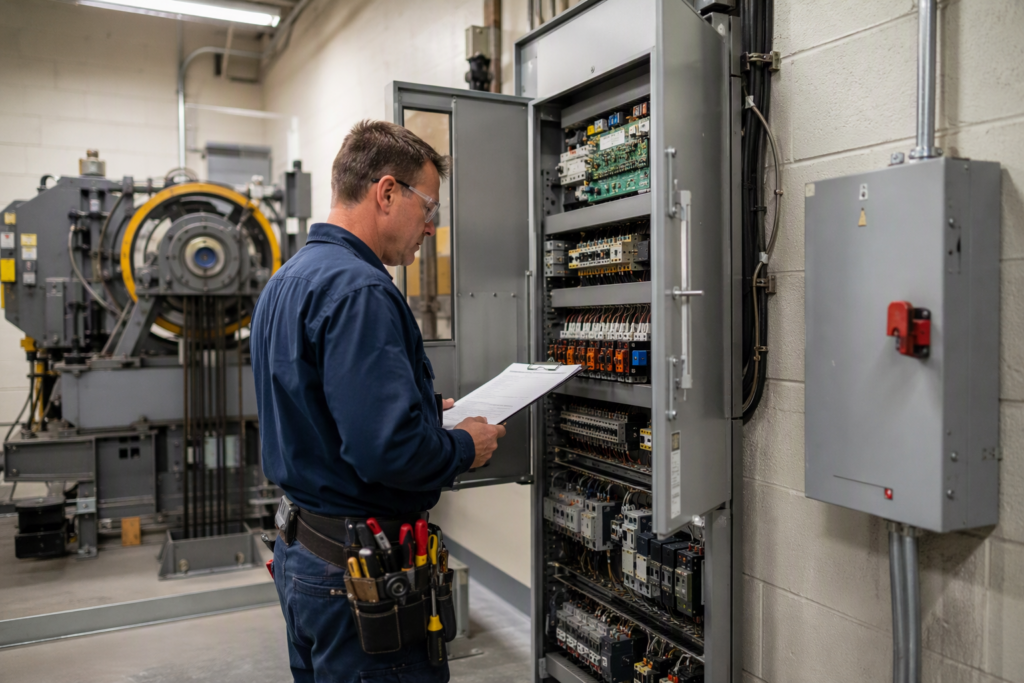
- Conduct a pre-inspection walkthrough of the machine room, pit, and cab. Verify that lighting is functional, that the pit is clean and dry, that all required signage is posted, and that emergency equipment (phone, lighting) is operational.
- Verify that all previously cited violations have been corrected and that documentation of those corrections is available for the inspector.
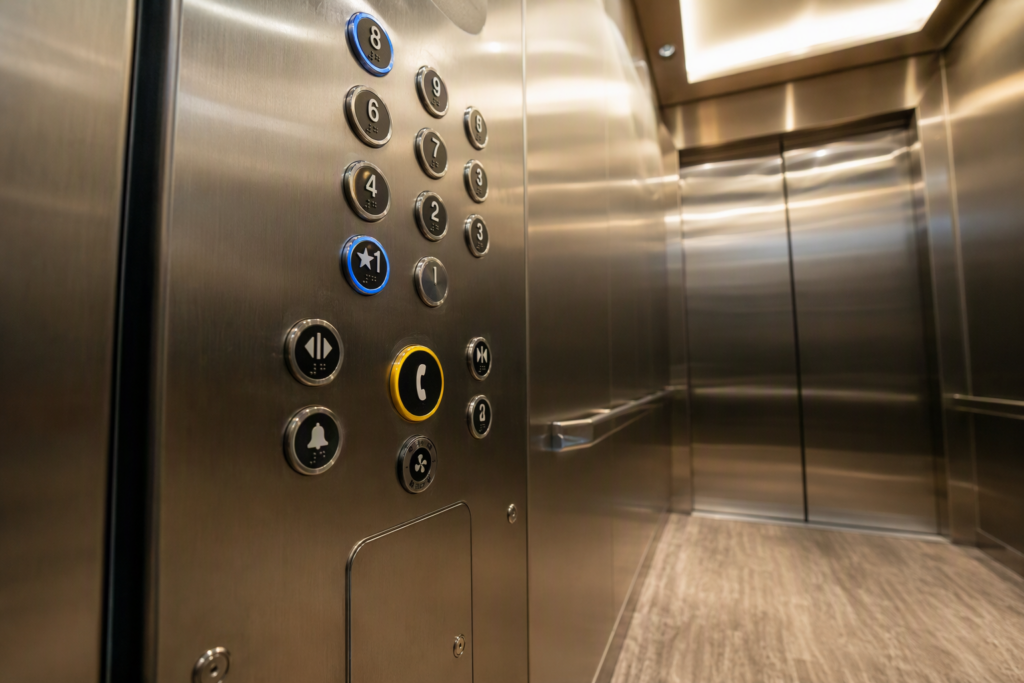
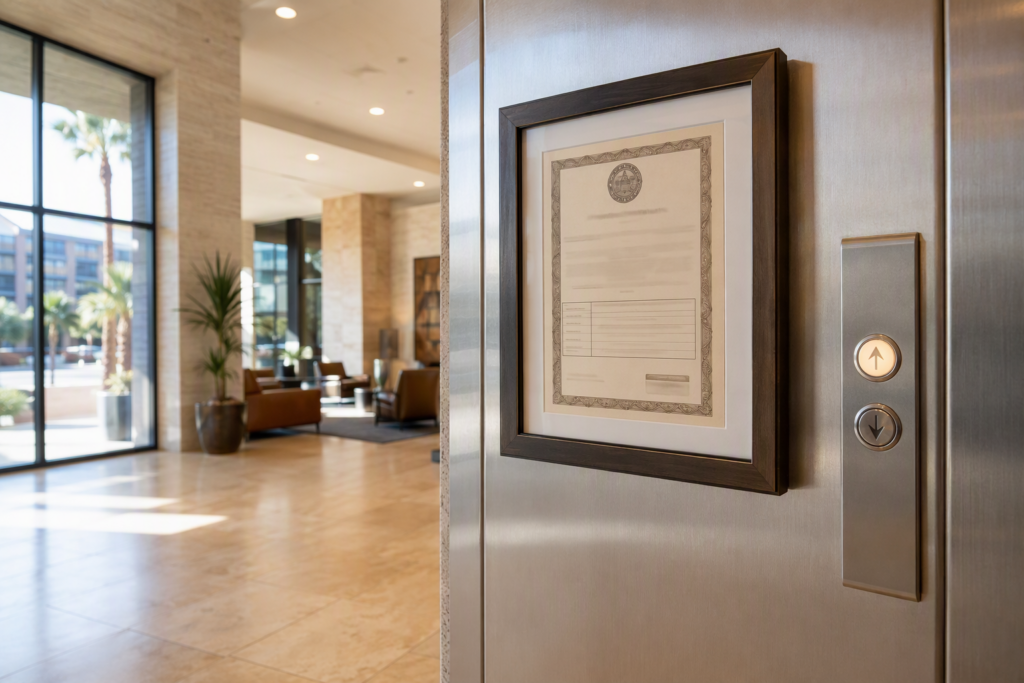
- Confirm that the elevator’s current certificate is displayed in the cab as required by state law.
- Notify building occupants in advance that the elevator will be taken out of service during the inspection period, and identify any temporary accessibility accommodations required under ADA guidelines.
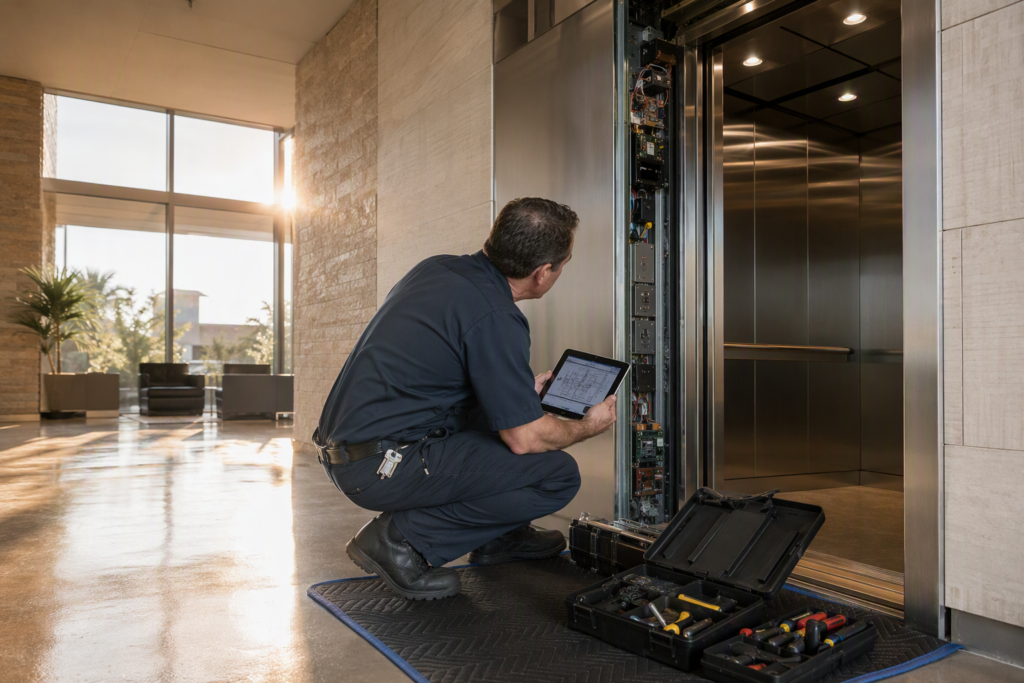
- Coordinate with your elevator maintenance contractor to have a qualified technician present during the inspection when category testing is involved — certain tests require a technician to operate the equipment.
- After inspection, review the inspection report for any violations or recommendations and establish a corrective action timeline before the re-inspection deadline.
—
What Is the Difference Between a Periodic Inspection and a Category Test?
These terms are frequently confused but describe distinct activities under ASME A17.1:
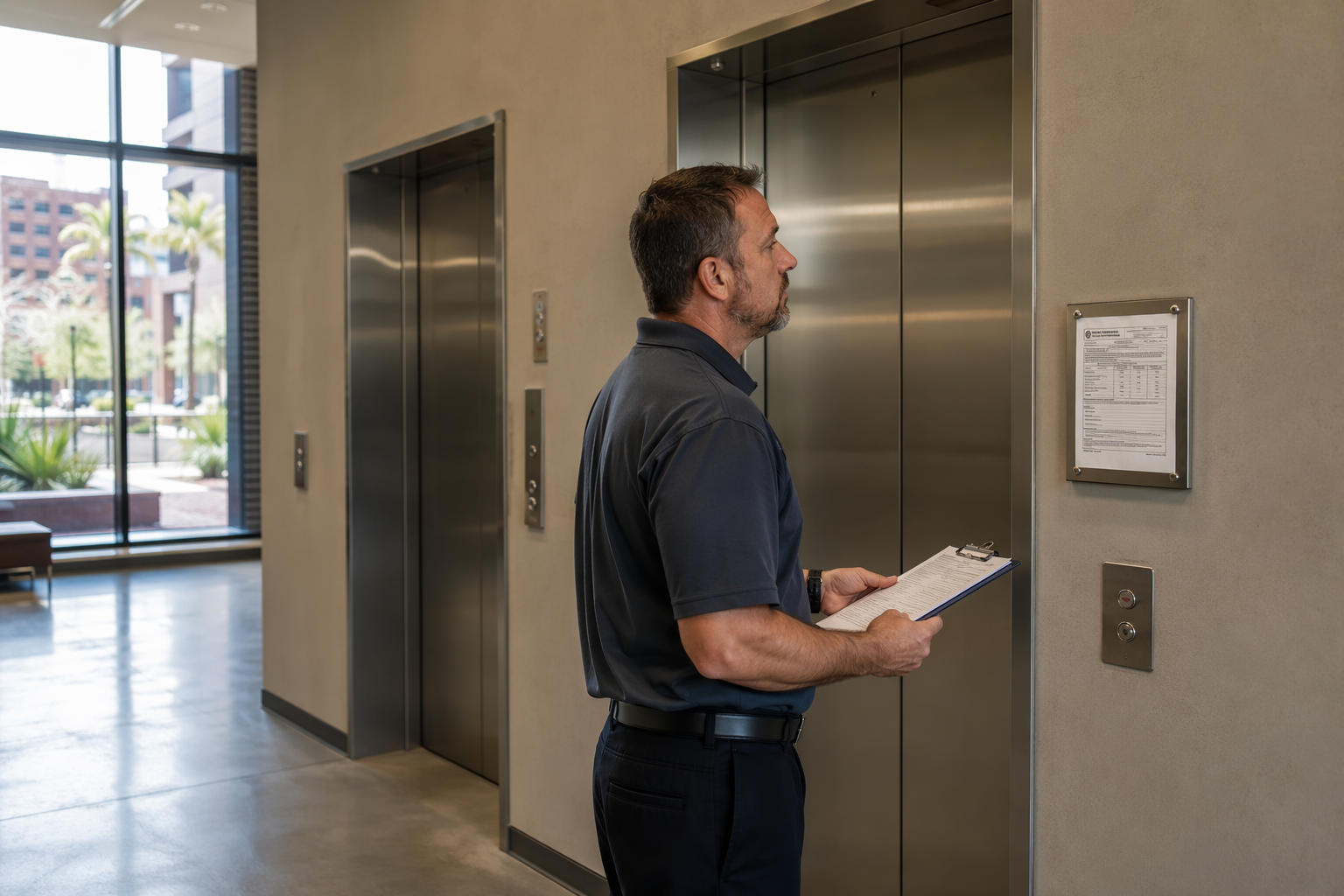
A periodic inspection is a visual and functional review of the elevator system conducted by a qualified inspector. The inspector observes equipment condition, verifies that required devices are present and apparently functional, and documents any apparent deficiencies. It does not involve intentionally stressing or loading the equipment to its rated limits.
A category test is an active, performance-based test in which specific safety devices are exercised under defined conditions. Category 1 tests verify that safeties and buffers function correctly at rated load and speed. Category 5 tests go further — requiring full-load, full-speed testing of safety devices — and must be conducted under controlled conditions by qualified personnel. Category tests carry a higher preparation burden and typically require the elevator to be out of service for a longer period than a periodic inspection alone.
Both have distinct schedules, and both generate separate documentation that must be retained and available to the AHJ.
—
Does OSHA Play a Role in Elevator Inspection Requirements?
OSHA occupational safety standards apply to elevators in workplace settings, particularly during construction phases and for freight or service elevators in industrial environments. OSHA’s jurisdiction focuses on protecting workers — including elevator technicians, maintenance personnel, and workers in buildings where elevators operate — rather than the general public riding passenger elevators.
In most commercial building contexts, the primary regulatory authority for passenger elevator inspections is the state elevator safety program, not OSHA. However, when elevator work involves employee exposure to hazards — such as during maintenance, repair, or installation — OSHA standards for hazard communication, lockout/tagout, and fall protection may apply concurrently with state elevator codes. Facility managers should understand that compliance with state elevator inspection requirements does not automatically satisfy all applicable OSHA obligations for workers who interact with elevator systems.
—
How Does Elevator Age Affect Inspection Requirements and Frequency?
Older elevator equipment does not always face a different statutory inspection frequency than newer equipment — annual periodic inspections typically apply regardless of age. However, equipment age affects compliance in several important indirect ways:
- Older equipment is more likely to have components that fall out of compliance with current code editions when modernization triggers a full code review.
- Some state programs flag equipment beyond a certain age for enhanced review or require documented condition assessments prior to certificate renewal.
- Aging hydraulic systems may be subject to more frequent pit inspections or tank integrity assessments under state-specific amendments.
- Equipment with a history of violations or callbacks may be subject to increased inspector scrutiny during annual inspections.
For older equipment, proactive maintenance and component documentation become even more important preparation tools before each inspection cycle.
—
What Records Must Building Owners Maintain for Elevator Inspections?
Record-keeping requirements vary by state, but standard documentation that most AHJs expect includes:
- The current, valid inspection certificate (which must typically be posted in the elevator cab).
- A maintenance logbook or digital equivalent showing dates, scope of maintenance visits, and technician identification.
- Records of all repairs, part replacements, and callbacks.
- Documentation of any category tests performed, including test results and the name of the witness or inspector.
- Records of previous inspection reports and documentation of corrective actions taken for cited violations.
- Any permits issued for modifications, modernizations, or major repairs.
Maintaining organized, readily accessible records significantly reduces inspection friction and demonstrates a culture of proactive compliance to inspectors and enforcement officials.
—
What Are the 2025–2026 Trends in State Elevator Inspection Requirements?
The regulatory environment for elevator inspections is evolving in several qualitative directions heading into 2025 and 2026:
- Digital documentation and remote monitoring: An increasing number of state programs are accepting or actively encouraging digital maintenance logs and remote monitoring data as supplemental evidence of compliance. While this has not yet replaced in-person inspections in any major jurisdiction, it is shaping how inspectors evaluate equipment condition between cycles.
- Code edition updates: States that have lagged behind in adopting current editions of ASME A17.1 are under ongoing pressure — from industry groups and safety advocates — to modernize their adopted standards. Adoption of newer editions can change category test intervals and introduce new inspection requirements for specific equipment types.
- Accessibility enforcement integration: Regulators are increasingly coordinating elevator safety enforcement with ADA accessibility compliance reviews, particularly in public accommodations and federally assisted facilities.
- Inspector workforce constraints: Many state programs face qualified inspector shortages. This has led some jurisdictions to explore third-party inspection accreditation frameworks, which could affect how and by whom inspections are conducted in coming years.
- Increased scrutiny of older hydraulic systems: Environmental and safety concerns around underground hydraulic tanks are driving some states toward more rigorous inspection requirements for aging hydraulic elevator installations.
Arizona Elevator Solutions monitors these regulatory trends on an ongoing basis to ensure that clients in Arizona receive guidance that reflects current and emerging requirements — not just the baseline that existed years ago.
—
How Can Building Owners Stay Ahead of Inspection Deadlines?
Reactive compliance — scrambling to schedule an inspection after a certificate has already expired — is among the most common and most avoidable elevator compliance failures. Proactive strategies include:
- Maintaining a compliance calendar that tracks certificate expiration dates, category test due dates, and maintenance intervals for each elevator in a portfolio.
- Working with an elevator service provider capable of tracking inspection schedules and providing advance notice of upcoming requirements.
- Building category test preparation into the annual maintenance plan rather than treating it as a separate, unexpected event.
- Establishing a direct relationship with the state AHJ to receive any notices of code amendments or enforcement priority shifts directly.
Arizona Elevator Solutions positions itself as a data-driven service partner for exactly this purpose — helping building owners and facility managers maintain a forward-looking compliance posture rather than a reactive one.
—
Sourced Data Reference Table
| Inspection / Test Type | Typical Interval (ASME A17.1 Baseline) | Source |
|---|---|---|
| Periodic Inspection | Annual (most jurisdictions) | ASME A17.1 |
| Category 1 Test (traction & hydraulic) | Annual | ASME A17.1 |
| Category 5 Test (traction elevators) | Every 5 years | ASME A17.1 |
Note: State-specific amendments may alter these intervals. Confirm with the authority having jurisdiction in your state.
—
Frequently Asked Questions: State Elevator Inspection Frequency
How often are elevators inspected by the state?
In most U.S. states, elevators are subject to annual periodic inspections conducted by or on behalf of the state authority having jurisdiction. Some states require semi-annual inspections for elevators in high-risk occupancies such as hospitals or schools. Category testing — more rigorous performance tests — follows separate intervals established under ASME A17.1 and any state-specific amendments.
What code governs elevator inspection frequency in the U.S.?
The primary model code is the ASME A17.1 Safety Code for Elevators and Escalators. Most states adopt this code as their regulatory baseline, though they may amend it or operate on different adopted editions. Federal OSHA standards apply specifically in workplace contexts.
Does every state have the same elevator inspection frequency requirement?
No. Elevator inspection frequency is a state-level regulatory matter, and requirements vary meaningfully across jurisdictions. While annual periodic inspections are the most common baseline, occupancy type, equipment class, and state-specific amendments all create variation. Building owners with properties in multiple states must verify requirements in each jurisdiction.
What is a Category 5 elevator test and how often is it required?
A Category 5 test is the most demanding performance test required under ASME A17.1. It involves full-load, full-speed testing of the elevator’s safety devices and must be conducted under controlled conditions by qualified personnel. Under the standard ASME A17.1 framework, Category 5 testing is required every five years for most traction elevators, though state amendments can modify this interval.
What happens if a building owner misses the elevator inspection deadline?
Operating an elevator with an expired inspection certificate can result in civil fines, mandatory shutdown orders, loss of insurance coverage, and — in the event of an incident — significant legal liability. Buildings subject to ADA requirements may also face simultaneous accessibility violations if a shutdown elevator creates a barrier to access.
Who conducts state elevator inspections?
Inspections are conducted by qualified elevator inspectors — either state employees working for the authority having jurisdiction or third-party inspectors holding accreditation recognized by the state program. In some states, the elevator maintenance contractor’s technician must be present during category testing but cannot serve as the official inspector of record for that equipment.
How long does a state elevator inspection take?
The duration of an elevator inspection varies by equipment type, inspection scope, and the condition of the installation. A routine annual periodic inspection of a straightforward passenger elevator typically requires less time than a combined periodic inspection and category test. Building owners should plan for the elevator to be out of service during the inspection and coordinate occupant notifications accordingly.
Are freight elevators subject to the same inspection frequency as passenger elevators?
Freight elevators are governed by the same foundational framework — ASME A17.1 — as passenger elevators, but the specific inspection and test requirements can differ based on equipment class and rated capacity. Additionally, when freight elevators are used by employees in workplace settings, OSHA standards may impose additional requirements beyond the state elevator safety program.
Do residential elevators require the same inspection frequency as commercial elevators?
Residential elevator requirements vary significantly by state and often by whether the residence is a single-family home or a multi-family building. Many states exempt private single-family residential elevators from the same mandatory periodic inspection requirements that apply to commercial or publicly accessible installations. Multi-family residential buildings with elevators typically fall under commercial inspection requirements. Building owners should confirm with the local AHJ.
How does Arizona’s elevator inspection program work?
Arizona’s elevator safety program is administered through ADOSH and is grounded in the ASME A17.1 Safety Code for Elevators and Escalators as adopted in the state. Commercial and public-use elevators in Arizona are required to undergo periodic inspections and applicable category tests on schedules established by the adopted code and enforced by ADOSH. Arizona Elevator Solutions maintains current familiarity with Arizona’s regulatory requirements and helps building owners navigate inspection preparation, documentation, and corrective action processes.
—
Work With a Data-Driven Elevator Compliance Partner in Arizona
Staying compliant with state elevator inspection frequency requirements demands more than a once-a-year calendar reminder. It requires a systematic understanding of which category tests apply to specific equipment, what documentation must be maintained, how state-specific amendments affect ASME A17.1 baseline intervals, and how to prepare effectively for each inspection cycle.
Arizona Elevator Solutions brings a structured, code-grounded approach to elevator compliance for building owners and facility managers across Arizona. Whether a property has a single passenger elevator or a multi-elevator portfolio, the firm applies current knowledge of ASME A17.1, ADOSH requirements, and ADA accessibility considerations to help clients maintain continuous, documented compliance — not reactive scrambling.
Contact Arizona Elevator Solutions for a free elevator assessment: 480-557-7600
Need elevator service you can rely on? Arizona Elevator Solutions is ready to help.