
Elevator Out of Service: Who to Contact and What to Do — Complete FAQ Guide
Who should I contact first when an elevator is out of service?
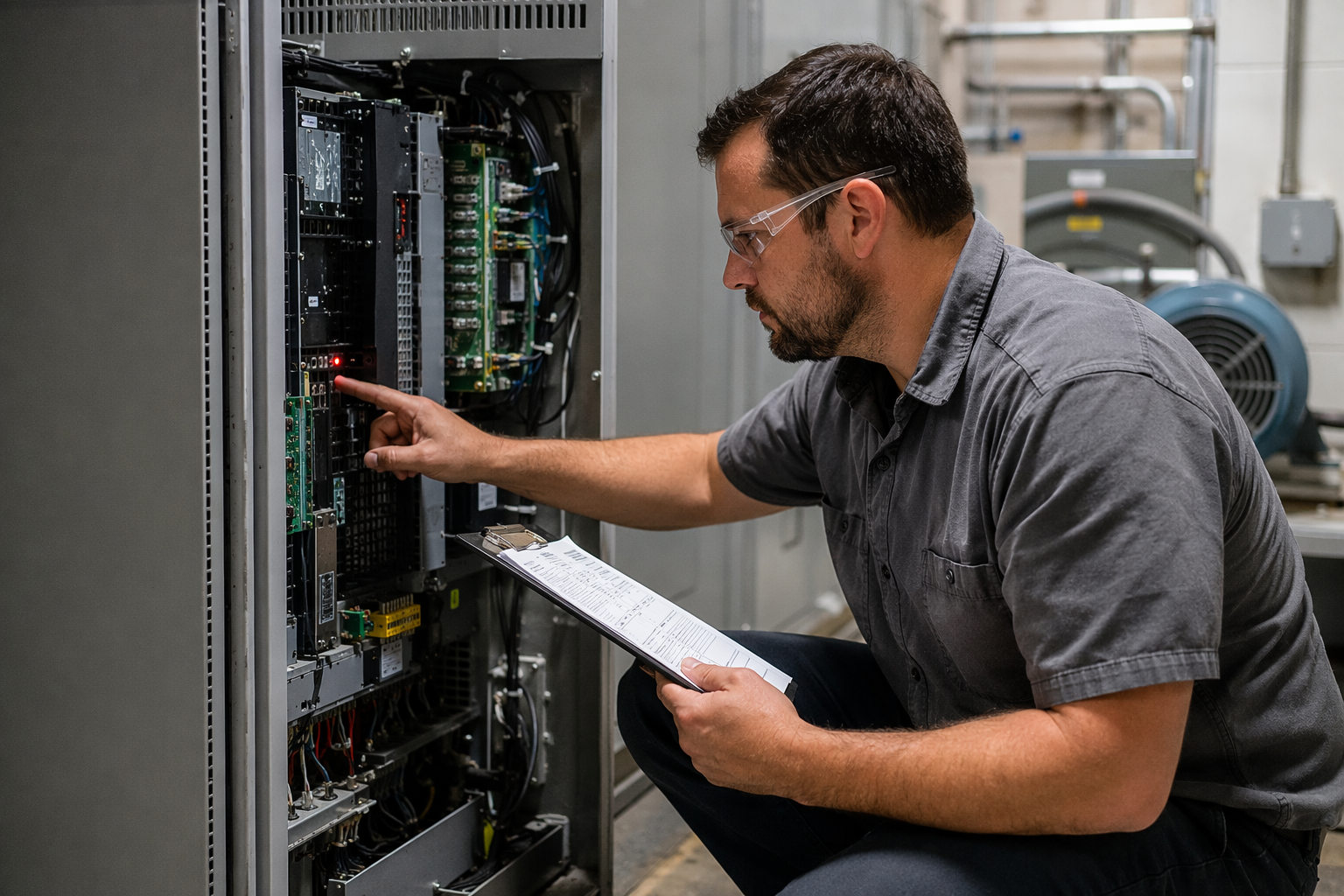
Contact your licensed elevator service contractor immediately, followed by your building or property manager, and — if a passenger is trapped — emergency services (911) without delay.
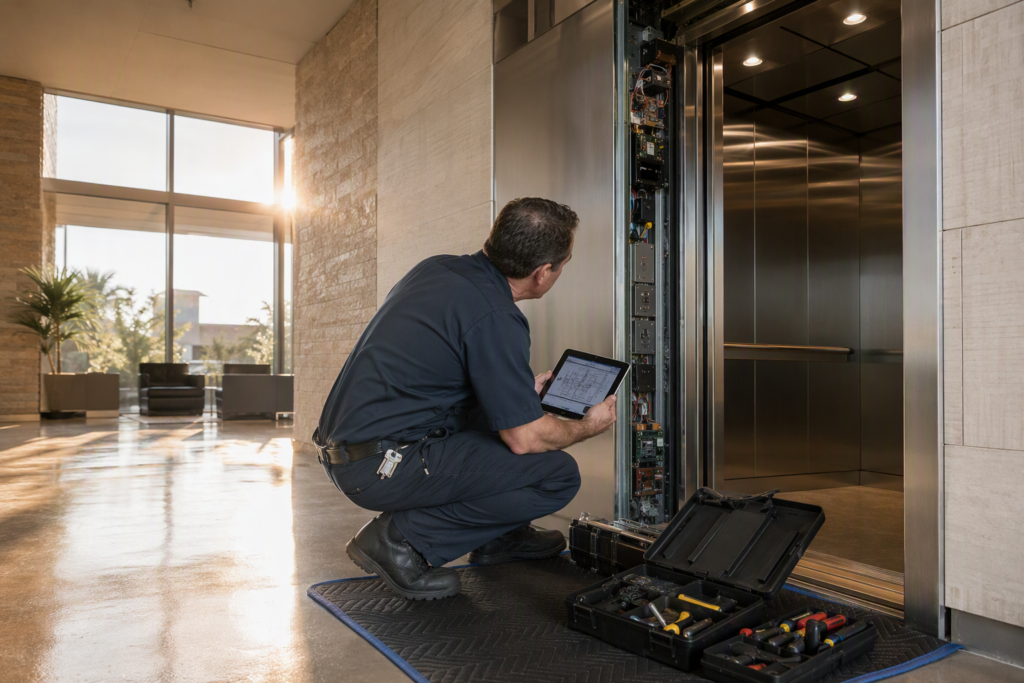
The chain of contacts matters. An elevator contractor has the trained personnel, tools, and code authority to restore the unit to service safely. Building managers need to know so they can arrange alternative access for occupants, especially those who depend on the elevator due to mobility limitations. If a person is trapped inside the cab, 911 dispatch can coordinate a fire department response alongside the elevator technician, since forced entry without proper training can worsen the situation or injure the trapped individual.
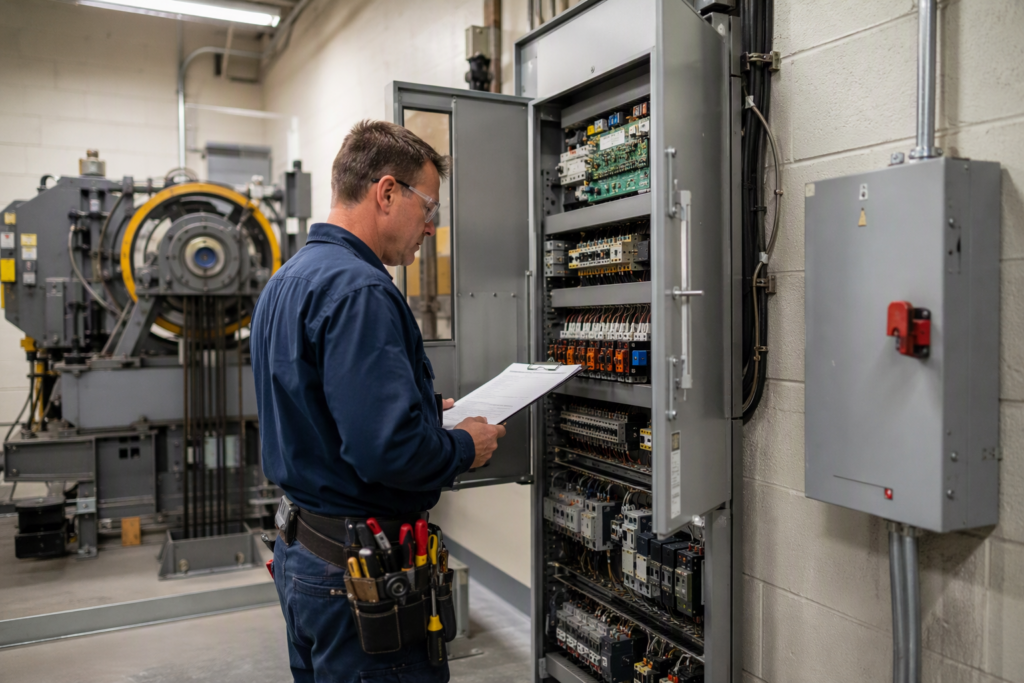
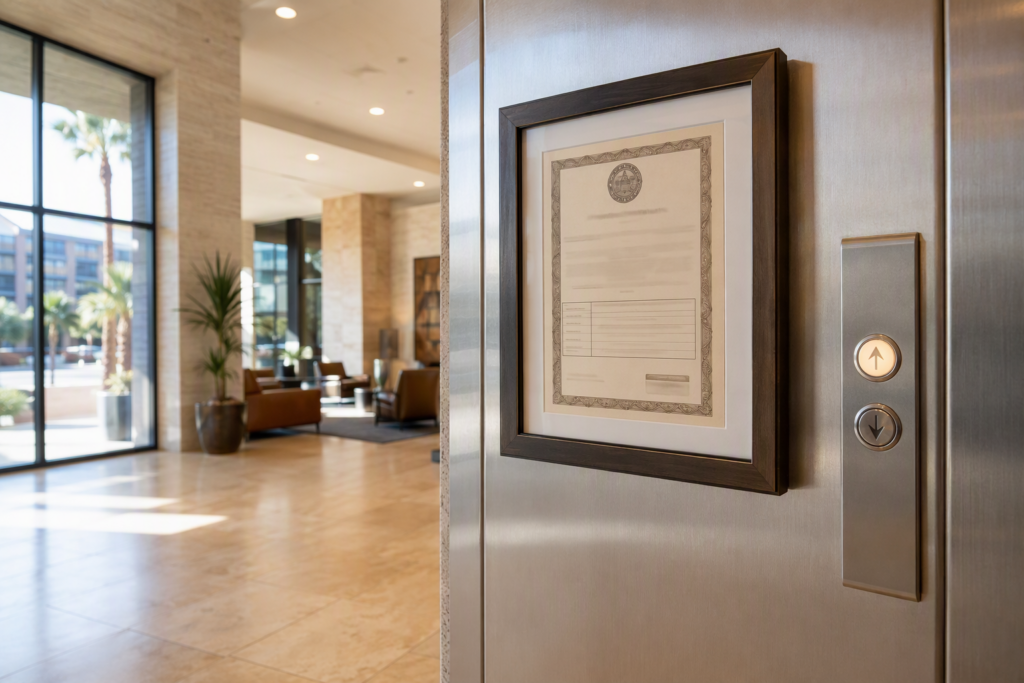
In markets served by Arizona Elevator Solutions — Phoenix, Tucson, Scottsdale, and Mesa — building owners should maintain their elevator contractor’s contact information posted in the machine room and at the building management office at all times.
What should I do step by step when an elevator goes out of service?

Following a clear, ordered protocol when an elevator goes out of service protects passenger safety, limits liability, and speeds restoration.
- Assess for trapped passengers. Listen at the cab door and look at the position indicator. If someone is trapped, call 911 immediately before doing anything else.
- Do not attempt manual rescue without training. Unauthorized hoistway entry violates ASME A17.1 Safety Code for Elevators and Escalators safety provisions and can put both rescuer and passenger at risk.
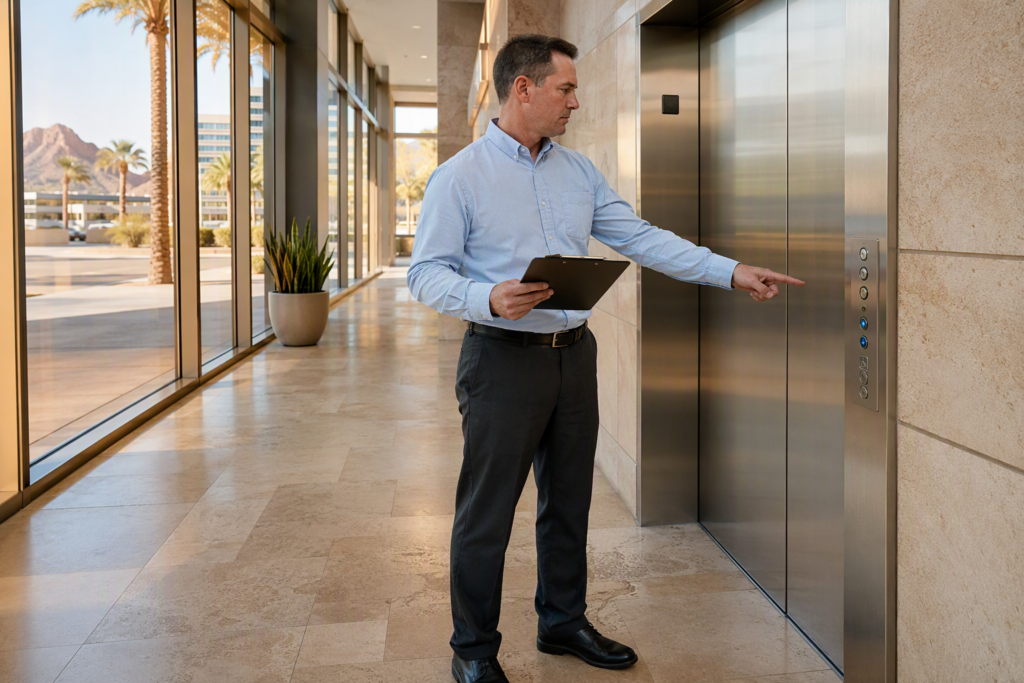
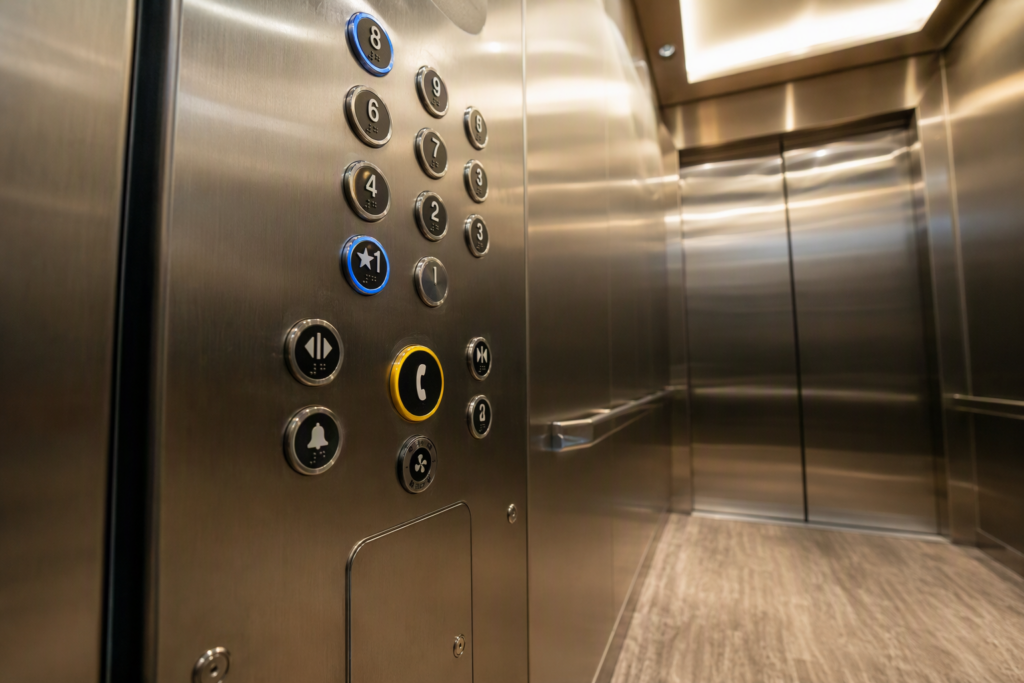
- Secure the elevator entrances. Place visible “Out of Service” signs at every landing, covering all call buttons at each floor the elevator serves.
- Contact your elevator service contractor. Report the unit number, the building address, the last known floor position of the cab, and any error codes or unusual sounds observed.
- Notify your building or property manager. They must coordinate alternative accessibility accommodations under ADA obligations.
- Log the incident. Record the date, time, symptoms observed, and any recent maintenance history. This documentation supports the repair order and any required regulatory reporting.
- Do not reset circuit breakers or attempt DIY repairs. Modern elevators contain high-voltage systems and programmable controllers; unauthorized intervention can void maintenance contracts and create liability.
- Confirm restoration with your contractor before reopening. The unit should be test-cycled and visually inspected before signage is removed and passengers are allowed to re-board.
Is a building owner legally required to fix an out-of-service elevator quickly?
Yes — Arizona building owners and property managers have a legal duty of care to maintain elevators in safe and operable condition, and prolonged outages may trigger ADA compliance obligations and state inspection reporting requirements.
Under the Americans with Disabilities Act (ADA), public accommodations and commercial facilities must ensure that accessible features, including elevators, remain operational. Extended outages without alternative accommodations for people with disabilities can constitute an ADA violation. Arizona enforces elevator safety through the state’s Elevator Safety Program, which requires that elevators hold a current certificate of inspection to legally operate.
If an elevator is shut down due to a safety violation found during inspection, it may not be returned to service until the deficiency is corrected and the unit is re-inspected or a variance is granted by the appropriate authority having jurisdiction (AHJ).
When should I call 911 versus calling an elevator technician?
Call 911 when a passenger is trapped inside the cab; call your elevator technician for all mechanical outages where no one is in danger.
Emergency services — typically the fire department in Arizona municipalities — are trained in passenger rescue protocols. However, they are not elevator repair technicians. Once the passenger is safe, a licensed elevator service company must still respond to diagnose and repair the unit before it can return to service. Calling 911 for a mechanical-only outage with no trapped passengers is generally unnecessary and diverts emergency resources.
What information should I have ready when I call an elevator service company?
Having key details ready when you call helps the responding technician arrive prepared and reduces overall downtime.
Provide the following to your elevator contractor:
- Building name and full address, including suite or floor if applicable
- Elevator unit number or cab identifier (found on the certificate of inspection inside the cab or in the machine room)
- Type of elevator (hydraulic, traction, MRL — machine room-less)
- Last known position of the cab
- Description of the malfunction (stopped mid-floor, doors won’t close, alarm sounding, power loss, error code displayed)
- Whether the unit was recently serviced or had any prior recurring issues
- Contact name and callback number for on-site access
What are the most common reasons an elevator goes out of service?
The most frequent causes of elevator outages include door system malfunctions, hydraulic fluid issues, electrical failures, and safety device activations triggered by the elevator’s onboard diagnostics.
Door system problems — worn door gibs, misaligned rollers, or faulty door sensors — account for a significant share of service calls in commercial buildings. Hydraulic elevators, common in low-rise buildings throughout the Phoenix and Tucson metro areas, can experience fluid leaks or pump failures. Traction elevators may go out of service due to brake issues, governor trips, or motor controller faults. In Arizona’s extreme summer heat, thermal stress on electrical components and hydraulic fluid viscosity changes can also contribute to seasonal outages.
Modern elevators are equipped with safety circuits that intentionally take the unit out of service when the onboard controller detects a parameter outside safe operating range — this is a protective feature, not a flaw, and it requires a trained technician to diagnose the fault code and clear the condition properly.
How long does elevator repair typically take?
Repair duration depends on the fault type — minor issues such as door adjustments or reset procedures may be resolved in under an hour, while parts-dependent repairs for hydraulic pumps or motor controllers can take multiple days.
Common fault categories by approximate complexity:
| Fault Type | Typical Complexity | Parts Dependency | Relative Downtime |
|---|---|---|---|
| Door sensor or adjustment | Low | Rarely required | Short (often same visit) |
| Safety circuit reset | Low–Medium | Rarely required | Short to moderate |
| Hydraulic fluid leak (minor) | Medium | Fluid and seals | Moderate |
| Hydraulic pump or valve | High | Yes — unit-specific | Extended (days possible) |
| Motor controller or drive | High | Yes — often proprietary | Extended (days to weeks) |
| Cab or hoistway structural | Very High | Yes — custom fabrication | Extended (weeks possible) |
| Power supply / building electrical | Varies | Coordinate with electrician | Varies |
Parts availability is a key variable, particularly for older or proprietary elevator systems. Engaging a contractor with established supplier relationships — as Arizona Elevator Solutions maintains across Phoenix, Scottsdale, Mesa, and Tucson — can meaningfully reduce sourcing delays.
What are my ADA obligations when an elevator is out of service?
Under the ADA, public accommodations must ensure that people with disabilities can access programs, services, and goods — meaning a prolonged elevator outage without alternative accommodation may constitute a violation.
When an elevator serving an accessible route goes out of service, building operators should promptly provide alternative accommodations where feasible — such as relocating services to an accessible floor, assigning staff to assist, or arranging alternative access. The ADA does not require the impossible, but it does require good-faith, prompt action. Documenting the steps taken, the contractor contact made, and the estimated restoration date creates a defensible record if a complaint is filed. Buildings with a single accessible elevator in a multi-story structure face the highest compliance risk during outages.
Does Arizona require elevator inspections, and who enforces them?
Yes — Arizona requires that elevators hold a current certificate of inspection issued by a licensed elevator inspector, and enforcement is administered through the Arizona Department of Occupational Safety and Health (ADOSH) or local AHJs depending on jurisdiction.
Inspection intervals and requirements are governed by adoption of the ASME A17.1 Safety Code for Elevators and Escalators, which sets standards for design, construction, operation, inspection, testing, maintenance, alteration, and repair of elevators across the United States. Arizona municipalities such as Phoenix and Tucson may enforce through their own building departments. Operating an elevator without a current inspection certificate exposes the building owner to fines, mandatory shutdown orders, and civil liability. An out-of-service elevator that has also lapsed on its inspection creates a compounded compliance problem.
What is the difference between a maintenance contract and a repair call?
A maintenance contract is a scheduled, ongoing service agreement covering routine inspections and preventive tasks, while a repair call is a reactive response to an unplanned outage or mechanical failure.
Maintenance contracts typically cover lubrication, adjustment, safety device testing, cleaning, and minor component replacement on a scheduled basis — often monthly or quarterly depending on the building type and elevator usage. A repair call addresses a specific fault that has caused the unit to go out of service. Many maintenance agreements include provisions for repair labor, but parts costs and the scope of covered repairs vary significantly by contract tier. Buildings without a maintenance contract face higher exposure to extended outages because there is no pre-established service relationship and no maintenance history on record when a technician responds.
Can I reset an elevator myself to get it back in service?
Building staff may be authorized to perform basic resets — such as cycling main power after a confirmed power interruption — only if explicitly trained and authorized to do so by the elevator’s maintenance contractor; all other resets should be performed by a licensed technician.
The ASME A17.1 code makes a clear distinction between owner/operator responsibilities and work that must be performed by qualified elevator personnel. Attempting an unauthorized reset after a safety circuit trip can mask the underlying fault, allowing the elevator to operate in an unsafe condition. If the unit tripped due to a legitimate safety event — such as an overspeed governor trip, a buffer impact, or a pit flooding condition — returning it to service without a technician inspection is a serious safety risk and a code violation.
What signage is required when an elevator is out of service?
At minimum, visible “Out of Service” notices must be posted at every landing served by the elevator, covering call buttons and clearly communicating the status to all potential users, including those with disabilities who rely on the unit for accessible access.
Signage should include an estimated restoration timeframe when known, an alternative access route or contact number for assistance, and — for ADA compliance — should be legible and positioned accessibly. Some jurisdictions and insurance carriers have specific signage requirements; building managers should verify local AHJ guidance. Plain, clear language is always preferred over technical jargon on public-facing signage.
How does extreme Arizona heat affect elevator reliability?
Arizona’s sustained high summer temperatures can stress elevator hydraulic systems, electrical components, and cooling systems in machine rooms, making preventive maintenance particularly important in the Phoenix, Scottsdale, Tucson, and Mesa climates.
Hydraulic fluid viscosity is temperature-sensitive — fluid that performs well at moderate temperatures may thin or degrade under sustained heat, affecting pump performance and valve response. Machine room temperatures in unshielded Arizona buildings can far exceed equipment-rated operating thresholds during summer months, increasing the risk of controller faults and motor overheating. Elevator contractors familiar with the Arizona climate — such as Arizona Elevator Solutions — account for these regional factors in their preventive maintenance scheduling and fluid selection recommendations.
What records should a building keep related to elevator outages?
Buildings should maintain a written log of every elevator outage, including the date and time of occurrence, the reported symptoms, the contractor contacted, the technician’s findings, parts replaced, and the date and time of restoration to service.
This documentation serves multiple purposes: it supports regulatory compliance when inspectors review maintenance history, it helps identify recurring fault patterns that may indicate a deeper systemic issue, and it creates a legal record that the building owner exercised reasonable care. Under ASME A17.1, certain maintenance and inspection records are required to be kept on site and made available to inspectors. Digital recordkeeping integrated with a contractor’s maintenance management system provides the most reliable audit trail.
What is the role of OSHA in elevator outages and safety?
The Occupational Safety and Health Administration (OSHA) has jurisdiction over elevator safety as it relates to workplace environments and worker exposure, including elevator technicians performing maintenance and repair work in hoistways.
OSHA standards govern lockout/tagout procedures, personal protective equipment, and hoistway access safety for workers. For building owners, OSHA’s general duty clause requires that the workplace be free from recognized hazards — which includes maintaining building equipment such as elevators in safe condition. An elevator outage caused by a known deficiency that was not corrected can create OSHA exposure for the building operator if a worker is subsequently injured. OSHA and state elevator inspection authorities operate in parallel; compliance with one does not guarantee compliance with the other.
Should I notify my insurance carrier when an elevator goes out of service?
Notifying your insurance carrier of significant elevator outages — particularly those involving passenger incidents, extended downtime, or ADA accommodation requirements — is a prudent risk management step that most commercial property policies either require or strongly recommend.
Insurance carriers may have specific requirements for documentation, contractor qualifications, and restoration timelines that must be followed to preserve coverage. If a passenger was trapped or injured in connection with the outage, notification is typically mandatory under the policy terms. Building owners should review their policy language and consult with their broker to understand notification obligations before an outage occurs, not after.
How can regular maintenance prevent elevator outages?
Scheduled preventive maintenance — covering lubrication, safety device testing, door system adjustment, electrical connection inspection, and fluid analysis on hydraulic units — is the most effective strategy for reducing unplanned outages and extending equipment life.
The ASME A17.1 Safety Code for Elevators and Escalators establishes minimum maintenance requirements, but best-practice programs go beyond the minimum by incorporating condition monitoring, predictive component replacement, and technology-specific service protocols. Buildings with documented preventive maintenance programs consistently experience fewer unplanned outages than those relying on reactive-only service. Arizona Elevator Solutions provides structured maintenance programs designed for the specific demands of the Arizona climate and the commercial, residential, and mixed-use building types served across Phoenix, Mesa, Scottsdale, and Tucson.
What is a modernization, and should I consider it after repeated outages?
Elevator modernization is the partial or complete replacement of aging elevator components — typically controls, drive systems, doors, and cab finishes — and should be evaluated when recurring outages, parts obsolescence, or code compliance gaps make continued repair economically or practically unfeasible.
Older elevator systems, particularly those installed before the widespread adoption of solid-state controllers, can reach a point where replacement parts are no longer manufactured, qualified technicians are scarce for the platform, and repair costs approach or exceed modernization costs on a per-incident basis. A qualified elevator contractor can conduct a condition assessment to identify whether the unit is a candidate for targeted component upgrades or full modernization. Modernized systems also provide an opportunity to bring the elevator into compliance with current editions of ASME A17.1 and ADA accessibility standards, reducing long-term regulatory risk.
How do I choose the right elevator service company in Arizona?
Choose a licensed, insured elevator service company with demonstrable experience servicing the specific type and brand of elevator in your building, familiarity with Arizona regulatory requirements, and a structured approach to both preventive maintenance and emergency response.
Key criteria to evaluate when selecting an elevator contractor in Arizona include:
- Licensing and certification status with the relevant Arizona authority having jurisdiction
- Experience with your specific elevator type (hydraulic, traction, MRL, commercial, residential)
- Familiarity with the manufacturer’s controller platform and access to OEM or quality-equivalent parts
- Clear written maintenance agreement with defined scope of work
- Transparent communication practices and documentation provided after each service visit
- References from comparable building types in the Arizona market
- Knowledge of local AHJ inspection requirements and code compliance obligations
Arizona Elevator Solutions serves commercial and residential building owners across Phoenix, Scottsdale, Mesa, and Tucson, bringing code-focused service practices and regional climate knowledge to every maintenance and repair engagement.
What should I do if my elevator’s inspection certificate has expired during the outage?
If an elevator’s certificate of inspection has expired while the unit is out of service, do not return it to operation until a current certificate is obtained — contact your elevator service contractor and the relevant AHJ to determine the inspection and reinstatement process.
Operating an elevator without a current inspection certificate in Arizona is a violation that can result in mandatory shutdown orders, fines, and liability exposure if an incident occurs. When an elevator is already out of service for mechanical reasons, it creates an opportunity to address an inspection lapse simultaneously — coordinating the repair and subsequent inspection through your contractor can consolidate the compliance restoration process. The ASME A17.1 code and state regulations work in tandem to define what is required before a unit may legally return to service after a shutdown.
Need elevator service you can rely on? Arizona Elevator Solutions is ready to help.