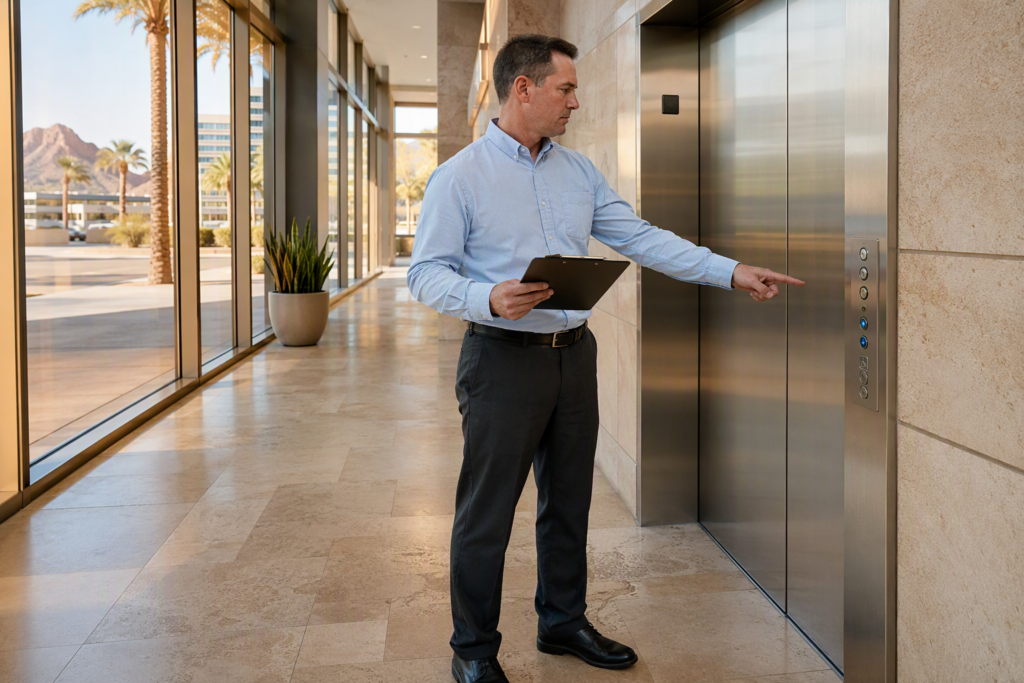
Elevator Certificate of Compliance for Healthcare Facilities in Arizona
Healthcare facilities in Phoenix, Tucson, Scottsdale, and Mesa operate under some of the strictest vertical transportation standards in any industry. Patients, medical staff, and critical equipment depend on elevators every hour of every day — making a current, valid certificate of compliance not just a legal requirement but a patient safety imperative. This guide covers everything healthcare facility managers and compliance officers need to know about obtaining, maintaining, and renewing elevator certificates of compliance in Arizona.
What Is an Elevator Certificate of Compliance for Healthcare Facilities?

An elevator certificate of compliance is a legally required document issued after a qualified inspector verifies that an elevator installation, alteration, or periodic maintenance inspection has passed all applicable code requirements. In Arizona, this process is governed by the Arizona Department of Occupational Safety and Health (ADOSH) and references the current edition of the ASME A17.1 Safety Code for Elevators and Escalators.
For healthcare environments specifically, the stakes are elevated. An expired or missing certificate can trigger regulatory action from state health departments, The Joint Commission (TJC), the Centers for Medicare & Medicaid Services (CMS), and other accreditation bodies that conduct their own facility audits. A single non-compliant elevator in a hospital can affect an entire accreditation survey outcome.
Which Codes Apply to Hospital and Medical Facility Elevators in Arizona?
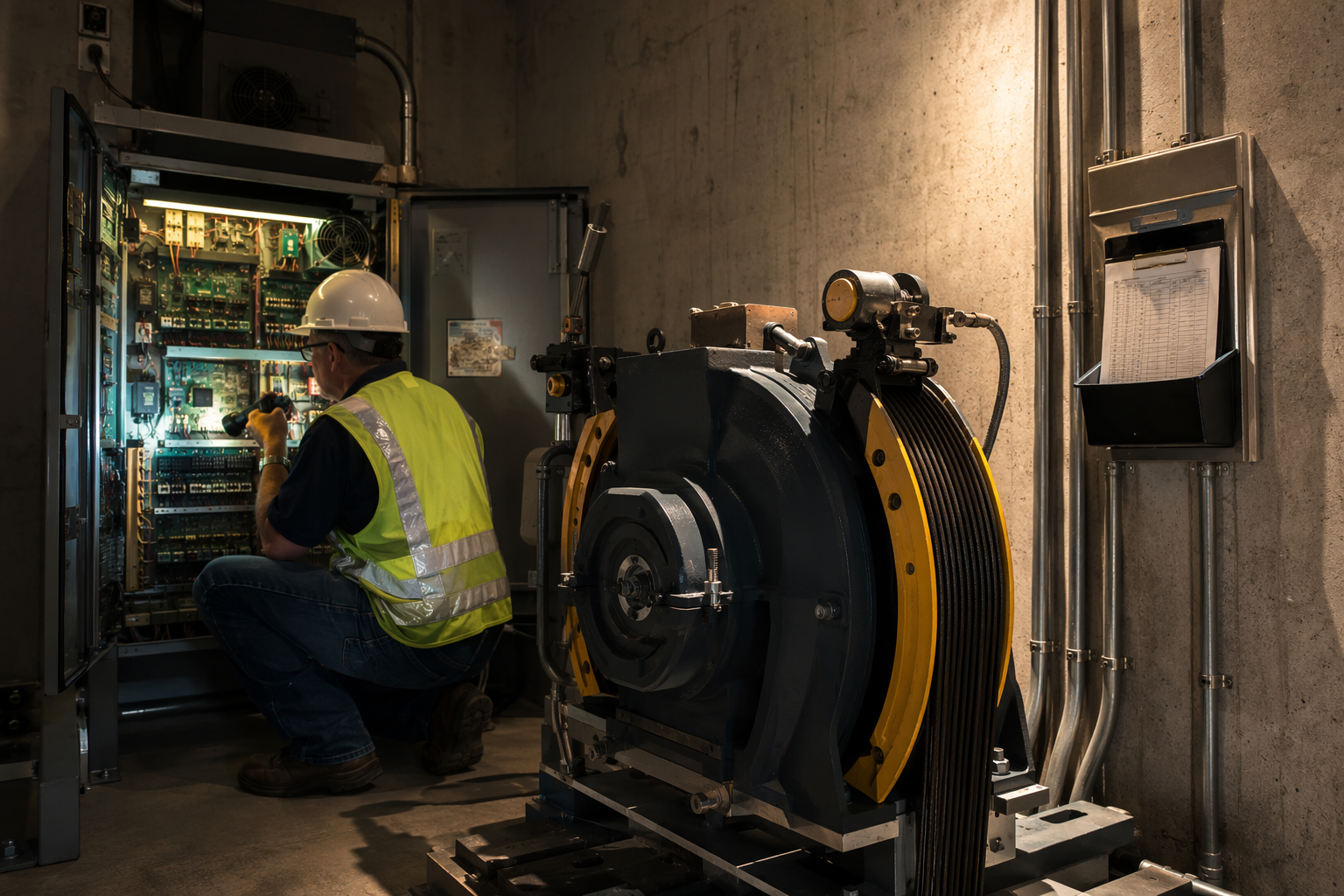
Healthcare elevator compliance in Arizona draws from multiple overlapping regulatory frameworks:
- ASME A17.1 Safety Code for Elevators and Escalators: The foundational mechanical and electrical safety standard governing design, installation, inspection, testing, and maintenance intervals for all elevators. Arizona adopts editions of this code through ADOSH rulemaking.
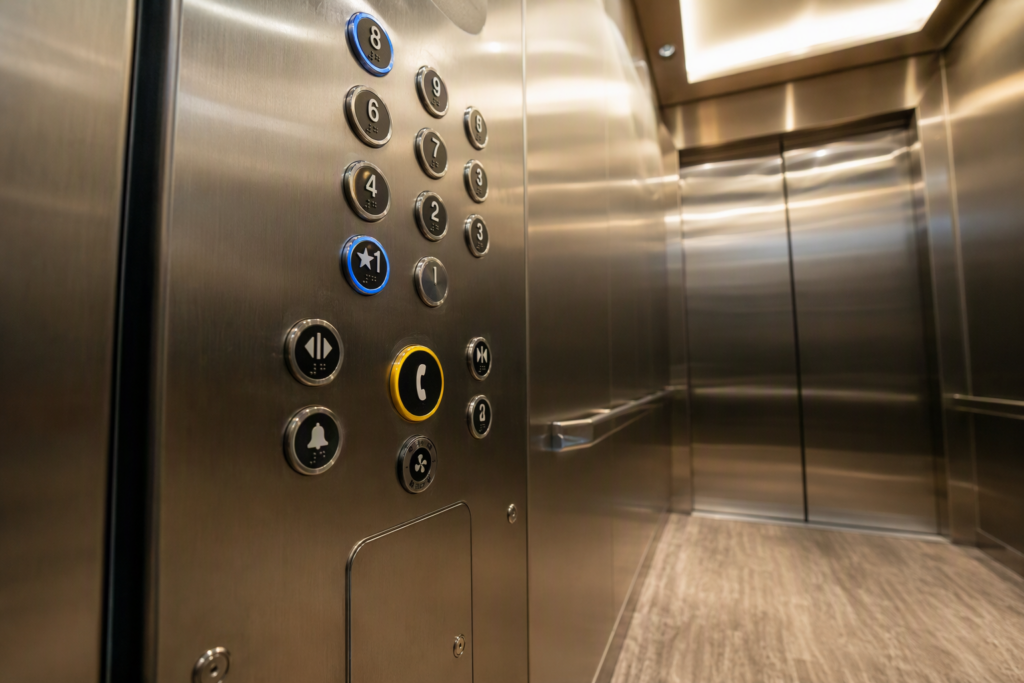
- Americans with Disabilities Act (ADA): Mandates accessible elevator dimensions, door timing, floor call buttons, Braille signage, and audible indicators — critical in healthcare settings where patients may have mobility, vision, or hearing impairments.
- NFPA 101 Life Safety Code: Addresses elevator use during fire emergencies, Phase I and Phase II firefighter service, and integration with fire alarm systems in healthcare occupancies.
- CMS Conditions of Participation: Medicare- and Medicaid-certified facilities must demonstrate that physical plant systems, including elevators, meet applicable life safety standards as a condition of federal reimbursement.
- The Joint Commission Environment of Care Standards: Accredited hospitals must maintain documentation of elevator inspections, deficiency corrections, and certificates as part of their Environment of Care (EC) management plans.
- OSHA General Industry Standards: Protect healthcare workers from elevator-related hazards, including safe operation during maintenance and proper lockout/tagout procedures.
Arizona Elevator Solutions works with healthcare facility teams to map each of these requirements to their specific elevator inventory so no compliance gap is overlooked.
How Often Must Healthcare Elevators Be Inspected in Arizona?
Arizona requires periodic inspections of all conveyances in accordance with ADOSH regulations, which reference ASME A17.1 inspection and test intervals. Healthcare facilities typically have passenger and hospital-service elevators that require both periodic inspections and periodic tests on separate schedules. The specific interval depends on the type of conveyance and the test category (e.g., Category 1 and Category 5 tests for hydraulic elevators have different frequencies).
Beyond the state-mandated schedule, CMS surveys and Joint Commission accreditation visits can occur at any time. Maintaining a continuous, up-to-date compliance posture — rather than scrambling before a known survey — is standard practice at accredited healthcare organizations.
What Happens If a Healthcare Facility Has an Expired Certificate?
Operating an elevator with an expired certificate of compliance in Arizona exposes a healthcare facility to serious consequences:
- State ADOSH citations and civil penalties
- Mandatory elevator shutdown until re-inspection passes
- Findings cited during Joint Commission or CMS surveys, potentially affecting accreditation status
- Increased liability exposure in the event of a patient or staff injury
- Potential disruption to patient transport, surgical scheduling, and supply chain operations within multi-story facilities
An elevator shutdown in a hospital is not a minor inconvenience — it can impair the ability to move patients between floors for imaging, surgery, or intensive care. Proactive compliance management with a qualified service partner like Arizona Elevator Solutions eliminates this risk.
What Is the Process for Obtaining a Healthcare Elevator Certificate of Compliance?
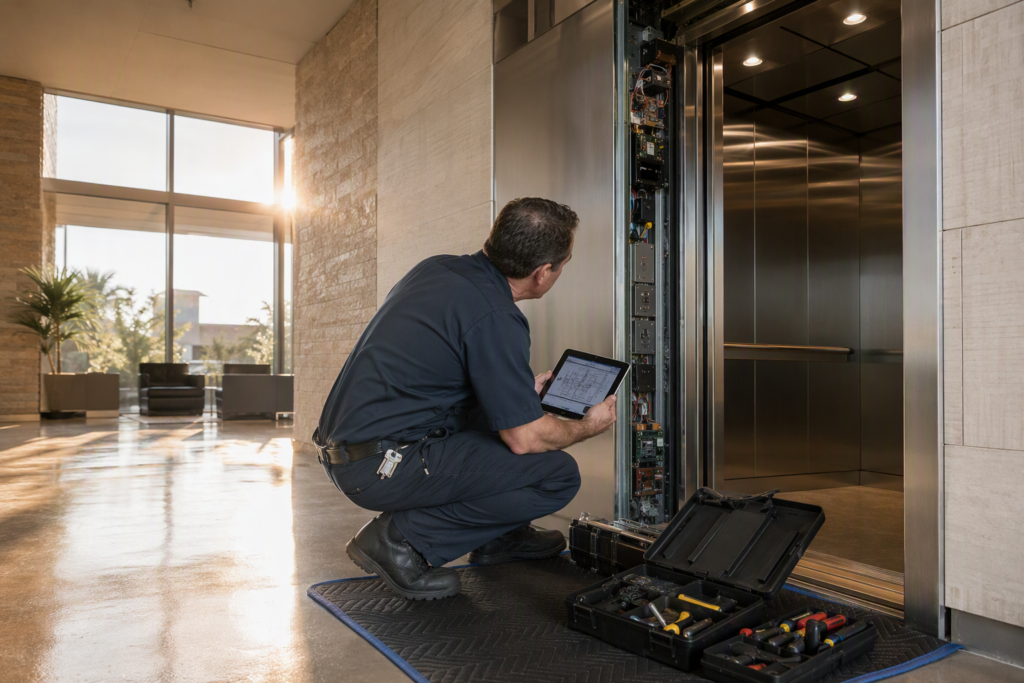
- Conduct a pre-inspection maintenance service. A certified elevator contractor performs all required maintenance, lubrication, adjustments, and safety device testing before the official inspection is scheduled.
- Review the current code edition. Confirm the elevator meets Arizona’s adopted edition of ASME A17.1 and that all ADA accessibility elements are in working order.
- Submit the inspection application to ADOSH. The elevator owner or their authorized contractor files the required paperwork with the Arizona Division of Occupational Safety and Health to schedule an inspection.
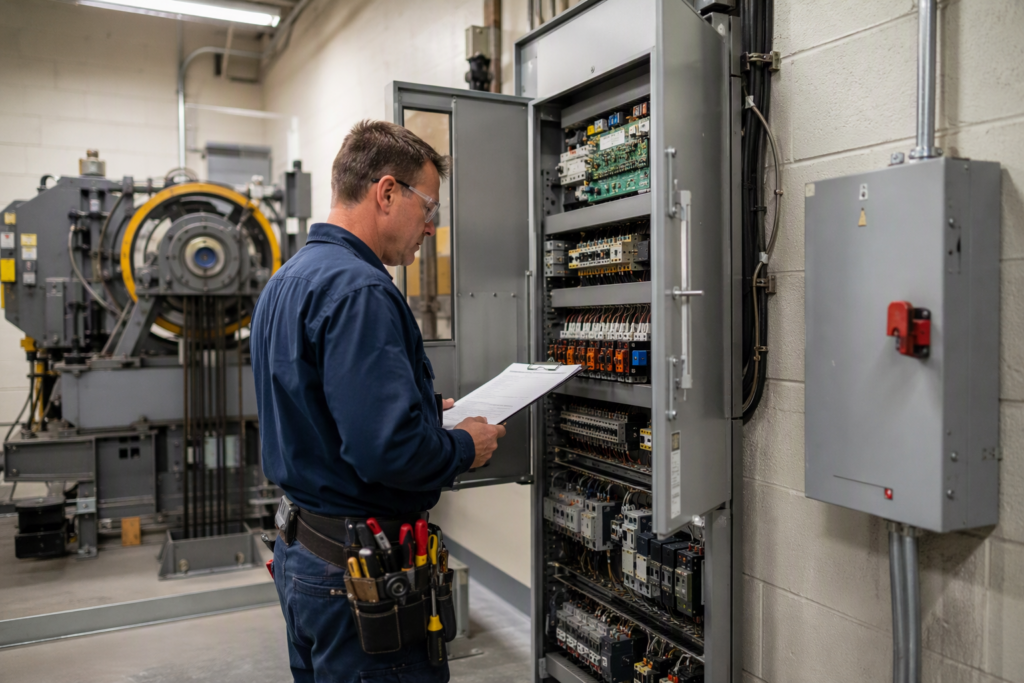
- Facilitate the inspection. An ADOSH-authorized inspector examines the machine room, hoistway, car, pit, and all control systems. Required tests (e.g., governor, safeties, buffers, and door force) are performed.
- Address any deficiencies immediately. If the inspector identifies code violations, the facility receives a written deficiency notice. A follow-up inspection is scheduled after corrections are made.
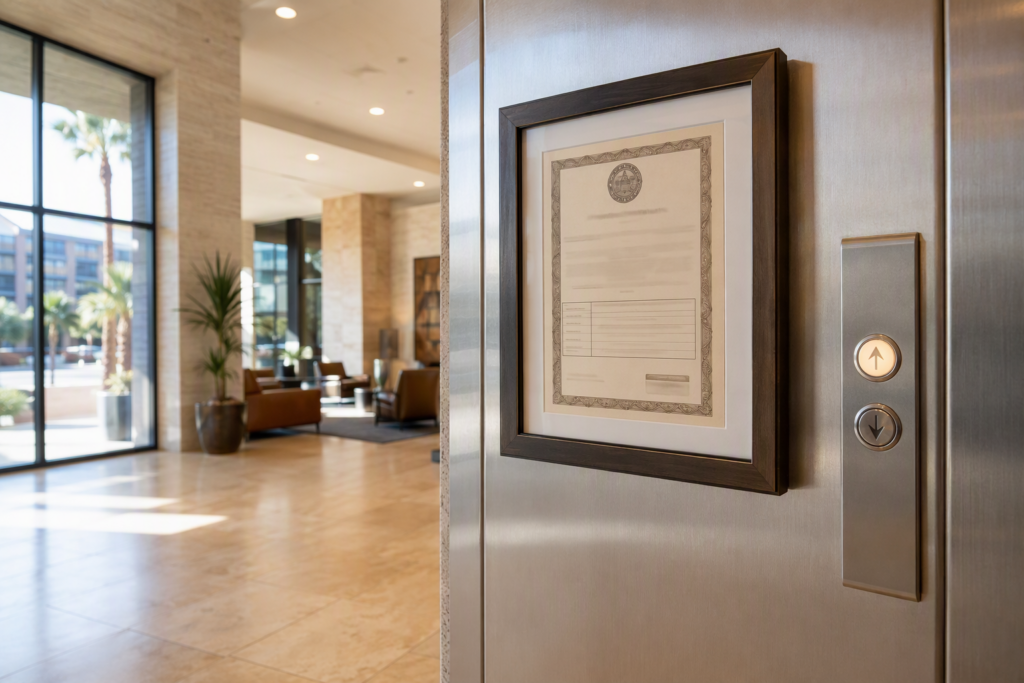
- Receive the certificate of compliance. Once all requirements are satisfied, the certificate is issued and must be posted in the elevator car or machine room as required by state law.
- Update facility compliance records. File the certificate with the facility’s Environment of Care documentation, maintenance logs, and any TJC or CMS survey binders.
What Are the ADA Requirements Specific to Healthcare Elevator Environments?
The ADA sets minimum standards that are especially consequential in healthcare settings where a significant portion of elevator users may have disabilities or mobility limitations. Key requirements include minimum car dimensions for accessibility, door open times sufficient for wheelchair users, raised and Braille floor designations, audible floor announcements, and accessible call button heights. Healthcare facilities that have undergone renovations since original construction must ensure alterations triggered ADA upgrade requirements were addressed and documented.
How Should a Healthcare Facility Prepare for an Elevator Inspection?
Preparation reduces the likelihood of inspection failures and unplanned elevator downtime. Best practices include:
- Ensuring machine room access is clear, clean, dry, and properly lit
- Verifying that all required signage — including capacity placard, certificate posting location, and firefighter service instructions — is current and legible
- Confirming that pit lighting, pit stop switch, and pit ladder are functional and code-compliant
- Testing Phase I and Phase II firefighter service operation in advance
- Reviewing the maintenance log for any open deficiencies and confirming all have been resolved
- Ensuring the current maintenance contract and service records are available for inspector review
Questions Your Inspector Will Ask
Arizona ADOSH inspectors and TJC environment of care surveyors commonly ask facility managers the following questions. Being prepared with documented answers demonstrates a mature compliance program:
- “Where is the current certificate of compliance posted, and what is the expiration date?”
- “When was the last Category 1 or Category 5 test performed, and by whom?”
- “Who is your current elevator maintenance contractor, and can I see the maintenance contract?”
- “Are there any open deficiencies from the last inspection, and how were they resolved?”
- “How does this elevator integrate with the building fire alarm system for Phase I recall?”
- “What is the procedure when an elevator malfunctions and a patient or staff member is trapped?”
- “Has this elevator been modified or altered since the last inspection, and was a permit obtained?”
- “Is the pit dry, and when was the pit last inspected by a technician?”
- “Where is the machine room key stored, and who has access?”
- “Are all ADA features — including door timing and audible indicators — currently functional?”
Arizona Elevator Solutions helps healthcare clients build documentation packages that answer these questions before an inspector ever sets foot in the facility.
What Types of Elevators Are Common in Arizona Healthcare Facilities?
Healthcare facilities across Phoenix, Tucson, Scottsdale, and Mesa operate a range of elevator types, each with distinct compliance considerations:
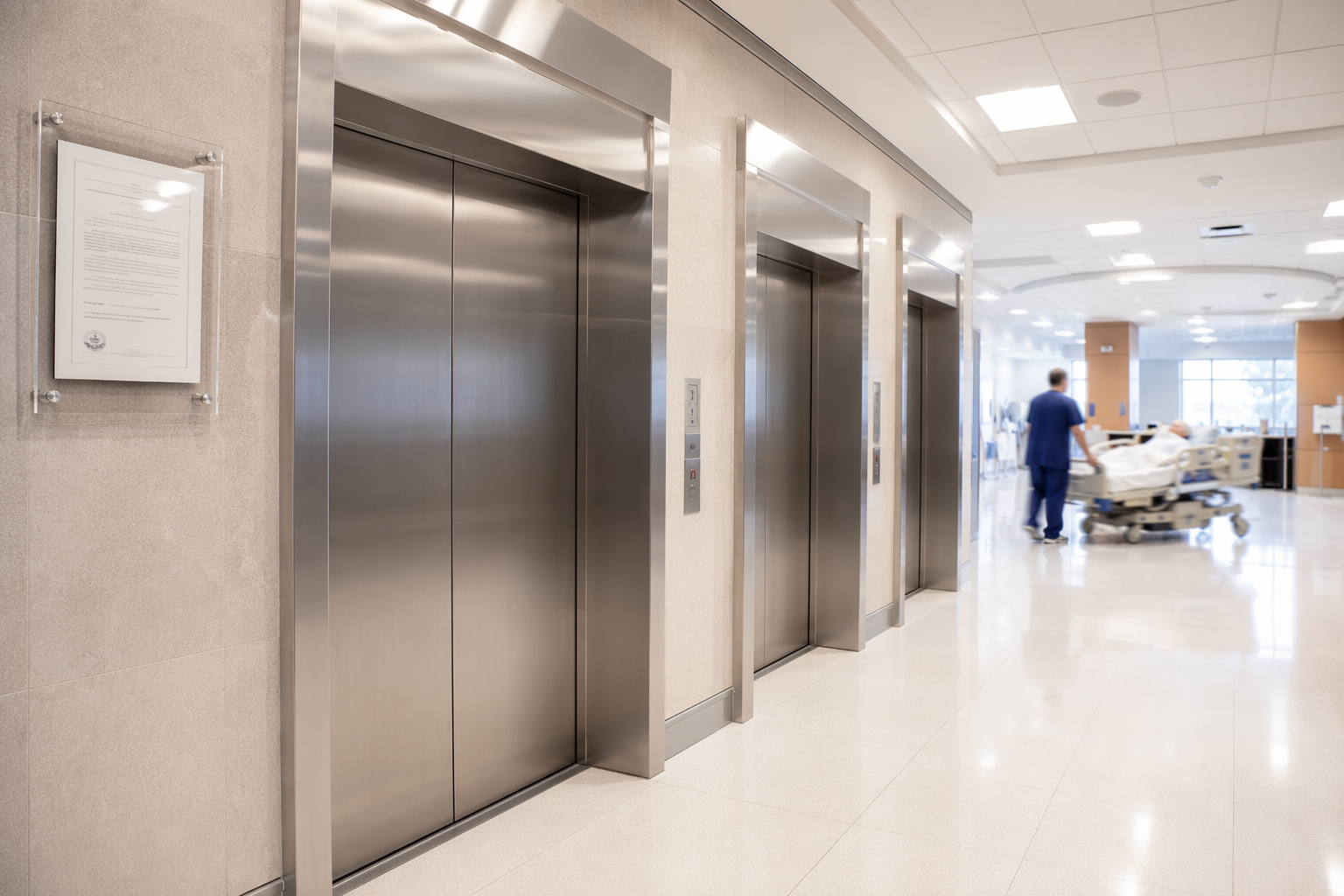
- Hospital service elevators: Designed for large capacity loads including hospital beds, gurneys, and medical equipment. Require wider doors, deeper cars, and specific door timing parameters.
- Traction passenger elevators: Common in multi-story hospitals and medical office buildings. Subject to full ASME A17.1 periodic inspection and testing schedules.
- Hydraulic elevators: Found in lower-rise medical clinics and outpatient surgery centers. Require specific hydraulic fluid containment compliance and Category 1/5 test cycles.
- Accessibility lifts and LULAs: Limited-use/limited-application elevators sometimes found in smaller clinics. Subject to ASME A18.1 Safety Standard for Platform Lifts and Stairway Chairlifts.
How Does an Elevator Modernization Affect a Healthcare Facility’s Compliance Certificate?
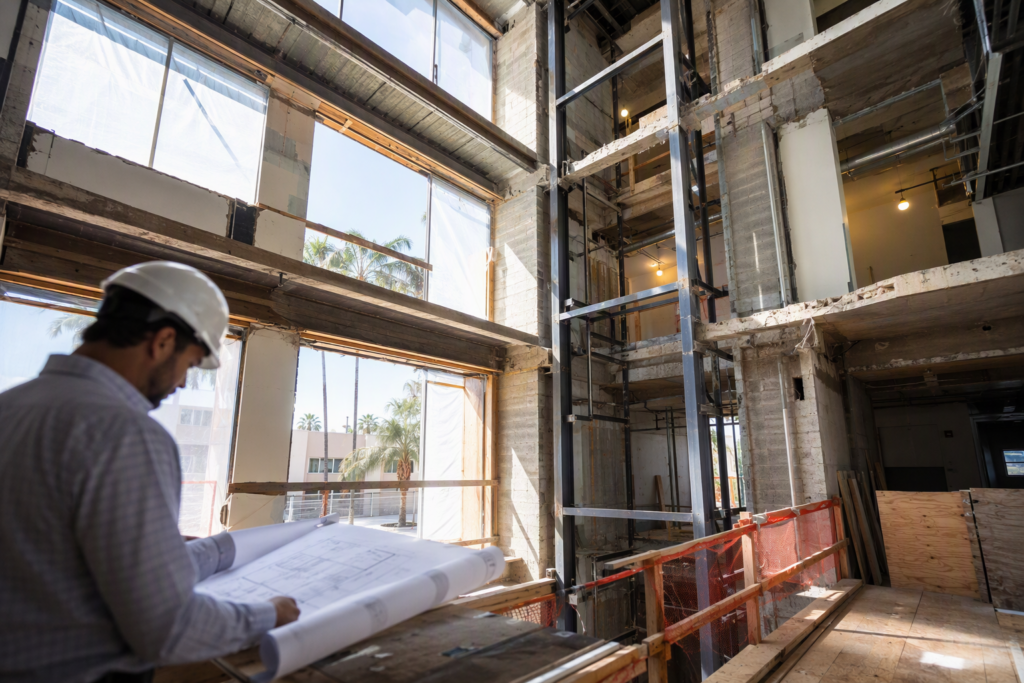
Any alteration to an existing elevator — including control system upgrades, door operator replacements, or cab interior renovations — triggers a new permit and inspection requirement under Arizona law. The altered elevator must be re-inspected before returning to service, and a new certificate of compliance is issued only after the post-alteration inspection passes. Healthcare facilities planning modernization projects should factor the inspection and certificate timeline into construction schedules to avoid prolonged elevator downtime.
Can a Healthcare Facility Manage Elevator Compliance Without a Service Contract?
Technically, a facility could attempt to manage elevator compliance independently, but in practice, healthcare organizations use licensed elevator service contractors for several reasons. ASME A17.1 requires that maintenance be performed by qualified personnel following code-prescribed procedures. Inspectors frequently request maintenance logs signed by licensed technicians. Furthermore, the complexity of annual test requirements, deficiency resolution timelines, and permit coordination across multiple elevators in a large hospital campus makes in-house management impractical and high-risk.
Arizona Elevator Solutions provides healthcare-specific maintenance programs designed around the compliance calendar — ensuring inspections, tests, and certificate renewals are tracked and executed without gaps.
What Should Healthcare Facilities in Phoenix, Tucson, Scottsdale, and Mesa Look for in an Elevator Service Partner?
When selecting an elevator service provider for a regulated healthcare environment, facility managers should evaluate:
- Demonstrated familiarity with Arizona ADOSH inspection requirements and ASME A17.1 in healthcare applications
- Experience coordinating inspections across multi-elevator hospital campuses
- Ability to provide documentation formatted for Joint Commission and CMS survey readiness
- Proven process for managing permit applications, deficiency corrections, and certificate posting
- Capacity to support both routine maintenance and emergency response when elevator issues arise outside normal business hours
Arizona Elevator Solutions serves healthcare clients across the Phoenix metro, Tucson, Scottsdale, and Mesa markets with programs built around these specific demands.
What Documentation Should a Healthcare Facility Retain for Elevator Compliance?
Accreditation surveyors and state inspectors expect healthcare facilities to maintain organized records. A complete elevator compliance file should include:
- Current certificate of compliance for each conveyance
- All previous inspection reports and deficiency notices going back a minimum of several years
- Documentation of corrective actions taken in response to deficiencies
- Maintenance logs showing routine service visits, tests performed, and parts replaced
- Permits for any alterations or modernizations
- Copies of the current maintenance service agreement
- Emergency entrapment procedure posted in each cab and in facility emergency plans
How Long Does It Take to Obtain a Healthcare Elevator Certificate of Compliance?
The timeline depends on several factors: the current condition of the elevator, whether any deficiencies are found during inspection, ADOSH scheduling availability, and whether any permits for alterations are pending. A well-maintained elevator with no outstanding deficiencies can typically receive its certificate following a single successful inspection appointment. Elevators with deferred maintenance or code violations will require additional repair time and a follow-up inspection before a certificate is issued.
Planning ahead — rather than scheduling inspections close to accreditation surveys or certificate expiration dates — provides the buffer needed to resolve any unexpected findings without operational disruption.
Need elevator service you can rely on? Arizona Elevator Solutions is ready to help.