Choosing the right vertical transport solution for an Arizona warehouse or industrial facility is a critical infrastructure decision. The wrong equipment creates compliance gaps, slows operations, and generates costly retrofits. This guide covers every major decision factor: equipment types, code compliance, cost considerations, installation timelines, and how to choose a qualified service partner.
What Are the Core Elevator and Lift Options for Arizona Warehouses?
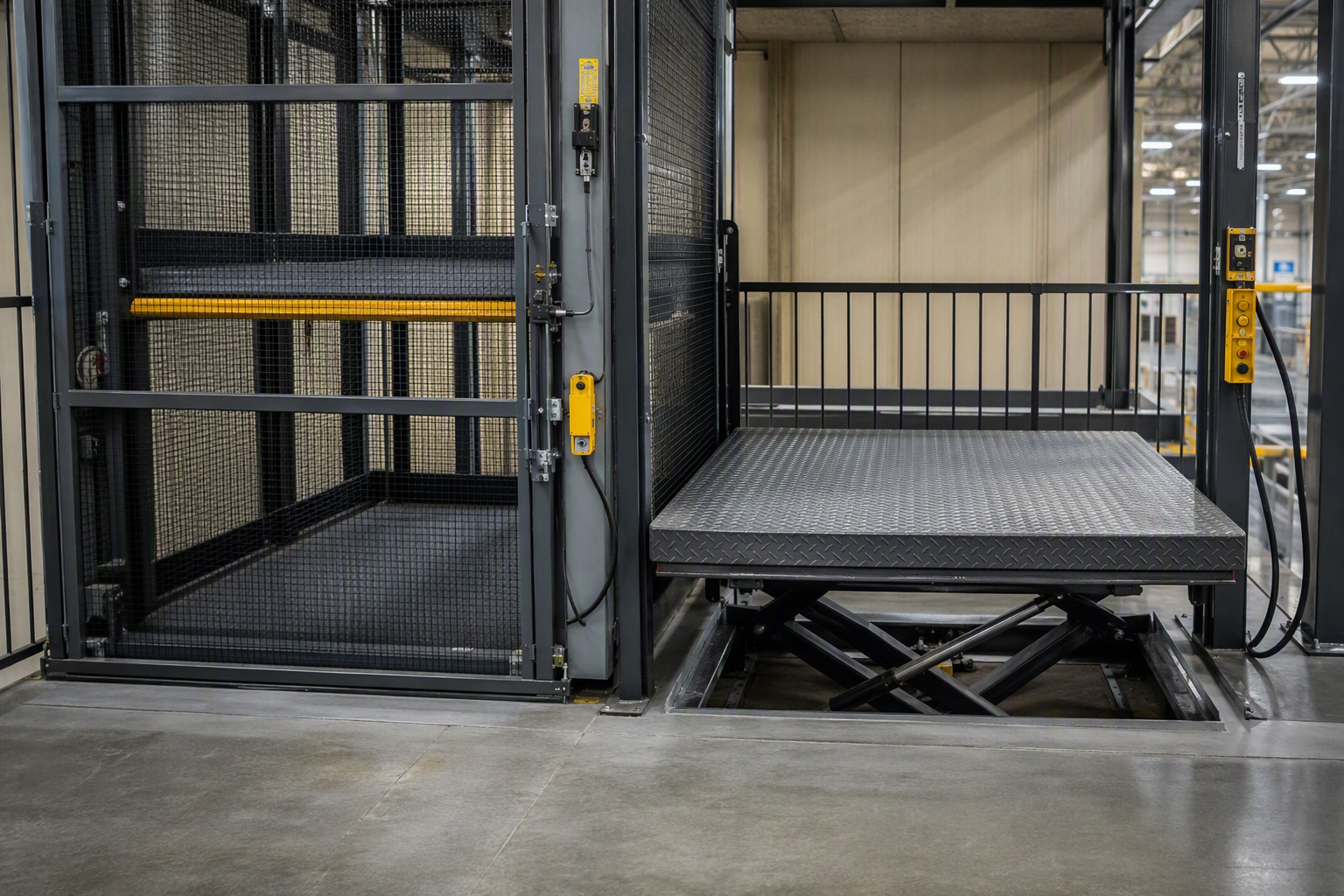
Industrial facilities in Arizona typically evaluate four primary vertical transport solutions. Each serves distinct operational profiles, and no single option is universally superior.
| Equipment Type | Best Use Case | Typical Load Capacity | Key Regulatory Standard | Passenger Use Permitted? |
|---|---|---|---|---|
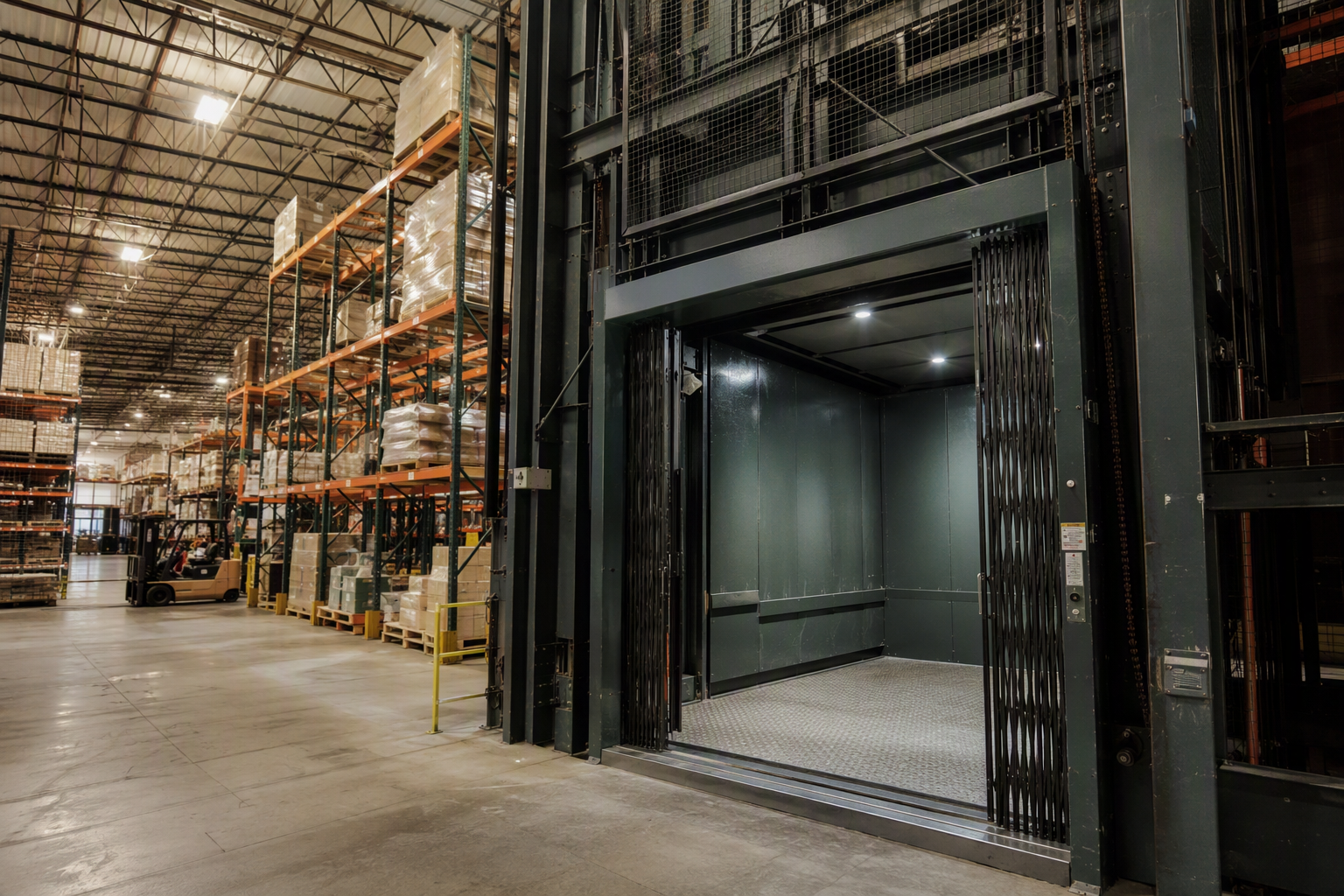
| Freight Elevator | Multi-story warehouses, heavy goods transport with attendant | High — varies by design | ASME A17.1 Safety Code for Elevators and Escalators | Limited (attendant/operator class only) |
| Vertical Reciprocating Conveyor (VRC) | Material-only movement between levels; no passenger use | Moderate to high — engineered per application | OSHA Material Handling Regulations + ASME B20.1 | No — material only |
| Hydraulic Lift (Industrial) | Low-rise facilities, dock leveling, mezzanine access | Moderate — depends on cylinder configuration | ASME A17.1 Safety Code for Elevators and Escalators | Conditional — depends on classification |
| Scissor Lift / Mezzanine Lift | Mezzanine storage access, lower travel heights | Low to moderate | OSHA General Industry Standards | Restricted — site-specific assessment required |
What Arizona and Federal Compliance Requirements Apply to Industrial Elevators?
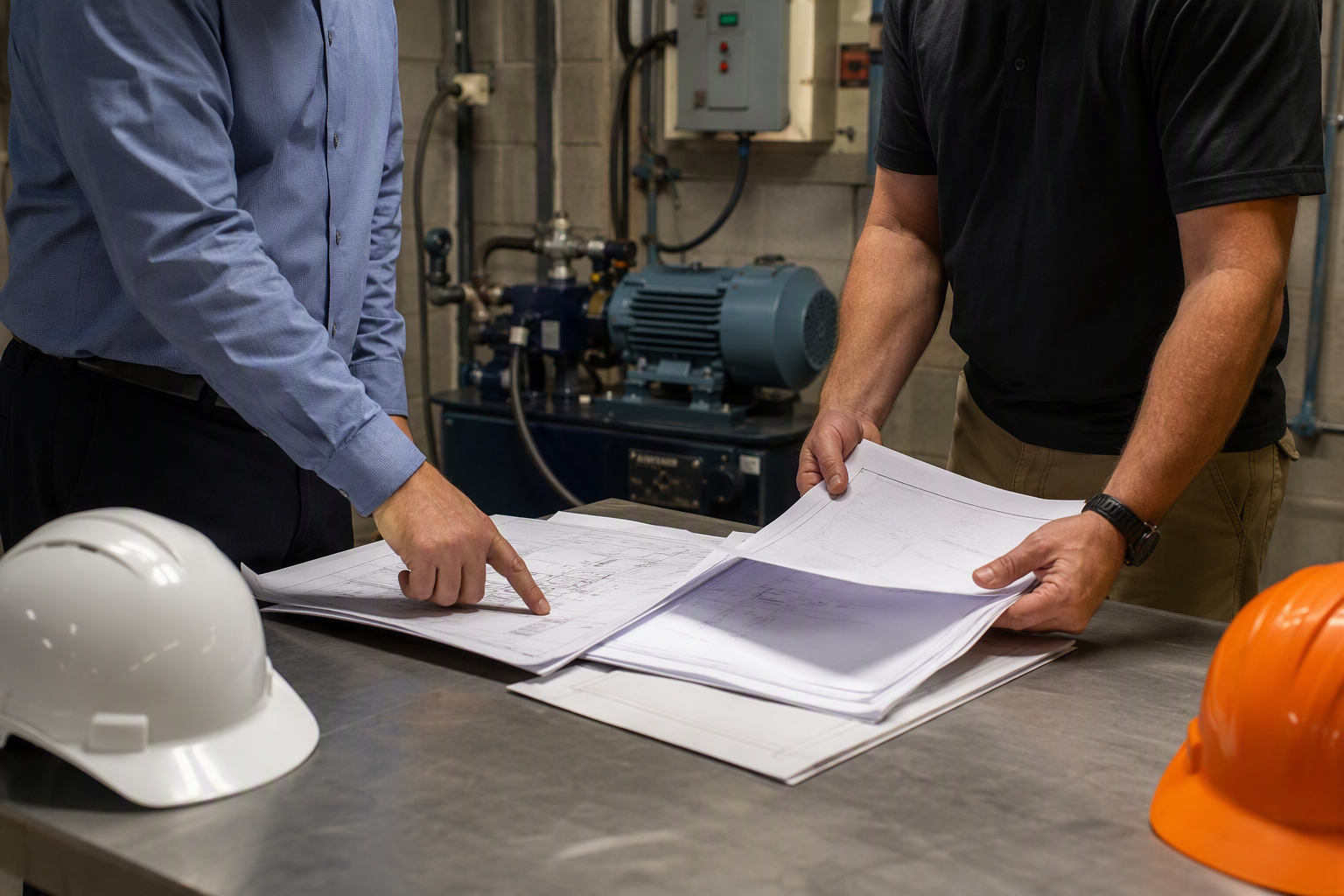
Arizona industrial facilities must navigate overlapping federal and state-level code obligations. Compliance is not optional — operating non-compliant lifting equipment exposes facilities to OSHA citations, insurance voids, and potential liability in the event of an incident.
- ASME A17.1 (current edition): The foundational safety code for elevators and escalators in the United States governs design, construction, operation, and maintenance of freight elevators used in industrial settings. Arizona adopts this standard as its basis for elevator inspection and permitting. Review requirements at ASME Codes & Standards.
- OSHA 29 CFR 1910 (General Industry): Federal OSHA standards govern the use of powered platforms, VRCs, and material handling equipment in warehouses. Facilities with employees operating near lifting equipment must comply with applicable guarding, lockout/tagout, and inspection requirements.
- ADA Accessibility Standards: If any portion of a warehouse is open to employees with disabilities or the public, the Americans with Disabilities Act may require accessible vertical transport. The ADA’s accessibility guidelines distinguish between freight-only and passenger-accessible equipment.
- Arizona Department of Occupational Safety and Health (ADOSH): Arizona operates its own OSHA-approved State Plan through ADOSH, which enforces standards at least as effective as federal OSHA requirements. Industrial facilities in Arizona must ensure elevator and lift equipment is registered, inspected, and permitted at the state level.
- Local Building and Fire Codes: Maricopa County, Pima County, and incorporated municipalities may layer additional fire-rated shaft requirements, pit depth minimums, and machine room ventilation standards onto state code.
How Does Arizona’s Climate Affect Industrial Elevator Equipment?
Arizona’s extreme heat — with summer temperatures routinely exceeding 110°F in the Phoenix metropolitan area — creates equipment stresses that are less common in other states. Facility operators and equipment specifiers should account for these environmental factors:
- Hydraulic fluid degradation: High ambient temperatures accelerate thermal breakdown of hydraulic fluid in elevator systems, potentially affecting performance and requiring more frequent fluid analysis and replacement cycles.
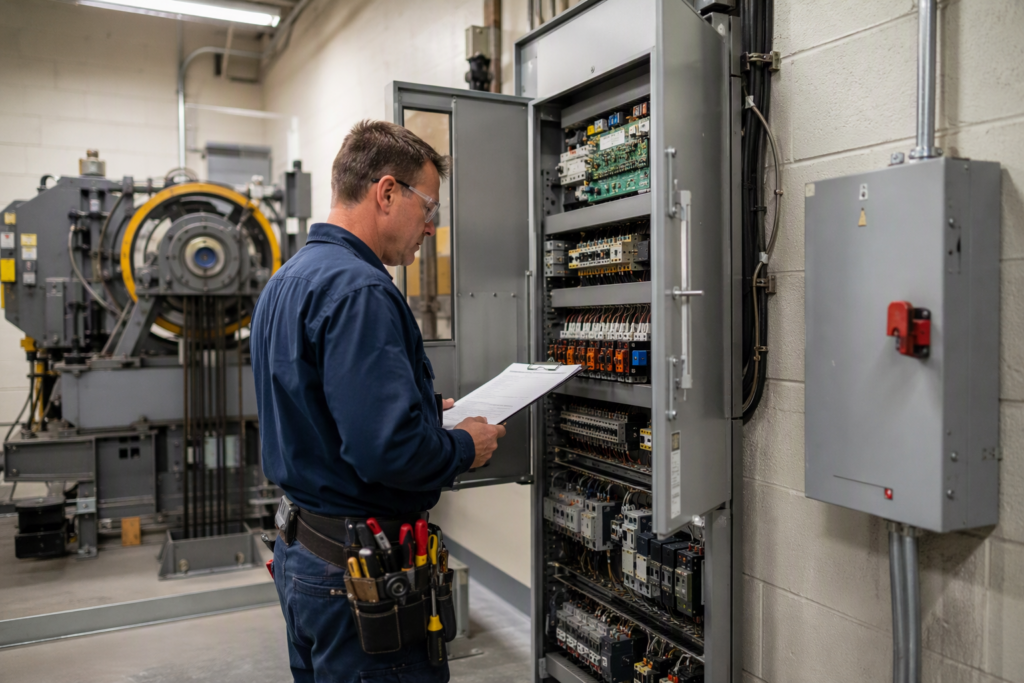
- Machine room cooling: Elevator machine rooms in Arizona facilities may require supplemental HVAC or ventilation beyond what is standard in cooler climates. The ASME A17.1 Safety Code for Elevators and Escalators includes temperature limits for machine room environments.
- Dust and particulate infiltration: Desert environments generate fine particulate matter that can penetrate mechanical systems, accelerating wear on motors, brakes, and control electronics. Industrial-grade sealing and filtration become especially important.
- Seismic considerations: Arizona falls within seismic zones that require evaluation of seismic design provisions under applicable building codes, particularly for new construction installations.
What Is the Step-by-Step Process for Installing a Freight Elevator in an Arizona Warehouse?
- Conduct a needs assessment. Determine load capacity requirements, number of floors served, travel height, opening dimensions, frequency of use, and whether passengers will accompany loads. This assessment drives equipment classification under ASME A17.1.
- Engage a qualified elevator consultant or contractor. Select a company with demonstrated experience in Arizona’s regulatory environment — such as Arizona Elevator Solutions — to advise on equipment selection and code compliance pathways.
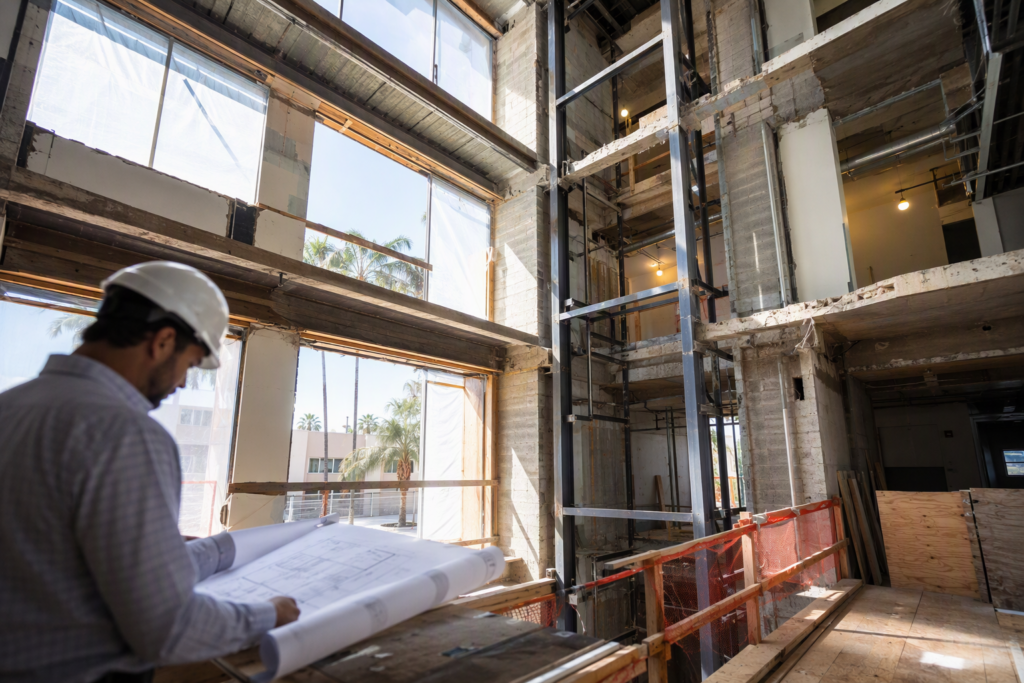
- Submit architectural and engineering plans. Stamped drawings for the hoistway, pit, machine room (if applicable), and structural supports must be prepared and submitted to the Arizona State Elevator Safety section and the local Authority Having Jurisdiction (AHJ) for plan review.
- Obtain permits. Both a state elevator permit and a local building permit are typically required before installation begins. Permitting timelines vary by jurisdiction and project complexity.
- Complete installation. Installation is performed by licensed elevator contractors. Major components — hoistway construction, rail installation, equipment mounting, and wiring — proceed sequentially per approved plans.
- Schedule state inspection. Upon installation completion, an Arizona-certified elevator inspector conducts a final acceptance inspection. The elevator cannot be placed into service until inspection approval is granted.
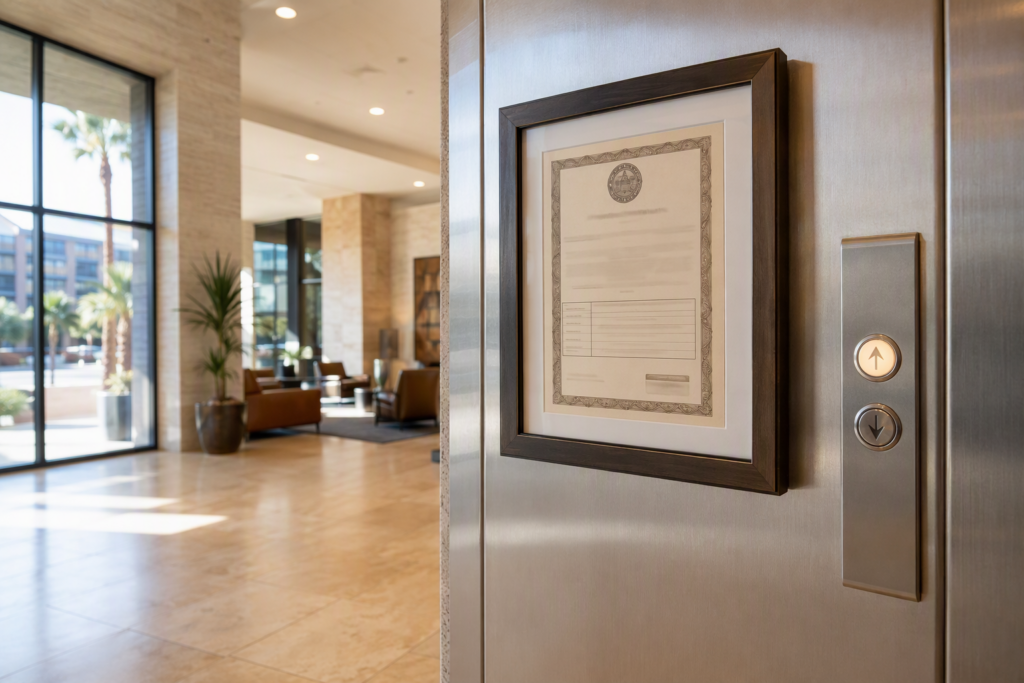
- Obtain Certificate of Operation. The state issues an operating certificate that must be posted in or near the elevator. This certificate requires periodic renewal tied to ongoing inspection compliance.
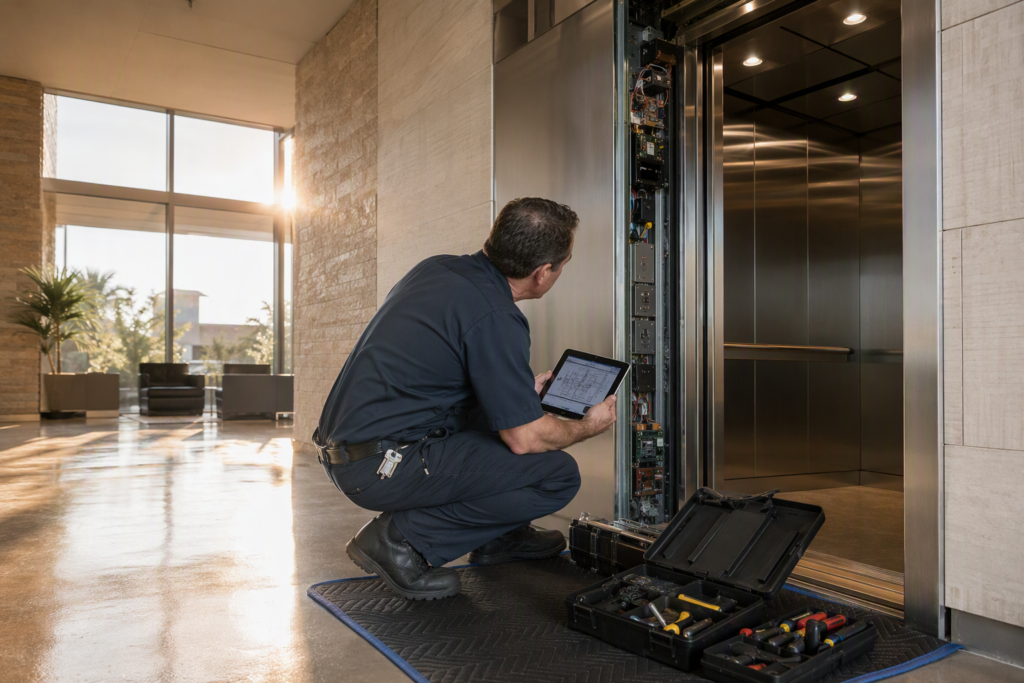
- Establish a maintenance contract. Ongoing compliance requires a documented maintenance program. Arizona Elevator Solutions provides preventive maintenance plans calibrated to industrial use patterns and Arizona’s environmental conditions.
How Do Freight Elevators Compare to Vertical Reciprocating Conveyors (VRCs) for Warehouse Use?
| Factor | Freight Elevator | Vertical Reciprocating Conveyor (VRC) |
|---|---|---|
| Regulatory Classification | ASME A17.1 elevator | ASME B20.1 conveyor — not classified as an elevator |
| Passenger Use | Permitted with restrictions | Strictly prohibited — materials only |
| State Inspection Requirement | Yes — mandatory state inspection and certificate | Subject to OSHA inspection; not typically under state elevator authority |
| Installation Footprint | Larger — requires dedicated hoistway, pit, and machine room | More compact — can be installed in tighter floor openings |
| Installation Timeline | Longer — full permitting and inspection cycle | Shorter — fewer regulatory steps |
| Operational Flexibility | Higher — supports mixed passenger/freight use | Lower — dedicated material handling only |
| Long-Term Maintenance Complexity | Higher — more components, code-required maintenance | Lower — simpler mechanical system |
| Best Fit | Multi-story facilities with personnel access needs | High-throughput material movement, mezzanine applications |
What Are the ADA Requirements for Warehouse Vertical Transport?
The Americans with Disabilities Act primarily applies to public accommodations and commercial facilities where employees or visitors with disabilities require accessible routes. For industrial warehouses, ADA obligations typically arise in the following scenarios:
- Office or administrative areas within the facility: If a warehouse includes office space above grade level, an accessible elevator or lift may be required to provide equal access.
- Employee work areas: While ADA standards for employee-only work areas allow some flexibility, facilities must still provide accessible means of egress and accommodation pathways when required.
- Customer or visitor access points: Any area open to the public or clients requires full ADA-compliant vertical access when multiple floors exist.
Freight elevators classified under ASME A17.1 as Class A or B may satisfy ADA accessibility requirements when properly equipped with compliant controls, cab dimensions, and door clearances. A determination should be made in consultation with a qualified accessibility consultant and elevator specialist.
What Ongoing Inspection and Maintenance Requirements Apply in Arizona?
Arizona regulates elevator safety at the state level. Freight elevators placed into service require periodic inspections conducted by or on behalf of the state’s elevator safety program. Key obligations include:
- Annual routine inspections: Elevators must undergo periodic safety inspections at intervals established by the adopted edition of ASME A17.1, which specifies inspection and test intervals for different elevator classifications.
- Periodic tests: Certain safety devices — including governors, safeties, and hydraulic relief valves — require periodic testing beyond routine annual inspection. ASME A17.1 defines these test intervals by equipment type.
- Maintenance documentation: Arizona facilities are expected to maintain records of all maintenance, repairs, and tests. OSHA may also request maintenance logs during industrial inspections.
- Certificate of Operation posting: The current certificate of operation must be displayed in or adjacent to the elevator cab at all times.
Arizona Elevator Solutions provides maintenance programs structured around ASME A17.1 inspection intervals and Arizona’s state inspection schedule, helping facility operators remain continuously compliant without gaps in documentation.
What Factors Should Drive the Final Equipment Decision for a Warehouse?
| Decision Factor | Points Toward Freight Elevator | Points Toward VRC or Mezzanine Lift |
|---|---|---|
| Personnel will ride with loads | ✓ Required | ✗ Prohibited |
| Travel height exceeds mezzanine level | ✓ Better suited | Limited |
| Material-only throughput is priority | Capable but over-specified | ✓ Cost-effective choice |
| ADA compliance is required | ✓ Can be configured for compliance | ✗ Not ADA-compliant |
| Faster installation timeline needed | Longer permitting cycle | ✓ Generally faster |
| Facility is multi-story (3+ floors) | ✓ Standard solution | Limited practicality |
| Budget favors lower initial cost | Higher initial investment | ✓ Generally lower upfront cost |
How Should Arizona Facility Operators Evaluate Elevator Service Providers?
The quality of the elevator service company directly affects equipment uptime, compliance continuity, and long-term cost of ownership. When evaluating providers for an Arizona industrial facility, operators should consider the following criteria:
- Familiarity with Arizona’s state inspection process: Providers should understand the Arizona Department of Occupational Safety and Health framework and the state’s adopted elevator safety standards.
- Industrial and freight elevator specialization: Not all elevator companies have equal depth in freight equipment. Verify experience with the specific equipment classifications relevant to warehouse operations.
- Maintenance documentation practices: Providers should offer written maintenance records formatted to satisfy both ASME A17.1 maintenance documentation requirements and OSHA recordkeeping expectations.
- Independent vs. manufacturer-tied service: Independent service providers — like Arizona Elevator Solutions — are not contractually restricted to a single manufacturer’s parts, which can result in broader equipment compatibility and more competitive maintenance options.
- Local presence in Arizona: A locally based company understands regional environmental factors — including heat, dust, and seismic considerations — that affect equipment performance and maintenance schedules.
Arizona Elevator Solutions is an independent, Arizona-based elevator service company serving warehouse and industrial clients across the state. As an independent provider, the company is not tied to a single manufacturer, enabling objective equipment recommendations and flexible parts sourcing for freight and industrial elevator systems.
What Are Common Compliance Mistakes Arizona Warehouses Make With Freight Elevators?
Industrial facilities frequently encounter avoidable compliance gaps that lead to failed inspections, operational shutdowns, or regulatory citations. The most common issues include:
- Operating with an expired Certificate of Operation: Certificates require periodic renewal tied to inspection cycles. Missing a renewal date can result in mandatory shutdown until the inspection is completed and the certificate reissued.
- Using a freight elevator classified for attendant use without an operator present: ASME A17.1 classifies freight elevators by how they are loaded and who may ride. Using a Class C elevator (truck loading) for general personnel access violates the equipment’s classification.
- Delaying required periodic safety tests: Beyond annual inspections, ASME A17.1 requires periodic tests of governors, safeties, and other critical components on defined schedules. Facilities that defer these tests accumulate compliance deficiencies.
- Inadequate machine room environmental controls: Arizona’s heat can cause machine room temperatures to exceed code-permitted thresholds, potentially invalidating the elevator’s operating conditions without the facility’s awareness.
- Installing a VRC without recognizing OSHA guarding requirements: VRCs that lack proper perimeter guarding, interlocking gates, and warning signage violate OSHA material handling standards regardless of equipment quality.
Is a New Installation or a Modernization the Right Choice for an Existing Arizona Warehouse?
Facilities with existing freight elevator equipment frequently face the decision between full replacement and targeted modernization. This determination depends on the current equipment’s age, condition, parts availability, and code compliance status.
- Modernization is generally appropriate when: The hoistway structure and cab are sound, the equipment is mechanically serviceable, and specific components — controls, door operators, safety devices — are the primary compliance or reliability concern.
- Full replacement is generally appropriate when: The equipment is beyond serviceable life, manufacturer parts are discontinued, a new load capacity or configuration is required, or compliance deficiencies are systemic rather than component-specific.
- Code compliance triggers replacement or upgrade: When Arizona adopts a new edition of ASME A17.1, alterations or modernizations must bring the affected components into compliance with the current adopted edition, which can expand the scope of a project significantly.
Arizona Elevator Solutions conducts detailed equipment assessments for existing industrial elevator installations, providing facility operators with a clear picture of current compliance status, remaining service life, and the cost-benefit comparison between modernization and replacement.
Summary: Key Takeaways for Arizona Warehouse Elevator Decisions
- Freight elevator classification under ASME A17.1 determines permissible use, inspection requirements, and design specifications — equipment must match the actual operational use case.
- VRCs and mezzanine lifts are cost-effective for material-only applications but cannot legally carry personnel and do not satisfy ADA accessibility requirements.
- OSHA and Arizona ADOSH compliance applies across all equipment types and must be maintained through documented inspection and maintenance records.
- Arizona’s extreme heat requires specific attention to hydraulic fluid performance, machine room temperature management, and dust infiltration mitigation.
- Independent service providers like Arizona Elevator Solutions offer broader equipment flexibility and objective guidance compared to manufacturer-tied service organizations.
Ready to Choose the Right Lift Solution for Your Facility?
Arizona Elevator Solutions provides free elevator assessments for warehouse and industrial facilities throughout Arizona. Get expert guidance on compliance, equipment selection, and cost-effective maintenance — from an independent provider with deep knowledge of Arizona’s regulatory environment.
Contact Arizona Elevator Solutions for a free elevator assessment: 480-557-7600
Need elevator service you can rely on? Arizona Elevator Solutions is ready to help.