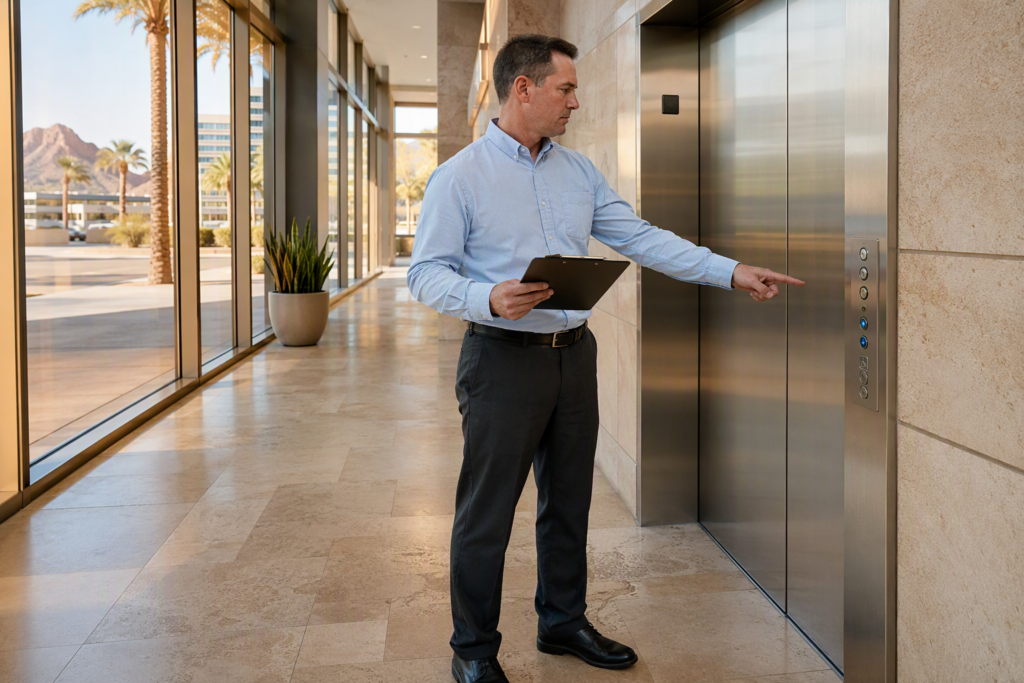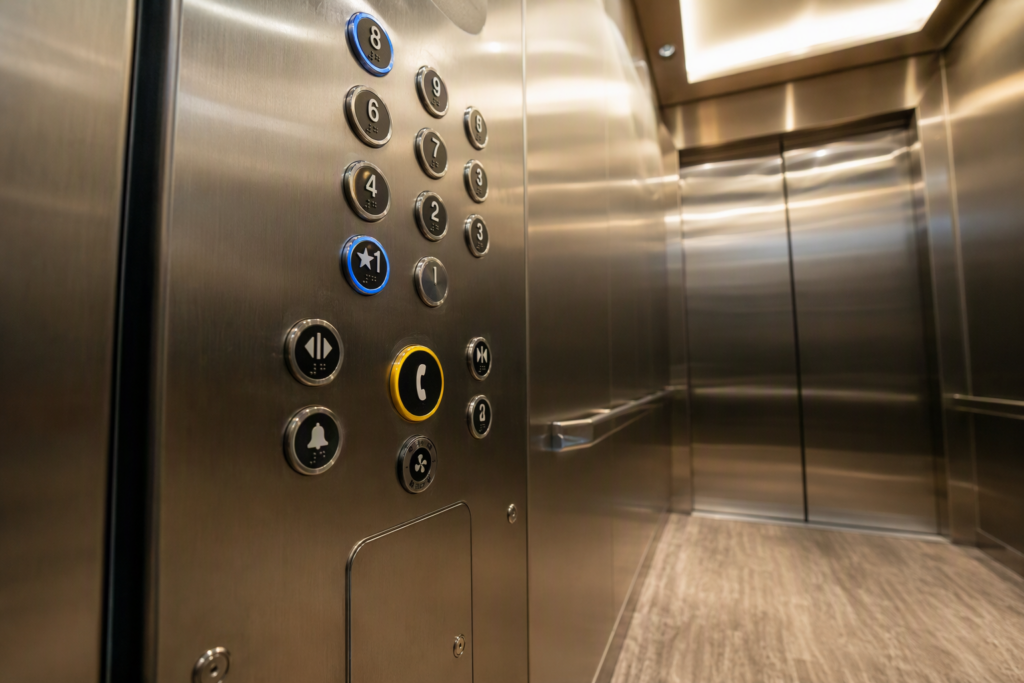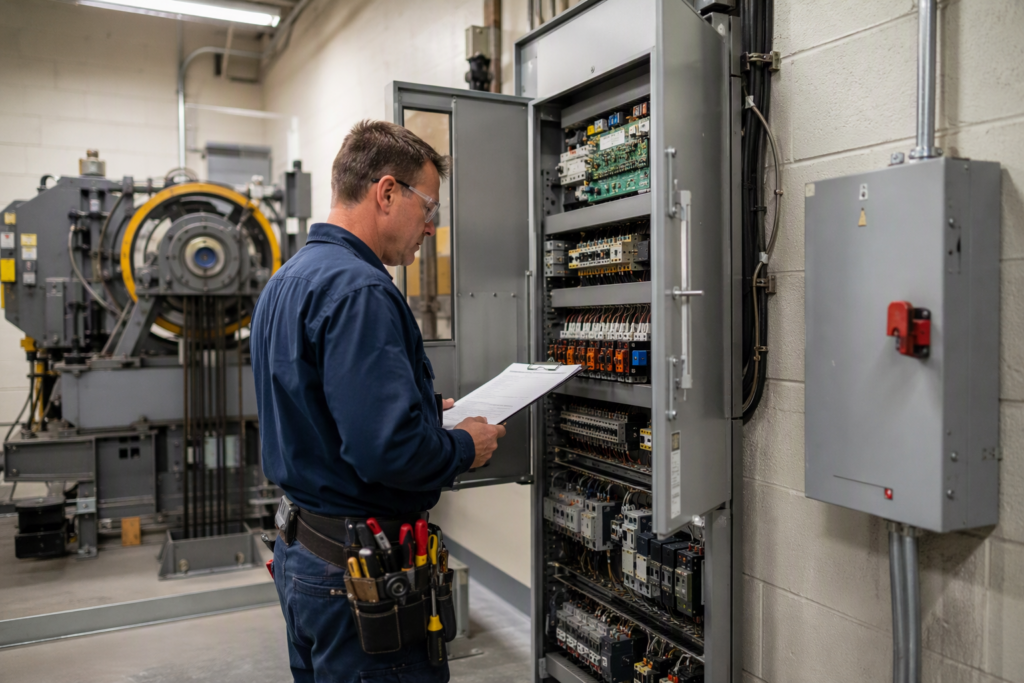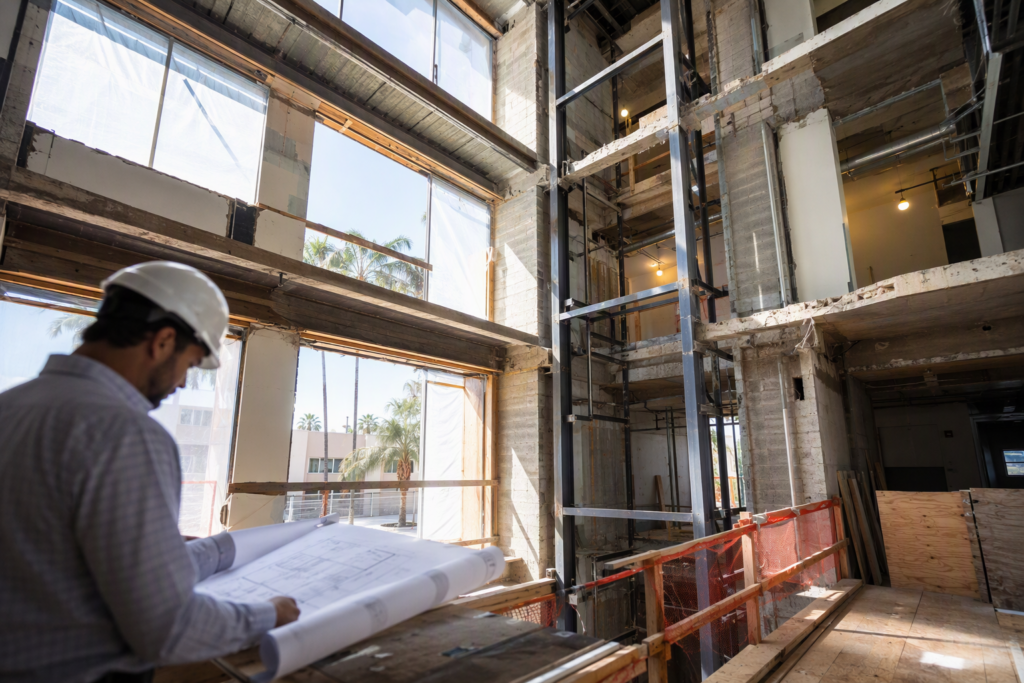
What actually happens the moment my elevator fails its Arizona state inspection?
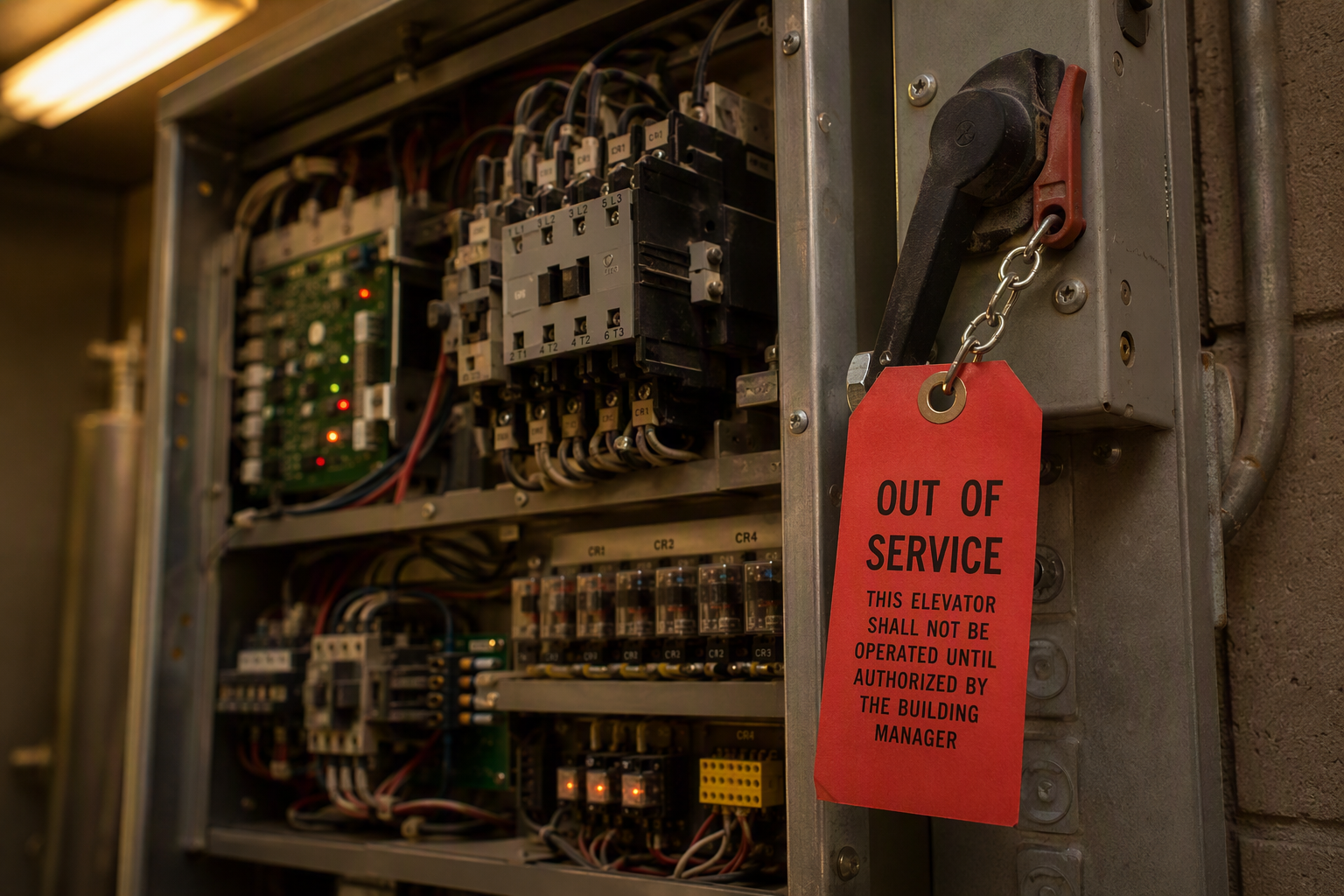
When an elevator fails its Arizona state inspection, the inspector issues a formal written order of deficiency that classifies each violation by hazard level and specifies a mandatory correction deadline or an immediate shutdown order depending on severity.
Arizona elevator inspections are conducted under the authority of the Arizona Department of Occupational Safety and Health (ADOSH), which enforces the state’s adopted version of the ASME A17.1 Safety Code for Elevators and Escalators. When an inspector finds one or more violations, the outcome falls into one of three categories: a notice with a scheduled re-inspection date, a conditional operating permit that allows continued use under restrictions, or an immediate out-of-service order requiring the elevator to be shut down before the inspector leaves the premises.
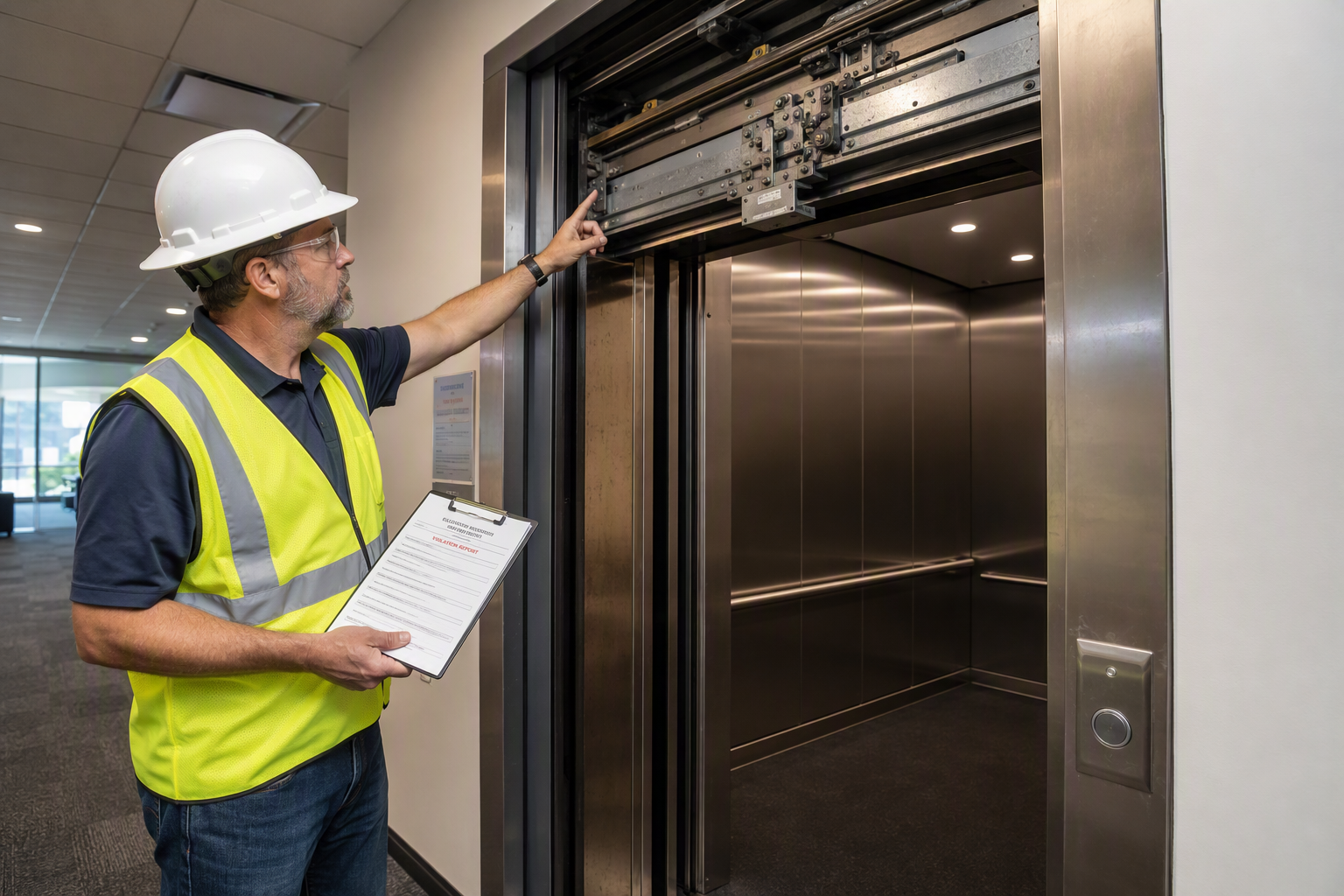
The inspector documents all deficiencies on a standardized violation report, which is provided to the building owner or their authorized representative. This report is the official record that drives every subsequent compliance deadline and is the document Arizona Elevator Solutions technicians review first when a client calls after a failed inspection.
What are the different violation severity categories in Arizona?
Arizona ADOSH categorizes elevator violations by the immediacy of the safety risk they pose, distinguishing between imminent danger conditions that require immediate shutdown and less critical deficiencies that permit continued operation during a correction window.
Understanding the category assigned to each violation is critical because it determines your legal right to keep the elevator running. An imminent hazard — such as a failed safeties test, non-functioning door interlocks, or a broken governor — means the elevator must stop running immediately. A serious violation that does not create an imminent hazard may allow continued operation, but only until the stated deadline. Minor or administrative violations, such as missing posted certificates or outdated signage, typically carry longer correction windows and do not affect the elevator’s operating status.
Building owners should never assume that because an elevator is still running after a failed inspection it is legally permitted to run. The violation report — not the elevator’s continued functionality — governs legal operating status.
How long do I have to fix violations before I must shut the elevator down?
Correction timelines in Arizona vary by violation category: imminent danger violations require immediate shutdown with no grace period, serious safety violations commonly allow 30 days for correction, and non-critical or administrative deficiencies may allow up to 90 days, though the inspector retains authority to set shorter deadlines based on specific circumstances.
These timeframes are not statutory minimums that owners are entitled to as a right — they are administrative guidelines the inspector applies using professional judgment. An inspector who determines that a “serious” violation is deteriorating rapidly may set a deadline shorter than 30 days. Conversely, if a required replacement part has a documented lead time and the hazard can be safely mitigated in the interim (for example, a temporary speed reduction or a locked-floor bypass), the inspector may note that mitigation and allow continued restricted operation while the full repair is completed.
The safest course of action is to treat every correction deadline as a hard stop. Arizona law does not automatically extend deadlines because parts are on order or a contractor has been contacted. Owners who need additional time must proactively communicate with ADOSH before the deadline, document their good-faith repair efforts, and in some cases request a formal extension in writing.
Can I keep the elevator running while violations are being repaired?
An elevator may continue operating during the correction period only if the inspector has not issued an out-of-service order and the violation category permits continued use — any elevator flagged for imminent hazard must be taken out of service immediately regardless of business impact or passenger inconvenience.
For non-imminent violations, the building owner bears full legal and liability exposure for any incident that occurs while the elevator operates with known, documented deficiencies. This is a significant consideration for property managers and risk officers: the failed inspection report is a discoverable document that establishes constructive knowledge of the deficiency. Continuing to operate under such conditions without active, documented remediation efforts substantially increases civil and regulatory liability.
Arizona Elevator Solutions recommends that building owners in Phoenix, Scottsdale, Mesa, and Tucson prioritize scheduling a remediation assessment immediately upon receipt of a violation report rather than waiting until the deadline approaches.
What is the step-by-step process after receiving a failed inspection notice?
Following a structured remediation protocol after a failed inspection minimizes legal exposure, shortens downtime, and demonstrates good-faith compliance to the regulator.
- Read the violation report in full — Identify each deficiency, its assigned severity category, the specific ASME A17.1 or state code section cited, and the correction deadline assigned to each item.
- Determine which violations require immediate shutdown — If any imminent hazard violations are listed, lock out and tag out the elevator immediately before taking any other action.
- Contact a licensed elevator service contractor — Call a qualified, state-authorized elevator contractor to conduct a site assessment and provide a written scope of repair with part lead times.
- Notify your insurance carrier and property management team — A failed inspection with an active out-of-service period is a material event that insurers and ADA compliance officers need to know about promptly.
- Post required notices for building occupants — If the elevator must be taken out of service, post compliant out-of-order signage and ensure accessible alternative routes are identified per ADA requirements, particularly for occupants with mobility impairments.
- Coordinate the repair timeline with your contractor — Obtain written confirmation of part orders, expected delivery dates, and scheduled labor so you have documentation for ADOSH if a deadline extension becomes necessary.
- Request a deadline extension in writing if needed — Submit a formal written request to ADOSH before the correction deadline expires, including documentation of repair contracts and part orders.
- Complete all repairs and schedule the re-inspection — Once all violations are corrected, notify ADOSH to schedule a follow-up inspection to restore the certificate of inspection.
- Retain all documentation — Keep the original violation report, repair invoices, part receipts, and re-inspection certificate together in the elevator’s permanent maintenance file.
What happens if I miss the correction deadline?
Missing an Arizona elevator correction deadline without an approved extension can result in a mandatory shutdown order, civil penalties, and in cases involving injury, potential criminal liability for building owners and operators.
ADOSH has authority to issue stop-use orders at any time, including retroactively shutting down an elevator that was previously allowed to operate during a correction period. Penalty amounts are set administratively and can escalate for willful or repeat violations. Beyond regulatory penalties, an elevator operating past a correction deadline with documented violations creates an extraordinarily difficult liability position if a passenger is injured — even if the injury appears unrelated to the specific deficiency cited.
Building owners should also be aware that certain lenders, property insurers, and commercial lease agreements contain clauses requiring valid elevator operating certificates. A lapsed certificate can trigger default notices or policy exclusions independent of any ADOSH enforcement action.
What violations most commonly cause immediate shutdown orders in Arizona?
The most common causes of immediate out-of-service orders in Arizona elevators are failures of the car safety system, non-functioning door interlocks, governor or overspeed device failures, hoistway access faults, and pit flooding or severe structural deterioration in the hoistway.
Under the ASME A17.1 Safety Code for Elevators and Escalators, the car safety (the mechanical device that arrests the car if the governor detects overspeed) is a primary safety device whose failure is categorically non-negotiable. Similarly, door interlock failures are an imminent hazard because they create the risk of a passenger stepping into an open hoistway shaft. These are not conditions where a 30-day correction window applies.
Other conditions that commonly trigger immediate shutdown include inoperative emergency lighting and communication systems, pit depths that do not meet minimum clearance requirements when the car is at the lowest landing, and evidence of active water intrusion into electrical systems.
How does Arizona’s inspection framework compare to ASME A17.1 requirements?
Arizona adopts ASME A17.1 as the foundational technical standard for elevator safety and enforces it through ADOSH, which means that any violation of ASME A17.1 is simultaneously a violation of Arizona state law — there is no grace period where a building can be “out of compliance with ASME but compliant with Arizona.”
| Standard / Authority | Scope | Enforcement Body in Arizona | Key Document |
|---|---|---|---|
| ASME A17.1 Safety Code for Elevators and Escalators | Design, construction, installation, operation, inspection, testing, maintenance, alteration, and repair of elevators | Arizona ADOSH (adopts and enforces) | ASME Codes & Standards |
| ASME A17.2 Guide for Inspection of Elevators, Escalators, and Moving Walks | Inspector procedures and checklists used during state inspections | Arizona ADOSH inspectors | ASME Codes & Standards |
| ADA Title III / Title II | Accessibility requirements for elevators serving the public or employees | U.S. Department of Justice; private right of action | ADA.gov |
| OSHA General Industry Standards | Elevator safety in workplaces; maintenance worker protection | Federal OSHA (in non-state-plan workplaces) | OSHA.gov |
| Arizona ADOSH State Plan | State-level occupational safety enforcement, elevator inspections | Arizona ADOSH | Arizona Department of Occupational Safety and Health |
What are my ADA obligations when my elevator is out of service for repairs?
When an elevator is taken out of service for inspection-related repairs, building owners have an obligation under the Americans with Disabilities Act to provide equivalent accessible service or clearly communicate the unavailability and available alternatives to individuals with disabilities.
For buildings with a single elevator serving upper floors, an out-of-service period can constitute an ADA access barrier if no alternative accessible route to those floors exists. Title III entities (places of public accommodation) and Title II entities (state and local government facilities) face different standards, but both require good-faith efforts to maintain accessible service. Building owners should consult with an ADA compliance specialist when a multi-day or multi-week outage is anticipated.
Practically, this means posting clear signage that identifies that the elevator is temporarily out of service, providing a contact method for individuals who need assistance, and — where programmatically feasible — relocating services to accessible ground-floor locations for the duration of the outage.
How do I request a deadline extension from Arizona ADOSH?
A deadline extension request to Arizona ADOSH must be submitted in writing before the original correction deadline expires and must include documentation demonstrating good-faith repair efforts, such as a signed repair contract, equipment purchase orders, and projected completion dates.
ADOSH is not required to grant extensions, and requests submitted after a deadline has already lapsed are evaluated under a different, less favorable standard than pre-deadline requests. The documentation package accompanying an extension request should be thorough: the more evidence of active remediation an owner can provide — parts on order, labor scheduled, temporary mitigations in place — the stronger the case for an extension.
It is worth noting that extensions are more readily granted when the deficiency involves long-lead-time parts (certain proprietary components for older hydraulic or traction systems can have lead times measured in weeks) than when the violation involves repairs that could have been completed quickly but were delayed by budget or scheduling decisions.
What does a re-inspection involve after violations are corrected?
A re-inspection after violation corrections involves the Arizona ADOSH inspector or their authorized third-party inspector verifying that every cited deficiency has been fully corrected per the applicable ASME A17.1 code section, testing relevant safety devices, and restoring the certificate of inspection if all items pass.
Re-inspections are not a rubber stamp — they are full technical reviews of the specific items cited in the original violation report. If additional deficiencies are discovered during the re-inspection that were not present or not noted in the original inspection, those can generate new violation notices, effectively restarting the compliance cycle for those items. This is one reason why a thorough pre-re-inspection review by a qualified elevator contractor — examining the entire unit, not just the cited violations — is valuable before scheduling the official re-inspection.
How often are Arizona elevators required to be inspected to avoid these situations?
Arizona elevators are subject to periodic inspections as required under the state’s adoption of ASME A17.1 and ADOSH regulations, with inspection frequency generally tied to elevator type and use — most passenger elevators in commercial buildings undergo annual inspections, while periodic tests of specific safety devices occur on longer cycles.
The ASME A17.1 Safety Code for Elevators and Escalators specifies different test categories: routine inspections (typically annual), periodic tests (which may be required every one to five years depending on the test type and elevator classification), and witnessing requirements that determine whether a state inspector or qualified elevator inspector must be present. Owners who maintain a consistent preventive maintenance program dramatically reduce the probability of a failed inspection because deficiencies are identified and corrected between inspection cycles rather than discovered by the inspector for the first time.
What is the difference between a failed inspection and an expired certificate?
A failed inspection results in a violation notice with specific deficiencies documented, while an expired certificate means the elevator’s legal authorization to operate has lapsed because the inspection was not completed or renewed on schedule — both conditions make operating the elevator illegal under Arizona law, but they require different corrective actions.
An expired certificate typically requires scheduling and passing an inspection to be reinstated. A failed inspection requires correcting the specific violations, passing a re-inspection, and then having the certificate restored. In practice, many building owners confuse the two because both result in the same operational restriction, but the paperwork and process differ. Operating with an expired certificate — even if the elevator has no known deficiencies — carries the same legal exposure as operating after a failed inspection.
Can a third-party elevator inspector conduct the re-inspection in Arizona?
Arizona authorizes qualified elevator inspectors — including those employed by private firms and certified to the standards recognized by ADOSH — to conduct certain inspection and witnessing functions, though the specific authority granted to third-party inspectors versus ADOSH staff inspectors depends on the inspection category and the elevator type.
Building owners considering third-party inspection services should verify that the inspector holds the credentials recognized by Arizona ADOSH and that the specific inspection type being performed is within the authorized scope for third-party inspectors under current Arizona regulations. Using an unauthorized inspector does not produce a valid certificate of inspection and does not satisfy ADOSH requirements.
How much does it typically cost to correct common elevator violations in Arizona?
The cost to correct elevator violations in Arizona varies substantially depending on the nature of the deficiency — administrative corrections such as replacing posted certificates or updating emergency contact information carry minimal cost, while mechanical or electrical repairs involving proprietary components, door systems, or control modernization can range from moderate to significant capital expenditures.
Rather than citing specific figures that would not be accurate across all building types, elevator ages, and violation categories, building owners are best served by obtaining a written scope and estimate from a qualified elevator contractor as soon as the violation report is received. Arizona Elevator Solutions provides free elevator assessments for building owners in Phoenix, Tucson, Scottsdale, and Mesa, which allows owners to understand the full scope and cost of compliance before making decisions about repair sequencing or whether to request an extension.
One cost consideration that owners sometimes overlook is that deferred repairs rarely become less expensive. A minor hydraulic seal violation that is corrected promptly is substantially less costly than the same system after a failure that contaminates the pit and damages the pump unit.
What are the most common reasons Arizona elevators fail inspections?
The most frequently cited reasons Arizona elevators fail state inspections include worn or improperly functioning door mechanisms, inadequate pit lighting or pit access conditions, missing or expired posted certificates and emergency contacts, oil or hydraulic fluid leaks in the pit, outdated or non-compliant firefighter service operation, and deteriorated hoistway components.
Many of these deficiencies are preventable through consistent preventive maintenance. Door mechanism wear, in particular, is a high-frequency failure mode because elevator doors cycle thousands of times per month in commercial buildings — wear on rollers, gibs, and interlock components accumulates steadily and, without regular adjustment and lubrication, reaches failure thresholds between inspection cycles. A preventive maintenance contract that includes door adjustment as a routine task addresses this category of violation before it appears on an inspection report.
Does a failed inspection affect my property’s liability insurance?
A failed elevator inspection can materially affect a property’s liability insurance coverage because many commercial property and general liability policies contain clauses requiring that building systems maintain valid operating certificates and comply with applicable safety regulations — a documented failure of compliance may trigger exclusions or policy conditions that void coverage for incidents involving the affected equipment.
Building owners should review their policies and notify their insurance broker promptly after receiving a failed inspection notice. Some insurers require notification of failed inspections as a policy condition. Failure to notify can itself become a basis for coverage denial if a claim is subsequently filed. This is an area where the practical consequences of a failed inspection extend well beyond the ADOSH enforcement process.
How does preventive maintenance reduce the risk of failing an Arizona inspection?
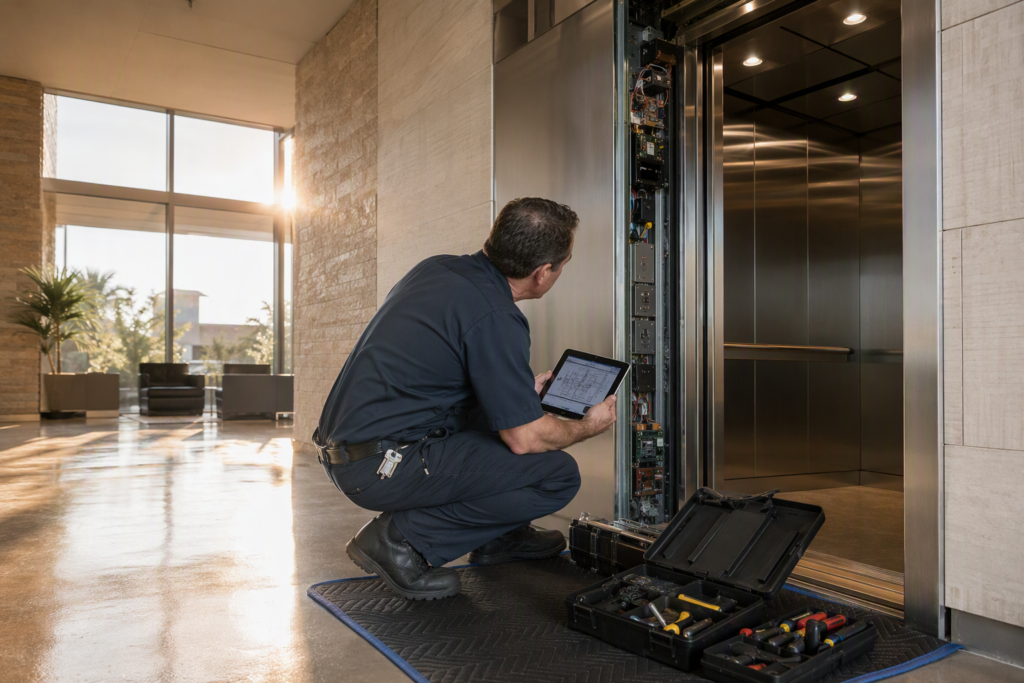
A structured preventive maintenance program reduces the risk of a failed Arizona elevator inspection by identifying and correcting wear, lubrication deficiencies, adjustment issues, and code compliance gaps between inspection cycles — before those conditions become documented violations.
The ASME A17.1 Safety Code for Elevators and Escalators explicitly requires that elevators be maintained in a safe operating condition and that maintenance be performed by qualified personnel. This is not a recommendation — it is a code requirement. A maintenance program that meets ASME A17.1 standards addresses lubrication intervals, safety device testing, door system adjustment, controller and electrical system inspection, and pit housekeeping, all of which directly correspond to the most common inspection failure categories.
Arizona Elevator Solutions serves commercial and residential building owners across Phoenix, Scottsdale, Mesa, and Tucson with preventive maintenance programs designed to keep elevators compliant with Arizona’s ADOSH inspection requirements and the current 2026 edition of ASME A17.1 standards.
What should building owners in Phoenix and Tucson specifically know about Arizona ADOSH enforcement?
Building owners in Phoenix, Tucson, Scottsdale, and Mesa should be aware that Arizona operates as a state-plan state under OSHA, meaning that Arizona ADOSH — not federal OSHA — has primary jurisdiction over elevator safety enforcement, and ADOSH conducts its enforcement program independently with its own inspection schedule, penalty structure, and violation classification system.
This matters because resources available on federal OSHA’s website, while useful for general elevator safety information, do not always reflect Arizona-specific procedural requirements. Building owners and property managers in Arizona’s major urban markets who are accustomed to commercial real estate practices in other states should not assume that another state’s correction timelines, inspector authority, or penalty structures apply in Arizona. Working with a contractor who is familiar with Arizona ADOSH’s specific procedures — as Arizona Elevator Solutions is — reduces the risk of procedural errors during the compliance process.
For reference, OSHA.gov maintains information about state-plan states and their relationship to federal OSHA enforcement that can help building owners understand the jurisdictional framework.
What records should I keep related to elevator inspections and violations?
Building owners should maintain a permanent elevator file that includes the current certificate of inspection, all historical inspection reports (pass and fail), all violation notices, repair invoices and parts receipts corresponding to each violation, re-inspection reports, maintenance logs, and any written communications with ADOSH regarding extensions or compliance schedules.
Under ASME A17.1, maintenance records are a code requirement, not merely a best practice. In the event of an incident, litigation, or regulatory audit, these records are the primary evidence of whether the building owner met their duty of care. Records should be retained for as long as the elevator is in service and for a period after decommissioning consistent with the applicable statutes of limitations in Arizona for property liability claims.
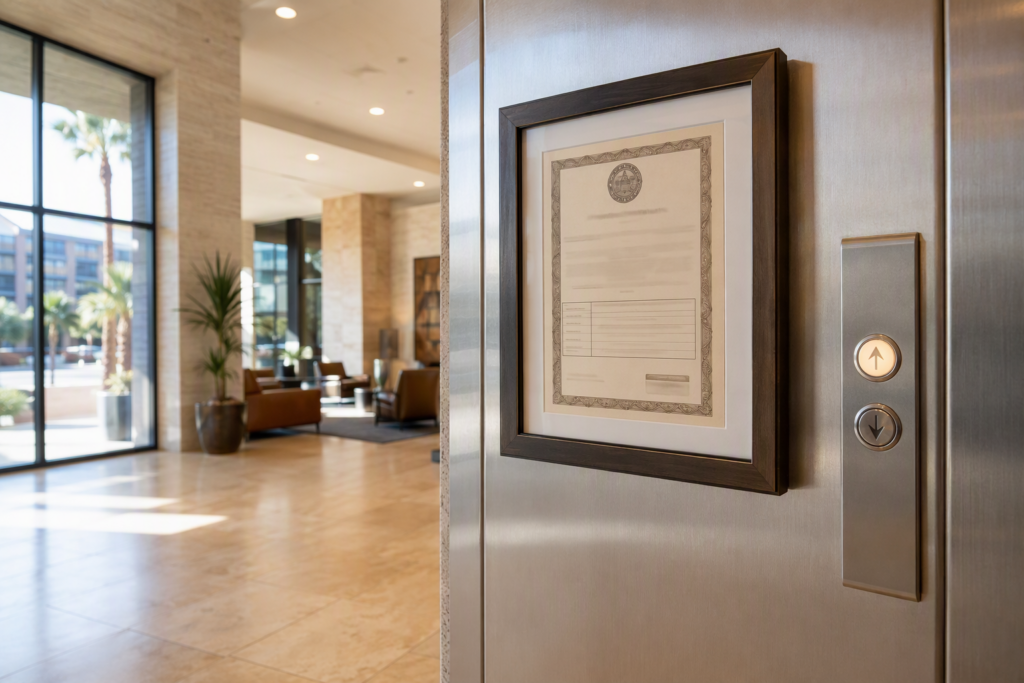
The certificate of inspection is also required to be posted in the elevator car in a location visible to passengers. Absence of the posted certificate is itself a citable violation during inspections.
Get Expert Help Resolving Your Elevator Violations Today
If your elevator has failed an Arizona state inspection, received a violation notice, or is approaching its inspection date with known maintenance gaps, acting quickly is the most effective way to protect your building occupants, limit liability, and minimize downtime. Arizona Elevator Solutions provides free elevator assessments for building owners and property managers throughout Phoenix, Tucson, Scottsdale, and Mesa — giving you a clear picture of required repairs, realistic timelines, and what to expect during the re-inspection process.
Contact Arizona Elevator Solutions for a free elevator assessment: 480-557-7600
Need elevator service you can rely on? Arizona Elevator Solutions is ready to help.