Elevator Maintenance and Compliance Requirements for Senior Living and Assisted Living Facilities in Arizona
Senior living and assisted living facilities in Phoenix, Tucson, Scottsdale, Mesa, and across Arizona face a layered set of elevator obligations that go well beyond what a typical commercial office building must satisfy. Residents depend on vertical transportation for daily mobility, medication delivery, emergency evacuation, and essential care — making elevator reliability a direct patient-safety concern. The following guide covers every major compliance dimension facility managers, administrators, and owners need to understand in 2026.
—
What Are the Core Elevator Compliance Frameworks That Apply to Senior and Assisted Living Facilities in Arizona?
Three primary frameworks govern elevator compliance in Arizona senior care settings:
- ASME A17.1 Safety Code for Elevators and Escalators: This nationally recognized code establishes minimum design, installation, inspection, testing, and maintenance standards. Arizona adopts ASME A17.1 as the baseline technical standard for all conveyances in the state.
- Arizona Revised Statutes — Elevator Safety: Arizona’s Department of Occupational Safety and Health (ADOSH), operating under federal OSHA guidelines and state authority, oversees elevator licensing, inspector certification, and enforcement for conveyances in the state.
- Americans with Disabilities Act (ADA): Title III and associated accessibility guidelines require that elevators in facilities serving individuals with disabilities — including senior living residents — meet specific cab dimensions, door timing, control height, and signage standards.
Facilities that accept Medicare or Medicaid reimbursement may also face additional CMS (Centers for Medicare & Medicaid Services) facility condition requirements that reference elevator operability as part of overall life-safety compliance.
—
How Often Must Elevators in Arizona Senior Living Facilities Be Inspected?
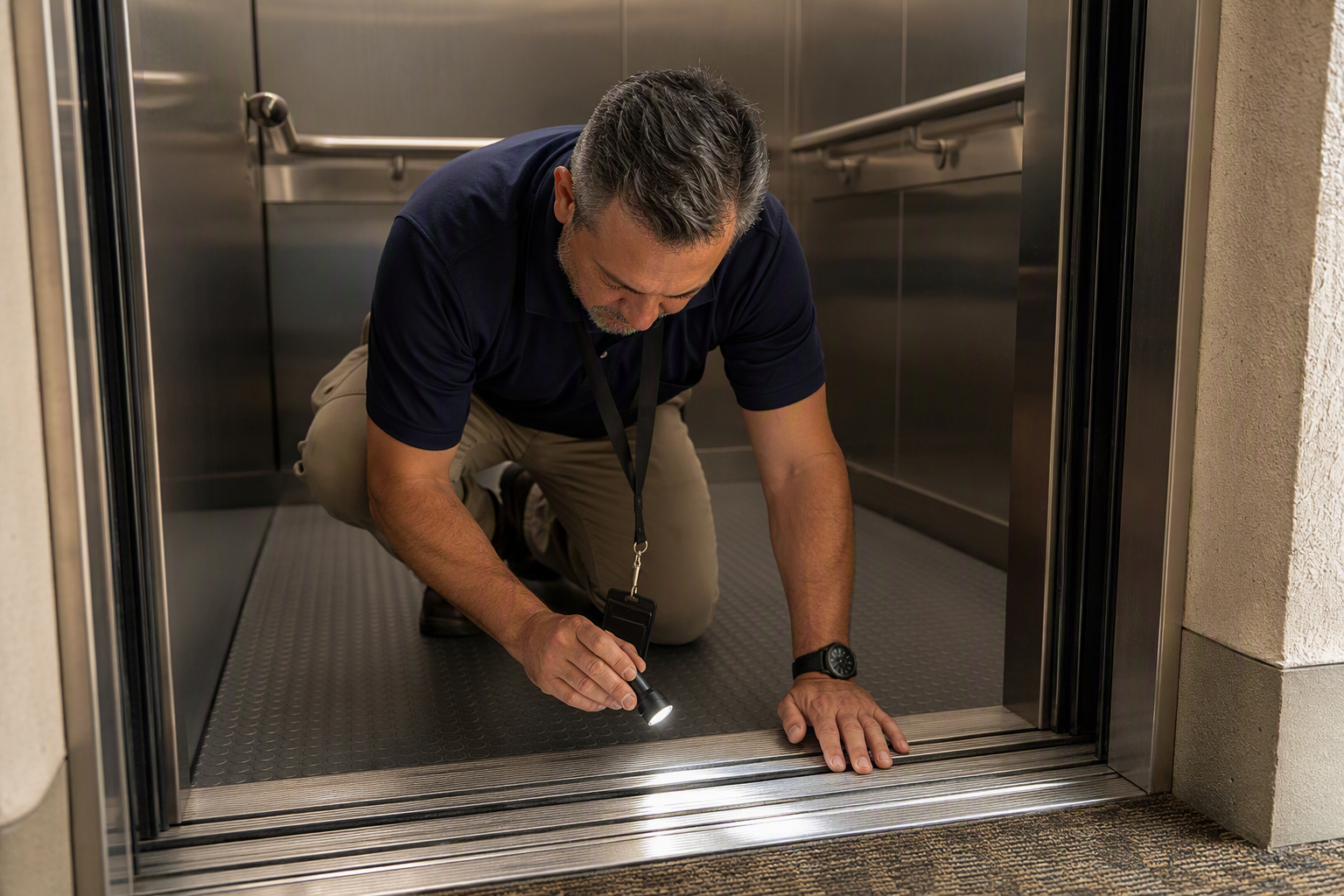
Under Arizona’s elevator safety program, conveyances in facilities such as assisted living must undergo periodic inspections by a licensed elevator inspector. The inspection frequency is tied to the conveyance category as defined in ASME A17.1. Routine (periodic) inspections are required at intervals prescribed by state code, and facilities must obtain a valid Certificate of Inspection before an elevator may legally carry passengers.
Beyond state-mandated inspections, many senior care operators implement monthly or quarterly maintenance visits through a qualified elevator contractor — a practice strongly supported by ASME A17.1 maintenance provisions. Arizona Elevator Solutions works with senior living operators throughout the Phoenix metro, Tucson, Scottsdale, and Mesa areas to build maintenance schedules that satisfy both state inspection requirements and facility risk-management goals.
—
What ADA Requirements Apply Specifically to Elevators in Assisted Living Buildings?
The ADA sets measurable requirements for elevators serving the public and residents in multi-story senior care buildings. Key standards include:
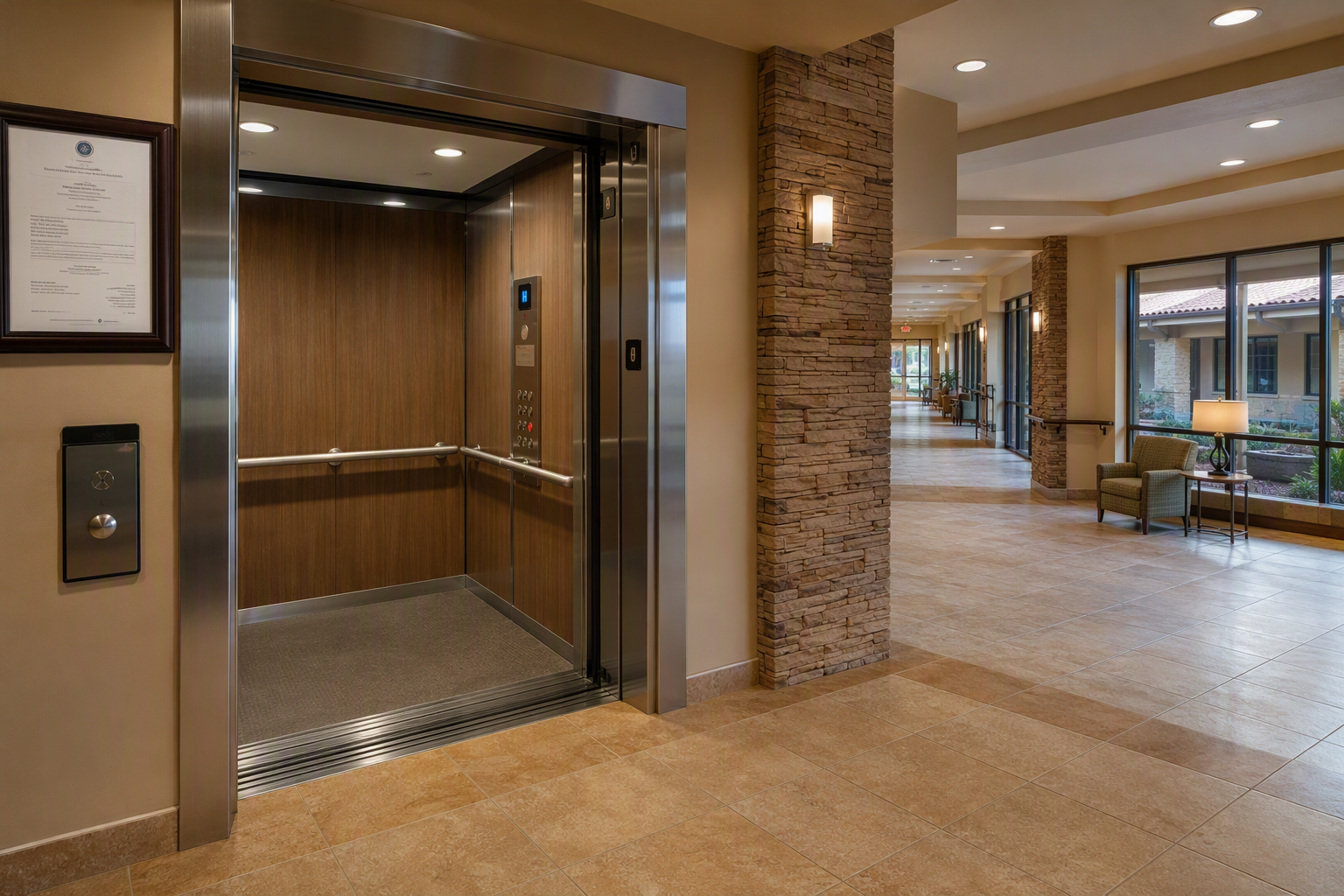
- Cab dimensions: Minimum interior dimensions to accommodate wheelchairs and mobility devices.
- Door timing: Doors must remain open long enough for individuals moving slowly or using assistive equipment — a critical concern in assisted living environments.
- Control placement: Operating controls must be mounted within reach ranges accessible to individuals in wheelchairs.
- Tactile and visual indicators: Raised characters, Braille, and audible signals must be present at landings and inside the cab.
- Emergency communication: A two-way communication system must be operable by individuals who are deaf or hard of hearing, using both visual and audible signals.
Because many assisted living residents use power wheelchairs, walkers, or have limited reach or vision, ADA compliance in this vertical is not a formality — it is a functional life-safety measure.
—
What Maintenance Practices Are Required Under ASME A17.1 for Healthcare Settings?
ASME A17.1 includes a dedicated maintenance section requiring that all elevators be maintained in a condition that is safe for use. For senior living facilities, this typically translates to:
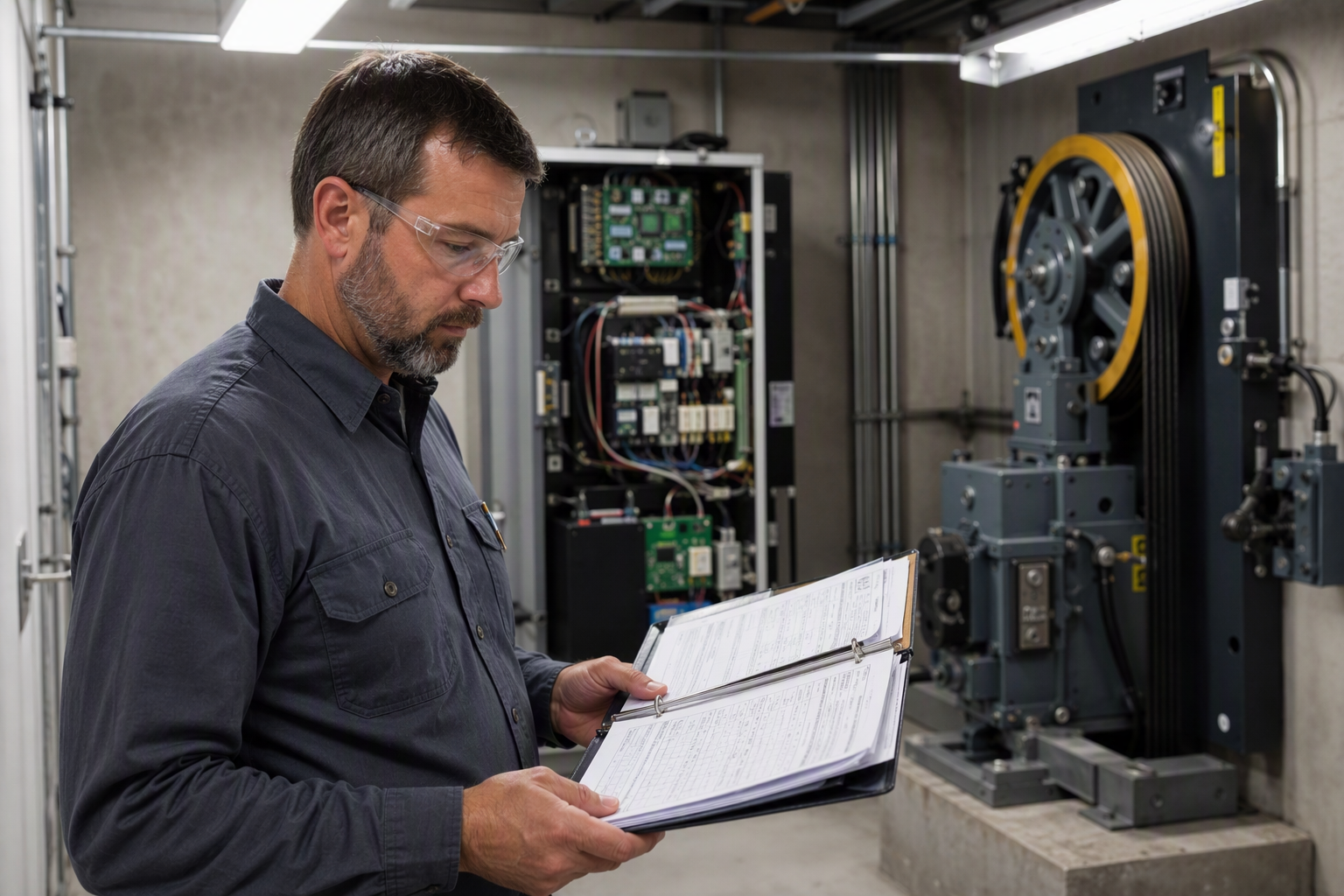
- Maintaining a written maintenance control program (MCP) on site, accessible to inspectors.
- Documenting all maintenance tasks performed, parts replaced, and tests conducted.
- Conducting periodic tests of safety devices, including governors, safeties, and buffers, on the schedule specified in the code.
- Retaining records of all inspections, tests, and maintenance for the period required by state authority.
- Ensuring the maintenance contractor holds all required Arizona licenses and certifications.
Arizona Elevator Solutions provides senior living clients with fully documented maintenance control programs that satisfy ASME A17.1 requirements and can be presented to state inspectors or CMS surveyors without delay.
—
What Happens If an Elevator Is Out of Service at a Senior Living Facility?
An inoperable elevator in a multi-story assisted living facility is not merely an inconvenience — it can constitute a life-safety and licensing deficiency. Residents who depend on the elevator for access to dining, therapy, medication administration, or egress may be directly endangered. Facility administrators should follow a documented out-of-service protocol:
- Immediately notify facility leadership and document the time and nature of the failure.
- Post required out-of-service notices at all elevator entrances on each floor.
- Assess which residents are affected and implement alternative care-access plans per the facility’s emergency protocols.
- Contact a licensed elevator contractor to diagnose and repair the unit.
- Do not return the elevator to service until the contractor certifies it is safe and, where required by state code, the appropriate inspection is completed.
- Document all corrective actions taken and retain records for compliance files.
—
Are There Fire Service and Emergency Operation Requirements for Elevators in Senior Care Facilities?
Yes. ASME A17.1 requires that elevators in buildings over a certain height be equipped with Phase I Emergency Recall and Phase II Emergency In-Car Operation — commonly called “fire service operation.” In a senior living context, this is especially significant because:
- Phase I recall sends all elevator cars to a designated floor upon activation of the building’s fire alarm, preventing residents from inadvertently entering a smoke-affected floor.
- Phase II allows trained fire service personnel to operate the elevator manually during an emergency evacuation.
- Smoke detectors at each landing hoistway door and in the machine room are required to trigger Phase I recall automatically.
Facilities should verify during routine maintenance that fire service operation functions correctly and that all associated smoke detection and recall equipment is tested on the schedule required by both the elevator code and the life-safety code applicable to the building.
—
What Modernization Triggers Apply to Older Elevators in Arizona Senior Living Properties?
Many assisted living facilities in Phoenix, Tucson, Scottsdale, and Mesa operate in buildings constructed decades ago, with elevator equipment that predates current ASME editions. While Arizona does not automatically require retroactive modernization simply because a new code edition is adopted, several situations can trigger mandatory upgrades:
- Major alterations: Significant changes to elevator components — such as the controller, drive system, or cab — typically require the altered system to meet current code requirements for that component.
- Change of use or occupancy: Reclassifying a building or expanding a facility’s licensed bed count can trigger a review of elevator adequacy.
- Inspection deficiencies: If a state inspector issues a violation notice, the facility is required to correct the deficiency within the stated timeframe.
- ADA barrier removal obligations: Facilities undertaking renovations may trigger ADA path-of-travel requirements that include elevator accessibility improvements.
—
How Should Senior Living Facilities Evaluate and Select an Elevator Service Contractor in Arizona?
The selection of an elevator service contractor is a compliance decision, not merely a vendor decision. Facilities should evaluate contractors on:
- State licensure — Arizona requires elevator contractors and mechanics to be licensed; verify credentials with the Arizona Registrar of Contractors or ADOSH.
- Demonstrated familiarity with senior care and healthcare occupancy requirements under ASME A17.1 and ADA.
- Ability to provide and maintain a written maintenance control program.
- Documentation practices that produce records suitable for state inspection and CMS survey review.
- Geographic coverage matching the facility’s location, whether in Phoenix, Tucson, Scottsdale, Mesa, or surrounding communities.
Arizona Elevator Solutions is a certified elevator service company serving the senior living market across the Phoenix metro, Tucson, Scottsdale, and Mesa areas, providing maintenance programs specifically structured for healthcare and residential care occupancies.
—
What Documentation Should a Senior Living Facility Keep on File for Elevator Compliance?
Facility administrators and compliance officers should maintain the following on site and readily accessible:
- Current valid Certificate of Inspection for each conveyance.
- Complete maintenance control program (MCP) as required by ASME A17.1.
- Maintenance and repair logs, including parts replaced and tests performed.
- Records of all periodic and acceptance tests required by the applicable ASME code edition.
- Records of any complaints, incidents, or entrapments, and the corrective actions taken.
- Contractor license verification for any company performing work on the elevator.
- ADA compliance documentation for each elevator, including any variance or planned-barrier-removal records.
—
Questions Your Inspector Will Ask
When an Arizona state elevator inspector or a CMS life-safety surveyor visits a senior living facility, the following are among the questions and documentation requests commonly encountered:
- Is your Certificate of Inspection current and posted in or near the elevator as required?
- Do you have a written Maintenance Control Program on site, and is it being followed?
- Are maintenance logs up to date and available for review?
- When was the last periodic test of the safety devices, and is that test documented?
- Has fire service operation (Phase I and Phase II) been tested, and is there a record?
- Are all ADA-required features — door timing, tactile controls, emergency communication — currently functioning?
- Is your elevator contractor licensed in Arizona, and can you provide proof?
- Have there been any entrapments or incidents, and how were they documented and resolved?
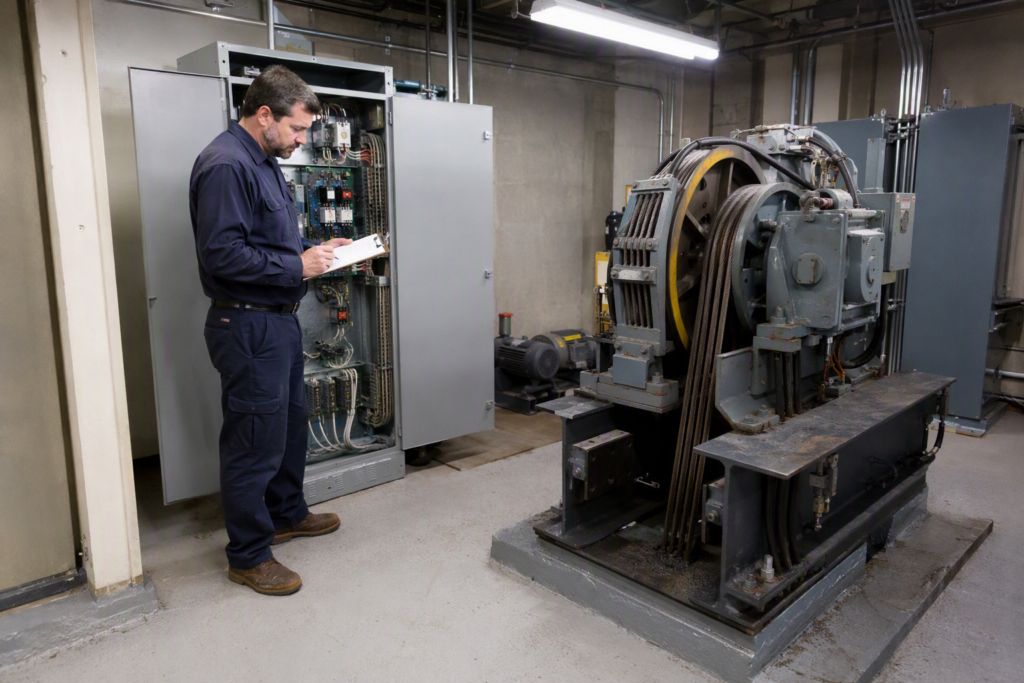
- Is the machine room secured, clean, and free of storage not related to elevator equipment?
- Are all required permits for any recent alterations on file?
—
What Should a Senior Living Facility Do to Prepare for an Elevator Inspection in Arizona?
- Review the maintenance control program and confirm all scheduled tasks have been completed and logged.
- Verify the Certificate of Inspection is current and properly posted.
- Confirm all safety device test records are filed and accessible.
- Test fire service operation and document the result prior to the inspection date.
- Walk the elevator cab and landing areas to identify any visible ADA deficiencies — non-functioning indicators, worn Braille labels, or sticky door operations — and address them proactively.
- Confirm the machine room is clean, secured, and that all lighting and required signage is in place.
- Notify your elevator contractor so a technician can be available during the inspection if questions arise.
Arizona Elevator Solutions offers pre-inspection assessment services for senior living facilities in the Phoenix, Tucson, Scottsdale, and Mesa markets to help identify and correct deficiencies before the official state inspector arrives.
—
How Does Elevator Compliance Connect to Arizona Senior Care Licensing?
The Arizona Department of Health Services (ADHS) licenses assisted living facilities and inspects them for life-safety compliance. Elevator operability and valid inspection certifications are components of the physical plant requirements that ADHS reviewers assess. A facility with an elevator out of compliance — missing a current Certificate of Inspection, documented maintenance failures, or unresolved ADA deficiencies — may face licensing deficiency citations that require corrective action plans and follow-up inspections. In serious cases, elevator-related deficiencies can affect a facility’s ability to admit new residents until corrections are verified.
—
Get a Free Elevator Assessment for Your Senior Living Facility
Keeping residents safe and facilities compliant requires a maintenance partner who understands the specific demands of the senior care environment. Contact Arizona Elevator Solutions for a free elevator assessment and learn how a structured maintenance program can protect your residents, satisfy state inspectors, and support your facility’s licensing standing throughout Phoenix, Tucson, Scottsdale, Mesa, and the broader Arizona market.
Contact Arizona Elevator Solutions for a free elevator assessment: 480-319-7157
Need elevator service you can rely on? Arizona Elevator Solutions is ready to help.