Elevator Requirements and Compliance Obligations for Hospitals and Healthcare Facilities in Arizona
Quick Answer: Hospitals and healthcare facilities in Arizona must comply with ASME A17.1 Safety Code for Elevators and Escalators, the Americans with Disabilities Act (ADA), Arizona state elevator safety statutes, and healthcare-specific standards from the Facility Guidelines Institute (FGI) — all of which govern elevator design, capacity, accessibility, and mandatory inspection intervals.
Healthcare facilities face a higher standard of elevator compliance than virtually any other building type. When an elevator in a hospital fails, the consequences extend beyond inconvenience — delayed patient transport, blocked emergency access, and regulatory citations can directly affect patient outcomes. For facility managers and compliance officers at hospitals, surgical centers, and long-term care facilities across Phoenix, Tucson, Scottsdale, and Mesa, understanding the full scope of elevator obligations is not optional. The sections below break down every major requirement and answer the questions most commonly raised by healthcare administrators and state inspectors.
—
What Federal and State Codes Govern Elevators in Arizona Healthcare Facilities?
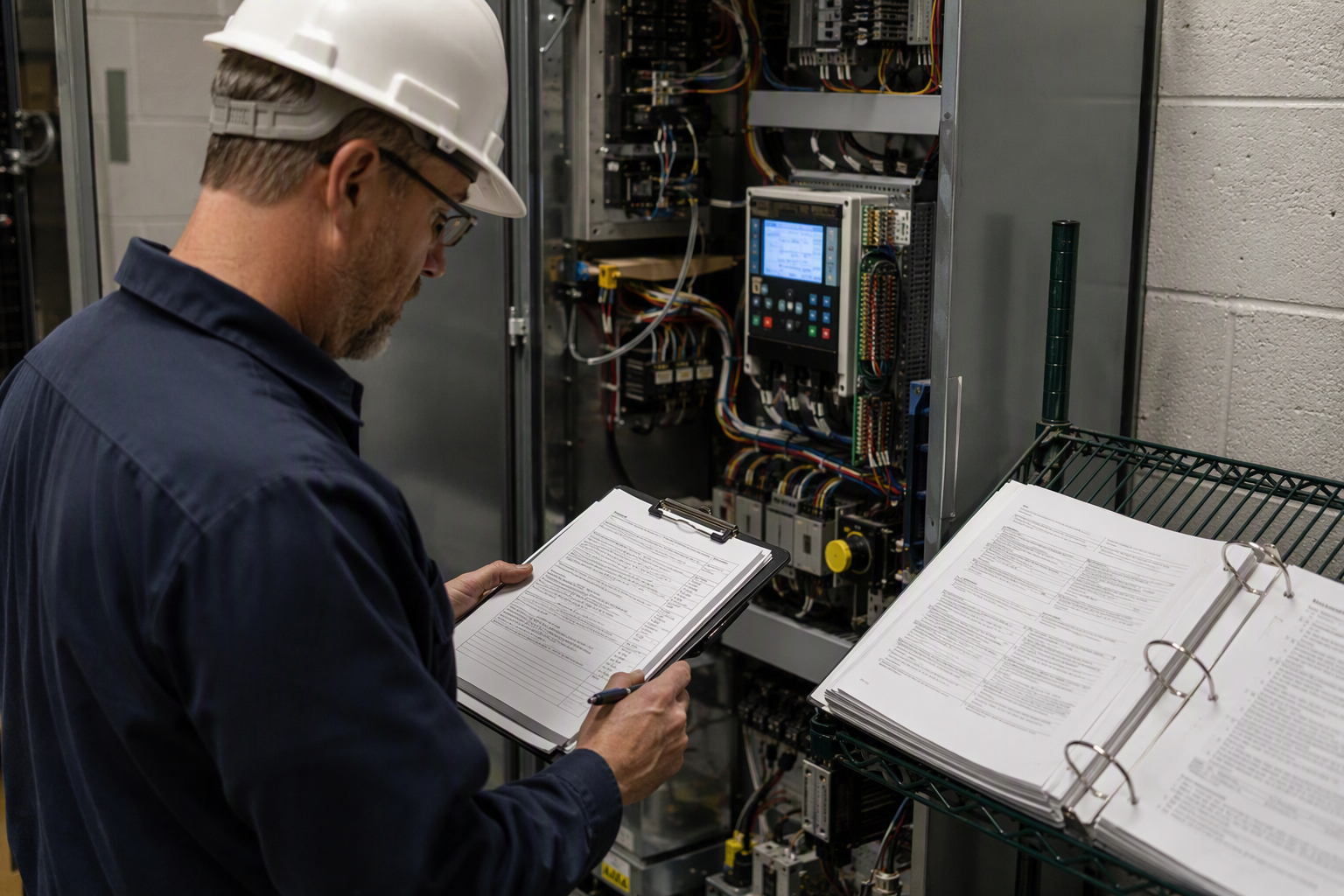
Arizona elevator compliance for healthcare facilities sits at the intersection of multiple overlapping regulatory frameworks:
- ASME A17.1 Safety Code for Elevators and Escalators: The primary mechanical and safety standard adopted by Arizona as the baseline for all elevator installations, alterations, and maintenance. It governs load ratings, door safety, emergency lighting, and communication systems.
- Americans with Disabilities Act (ADA): Mandates accessible elevator design including minimum cab dimensions, accessible controls, audible and visual indicators, and Braille signage. Healthcare facilities serving the public carry ADA obligations that are actively enforced.
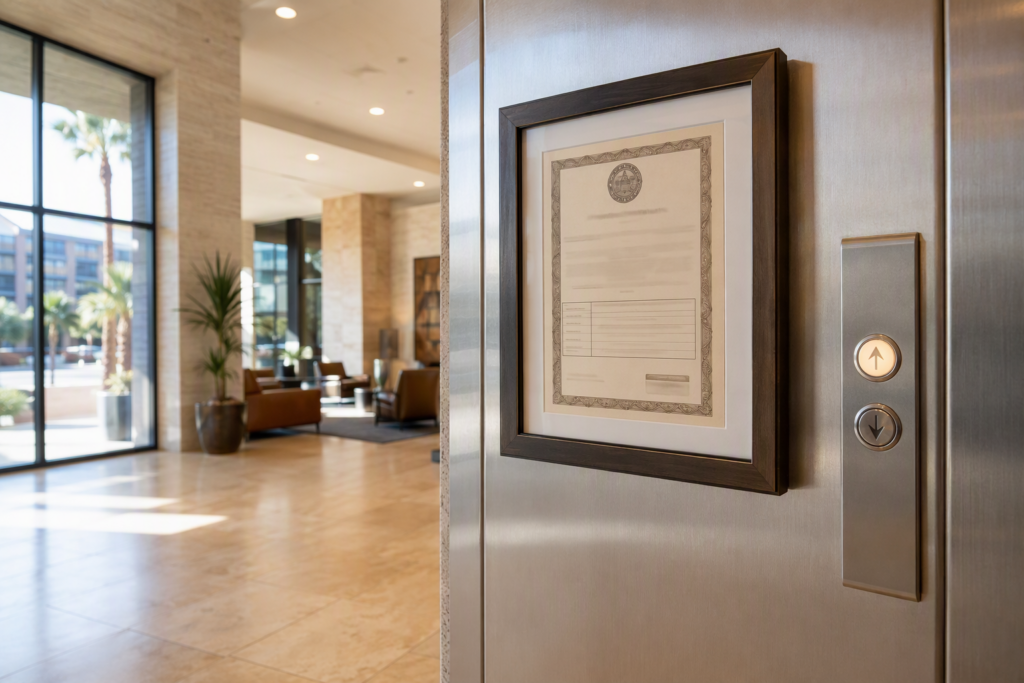
- Arizona Revised Statutes (ARS) Title 23 — Elevator Safety: Requires that all elevators in Arizona be registered, inspected by a licensed elevator inspector, and maintain a current certificate of operation. Hospitals are not exempt from these state-level requirements.
- Facility Guidelines Institute (FGI) Guidelines for Design and Construction of Hospitals: Adopted by many Arizona health authorities and accrediting bodies, FGI guidelines specify minimum elevator quantities, size requirements for stretcher and bed transport, and service elevator separation for clinical versus public use.
- The Joint Commission (TJC) Environment of Care Standards: Accredited hospitals must demonstrate that vertical transportation equipment is properly maintained and does not pose a safety risk to patients, staff, or visitors.
Arizona Elevator Solutions works with healthcare clients across the Phoenix metro, Tucson, Scottsdale, and Mesa markets to map these overlapping requirements into a single compliance roadmap.
—
What Are the Minimum Elevator Size and Capacity Requirements for Hospitals?
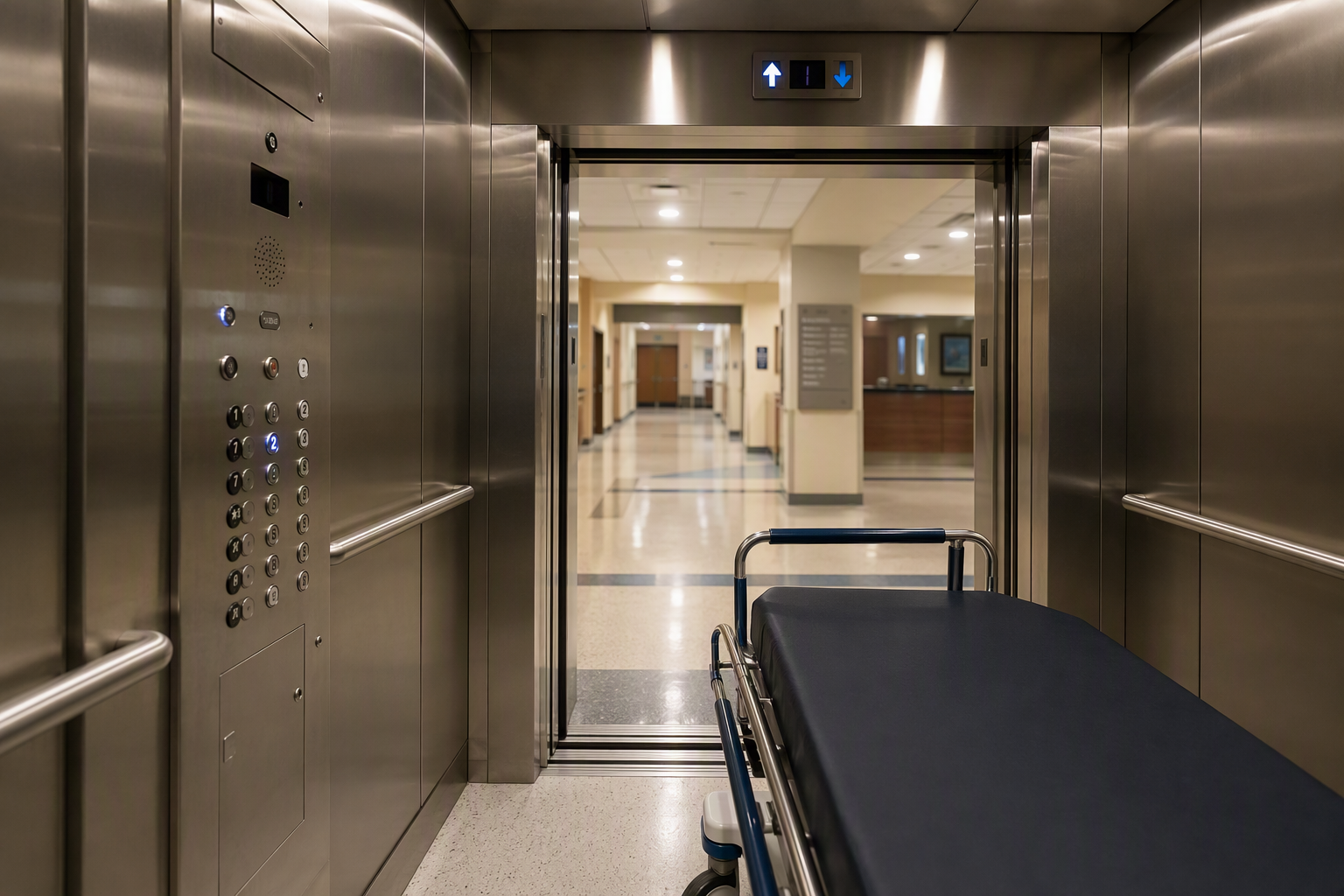
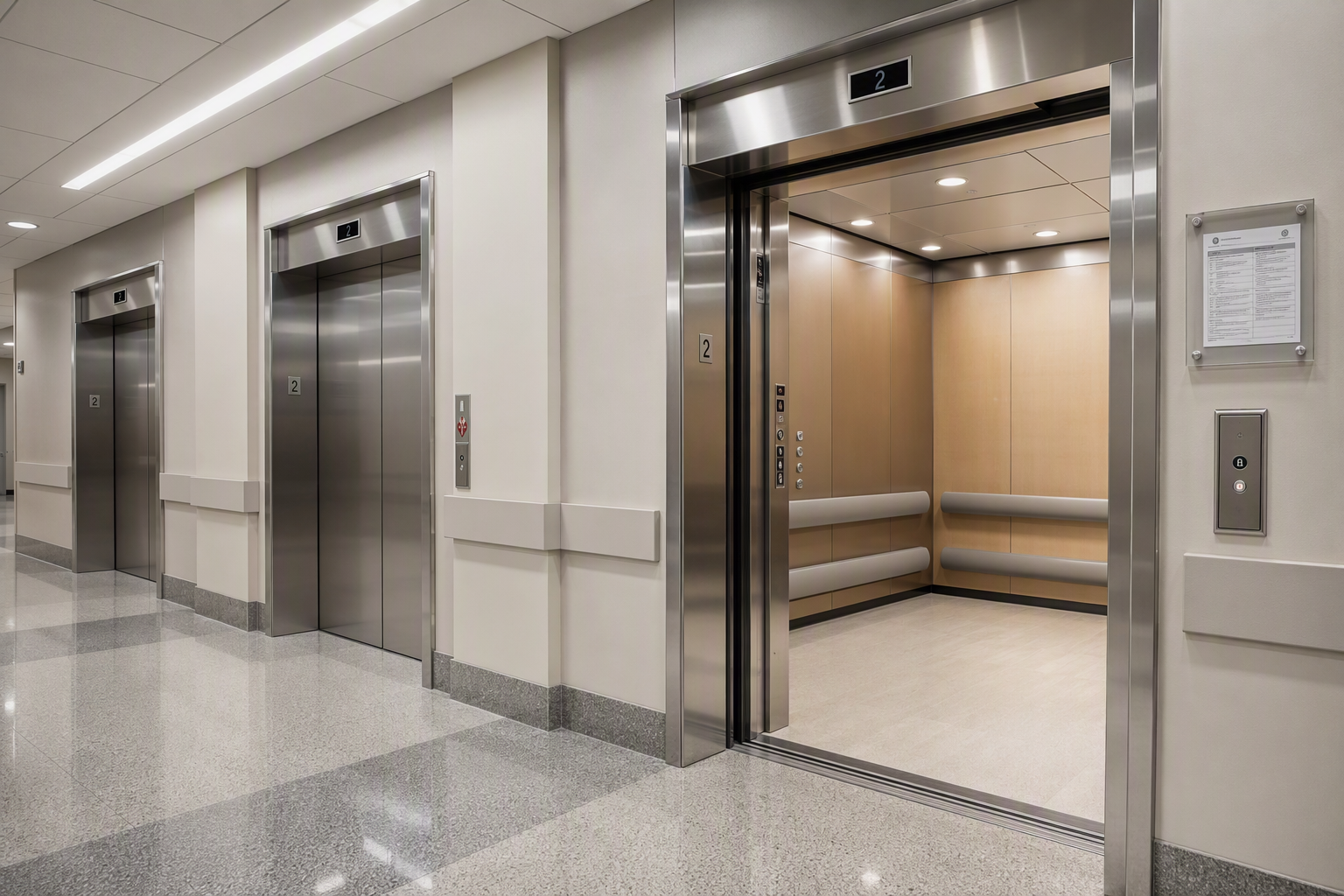
Healthcare facilities have significantly larger minimum elevator requirements than commercial office buildings. Under FGI guidelines — which Arizona health planners and accreditors widely reference — hospitals must provide at least one elevator large enough to accommodate a fully extended hospital bed with medical personnel on both sides. This typically requires:
- A minimum cab clear floor area sufficient for a 76-inch stretcher plus attendants
- Door openings wide enough for lateral patient transfer
- Adequate weight capacity for beds, wheelchairs, portable life-support equipment, and accompanying staff simultaneously
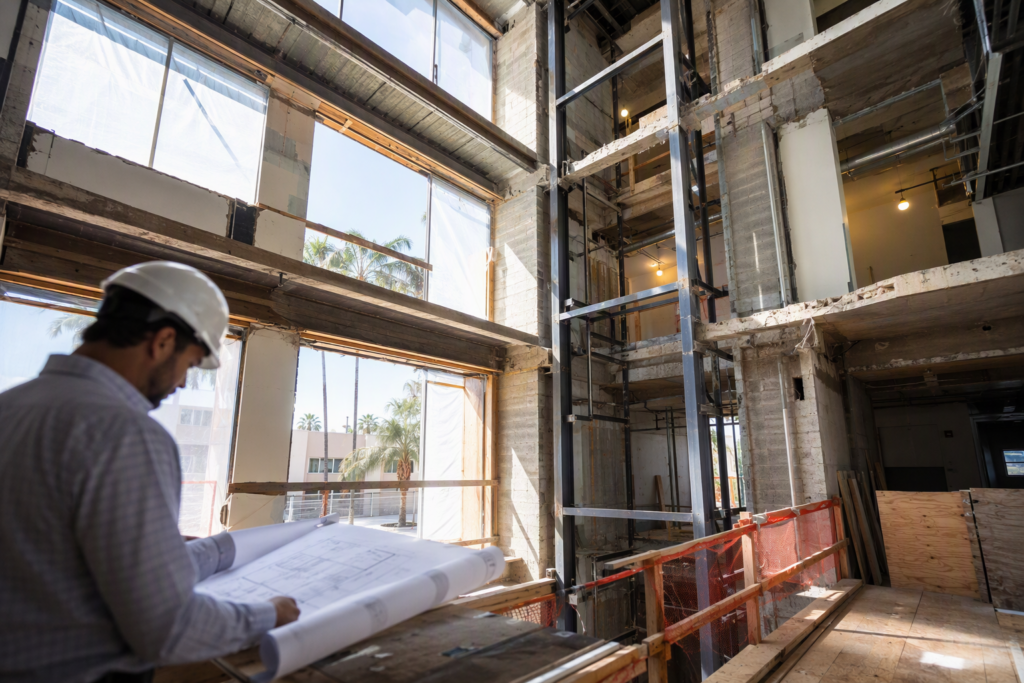
For new construction or major renovation projects in Arizona, these dimensions must be confirmed against the current edition of the FGI guidelines and coordinated with the state health facility licensing agency before a certificate of occupancy is issued.
—
How Often Must Elevators in Arizona Hospitals Be Inspected?
Under Arizona state law and consistent with ASME A17.1 requirements, elevators must undergo periodic inspections by a licensed elevator inspector. For hospitals, where elevator downtime and safety failures carry clinical risk, adherence to inspection schedules is treated as a serious compliance matter. The inspection cycle generally includes:
- Periodic inspection: A full safety inspection performed at state-mandated intervals to verify mechanical, electrical, and life-safety systems are functioning correctly.
- Periodic test: Functional testing of safety devices, including buffers, safeties, and governor systems, at intervals specified in ASME A17.1.
- Five-year full-load safety test: A comprehensive load and safety test required under ASME A17.1 to confirm that the elevator can safely handle its rated capacity and that all emergency systems activate as designed.
- Maintenance log review: Inspectors will audit maintenance records to confirm that a qualified elevator mechanic has been performing routine maintenance on the prescribed schedule.
Facilities that allow certificates of inspection to lapse face shutdown orders — a critical risk in any healthcare environment.
—
What ADA Accessibility Requirements Apply Specifically to Healthcare Elevators?
The ADA requires that elevators serving multiple floors in healthcare facilities be accessible to people with disabilities. Key requirements include:
- Minimum cab dimensions that accommodate a standard wheelchair
- Call buttons at accessible heights and with raised characters and Braille
- Visual and audible floor indicators
- Door reopening devices that detect obstructions without contact
- Handrails on at least one wall of the cab
- Leveling accuracy within one-half inch of the landing
In healthcare settings, these requirements extend beyond general public accessibility — they directly affect the safe transport of patients in wheelchairs, on gurneys, or with assistive devices.
—
Are There Special Elevator Requirements for Emergency Departments and Surgical Floors?
Yes. High-acuity areas such as emergency departments, intensive care units, and surgical suites often require dedicated service or clinical elevators that are physically separated from public passenger elevators. This separation prevents cross-contamination of infection control zones, reduces congestion during emergency transport, and ensures that critical patient movement is never delayed by general visitor traffic. Facilities seeking Joint Commission accreditation are expected to demonstrate that their vertical transportation plan supports uninterrupted clinical workflows.
—
What Happens If a Hospital Elevator Fails Inspection in Arizona?
When a state-licensed elevator inspector identifies a deficiency, the facility receives a written notice of violation. Depending on the severity of the finding:
- The elevator may be placed out of service immediately if the deficiency presents an imminent hazard to occupants.
- The facility will be given a corrective action period to repair the identified issue.
- A follow-up inspection is required to confirm that the violation has been corrected before the elevator is returned to full service.
- Repeated or unresolved violations can trigger civil penalties under Arizona statutes and may be reported to accrediting bodies such as The Joint Commission.
- Deficiencies related to ADA non-compliance may trigger separate federal enforcement action.
Arizona Elevator Solutions provides pre-inspection assessments designed to identify and resolve code deficiencies before a state inspector arrives, reducing the risk of out-of-service orders in critical care environments.
—
What Maintenance Program Does a Healthcare Facility Need to Stay Compliant?
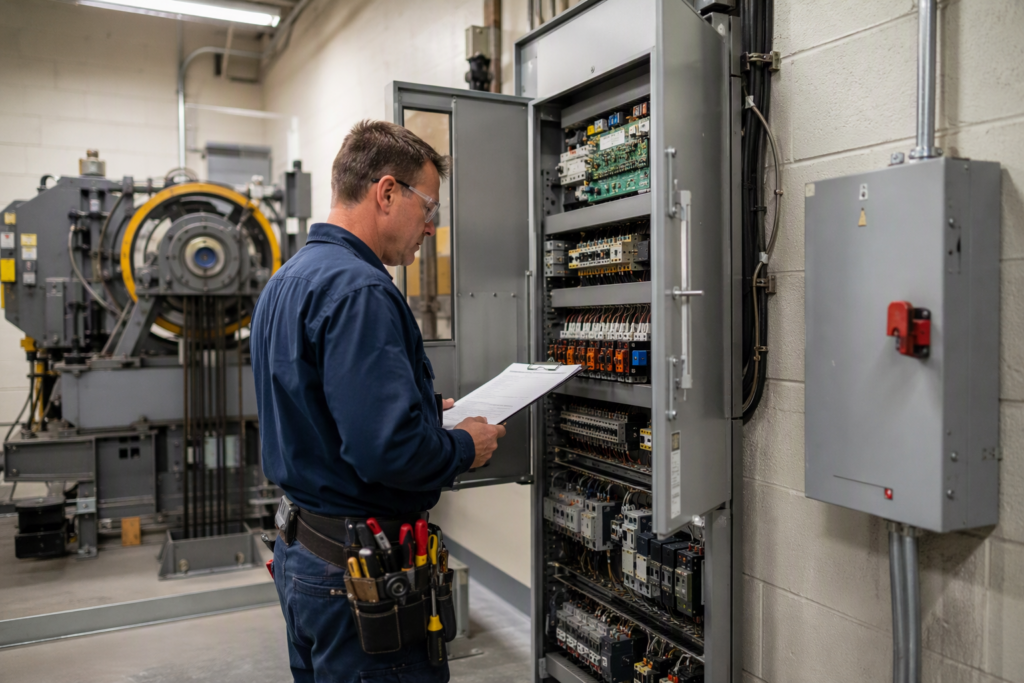
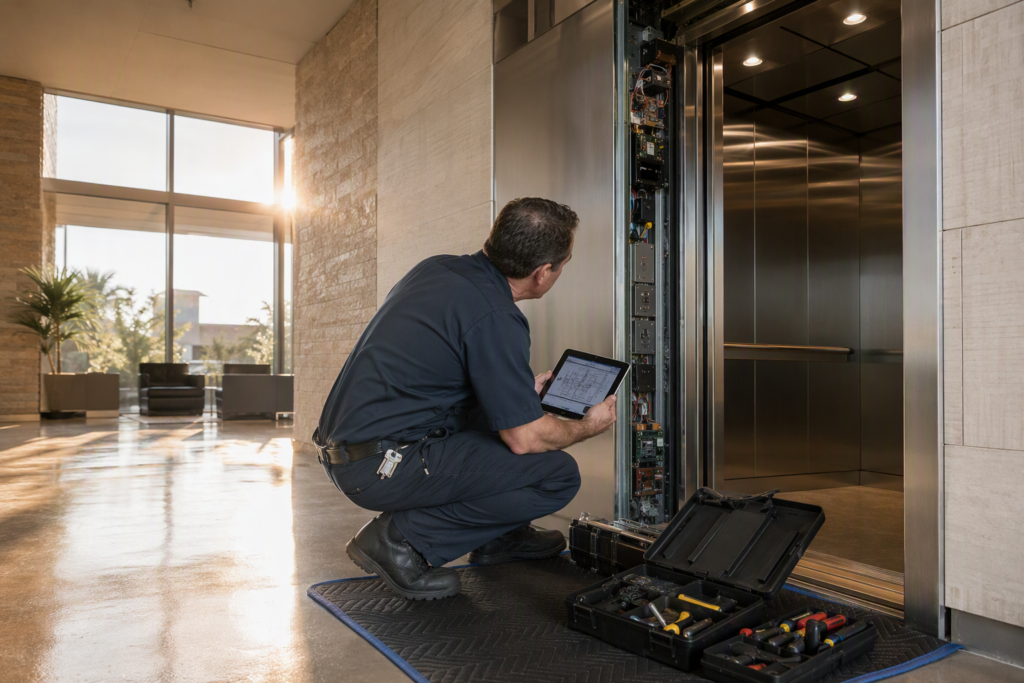
A compliant maintenance program for a healthcare elevator goes well beyond oil changes and basic adjustments. Under ASME A17.1, maintenance must be performed by a qualified elevator mechanic and must follow a documented schedule. A healthcare-appropriate maintenance program typically includes:
- Lubrication and adjustment of all moving components on a defined schedule
- Testing of door safety edges, door reopening devices, and leveling systems
- Inspection and testing of emergency lighting and two-way communication systems
- Review and update of the maintenance control program (MCP) as required by current ASME A17.1 editions
- Documentation of all maintenance activities in a logbook retained on-site for inspector review
For healthcare facilities, a well-documented maintenance record is also a risk management asset — it demonstrates due diligence if a patient or staff member is ever injured in an elevator incident.
—
Do Arizona Long-Term Care Facilities and Outpatient Clinics Have the Same Obligations as Hospitals?
Not always identically, but the obligations are substantial. Long-term care facilities, skilled nursing facilities, and multi-story outpatient clinics in Arizona are all subject to state elevator safety statutes, ASME A17.1, and ADA requirements. FGI guidelines differentiate design requirements based on facility type and occupancy, so a two-story outpatient clinic will have different minimum specifications than a 400-bed acute care hospital. However, any healthcare facility serving patients who use wheelchairs or require stretcher transport — which is virtually every licensed healthcare facility — must ensure their elevators can accommodate those needs safely.
—
How Should a Hospital Facility Manager Prepare for a 2026 State Elevator Inspection?
Facility managers in Phoenix, Tucson, Scottsdale, and Mesa can take a structured approach to inspection readiness in 2026:
- Confirm that the current certificate of operation is posted inside the elevator cab as required by Arizona law.
- Pull the maintenance logbook and verify that all scheduled maintenance visits have been completed and documented.
- Test emergency lighting and the two-way communication system in each cab before the inspector arrives.
- Walk each elevator landing and confirm that door operation, leveling accuracy, and safety edge function all meet ASME A17.1 standards.
- Verify that ADA-required signage, Braille, and audible indicators are present and legible.
- Confirm whether any five-year full-load safety tests are overdue and schedule them in advance of the inspection.
- Engage a qualified elevator service company to conduct a pre-inspection audit and address any deficiencies in advance.
—
Questions Your Inspector Will Ask
Arizona elevator inspectors working in healthcare facilities commonly raise the following questions during an inspection visit. Facility managers should be prepared to answer each one with documentation in hand:
- Is the current certificate of operation posted and unexpired? Inspectors look for this immediately upon entering the machine room or cab.
- Where is the maintenance logbook, and is it current? Gaps in maintenance records are a common citation source.
- Has the five-year full-load safety test been performed on schedule? Overdue tests result in mandatory out-of-service orders.
- Are all emergency communication systems functional? Two-way communication must connect to a live monitoring point, not an unmanned voicemail system.
- Has the maintenance control program (MCP) been updated to reflect the current ASME A17.1 edition? Outdated MCPs are a documented deficiency.
- Are door reopening devices functioning correctly across the full height of the door opening? Partial detection is non-compliant.
- Does the elevator level within the required tolerance at each floor? Leveling failures are a trip-and-fall hazard and a code violation.
- Are ADA-required features intact, including Braille, audible signals, and accessible controls? Missing or damaged ADA features are flagged separately from mechanical deficiencies.
- Is there documentation that the elevator mechanic performing maintenance holds the required qualifications? Work performed by unqualified individuals voids compliance.
Arizona Elevator Solutions prepares healthcare clients in Phoenix, Tucson, Scottsdale, and Mesa to answer every one of these questions with confidence before an inspector ever sets foot on the property.
—
What Should a Healthcare Facility Do When Choosing an Elevator Service Provider?
Not all elevator service companies have experience with the specific demands of healthcare environments. When evaluating providers, facility managers should consider:
- Whether the company is certified and employs qualified elevator mechanics under Arizona licensing requirements
- Whether the company has demonstrated knowledge of FGI guidelines and Joint Commission Environment of Care standards, not just commercial elevator codes
- Whether the company can provide pre-inspection audits and help the facility develop a compliant maintenance control program
- Whether the company serves the facility’s market — Phoenix, Tucson, Scottsdale, and Mesa healthcare facilities benefit from a provider with established local presence who understands Arizona regulatory enforcement practices
- Whether the company can support new construction coordination, major modernizations, and emergency repairs — not just routine maintenance
Arizona Elevator Solutions is a certified elevator service company serving healthcare facilities across the Phoenix metro area, Tucson, Scottsdale, and Mesa, with a focus on compliance-driven maintenance and inspection readiness.
—
Can Hospitals in Arizona Self-Perform Elevator Maintenance?
Under ASME A17.1 and Arizona state regulations, elevator maintenance must be performed by qualified elevator mechanics. Hospital facilities management staff — even skilled engineers — cannot substitute for a licensed elevator mechanic when it comes to performing, documenting, and certifying elevator maintenance under the required maintenance control program. Facilities that attempt to self-perform work without proper qualification risk voiding their certificate of operation and face potential liability exposure if an incident occurs.
—
What Is the Cost of Elevator Non-Compliance for a Healthcare Facility?
The financial and operational costs of non-compliance extend well beyond regulatory fines. A healthcare facility that receives an out-of-service order on a primary clinical elevator may face:
- Disruption to patient transport workflows, including delays in time-sensitive procedures
- Findings during Joint Commission surveys that affect accreditation status
- Emergency repair costs that are significantly higher than planned maintenance expenditures
- Potential civil liability if a patient, visitor, or staff member is injured due to a documented maintenance failure
- Reputational consequences if regulatory actions become public record
Investing in a structured, documented elevator compliance program is demonstrably lower risk than managing the consequences of a lapse.
—
Contact Arizona Elevator Solutions for a Free Elevator Assessment
Healthcare facility managers across Phoenix, Tucson, Scottsdale, and Mesa trust Arizona Elevator Solutions to keep their elevators compliant, safe, and inspection-ready. Whether a facility needs a pre-inspection audit, help developing a maintenance control program, or support with a major modernization project, the Arizona Elevator Solutions team is equipped to help.
Contact Arizona Elevator Solutions for a free elevator assessment: 480-557-7600
Need elevator service you can rely on? Arizona Elevator Solutions is ready to help.