Elevator Modernization vs. Replacement in Healthcare: When Does It Make Financial Sense?
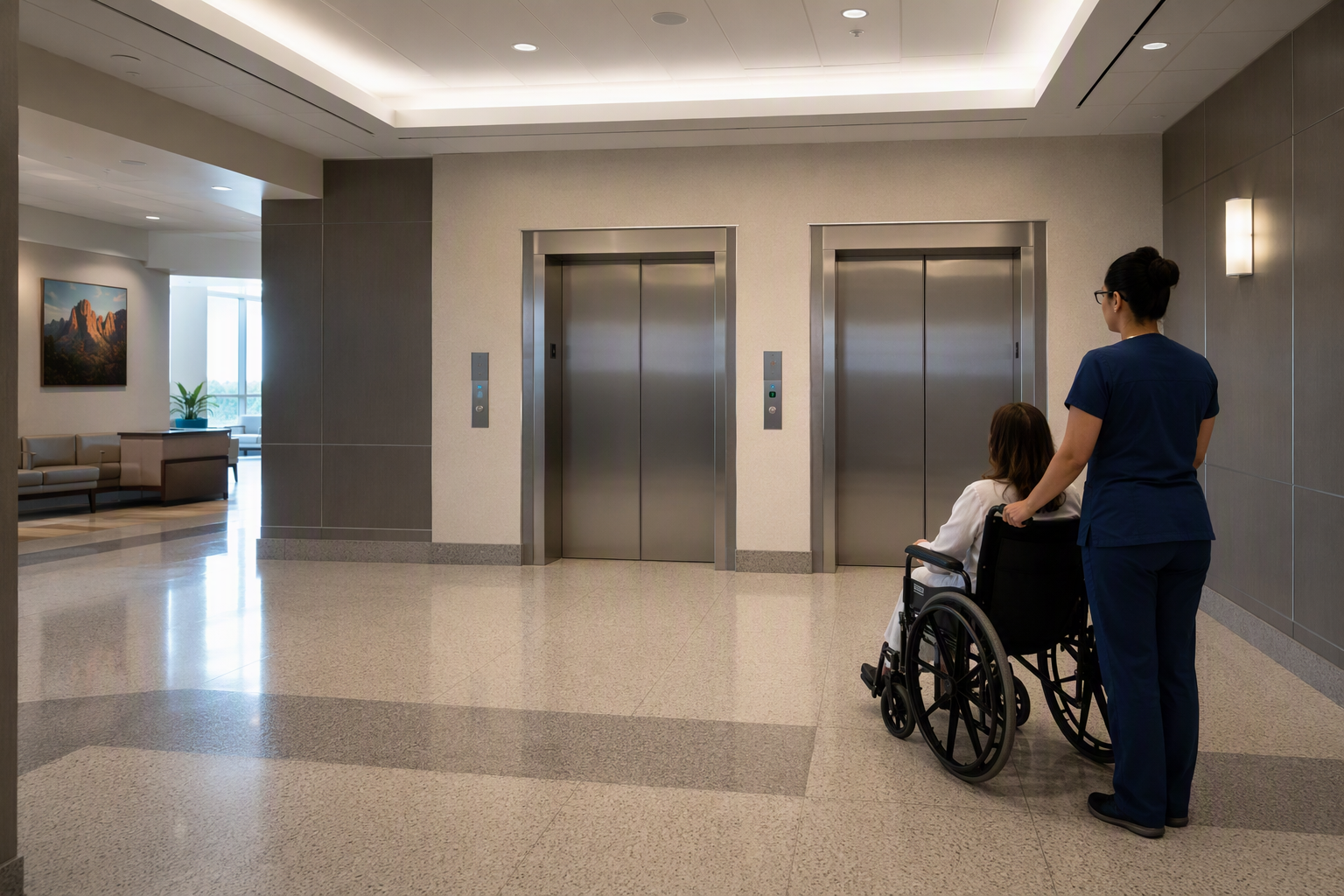
Healthcare facilities in Phoenix, Tucson, Scottsdale, and Mesa face a unique challenge: elevators are not optional equipment. Hospitals, outpatient surgery centers, skilled nursing facilities, and medical office buildings depend on vertical transportation for patient transfers, medical equipment movement, and emergency response. When an elevator begins to underperform, the decision between modernization and full replacement carries clinical, operational, and financial consequences that go far beyond what most commercial building owners face.
This guide helps healthcare facility managers, CFOs, and compliance officers understand the decision-making framework for 2026 and beyond—covering cost factors, compliance requirements, timelines, and how Arizona Elevator Solutions approaches the evaluation process.
What Is the Core Financial Difference Between Modernization and Replacement?
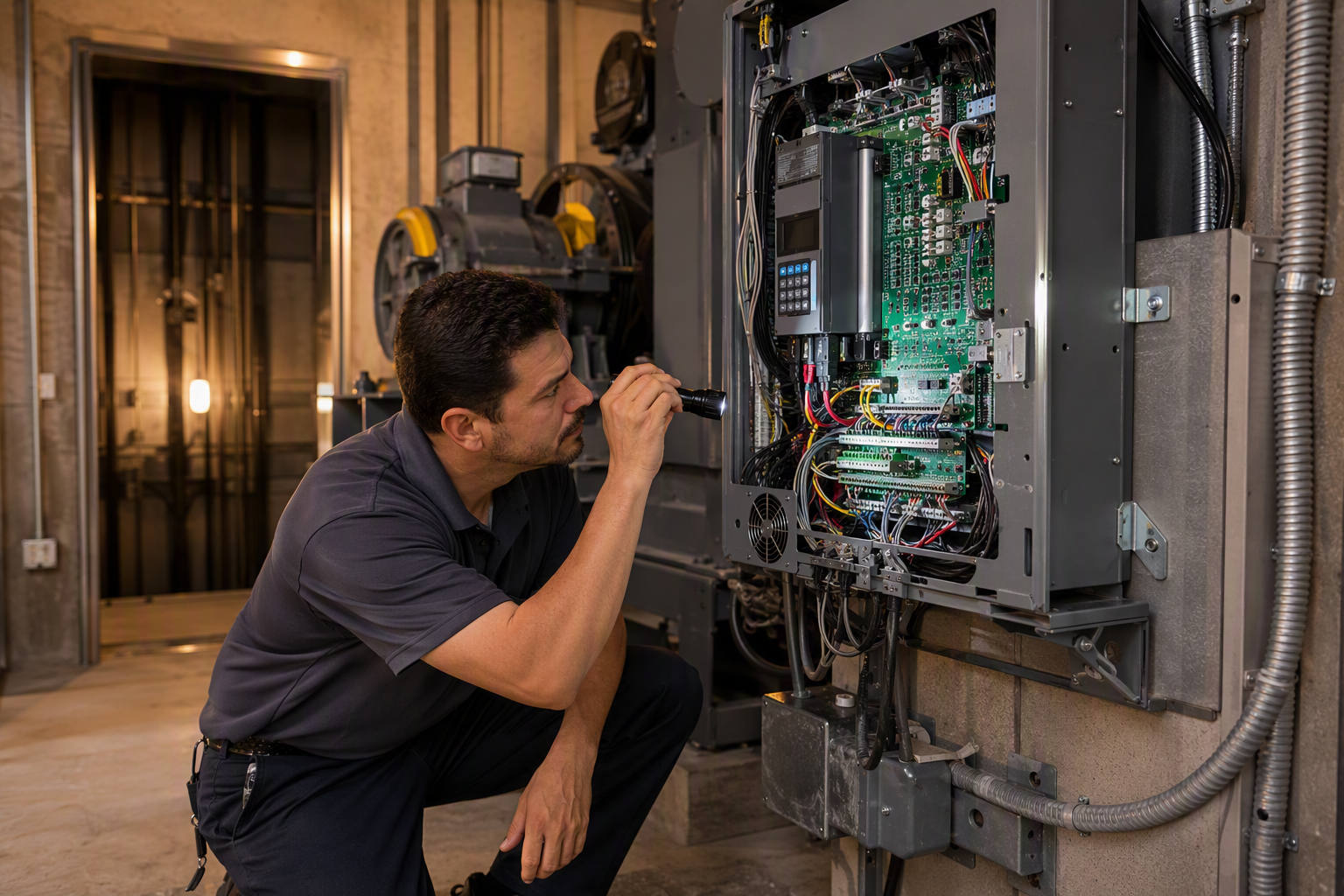
Full elevator replacement involves removing every component—cab, rails, machinery, controls, and often portions of the hoistway structure—and installing a new system. Modernization, by contrast, retains serviceable structural elements and upgrades components such as controls, motor drives, door operators, cabs, and safety devices.
In healthcare environments, full replacement typically requires extended out-of-service periods, temporary patient transport contingencies, and potential structural modifications to the building envelope. Modernization, depending on scope, can often be completed in phases or during off-peak hours, reducing the operational impact on patient care.
The financial case for modernization strengthens when:
- The hoistway and structural rails are in acceptable condition
- The elevator is fewer than roughly 25–30 years old (structural components still viable)
- The primary failure points are electrical, mechanical, or control-related
- The facility cannot absorb a prolonged out-of-service period
- A full replacement would trigger code upgrades requiring significant building renovation
The financial case for full replacement strengthens when:
- Structural components—rails, buffers, or hoistway walls—are deteriorated
- The system is so outdated that parts are no longer manufactured or available
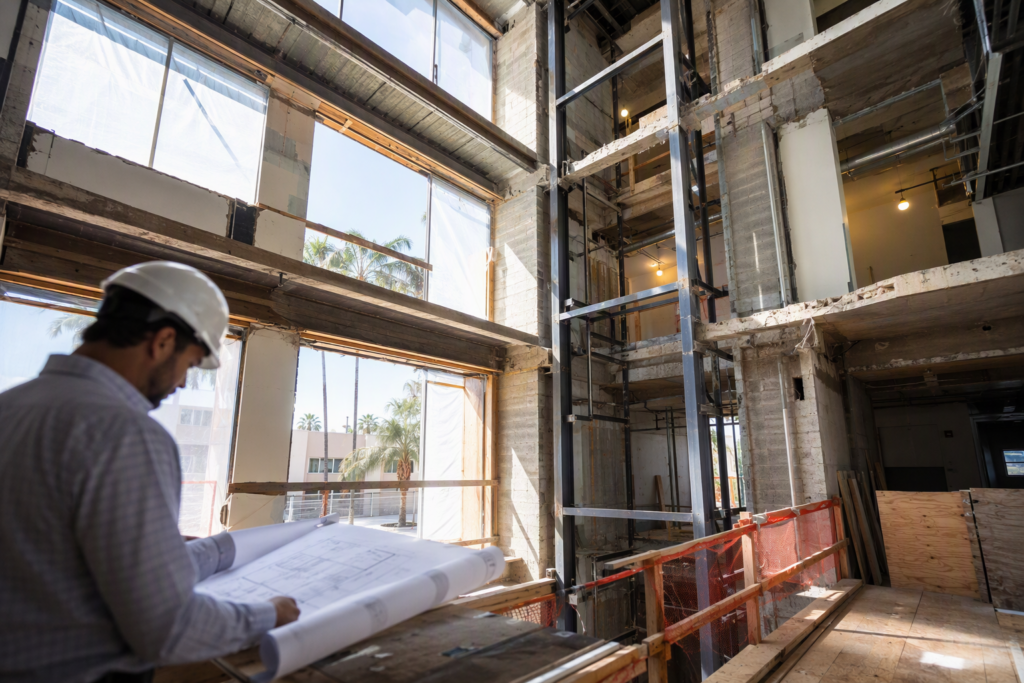
- The facility is planning a major renovation that already requires structural work
- Cumulative modernization costs across multiple components approach replacement cost
What Compliance Requirements Apply to Healthcare Elevators in Arizona?
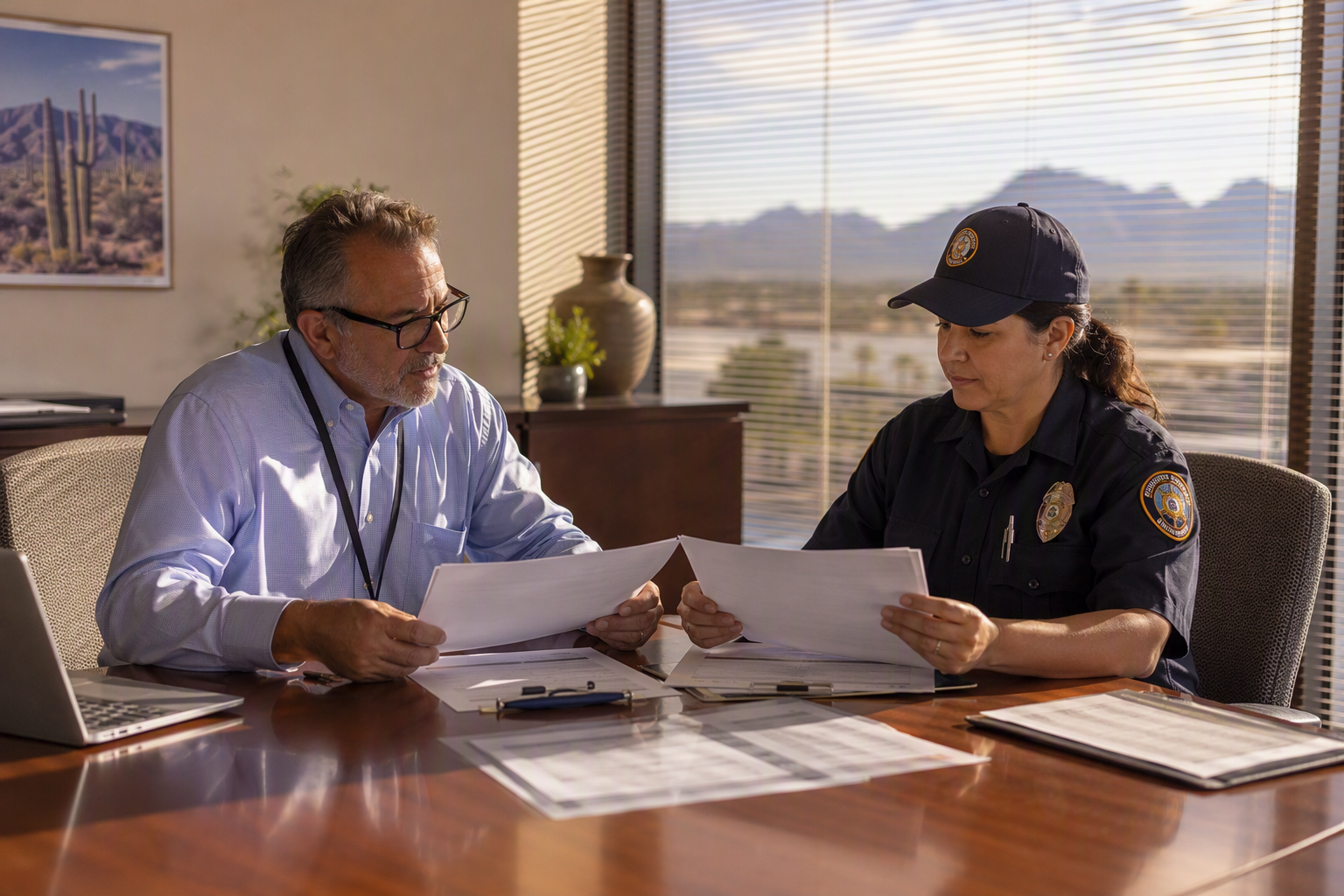
Healthcare elevators in Arizona must comply with multiple overlapping regulatory frameworks. Understanding which codes apply—and when a modernization or replacement project triggers mandatory upgrades—is essential to accurate financial modeling.
ASME A17.1 Safety Code for Elevators and Escalators
The ASME A17.1 Safety Code for Elevators and Escalators governs elevator design, installation, operation, inspection, testing, and maintenance across the United States, including Arizona. Arizona adopts this standard through the Arizona Department of Occupational Safety and Health (ADOSH) and relevant building authorities. Any modernization project must bring the modified components into compliance with the adopted edition of ASME A17.1 in effect at the time of permit issuance.
Importantly, ASME A17.1 includes provisions for “alterations” that can trigger upgrades to other parts of the system. A facility planning a partial modernization should review which alterations require additional code compliance upgrades—this affects total project cost and must be factored into the modernization-versus-replacement analysis.
Americans with Disabilities Act (ADA)
The Americans with Disabilities Act (ADA) sets accessibility requirements for elevators in healthcare facilities, including door width, cab dimensions, control panel height, tactile signage, and audible signals. Any modernization project that constitutes an “alteration” under ADA standards may trigger accessibility upgrades. Healthcare facilities have an additional obligation given their patient population, many of whom use wheelchairs, stretchers, or mobility aids.
Healthcare-Specific Codes
Hospitals and licensed healthcare facilities in Arizona that fall under the jurisdiction of the Centers for Medicare & Medicaid Services (CMS) must also consider the Facility Guidelines Institute (FGI) Guidelines for Design and Construction of Hospitals, which include elevator requirements for patient-use lifts, stretcher capacity, and infection control in cab design. The Joint Commission also reviews vertical transportation adequacy during facility accreditation surveys.
What Are the Key Cost Drivers in a Healthcare Elevator Modernization?
Several factors determine the total cost of a modernization project in a healthcare setting:
- Scope of component replacement: Replacing only controls is significantly less expensive than replacing controls, drives, door operators, and the cab interior simultaneously.
- Infection control requirements: Healthcare cab interiors must use antimicrobial, cleanable surfaces, which increases material costs compared to standard commercial upgrades.
- Phasing and scheduling: After-hours or phased work to avoid patient care disruption increases labor costs but protects clinical operations.
- Code-triggered upgrades: As noted above, certain alterations under ASME A17.1 require additional system upgrades, which can expand scope unexpectedly.
- Number of elevators: Multi-elevator modernization projects can sometimes be negotiated at better terms, but sequencing is critical in a healthcare environment where elevator redundancy is a patient safety issue.
How Long Does Healthcare Elevator Modernization Take?
Timeline varies significantly based on scope, permitting, and parts availability. A controls-only modernization might be completed in a matter of days per elevator. A comprehensive modernization covering controls, drive systems, door operators, cab interiors, and safety devices may take several weeks per unit. Arizona Elevator Solutions works with healthcare clients in Phoenix, Tucson, Scottsdale, and Mesa to develop sequenced schedules that maintain at least one operational elevator at all times, a non-negotiable requirement in most healthcare environments.
Full replacement timelines are typically longer due to structural work, permitting complexity, and equipment lead times. Healthcare facilities should plan for extended out-of-service periods and develop interim transport protocols well in advance.
What Questions Should a Healthcare Facility Ask Before Deciding?
Before committing to either path, healthcare facility managers should work through a structured decision process. Arizona Elevator Solutions recommends evaluating the following during a facility assessment:
- What is the current condition of the hoistway structure, guide rails, and buffers?
- Are replacement parts for existing controls and drive systems still available from manufacturers?
- What is the facility’s patient transport contingency plan if one or more elevators are out of service?
- Does the current elevator meet ADA accessibility requirements, and will the project trigger mandatory upgrades?
- Are there planned capital projects or renovations that should be coordinated with elevator work?
- What are the facility’s infection control standards for cab materials and finishes?
- Has the elevator had a recent third-party inspection, and what deficiencies were noted?
- What is the elevator’s maintenance history, and are recurring failures concentrated in specific components?
What Are the Signs That Modernization Is No Longer Enough?
There are clear indicators that a healthcare elevator has moved beyond the point where modernization is the financially sound choice:
- Repeated failures in structural components such as guide rails or safeties
- Parts obsolescence across multiple systems simultaneously, making sourcing difficult and expensive
- Hoistway damage or deterioration requiring significant structural repair regardless of elevator decision
- A modernization cost estimate that approaches or exceeds replacement cost when all code-triggered upgrades are included
- Patient safety incidents linked to recurring mechanical failures that modernization cannot resolve
Does Modernization Affect the Elevator’s Inspection Status in Arizona?
Yes. Any alteration to an elevator system in Arizona requires a permit and subsequent inspection by the relevant authority having jurisdiction (AHJ). Under ASME A17.1, altered components must meet current code requirements, and the inspection process confirms compliance before the elevator is returned to service. Healthcare facilities should factor permit processing time and inspection scheduling into their project timelines, as delays can extend out-of-service periods.
How Do Energy Efficiency and Operational Savings Factor Into the Financial Analysis?
Modernization projects that include upgraded variable-frequency drives (VFDs) and regenerative drive technology can reduce elevator energy consumption meaningfully. In a healthcare environment where elevators operate continuously across all hours, energy savings contribute to the return on investment of a modernization project over time. Facilities should request energy consumption data on current equipment and projections for modernized equipment as part of the financial analysis—Arizona Elevator Solutions can provide this information during a facility assessment.
What Role Does Planned Preventive Maintenance Play in This Decision?
Elevators that have been maintained under a documented preventive maintenance program consistent with ASME A17.1 requirements typically present more predictable modernization candidates. Maintenance records allow engineers to evaluate component wear accurately and identify which systems are approaching end of useful life. Elevators with incomplete or absent maintenance histories carry greater uncertainty in modernization cost estimates, which should be reflected in contingency budgeting.
Questions Your Inspector Will Ask
When an Arizona elevator inspector—whether from ADOSH or a third-party inspection firm—evaluates a healthcare elevator prior to or following a modernization project, the following questions and documentation requests are standard:
- When was the last full periodic inspection, and what was the outcome? Inspectors will review the certificate of operation and any outstanding violation notices.
- What alterations have been made since the last inspection? Undocumented alterations can result in citation and may require retroactive permitting.
- Are all safety devices—governors, safeties, buffers, and door interlocks—tested and documented? ASME A17.1 specifies testing intervals for each device type.
- Does the elevator meet current ADA requirements for healthcare use? Inspectors in healthcare environments may cross-reference ADA standards, particularly for cab dimensions and control panel placement.
- Is the maintenance log current and available on-site? Maintenance documentation is a standard inspection requirement and directly affects the inspection outcome.
- Have any components been replaced with non-listed or non-approved parts? Part substitutions must comply with ASME A17.1 listing requirements.
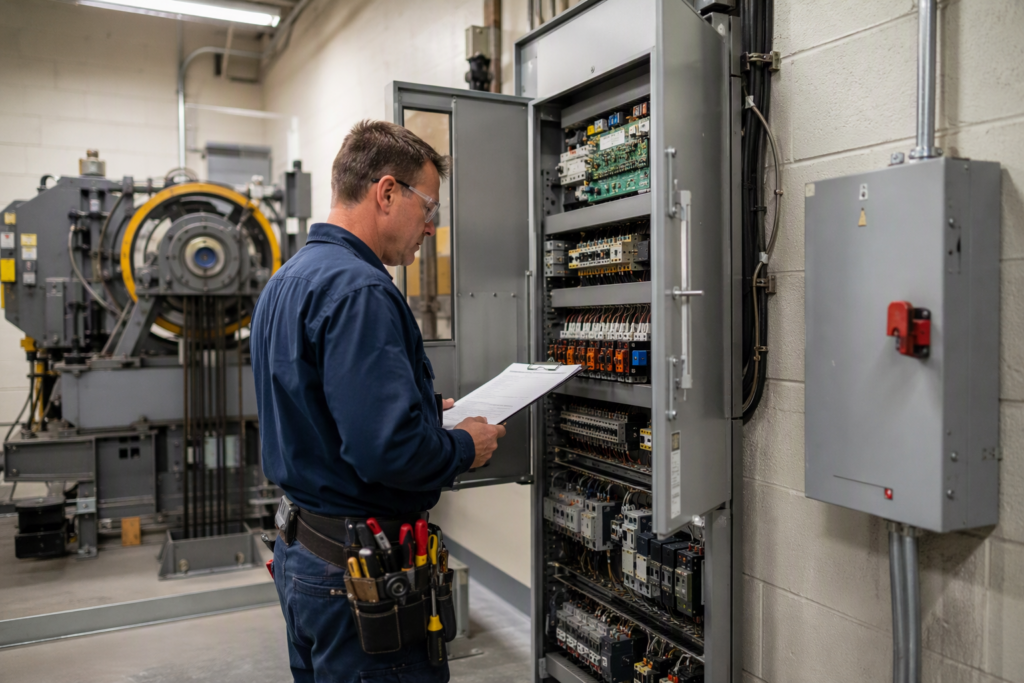
- Is the machine room properly secured, ventilated, and free of unauthorized storage? Machine room conditions are a routine inspection item and deficiencies can result in mandatory corrections before continued operation.
How Does Arizona Elevator Solutions Support Healthcare Facility Decision-Making?
Arizona Elevator Solutions provides structured elevator assessments for healthcare facilities across Phoenix, Tucson, Scottsdale, and Mesa that are specifically designed to produce the data points needed for a modernization-versus-replacement financial analysis. Assessments evaluate structural component condition, parts availability, code compliance status, maintenance history, and operational performance—delivering a documented basis for capital planning decisions rather than a sales pitch in either direction.
Healthcare facilities have specific needs that general commercial elevator assessments do not address: infection control material requirements, patient transport continuity planning, Joint Commission documentation standards, and the regulatory intersection of ASME A17.1, ADA, and CMS conditions of participation. Arizona Elevator Solutions works within this regulatory environment across the Phoenix metropolitan area and southern Arizona markets.
What Should a Healthcare Facility Do Right Now If an Elevator Is Underperforming?
- Document all recent failures, service calls, and repair costs in writing to establish a baseline performance record.
- Pull the current certificate of operation and review any open violations or inspection conditions.
- Notify your current maintenance provider in writing of the performance issues and request a written assessment of cause and recommended corrective action.
- Request a second opinion from a qualified elevator contractor—this is standard practice for capital decisions of this magnitude.
- Identify your patient transport contingency plan so that any out-of-service period, whether planned or unplanned, does not create a patient safety gap.
- Engage your facility’s compliance officer and risk management team before committing to any project scope that may affect ADA or CMS compliance status.
- Contact Arizona Elevator Solutions for a free elevator assessment to obtain an independent evaluation of current condition and a documented framework for the modernization-versus-replacement decision.
Get an Independent Assessment for Your Healthcare Elevator
Healthcare elevators are patient safety infrastructure. The decision to modernize or replace requires accurate data, regulatory expertise, and an honest evaluation of your facility’s specific situation—not a predetermined recommendation.
Contact Arizona Elevator Solutions for a free elevator assessment at 480-557-7600. Serving hospitals, outpatient facilities, skilled nursing centers, and medical office buildings across Phoenix, Tucson, Scottsdale, and Mesa, Arizona.
Need elevator service you can rely on? Arizona Elevator Solutions is ready to help.