Elevator Modernization Timeline & Downtime: Complete FAQ Guide
Elevator modernization is one of the most significant investments a building owner or property manager can make in the long-term safety, reliability, and code compliance of their facility. Understanding how long the process takes, what drives that timeline, and how downtime is managed are critical questions for any Phoenix, Tucson, Scottsdale, or Mesa property. This guide answers the 20 most important questions building professionals ask before, during, and after a modernization project.
How Long Does Elevator Modernization Typically Take?
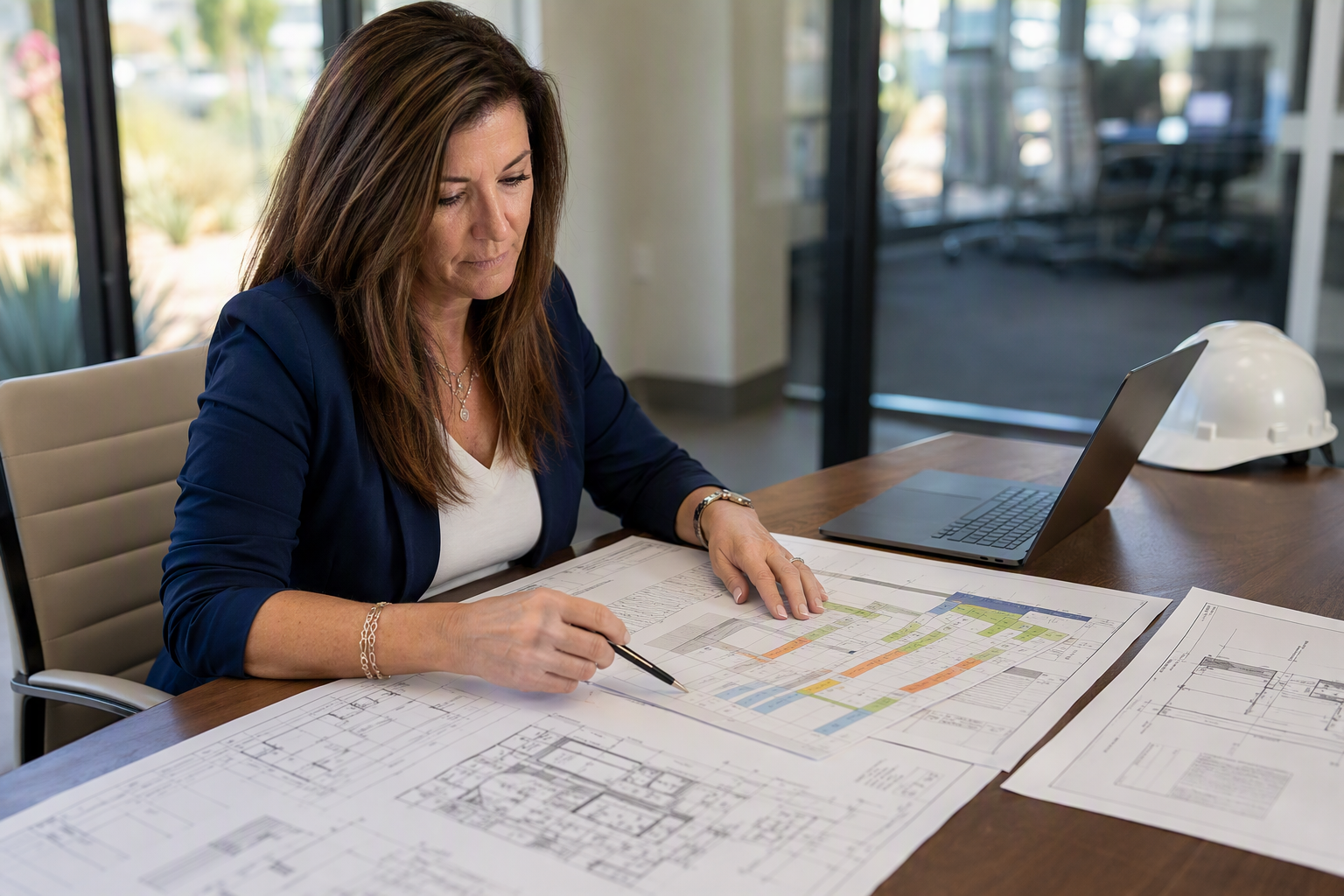
Most elevator modernization projects take between two weeks and six months, with the actual duration driven primarily by the scope of work, equipment lead times, building type, and local permitting requirements.
A partial modernization focused on a single system—such as replacing a controller or upgrading cab interiors—can often be completed in one to three weeks. A full-gut modernization that replaces the controller, drive system, cab, doors, fixtures, guide rails, and safety components is a significantly larger undertaking and may span three to six months or longer for complex, multi-car installations. Equipment procurement is frequently the longest single variable: specialty components ordered from manufacturers can carry lead times of four to twelve weeks before installation even begins.
In the Arizona market, permitting through city and county agencies in Phoenix, Tucson, Scottsdale, and Mesa also adds time to the front end of a project. Arizona Elevator Solutions works with local authorities having jurisdiction (AHJs) to anticipate permit review windows and sequence work accordingly, reducing idle time during the construction phase.
Will the Elevator Have to Be Shut Down Completely During Modernization?
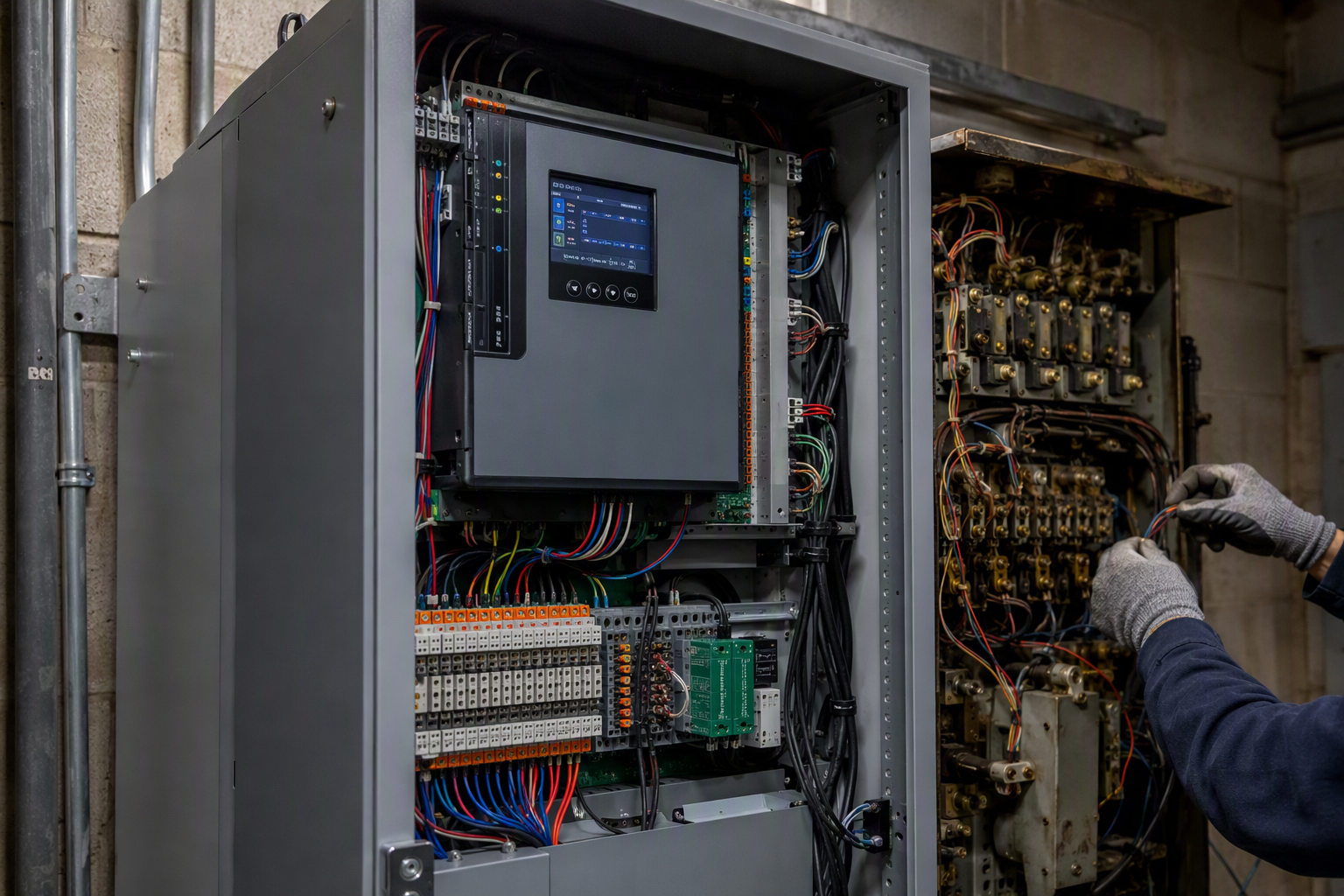
Yes, the elevator will be out of service for at least a portion of the modernization project, but the duration and nature of that downtime depend heavily on the scope and how the project is scheduled.
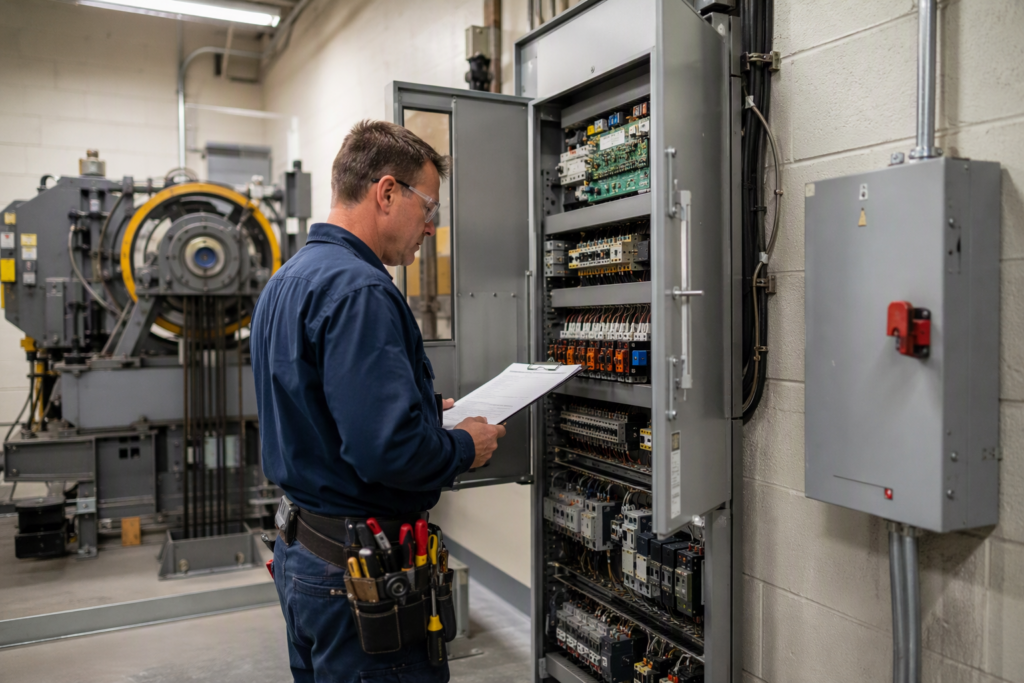
For partial modernizations, only specific work phases require full shutdown. For example, controller replacement requires the elevator to be de-energized and locked out, but preparatory work such as cab finishing or fixture replacement can sometimes be performed during off-peak or after-hours windows. For full modernizations involving the machine room, hoistway, and cab simultaneously, continuous downtime is generally unavoidable.
Property managers should request a detailed phased work plan from their contractor before the project begins. A well-structured phasing plan distinguishes between work that genuinely requires the elevator to be out of service and work that can be completed while the car is parked at a specific floor or during scheduled low-use periods. Buildings with multiple elevators should discuss staggered modernization schedules so at least one car remains in service throughout the project.
What Factors Most Influence the Length of a Modernization Project?
The primary factors affecting modernization timeline are scope of work, equipment lead times, permitting, building access constraints, and the age and configuration of the existing installation.
Older elevators—particularly those with proprietary relay-logic controllers installed before solid-state systems became standard—may require more extensive field engineering before new equipment can be integrated. Similarly, elevators that do not meet current ASME A17.1 Safety Code for Elevators and Escalators requirements may need additional safety device upgrades that add weeks to the schedule. Buildings with restricted hoistway access, limited machine room clearances, or occupied floors that limit working hours are also common sources of schedule extension.
What Is Typically Included in a Full Elevator Modernization?
A comprehensive elevator modernization generally replaces or upgrades the controller and drive system, door operators, cab interior, fixtures and indicators, guide shoes, buffers, and safety devices, while also addressing any outstanding code compliance items.
The specific scope varies by installation. Hydraulic elevator modernizations often focus on the power unit, control valve, hydraulic fluid, and cylinder integrity. Traction elevator modernizations commonly involve the machine, brake, hoist ropes, sheaves, and governor in addition to electrical and cab components. A thorough pre-modernization survey by a qualified elevator contractor should identify every component approaching end of service life so that all necessary work can be consolidated into a single project rather than requiring repeat shutdowns.
How Does Phased Modernization Reduce Downtime?
Phased modernization divides the total scope into sequential work packages, each with a defined shutdown window, so the elevator can return to partial or full service between phases.
A common phasing approach separates machine room and controller work from hoistway and cab work. The controller replacement phase takes the elevator out of service for the wiring, programming, and commissioning of the new control system. Once the elevator is returned to service on the new controller, a second phase addresses cab interior, door equipment, and fixtures—work that is often achievable with the car parked at a designated floor during off-peak hours. This structure can meaningfully compress the total days of complete inaccessibility for building users, even if the overall project calendar runs longer than a single continuous shutdown would.
Can Modernization Work Be Done After Hours or on Weekends to Limit Disruption?
Yes, after-hours and weekend scheduling is a widely used strategy for minimizing the impact of elevator downtime on building occupants, though it typically increases overall project labor costs.
After-hours work is particularly viable for phases involving cab interiors, fixtures, and door hardware, where elevator removal from service is not strictly required for every task. Machine room and electrical work that requires sustained lock-out/tag-out and inspector availability is more challenging to schedule outside standard business hours, as local inspectors in Phoenix, Tucson, Scottsdale, and Mesa may have limited availability for off-hours inspections. Building owners should discuss scheduling flexibility early in the bid process and confirm inspector availability before committing to a night or weekend schedule.
What ASME A17.1 Code Requirements Apply to Elevator Modernization?
The ASME A17.1 Safety Code for Elevators and Escalators establishes minimum requirements for altered and modernized elevator installations, and the applicable edition is determined by the AHJ in the jurisdiction where the work is performed.
Under ASME A17.1, alterations to an elevator must comply with the code requirements in effect at the time the alteration permit is issued. This means that a modernization project cannot simply restore like-for-like; the altered components must meet current code standards. Additionally, certain safety device upgrades—such as oil buffers, car safeties, and door interlocks—may be triggered even if those components are not the primary focus of the modernization, because the code requires that connected systems meet current standards when a related component is altered. In 2026, AHJs across Arizona continue to enforce these alteration provisions, making a thorough code-gap analysis an essential first step before any modernization scope is finalized.
What ADA Compliance Requirements Apply During Elevator Modernization?
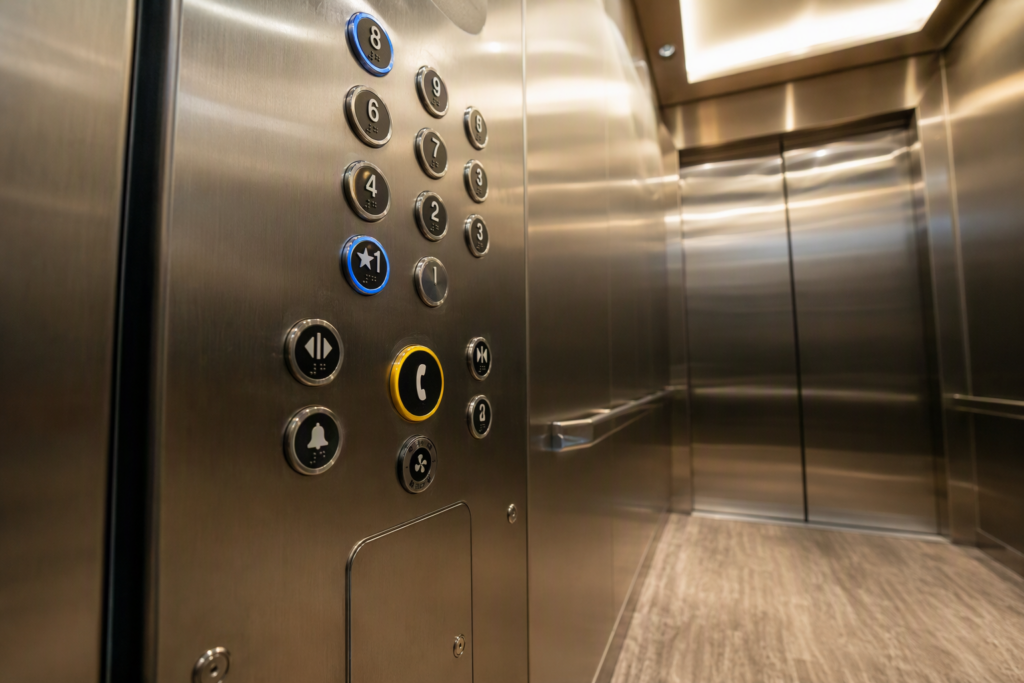
When an elevator is modernized, the project is typically required to bring the cab, fixtures, and controls into compliance with ADA accessibility standards, including floor button placement, door timing, audible signals, and Braille markings.
The ADA Standards for Accessible Design specify requirements for elevator call buttons, floor designations, leveling accuracy, door reopening devices, and cab dimensions. A modernization that replaces fixtures and controls without addressing these requirements creates legal exposure for building owners, particularly in commercial properties subject to Title III of the ADA. Contractors should perform an ADA audit as part of the pre-modernization survey to identify non-compliant elements that need to be addressed within the project scope.
How Does the Permitting Process Affect the Modernization Timeline in Arizona?
Arizona elevator modernization projects require permits from the state or local AHJ, and permit review timelines vary by city and project complexity, with review periods commonly ranging from several days to several weeks.
In Phoenix, Scottsdale, Mesa, and Tucson, elevator permits are typically reviewed by the city building department in coordination with the state elevator safety program. Permit applications must include detailed engineering drawings, equipment specifications, and code compliance documentation. Incomplete submittals are the most common cause of permitting delays. Selecting a contractor with established relationships with local AHJs and experience preparing compliant submittals for Arizona jurisdictions can significantly compress the permitting phase of the overall timeline.
What Is the Typical Modernization Timeline by Scope of Work?
Project timelines vary significantly based on what is being replaced or upgraded, as summarized in the comparison table below.
| Modernization Scope | Estimated Duration | Typical Downtime | Key Code Trigger |
|---|---|---|---|
| Cab interior & fixtures only | 1–2 weeks | Minimal / after-hours possible | ADA fixture compliance |
| Controller replacement (partial mod) | 2–4 weeks | Continuous during electrical work | ASME A17.1 alteration requirements |
| Door operator & door equipment | 1–3 weeks | Intermittent | ASME A17.1 door interlock standards |
| Hydraulic power unit & valve | 2–5 weeks | Continuous during power unit work | ASME A17.1 hydraulic safety requirements |
| Full traction modernization | 8–16 weeks | Extended continuous shutdown | Full ASME A17.1 & ADA compliance |
| Full hydraulic modernization | 6–12 weeks | Extended continuous shutdown | Full ASME A17.1 & ADA compliance |
| Multi-car / complex installation | 3–6+ months | Staggered; one car in service | Full ASME A17.1 & ADA compliance |
Note: Durations above reflect typical ranges and will vary based on equipment lead times, permitting, building access, and site-specific conditions. These are general industry benchmarks, not guaranteed timelines.
How Should Building Management Prepare for Elevator Downtime?
Effective preparation for elevator downtime involves advance communication with building occupants, ADA accommodation planning, temporary signage, and coordination with emergency services.
- Notify building occupants and tenants in writing at least two to four weeks before the scheduled start date, including the expected duration and a point of contact for questions.
- Assess ADA accommodation needs for tenants, employees, or visitors who rely on elevator access and arrange alternative accommodations such as temporary facility reassignment or stair assist resources.
- Post clear signage at all elevator lobbies and building entrances before work begins, indicating which elevator is out of service, anticipated completion, and directions to available alternatives.
- Notify local fire and emergency services of the elevator outage so dispatch can account for the limitation when responding to the building.
- Coordinate with your contractor on daily work schedules, noise-generating activities, and any periods when the freight elevator or loading dock may be restricted.
- Establish a weekly project update cadence with the contractor so that any schedule changes are communicated promptly to building management.
- Confirm final inspection scheduling with the AHJ well in advance of the anticipated completion date to avoid delays at project closeout.
What Are the Risks of Delaying Elevator Modernization?
Delaying elevator modernization when equipment has reached end of service life increases the risk of unplanned outages, code violations, safety incidents, and mounting maintenance costs on aging components.
Controllers, drive systems, and door equipment all have finite service lives, and as components age, parts availability diminishes and the frequency of service calls typically increases. An unplanned breakdown is almost always more disruptive than a planned modernization outage because it occurs without notice, may last indefinitely pending parts procurement, and can expose building owners to liability. Additionally, older elevators may no longer be insurable or may face exclusions from property and liability policies that reference code compliance as a condition of coverage. The ASME A17.1 Safety Code for Elevators and Escalators does not include a grandfather clause that exempts older installations from safety device requirements triggered by alterations.
What Happens During the Final Inspection After Modernization?
After modernization work is complete, the elevator must pass a full acceptance inspection by a state-licensed or AHJ-designated elevator inspector before it is returned to public service.
The acceptance inspection for an altered or modernized elevator typically includes verification of all replaced and modified components, a full safety test including governor and safety device operation, door timing and force tests, leveling accuracy, and where applicable, load testing. The inspector reviews the permit documentation and contractor-provided test records against the requirements of the applicable ASME A17.1 edition adopted by the AHJ. Any deficiencies noted during the inspection must be corrected before a certificate of operation is issued. Building owners should factor inspection scheduling lead time into their overall project timeline, as inspector availability in busy permit seasons can add days or weeks to project closeout.
How Does Equipment Lead Time Affect the Modernization Schedule?
Equipment lead times are frequently the largest single source of schedule variability in elevator modernization projects, with specialty controllers, drive systems, and cab components sometimes requiring weeks of lead time from order to delivery.
The most schedule-sensitive items are typically the elevator controller and the drive system, which are often engineered to order based on the specific installation requirements. Building owners who begin the modernization planning process early—ideally six to twelve months before the intended start date—allow their contractor to place equipment orders before permits are even issued, compressing the overall project calendar by stacking the procurement and permitting phases. Arizona Elevator Solutions recommends initiating the assessment and specification phase well ahead of any target construction start date to account for these lead times in the Phoenix, Scottsdale, Mesa, and Tucson markets.
What Is the Difference Between Elevator Modernization and Elevator Repair?
Elevator repair addresses a specific failed or failing component to restore current functionality, while modernization is a systematic replacement or upgrade of major systems to extend the elevator’s service life, improve performance, and achieve code compliance.
Repair is appropriate when a discrete component has failed and the rest of the installation remains in serviceable condition. Modernization is appropriate when multiple systems are aging simultaneously, when the cost of repeated repairs exceeds the investment in replacement, when code compliance gaps exist, or when the building’s performance expectations have outgrown the elevator’s original design capabilities. A qualified elevator contractor can help building owners evaluate the repair-versus-modernize decision based on the age of components, documented service history, and anticipated future maintenance costs.
How Does Modernization Affect Elevator Maintenance Agreements?
Modernizing an elevator typically resets the maintenance baseline for the equipment, and building owners should review their existing maintenance agreement before, during, and after a modernization project to ensure coverage aligns with the new equipment configuration.
New controllers, drives, and door operators often come with manufacturer warranties that specify maintenance requirements as conditions of warranty validity. A maintenance agreement that was written around legacy equipment may not cover new components correctly, or may not account for the diagnostic software and proprietary interfaces of modern controllers. Building owners should request an updated maintenance proposal from their elevator service provider that reflects the as-modernized configuration, including any manufacturer-required service intervals and software update provisions.
What Worker Safety Requirements Apply During Elevator Modernization?
Elevator modernization work is subject to OSHA regulations governing construction safety, including lock-out/tag-out procedures, fall protection in hoistways, electrical safety, and confined space protocols in machine rooms and pits.
Lock-out/tag-out (LOTO) is a critical safety requirement whenever elevator electrical systems are de-energized for maintenance or replacement work, ensuring that equipment cannot be re-energized while technicians are in the hoistway or machine room. Building owners and property managers share responsibility for ensuring that their facility’s electrical systems support proper LOTO practices and that building staff do not interfere with contractor safety controls during the project. Any concerns about contractor safety practices should be directed to the contractor’s safety officer and, if unresolved, to the relevant OSHA area office.
How Do Multi-Car Buildings Approach Modernization to Keep at Least One Elevator Running?
Buildings with two or more elevators typically stagger modernization phases so that at least one car remains in service at all times, using sequential shutdown scheduling to balance project progress with occupant access needs.
The sequence of car modernizations in a multi-car group should be coordinated with the group controller upgrade, as modern dispatching systems require compatible car controllers to function as an integrated group. In some cases, the group controller is upgraded first—with minimal individual car downtime—and then each car is modernized sequentially while the remaining cars handle the building’s vertical transportation load. Arizona Elevator Solutions works with property managers across multi-car installations in Phoenix and surrounding markets to develop phasing plans that protect building occupant access throughout the project.
What Questions Should Building Owners Ask When Evaluating Modernization Bids?
Evaluating competing modernization bids requires building owners to compare scope, equipment specifications, warranty terms, permitting responsibility, phasing plans, and subcontractor qualifications—not just the bottom-line price.
Key questions to ask every bidding contractor include: What specific equipment brands and models are included, and what are their lead times? Who is responsible for obtaining permits and scheduling inspections? What is the phasing plan, and how many total days of complete shutdown are projected? What warranties are provided on equipment and labor? Are any portions of the work subcontracted, and what are the subcontractors’ qualifications? What code edition will the completed installation comply with, and has a full code-gap analysis been performed? A contractor who cannot answer these questions clearly may not have the experience or resources to execute the project successfully.
Why Should Arizona Property Owners Choose a Local Elevator Contractor for Modernization?
Local elevator contractors with established relationships with Arizona AHJs, familiarity with regional permitting timelines, and proximity to the jobsite are better positioned to manage the scheduling, inspection, and problem-resolution demands of a modernization project than out-of-area firms.
Elevator permitting and inspection processes vary meaningfully between Phoenix, Tucson, Scottsdale, and Mesa, and a contractor who routinely works in these jurisdictions understands the documentation expectations, inspector scheduling processes, and common review triggers that affect project timelines. Proximity to the jobsite also matters during construction: a local contractor can respond quickly to unforeseen conditions, equipment discrepancies, or inspection-related callbacks without the delay and cost of mobilizing from a distant location. Arizona Elevator Solutions is a certified elevator service company serving all four major Arizona markets with direct knowledge of local code enforcement practices and AHJ relationships.
What Should Building Owners Do Immediately After Deciding to Modernize?
Once a decision to modernize has been made, building owners should take a structured series of steps to position the project for a smooth start and minimize the risk of delays or cost overruns.
- Commission a pre-modernization survey from a qualified elevator contractor to document the current condition of all major components and identify all code compliance gaps.
- Request a code-gap analysis against the current edition of ASME A17.1 and applicable ADA standards to ensure the modernization scope captures all required upgrades.
- Establish a project budget that includes equipment, labor, permitting, inspection fees, contingency, and any building work required to support the elevator installation (electrical panel upgrades, pit waterproofing, etc.).
- Solicit competitive bids from at least two qualified local elevator contractors, using a clearly defined scope document to ensure bids are comparable.
- Review bid proposals for scope completeness, equipment quality, warranty terms, phasing plan, and permitting responsibility—not price alone.
- Notify your insurance carrier of the planned modernization to confirm coverage during construction and verify that the completed installation will meet insurer requirements.
- Communicate with building occupants as soon as a start date is established, providing as much advance notice as possible.
- Schedule a project kickoff meeting with the selected contractor to confirm milestones, communication protocols, and escalation procedures.
Need elevator service you can rely on? Arizona Elevator Solutions is ready to help.