Who to Contact for ADA Elevator Requirements for Buildings
Navigating ADA elevator requirements involves federal law, state building codes, local enforcement agencies, and technical standards that intersect in ways that trip up even experienced facilities managers. This guide identifies every contact point, explains what each authority governs, and outlines what building owners and managers in Arizona and beyond need to know to achieve and maintain compliance in 2026.
What Exactly Does the ADA Require for Elevators in Buildings?
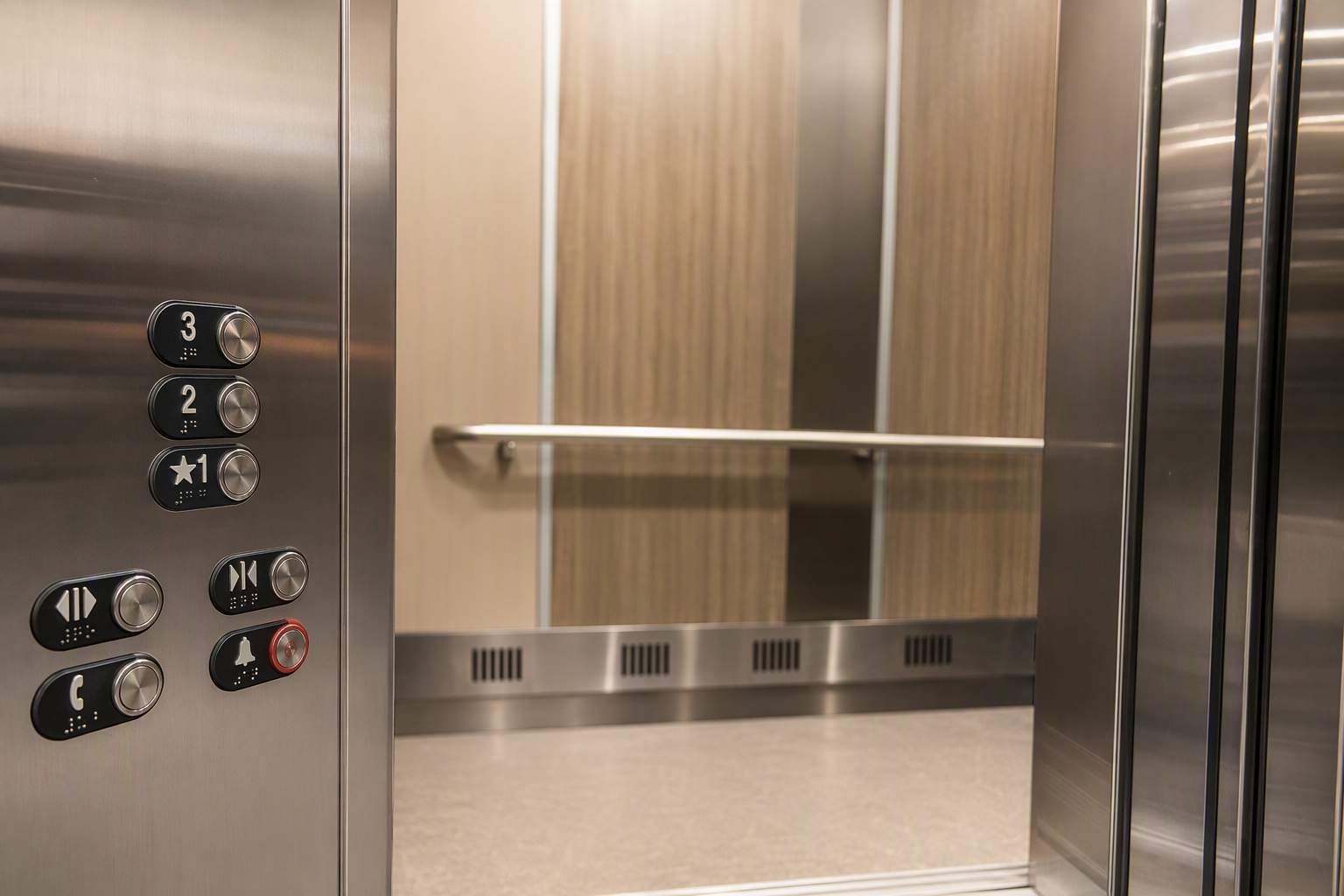
The Americans with Disabilities Act (ADA) mandates that new construction and alterations to commercial facilities provide accessible routes for people with disabilities. Elevators are a primary mechanism for achieving vertical accessibility. Under the ADA Standards for Accessible Design, elevators must meet specific requirements covering cab dimensions, door widths, control height, floor indicators, Braille signage, leveling tolerances, and emergency communication systems.
Two major exemptions apply: buildings that are fewer than three stories or have fewer than 3,000 square feet per story are generally exempt from elevator installation requirements under the ADA’s “elevator exemption,” though even exempt buildings must comply with the ADA in other respects. It is critical to verify whether your building type and use qualify for this exemption with your local AHJ before assuming no elevator is required.
Technical specifications for elevator equipment itself — including safety systems, load ratings, and mechanical performance — are governed by the ASME A17.1 Safety Code for Elevators and Escalators, which most states, including Arizona, adopt by reference into their building codes.
Who Are the Primary Contacts for ADA Elevator Compliance?
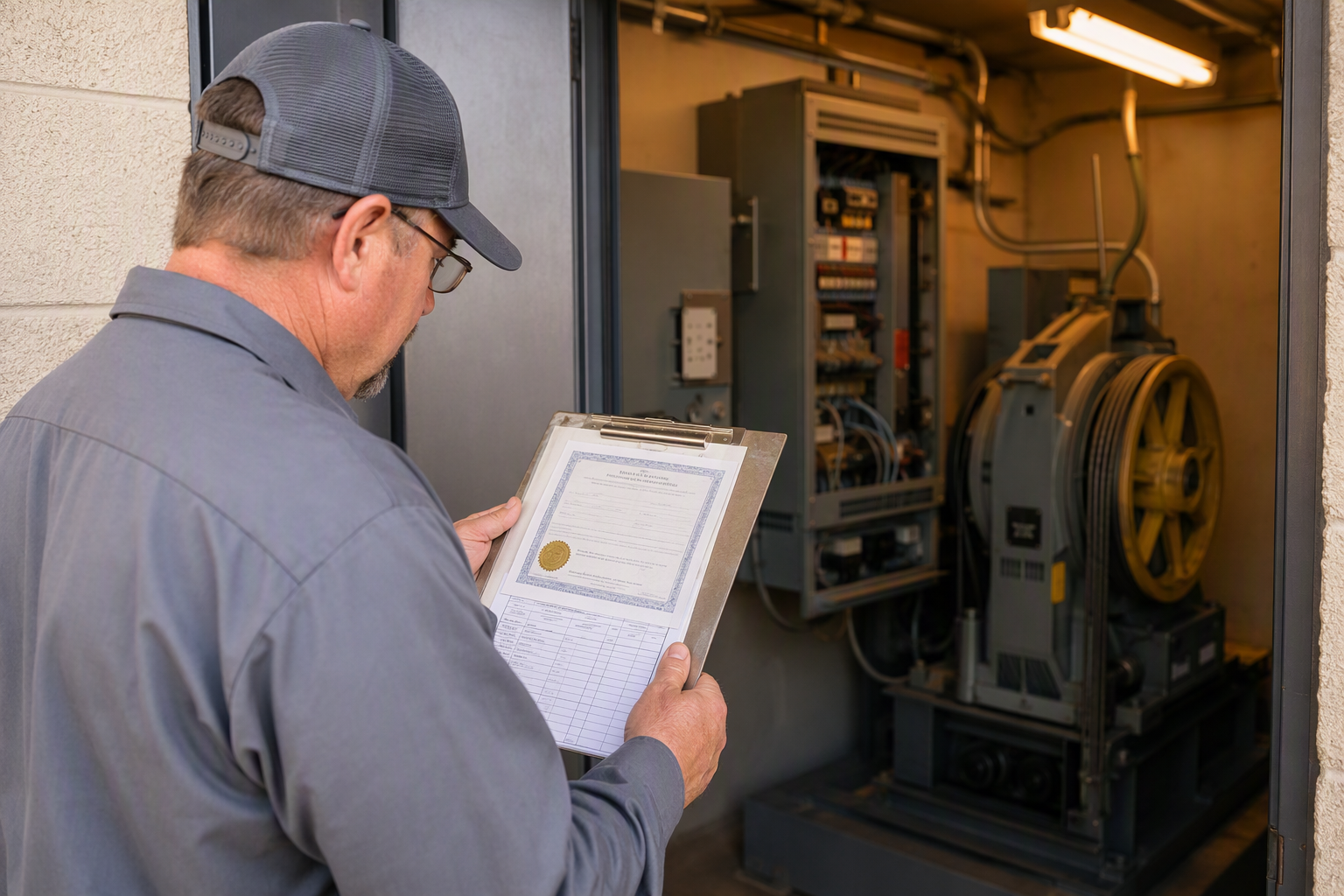
Responsibility for ADA elevator compliance is distributed across several parties. Understanding who handles what prevents costly gaps:
- U.S. Access Board: The federal agency that develops and maintains the ADA Accessibility Guidelines. Provides technical guidance, publishes the standards, and offers free technical assistance to building owners and designers at no cost.
- U.S. Department of Justice (DOJ): Enforces Title II (government entities) and Title III (public accommodations) of the ADA. The DOJ’s ADA.gov portal is the authoritative source for current standards and compliance guidance.
- Local Authority Having Jurisdiction (AHJ): Your city or county building department issues permits, conducts plan reviews, and performs inspections. In Arizona, the AHJ interprets and enforces adopted state and local building codes, including the accessibility provisions that mirror or augment federal ADA requirements.
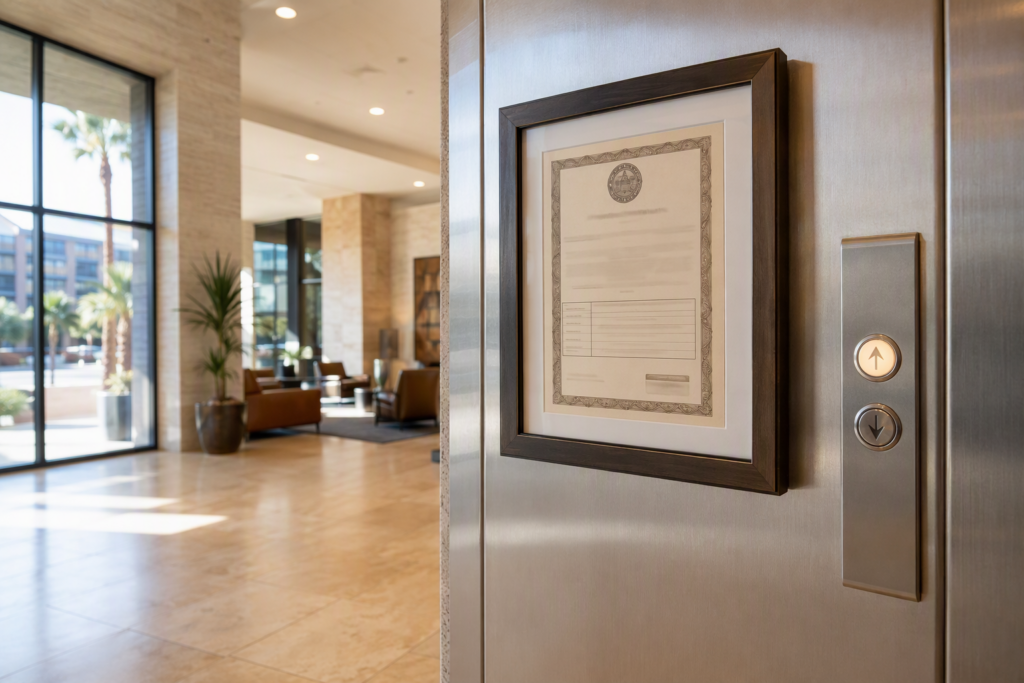
- Arizona Department of Fire, Building and Life Safety (DFBLS): Oversees elevator inspection and licensing statewide in Arizona. All elevators must be registered, periodically inspected, and operated under a valid certificate issued through this office.
- Licensed Elevator Contractor: A state-licensed elevator company performs installation, alteration, and maintenance work that brings equipment into ADA conformance. Contractors must be licensed under Arizona Revised Statutes and familiar with both ASME standards and ADA technical specifications.
- ADA Compliance Consultant or Accessibility Specialist: An independent consultant performs gap analyses, prepares transition plans, and provides documentation for legal defensibility — particularly valuable for existing facilities undertaking path-of-travel upgrades.
- Architect or Licensed Design Professional: For new construction or significant alterations, an architect of record ensures ADA compliance is incorporated into construction documents and that elevator specifications meet applicable standards.
How Do I Contact the U.S. Access Board for Elevator Guidance?
The U.S. Access Board provides free technical assistance by phone and email. Staff members can clarify specific provisions of the ADA Standards for Accessible Design and explain how they apply to elevator configurations. The Access Board also publishes detailed guides on accessible elevators that are freely available on its website. For complex projects, the Access Board’s technical assistance is a low-cost first step before engaging paid consultants.
Building owners should note that the Access Board does not perform on-site inspections or issue compliance certifications. Its role is interpretive and advisory. Enforcement authority rests with the DOJ and, in employment contexts, the Equal Employment Opportunity Commission (EEOC).
What Role Does the Local Building Department Play in ADA Elevator Requirements?
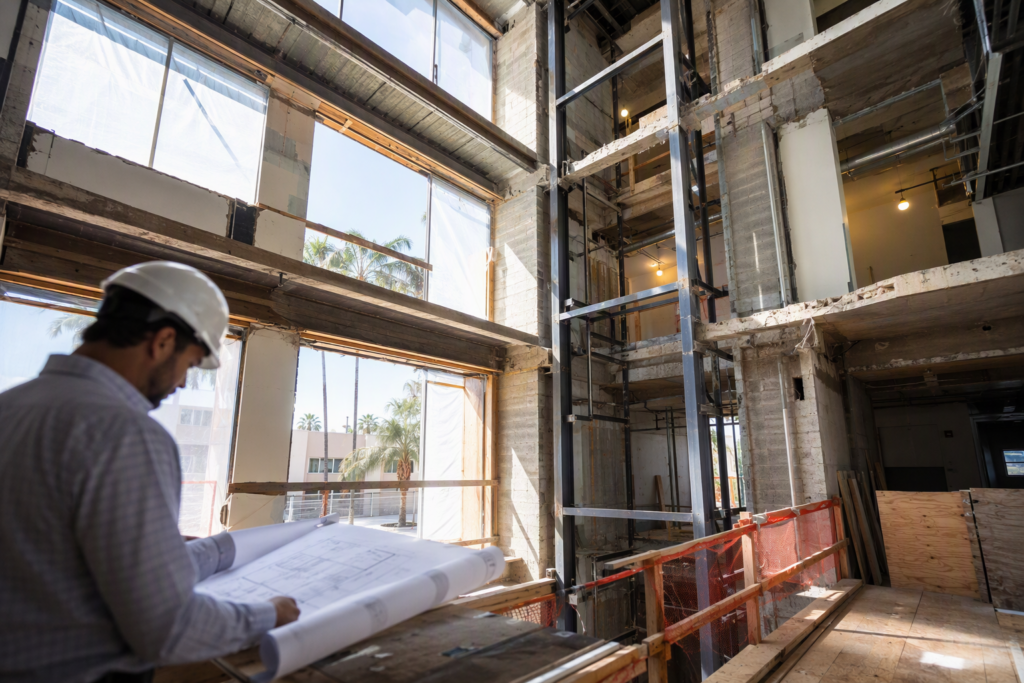
The local building department (AHJ) is typically the first practical contact for any elevator project. When a building permit is pulled for new construction or an alteration, the AHJ reviews plans to confirm that the proposed elevator installation complies with the locally adopted building code — which incorporates accessibility standards derived from the ADA and the ASME A17.1 Safety Code for Elevators and Escalators.
Key interactions with the local AHJ include:
- Submit permit application with architectural drawings and elevator specifications prepared by a licensed design professional.
- Undergo plan review for compliance with accessibility and mechanical code requirements.
- Receive permit approval and conditions before commencing installation or alteration work.
- Schedule rough-in and final inspections at required construction milestones.
- Obtain a certificate of occupancy or final approval confirming the elevator meets all required standards.
- Maintain records of all inspections and approvals for the life of the building.
In Arizona, elevator installations also require a separate inspection certificate from the DFBLS, which operates independently of the local building department’s occupancy approval process.
What ASME Standards Apply to ADA-Compliant Elevators?
The ASME A17.1 Safety Code for Elevators and Escalators governs the mechanical, electrical, and safety systems of elevator equipment. While the ADA addresses accessibility dimensions and features, ASME A17.1 addresses the underlying engineering that makes the elevator safe and operable. Both sets of requirements must be satisfied simultaneously for a legally compliant installation.
For existing elevators requiring ADA upgrades, ASME A17.3 — the Safety Code for Existing Elevators and Escalators — provides the applicable retrofit standards. This distinction matters because the requirements for modernizing an existing elevator differ from those for new construction, and a licensed elevator contractor must know which code edition applies based on the original installation date and the scope of the planned modification.
Arizona adopts ASME standards by reference through the state’s building code framework. Confirming the currently adopted edition with the Arizona DFBLS is advisable before beginning any project, as code editions are updated on a cycle and local adoption may lag the most recent ASME publication.
When Should a Building Owner Contact an ADA Compliance Consultant?
An ADA compliance consultant adds value in several scenarios beyond routine new construction:
- Existing building assessments: When a building constructed before the ADA’s effective date needs a structured compliance review, a consultant can identify vertical accessibility gaps and prioritize corrective actions.
- Complaint response: If a building receives a DOJ complaint or civil rights complaint alleging elevator inaccessibility, a consultant can rapidly assess the situation, document good-faith compliance efforts, and recommend remediation.
- Transition planning: State and local government entities are required under the ADA to develop and implement transition plans for structural barriers. A consultant ensures elevator provisions are correctly addressed within that plan.
- Lease negotiations: Commercial tenants and landlords both benefit from knowing which party bears responsibility for elevator ADA compliance before a lease is executed.
- Renovation projects: The ADA’s path-of-travel obligation requires that alterations triggering compliance also extend accessibility improvements to connected paths of travel, including elevators serving altered areas.
What Are the ADA Elevator Requirements for Cab Dimensions and Controls?
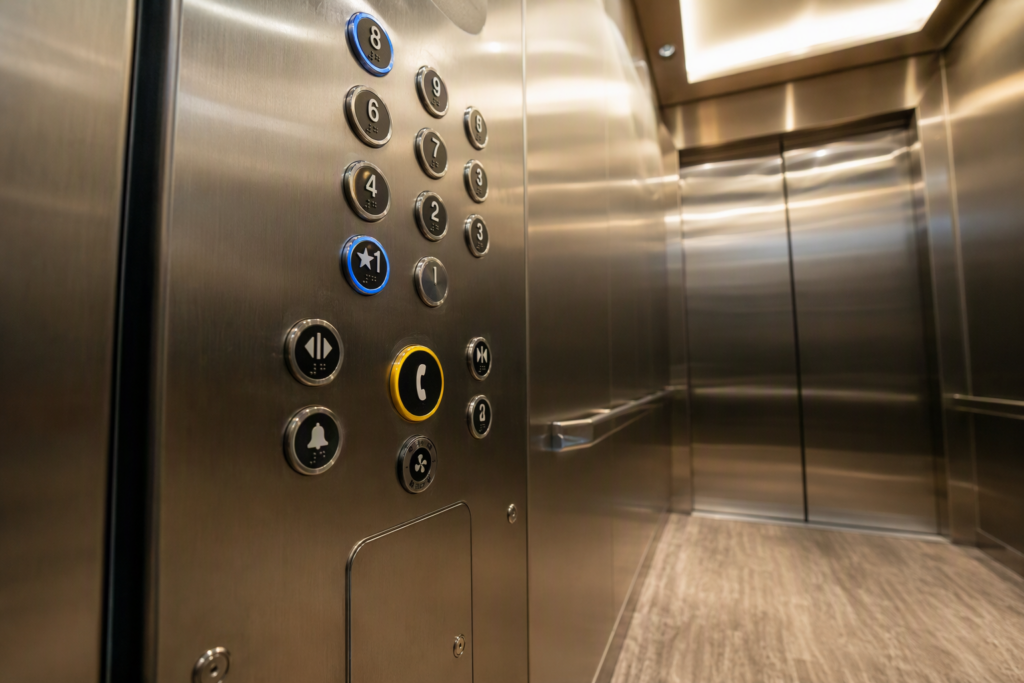
Under the ADA Standards for Accessible Design, elevator cabs must provide sufficient floor space to allow a wheelchair user to enter, maneuver, and exit without assistance. Control panels must be mounted within reach ranges accessible to individuals using wheelchairs, and controls must be accompanied by raised tactile characters and Braille. Floor level indicators visible and audible to passengers are required. The door must remain open long enough for a person with a mobility impairment to enter and exit safely, and the leveling tolerance between the cab floor and the landing floor must be within a narrow range to prevent a tripping or tipping hazard.
These requirements apply at the time of installation for new construction and at the time of alteration for existing elevators undergoing modernization. For existing elevators that are not being altered, the ADA requires removal of barriers where readily achievable — a fact-specific standard that considers cost and feasibility relative to the resources of the building owner.
How Does OSHA Intersect with ADA Elevator Compliance for Building Owners?
While the ADA governs public accessibility, OSHA governs worker safety in and around elevator equipment. Building owners and employers must satisfy both frameworks. OSHA’s general duty clause and specific standards for construction and general industry apply to elevator maintenance technicians and workers who access machine rooms, pits, and hoistways.
For building owners, the practical intersection occurs during maintenance and modernization work: the contractor performing ADA-required elevator upgrades must comply with OSHA standards for confined space entry, lockout/tagout procedures, and fall protection while doing so. Verifying that an elevator contractor maintains proper OSHA compliance protects the building owner from liability exposure during the project.
What Is the Step-by-Step Process for Bringing an Existing Elevator into ADA Compliance?
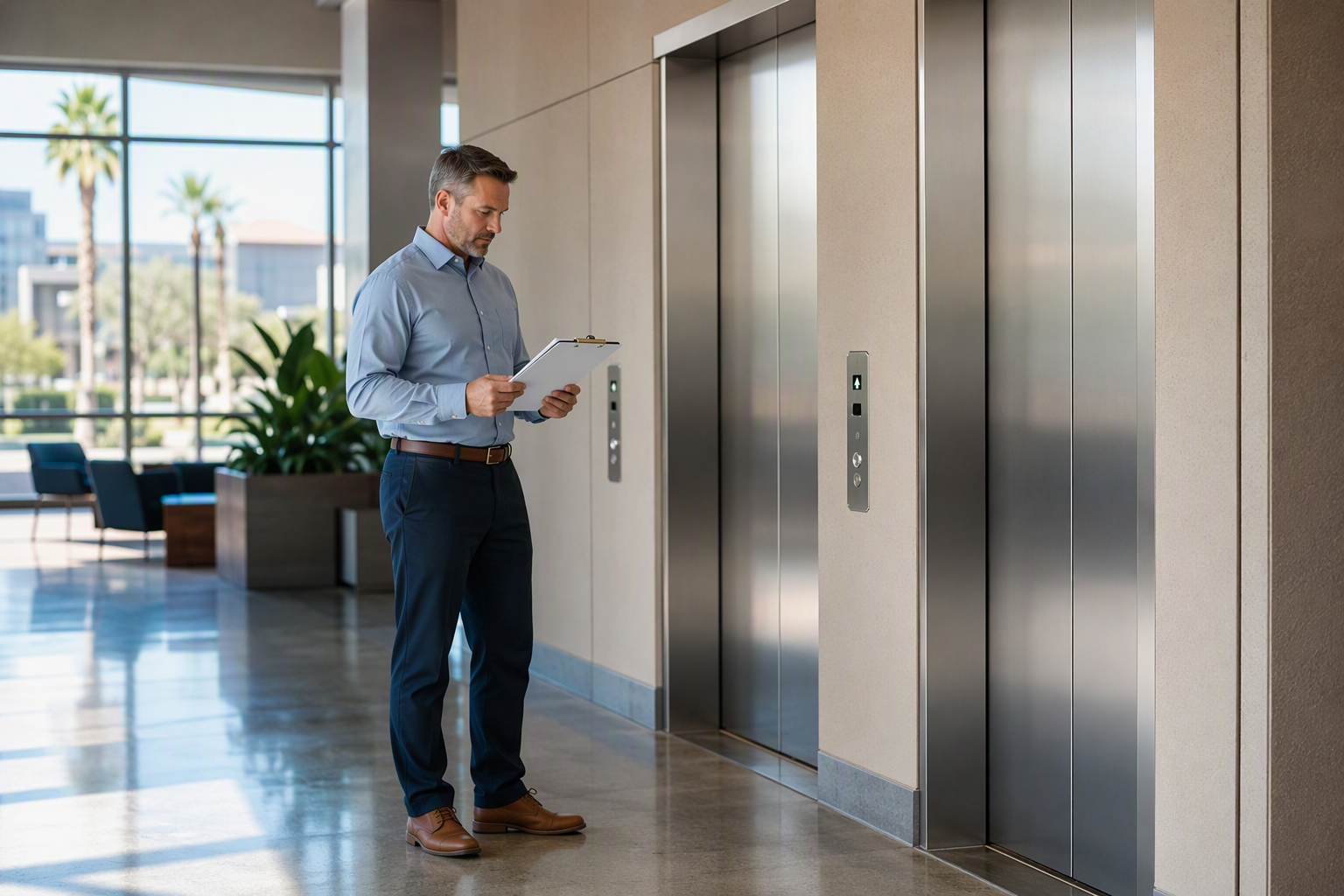
- Conduct a baseline accessibility audit. Engage a licensed elevator contractor or ADA compliance consultant to document the current state of the elevator against the applicable ADA Standards for Accessible Design.
- Identify all deficiencies. Create a written list of specific non-conformances — cab dimensions, door timing, control heights, signage, leveling, and communication systems.
- Prioritize by legal obligation. Distinguish between alterations that trigger mandatory compliance and readily achievable barrier removal applicable to unaltered equipment.
- Consult with the local AHJ. Determine which modifications require a permit, what drawings must be submitted, and which inspections will be required upon completion.
- Engage a licensed elevator contractor. Obtain a scope of work and specifications that address all identified deficiencies and conform to the applicable ASME standard for existing elevators.
- Submit permit application. File required documentation with the local building department and, where applicable, the Arizona DFBLS.
- Complete the modernization work. Licensed elevator mechanics perform the modifications under permit.
- Schedule inspections. Coordinate required inspections with the AHJ and state elevator inspection authority.
- Obtain updated certificates. Secure the revised elevator inspection certificate and any updated certificate of occupancy documentation.
- Document and retain records. Maintain all permits, inspection reports, and certificates on file at the building for future reference and legal defensibility.
What Trends Are Shaping ADA Elevator Compliance in 2025–2026?
Several developments are influencing how building owners approach ADA elevator compliance heading into 2026:
- Increased DOJ enforcement activity: Federal enforcement of ADA Title III requirements for public accommodations has grown, with settlements increasingly addressing vertical accessibility in multi-story commercial buildings. Building owners who have deferred elevator upgrades face greater exposure.
- Code modernization cycles: ASME continues to update the A17.1 code on a recurring publication schedule. States that adopt new editions introduce updated technical requirements that affect both new installations and modernization projects. Staying current with the adopted edition in Arizona is an ongoing compliance obligation.
- Destination dispatch and smart elevator technology: Newer control systems raise new accessibility questions around touchscreens and app-based interfaces that may not meet traditional ADA control requirements. The industry is actively working through how ADA standards apply to these technologies, and building owners adopting smart elevator systems should seek guidance before installation.
- Aging building stock: A substantial portion of commercial real estate was constructed in the decades immediately following the ADA’s 1990 enactment. As these buildings age and undergo renovations, path-of-travel obligations are being triggered at a higher rate, bringing latent elevator accessibility deficiencies into mandatory compliance scope.
- ESG and accessibility reporting: Environmental, social, and governance (ESG) frameworks increasingly include accessibility as a component of social performance reporting. This creates institutional pressure on building owners and real estate investment trusts to proactively address ADA elevator compliance as part of portfolio management.
How Does Arizona State Law Add to Federal ADA Elevator Requirements?
Arizona’s building code framework incorporates federal ADA accessibility standards and supplements them with state-specific provisions. The Arizona Department of Fire, Building and Life Safety administers the state elevator safety program, which requires all conveyances — including passenger elevators — to be registered, annually inspected, and operated under a valid certificate. Failure to maintain a current inspection certificate can result in the elevator being ordered out of service, regardless of its ADA compliance status.
Arizona also adopts the International Building Code (IBC) with state amendments, and the IBC’s accessibility provisions are coordinated with but not identical to the federal ADA standards. In cases of conflict, the more stringent requirement typically controls. Working with a contractor familiar with both the federal ADA framework and Arizona’s adopted codes is essential for projects in this state.
What Should I Look for When Selecting an Elevator Contractor for ADA Work?
Selecting the right contractor for ADA elevator work requires evaluating several factors beyond price:
- State licensing: Confirm the contractor holds a current Arizona elevator contractor license. Unlicensed work is illegal and will not pass inspection.
- Familiarity with ADA standards: The contractor should demonstrate knowledge of the ADA Standards for Accessible Design — not just ASME mechanical requirements — and understand how both frameworks apply to the specific project.
- Permitting experience: A qualified contractor navigates the local AHJ permit process and Arizona DFBLS inspection requirements without placing that burden on the building owner.
- Documentation practices: The contractor should provide complete as-built documentation, inspection certificates, and warranty records upon project completion.
- References and project history: Requests for references from comparable ADA modernization projects in similar building types is reasonable due diligence.
Arizona Elevator Solutions provides ADA-focused elevator assessments and modernization services, bringing technical knowledge of both federal accessibility standards and Arizona’s state elevator code to each project. The team works with building owners, property managers, facility directors, and legal counsel to identify compliance gaps and execute code-conforming solutions.
Can a Building Be Fined for ADA Elevator Non-Compliance?
Yes. The ADA authorizes civil penalties for violations found through DOJ enforcement actions. Private plaintiffs may also bring suit under Title III and recover injunctive relief requiring the building owner to remediate the accessibility barrier. While the ADA does not provide for compensatory damages in private suits under Title III, attorney’s fees are available — making litigation a meaningful financial risk even without a damages award. State civil rights laws may provide additional remedies.
Beyond formal legal action, building owners face reputational and operational risk when elevator inaccessibility excludes individuals with disabilities from using the building. Proactive compliance is consistently less costly than remediation under legal compulsion.
What Questions Should I Ask Before Contacting an Elevator Compliance Expert?
Coming prepared to any consultation — whether with the AHJ, a compliance consultant, or a licensed elevator contractor — accelerates the process. Useful preparatory information includes:
- The year the building was constructed and, if applicable, the year of the most recent elevator installation or modernization
- The building’s use classification (office, retail, healthcare, government, residential, etc.)
- The number of stories served by the elevator and whether any floors are currently inaccessible
- Whether any ADA complaints or demands have been received
- The current inspection certificate status of the elevator
- Any planned renovation or alteration work that may trigger path-of-travel compliance obligations
- The building’s ownership structure, as responsibility for compliance can differ between landlord and tenant depending on lease terms
How Does Arizona Elevator Solutions Support ADA Compliance?
Arizona Elevator Solutions serves building owners, property managers, architects, and facility directors across Arizona with elevator assessments, modernization planning, and compliance-focused installation and maintenance services. The team applies current knowledge of the ADA Standards for Accessible Design and the ASME A17.1 Safety Code for Elevators and Escalators to evaluate existing equipment, identify deficiencies, and develop scope-of-work plans that satisfy both federal and Arizona-specific requirements.
For building owners facing ADA compliance questions, an elevator assessment from Arizona Elevator Solutions provides a clear picture of current status, required actions, and the sequence in which improvements should be pursued — supporting informed decisions and documented good-faith compliance efforts.
Get Expert Guidance on ADA Elevator Requirements
ADA elevator compliance involves multiple authorities, layered codes, and time-sensitive obligations. Whether a building is undergoing new construction, a planned renovation, or a compliance review in response to a complaint, working with a knowledgeable elevator contractor from the outset reduces risk and controls cost.
Contact Arizona Elevator Solutions for a free elevator assessment: 480-557-7600
Need elevator service you can rely on? Arizona Elevator Solutions is ready to help.