Elevator Accident Statistics: What the Data Says About Safety, Risk, and Prevention
Elevators move an estimated one billion people every day in the United States. That staggering volume of use makes the elevator one of the most-used pieces of mechanical equipment in modern life — and it also makes understanding elevator accident statistics critically important for building owners, facility managers, and passengers alike. This page synthesizes what verified data sources reveal about elevator injuries, fatalities, and the regulatory frameworks designed to minimize risk, with specific guidance on what Arizona property owners should know.
How Many Elevator Accidents Happen Each Year in the United States?
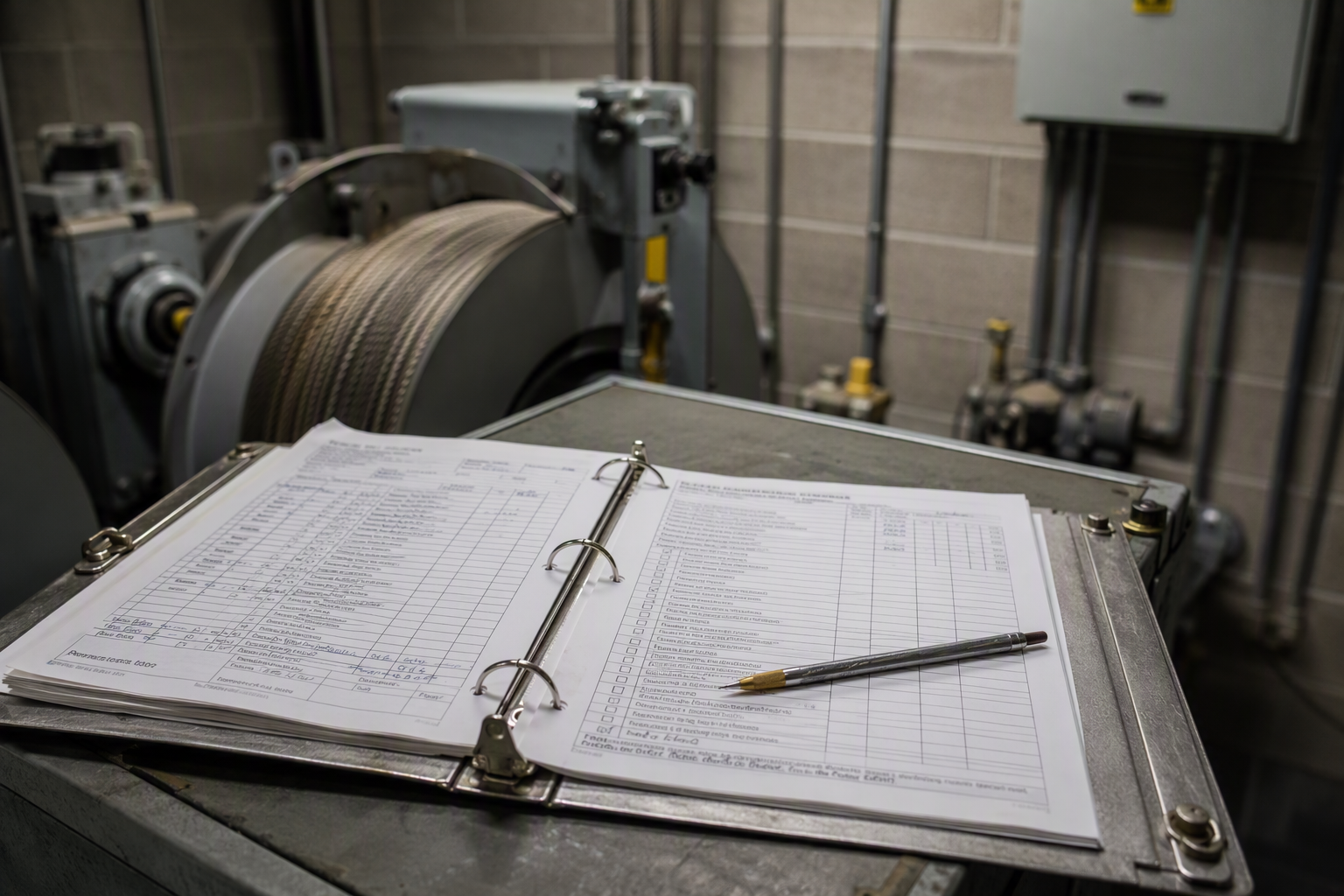
Verified federal data provides the clearest available picture of the national scope of elevator-related injuries and deaths. The figures below are drawn from publicly available government sources and represent the most widely cited benchmarks in the industry.
| Metric | Figure | Source |
|---|---|---|
| Annual elevator-related deaths (workers and passengers) | Approximately 27 per year | U.S. Bureau of Labor Statistics / OSHA |
| Annual elevator-related injuries requiring emergency treatment | Approximately 10,200 per year | OSHA Elevator Safety Resources |
| Share of elevator deaths involving workers (maintenance, construction) | Approximately 50% of fatalities | OSHA |
These figures, while striking in their raw numbers, must be understood in context: elevators complete roughly 18 billion passenger trips per year in the United States. On a per-trip basis, elevators remain one of the safest modes of transportation and vertical conveyance in the built environment. However, the injuries and fatalities that do occur are largely preventable through proper maintenance, timely inspection, and compliance with established safety codes.
Who Is Most at Risk in Elevator Accidents?
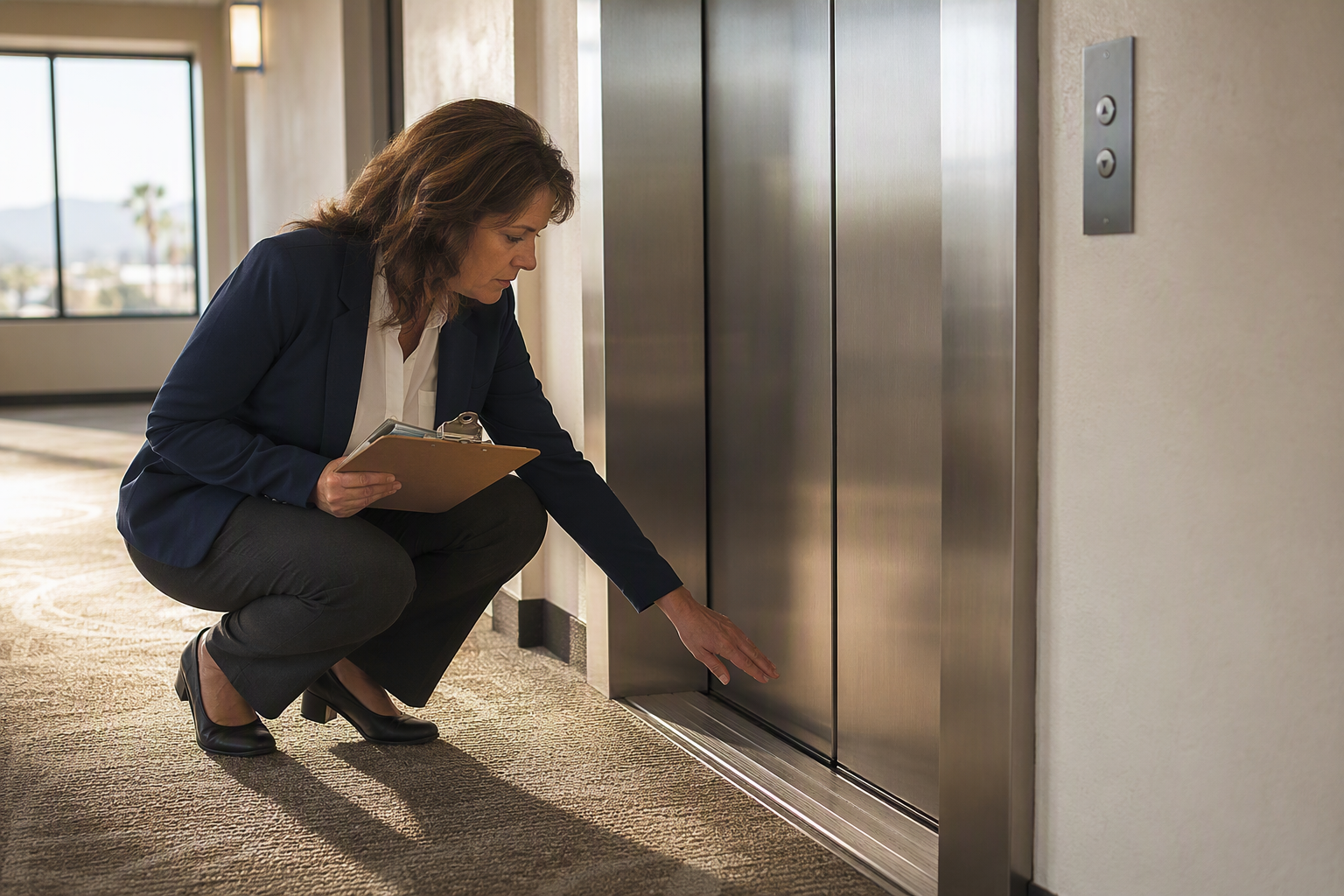
Elevator accident data consistently shows that risk is not distributed evenly across the population. Two groups face disproportionately elevated risk:
- Maintenance and construction workers: According to OSHA, elevator workers — including mechanics, installers, and construction laborers working near elevator shafts — account for roughly half of all elevator-related fatalities. Falls into elevator shafts, contact with counterweights, and entrapment in machinery spaces are the leading causes of worker deaths.
- Older adults and individuals with mobility impairments: Passengers over the age of 65 and those using mobility aids are statistically more likely to be injured in leveling failures, sudden stops, and door malfunctions. This population often depends on elevators as their primary means of vertical access, increasing exposure and injury severity.
Children also represent a higher-risk group, particularly in incidents involving door entrapment and unintended movement of elevator cars. These incidents are disproportionately associated with older, under-maintained equipment lacking modern safety devices.
What Are the Most Common Causes of Elevator Accidents?
Safety incident data and engineering analysis consistently point to a handful of recurring root causes across elevator accident reports. These are not speculative — they align with the hazard categories specifically addressed by the ASME A17.1 Safety Code for Elevators and Escalators, which is the foundational safety standard adopted by most U.S. jurisdictions:
- Poor or deferred maintenance: Mechanical components including braking systems, door operators, and leveling devices degrade over time. When preventive maintenance schedules are not followed, failure rates increase significantly.
- Leveling errors: When an elevator car does not align precisely with the floor level at the landing, it creates a tripping hazard. Misleveling is one of the leading causes of passenger falls in and out of elevator cabs.
- Door malfunctions: Faulty door sensors, worn door contacts, and deteriorated door edges cause doors to close on passengers or fail to detect obstructions properly.
- Unintended car movement: Elevators that move unexpectedly — either while loading or unloading — pose severe injury risk, particularly for workers entering a car from a landing.
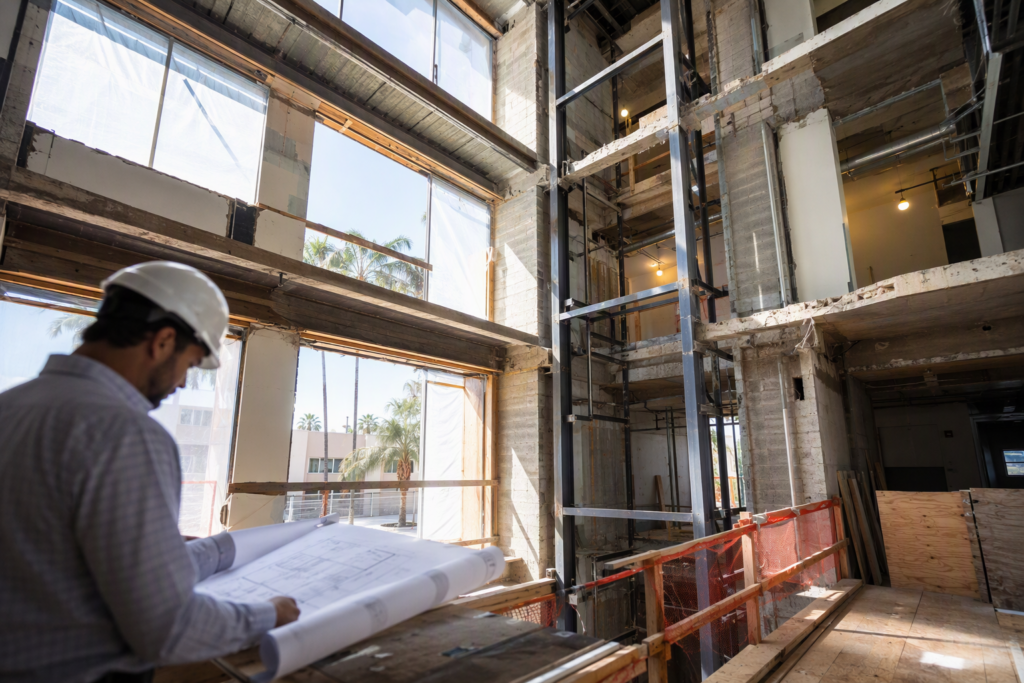
- Shaft access and fall hazards: Open or inadequately guarded elevator shafts are among the most dangerous conditions on construction sites and during maintenance operations, as documented extensively by OSHA.
- Aging equipment: Older elevator systems may predate modern safety requirements and may lack safety features now mandated under current editions of the ASME A17.1 code.
What Safety Standards Govern Elevator Accident Prevention?
Elevator safety in the United States is governed by a layered regulatory framework. Understanding this framework is essential for building owners who want to reduce liability and ensure passenger protection.
The primary document is the ASME A17.1 Safety Code for Elevators and Escalators, published by the American Society of Mechanical Engineers. This code establishes minimum requirements for elevator design, construction, installation, operation, inspection, testing, maintenance, alteration, and repair. Most U.S. states and local jurisdictions adopt some version of ASME A17.1 as their statutory elevator safety code.
Key safety requirements addressed in the code include:
- Mandatory inspection and testing intervals for different categories of elevator equipment
- Requirements for door reopening devices and door close force limits
- Pit safety and lighting requirements
- Emergency communication systems within elevator cars
- Unintended car movement protection (UCMP) devices
- Governor and safety device testing protocols
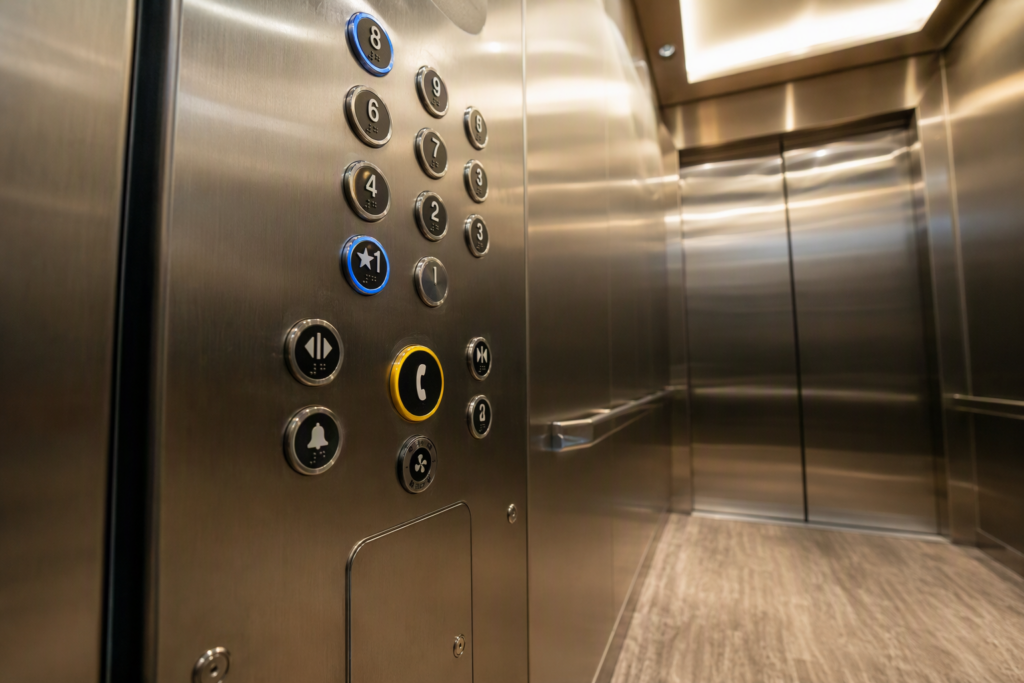
For public accommodations, the Americans with Disabilities Act (ADA) imposes additional requirements ensuring that elevator access is available to individuals with disabilities. ADA elevator requirements cover cab dimensions, door timing, control panel height and marking, and floor designation signage — all of which interact with safety considerations as well as accessibility.
At the federal level, OSHA regulates elevator safety as it pertains to workers, with specific standards governing construction-phase shaft protection, lockout/tagout procedures for maintenance personnel, and general industry requirements for powered platform operations.
What Do Elevator Accident Statistics Reveal About Inspection Compliance?
A consistent theme in elevator accident investigation findings is the role of inspection gaps. Elevators that have missed required periodic inspections — or that have outstanding violations following an inspection — appear disproportionately in incident reports.
The ASME A17.1 Safety Code specifies inspection and test categories including routine periodic inspections, five-year full load safety tests, and governor/safety device tests. When these required tests are deferred or not documented, building owners and managers face both elevated safety risk and regulatory liability.
Arizona, like most states, requires licensed elevator inspectors to certify vertical transportation equipment on a periodic basis. Buildings with lapsed certificates of inspection are out of compliance regardless of the equipment’s apparent condition.
How Do Escalator Accidents Compare to Elevator Accidents?
While this page focuses primarily on elevator accident statistics, escalators warrant mention because they are regulated under the same ASME A17.1 Safety Code for Elevators and Escalators and present a distinct risk profile.
Escalator injuries tend to involve different mechanisms than elevator injuries — falls on escalator steps, entrapment of clothing or footwear in the comb plate or skirt panel, and injuries from sudden stops are the most commonly documented categories. Children and elderly individuals again represent the highest-risk passenger demographics for escalator incidents.
From a facility management perspective, the maintenance and inspection obligations for escalators parallel those for elevators, and the consequences of deferred maintenance are similarly serious from both a safety and legal liability standpoint.
What Should a Building Owner Do Immediately After an Elevator Accident?
- Ensure immediate safety and call emergency services. If anyone is injured, call 911 before taking any other action. Do not attempt to manually retrieve a trapped passenger unless you are a trained elevator mechanic — improper rescue attempts can worsen the situation.
- Take the elevator out of service. Secure the elevator and prevent further use until the cause of the incident is determined. Post clear signage and physically prevent passenger access.
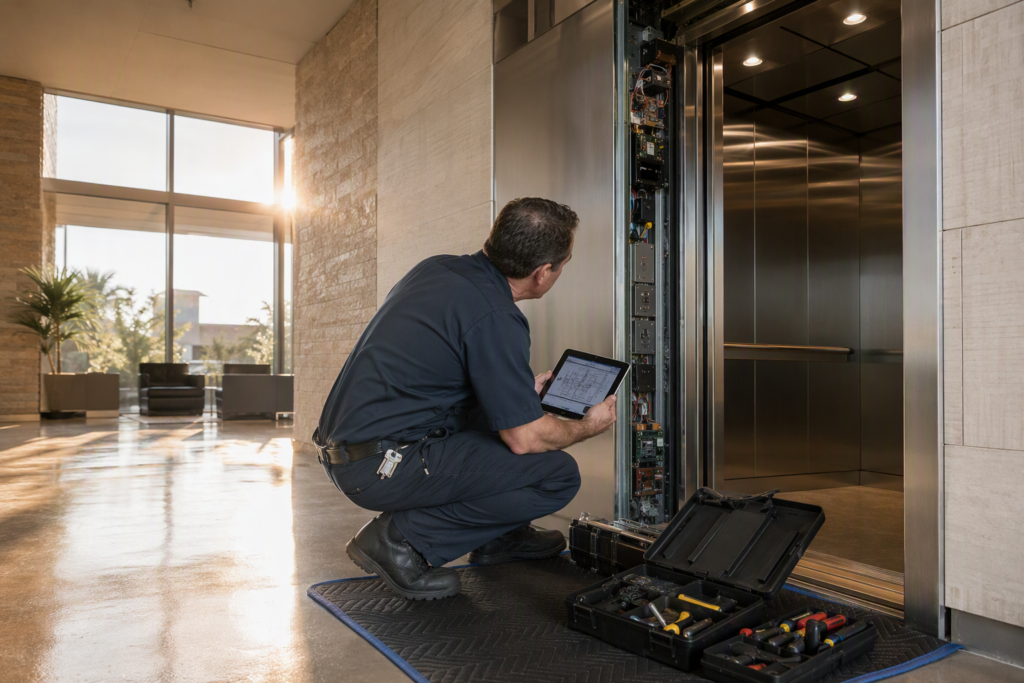
- Notify the elevator maintenance contractor. A licensed elevator technician should respond to evaluate the equipment, document conditions, and determine whether the car can be safely returned to service.
- Document the scene. Photograph the elevator cab interior, landing, door edges, and any physical evidence related to the incident before anything is cleaned or altered.
- Notify the state elevator inspection authority. In Arizona, elevator incidents involving injury may trigger mandatory reporting obligations to the relevant state regulatory authority. Consult with legal counsel promptly.
- Preserve maintenance records. Gather all inspection certificates, maintenance logs, and work orders. These records are central to any subsequent investigation or legal proceeding.
- Complete an internal incident report. Document witness accounts, environmental conditions, and any known prior complaints about the elevator’s performance.
- Conduct a root cause analysis. Before returning the elevator to service, ensure that a qualified elevator professional has identified and corrected the underlying cause of the incident — not merely the symptom.
What Are the Legal and Liability Implications of Elevator Accidents?
Building owners and property managers have a legal duty of care to maintain elevators in a safe operating condition. When an elevator accident occurs and it is determined that the building owner failed to maintain the equipment, conduct required inspections, or respond appropriately to known deficiencies, significant civil liability exposure can result.
Courts and insurance adjusters routinely examine maintenance logs, inspection certificates, and work order histories when evaluating elevator accident claims. Buildings that can demonstrate consistent, documented compliance with the ASME A17.1 Safety Code and applicable state regulations are in a substantially stronger position than those with gaps in their compliance documentation.
ADA-related elevator failures — for example, an elevator that is out of service and provides the sole accessible route for individuals with disabilities — can generate parallel liability under the Americans with Disabilities Act in addition to any personal injury claims.
How Does Preventive Maintenance Reduce Elevator Accident Risk?
The relationship between preventive maintenance and accident reduction is one of the most well-supported principles in the elevator safety literature. Elevators that receive regular, documented maintenance consistently demonstrate lower rates of safety-critical failures compared to equipment maintained reactively.
Key maintenance activities that directly reduce accident risk include:
- Regular lubrication and adjustment of door operators and contacts
- Testing and calibration of leveling devices to prevent floor misalignment
- Inspection and testing of governor and safety systems that prevent freefalls
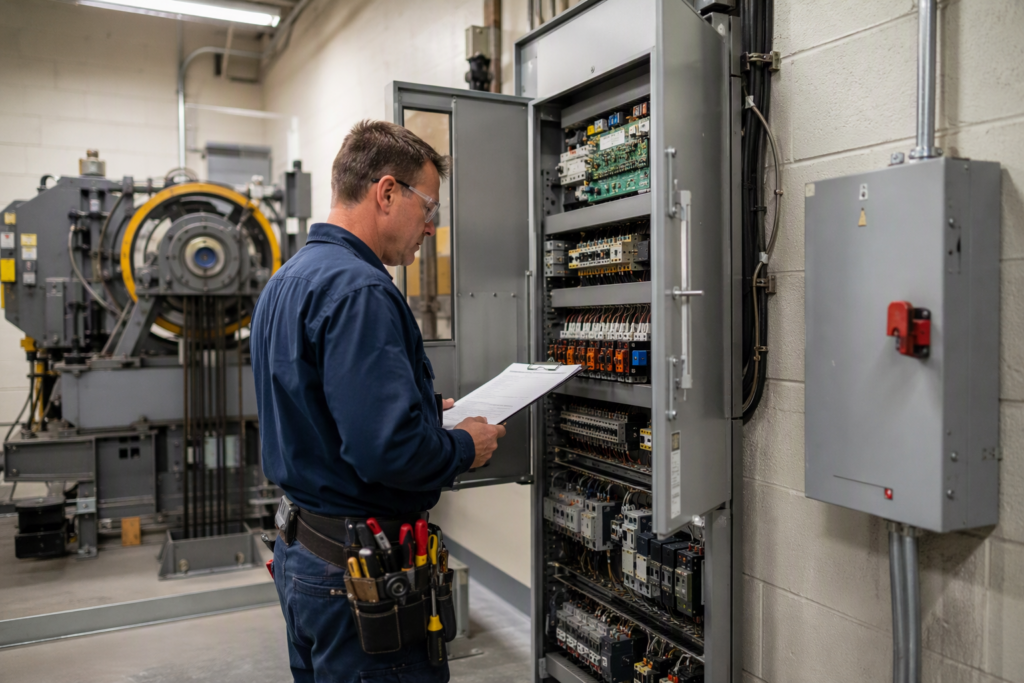
- Examination of rope and chain components for wear
- Testing of emergency lighting, communication systems, and alarm bells
- Inspection of pit conditions including water intrusion and lighting
Arizona Elevator Solutions approaches elevator maintenance as a data-driven discipline — tracking equipment performance patterns, prioritizing components with elevated failure probability, and documenting all service activities to support both safety outcomes and regulatory compliance for Arizona property owners.
What Are the Trends in Elevator Safety for 2025 and 2026?
The elevator safety industry is undergoing meaningful change in the mid-2020s, driven by technology adoption, aging infrastructure, and evolving code requirements. While specific statistics for 2025–2026 are not yet available from authoritative sources, several qualitative trends are well-documented:
- Remote monitoring and predictive maintenance: IoT-enabled elevator monitoring systems are becoming increasingly common in commercial and multi-family residential buildings. These systems track performance parameters in real time and can flag anomalies before they develop into safety failures.
- Aging equipment modernization pressure: A substantial portion of the U.S. elevator fleet was installed before current safety standards were enacted. Industry observers note growing regulatory and market pressure on building owners to modernize older equipment, particularly in jurisdictions updating their adopted editions of ASME A17.1.
- Increased enforcement activity: State elevator inspection programs have shown increased enforcement activity in many jurisdictions, with stricter follow-through on out-of-service orders for elevators with uncorrected violations.
- Workforce safety emphasis: Following sustained attention from OSHA to elevator mechanic fatalities, there is growing industry emphasis on confined space protocols, lockout/tagout compliance, and shaft fall protection during maintenance and modernization work.
- Accessibility and safety convergence: Updates to ADA guidance and state accessibility codes are increasingly aligned with safety code revisions, reducing the gap between minimum accessibility requirements and minimum safety standards.
How Do Arizona’s Elevator Accident Risks Compare to National Averages?
Arizona’s elevator safety risk profile is shaped by factors specific to the state’s built environment and climate. The rapid growth of multi-family residential construction in the Phoenix metropolitan area and Tucson has added significant new elevator inventory over the past decade — elevators that are now aging into their first major maintenance cycles.
Arizona’s desert climate introduces specific maintenance challenges that are less common in other regions. Extreme heat accelerates wear on certain electrical components, and monsoon-season moisture can create pit flooding conditions that affect safety systems. These environmental factors make adherence to inspection schedules and preventive maintenance protocols particularly important for Arizona building owners.
Compliance with the ASME A17.1 Safety Code as adopted under Arizona’s regulatory framework is the baseline expectation for all elevator equipment operating in the state, regardless of the age of the installation.
What Is the Cost of an Elevator Accident Versus the Cost of Prevention?
The economic calculus around elevator safety strongly favors prevention. While specific cost figures vary based on incident severity, jurisdiction, and insurance arrangements, the cost categories associated with elevator accidents are well-understood:
On the accident cost side, building owners face potential medical expenses, lost productivity, emergency response costs, legal fees, settlement or judgment amounts, increased insurance premiums, and reputational damage. Regulatory fines for non-compliant equipment add a further financial dimension.
On the prevention side, the costs include periodic inspections, routine preventive maintenance contracts, component replacement as equipment ages, and periodic modernization investments. These costs are predictable, plannable, and a fraction of the potential liability exposure from a serious incident.
Building owners who treat elevator maintenance as an operational cost center rather than a liability management tool consistently find themselves better positioned both financially and legally.
How Can Building Managers Verify Their Elevator Is Legally Compliant?
Verifying elevator compliance in Arizona involves several concrete steps:
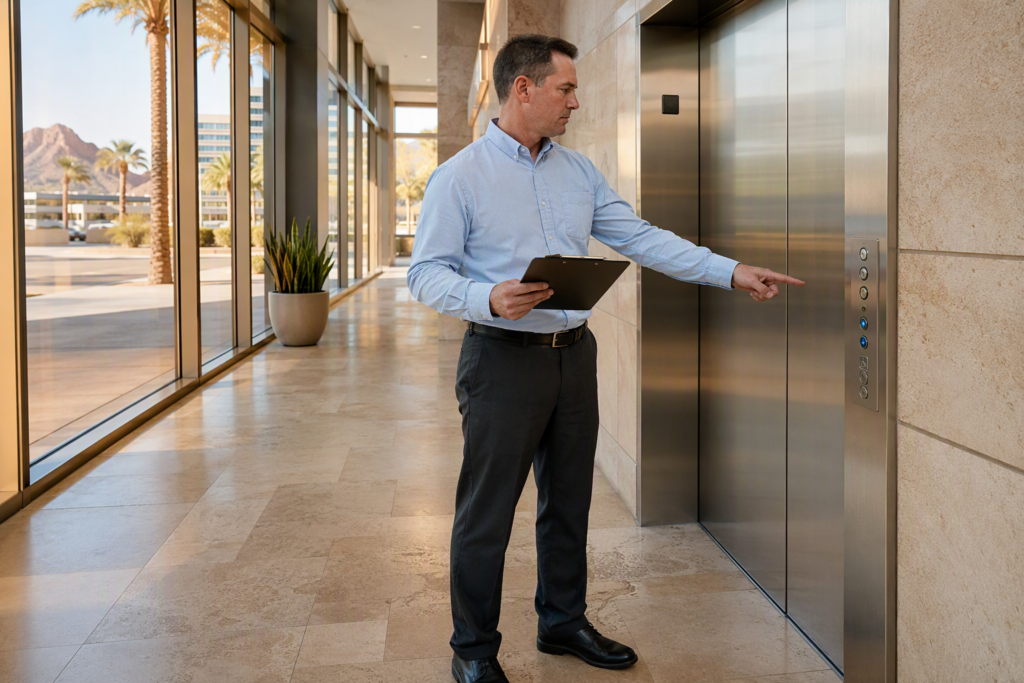
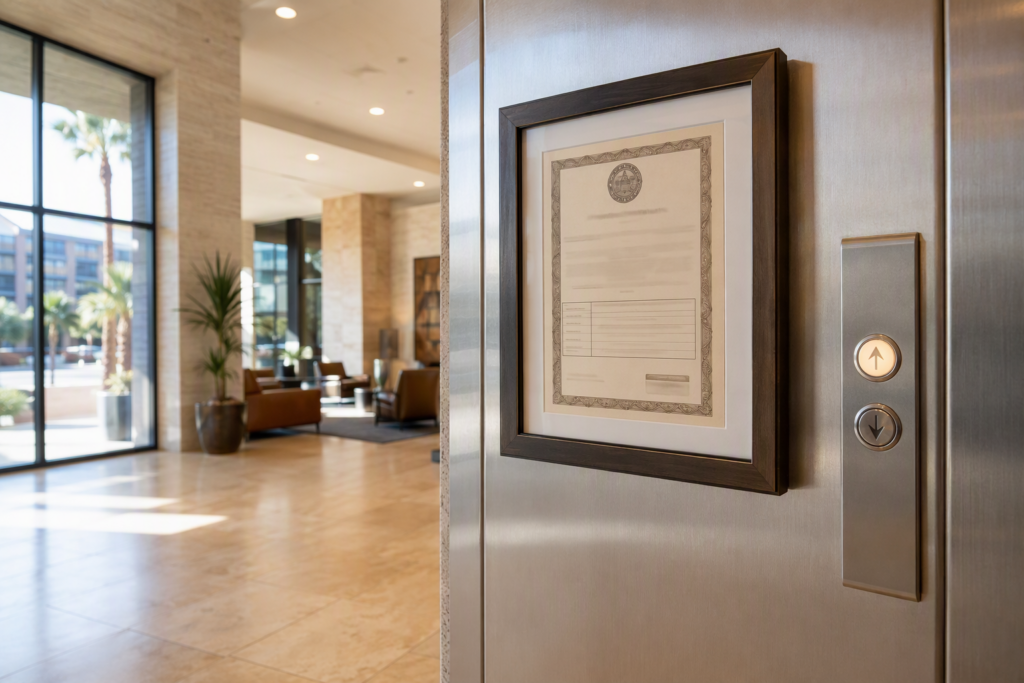
- Current certificate of inspection: A valid, current certificate of inspection issued by a licensed elevator inspector must be posted in or near each elevator. An expired certificate is a compliance failure regardless of the elevator’s mechanical condition.
- Maintenance records: Documented records of all maintenance activities, including dates, technician information, and work performed, should be maintained and available for review by inspectors.
- Outstanding violation clearance: Any violations cited in a prior inspection report must be corrected and documented before a renewal certificate can be issued.
- Code edition currency: As jurisdictions update their adopted edition of ASME A17.1, building owners should verify whether any newly required safety devices or modifications apply to their existing equipment.
- ADA compliance verification: For buildings subject to the ADA, periodic review of elevator accessibility features — including door timing, control panel compliance, and cab dimensions — is part of a complete compliance picture.
Arizona Elevator Solutions provides compliance assessments that examine each of these dimensions, giving building owners and managers a clear, documented picture of their current compliance status and any remediation priorities.
Summary: What Elevator Accident Statistics Tell Us About Prevention
The data on elevator accidents points consistently to the same conclusion: the vast majority of elevator injuries and fatalities are preventable. The mechanisms of prevention — regular inspections, documented preventive maintenance, timely repair of identified deficiencies, and compliance with established codes — are well-understood and widely available.
For Arizona building owners and facility managers, the relevant framework is clear: comply with the ASME A17.1 Safety Code for Elevators and Escalators, meet ADA accessibility requirements, observe OSHA worker safety obligations, and engage a qualified elevator service provider who brings both technical competence and rigorous documentation practices to every service visit.
Arizona Elevator Solutions serves commercial, residential, and institutional elevator owners across Arizona with a data-driven approach to maintenance, inspection support, and compliance management — helping property owners understand their risk profile and take action before accidents occur.
Get a Free Elevator Safety Assessment from Arizona Elevator Solutions
Elevator accident statistics make clear that the time to act on safety is before an incident occurs, not after. Whether a building’s elevator is approaching an inspection deadline, showing performance changes, or simply hasn’t had a documented maintenance review in an extended period, a professional assessment is the first step toward informed risk management.
Contact Arizona Elevator Solutions for a free elevator assessment: 480-557-7600
Need elevator service you can rely on? Arizona Elevator Solutions is ready to help.