Elevator Industry Statistics 2025: Key Data, Trends & Market Insights
Understanding elevator industry statistics helps building owners, facility managers, and real estate investors make smarter decisions about maintenance budgets, modernization timelines, and compliance obligations. This page compiles sourced market data alongside qualitative trend analysis covering the full elevator industry landscape — from global market size to Arizona-specific service considerations.
What Is the Current Size of the Global Elevator Market?

The elevator and escalator industry is one of the largest segments within the broader building technologies and vertical transportation sector. According to data published and tracked by major market research organizations, the global elevator and escalator market has been valued at well over $100 billion USD and is projected to continue expanding through the latter half of the 2020s.
Growth is primarily attributed to rapid urbanization in emerging economies, an increasing volume of high-rise construction projects, and aging elevator infrastructure in developed markets that requires replacement or modernization. The United States represents one of the largest single-country markets, with millions of elevators in operation across residential, commercial, healthcare, and government building types.
Because specific market valuation figures shift frequently and vary by research methodology, precise figures are best verified through current reports from organizations such as the American Society of Mechanical Engineers (ASME), industry trade associations, or published government economic surveys. Arizona Elevator Solutions monitors these market trends to guide clients on optimal investment timing for modernization and new installation projects.
How Many Elevators Are Currently in Service in the United States?
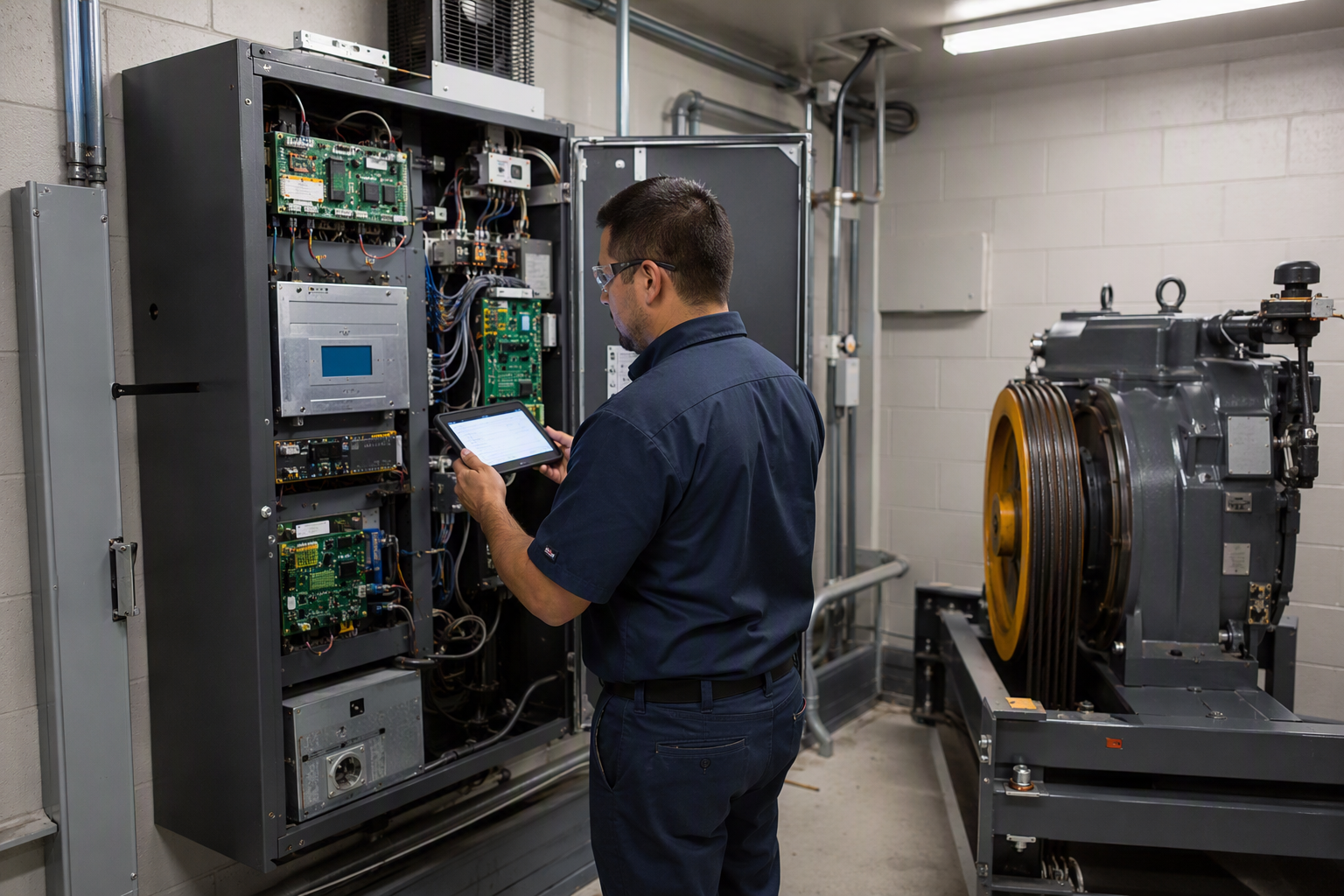
Estimates from industry bodies and government sources consistently place the number of elevators in operation across the United States in the range of approximately 900,000 to over one million units. This installed base represents a massive ongoing demand for inspection, maintenance, repair, and modernization services.
The distribution of this installed base skews heavily toward commercial office buildings, multifamily residential towers, hospitals and healthcare facilities, hotels, and government structures. Low-rise residential elevators — including platform lifts and home elevators — represent a growing segment as the population ages and demand for aging-in-place solutions increases.
A significant portion of the existing U.S. elevator fleet is aging. Industry guidance consistently notes that elevators older than 20 to 25 years frequently require component upgrades to maintain safety compliance, energy efficiency, and reliability. This aging installed base is a primary driver of the modernization segment’s growth heading into 2025 and 2026.
What Are the Key Elevator Industry Trends for 2025 and 2026?
Several converging forces are reshaping the elevator industry through 2025 and 2026. These trends are qualitative in nature — they reflect directional forces confirmed by industry reporting, code development activity, and regulatory movement rather than single-point statistics:
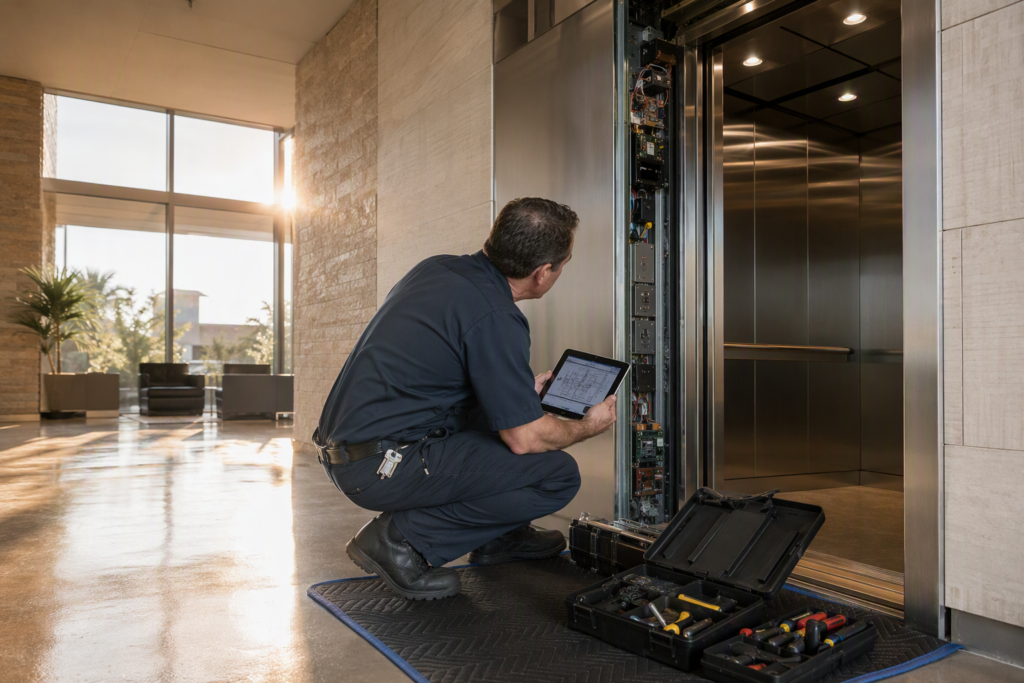
- Remote Monitoring and IoT Integration: Elevator manufacturers and independent service providers are increasingly deploying sensor-based remote monitoring systems that detect mechanical anomalies before failures occur. This predictive maintenance approach is becoming an industry standard expectation rather than a premium add-on.
- Energy Efficiency Upgrades: Regenerative drive technology, LED lighting retrofits, and standby mode systems are driving significant reductions in elevator energy consumption. Building owners pursuing LEED certification or ESG benchmarks are prioritizing these upgrades.
- Modernization Over New Construction: In many established U.S. markets, modernization of existing elevators represents a larger share of contractor revenue than new installations. Aging components — particularly relay-based controls, hydraulic systems, and outdated cab interiors — are being systematically replaced.
- Accessibility Code Enforcement: Enforcement activity under the Americans with Disabilities Act (ADA) continues to drive retrofits and platform lift installations in existing buildings that were previously non-compliant.
- Workforce and Supply Chain Pressures: The elevator industry, like much of the skilled trades sector, faces ongoing workforce development challenges. Qualified elevator mechanics remain in high demand, and supply chain normalization following pandemic-era disruptions continues to affect parts lead times for certain components.
- Destination Dispatch and Smart Building Integration: High-rise and mixed-use buildings are increasingly specifying destination dispatch systems that integrate with access control, building automation, and occupancy management platforms.
What Elevator Safety Codes and Standards Apply in 2025?
Elevator safety in the United States is governed primarily by the ASME A17.1 Safety Code for Elevators and Escalators, which is developed and maintained by the American Society of Mechanical Engineers. This code establishes minimum requirements for the design, construction, installation, operation, inspection, testing, maintenance, alteration, and repair of elevators and related conveyances.
States and municipalities adopt specific editions of ASME A17.1 at varying intervals, meaning the edition enforced in Arizona may differ from that enforced in neighboring states. Building owners and facility managers should confirm with their local Authority Having Jurisdiction (AHJ) which edition is currently enforced in their jurisdiction.
Key areas covered by ASME A17.1 include:
- Inspection and testing intervals for periodic and acceptance inspections
- Requirements for elevator machine rooms, hoistways, and pits
- Fire service operation and emergency recall requirements
- Seismic design requirements in applicable geographic zones
- Accessibility requirements as they relate to elevator design and operation
Workplace safety for elevator construction and maintenance personnel falls under the jurisdiction of the Occupational Safety and Health Administration (OSHA), which enforces standards addressing lockout/tagout procedures, pit safety, and confined space protocols relevant to elevator work.
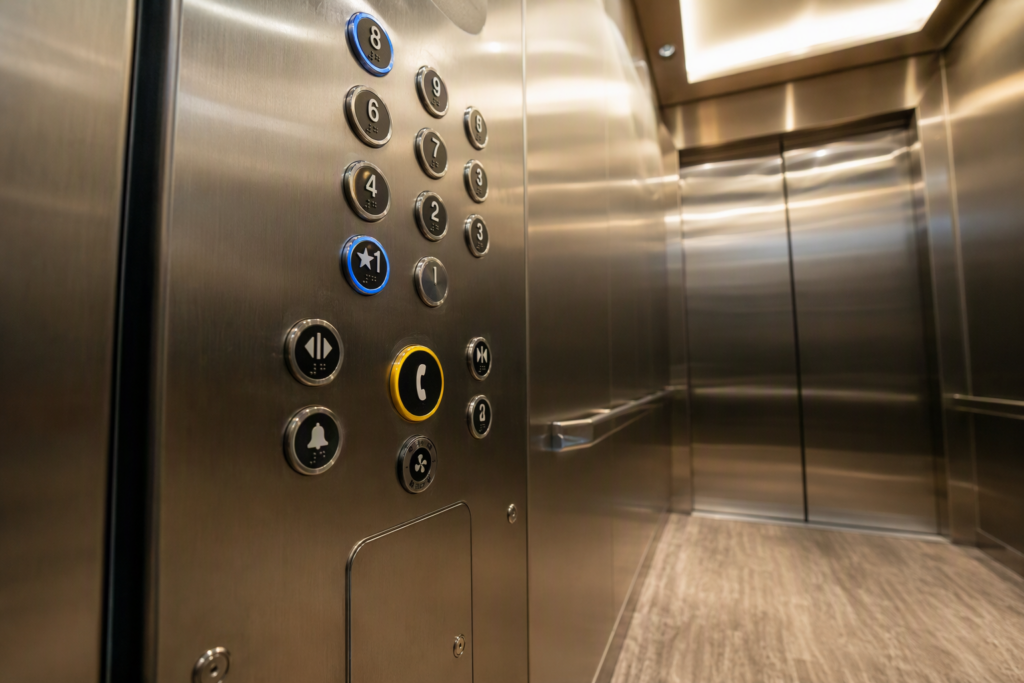
Accessibility requirements for elevator installation and retrofit in public accommodations and commercial facilities are governed by the Americans with Disabilities Act (ADA), which specifies minimum cab dimensions, door timing, control height, Braille signage, and audible signal requirements.
What Does an Elevator Inspection Involve and How Often Is It Required?
Elevator inspections are a mandatory component of lawful elevator operation in virtually every U.S. jurisdiction. Under the framework established by the ASME A17.1 Safety Code for Elevators and Escalators, inspections are categorized into periodic inspections (routine operational checks) and periodic tests (more comprehensive safety system evaluations).
The following ordered process describes what a standard elevator inspection and compliance cycle typically involves:
- Confirm jurisdiction requirements: Contact the local Authority Having Jurisdiction (AHJ) to determine inspection frequency, required test types, and certification documentation requirements for your specific elevator type and location.
- Schedule with a licensed elevator inspector: Most states require inspections to be performed by a licensed inspector — either a state or municipal inspector, or a qualified third-party inspector approved by the AHJ.
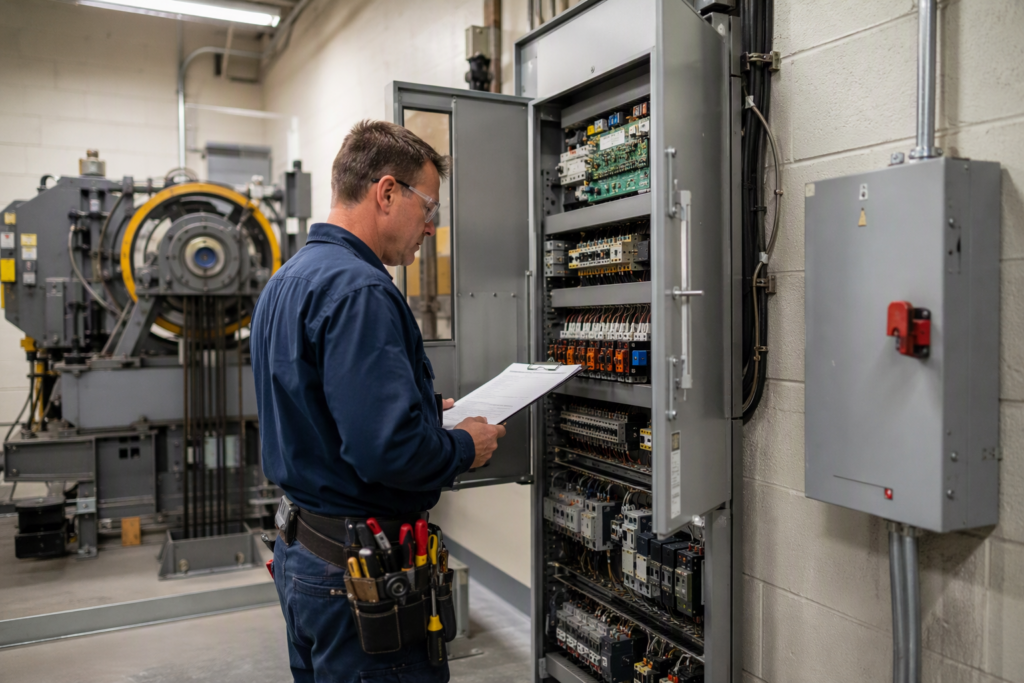
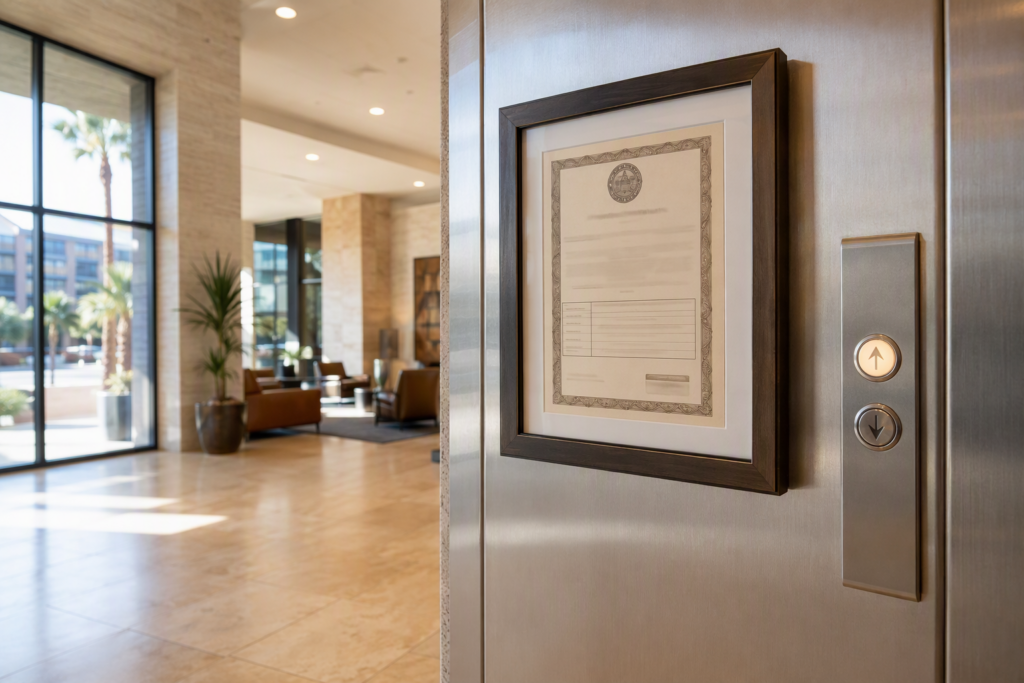
- Prepare the elevator and machine room: Ensure the machine room is accessible, lighting is functional, log books are current, and the most recent Certificate of Inspection is posted as required.
- Conduct the inspection: The inspector evaluates the hoistway, cab, machine room, pit, safety devices, emergency systems, and operational performance against the applicable code edition.
- Address deficiencies: Any violations or deficiencies identified must be corrected within the timeframe specified by the AHJ. Some critical violations may result in an elevator being taken out of service immediately.
- Obtain updated Certificate of Inspection: Upon passing inspection, a new certificate is issued and must be posted inside the elevator cab as required by code.
- Document and retain records: Maintain complete inspection and maintenance records, as these are subject to AHJ review and may be required in the event of an incident investigation.
Inspection intervals vary by elevator type and jurisdiction. Hydraulic elevators, traction elevators, and limited-use/limited-application (LULA) elevators each have distinct inspection and test requirements under ASME A17.1.
What Factors Drive Elevator Modernization Decisions in 2025?
Elevator modernization — the partial or complete upgrade of an existing elevator system — is driven by a combination of safety requirements, reliability concerns, energy efficiency goals, and tenant or occupant experience expectations. The following factors are the most consistent drivers across the industry:
- Age of Control System: Relay-based and older microprocessor control systems become increasingly difficult to service as replacement parts are discontinued by manufacturers. When parts are no longer available, modernization is the only viable path forward.
- Hydraulic Fluid and Environmental Compliance: Older hydraulic elevators may use oil-based hydraulic fluids in single-bottom cylinders that present environmental liability risks. Modernization to above-ground cylinders or conversion to traction or machine-room-less (MRL) configurations addresses this risk.
- Code Compliance: Subsequent editions of ASME A17.1 introduce new requirements that trigger mandatory upgrades when major work is performed on an existing elevator. Additions such as firefighters’ emergency operation, seismic switches, and door reopening devices have been progressively required through successive code editions.
- Energy Costs: Building operators pursuing operating cost reductions or sustainability certifications frequently prioritize elevator upgrades to regenerative drives and LED cab lighting as high-return investments.
- Occupant Experience and Aesthetics: In competitive commercial real estate and multifamily markets, updated cab finishes, modernized fixtures, and improved ride quality directly influence tenant satisfaction and property valuation.
How Does the ADA Affect Elevator Requirements in Existing Buildings?
The Americans with Disabilities Act (ADA) establishes requirements for accessible vertical transportation in public accommodations and commercial facilities. For new construction, full ADA compliance is required from the outset. For existing buildings, the ADA’s “readily achievable barrier removal” standard applies, meaning owners must remove accessibility barriers when doing so is achievable without significant difficulty or expense.
Common ADA elevator requirements include minimum cab dimensions, compliant door width and timing, accessible call button placement and height, Braille and raised character signage on hall stations and cab controls, audible and visual floor indicators, and level landing tolerances. When a building undergoes renovation to its primary function areas, the ADA’s path of travel requirements can trigger elevator upgrades even when the elevator itself is not part of the direct renovation scope.
Platform lifts installed under ADA requirements must comply with both ADA Standards for Accessible Design and ASME A18.1 Safety Standard for Platform Lifts and Stairway Chairlifts, as referenced within the ADA technical standards framework.
What Are the Most Common Elevator Repairs and Maintenance Needs?
Routine elevator maintenance addresses a predictable set of wear components and systems. Understanding the most common maintenance needs helps building owners plan operating budgets and avoid unplanned outages:
- Door System Components: Door operators, rollers, gibs, and sill grooves are among the highest-frequency repair items across all elevator types. Door-related malfunctions account for a substantial share of service calls industry-wide.
- Hydraulic Seals and Packing: Hydraulic elevators require periodic inspection and replacement of cylinder seals, packing glands, and pump unit components to prevent fluid leaks and maintain operating pressure.
- Hoist Ropes and Sheaves: Traction elevator hoist ropes are subject to wear and fatigue over time and must be inspected, lubricated, and replaced according to ASME A17.1 criteria and manufacturer guidelines.
- Controller and Software Updates: Modern microprocessor-based controllers may require firmware updates and board-level repairs as components age or software issues are identified.
- Safety Devices: Governor mechanisms, safety devices, buffers, and overspeed detection systems must be tested and maintained at intervals specified by ASME A17.1 and local code adoption.
- Pit and Machine Room Conditions: Water intrusion in pits, inadequate lighting, and temperature extremes in machine rooms are persistent maintenance issues that affect equipment longevity and inspection outcomes.
How Does Elevator Downtime Affect Building Operations?
Elevator downtime has measurable consequences for building operations across virtually every property type. In commercial office buildings, elevator outages reduce tenant satisfaction and can trigger lease-related disputes. In healthcare facilities, elevator reliability is directly tied to patient care logistics and emergency response capability. In multifamily residential buildings, elevator outages disproportionately affect residents with mobility limitations and can create ADA compliance exposure for building owners.
The financial impact of unplanned downtime extends beyond the direct cost of emergency repairs to include reduced building productivity, potential liability exposure, and reputational effects in competitive markets. This is why the industry trend toward predictive maintenance and remote monitoring — discussed earlier in this page — represents a meaningful operational and financial investment rather than simply a technological upgrade.
Planned maintenance contracts, when structured appropriately, reduce the frequency and severity of unplanned outages by addressing wear items before they cause failures. Arizona Elevator Solutions works with building owners to develop maintenance plans aligned with the specific age, type, and usage profile of each elevator in their portfolio.
What Should Building Owners Know About Elevator Permits and Jurisdiction in Arizona?
In Arizona, elevator installation, major alteration, and inspection activities are subject to state and local permitting and inspection requirements. Building owners and facility managers should be aware of the following:
- Elevator work typically requires a permit issued by the relevant state agency or local municipality before work begins.
- The applicable edition of ASME A17.1 enforced in Arizona is determined by the state’s adoption schedule and should be confirmed with the relevant authority.
- Certificates of Inspection are required to be posted in elevator cabs and must be current — expired certificates represent a compliance violation subject to enforcement action.
- Elevator contractors performing installation, alteration, and maintenance in Arizona are generally required to hold appropriate state contractor licenses and comply with OSHA regulations governing elevator work.
Arizona Elevator Solutions operates with full awareness of Arizona’s regulatory framework and assists building owners in navigating permit requirements, scheduling state-required inspections, and maintaining documentation of compliance activities.
How Do Elevator Costs Compare Across Service Types?
Because elevator costs vary significantly based on equipment type, building configuration, local labor markets, and scope of work, it is not accurate to publish universal price points. However, the industry consistently distinguishes among several cost categories that building owners should understand:
- Routine Maintenance Contracts: Ongoing maintenance agreements are priced based on elevator type, age, number of units, and service level (oil and grease only vs. comprehensive parts-inclusive coverage). Contract structure has a direct impact on out-of-pocket repair costs over time.
- Repair and Emergency Service: Component-level repairs range from minor adjustments to major part replacements. Emergency call-back service during off-hours typically carries premium labor costs.
- Modernization Projects: Partial modernizations (controls only, door systems only) and full modernizations (cab, controls, mechanical systems) represent substantially different capital commitments. Scope is driven by equipment age, compliance requirements, and owner objectives.
- New Installation: New elevator installation costs are influenced by elevator type (hydraulic, traction, MRL), travel distance, cab size, door configuration, finish level, and site conditions.
Arizona Elevator Solutions provides detailed project assessments that allow building owners to understand the specific cost drivers relevant to their equipment and goals before committing to a scope of work.
What Are the Most Important Elevator Statistics for Facility Managers to Monitor?
While global and national market statistics provide context, facility managers benefit most from tracking operational metrics specific to their own elevator portfolio. The following indicators are widely recognized in the industry as key performance benchmarks:
- Callback Rate: The number of service calls required outside of scheduled maintenance visits per elevator per year. Lower callback rates indicate a well-maintained system.
- Mean Time Between Failures (MTBF): A reliability measure that tracks how long an elevator operates between unplanned service events.
- Inspection Pass Rate: Whether elevators pass mandatory inspections on the first visit or require re-inspection after deficiency correction. Repeat failures indicate a maintenance quality or documentation gap.
- Parts Availability Lead Times: For aging equipment, tracking how long it takes to source replacement parts helps anticipate risk and supports the business case for modernization.
- Energy Consumption per Elevator: Relevant for buildings pursuing sustainability benchmarks or utility cost reduction initiatives.
Arizona Elevator Solutions supports facility managers in establishing and tracking these operational metrics as part of a data-driven approach to elevator portfolio management.
How Does OSHA Regulate Elevator Work and Worker Safety?
Elevator installation, maintenance, and repair work involves significant worker safety risks including falls, electrical hazards, caught-in/between hazards, and confined space conditions. The Occupational Safety and Health Administration (OSHA) enforces federal regulations that govern these hazards for elevator workers.
Key OSHA standards relevant to elevator work include lockout/tagout (LOTO) procedures for controlling hazardous energy during maintenance activities, fall protection requirements for work at elevation, confined space entry procedures for pit work, and electrical safety standards applicable to elevator control and power systems. Employers in the elevator industry are responsible for ensuring that workers are trained, equipped, and protected in compliance with applicable OSHA standards.
Building owners and facility managers also bear responsibility for ensuring that their premises provide elevator contractors with safe access conditions, including adequate pit lighting, dry pit conditions, and clear machine room access as required by ASME A17.1.
Why Choose a Data-Driven Elevator Service Provider?
The elevator industry is increasingly defined by data — from remote monitoring systems that track equipment performance in real time to compliance management platforms that automate inspection scheduling and documentation. Building owners who partner with service providers that apply data-driven methodologies benefit from more predictable maintenance costs, reduced unplanned downtime, stronger regulatory compliance posture, and better-informed capital planning decisions.
Arizona Elevator Solutions approaches elevator service with this data-driven mindset, applying industry knowledge of ASME codes, ADA requirements, and market trends to provide clients across Arizona with maintenance, modernization, and new installation services that are grounded in current standards and aligned with each client’s operational and financial objectives.
From small residential elevators to complex commercial and healthcare installations, Arizona Elevator Solutions provides assessments, maintenance programs, and modernization projects designed to maximize equipment reliability and regulatory compliance across the full elevator lifecycle.
Get a Free Elevator Assessment from Arizona Elevator Solutions
Whether a building’s elevators are due for inspection, approaching the end of their service life, or failing to meet current ADA or ASME code requirements, Arizona Elevator Solutions offers a no-obligation assessment to help building owners and facility managers understand their equipment’s current status and develop a clear path forward.
Contact Arizona Elevator Solutions for a free elevator assessment: 480-557-7600
Need elevator service you can rely on? Arizona Elevator Solutions is ready to help.