Elevator Modernization vs Full Replacement: A Complete Decision Guide
Choosing between elevator modernization and full replacement is one of the most consequential maintenance decisions a building owner or facilities manager will make. Both paths restore safety, improve performance, and bring a system into compliance with current codes — but they differ significantly in scope, cost, disruption, and long-term value. This guide breaks down every major factor so you can make a confident, well-informed decision.
—
What Is the Difference Between Elevator Modernization and Full Replacement?
Understanding the scope of each option is essential before comparing costs or timelines.
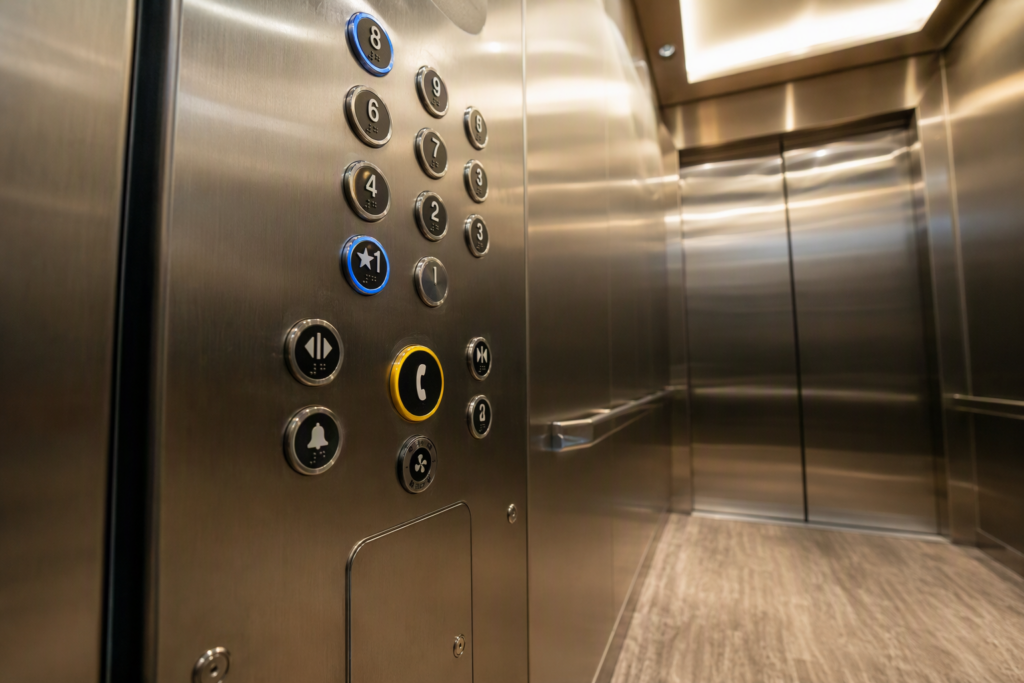
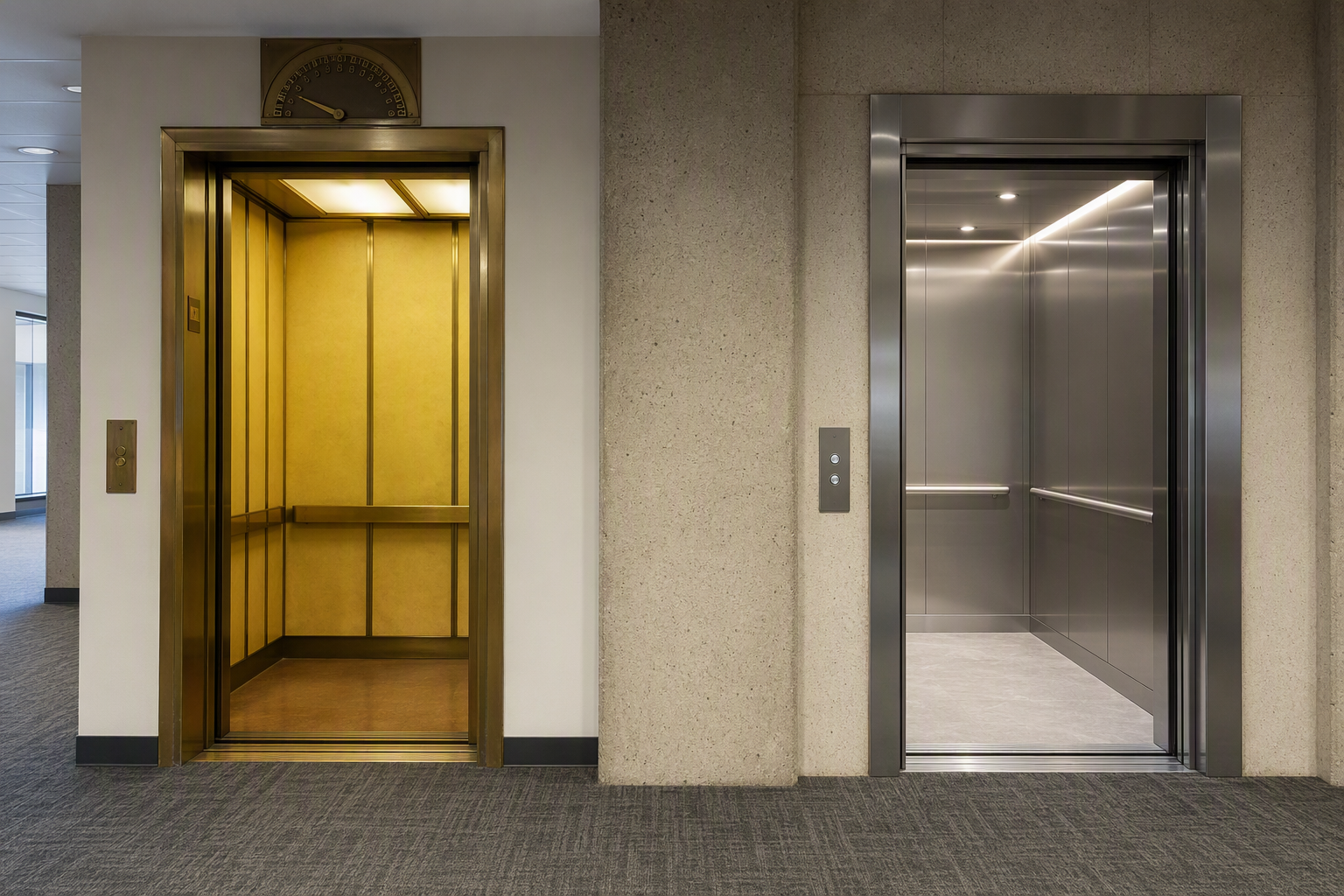
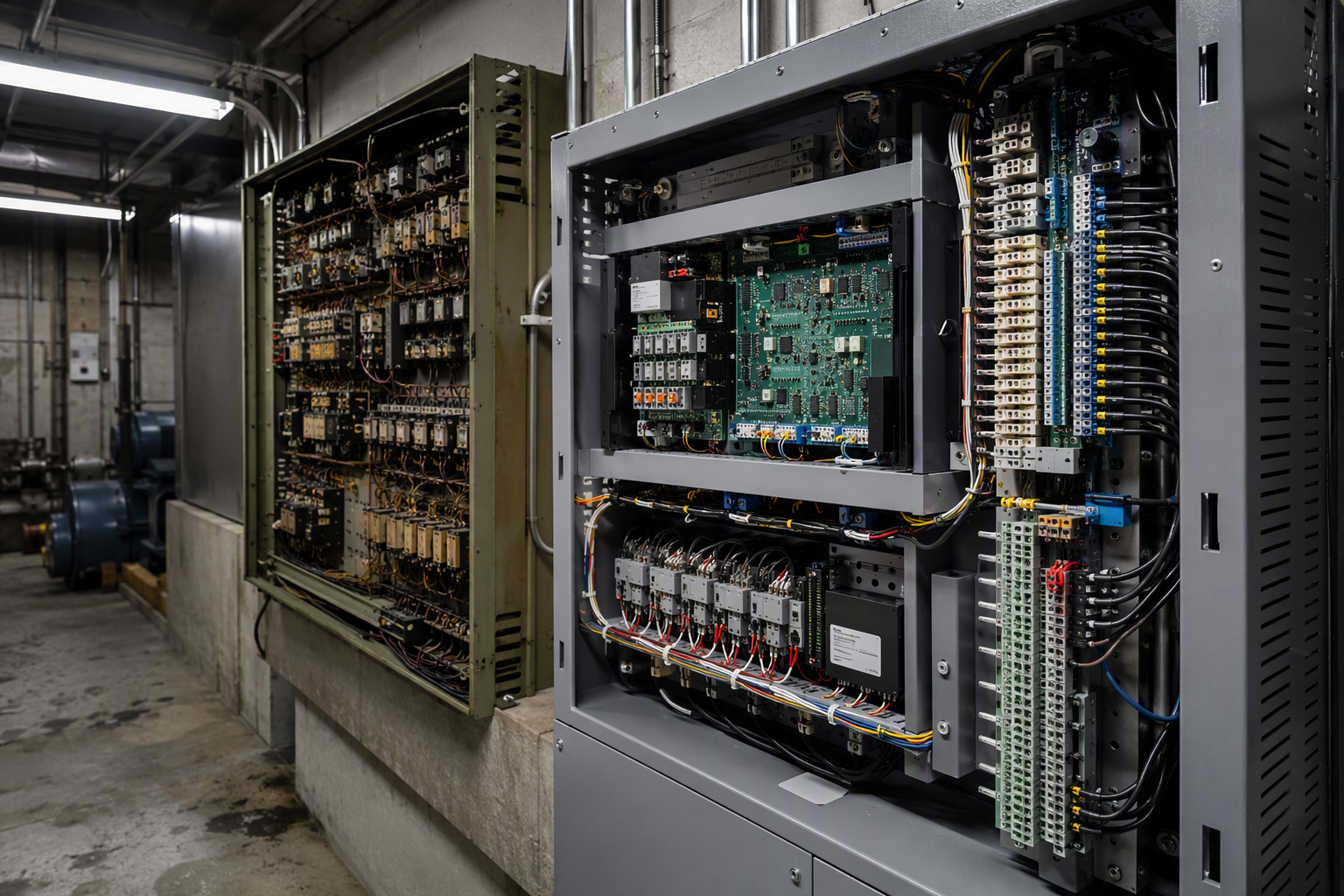
Elevator modernization involves replacing worn, outdated, or non-compliant components within an existing elevator system. This can range from a targeted single-component upgrade — such as replacing the control system or drive unit — to a comprehensive overhaul that replaces the controls, drive, doors, cab interior, lighting, and safety devices while retaining the original hoistway, rails, and structural frame.
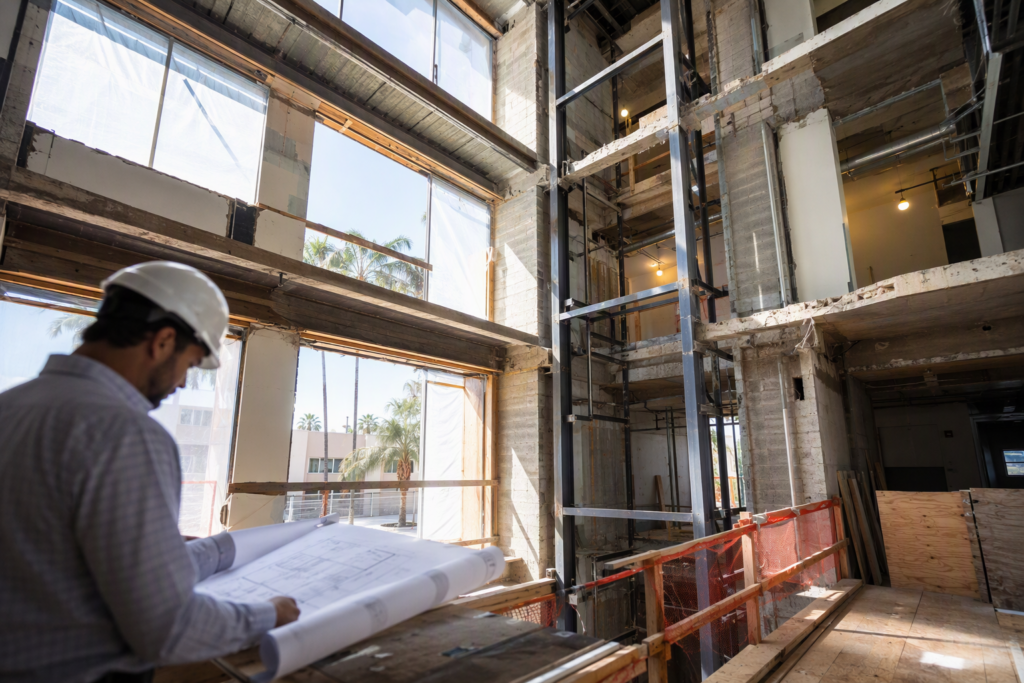
Full replacement means removing the entire elevator system, including all mechanical and electrical components, and in many cases modifying the hoistway itself. A brand-new elevator system is then installed from the ground up. This is a more invasive project that typically requires significant downtime and may involve construction work beyond the elevator contractor’s scope.
Both approaches must comply with applicable editions of the ASME A17.1 Safety Code for Elevators and Escalators and relevant ADA accessibility requirements. Arizona Elevator Solutions evaluates both pathways against current 2026 code requirements to ensure any work performed brings the installation into full compliance.
—
How Do Modernization and Replacement Compare Side by Side?

The table below summarizes the core differences across the most important decision categories.
| Factor | Modernization | Full Replacement |
|---|---|---|
| Scope | Selective or comprehensive component upgrades within existing structure | Complete removal and reinstallation of entire system |
| Hoistway Impact | Existing hoistway retained; minimal or no structural work | Hoistway may require structural modification or full rebuild |
| Downtime | Shorter; phased work often possible | Longer; full shutdown typically required |
| Disruption to Occupants | Lower; often completed in stages | Higher; extended outage affects all occupants |
| Code Compliance | Brings upgraded components into compliance; scope determines full compliance | Entire new system meets current code editions |
| ADA Accessibility | Can be addressed during modernization; scope must be planned carefully | New installation meets current ADA standards |
| Equipment Lifespan Added | Moderate; extends useful life of existing structure | Maximum; full new service life from installation date |
| Energy Efficiency | Significant improvement with drive and control upgrades | Maximum improvement with latest-generation equipment |
| Permitting Complexity | Moderate; permits required for component work | Higher; full installation permits and inspections required |
| Ideal Candidate | Structurally sound system with aging components | End-of-life system, compromised structure, or major reconfiguration needed |
—
What Are the Pros and Cons of Elevator Modernization?
| Pros | Cons |
|---|---|
| Lower upfront investment than full replacement | Does not address underlying structural or hoistway issues |
| Shorter downtime; phased scheduling options available | Older retained components may still require future service |
| Preserves building infrastructure investment | Scope must be carefully planned to achieve full code compliance |
| Significant reliability and performance improvement | Modernization of an end-of-life system may not provide long-term value |
| Energy efficiency gains through drive and control upgrades | Multiple rounds of partial modernization can accumulate in cost |
| Improved passenger experience with updated cab and controls | Technology integration may be limited by existing infrastructure |
—
What Are the Pros and Cons of Full Elevator Replacement?
| Pros | Cons |
|---|---|
| Brand-new system with maximum useful service life | Highest upfront cost |
| Full compliance with current ASME A17.1 and ADA standards | Extended downtime during removal and installation |
| No legacy components to age or fail in the near term | May require structural or hoistway construction work |
| Latest energy-efficiency and technology integration possible | Greater disruption to building occupants and operations |
| Clean warranty coverage on all components | Longer permitting and inspection process |
| Opportunity to reconfigure cab size, speed, or capacity | Not necessary if existing structure is sound |
—
When Does Elevator Modernization Make More Sense?
Modernization is generally the preferred approach under the following conditions:
- The hoistway, pit, and machine room structure are in good condition with no significant deterioration.
- The elevator system is experiencing control, door, or drive failures but the mechanical structure remains serviceable.
- The system is out of compliance with current code editions and targeted upgrades will resolve the deficiencies.
- The building owner needs to minimize downtime and occupant disruption.
- Budget constraints make full replacement impractical in the current fiscal period.
- The elevator is approaching mid-life rather than end-of-life, and a comprehensive modernization will extend useful service life significantly.
- ADA accessibility improvements are required and can be addressed within a modernization scope.
Arizona Elevator Solutions performs detailed condition assessments to determine whether a system is a strong candidate for modernization before recommending any scope of work.
—
When Does Full Replacement Make More Sense?
Full replacement becomes the recommended path under these circumstances:
- The elevator has reached the end of its useful service life and modernization costs approach or exceed replacement costs.
- The hoistway, pit, or machine room has structural deficiencies that must be corrected regardless of which path is chosen.
- The building is undergoing major renovation and reconfiguring the elevator layout or capacity is desired.
- Multiple rounds of prior modernization have been completed, leaving few original components to preserve.
- The existing system uses obsolete technology for which replacement parts are no longer readily available.
- A full-replacement warranty and maximum equipment lifespan are priorities for the property’s long-term capital plan.
—
How Long Does Each Process Take?
Timeline is a critical factor for occupied buildings, hospitals, multi-family residential properties, and commercial facilities where elevator availability directly affects occupants.
| Phase | Modernization | Full Replacement |
|---|---|---|
| Assessment & Planning | 1–3 weeks | 2–4 weeks (may include structural engineering) |
| Permitting | 2–6 weeks depending on jurisdiction | 4–10 weeks depending on jurisdiction and scope |
| Equipment Lead Time | Varies by component; often shorter than full system | Longer; full system manufacturing and delivery |
| Installation / Construction | Days to several weeks; phasing often possible | Several weeks to months; full shutdown required |
| Inspection & Sign-Off | Required; scope-dependent | Full inspection and certificate of occupancy required |
Note: Timelines vary by local jurisdiction, project complexity, and permit office processing times. Arizona Elevator Solutions coordinates directly with Arizona state and local authorities having jurisdiction (AHJ) to manage the permitting process on behalf of clients.
—
What Does the Step-by-Step Decision Process Look Like?
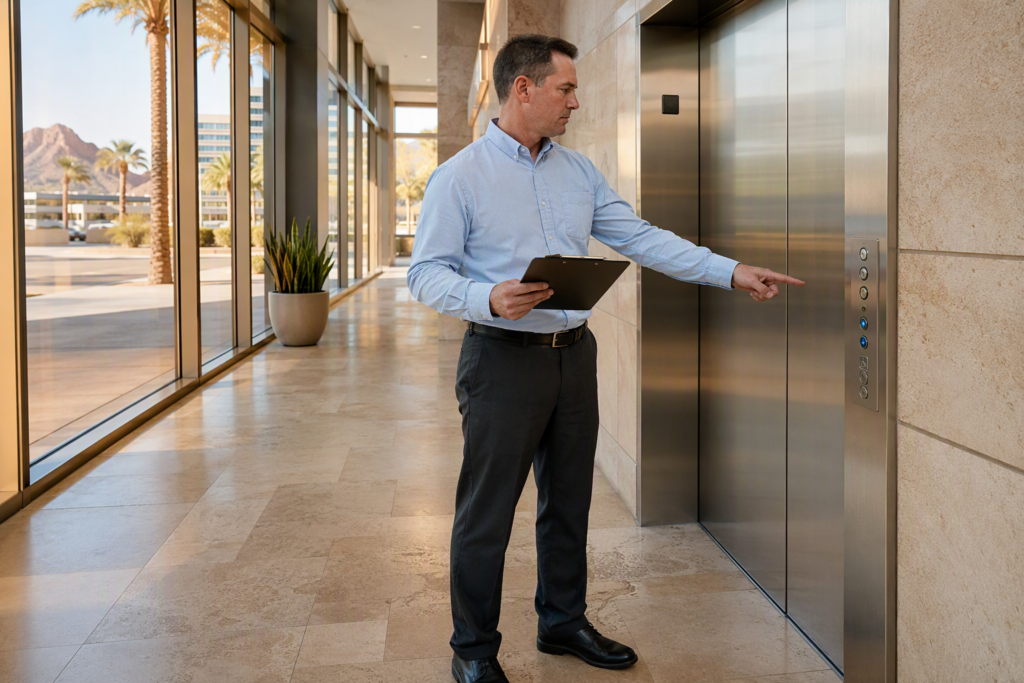
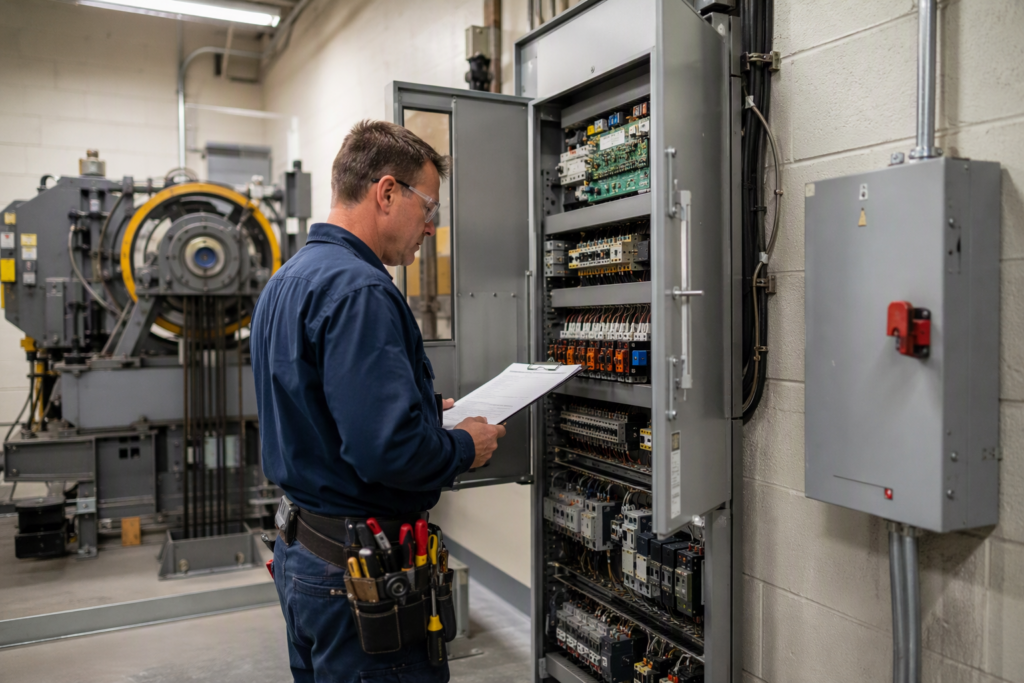
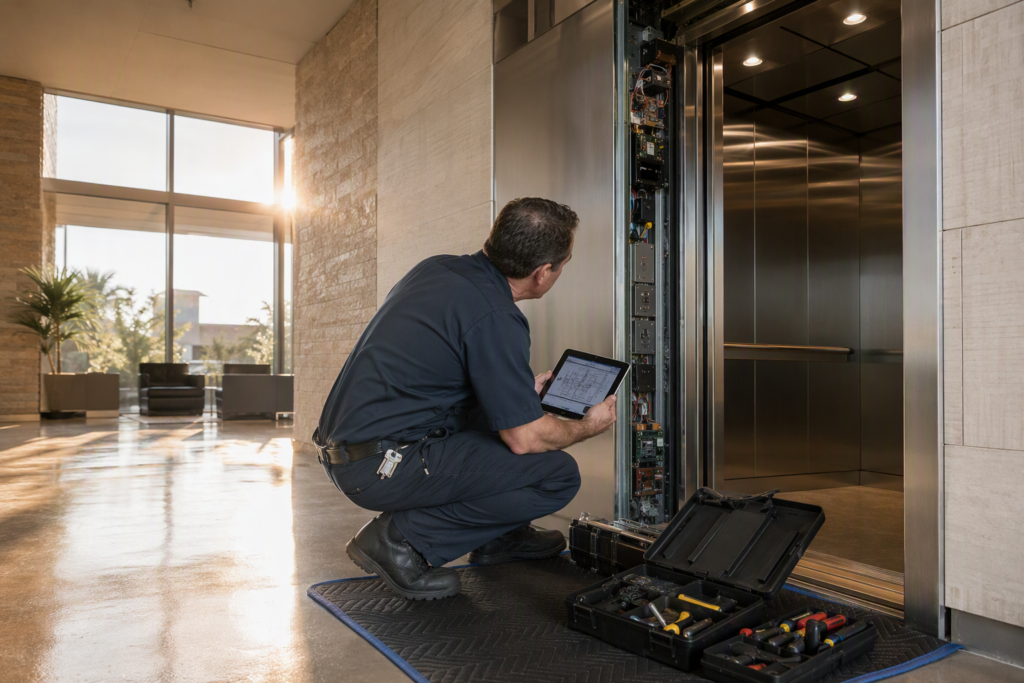
- Schedule a condition assessment. A qualified elevator professional inspects the hoistway, pit, machine room, mechanical components, controls, doors, and cab. Document all deficiencies.
- Review code compliance status. Compare the current installation against applicable ASME A17.1 Safety Code for Elevators and Escalators requirements and ADA accessibility standards to identify all deficiencies that must be resolved.
- Obtain detailed modernization scope and cost. A qualified contractor prepares a component-by-component modernization scope tied directly to identified deficiencies and desired performance improvements.
- Obtain a full replacement bid. Request a side-by-side replacement proposal for the same performance and compliance outcome.
- Compare total cost of ownership. Factor in not just installation costs but expected maintenance costs, remaining useful life, energy costs, and future capital expenditure under each scenario.
- Evaluate downtime impact. Quantify the operational cost of extended elevator outage for your specific building type and occupancy.
- Review financing and incentive options. Consult with your financial advisor regarding capital budgeting, depreciation treatment, and any applicable energy efficiency incentives.
- Make a documented decision. Record the basis for the decision in writing for building records, insurance purposes, and future capital planning.
- Execute the project with a certified contractor. Ensure all work is permitted, inspected, and signed off by the authority having jurisdiction before returning the elevator to service.
—
What Code and Compliance Issues Drive the Decision?
Code compliance is often the trigger for both modernization and replacement projects. In Arizona, elevator installations are regulated under adopted editions of the ASME A17.1 Safety Code for Elevators and Escalators. When a modernization is performed, the upgraded components must meet the current code edition in effect at the time of the permit. This can trigger additional compliance requirements on adjacent systems.
Accessibility requirements under the Americans with Disabilities Act apply to both modernization and replacement projects. Door width, cab dimensions, control panel height, and Braille signage requirements must all be evaluated as part of any scope of work.
Workplace safety standards from OSHA govern the safety of technicians performing installation and maintenance work, which is a factor in selecting a qualified, compliant contractor.
A common compliance-driven scenario: replacing only the control system may trigger requirements to also upgrade the door operator, safeties, or other interconnected systems to meet current code. Understanding these code interactions before committing to a scope is essential — and is a core part of the assessment process Arizona Elevator Solutions performs before recommending any path forward.
—
How Does Energy Efficiency Factor Into the Decision?
Energy consumption is a meaningful long-term consideration, particularly for buildings with high elevator utilization. Older hydraulic systems and relay-logic-controlled traction elevators are considerably less efficient than systems equipped with modern variable-frequency drives (VFDs), LED lighting, and standby power management.
A modernization project that replaces the drive system and controls can deliver substantial energy savings compared to the original system. A full replacement with a current-generation machine-room-less (MRL) or gearless traction system can achieve the highest efficiency levels available. The relevance of this factor depends on the building’s energy costs, elevator duty cycle, and sustainability goals.
Arizona Elevator Solutions can help building owners model the energy performance difference between modernization and replacement options as part of a comprehensive assessment.
—
How Should Building Owners Evaluate Contractors for This Work?
The quality of the contractor performing modernization or replacement work directly affects safety, code compliance, project outcomes, and long-term reliability. Building owners should verify the following when evaluating contractors:
- The contractor holds all required state and local licenses for elevator work in Arizona.
- The contractor has direct experience with the type of equipment in the building (hydraulic, traction, MRL, etc.).
- The contractor is independent and not tied exclusively to a single equipment manufacturer, ensuring unbiased recommendations.
- The contractor manages the permitting process and coordinates directly with the authority having jurisdiction.
- The contractor provides a written scope of work tied explicitly to code compliance and performance outcomes.
- Post-project maintenance and service support are available from the same contractor.
Arizona Elevator Solutions is an independent, certified elevator service company serving Arizona building owners. As an independent provider, Arizona Elevator Solutions is not tied to any single manufacturer, which means assessments and recommendations are based on what is genuinely best for the client’s building and budget — not on equipment sales incentives.
—
What Questions Should You Ask Before Committing to Either Path?
Use these questions as a framework when reviewing proposals from any elevator contractor:
- What is the current condition and estimated remaining useful life of the hoistway, pit, and machine room?
- Which specific components are failing or out of compliance, and which are still serviceable?
- Will the proposed modernization scope achieve full code compliance, or will additional work be required?
- What are the expected maintenance costs over the next ten years under each scenario?
- What is the realistic downtime under each approach, and can phasing reduce occupant impact?
- Are replacement parts for existing components still available and at what cost?
- What warranty coverage is provided on modernization components vs. a full replacement system?
- Who will manage permitting, inspection coordination, and sign-off with the authority having jurisdiction?
—
Summary: How to Choose Between Modernization and Full Replacement
There is no universal answer to the modernization vs. replacement question. The right decision depends on the specific condition of the existing installation, the compliance gaps that must be resolved, the building’s operational needs, and the owner’s long-term capital strategy. A detailed, independent condition assessment is the essential first step — and it is the only reliable basis for making this decision.
As a general guide:
- Choose modernization when the structure is sound, the system is mid-life, and targeted upgrades will restore compliance, reliability, and performance at a lower cost than replacement.
- Choose full replacement when the system is at end-of-life, the structure is compromised, modernization costs approach replacement costs, or a clean-slate installation better serves the building’s long-term needs.
Arizona Elevator Solutions provides free, independent elevator assessments to help Arizona building owners make this decision with complete information — not with a sales agenda. The team evaluates the existing installation, identifies all code and performance gaps, and presents both paths with honest, documented recommendations.
—
Get a Free Elevator Assessment from Arizona Elevator Solutions
Do not guess whether your elevator needs modernization or full replacement. A professional assessment from Arizona Elevator Solutions gives you the documented facts you need to make the right decision for your building and your budget.
Contact Arizona Elevator Solutions for a free elevator assessment: 480-557-7600
Need elevator service you can rely on? Arizona Elevator Solutions is ready to help.