Office Building Elevator Inspection Schedule: Requirements, Frequencies, and Compliance Guide
Elevator inspections in office buildings are not optional — they are a legally mandated safety requirement that protects occupants, limits liability, and keeps equipment operating reliably. Understanding the correct inspection schedule, what each inspection type covers, and what happens when deadlines are missed is essential for every commercial property manager, facilities director, and building owner.
Arizona Elevator Solutions provides data-driven inspection, maintenance, and compliance support for office buildings across Arizona, helping property teams navigate the layered requirements of state codes, ASME standards, and local authority jurisdiction.
What Is the Standard Elevator Inspection Schedule for Office Buildings?
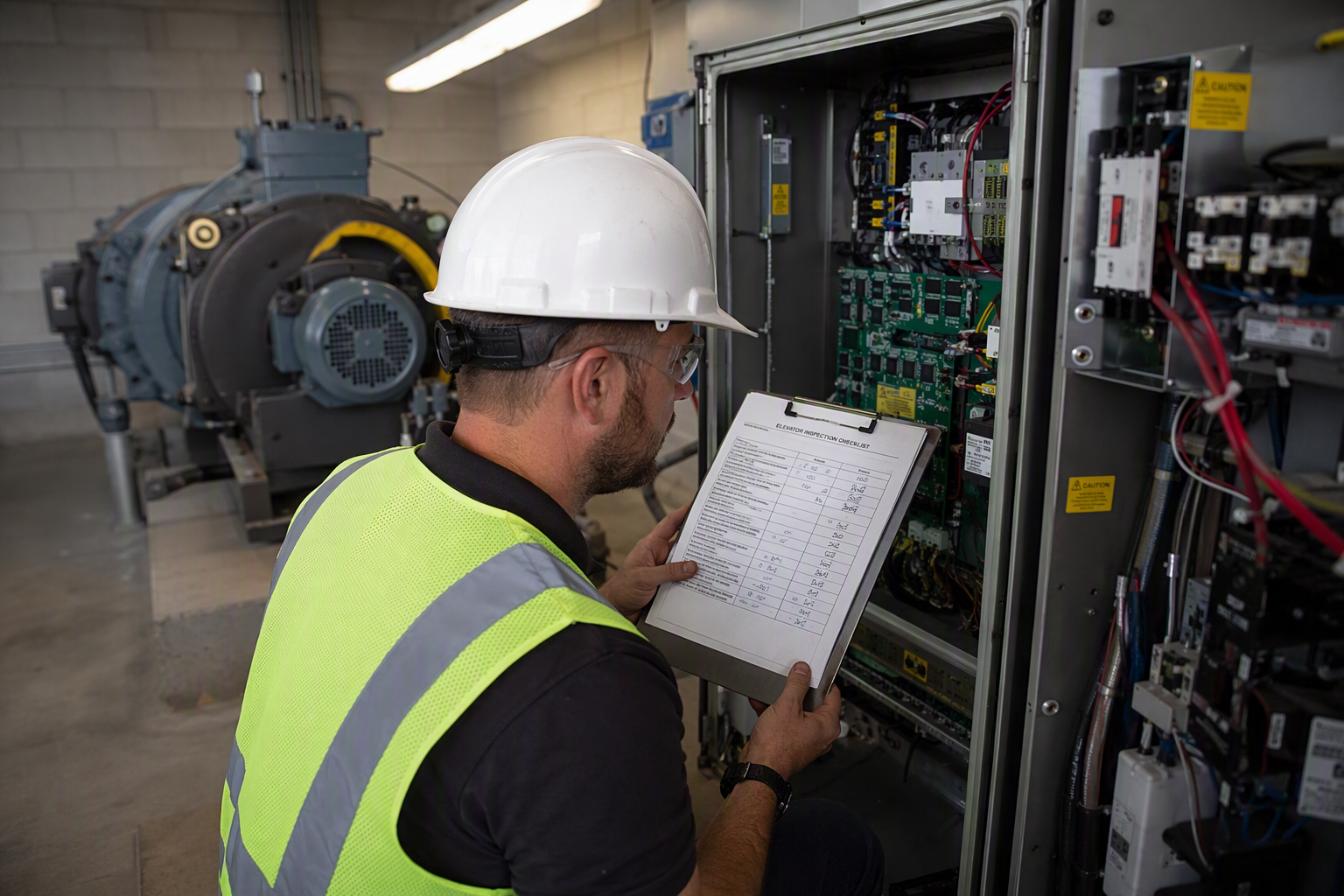
The foundational reference for elevator inspection schedules in the United States is the ASME A17.1 Safety Code for Elevators and Escalators, which is adopted — with or without amendments — by most U.S. states and municipalities. Under this framework, office building elevator inspections generally follow a tiered structure:
- Periodic inspections: Typically required at least annually, conducted by a licensed or certified elevator inspector, covering all safety-critical components of the elevator system.
- Periodic tests: More intensive functional and load tests required at defined intervals — some tests are annual, others occur on multi-year cycles (commonly every one to five years depending on the test type and jurisdiction).
- Maintenance visits: Separate from inspections, these are required at regular intervals defined either by the code, the maintenance contract, or the equipment manufacturer — and must be documented.
- Witnessing by the Authority Having Jurisdiction (AHJ): Certain tests must be witnessed by the local AHJ or a certified third-party inspector; the frequency depends on state and local adoption of ASME A17.1.
Because each state and municipality adopts its own version of ASME A17.1 — sometimes with local amendments — the exact intervals vary by location. In Arizona, the state elevator safety program administers inspection requirements and issues certificates of operation upon passing inspection. Property managers should confirm current intervals directly with the Arizona Department of Occupational Safety and Health or their local AHJ.
What Does ASME A17.1 Actually Require for Periodic Inspections?
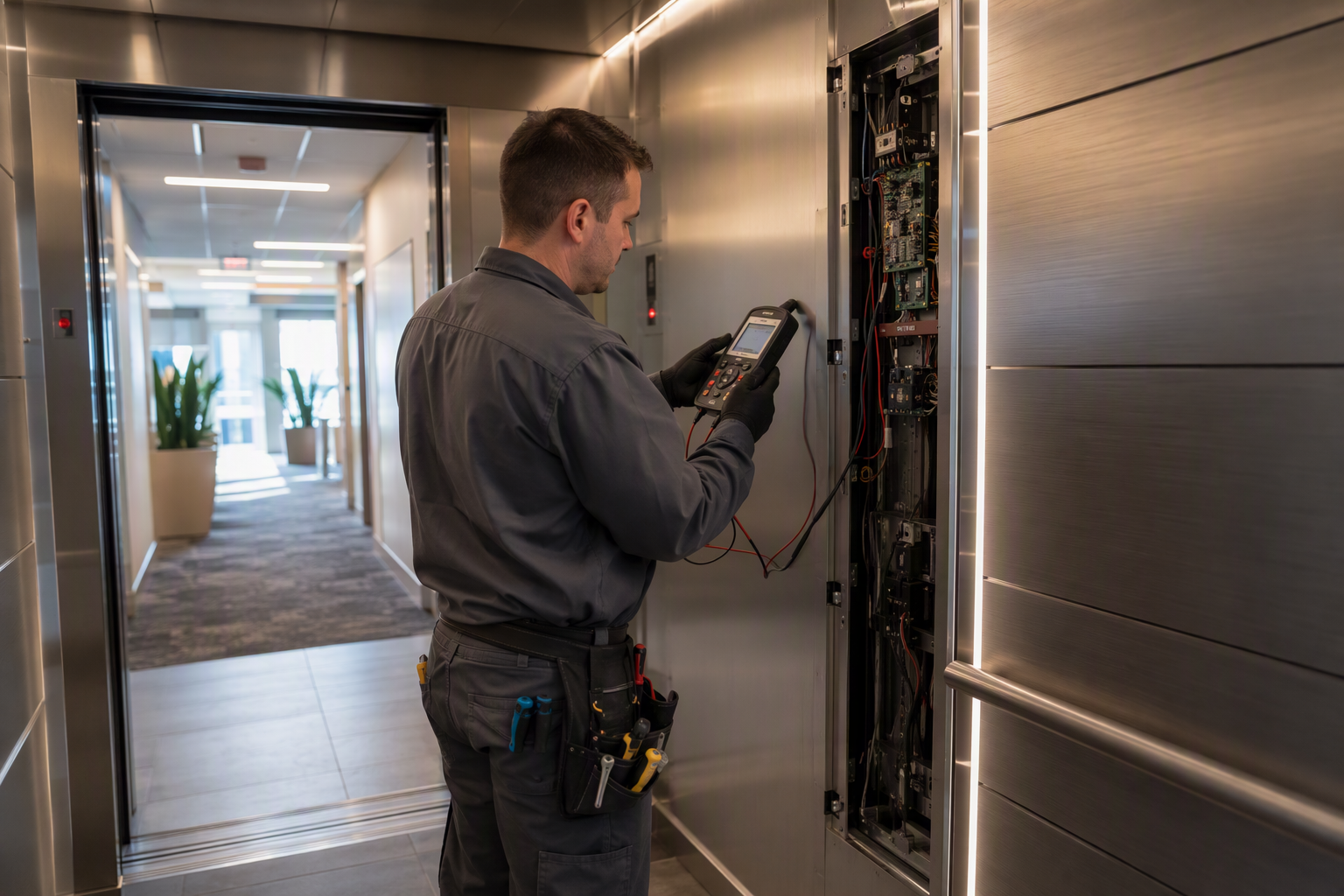
The ASME A17.1 Safety Code for Elevators and Escalators outlines specific inspection and test categories for electric traction elevators, hydraulic elevators, and other conveying systems commonly found in office buildings. The code distinguishes between:
- Periodic inspections — a visual and operational review of all accessible components, safety devices, doors, lighting, and emergency systems.
- Category 1 tests — annual no-load safety device tests, including governor and safeties on traction elevators.
- Category 3 tests — periodic governor and safety tests with load, on a cycle defined by the code edition and local adoption.
- Category 5 tests — full-load safety tests conducted at longer intervals, requiring careful coordination with building operations due to the intensity of the test.
- Hydraulic pressure tests — required for hydraulic elevator systems at intervals specified by the adopted code.
The specific year of the code edition adopted by a jurisdiction (for example, the 2019 edition of ASME A17.1) governs which test intervals apply. Property managers operating in 2026 should verify which edition their jurisdiction has currently adopted, as updates can shift test frequencies and documentation requirements.
Why Does the Inspection Schedule Differ Between Office Buildings?
Several factors influence exactly how an inspection schedule is structured for a specific office building:
- Elevator type: Hydraulic, traction, machine-room-less (MRL), and limited-use/limited-application (LULA) elevators each have distinct inspection and test protocols under ASME A17.1.
- Jurisdiction: The state, county, or city AHJ may impose stricter intervals than the base ASME standard.
- Number of units: Buildings with multiple elevators must track and schedule inspections for each unit individually — certificates are issued per unit, not per building.
- Age and condition of equipment: Older equipment may trigger additional compliance requirements, especially if it has not been modernized to meet current safety standards.
- Occupancy and use intensity: High-traffic office towers log more cycles per day, which some jurisdictions factor into maintenance frequency guidance.
- Certificate expiration dates: Each unit’s current certificate of operation drives the next due date; these dates may be staggered across units in the same building.
What Happens If an Office Building Misses Its Elevator Inspection Deadline?
Failing to maintain a current certificate of operation for an elevator in an office building carries serious consequences:
- Shutdown orders: The AHJ has authority to order an elevator out of service until a passing inspection is completed and a new certificate is issued.
- Fines and penalties: Operating an elevator without a valid certificate typically results in administrative fines, the amount of which varies by jurisdiction.
- Increased liability exposure: In the event of an incident involving an elevator operating without a current certificate, the property owner’s legal and insurance liability is substantially heightened.
- Insurance complications: Commercial property and general liability insurers may deny or reduce coverage for incidents involving non-compliant elevator equipment.
- Tenant and occupant concerns: Elevator shutdowns in multi-tenant office buildings create immediate operational disruptions and can trigger lease compliance questions.
Arizona Elevator Solutions works with commercial property teams to establish proactive inspection calendars that prevent lapses in certification — keeping elevators operational and buildings compliant.
How Should a Building Manager Prepare for an Office Elevator Inspection?
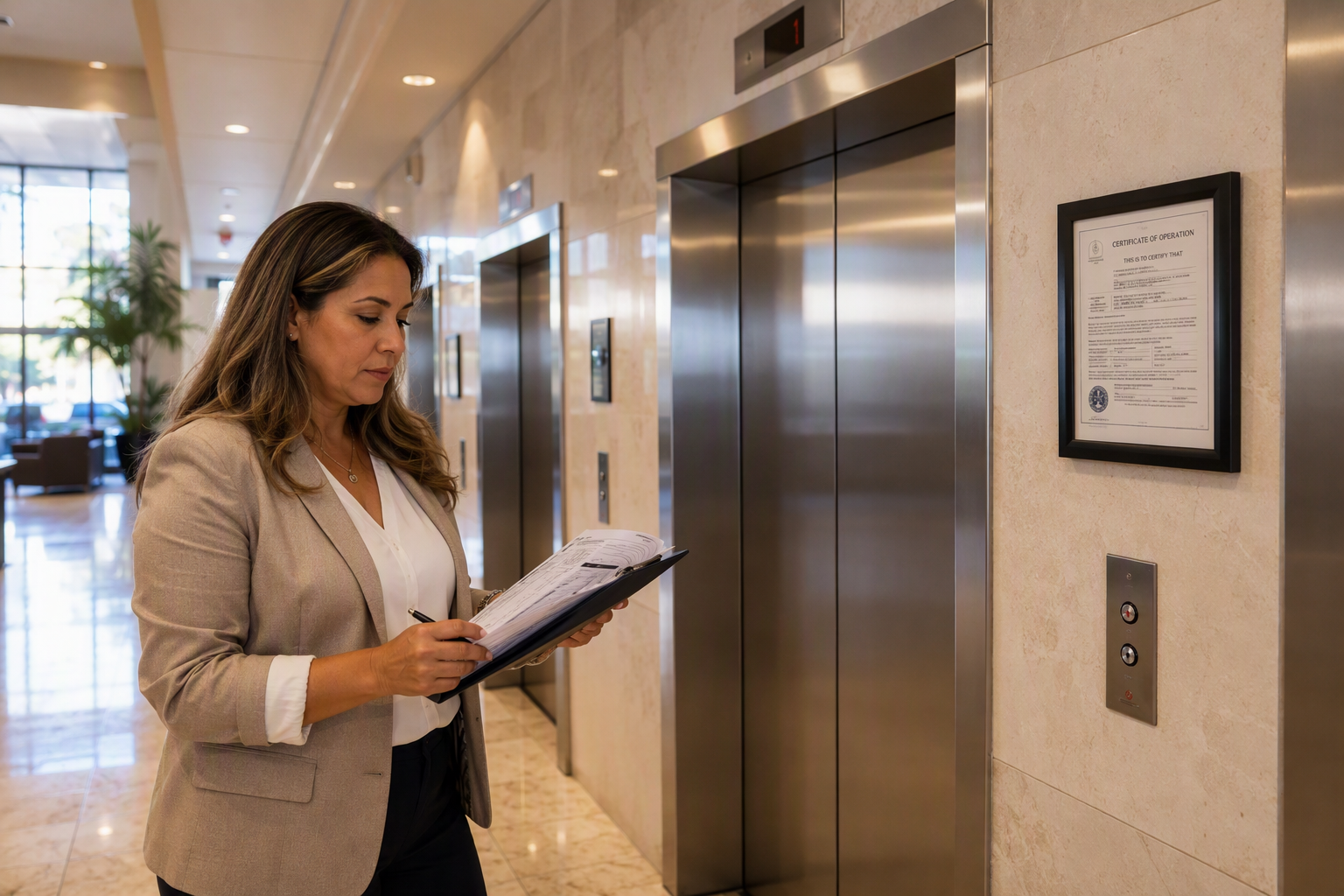
- Audit current certificates: Locate the certificate of operation for every elevator unit in the building and note each expiration date.
- Review maintenance records: Confirm that all required maintenance visits are documented and up to date; inspectors review maintenance logs as part of the inspection.
- Identify any outstanding violations: Pull the most recent inspection report and verify that all noted deficiencies have been corrected and documented.
- Coordinate with your maintenance contractor: Confirm the elevator contractor has completed all required pre-inspection maintenance and that the equipment is in proper operating condition.
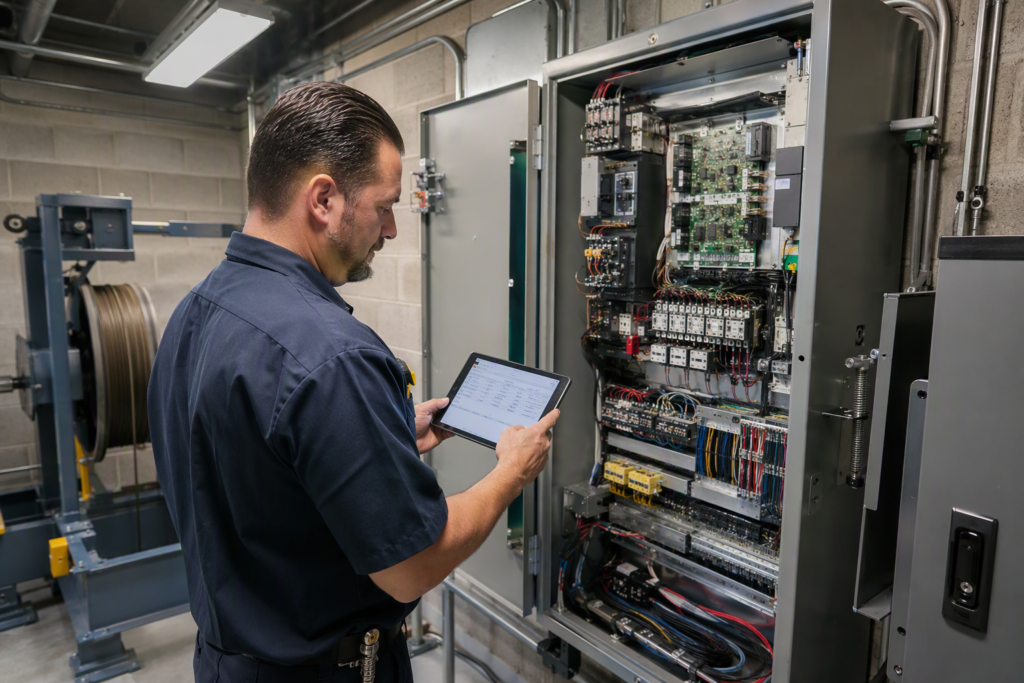
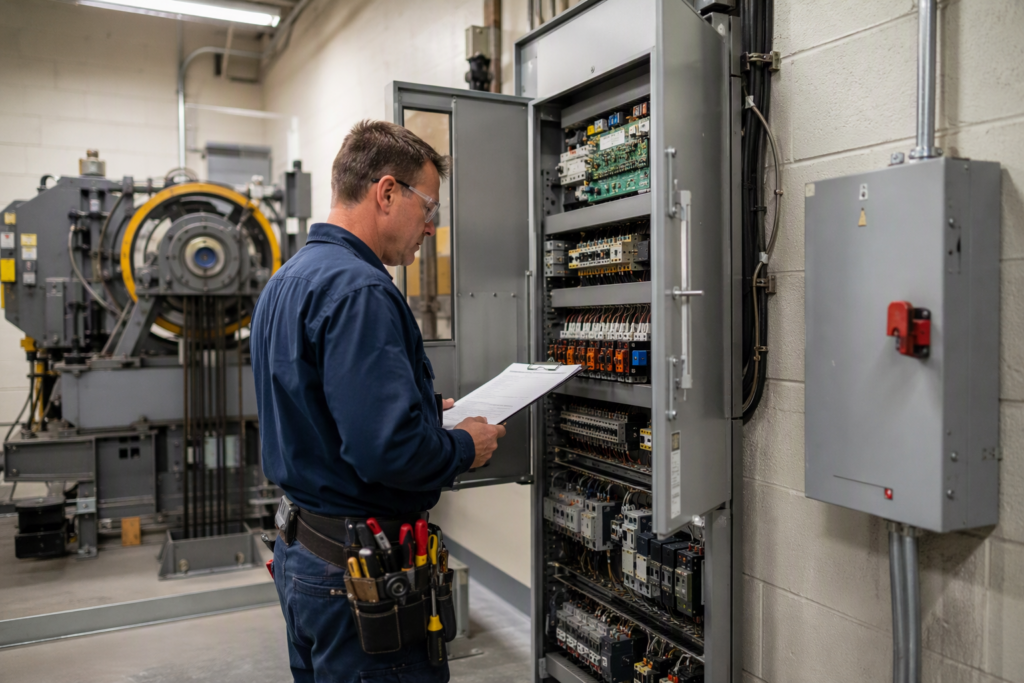
- Clear the machine room and pit: Ensure the machine room, pit, and all elevator equipment areas are accessible, properly lit, and free of unauthorized storage — inspectors require full access.
- Gather required documentation: Have the previous inspection report, test records, maintenance logs, and any modernization permits available for the inspector.
- Notify building occupants if needed: For Category 5 or load tests, brief planned downtime may be required; communicate this to tenants in advance.
- Confirm the inspection appointment with the AHJ or third-party inspector: Verify the scheduled date, required personnel, and any special requirements for the inspection type.
- Follow up on the inspection report promptly: After the inspection, review the written report immediately and schedule any corrective work before the deadline specified by the inspector or AHJ.
What Is the Difference Between an Elevator Inspection and Elevator Maintenance?
These two activities are often confused but serve distinct purposes under code and in practice:
Elevator inspections are conducted by a licensed or certified elevator inspector — a third party or government official — who evaluates whether the elevator meets all applicable safety code requirements. The result is a pass or fail determination and a written report. A passing inspection yields a certificate of operation issued by the AHJ.
Elevator maintenance is the ongoing, proactive work performed by a licensed elevator mechanic or maintenance contractor to keep equipment functioning correctly, safely, and efficiently. Maintenance includes lubrication, adjustment, component testing, cleaning, and minor repairs on a scheduled basis.
Both are required. Inspections verify compliance; maintenance sustains the condition that makes passing inspections possible. The ASME A17.1 Safety Code for Elevators and Escalators addresses both, and many jurisdictions require maintenance records to be available during inspections.
How Do ADA Requirements Interact With the Elevator Inspection Schedule?
The Americans with Disabilities Act (ADA) requires that elevators serving as the accessible route in covered facilities remain operational and accessible. While the ADA does not itself set inspection intervals, it creates a compliance obligation that intersects with the inspection schedule in several ways:
- An elevator taken out of service for failing inspection must be repaired promptly; extended outages on accessible routes can constitute an ADA compliance failure.
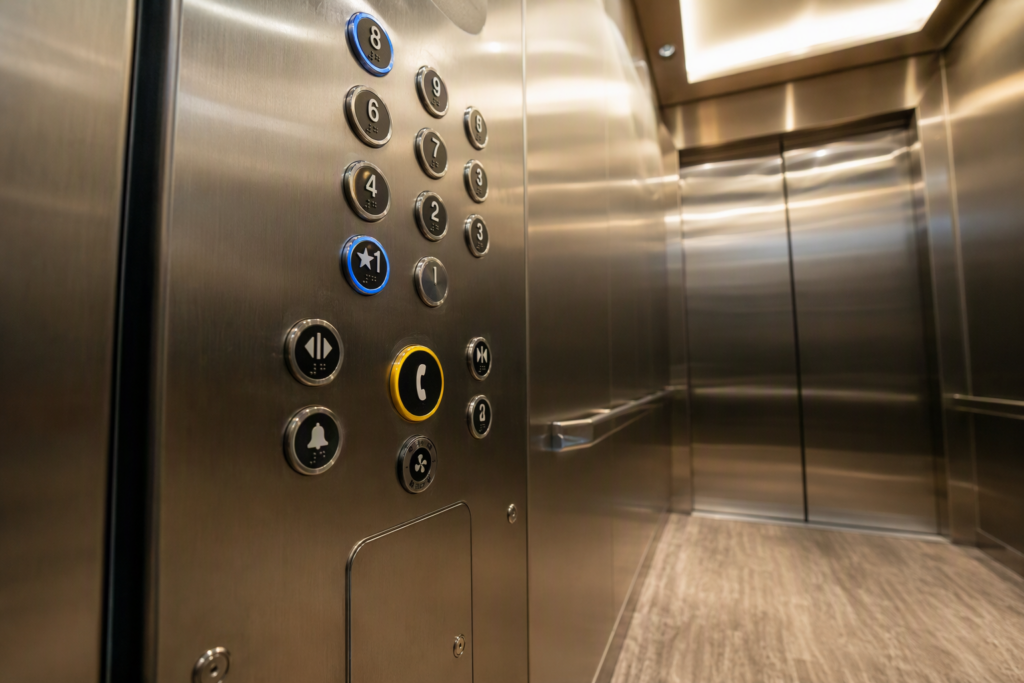
- ADA-required features — including accessible control panels, proper door timing, and Braille markings — are reviewed during inspections and must be maintained.
- Modernization projects triggered by inspection findings must incorporate current ADA standards for the upgraded components.
Property managers should treat ADA elevator accessibility as a parallel compliance obligation that runs alongside — not separate from — the routine inspection schedule.
What Are the OSHA Considerations for Elevator Inspections in Office Buildings?
While OSHA primarily governs workplace safety for workers who maintain or operate elevators rather than for general building occupants, OSHA requirements are directly relevant to:
- Elevator mechanics and inspectors working in machine rooms, pits, and on top of cars — OSHA standards govern fall protection, confined space entry, lockout/tagout, and electrical safety in these environments.
- Building maintenance staff who perform any work adjacent to or on elevator equipment must comply with OSHA general industry standards.
- Incident reporting: Workplace injuries involving elevator equipment in commercial buildings may trigger OSHA recordkeeping and reporting obligations for the employer.
Ensuring that all inspection and maintenance activities are conducted by properly trained, credentialed personnel is both a code requirement and an OSHA obligation.
How Should Office Buildings Track and Document Their Elevator Inspection Schedule?
Effective documentation is the backbone of elevator compliance for multi-elevator office buildings. Best practices include:
- Maintaining a centralized compliance calendar that tracks certificate expiration dates, test due dates, and maintenance visit schedules for every unit.
- Storing original inspection reports, test records, and maintenance logs in a designated, accessible file — either physical or digital — and retaining them for the period required by the jurisdiction.
- Displaying current certificates of operation in each elevator cab as required by local code.
- Tracking deficiency correction deadlines and documenting completion with dated work orders.
- Conducting an internal compliance review at least annually to confirm that all records are current before the next inspection cycle begins.
Arizona Elevator Solutions assists commercial clients in building and maintaining compliant documentation systems that withstand AHJ scrutiny and support smooth renewal cycles.
What Industry Trends Are Shaping Office Building Elevator Inspections in 2025–2026?
Several meaningful shifts are influencing how office building elevator inspections are scheduled and conducted heading into 2026:
- Remote monitoring and predictive maintenance: Building owners are increasingly adopting connected elevator monitoring platforms that provide real-time performance data. While this does not replace periodic inspections, it allows maintenance teams to identify developing issues between inspection cycles and demonstrate documented care to inspectors.
- Digital inspection records: Many jurisdictions and inspection firms are moving toward fully digital inspection reports and electronic record submission, reducing administrative burden and improving traceability.
- Code adoption updates: As jurisdictions continue updating to newer editions of ASME A17.1, building owners need to stay current with any changes in test intervals, documentation requirements, or newly mandated safety devices.
- Modernization pressure: Aging elevator infrastructure in office buildings constructed in the 1980s and 1990s is increasingly triggering modernization requirements as part of inspection findings — a trend that is expected to intensify through 2026.
- Workforce and scheduling demands: Certified elevator inspector availability varies by region; proactive scheduling well ahead of certificate expiration dates is becoming more important as inspection demand grows.
How Does the Inspection Schedule Change When an Office Elevator Is Modernized?
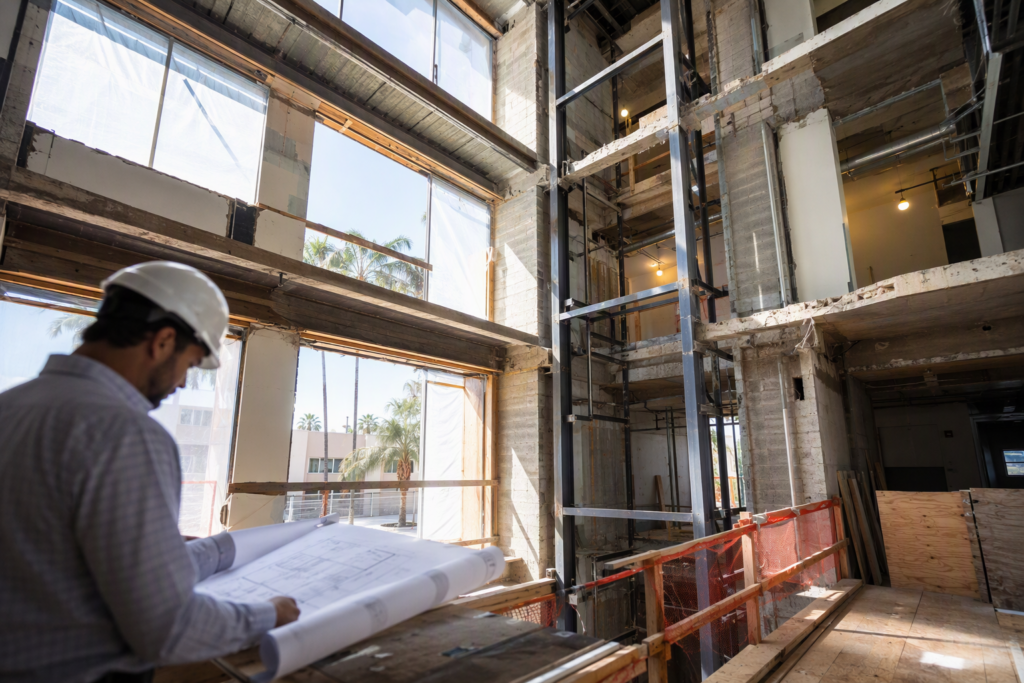
Elevator modernization — replacing major components such as the controller, drive system, or doors — triggers a new inspection and acceptance process before the elevator returns to service. Key points include:
- A permit is required before modernization work begins in most jurisdictions.
- Upon completion, the modernized elevator must pass an acceptance inspection that verifies all new components comply with the code edition in effect at the time of the permit.
- Passing the acceptance inspection resets the compliance baseline and initiates a new certificate of operation cycle.
- Test categories affected by modernized components (for example, new safety devices requiring Category 5 testing) must be completed as part of the acceptance process.
Why Choose a Data-Driven Elevator Service Provider for Inspection Compliance?
Managing elevator inspection schedules across a commercial office portfolio requires precision, documentation discipline, and deep familiarity with the applicable code requirements. Arizona Elevator Solutions approaches compliance management with a data-driven methodology — tracking each unit’s inspection history, test due dates, and certificate status to ensure no deadline is missed and no deficiency goes unaddressed.
For office building owners and property managers in Arizona, partnering with a service provider that understands the layered requirements of ASME A17.1, state elevator safety regulations, ADA accessibility obligations, and OSHA workplace safety standards means fewer surprises, faster deficiency resolution, and continuous certificate currency across the entire elevator fleet.
Sourced Reference Data
| Standard / Authority | Relevance to Office Elevator Inspection | Source |
|---|---|---|
| ASME A17.1 Safety Code for Elevators and Escalators | Defines periodic inspection types, test categories (Cat. 1, 3, 5), and maintenance requirements adopted by most U.S. jurisdictions | ASME Codes & Standards |
| Americans with Disabilities Act (ADA) | Requires elevators serving as accessible routes to remain operational; governs cab control requirements and door timing | ADA.gov |
| OSHA General Industry Standards | Governs safety of workers performing elevator inspection and maintenance (fall protection, lockout/tagout, confined space) | OSHA.gov |
Need elevator service you can rely on? Arizona Elevator Solutions is ready to help.