Elevator Service in Phoenix, AZ | Arizona Elevator Solutions
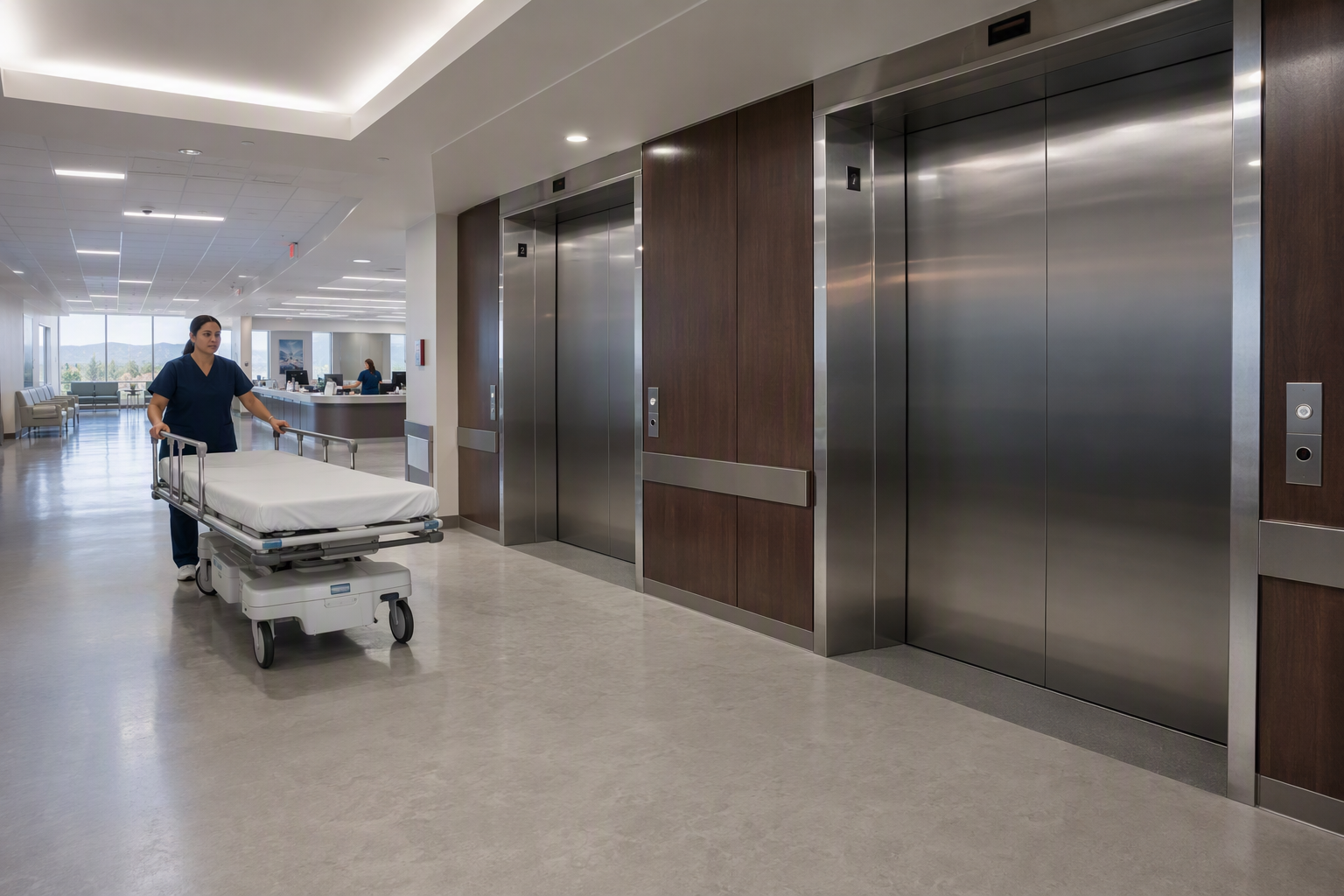
Healthcare facility elevators in Phoenix, AZ are subject to some of the most stringent elevator codes in any industry. Hospitals, outpatient surgical centers, long-term care facilities, and medical office buildings depend on elevators that operate reliably around the clock. Failure to meet applicable codes can result in regulatory action, costly shutdowns, or—most critically—danger to patients, visitors, and clinical staff.
Arizona Elevator Solutions provides comprehensive elevator inspection, maintenance, modernization, and compliance services tailored specifically to the demands of healthcare environments across the Phoenix metropolitan area. Understanding the specific code requirements that govern healthcare facility elevators is the essential first step toward achieving and maintaining compliance in 2026 and beyond.
—
What elevator codes apply to healthcare facilities in Arizona?
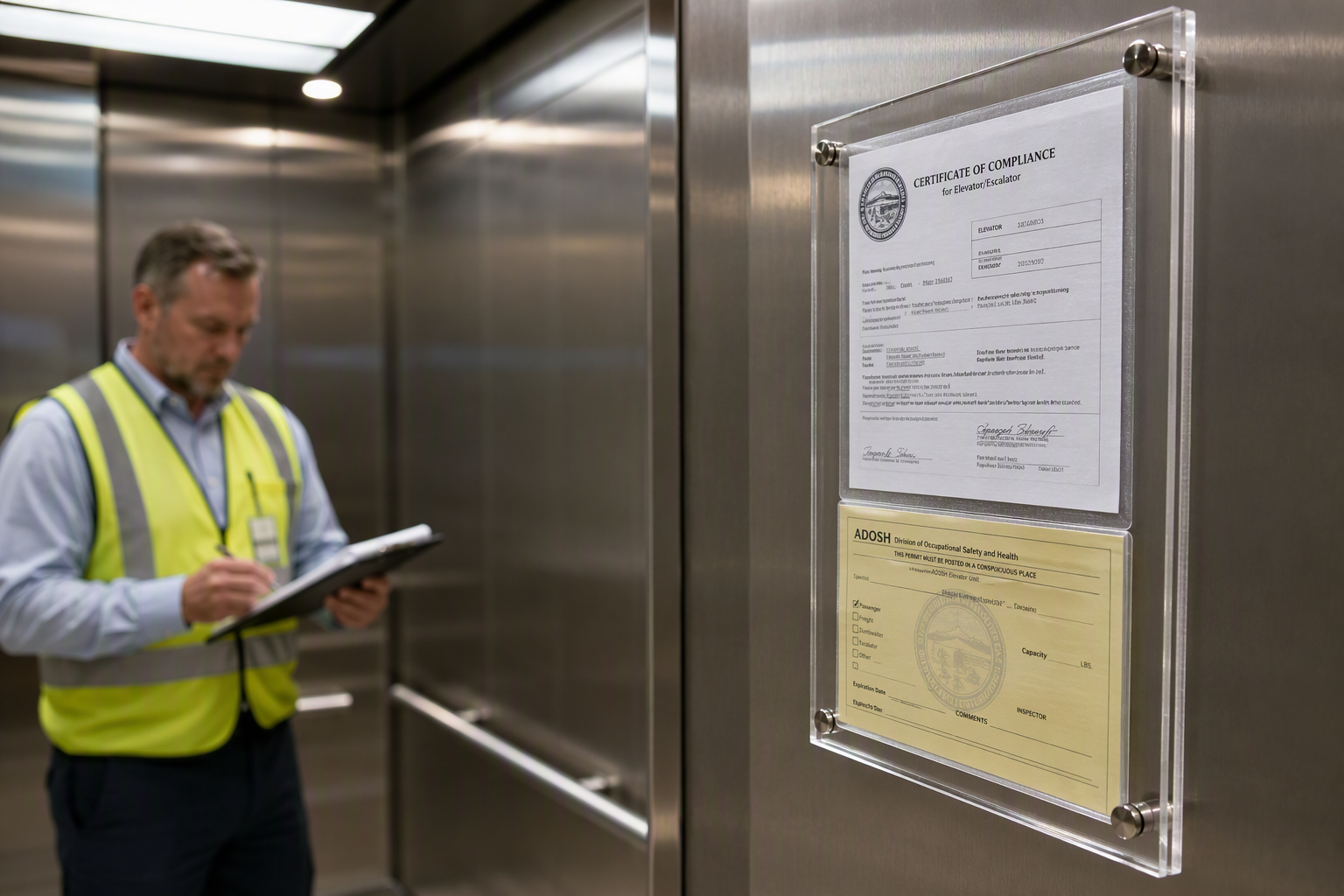
Arizona healthcare facilities must comply with a layered framework of elevator codes and standards. The primary governing document is the ASME A17.1 Safety Code for Elevators and Escalators, which Arizona has adopted as the foundational standard for elevator construction, installation, inspection, and maintenance. Arizona enforces this code through the Arizona Department of Occupational Safety and Health (ADOSH), which aligns its enforcement with OSHA federal guidelines accessible at OSHA.gov.
In addition to ASME A17.1, healthcare facilities must satisfy Americans with Disabilities Act (ADA) accessibility requirements, which mandate specific cab dimensions, control panel heights, door timing, and audible or visual signals to accommodate patients using wheelchairs, stretchers, or mobility aids.
Facilities subject to Centers for Medicare & Medicaid Services (CMS) conditions of participation, Joint Commission accreditation, or state health department licensing may face additional elevator-related requirements layered on top of the base ASME and ADA standards. Arizona Elevator Solutions helps healthcare administrators identify which combination of standards applies to their specific facility type and occupancy classification.
—
How do ASME A17.1 requirements differ for hospital elevators versus standard commercial elevators?
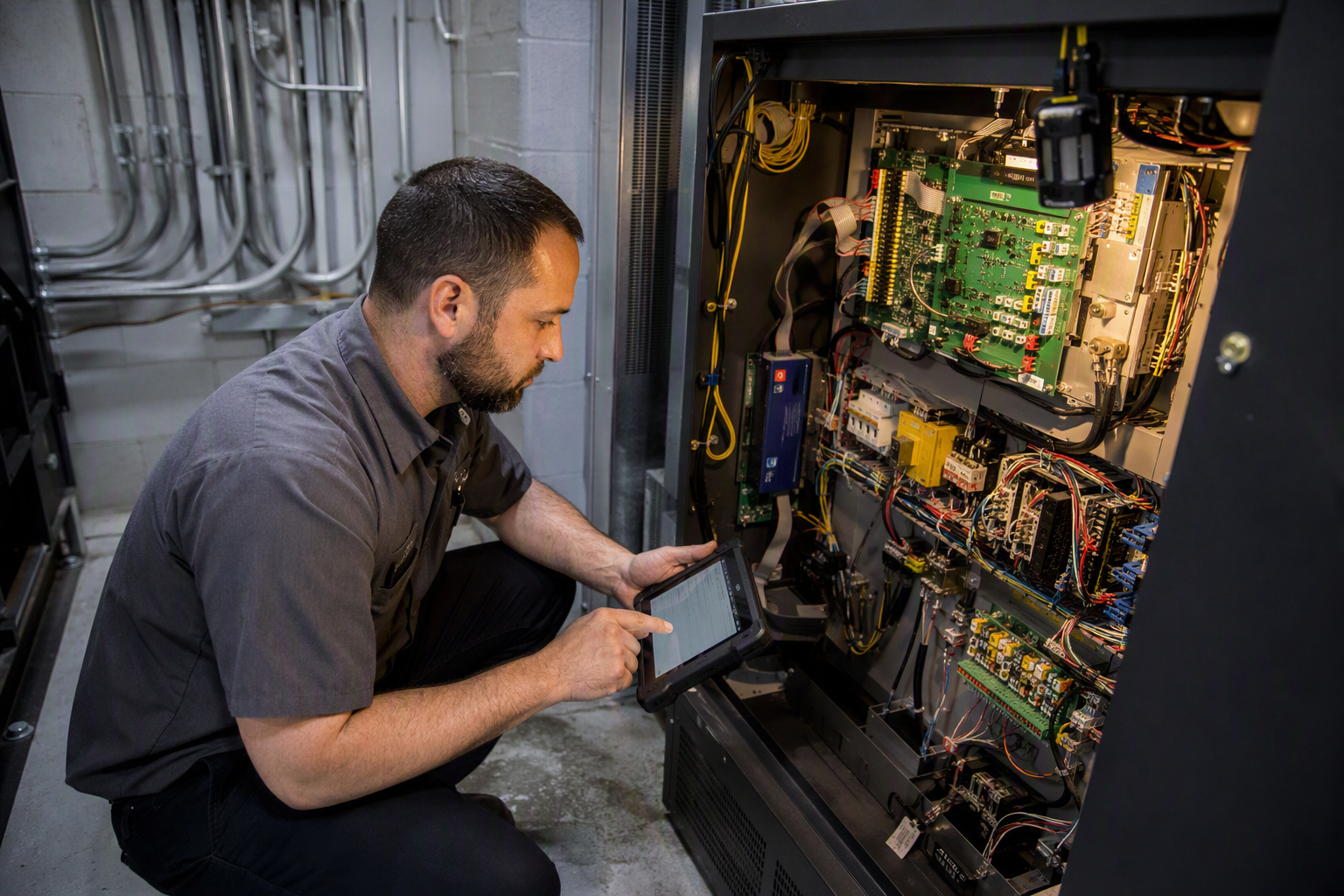
Hospital and healthcare elevators are not simply larger versions of office building elevators. The ASME A17.1 Safety Code for Elevators and Escalators contains provisions that address the unique demands of patient transport, including:
- Cab dimensions: Healthcare elevators must accommodate hospital beds, gurneys, and medical equipment, requiring larger cab interior dimensions than standard commercial units.
- Door hold-open time: Extended door dwell times accommodate patients in wheelchairs or staff transporting equipment—a requirement with direct ADA implications as well.
- Fire service operation (Phase I and Phase II): All elevators in healthcare facilities must have properly functioning firefighters’ emergency operation, allowing fire department personnel to take manual control during emergencies.
- Seismic requirements: Arizona’s seismic zone considerations affect how elevator machinery and cab structures must be engineered and maintained.
- Independent service operation: Many healthcare facilities require dedicated elevator service modes that prioritize patient transport floors during peak clinical hours.
These distinctions make routine commercial elevator experience insufficient for the healthcare environment. Arizona Elevator Solutions understands the intersection of ASME code requirements and healthcare operational demands specific to Phoenix-area facilities.
—
What are the required inspection intervals for healthcare facility elevators in Arizona?
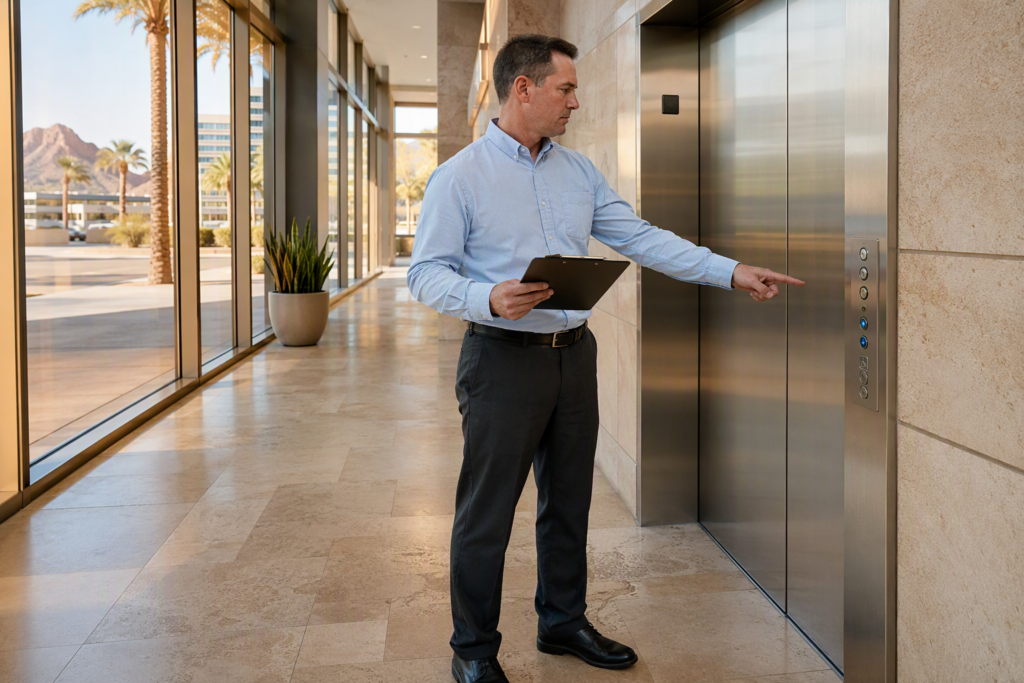
Under Arizona’s adoption of ASME A17.1, elevators in all occupancy types—including healthcare facilities—must undergo periodic inspections conducted by a qualified elevator inspector. These inspections verify that all safety devices, door mechanisms, control systems, and cab components meet current code.
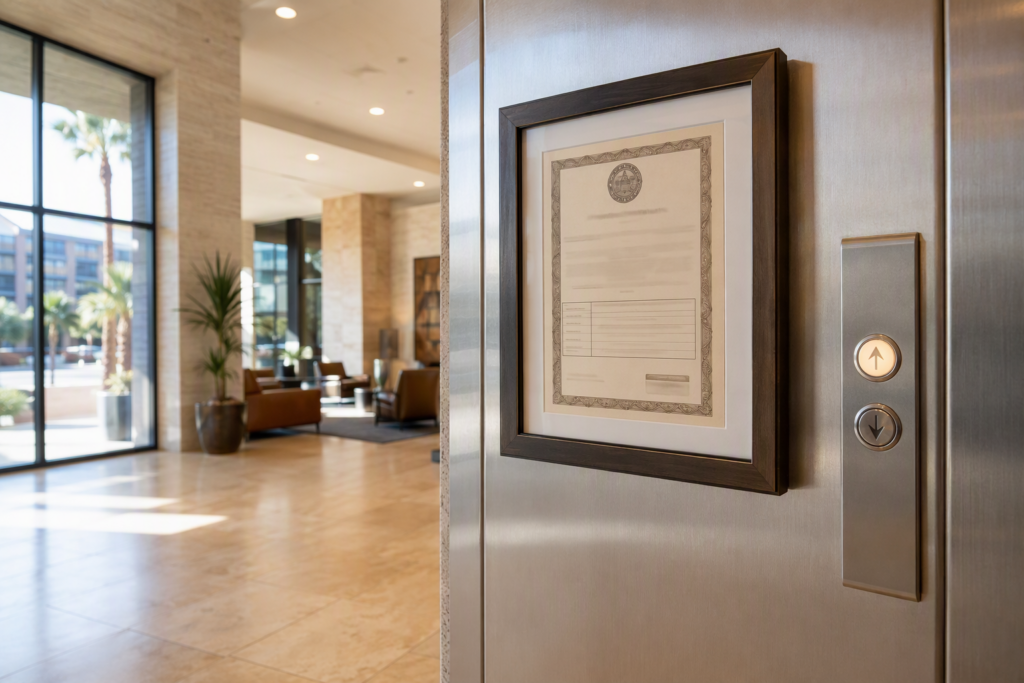
Healthcare facilities in Arizona should maintain documentation of all inspection certificates, which are typically required to be posted or available on-site. ADOSH enforces compliance and has the authority to order an elevator out of service if it fails inspection or if required documentation cannot be produced. For a facility where elevator downtime can directly affect patient care, staying ahead of inspection deadlines is not optional—it is a clinical and operational priority.
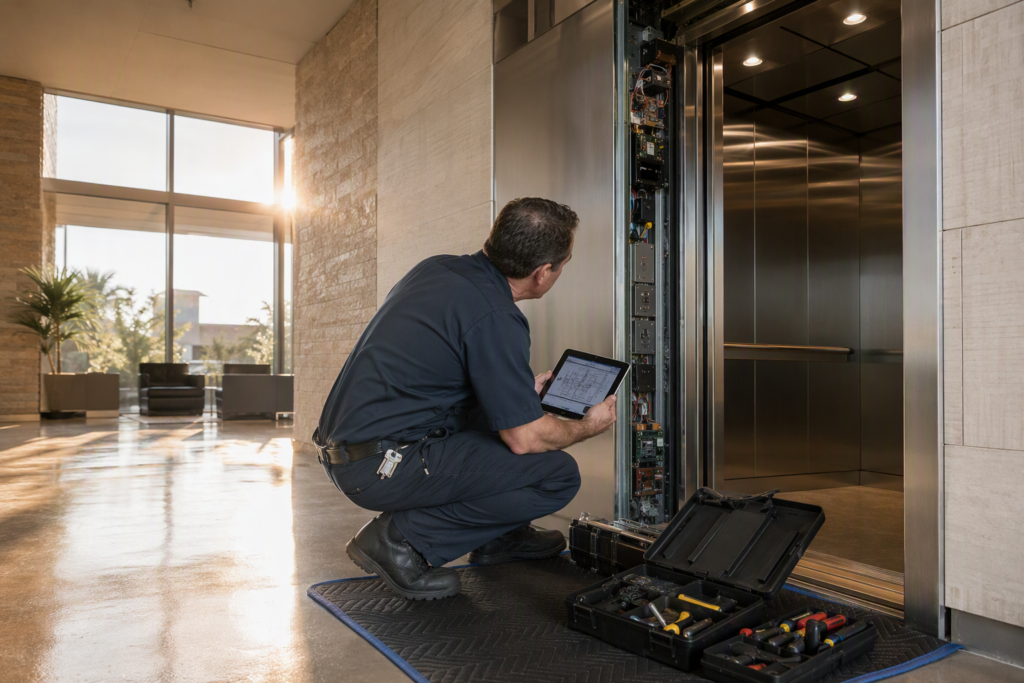
Arizona Elevator Solutions assists healthcare clients in tracking inspection schedules, preparing equipment for inspection, and addressing any deficiencies identified during the inspection process before they escalate into compliance violations.
—
How does ADA compliance apply specifically to healthcare elevator environments?
The Americans with Disabilities Act sets specific accessibility standards that healthcare facility elevators must meet. Key requirements include:
- Call buttons positioned at accessible heights for individuals using wheelchairs
- Visual and audible floor indicators inside the cab and at landings
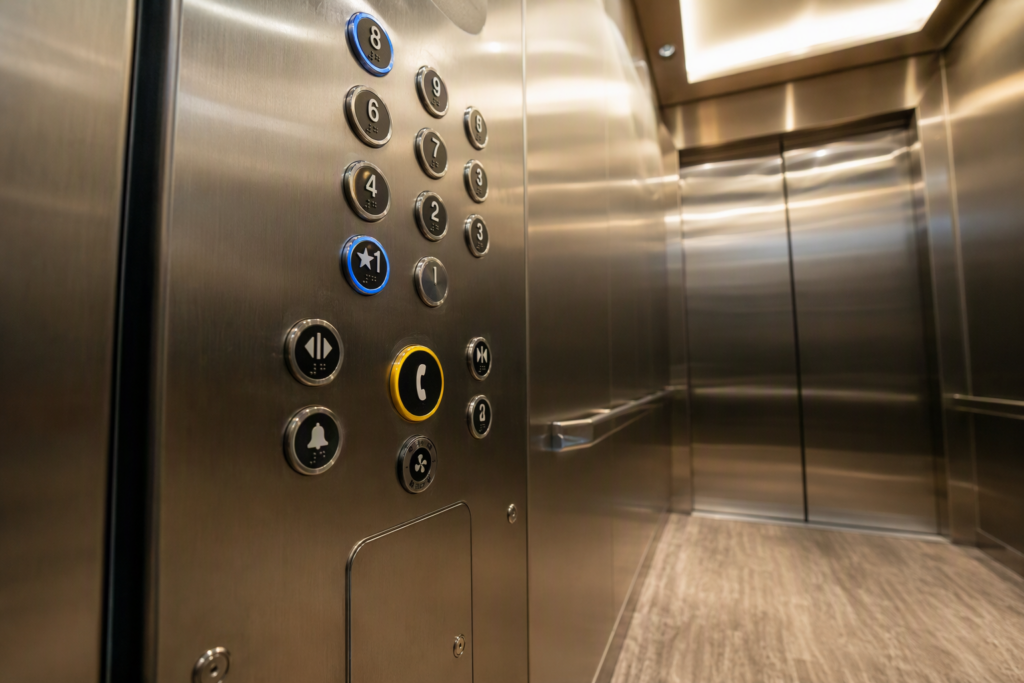
- Braille and raised character markings on control panels
- Door reopening devices that respond to both passenger contact and proximity
- Adequate cab lighting levels
- Two-way emergency communication systems accessible to individuals with hearing or speech impairments
In a healthcare context, ADA compliance is not only a legal obligation—it directly affects patient dignity and safety. Arizona Elevator Solutions evaluates existing healthcare elevator installations against current ADA standards and provides modernization recommendations where gaps exist.
—
What should a healthcare facility do immediately if an elevator fails or goes out of service?
- Remove the elevator from service by posting clear out-of-service signage at all affected landings to prevent patient or staff use.
- Notify clinical leadership so patient transport workflows can be adjusted and alternative vertical access routes can be identified.
- Contact a licensed elevator service provider such as Arizona Elevator Solutions to initiate a service call and diagnostic assessment.
- Document the failure including the time, any error codes displayed, and circumstances leading up to the shutdown—this information assists technicians and supports your compliance records.
- Notify ADOSH or your AHJ (Authority Having Jurisdiction) if the failure involves a safety-related incident, entrapment, or if the elevator has exceeded its allowable out-of-service period under Arizona regulation.
- Do not restore the elevator to service until a qualified elevator mechanic has inspected, repaired, and cleared the unit for operation.
Arizona Elevator Solutions maintains availability for healthcare facility service needs and understands that elevator downtime in a clinical environment carries consequences that extend beyond inconvenience.
—
What does elevator modernization involve for an Arizona healthcare facility?
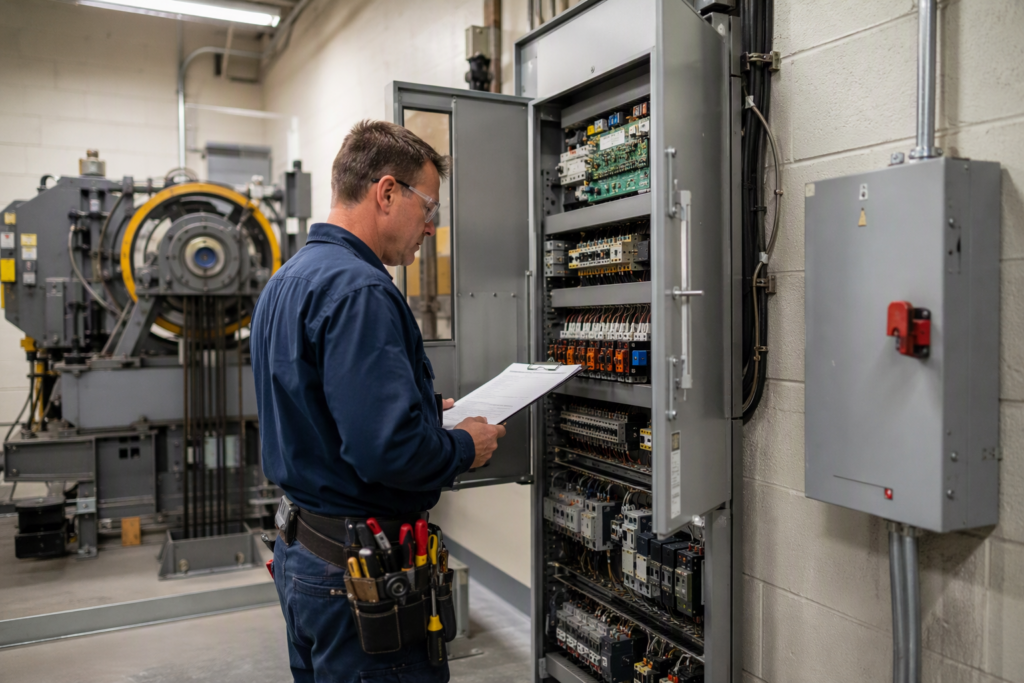
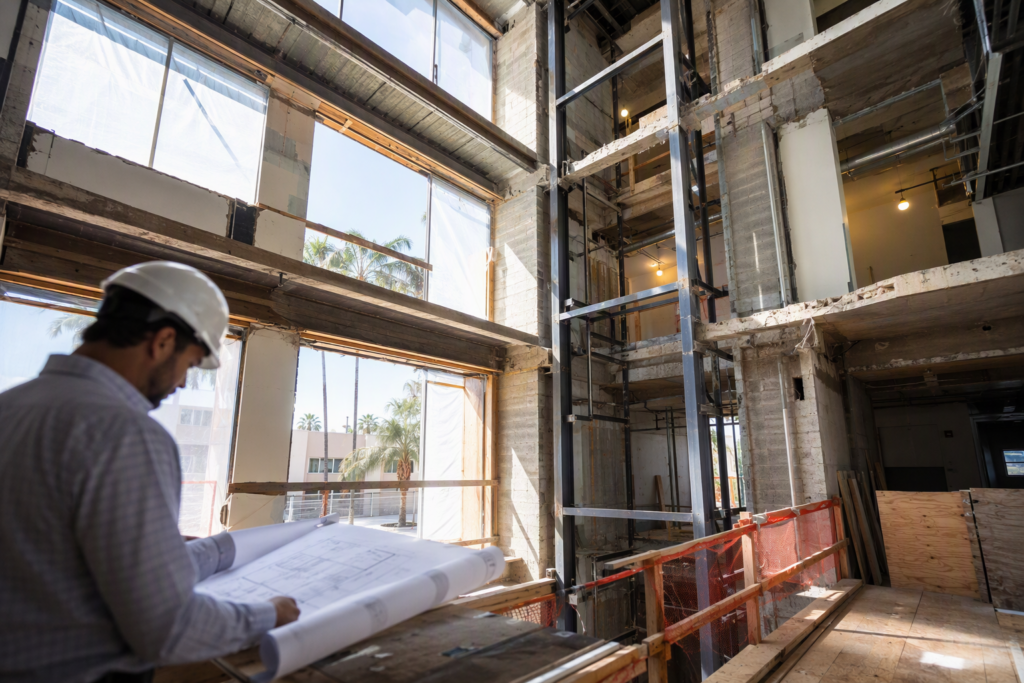
Older healthcare elevators in Phoenix may no longer meet current ASME A17.1 code editions, ADA standards, or the operational requirements of today’s clinical environments. Modernization is the process of upgrading elevator components—ranging from control systems and door operators to cab interiors and machine room equipment—to bring an installation into current compliance and performance standards.
For healthcare facilities, modernization planning must account for:
- Minimizing downtime and scheduling work during low-patient-volume periods
- Phasing projects across multiple elevators so vertical transportation is never fully interrupted
- Ensuring all upgraded components meet the specific dimensional and operational requirements for patient transport
- Coordinating with facility engineers, infection control teams, and clinical leadership
- Obtaining all required permits and passing post-modernization inspection before returning units to service
Arizona Elevator Solutions works directly with healthcare facility managers and engineering departments throughout the Phoenix metro area to plan and execute modernization projects that minimize disruption to patient care operations.
—
How should Phoenix healthcare facilities evaluate an elevator service vendor?
Selecting an elevator service partner for a healthcare facility requires evaluation beyond basic licensing. Healthcare administrators should consider:
- Healthcare-specific experience: Ask whether the vendor has documented experience servicing hospital, surgical center, or long-term care facility elevators—not just commercial or residential units.
- Code familiarity: The vendor should demonstrate clear knowledge of Arizona-adopted ASME A17.1 editions, ADA requirements, and any Joint Commission or CMS-related elevator standards.
- Preventive maintenance programs: A structured preventive maintenance agreement is essential in healthcare settings where unplanned downtime is unacceptable.
- Emergency availability: Confirm that the vendor provides service availability outside standard business hours, given that healthcare facilities operate continuously.
- Compliance documentation: The vendor should provide organized maintenance logs and inspection records that satisfy regulatory and accreditation review requirements.
- Local presence: A Phoenix-based service provider reduces response delays and brings familiarity with local AHJ requirements and ADOSH enforcement patterns.
Arizona Elevator Solutions serves healthcare clients across the Phoenix metropolitan area, including hospitals, outpatient facilities, behavioral health campuses, rehabilitation centers, and medical office buildings.
—
What markets and facility types does Arizona Elevator Solutions serve in the Phoenix area?
Arizona Elevator Solutions provides elevator inspection, maintenance, repair, and modernization services across the Phoenix metropolitan area, serving a wide range of healthcare and institutional facility types, including:
- Acute care hospitals and trauma centers
- Outpatient surgical and ambulatory care centers
- Long-term care and skilled nursing facilities
- Behavioral health and psychiatric facilities
- Rehabilitation hospitals and physical therapy centers
- Medical office buildings and multi-specialty clinics
- Veterans’ care and federally operated healthcare campuses
Beyond healthcare, Arizona Elevator Solutions also serves commercial, residential, and institutional clients throughout the greater Phoenix region, bringing the same commitment to code compliance and operational reliability to every project.
—
Schedule a Free Consultation
Healthcare facility elevator compliance in Arizona is complex—and the consequences of falling short affect patient safety, clinical operations, and regulatory standing. Arizona Elevator Solutions brings focused expertise in healthcare elevator code requirements to facilities across the Phoenix metropolitan area.
Contact Arizona Elevator Solutions today to schedule a free consultation and assess your facility’s current compliance posture, maintenance needs, or modernization opportunities.
Call us at 480-557-7600 — Arizona Elevator Solutions is ready to help your healthcare facility meet every applicable code requirement and keep your elevators operating safely and reliably.
Need elevator service you can rely on? Arizona Elevator Solutions is ready to help.