Senior Living Elevator Requirements: What Arizona Facilities Need to Know
Senior living communities — from independent living apartments and assisted living facilities to memory care centers and skilled nursing facilities — depend on elevators as essential infrastructure, not mere convenience. When an elevator goes out of service or fails a compliance inspection, the safety and dignity of residents are directly affected. This guide covers every compliance dimension, operational consideration, and maintenance requirement that senior living administrators, facility managers, and ownership groups in Phoenix, Tucson, Scottsdale, and Mesa need to understand in 2026.
What Are the Core Compliance Standards for Senior Living Elevators?
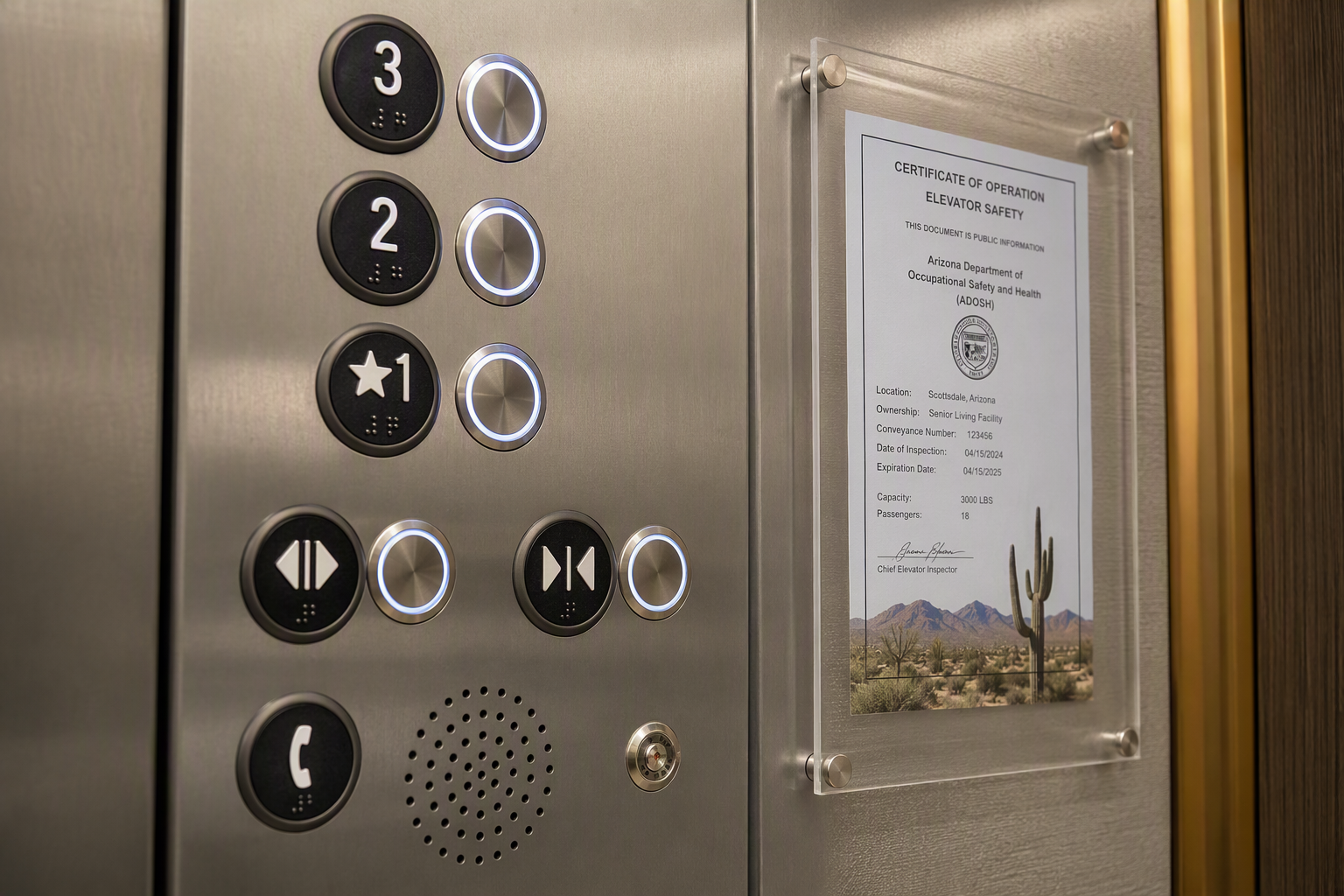
Senior living elevators in Arizona must satisfy a layered framework of federal, state, and industry-specific requirements:
- ASME A17.1 Safety Code for Elevators and Escalators: This is the foundational engineering and safety code governing elevator design, installation, operation, and maintenance across the United States. Arizona adopts this standard by reference through the Arizona Department of Occupational Safety and Health (ADOSH).
- ADA Standards for Accessible Design: The Americans with Disabilities Act mandates accessible elevator features in facilities serving the public or operating as places of employment. For senior living, this covers cab dimensions, door timing, control panel height, Braille markings, and audible signals.
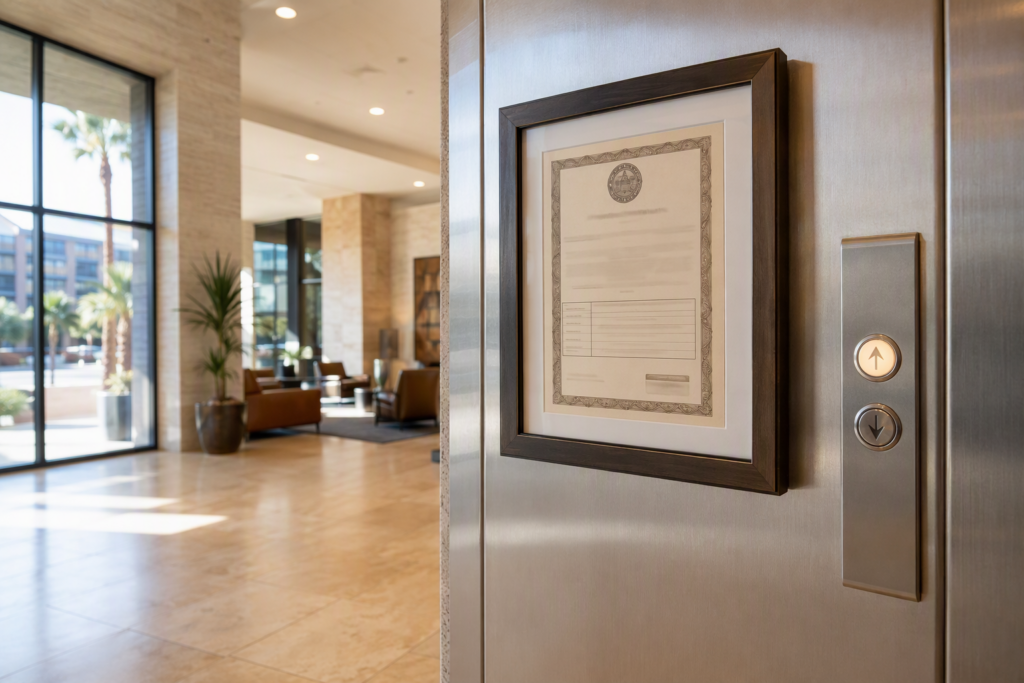
- Arizona Revised Statutes (ARS) Title 23 — Elevator Safety: Arizona regulates elevator installations, annual inspections, and operating permits through ADOSH. Facilities must maintain a valid certificate of operation, posted inside each elevator cab.
- CMS Conditions of Participation (for Medicare/Medicaid certified facilities): Skilled nursing facilities certified by the Centers for Medicare & Medicaid Services must maintain a safe physical environment, which includes elevator safety records as part of Life Safety Code surveys.
- NFPA 101 Life Safety Code: This code, referenced in CMS surveys, addresses elevator recall functions, fire service operation, and emergency lighting relevant to senior care buildings.
Arizona Elevator Solutions works with senior living operators across the Phoenix metro, Tucson, Scottsdale, and Mesa markets to assess compliance across all of these layers — not just one standard in isolation.
What ADA Requirements Apply Specifically to Senior Living Elevators?
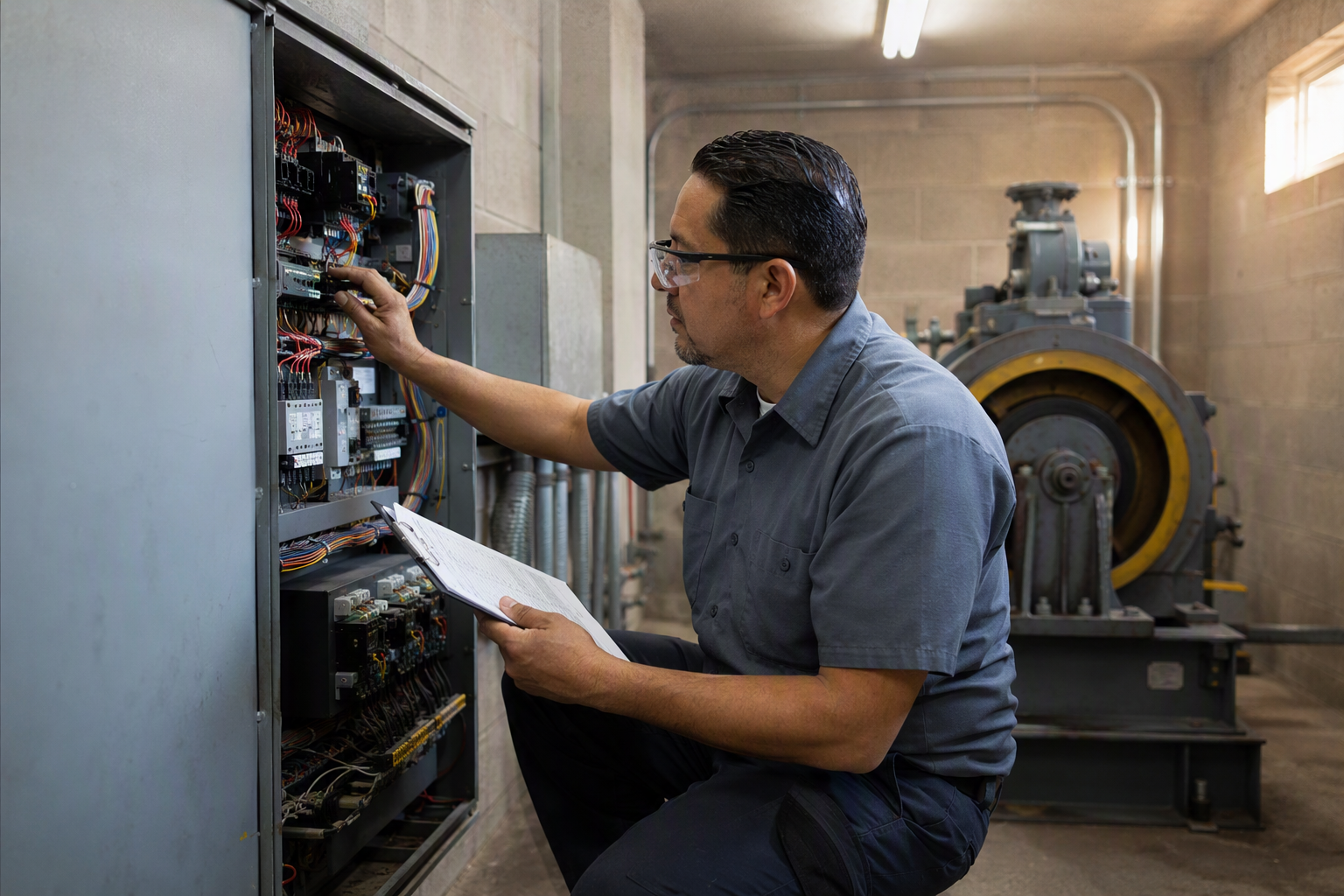
Under the ADA Standards for Accessible Design, elevators serving senior living residents must meet specific dimensional and operational requirements:
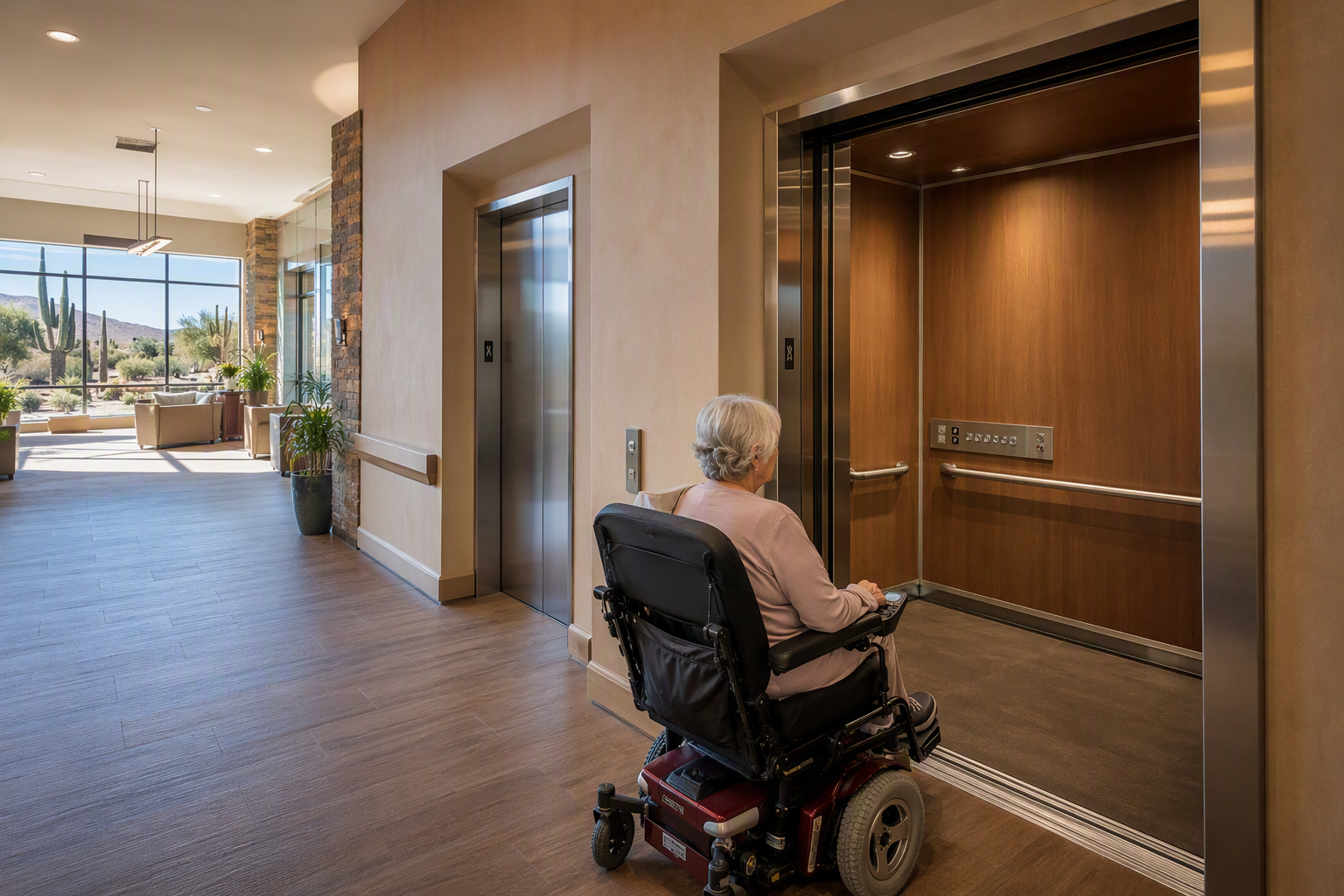
- Cab dimensions: Elevator cars must provide sufficient interior space to accommodate wheelchairs and motorized scooters, with clear floor space to allow maneuvering.
- Door clear width: Hoistway doors and car doors must maintain a minimum clear opening width to allow wheelchair passage.
- Door timing: Doors must remain open long enough for a person using a mobility aid to safely enter or exit without rushing. Door-close timing must be adjustable to accommodate slower-moving residents.
- Control panel height: Controls must be operable from a seated position, with the highest operable control within reach range for individuals in wheelchairs.
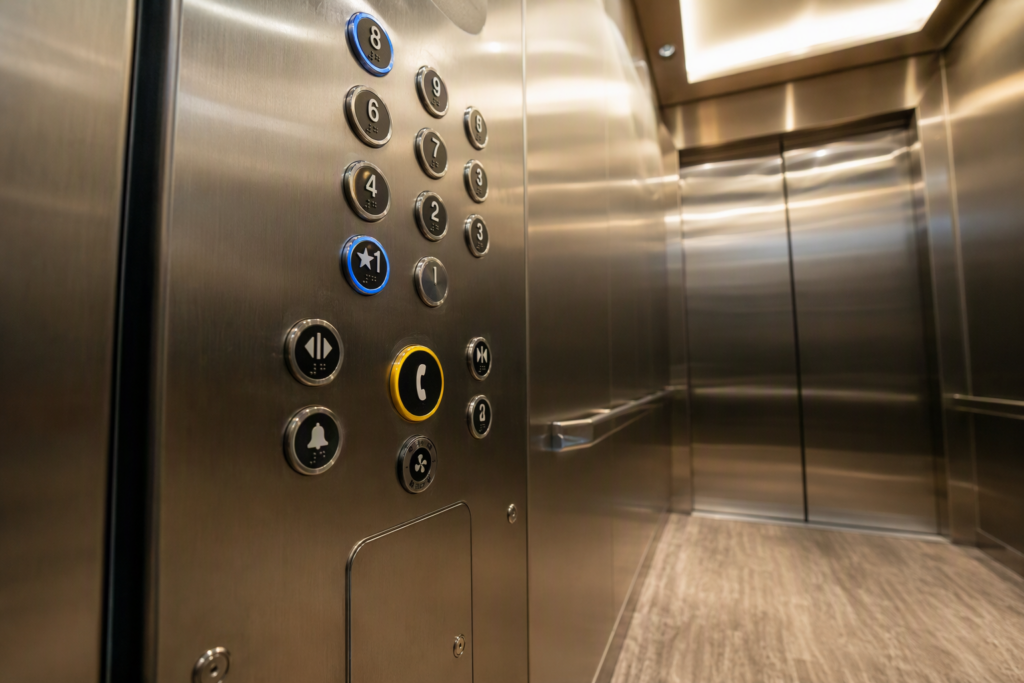
- Braille and tactile characters: Floor designations and key controls must include raised characters and Braille.
- Visual and audible floor indicators: Each floor stop must be announced visually (floor indicator lights) and audibly (voice or tone announcement).
- Two-way communication: An emergency communication system must allow two-way communication between trapped passengers and a monitoring point.
Facilities that were originally constructed before ADA compliance deadlines may still carry accessibility gaps. A comprehensive audit by Arizona Elevator Solutions can identify where existing equipment falls short and what remediation options are available.
How Often Do Senior Living Elevators Require Inspections in Arizona?
Arizona requires periodic inspections for all elevators operating under an ADOSH permit. Inspection frequency is tied to the type of equipment and its use classification. Senior living facilities typically operate passenger elevators subject to the inspection intervals defined under the ASME A17.1 Safety Code for Elevators and Escalators, which distinguishes between routine periodic inspections and periodic tests (such as the five-year full-load safety test).
Key inspection points for senior living environments include:
- Safety device function (governors, safeties, buffers)
- Door operation and sensing edge performance
- Emergency lighting and power backup
- Fire service recall (Phase I and Phase II) functionality
- Two-way emergency communication system
- Cab interior condition and accessibility feature integrity
Operating without a valid certificate of inspection exposes a facility to regulatory action, potential CMS survey findings, and liability. Arizona Elevator Solutions helps senior living operators track inspection schedules and maintain complete documentation.
What Elevator Features Are Most Important for Memory Care and Skilled Nursing Units?
Beyond baseline compliance, certain operational features are particularly critical in memory care and skilled nursing settings:
- Key-switch or access-controlled operation: Memory care units often use elevator access controls to prevent residents with cognitive impairment from exiting secured floors unsupervised. Access control integration must comply with fire service override requirements.
- Slow and smooth ride quality: Residents with balance disorders, osteoporosis, or post-surgical recovery needs benefit from low-jerk ride control and precise leveling at each floor.
- Stretcher-capable cab dimensions: Skilled nursing facilities frequently transport residents on gurneys or in reclining wheelchairs. Larger cab configurations that accommodate stretchers are often necessary.
- Handrails inside the cab: Grab rails mounted on three cab walls provide stability for ambulatory residents and reduce fall risk during transit.
- Emergency power: Automatic Rescue Operation (ARO) systems lower the elevator to the nearest floor and open doors during power outages — critical when residents may be non-ambulatory and unable to exit a stalled cab independently.
What Should Senior Living Facilities Do If an Elevator Fails or Goes Out of Service?
- Post out-of-service signage immediately on all affected floors to prevent attempts to use the elevator.
- Notify facility administration and care staff so that resident transport plans — especially for non-ambulatory residents on upper floors — can be activated.
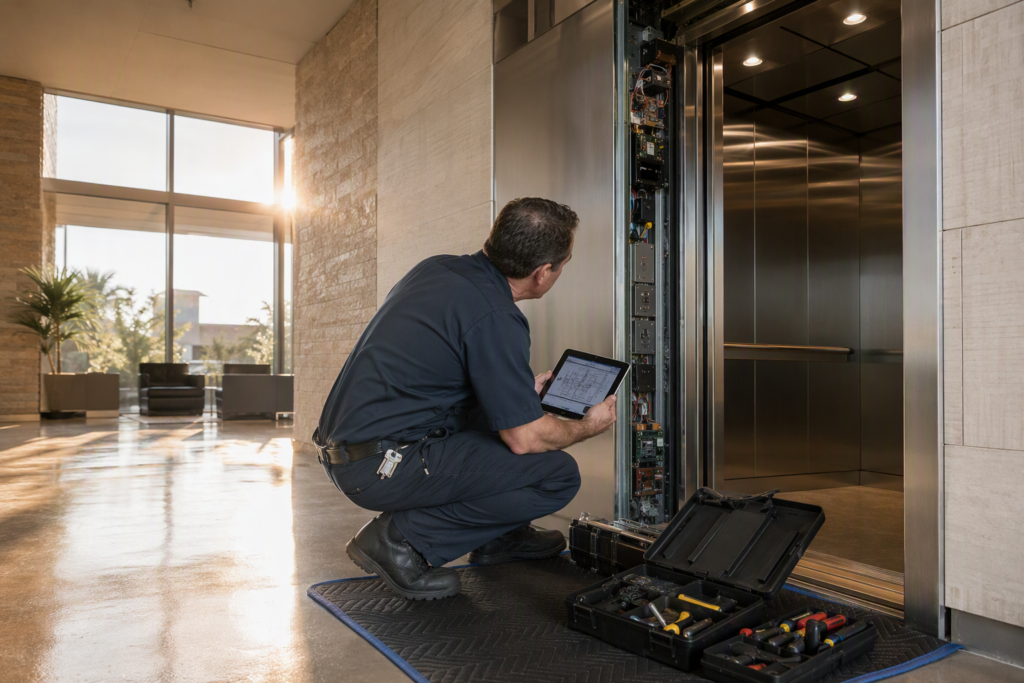
- Contact a licensed elevator service provider to assess the fault. In Arizona, only state-licensed elevator mechanics may perform repairs on permitted equipment.
- Document the outage with date, time, known cause (if apparent), and affected floors. This record supports ADOSH compliance and any CMS survey inquiries.
- Verify that emergency communication systems remain active even while the elevator is out of service, in case a resident is trapped in the cab.
- Do not restore service until the licensed mechanic confirms the equipment is safe and any required inspection sign-off is complete.
- Update maintenance logs with the repair event, parts replaced, and technician license information.
Arizona Elevator Solutions serves senior living facilities across Phoenix, Tucson, Scottsdale, and Mesa and can be contacted when equipment issues arise in these markets.
How Does Fire Service Operation Affect Senior Living Elevator Compliance?
Fire service operation — governed by both ASME A17.1 and NFPA 101 — requires that elevators in senior living buildings respond automatically to fire alarm signals. Phase I recall sends all cars to a designated floor (typically the ground floor or an alternate recall floor) and holds them for fire department use. Phase II allows fire department personnel to manually control individual cars from inside the cab.
For senior living facilities, proper Phase I and Phase II function is especially important because:
- Residents may be non-ambulatory and dependent on elevator transport during an evacuation
- Stairwells may not be a viable evacuation route for wheelchair users
- Fire department personnel may need to use elevators to reach residents on upper floors
Fire service recall must be tested at each periodic inspection and must function correctly with the building’s fire alarm system. Integration failures between the elevator controller and the fire alarm panel are a common compliance gap identified during inspections.
What Are the Consequences of Non-Compliance for Senior Living Operators?
Non-compliance with elevator requirements carries serious consequences for senior living operators:
- ADOSH enforcement action: Operating an elevator without a valid certificate of inspection can result in orders to cease operation and civil penalties.
- CMS survey deficiencies: Skilled nursing facilities and assisted living communities receiving Medicare or Medicaid reimbursement that fail Life Safety Code surveys related to elevator safety may face remediation plans, increased survey frequency, or — in severe cases — jeopardy of certification.
- Liability exposure: An injury to a resident or staff member on a non-compliant elevator creates significant legal and financial risk for facility ownership.
- Reputational harm: Families researching senior living placements increasingly review inspection records and regulatory histories. Documented violations can affect occupancy rates.
How Should Senior Living Facilities Plan for Elevator Modernization?
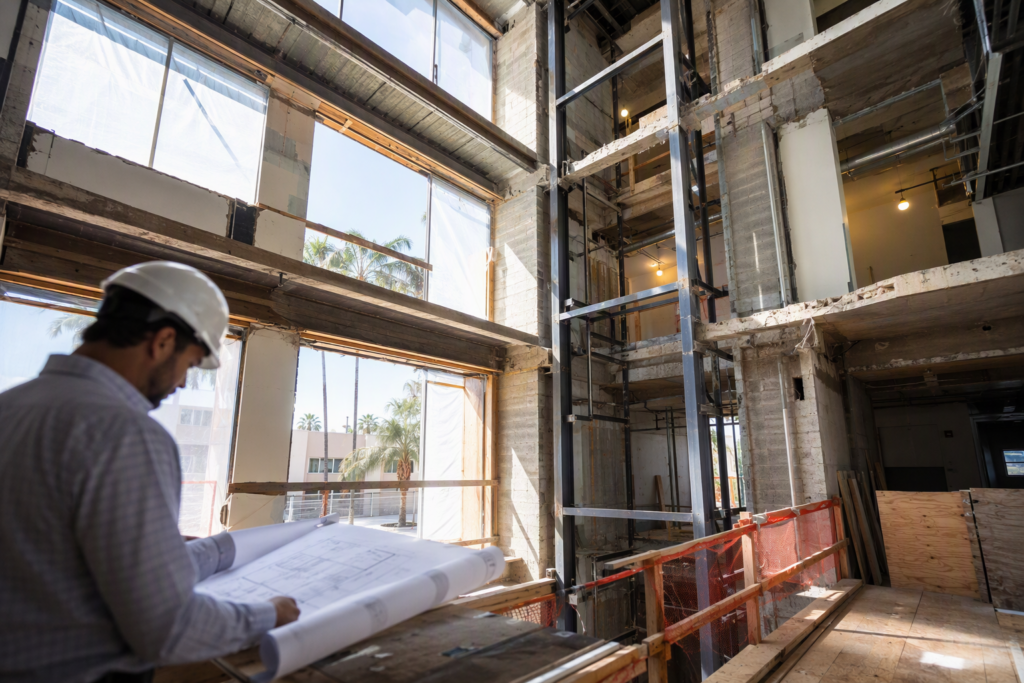
Older buildings that have operated elevators for decades often face modernization decisions driven by parts obsolescence, rising maintenance costs, or evolving compliance requirements. A modernization project for a senior living elevator typically involves:
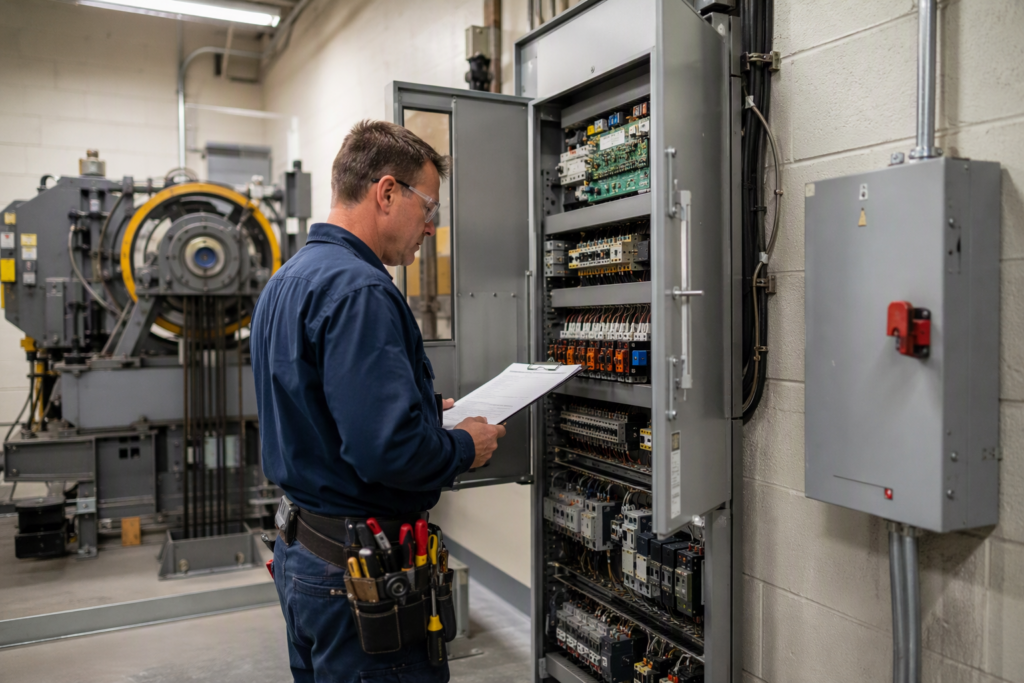
- Replacing the controller with a modern solid-state system that supports current fire service and access control requirements
- Upgrading the drive system for smoother, more energy-efficient operation
- Installing current-generation door operators and safety edges that meet active sensing requirements
- Updating cab interiors to meet current ADA standards for control panel height, Braille, and audible announcements
- Adding or upgrading emergency power systems for Automatic Rescue Operation
Modernization timelines vary based on building configuration, equipment age, and the scope of work. Planning should include a phased approach that minimizes service disruption to residents — particularly in buildings with a single elevator serving multiple floors. Arizona Elevator Solutions assists senior living operators with modernization planning tailored to occupied healthcare environments.
How Do Senior Living Elevator Requirements Differ From Standard Commercial Elevator Requirements?
The underlying codes — ASME A17.1 and the ADA — apply broadly to commercial and healthcare facilities alike. However, senior living environments impose additional practical and regulatory expectations:
- Longer door dwell times to accommodate mobility aid users
- Stretcher-capable cab dimensions in facilities providing nursing or medical care
- Access control integration with elopement prevention systems in memory care units
- CMS Life Safety Code survey requirements that go beyond standard commercial inspections
- Higher reliability expectations given the non-ambulatory resident population
A vendor experienced only with standard commercial office elevators may not recognize these additional layers. Facilities should select a service provider with documented experience in healthcare vertical environments.
Questions Your Inspector Will Ask
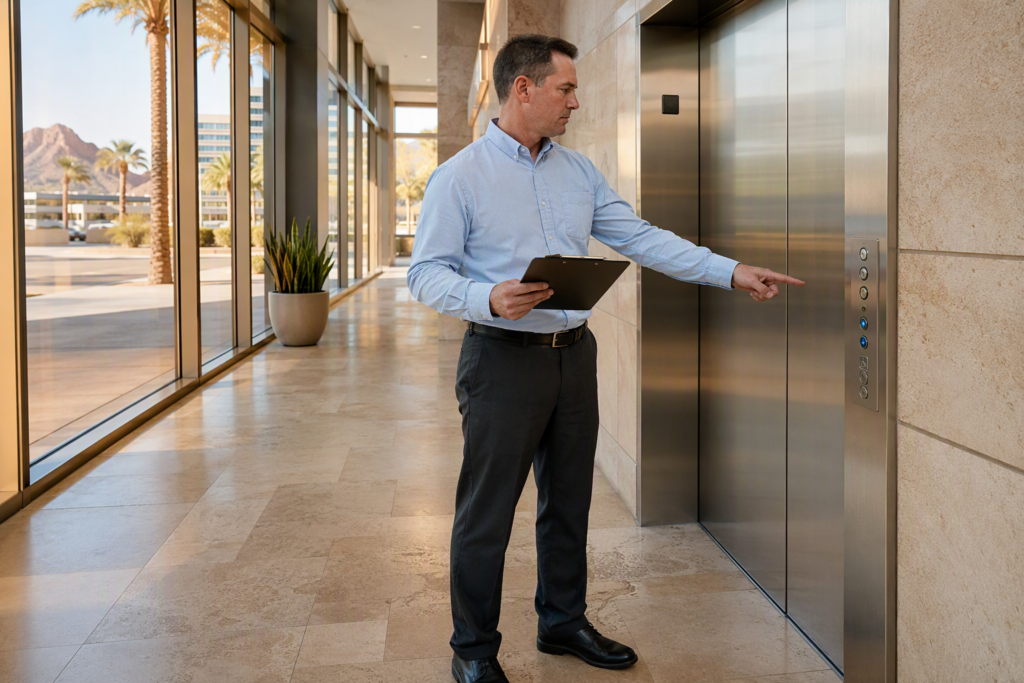
When an ADOSH elevator inspector or a CMS Life Safety surveyor evaluates a senior living facility’s elevators, expect questions and documentation requests that include:
- Is the current certificate of inspection posted inside the cab? Inspectors will verify the certificate is current, legible, and properly displayed.
- When was the last full-load safety test performed? The ASME A17.1 code establishes intervals for this test; inspectors will request documentation.
- Are maintenance logs current and available? A complete log of service visits, repairs, and part replacements is required.
- Does fire service recall test correctly with the building’s alarm system? Inspectors typically conduct a live test of Phase I recall function.
- Is the two-way emergency communication system operational? This will be tested during the inspection.
- Do door timing and sensing edges meet current requirements? Door operations are tested for open/close timing and obstruction sensing.
- Is emergency power (Automatic Rescue Operation) functional? ARO systems are tested for proper response to simulated power loss.
- Are cab controls and accessibility features compliant with current ADA standards? Control heights, Braille markings, and audible indicators will be verified.
- Are there any outstanding violation orders or open permits? Prior inspection findings must be resolved and documented.
Preparing thorough documentation before an inspection — not after — is the most effective way to avoid deficiency citations. Arizona Elevator Solutions provides pre-inspection assessments to help senior living teams identify and resolve issues proactively.
How Can Senior Living Facilities in Arizona Get Started With an Elevator Compliance Assessment?
Facilities in Phoenix, Tucson, Scottsdale, and Mesa that want to verify their elevator compliance status, prepare for an upcoming inspection, plan a modernization project, or address an identified deficiency can begin with a structured assessment of their current equipment and documentation.
A thorough assessment examines physical equipment condition, documentation completeness, fire service integration, accessibility feature compliance, and any open regulatory items — providing facility leadership with a clear picture of current status and a prioritized plan for any needed action.
Schedule Your Free Elevator Assessment Today
Senior living communities across Arizona rely on properly maintained, fully compliant elevators to protect residents, satisfy inspectors, and meet the expectations of families. Contact Arizona Elevator Solutions for a free elevator assessment and find out exactly where your facility stands.
Contact Arizona Elevator Solutions for a free elevator assessment: 480-557-7600
Serving senior living facilities in Phoenix, Tucson, Scottsdale, Mesa, and surrounding Arizona communities.
Need elevator service you can rely on? Arizona Elevator Solutions is ready to help.