Retail Elevator Maintenance Standards: A Complete Data & Compliance Guide
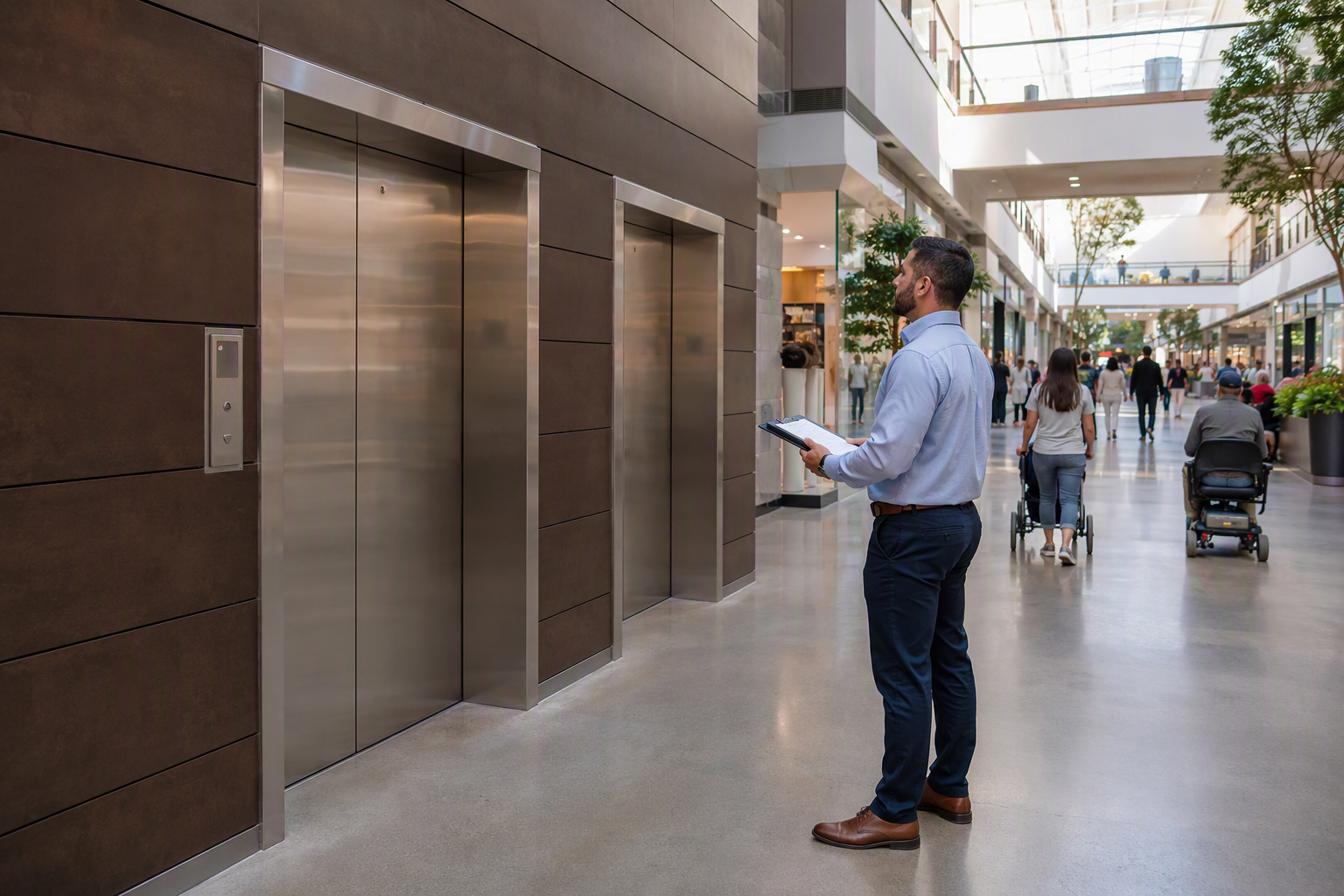
Retail environments place some of the heaviest demands on elevator systems of any commercial property type. Constant foot traffic from shoppers, deliveries, strollers, and mobility devices creates accelerated wear on mechanical components, door systems, and cab interiors. Understanding the applicable maintenance standards — and what happens when they are not met — is essential for retail property managers, shopping center operators, and facility directors.
This guide covers the full landscape of retail elevator maintenance standards: the governing codes, inspection requirements, compliance consequences, maintenance protocols, and what to look for when evaluating service providers in 2025–2026.
What Federal Standards Govern Retail Elevator Maintenance?
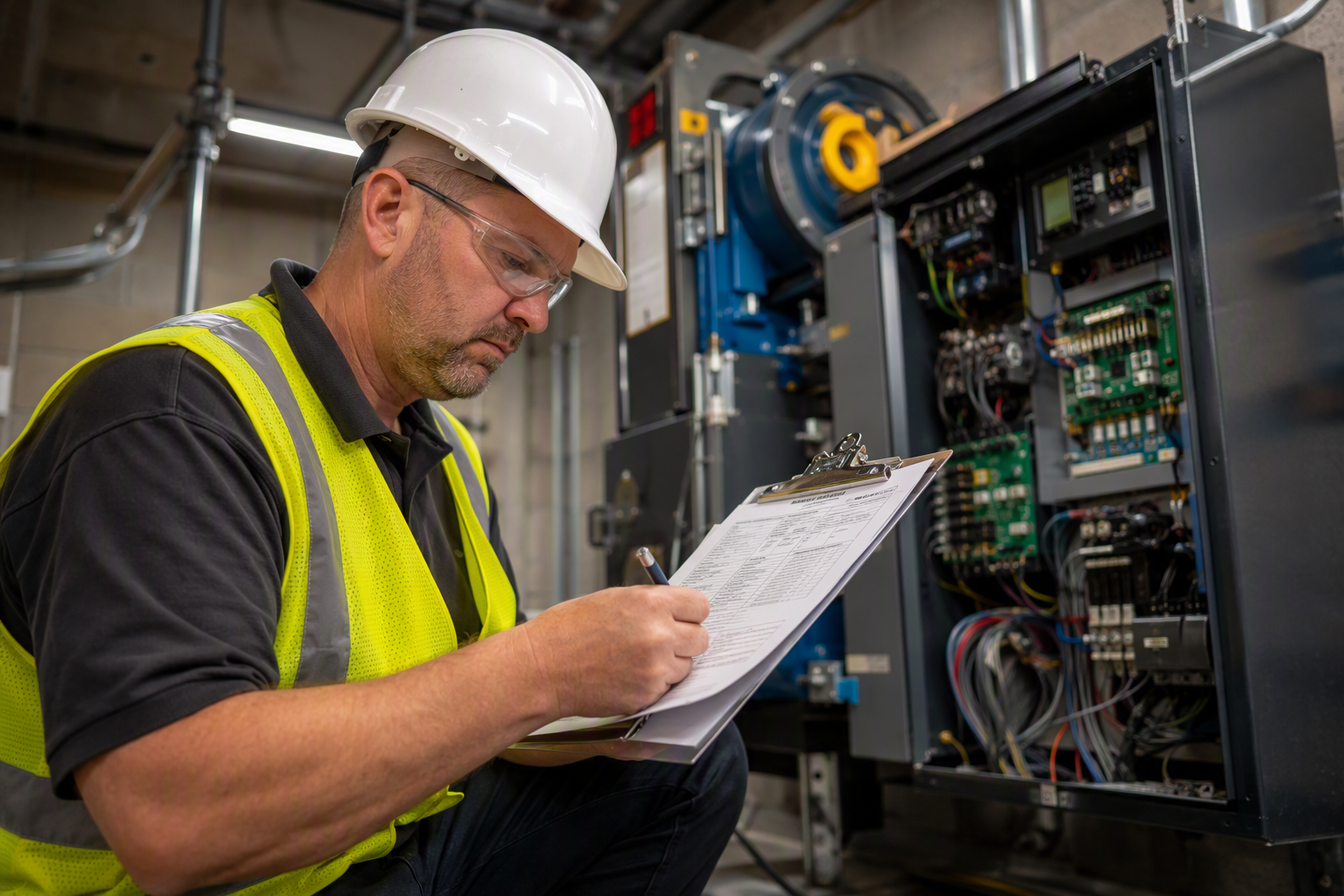
The primary federal-level standard for elevator safety and maintenance in the United States is the ASME A17.1 Safety Code for Elevators and Escalators. This code, published by the American Society of Mechanical Engineers, establishes minimum requirements for the design, construction, installation, operation, inspection, testing, maintenance, alteration, and repair of elevators and escalators.
ASME A17.1 is not self-enforcing at the federal level — individual states and local jurisdictions adopt it (often with amendments) as part of their building and safety codes. This means a retail elevator in Phoenix, Arizona, is subject to Arizona’s adopted version of the standard, which may differ in specific inspection intervals or testing requirements from the version enforced in, say, New York or Florida.
Accessibility is governed separately. The Americans with Disabilities Act (ADA) requires that elevators in retail facilities serving the public be maintained in operable working condition. An elevator that is frequently out of service due to neglected maintenance is not merely an inconvenience — it is a potential ADA compliance violation. Retail operators must ensure that elevators providing required accessible routes remain reliably operational.
Workplace safety around elevator mechanical rooms and maintenance activities falls under the jurisdiction of the Occupational Safety and Health Administration (OSHA), which regulates the safety conditions under which elevator technicians perform maintenance and repair work.
What Does ASME A17.1 Require for Retail Elevator Maintenance?
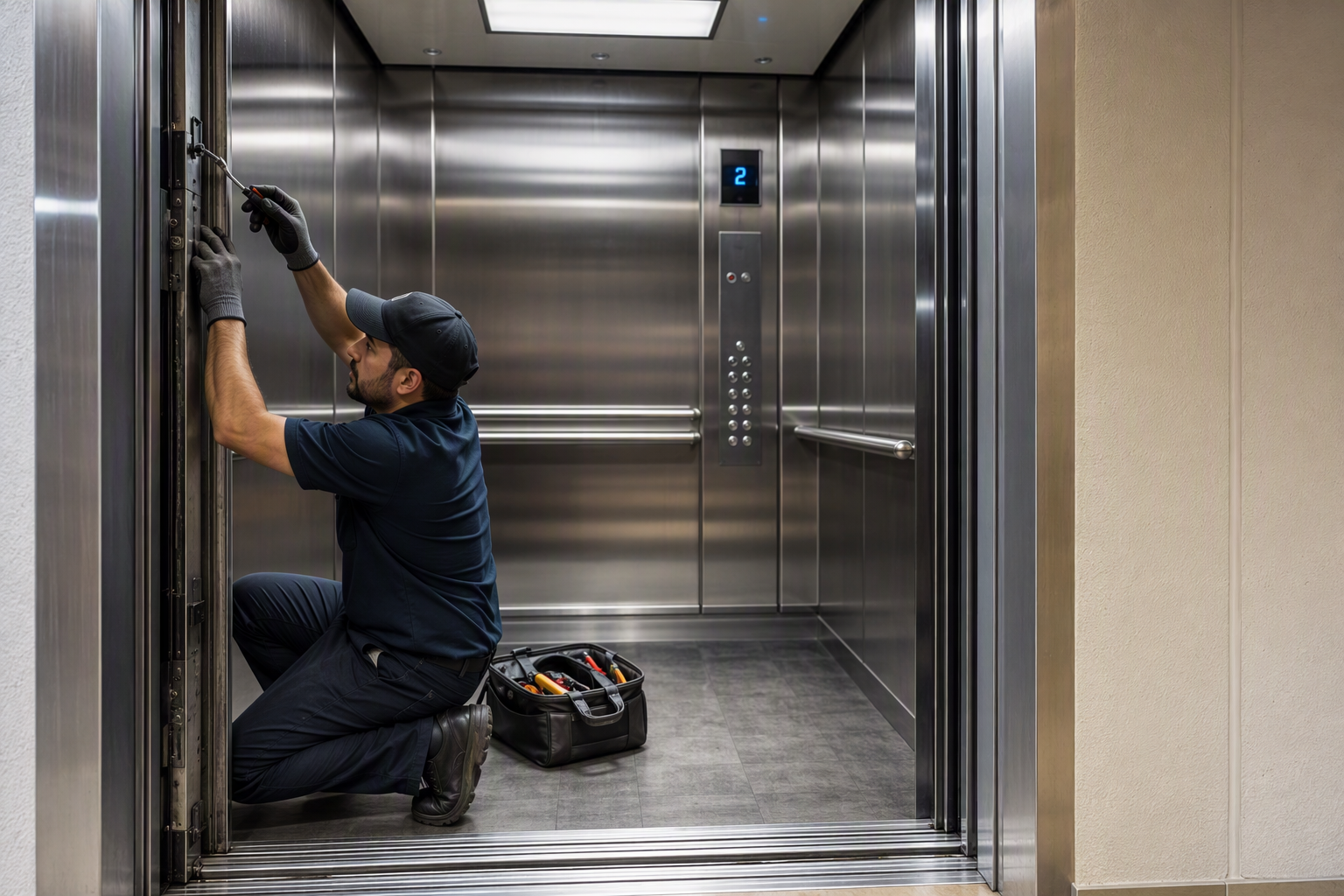
The ASME A17.1 Safety Code for Elevators and Escalators requires that elevators be maintained in a condition of safe operation. Key maintenance-related mandates under the code include:
- Periodic inspection and testing: Elevators must be inspected and tested at intervals specified by the adopting jurisdiction. For most commercial and retail installations, this means a full periodic inspection at least annually, with certain safety tests (such as governor and safety tests, pressure tests for hydraulic systems, and brake tests) required on defined cycles.
- Maintenance records: The code requires that maintenance records be kept and made available to the authority having jurisdiction (AHJ) upon request. For retail operators, this means maintaining a documented maintenance log for each elevator unit.
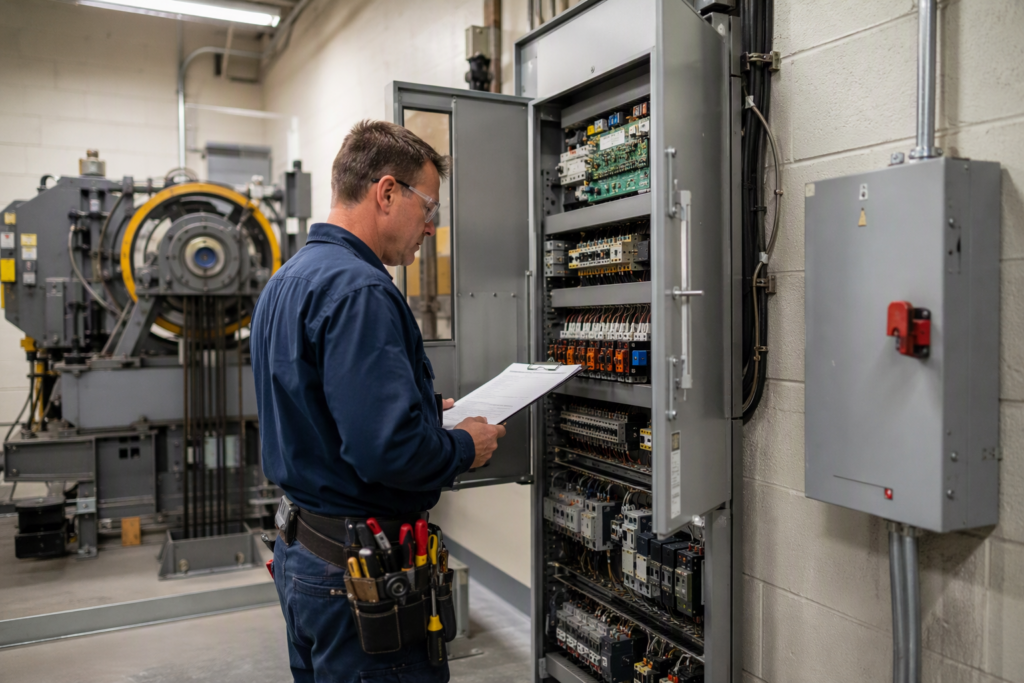
- Qualified personnel: All maintenance, repair, and testing must be performed by personnel meeting qualifications defined by the AHJ — typically licensed elevator mechanics who hold state or local credentials.
- Lubrication and adjustment: The code establishes that components must be kept properly lubricated, adjusted, and free of contamination that could affect safe operation.
- Door systems: Door reopening devices, closing forces, and timing mechanisms must meet specific performance criteria — a category of particular importance in retail settings where doors are exposed to extremely high cycle counts.
How Often Should Retail Elevators Be Inspected?
Inspection frequency for retail elevators is determined by a combination of the ASME A17.1 framework, state adoption rules, and local AHJ requirements. Qualitatively, there are two distinct inspection categories retail operators should understand:
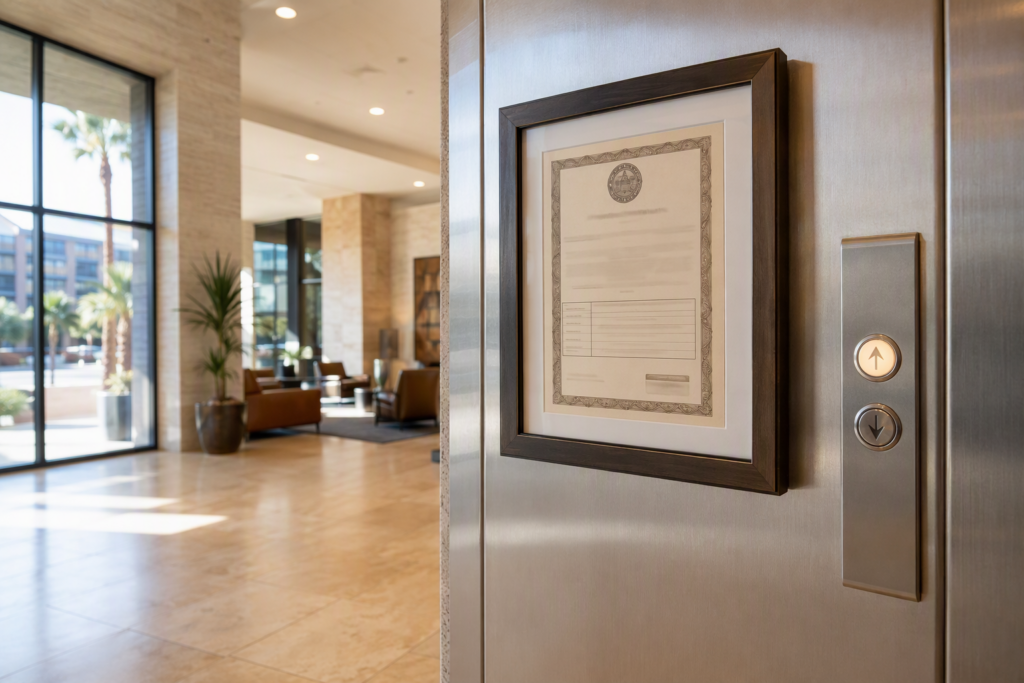
- Periodic (Annual) Inspection: Most jurisdictions require a formal inspection by a licensed, independent inspector at least once per calendar year. This inspection results in an official certificate that must typically be posted inside the elevator cab or made available on-site.
- Periodic Testing: Beyond visual inspection, specific components require physical testing on defined schedules. Hydraulic elevator pressure tests and full-load tests, for example, are required at intervals that vary by jurisdiction but commonly occur every one to five years depending on the test type.
These statutory minimums, however, represent the floor — not the ceiling — for a responsible maintenance program. High-traffic retail elevators serving shopping centers, grocery stores, or multi-story malls may cycle their doors and motors thousands of times per day. Maintenance professionals and the ASME A17.1 framework both recognize that usage intensity drives maintenance frequency. A quarterly or even monthly preventive maintenance visit is common practice for high-volume retail installations, even where the code requires only annual inspection.
What Are the Consequences of Non-Compliance for Retail Operators?
Failure to meet elevator maintenance standards in a retail setting carries consequences that extend well beyond a citation from an inspector. Retail property owners and operators face risk in several distinct categories:
- Operating permit suspension: An elevator operating without a current inspection certificate can be ordered out of service by the AHJ. In a retail setting, this can mean loss of accessible routes and significant disruption to operations.
- ADA liability: Under the Americans with Disabilities Act, a retail facility that fails to maintain its elevators in operable condition may face complaints and potential civil litigation from customers with disabilities who are denied access.
- Civil liability from injuries: Elevator-related incidents that occur on poorly maintained equipment expose retail operators to significant tort liability. Courts and juries routinely examine maintenance records in personal injury cases involving elevators.
- Insurance consequences: Many commercial property insurance policies require documented compliance with applicable elevator codes. A lapse in maintenance documentation can complicate claims or result in coverage disputes.
What Is a Preventive Maintenance Contract and What Should It Include?
A preventive maintenance (PM) contract is a service agreement between a retail property operator and a licensed elevator service company that establishes a regular schedule of maintenance visits, covered services, and response protocols. For retail elevators, a well-structured PM contract typically includes the following elements:
- Scheduled lubrication of guide rails, roller guides, and mechanical components
- Inspection and adjustment of door operators, clutches, and safety edges
- Testing of safety circuits, interlocks, and emergency communication systems
- Inspection of drive machine components (motor, sheaves, ropes or hydraulic cylinder)
- Review and update of maintenance logs to satisfy ASME A17.1 recordkeeping requirements
- Coordination with the AHJ for scheduled periodic inspections
- Emergency callback service provisions
When comparing PM contracts, retail operators should pay careful attention to what is explicitly excluded. Some contracts cover labor but not parts; others exclude modernization work or major component replacement. Clarity on these boundaries prevents unexpected costs when components fail between scheduled visits.
How Do Retail Elevators Differ from Other Commercial Elevator Applications?
Retail elevators are classified and maintained differently from office building, hospital, or residential elevators because of their unique operational profile:
- Door cycle volume: In a busy shopping center, a single elevator may complete more door open-close cycles in a week than a comparable office elevator does in a month. Door systems — the most frequently serviced component in any elevator — wear proportionally faster in retail environments.
- Load variability: Retail elevators routinely handle shopping carts, hand trucks, pallet jacks, and freight deliveries alongside passenger loads. This creates unpredictable load profiles that accelerate wear on guide systems and leveling mechanisms.
- Cab interior wear: Vandalism, impact damage from carts and strollers, and the accumulation of debris in threshold grooves are disproportionately common in retail settings, requiring more frequent cab interior inspection and cleaning.
- Longer operating hours: Many retail properties operate elevators from early morning through late evening, often seven days a week, reducing the maintenance access windows available to service technicians.
What Are the Key Steps to Establish a Code-Compliant Maintenance Program?
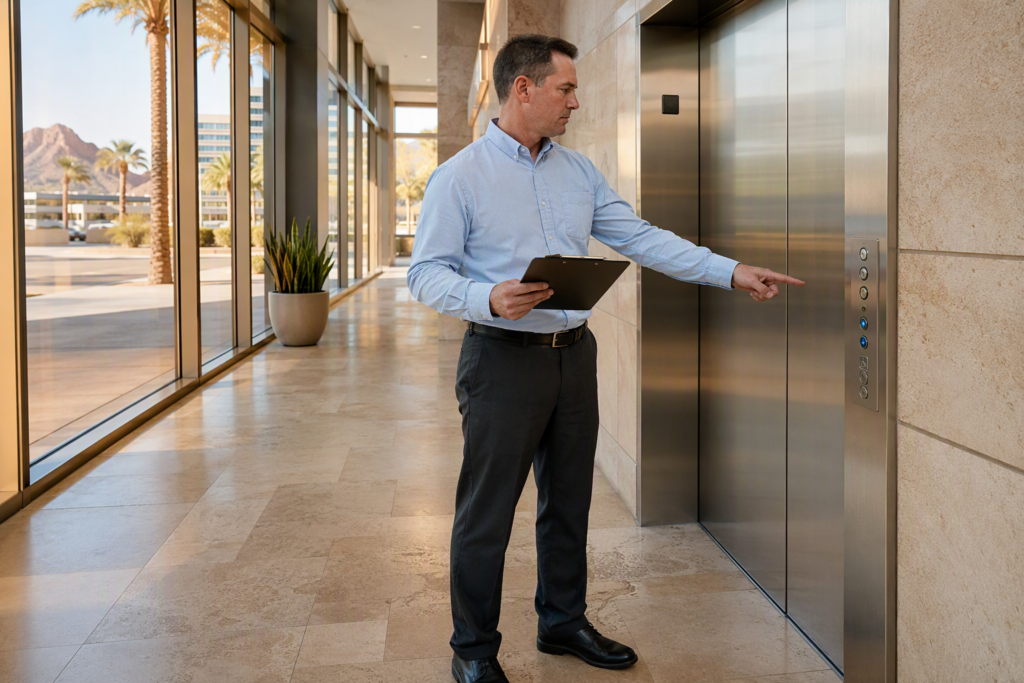
Retail operators establishing or auditing an elevator maintenance program should follow these steps to ensure compliance with applicable standards:
- Identify your authority having jurisdiction (AHJ): Determine which state and local agency enforces elevator safety codes in your jurisdiction. In Arizona, this is the Arizona Elevator Safety Board under the Industrial Commission of Arizona.
- Confirm the adopted code edition: Verify which edition of the ASME A17.1 Safety Code for Elevators and Escalators your jurisdiction has adopted, along with any local amendments.
- Audit current inspection certificates: Confirm that all elevator units on the property have current, valid inspection certificates and that these certificates are posted as required by local code.
- Review existing maintenance records: Collect and review all maintenance logs and service records for each unit. Identify any gaps or overdue service items.
- Evaluate your current service contract: Compare your existing PM contract scope against the usage intensity of your retail elevators and the requirements of the adopted code.
- Schedule any overdue testing: Identify testing cycles (hydraulic pressure tests, full-load tests, governor tests) that may be due or approaching and schedule them with a licensed contractor.
- Establish a documentation system: Implement a system — whether paper-based or digital — for maintaining complete, up-to-date maintenance records for each elevator unit on an ongoing basis.
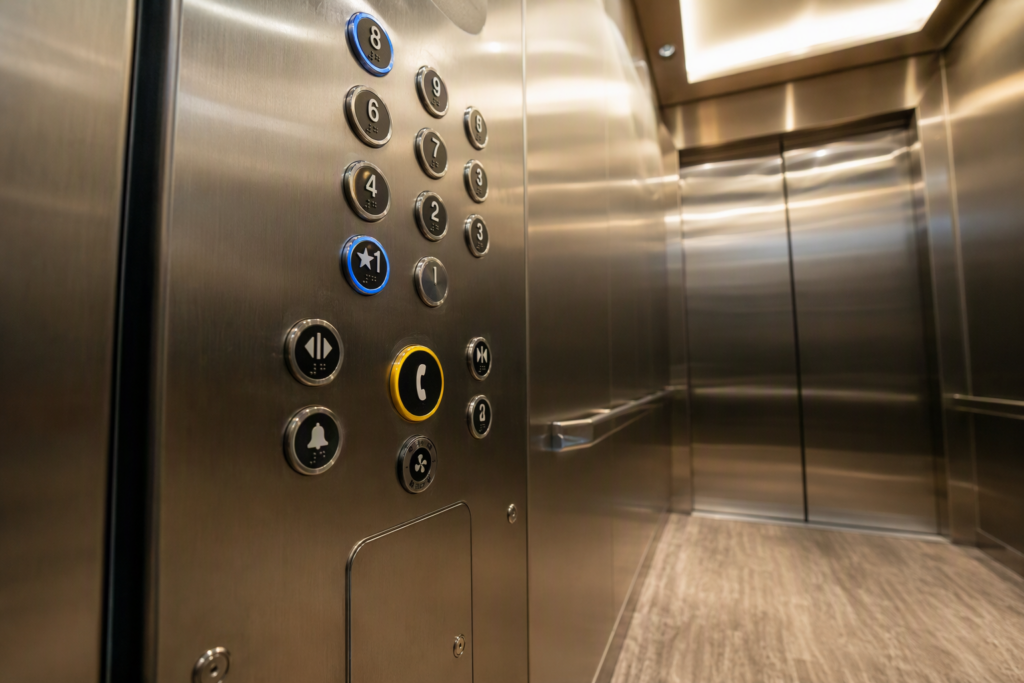
- Verify ADA compliance status: Confirm that elevator features required by the Americans with Disabilities Act — including control button height, cab dimensions, door timing, and audible/visual indicators — are functional and properly maintained.
What Does Elevator Maintenance Typically Cost for Retail Properties?
Maintenance costs for retail elevators vary based on factors that include the type of elevator (hydraulic, traction, machine-room-less), the age and condition of the equipment, the intensity of usage, geographic labor market rates, and the scope of the service contract. Rather than providing figures that would vary widely by context, retail operators should evaluate costs in relation to the following cost drivers:
- Equipment age and parts availability: Older elevator systems, particularly those manufactured before major code revisions, often require harder-to-source parts that carry cost premiums.
- Contract scope: Full-coverage contracts that include parts and labor command higher monthly fees than oil-and-grease contracts that cover only labor and consumables.
- Number of units: Multi-elevator retail properties typically benefit from volume pricing when units are contracted through a single service provider.
- Deferred maintenance backlog: Properties where maintenance has been neglected face higher initial costs to restore equipment to a baseline compliant condition before routine PM costs normalize.
What Industry Trends Are Shaping Retail Elevator Maintenance in 2025–2026?
Several qualitative trends are reshaping how retail elevator maintenance programs are structured and delivered as the industry moves through 2025 and into 2026:
- Remote monitoring and predictive maintenance: Elevator manufacturers and independent service providers are increasingly deploying IoT-connected monitoring systems that track door cycle counts, motor performance, and leveling accuracy in real time. This data allows service teams to address developing issues before they result in failures — a capability particularly valuable in high-traffic retail settings where unplanned downtime has immediate customer-facing consequences.
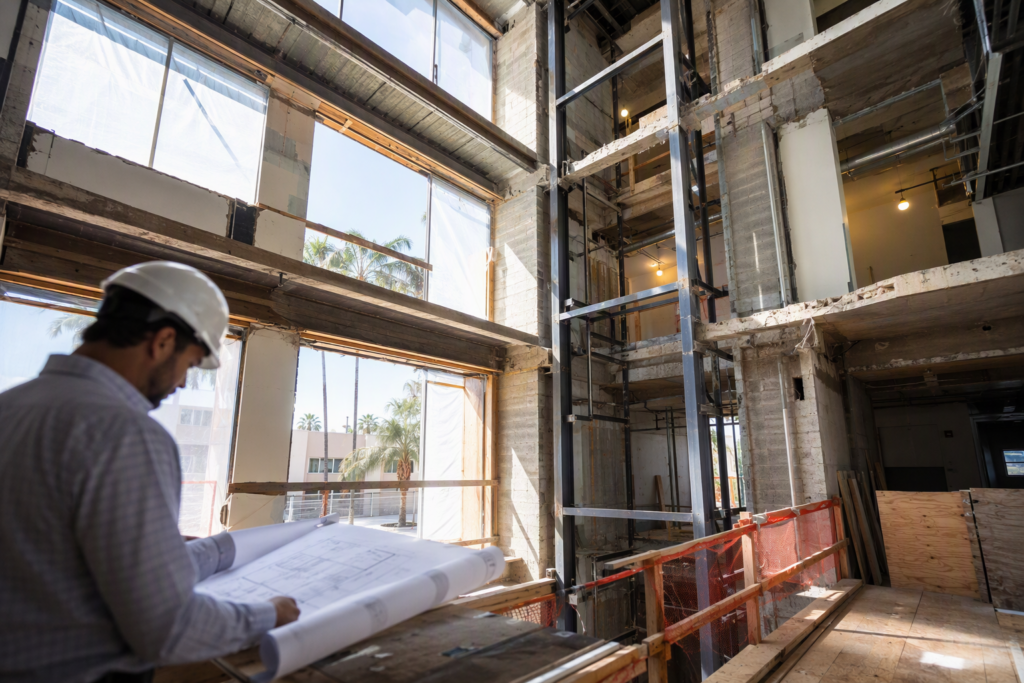
- Modernization-driven compliance: As the current edition of the ASME A17.1 standard continues to be adopted by additional jurisdictions, older retail elevator systems are increasingly subject to modernization requirements when major repairs or alterations are made. Retail operators should factor potential modernization costs into long-range capital planning.
- Sustainability and energy efficiency: Retailers subject to corporate sustainability commitments are showing growing interest in elevator systems and maintenance practices that reduce energy consumption — including LED cab lighting upgrades, regenerative drive systems, and sleep-mode programming for low-traffic periods.
- Code enforcement intensification: Across multiple states, elevator regulatory agencies have been increasing inspection frequency and enforcement activity. Retail operators who have historically relied on minimal maintenance programs are finding that the margin for non-compliance is narrowing.
How Does ADA Compliance Intersect with Elevator Maintenance for Retailers?
The Americans with Disabilities Act imposes a maintenance obligation — not merely an installation obligation — on retail facility operators. Elevators that are required as part of an accessible route must be kept operational. The ADA’s regulations distinguish between temporary outages (which may be acceptable if the operator takes reasonable steps to restore service promptly and provides notice) and systemic neglect that renders an elevator chronically unavailable.
Key ADA maintenance considerations for retail elevators include ensuring that door timing settings are not altered in ways that shorten the door open time below accessible thresholds, that audible floor announcements and visual floor indicators remain functional, that control button illumination is maintained, and that threshold plates and cab floors do not create tripping hazards for mobility device users.
What Should Retail Operators Look for When Choosing an Elevator Maintenance Provider?
Selecting a qualified elevator maintenance provider is one of the most consequential decisions a retail property operator makes for their facility. Evaluation criteria should include:
- Licensing and jurisdiction compliance: The contractor must hold all licenses required by the state and local AHJ. In Arizona, this means compliance with the requirements of the Arizona Elevator Safety Board.
- Familiarity with retail applications: Retail elevator maintenance differs meaningfully from residential or low-traffic commercial work. Ask prospective providers about their experience specifically with high-cycle-count, public-access installations.
- Documentation practices: A compliant maintenance provider will maintain thorough records of every service visit and make those records available to the property owner for AHJ compliance purposes.
- Contract transparency: Contracts should clearly delineate included and excluded services, parts coverage, testing responsibilities, and protocols for communicating findings from each maintenance visit.
- Code currency: The provider should demonstrate familiarity with the currently adopted edition of the ASME A17.1 Safety Code for Elevators and Escalators in your jurisdiction and any pending code changes that may affect your equipment.
Arizona Elevator Solutions approaches retail elevator maintenance as a data-driven discipline — using documented service histories, usage analysis, and code tracking to help retail clients build maintenance programs that go beyond minimum compliance to reduce total cost of ownership and unplanned downtime.
What Are the Most Common Retail Elevator Maintenance Failures?
While specific failure rate statistics vary by equipment type and environment, service professionals consistently identify the following as the most frequent maintenance-related issues in retail elevator applications:
- Door system failures: Door operators, safety edges, and closing mechanisms are the highest-frequency failure point in any high-traffic elevator. In retail settings, cart impacts and debris in threshold grooves compound normal wear.
- Leveling issues: Imprecise floor leveling creates trip hazards at the cab entrance — a safety and ADA concern that escalates quickly in public-facing retail settings.
- Hydraulic fluid degradation: In older hydraulic systems, fluid contamination and seal wear can lead to slow performance, excessive heat buildup, and eventual loss of service.
- Emergency communication system failures: The ASME A17.1 code requires a functioning two-way emergency communication system in every elevator cab. This system is tested during periodic inspections, but failures between inspections are not uncommon and require prompt correction.
- Lighting failures: Cab lighting and threshold lighting failures are among the most visible maintenance lapses in a retail context and should be addressed immediately both for safety and customer experience reasons.
Is There a Difference Between Inspection and Maintenance for Retail Elevators?
Yes — and understanding the distinction is important for retail operators structuring their compliance programs. Inspection and maintenance are related but legally and operationally distinct activities:
Inspection is a formal evaluation performed by a qualified inspector — often an independent third party or an AHJ representative — to verify that the elevator meets the requirements of the adopted code. An inspection results in a pass/fail determination and a certificate of compliance when passed. Inspections do not involve hands-on repair or adjustment work.
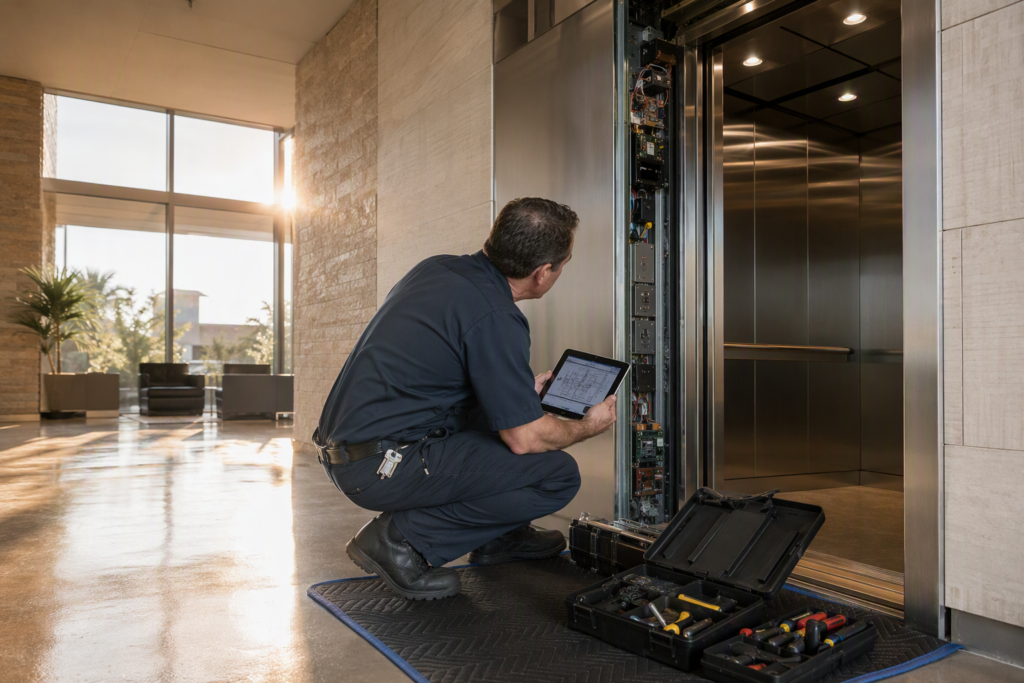
Maintenance is the ongoing program of lubrication, adjustment, testing, cleaning, and component replacement performed by licensed elevator mechanics to keep the equipment in safe operating condition. Good maintenance is what enables an elevator to pass its periodic inspection.
A common misconception among retail operators is that passing the annual inspection means the elevator requires no further attention until the next inspection. In practice, for high-traffic retail applications, the periodic inspection is a single checkpoint within an ongoing maintenance program that should be active throughout the year.
How Should Retail Operators Respond to a Failed Elevator Inspection?
When a retail elevator receives a failed or conditional inspection result, the response protocol matters both for safety and legal compliance:
- Take the elevator out of service immediately if the inspector or AHJ orders it. Operating an elevator after a shutdown order creates serious safety and liability exposure.
- Obtain a written copy of the inspection findings detailing all cited deficiencies.
- Contact a licensed elevator service contractor promptly to review the deficiency list and prepare a correction scope and timeline.
- Notify your insurance carrier of the out-of-service status and the corrective action plan, as required by most commercial property policies.
- Post required notices at the elevator entrance and, where required by ADA, provide direction to the nearest accessible alternative route.
- Complete all cited repairs using licensed elevator mechanics and ensure each repair is documented in the maintenance record.
- Schedule and pass a re-inspection before returning the elevator to service. In most jurisdictions, the AHJ or authorized inspector must sign off on the corrective work before the elevator can legally resume operation.
- Review your preventive maintenance program to understand what conditions led to the inspection failure and adjust the program scope or frequency to prevent recurrence.
Sourced Reference Data
| Standard / Regulation | Governing Body | Relevance to Retail Elevator Maintenance | Source |
|---|---|---|---|
| ASME A17.1 Safety Code for Elevators and Escalators | American Society of Mechanical Engineers | Primary U.S. standard for elevator maintenance, inspection, testing, and recordkeeping requirements | ASME Codes & Standards |
| Americans with Disabilities Act — Accessibility Requirements | U.S. Department of Justice | Requires elevators on accessible routes in retail facilities to be maintained in operable condition | ADA.gov |
| OSHA Standards for General Industry | Occupational Safety and Health Administration | Governs workplace safety for elevator maintenance personnel and machine room conditions | OSHA.gov |
About Arizona Elevator Solutions
Arizona Elevator Solutions is a licensed elevator service provider serving retail, commercial, and mixed-use properties throughout Arizona. The company takes a data-driven approach to elevator maintenance, helping retail clients build programs grounded in code compliance, documented service histories, and the specific usage demands of high-traffic commercial environments. Arizona Elevator Solutions works with retail property managers, facility directors, and shopping center operators to ensure their elevator assets remain safe, compliant, and operationally reliable.
Contact Arizona Elevator Solutions for a free elevator assessment. Call 480-557-7600 to speak with a licensed elevator professional about your retail property’s maintenance program and compliance status.
Need elevator service you can rely on? Arizona Elevator Solutions is ready to help.