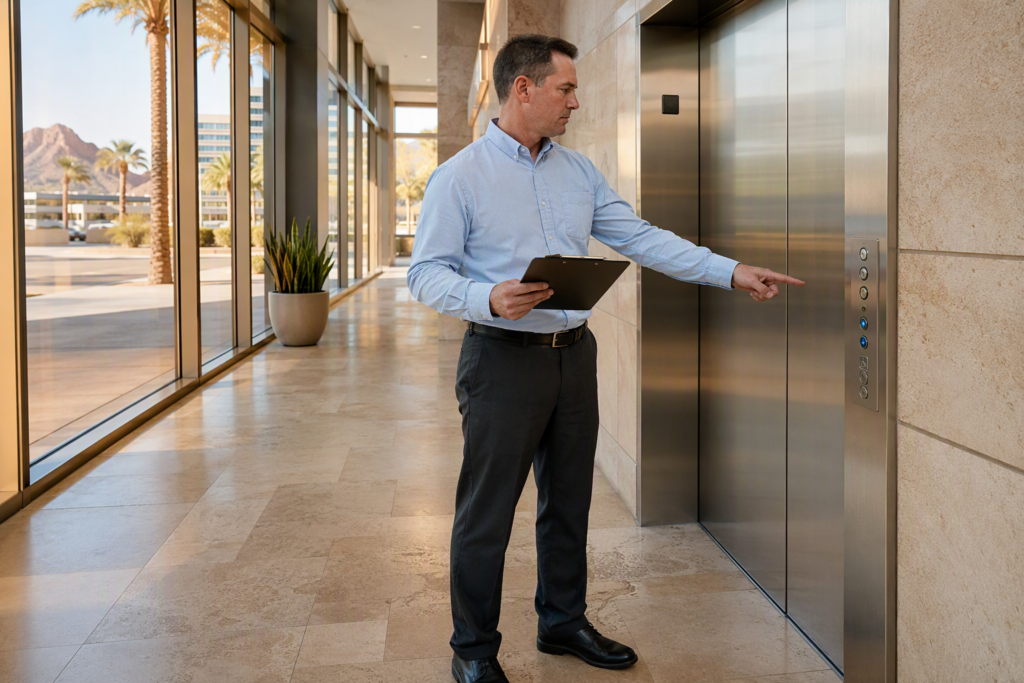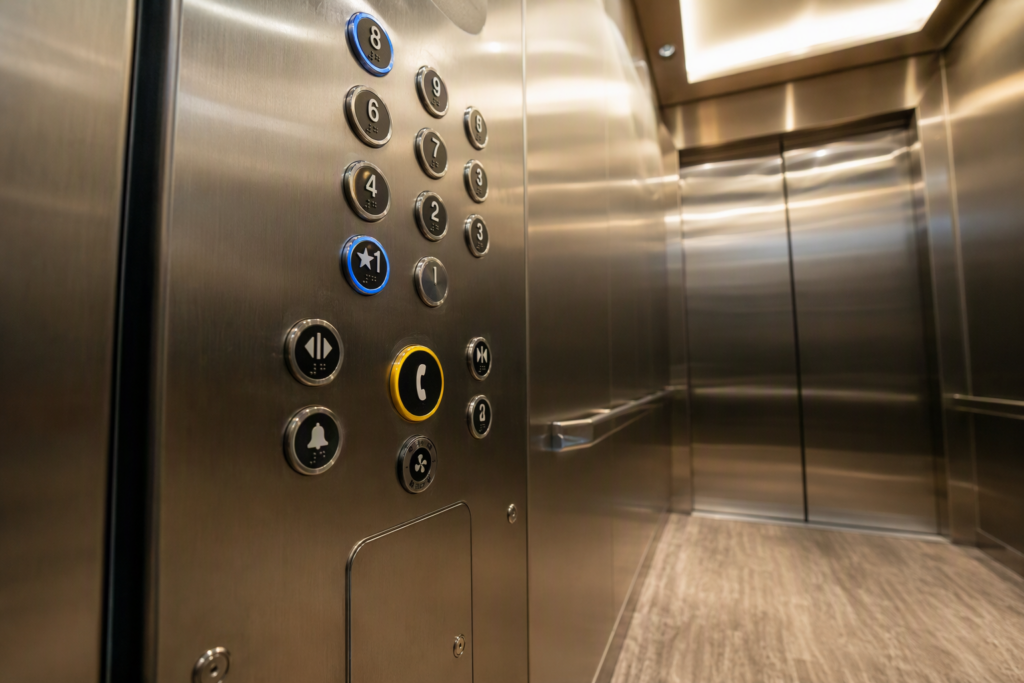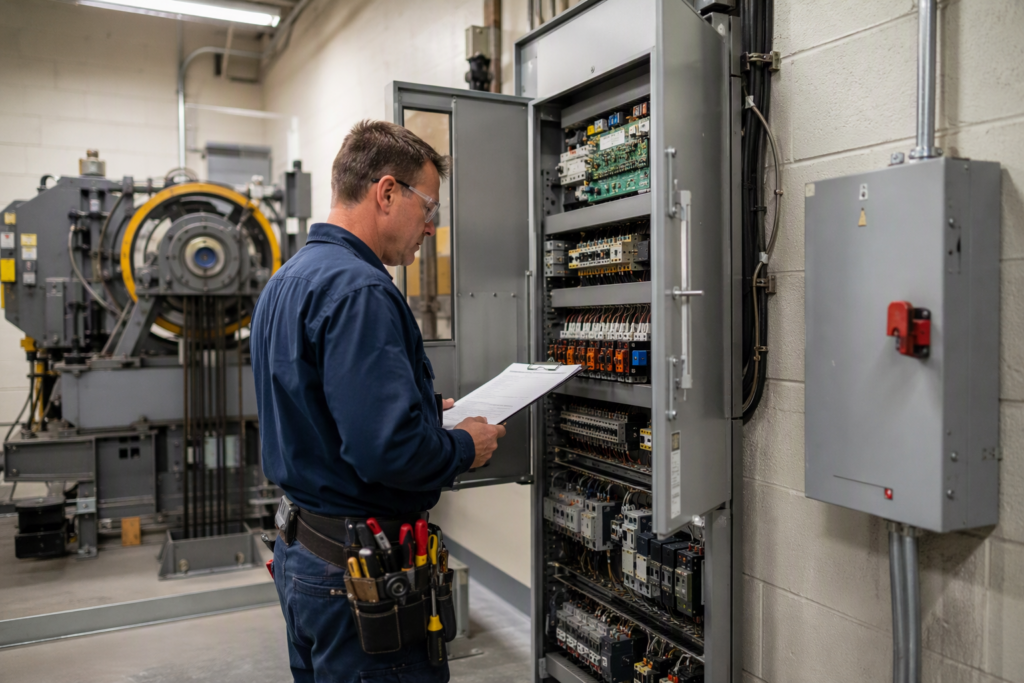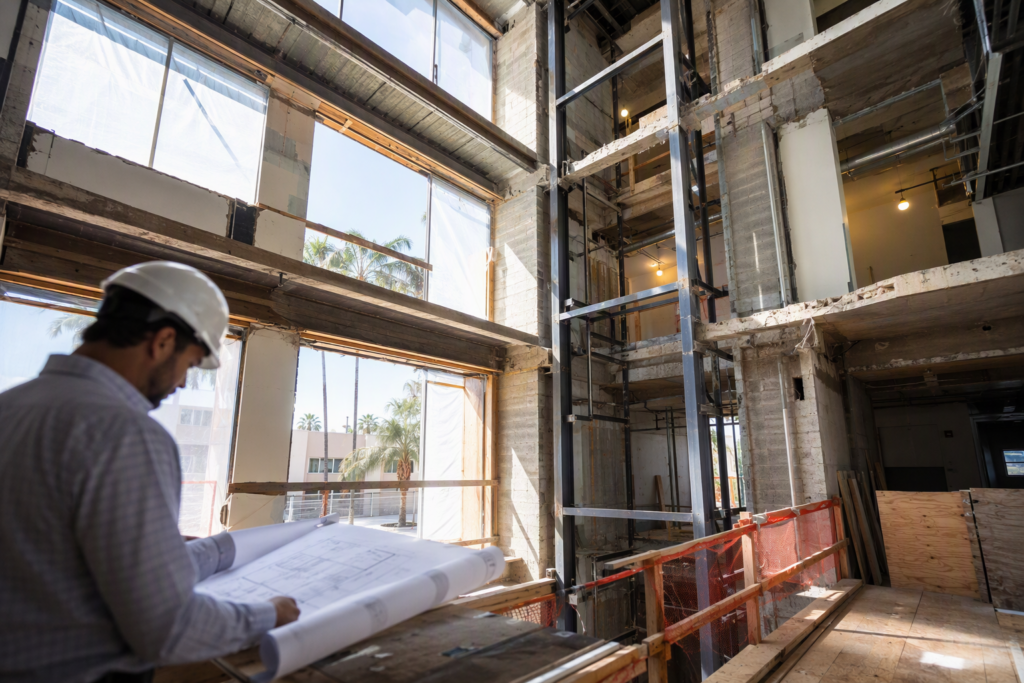
Elevator inspections in Phoenix are not a formality. They are a legal requirement enforced by state authority, and a failed inspection sets a compliance clock in motion that building owners and property managers cannot afford to ignore. This guide walks through what happens after a failed inspection, how deadlines work, what violations cost in operational disruption, and how to choose the right contractor to restore compliance.
What Does a Failed Elevator Inspection Actually Mean in Phoenix?
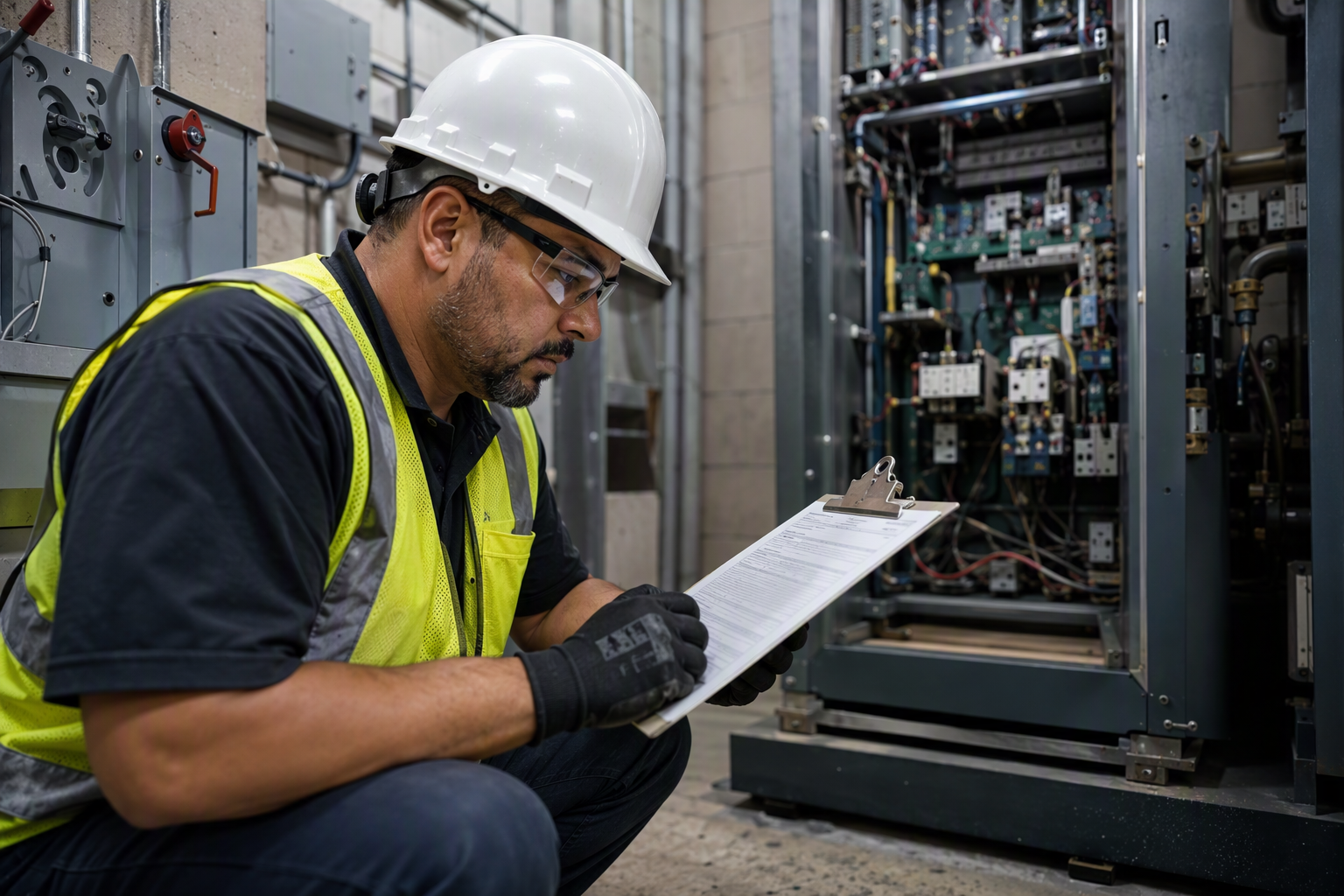
In Arizona, elevator inspections are administered under the jurisdiction of the Arizona Division of Occupational Safety and Health (ADOSH), which enforces the ASME A17.1 Safety Code for Elevators and Escalators as the foundational technical standard. When an elevator fails inspection, it means a certified inspector has identified one or more conditions that do not meet the code requirements in effect for that installation.
A failed inspection results in one or more of the following outcomes:
- A written Notice of Violation is issued to the building owner or property manager
- The elevator may be ordered out of service immediately if a hazardous condition is found
- An operating permit may be withheld or suspended until the unit passes a follow-up inspection
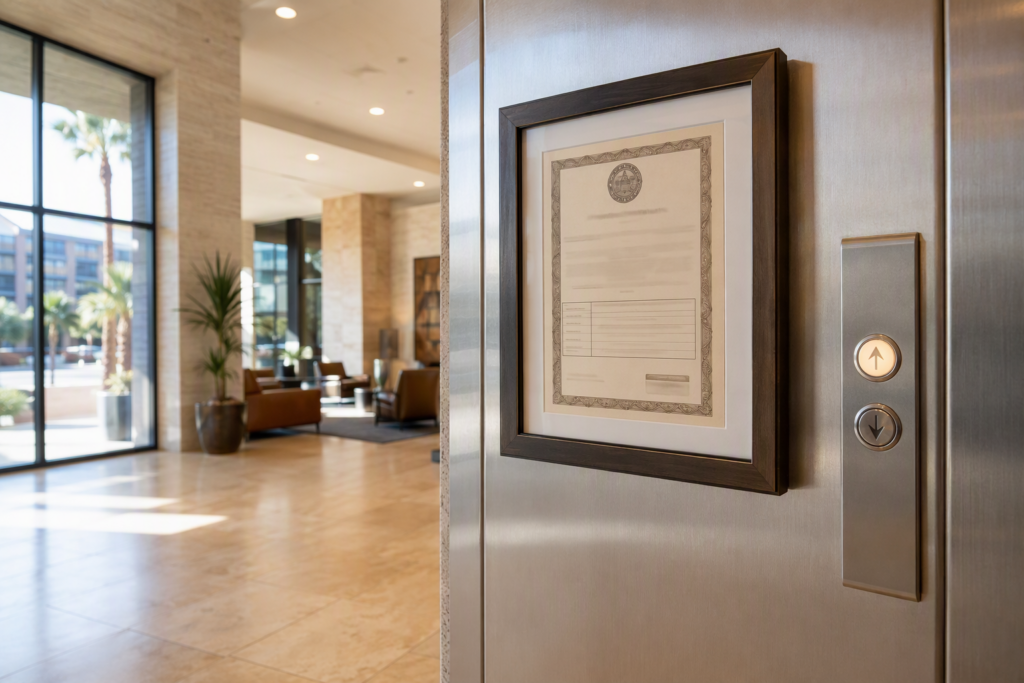
- The deficiencies are documented in a formal report that becomes part of the public inspection record
Not all failures carry the same urgency. ADOSH inspectors typically categorize findings by severity, distinguishing between imminent hazards (which require immediate shutdown) and non-imminent violations (which may allow a corrective window). Understanding this distinction is critical to knowing how much time a building owner actually has.
How Long Do You Have to Fix a Failed Elevator Inspection in Phoenix?
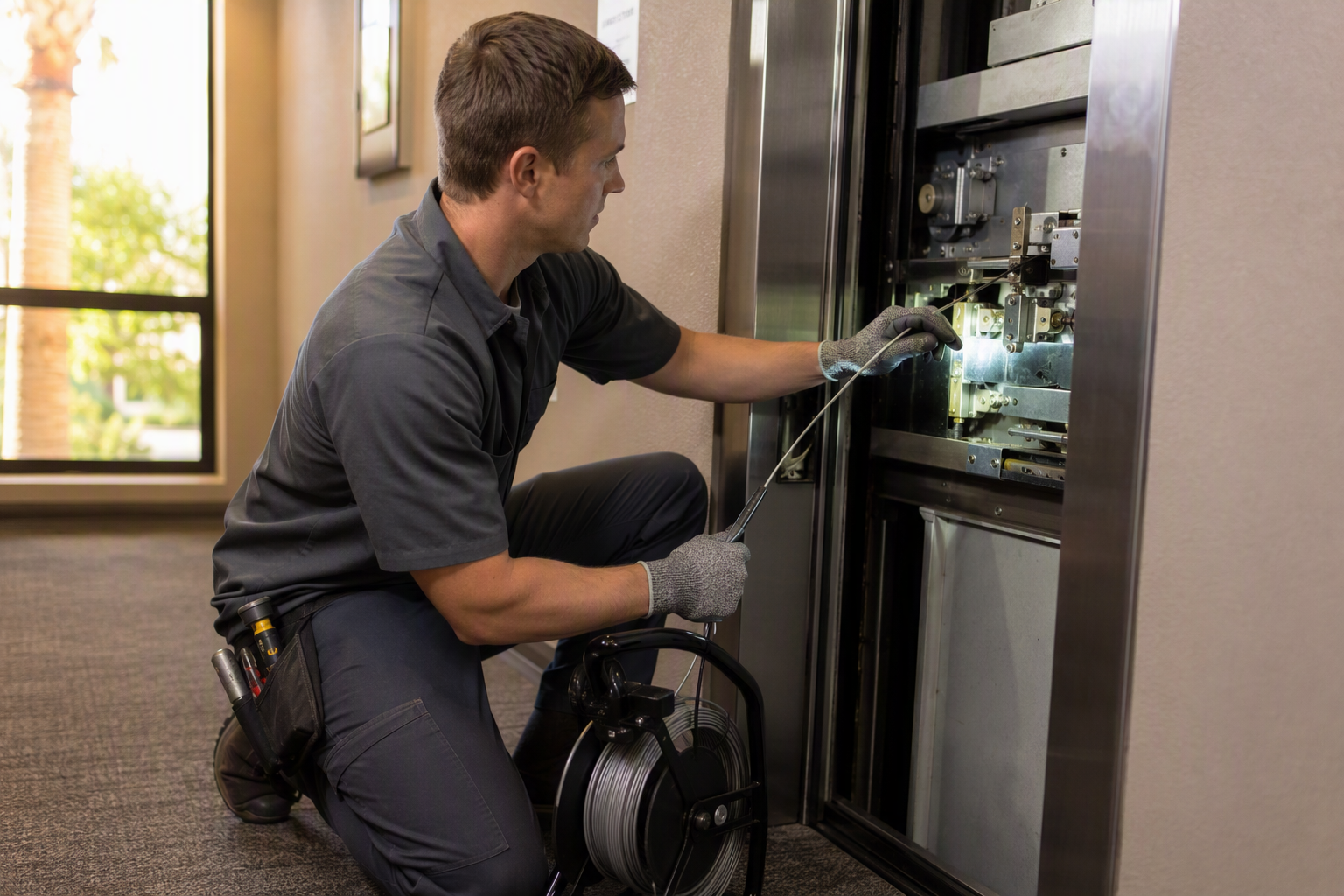
The deadline to correct violations depends on the nature of the deficiency found during inspection:
| Violation Category | Typical Action Required | Operational Impact | Follow-Up Inspection Required? |
|---|---|---|---|
| Imminent Hazard | Immediate shutdown; elevator locked out of service | Elevator unavailable until repaired and re-inspected | Yes — before reopening |
| Serious Violation (Non-Imminent) | Corrective action required within the period specified in the Notice of Violation | Elevator may remain in limited or full service depending on inspector’s determination | Yes |
| Minor / Administrative Violation | Correction required before next periodic inspection or within the notice deadline | Elevator generally remains in service | Documented at next scheduled inspection |
Important: The specific corrective deadline is written into the Notice of Violation itself. Building owners should read that document carefully and immediately contact a licensed elevator contractor. Deadlines are not automatically extended, and failing to meet them can escalate the violation’s severity and associated consequences.
What Happens If You Don’t Fix the Elevator Within the Required Timeframe?
Operating an elevator that has been ordered out of service or failing to correct documented violations within the notice period exposes building owners to serious consequences:
- Ongoing non-compliance penalties: ADOSH has authority to assess civil penalties for continued violations under Arizona’s occupational safety statutes.
- Legal liability exposure: Operating a non-compliant elevator that injures a passenger creates significant premises liability risk, and a documented failed inspection report in hand makes that risk far worse in litigation.
- Insurance complications: Many commercial property insurers have clauses that limit or void coverage for injuries occurring on equipment known to be out of compliance.
- ADA compliance complications: If the elevator is the primary means of access for individuals with disabilities, extended outages may create obligations under the Americans with Disabilities Act (ADA) to provide alternative accessible access — which carries its own logistical and legal burden.
- Reputational and tenant impact: Prolonged elevator outages in multifamily, commercial, or mixed-use buildings drive tenant complaints, potential lease disputes, and reputational damage.
What Are the Most Common Reasons Elevators Fail Inspection in Phoenix?
While every inspection outcome is specific to the unit and conditions found, certain categories of deficiencies appear frequently across commercial and residential elevator inventories:
| Common Deficiency Category | Examples | Typical Severity | Correction Complexity |
|---|---|---|---|
| Door safety systems | Failing door operators, worn door contacts, defective safety edges | Serious to Imminent | Moderate |
| Pit conditions | Water intrusion, missing stop switch, inadequate lighting, missing pit ladder | Serious | Low to Moderate |
| Emergency systems | Non-functional emergency lighting, inoperative alarm, failed two-way communication | Serious | Low to Moderate |
| Overspeed governor / safety devices | Worn governor components, out-of-date load test | Serious to Imminent | Moderate to High |
| Machine room conditions | Inadequate clearances, missing fire suppression, improper storage | Minor to Serious | Low |
| Hydraulic system issues | Oil leaks, failing power unit, inadequate pressure relief | Serious to Imminent | Moderate to High |
| Documentation failures | Missing or outdated certificates, load plate discrepancies | Minor to Administrative | Low |
Code compliance is measured against the edition of ASME A17.1 adopted in Arizona at the time the elevator was installed, with newer editions of the code providing the benchmark for major alterations or modernizations as of 2026.
What Should You Do Immediately After a Failed Inspection?
- Read the Notice of Violation in full. Identify every deficiency listed, the violation category assigned to each, and the specific corrective deadline stated in the document.
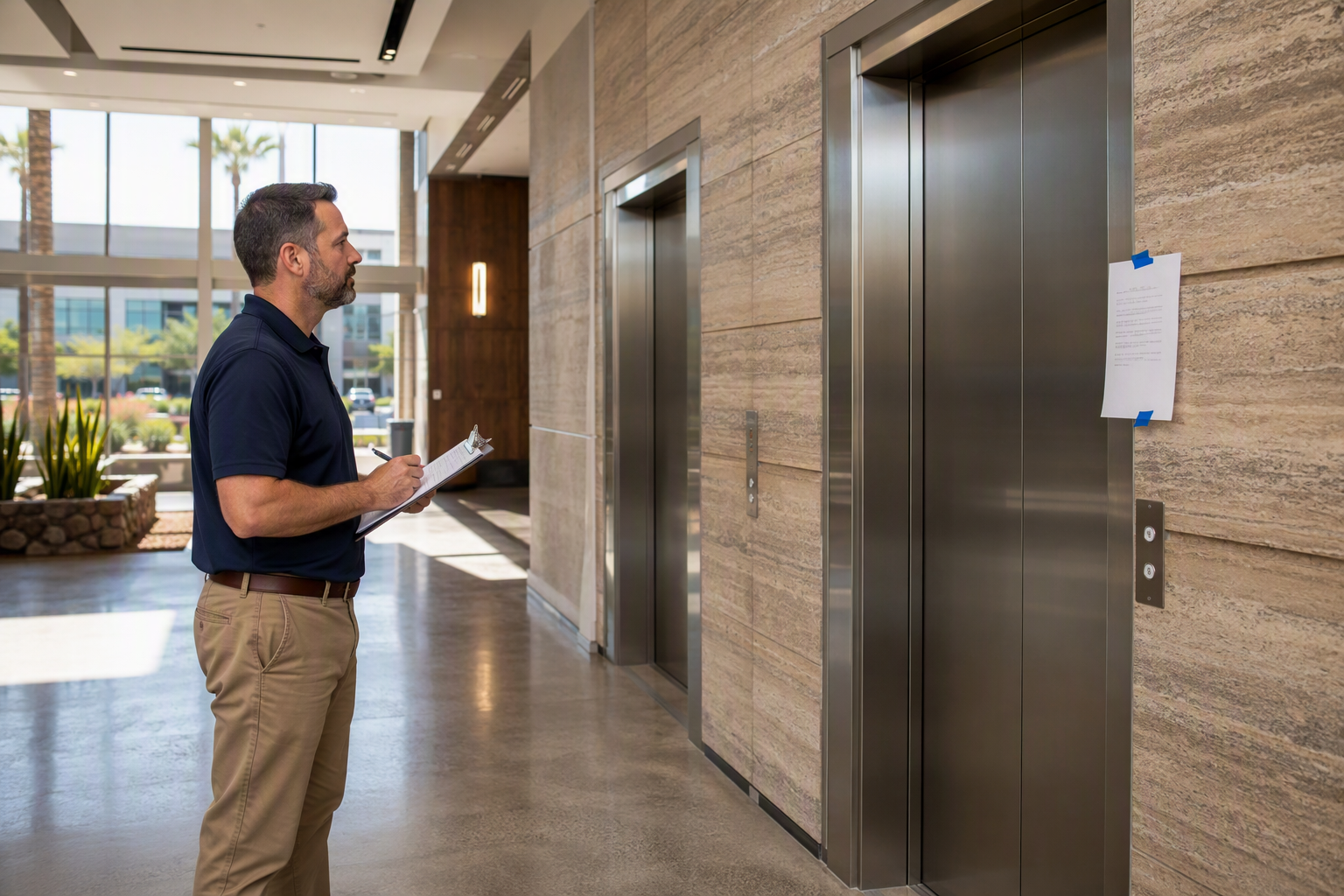
- If the elevator has been ordered out of service, lock it out immediately. Post the out-of-service notice on or adjacent to the elevator entrance on every floor. Do not allow the unit to be operated under any circumstances while it is under a shutdown order.
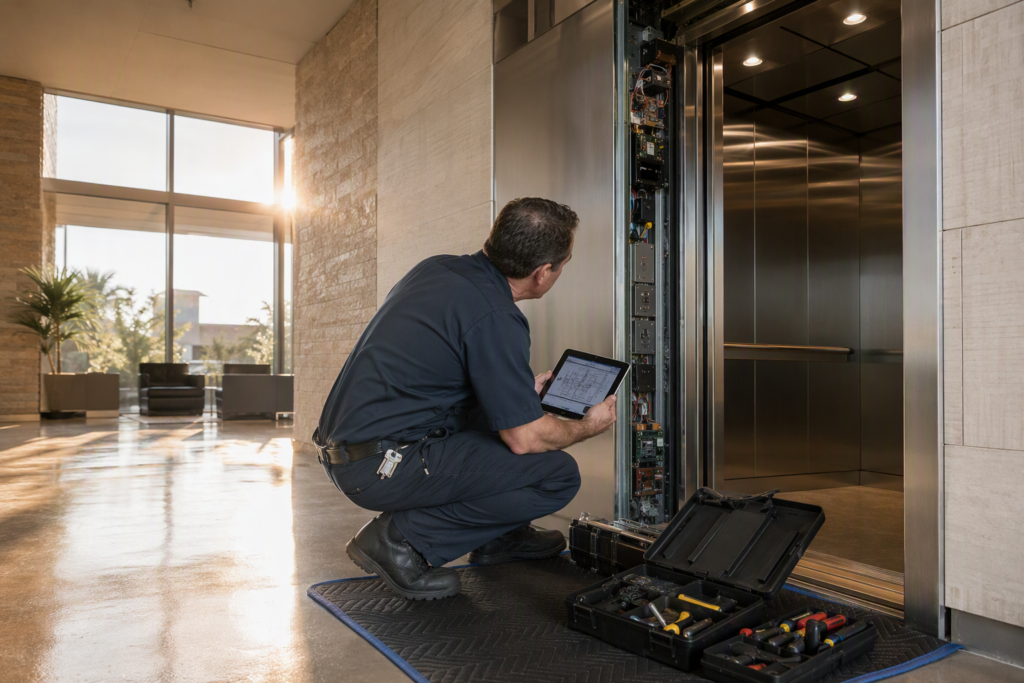
- Contact a licensed elevator contractor the same day. Arizona requires elevator work to be performed by contractors licensed under Arizona’s elevator safety statutes. Do not allow uncertified personnel to attempt repairs.
- Request a written scope of work and timeline from the contractor. Compare the contractor’s proposed correction list against every item on the Notice of Violation to confirm full coverage before authorizing work.
- Notify relevant parties. Inform building management, tenants, and your insurance carrier of the inspection result and the corrective action plan.
- Track all repair documentation. Retain invoices, parts records, and technician reports — these support the follow-up inspection and protect the building owner in the event of a legal dispute.
- Schedule the follow-up inspection through ADOSH. Coordinate with your contractor on the appropriate timing — the elevator must pass re-inspection before it can be legally returned to service.
- Confirm the operating permit is reinstated. Do not return the elevator to service on the assumption that repairs are complete. Confirm with ADOSH that the follow-up inspection has been passed and the permit is active.
How Do Independent Elevator Contractors Compare to OEM Service Providers for Inspection Corrections?
| Factor | Independent Contractor (e.g., Arizona Elevator Solutions) | OEM / Manufacturer-Tied Service Provider |
|---|---|---|
| Equipment flexibility | Typically services multiple brands and legacy equipment | Often specialized to their own brand; may decline or upcharge for other manufacturers |
| Parts sourcing | Access to OEM and compatible parts; can source cost-effectively | Often limited to proprietary parts; may carry higher parts markups |
| Contract flexibility | Generally more negotiable on scope and terms | May require long-term service agreements as a condition of repair |
| Local responsiveness | Phoenix-based independents focus on local market knowledge and relationships | Regional or national dispatch model may mean longer response windows |
| Code familiarity | Licensed contractors are required to know applicable ASME A17.1 requirements regardless of brand affiliation | Same licensing requirement applies |
| Cost transparency | Typically itemized proposals with competitive market pricing | Pricing may be less transparent; proprietary service structures common |
For post-inspection corrections where speed and cost-efficiency matter, many Phoenix building owners find that working with a qualified independent contractor gives them more flexibility on parts sourcing, scheduling, and contract terms — without sacrificing code compliance.
Arizona Elevator Solutions is an independent, certified elevator service company serving the Phoenix metro area. The team specializes in inspection corrections, modernization, and ongoing maintenance across a wide range of elevator makes and models.
Does a Failed Inspection Affect ADA Compliance Obligations?
Yes, potentially. Under the Americans with Disabilities Act, places of public accommodation and commercial facilities are required to ensure that individuals with disabilities have equal access to goods, services, and facilities. When an elevator — particularly one that serves as the sole accessible route to upper floors — is taken out of service following a failed inspection, building owners may have an obligation to provide an equivalent accessible alternative during the outage period.
This is especially relevant for:
- Multi-story commercial buildings where stairways are not an accessible option
- Healthcare, hospitality, and retail facilities with ADA-covered programs on upper floors
- Multifamily residential buildings where upper-floor units may be occupied by residents with mobility limitations
Resolving the inspection failure quickly is the most straightforward way to manage this risk. Building owners facing extended downtime should consult legal counsel regarding their specific obligations.
How Are Elevator Inspection Intervals Set in Phoenix?
Arizona’s elevator inspection program administered through ADOSH sets periodic inspection requirements based on equipment type and use. The ASME A17.1 Safety Code for Elevators and Escalators establishes technical standards against which inspections are conducted. Routine periodic inspections (sometimes called Category 1 and Category 5 tests depending on system type) occur on schedules defined by the applicable code and state program requirements.
Staying ahead of inspection cycles through proactive maintenance is the most reliable way to avoid a failed inspection. A well-maintained elevator is far more likely to pass inspection without deficiencies than one operating under a reactive maintenance model.
What Is the Difference Between an Inspection Failure and a Violation Tag?
These terms are often used interchangeably but refer to slightly different enforcement actions:
- An inspection failure is the overall result when a unit does not pass the inspection — one or more code deficiencies were found.
- A violation tag or notice is the formal written document ADOSH issues that itemizes specific deficiencies, assigns violation categories, and sets correction deadlines.
- An out-of-service tag is a physical placard placed on the elevator by an inspector or authorized official indicating the unit may not be operated. Removing or ignoring this tag while deficiencies remain unresolved is a serious legal matter.
Can You Appeal a Failed Elevator Inspection Result in Arizona?
Arizona’s administrative process provides avenues for contesting inspection findings. Building owners who believe a violation was cited in error, or that an inspector’s interpretation of the applicable code edition was incorrect, can raise those objections through ADOSH’s formal review or appeal process. However, pursuing an appeal does not automatically suspend the corrective deadline or permit the elevator to remain in operation if a shutdown order has been issued. Legal counsel experienced in Arizona occupational safety law and an independent engineering review are advisable before pursuing this route.
What Role Does Preventive Maintenance Play in Avoiding Future Inspection Failures?
The single most effective strategy for avoiding inspection failures is a structured, documented preventive maintenance program. Elevators operating under active maintenance contracts with licensed contractors are more likely to present deficiency-free at inspection because known issues are identified and resolved during routine service visits rather than discovered by an inspector.
Key elements of an effective elevator maintenance program include:
- Regular lubrication and adjustment of mechanical components
- Documented testing of safety devices, including door safety systems and overspeed governors
- Pit inspection and housekeeping on a scheduled basis
- Emergency systems testing (lighting, alarm, two-way communication)
- Hydraulic fluid and seal condition monitoring for hydraulic units
- Updated maintenance logs that can be presented to inspectors
Arizona Elevator Solutions provides customized maintenance programs for Phoenix-area buildings designed to keep elevators in continuous compliance with ASME A17.1 requirements and reduce the likelihood of inspection failures.
Should You Consider Modernization Instead of Repair After a Serious Failure?
| Decision Factor | Targeted Repair | Partial Modernization | Full Modernization |
|---|---|---|---|
| Best suited for | Isolated deficiencies on otherwise sound equipment | Multiple deficiencies concentrated in specific subsystems (e.g., controls, doors) | Aging equipment with systemic deficiencies or approaching end of useful service life |
| Compliance scope | Addresses only cited violations | Brings modernized subsystems to current code | Brings entire system to current code edition |
| Future inspection risk | Other aging components may generate future violations | Reduced risk in modernized systems | Significantly reduced overall risk |
| Downtime during work | Shortest | Moderate | Longest — weeks to months depending on scope |
| Long-term cost | Lower upfront; higher cumulative if failures recur | Moderate upfront; lower ongoing costs for modernized components | Higher upfront; lowest long-term maintenance and inspection risk |
The right path depends on equipment age, the nature and scope of the violations cited, budget constraints, and long-term building plans. Arizona Elevator Solutions can assess the current condition of a unit and provide a clear recommendation after a thorough evaluation — with no obligation to proceed.
Get Expert Help After a Failed Inspection
A failed elevator inspection in Phoenix triggers real deadlines, real liability, and real disruption. The fastest path back to compliance starts with a qualified assessment of what the violations actually require and a contractor who can execute the corrections efficiently and correctly.
Contact Arizona Elevator Solutions for a free elevator assessment. The team serves building owners and property managers throughout the Phoenix metro area and can help identify the fastest, most cost-effective path back to a passing inspection and a valid operating permit.
Call today: 480-557-7600
Need elevator service you can rely on? Arizona Elevator Solutions is ready to help.