Deciding whether to repair, modernize, or fully replace an elevator is one of the most consequential decisions a building owner or facilities manager will face. This guide covers the complete decision framework: warning signs, cost comparisons, compliance considerations, timelines, and how to evaluate your options with confidence.
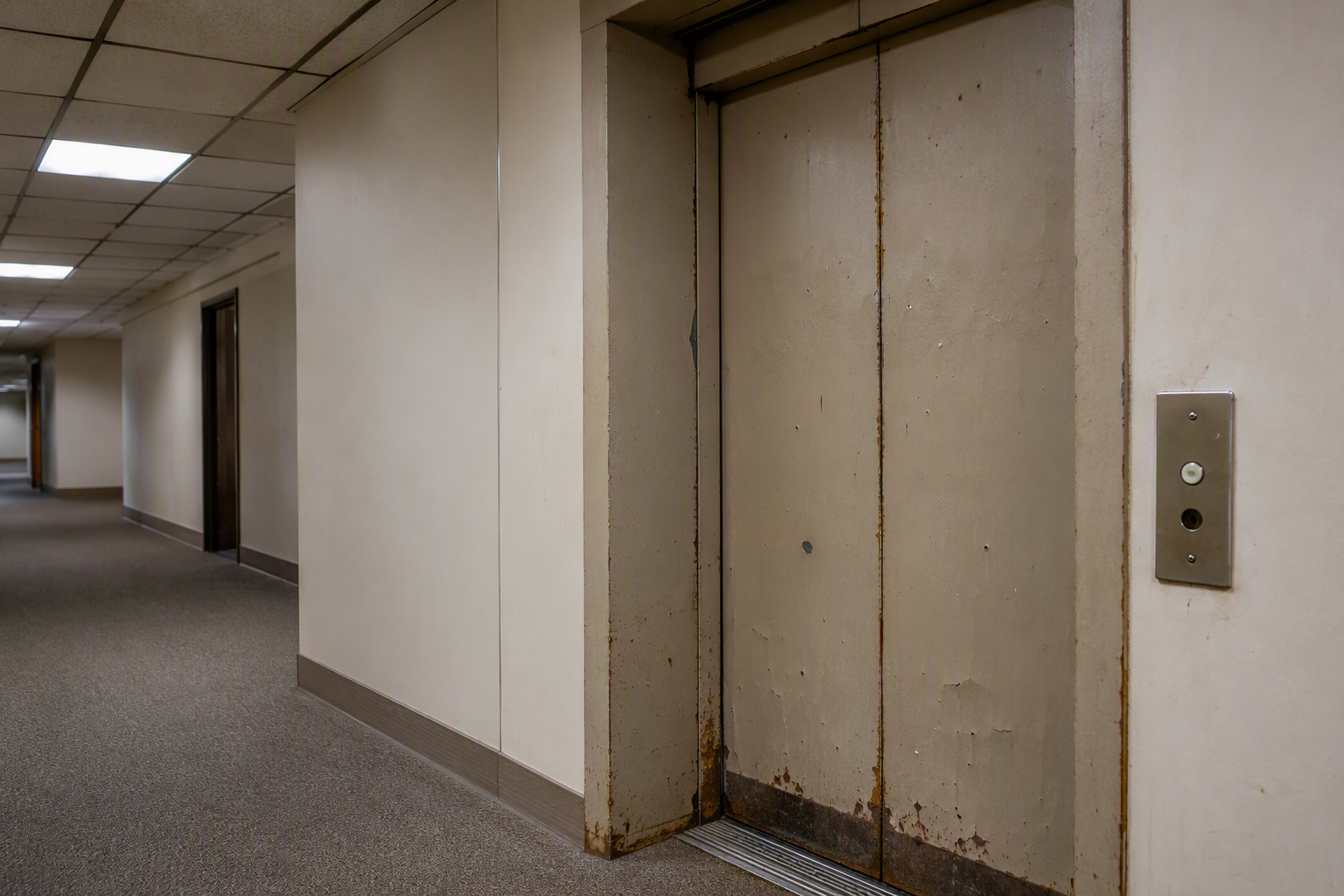
What Are the Most Critical Signs an Elevator Is at End of Life?
Not every breakdown signals end of life, but a pattern of compounding problems usually does. The following warning signs — especially when several occur together — indicate that an elevator has moved beyond the point where repair or partial modernization makes financial or safety sense.
- Chronic mechanical breakdowns: When the same components fail repeatedly within short intervals, the underlying infrastructure is no longer reliable. Individual repairs become a treadmill rather than a solution.
- Discontinued or obsolete parts: When original equipment manufacturers (OEMs) stop producing replacement parts, technicians must source used components or custom fabrications. This drives up costs, extends downtime, and creates traceability risks for safety-critical parts.
- Persistent entrapments: Any entrapment is a serious safety event. Recurring entrapments signal systemic failure in the door, leveling, or control systems — not isolated incidents.
- Aging hydraulic systems with known fluid leaks: Older hydraulic elevators may use fluids that pose environmental contamination risk. Repeated seal failures and fluid loss in aging cylinders are a strong indicator that the system has reached its service ceiling.
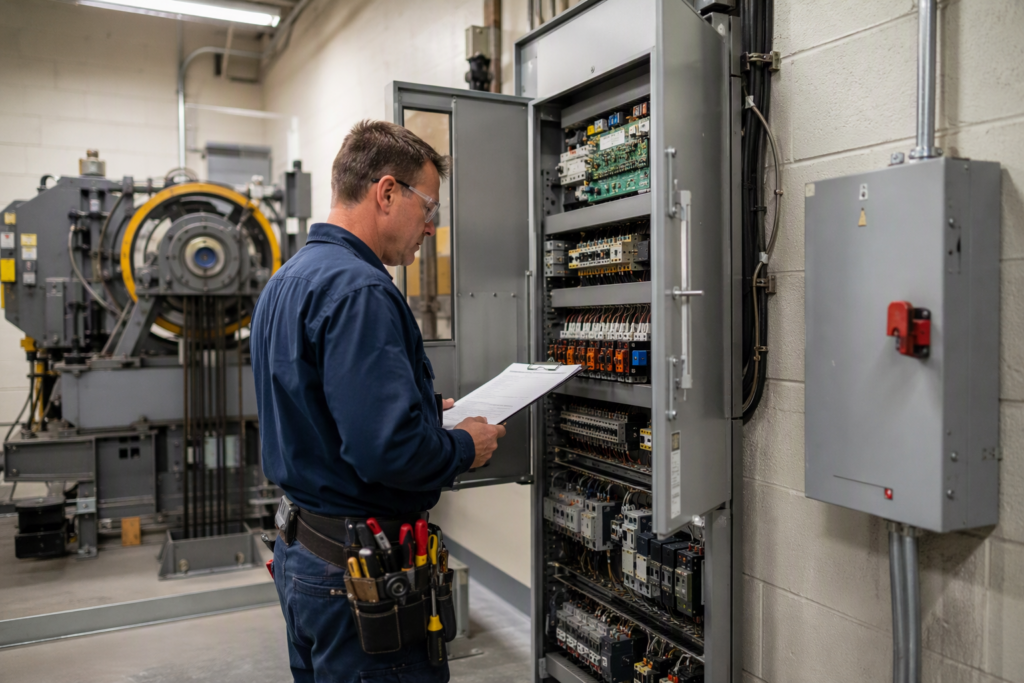
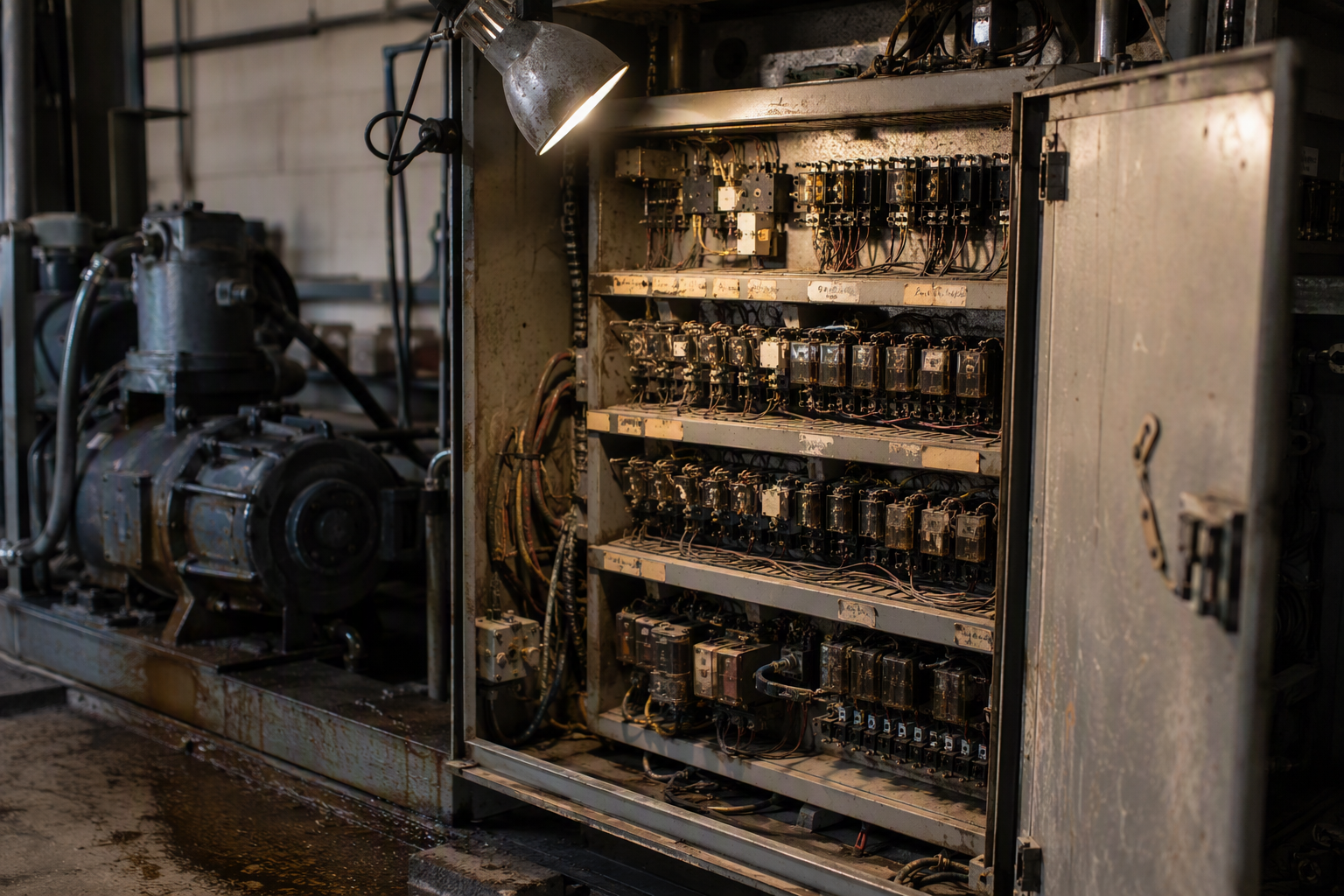
- Outdated control systems that cannot be retrofitted: Relay logic or early microprocessor controllers from decades past may not support modern safety features, remote monitoring, or energy-efficient drives. When retrofitting is impractical, replacement becomes the path forward.
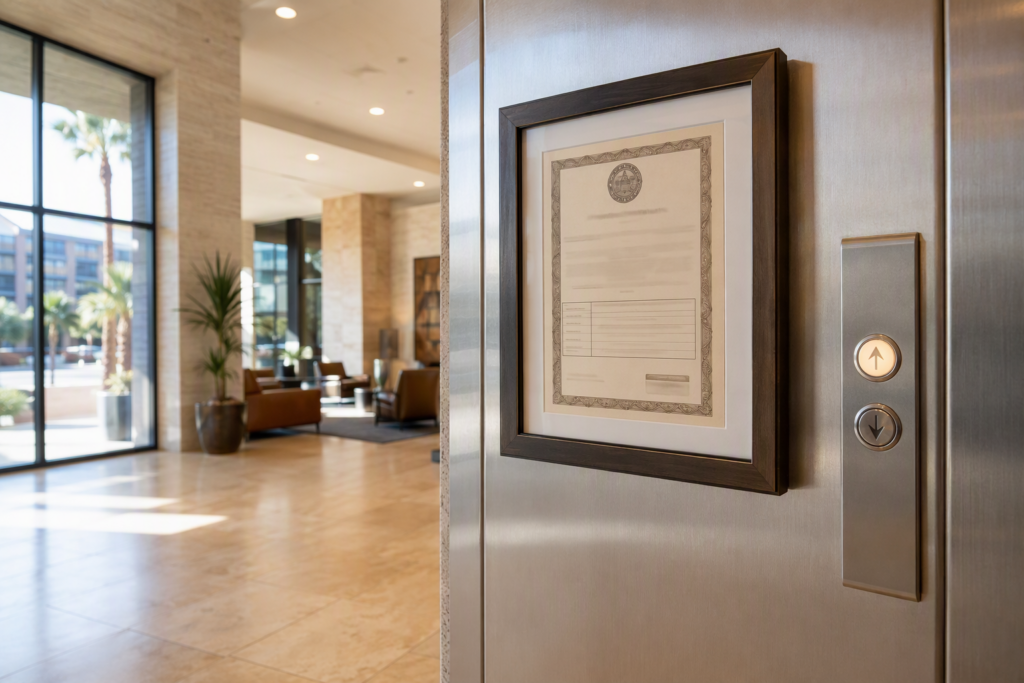
- Consistent failure of annual or periodic inspections: Under the ASME A17.1 Safety Code for Elevators and Escalators, elevators must pass regular inspections to remain in service. Repeated inspection failures or deferred violations accumulate into a compliance liability that can force shutdown.
- ADA non-compliance that cannot be corrected through modification: The Americans with Disabilities Act sets clear accessibility standards. When cab dimensions, control heights, or door widths cannot meet requirements without structural changes, replacement is often the only viable path.
- Unacceptable ride quality: Excessive vibration, jolting starts and stops, and misleveling at floors (a fall and trip hazard) that persist after adjustment indicate worn mechanical components throughout the drive system.
- Escalating insurance costs or denied coverage: Insurance carriers may flag aging elevator equipment as a liability risk, resulting in premium increases or coverage exclusions that shift financial risk to the building owner.
- Energy consumption far above modern benchmarks: Older AC two-speed or single-speed motors consume substantially more energy than modern variable-voltage, variable-frequency (VVVF) drives. In high-use buildings, the energy cost gap is significant enough to factor heavily into replacement ROI.
Repair vs. Modernization vs. Full Replacement: How Do They Compare?

Understanding the three options and their trade-offs is essential before making any decision. The table below summarizes the key dimensions of each approach.
| Factor | Targeted Repair | Modernization | Full Replacement |
|---|---|---|---|
| Scope | Fix specific failed component(s) | Upgrade major systems (controls, drives, doors, cab interior) | Remove and install entirely new elevator system |
| Best suited for | Elevators under 15–20 years old with isolated failures | Elevators with aging systems but structurally sound hoistway | Elevators with structural, safety, or compliance issues beyond modernization scope |
| Relative cost | Lowest upfront | Moderate | Highest upfront |
| Long-term value | Low if problems are systemic | High when hoistway and structure are sound | Highest — resets service life fully |
| Downtime | Hours to days per incident | Weeks, depending on scope | Months, including permitting and installation |
| Code compliance outcome | May not resolve all violations | Brings most systems into current code | Full compliance with current code edition |
| Parts availability risk | High if system is obsolete | Reduced — new components installed | Eliminated — entirely new equipment |
| Service life added | Minimal | Meaningful extension | Full new service life cycle |
| Energy efficiency gain | None | Moderate to significant | Maximum |
| ADA compliance | Unlikely to achieve full compliance | Partial, depending on cab and hoistway dimensions | Full compliance achievable by design |
What Is the Typical Service Life of a Commercial Elevator?
Elevator service life varies considerably based on usage intensity, maintenance history, environment, and equipment type. Rather than citing a single figure without a verifiable source, the practical framework is this: when the cumulative cost of repairs over a rolling multi-year period approaches or exceeds the cost of modernization, and when the system still cannot reliably pass inspection, the elevator has functionally reached end of life regardless of its calendar age.
The ASME A17.1 Safety Code for Elevators and Escalators establishes mandatory inspection and testing intervals. Buildings that document consistent inspection compliance and proactive maintenance will typically extend service life meaningfully compared to those that defer maintenance. Arizona Elevator Solutions recommends treating every failed inspection as a structured decision point — not just a repair ticket.
How Does Compliance Factor Into the Replacement Decision?
Compliance is not optional, and it is one of the most decisive factors in the repair-versus-replace calculation. Two primary regulatory frameworks govern elevator safety and accessibility in commercial buildings:
- ASME A17.1 Safety Code for Elevators and Escalators: This is the foundational safety standard. It defines requirements for mechanical, electrical, and structural components, as well as inspection and testing protocols. The 2025/2026 code editions include updated requirements for firefighters’ emergency operations, door detection systems, and seismic considerations in applicable regions. Arizona is subject to these evolving requirements, and buildings in non-compliance face shutdown orders and liability exposure.
- Americans with Disabilities Act (ADA): The ADA requires that elevators serving multi-story commercial buildings meet specific accessibility standards. These include minimum cab dimensions, control panel height limits, audible and visual signals, and Braille markings. An elevator that cannot meet these requirements through modification — because of hoistway size or structural constraints — must be replaced to achieve compliance.
- OSHA standards: OSHA regulations address workplace safety for elevator maintenance personnel and building occupants. Persistent hazards identified during OSHA inspections that cannot be corrected through repair or modification become a compelling case for replacement.
In Arizona, the Office of Occupational Safety and Health enforces state elevator regulations in coordination with federal frameworks. Buildings with elevators operating under active violation notices face potential closure of the unit and legal liability in the event of injury.
What Is the ROI Framework for Elevator Replacement?
Return on investment for elevator replacement is multi-dimensional. The following table outlines the value categories to analyze when building a business case for replacement versus continued repair spending.
| ROI Category | Repair Path | Replacement Path |
|---|---|---|
| Cumulative repair spend (multi-year) | Unpredictable; increases as system ages | Eliminated for new system during warranty period |
| Energy cost | High with aging motors and controls | Reduced with VVVF drives and modern motors |
| Tenant and occupant satisfaction | Diminishes with frequent outages | Improves; reduces lease risk in commercial buildings |
| Insurance liability | Exposure increases with aging equipment and entrapments | Exposure significantly reduced with code-compliant new system |
| Property value | Aging elevator is a disclosed liability during sale | New elevator is a disclosed asset; may support higher valuation |
| Regulatory downtime risk | High — shutdown orders possible | Low — new system starts with full compliance |
| Downtime during transition | Ongoing, unpredictable outages | Planned downtime during installation; predictable |
What Should a Building Owner Do Immediately If They Suspect End-of-Life Conditions?
- Stop using the elevator if any safety hazard is present. If the elevator is misleveling at floors, producing unusual sounds, failing to hold at landings, or has had a recent entrapment, it should be taken out of service until assessed by a qualified technician.
- Compile all maintenance and inspection records. Gather every service ticket, inspection report, and violation notice. This documentation defines the pattern of failures and is essential for any engineering or cost analysis.
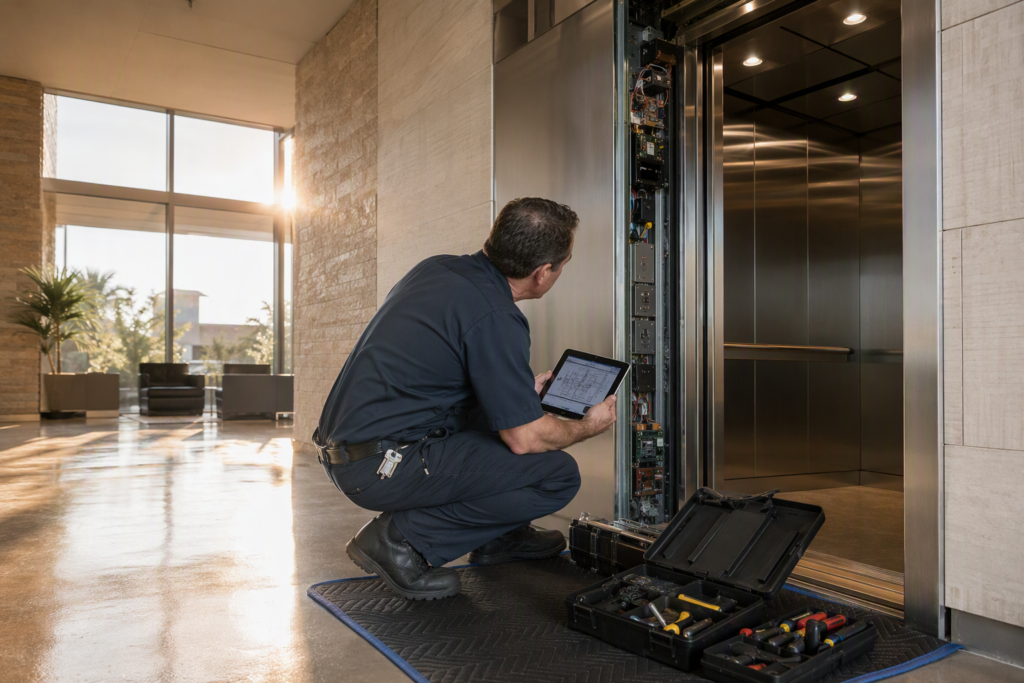
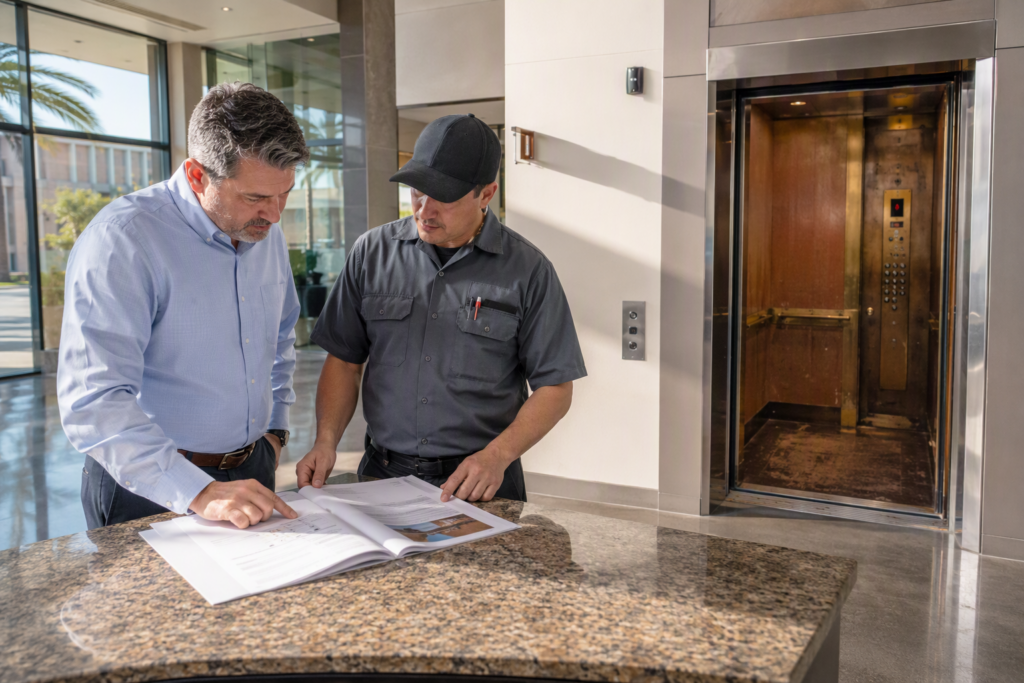
- Request a comprehensive condition assessment — not just a service call. A targeted repair visit addresses the symptom; a condition assessment evaluates the entire system and produces a documented finding with recommendations. Arizona Elevator Solutions provides free elevator assessments for building owners evaluating their options.
- Review current compliance status. Cross-reference the latest inspection report against the current ASME A17.1 requirements and ADA accessibility standards. Identify which violations are correctable through repair versus those requiring system-level changes.
- Obtain multiple independent bids. Do not rely solely on the incumbent service contractor’s recommendation. An independent provider — one with no financial stake in selling a specific manufacturer’s equipment — will produce a less conflicted assessment.
- Model total cost of ownership over a defined horizon. Compare the realistic total cost of continued repair (including emergency callouts, parts at a premium, and potential downtime costs) against the amortized cost of replacement over the same period.
- Consult your insurance carrier. Inform your insurer of the elevator’s condition and compliance status. Their response — particularly any coverage limitations — may accelerate the replacement timeline or provide additional financial justification.
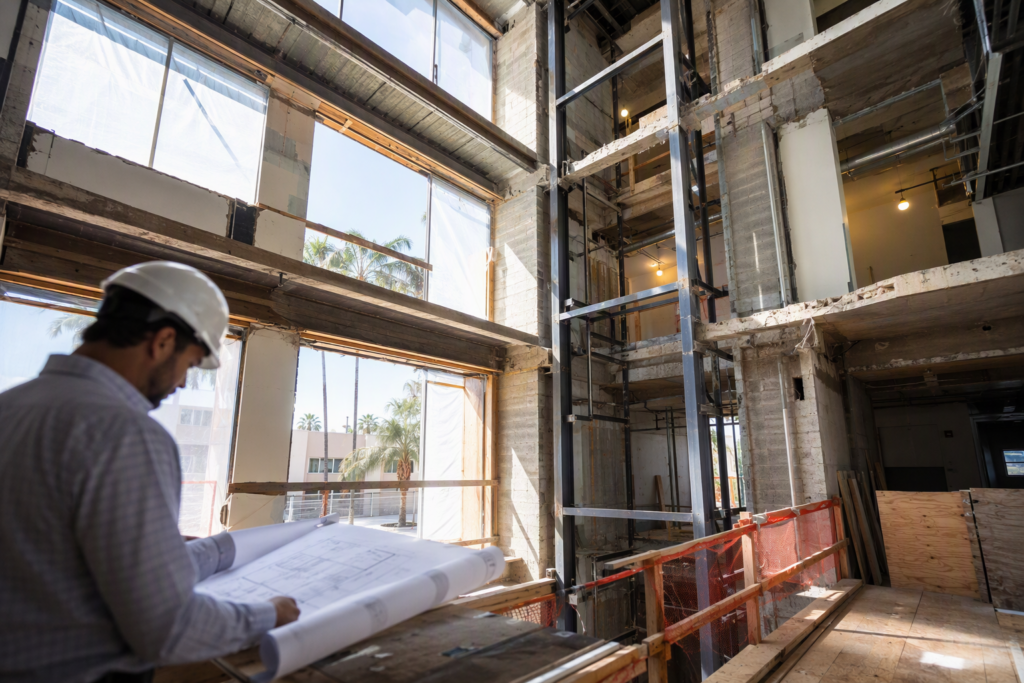
- Establish a replacement timeline and budget if replacement is indicated. Elevator replacement in commercial buildings involves permitting, engineering review, equipment lead times, and installation. Planning the timeline realistically protects against rushed decisions and ensures occupant communication can be handled professionally.
How Long Does Elevator Replacement Take?
Full elevator replacement timelines vary based on building type, hoistway configuration, local permitting requirements, and equipment availability. In general, the process involves several sequential phases: condition assessment and decision, engineering and specification, permitting (which in Arizona requires state review), equipment procurement, installation, and final inspection. Each phase adds time, and supply chain conditions affect equipment lead times. Building owners who are seeing end-of-life warning signs should begin the planning process well before a forced shutdown occurs — reactive replacement under emergency conditions is always more disruptive and costly than planned replacement.
How Is Elevator Modernization Different From Replacement, and When Is It the Right Choice?
Modernization retains the existing hoistway structure, pit, and overhead, while replacing major subsystems: typically the controller, drive system, door operators, fixtures, and cab interior. It is the right choice when the hoistway is structurally sound, the pit depth and overhead clearances meet current code, the hydraulic cylinder (for hydraulic units) is in good condition, and the building owner wants to significantly extend service life without the cost and disruption of full replacement.
Modernization is not the right choice when the hoistway itself has structural problems, when the existing layout cannot be modified to meet ADA cab dimensions, when the hydraulic cylinder is corroded or leaking underground (an environmental concern in Arizona’s soil conditions), or when the cumulative cost of modernization approaches replacement cost without achieving equivalent outcomes.
What Questions Should You Ask an Elevator Service Company Before Choosing a Path?
- Is this company manufacturer-independent, or do they have a financial incentive to recommend a specific brand’s equipment?
- Can they provide a written condition assessment with specific findings, not just a verbal recommendation?
- Are they familiar with Arizona state elevator regulations and permitting requirements?
- Can they document their recommendation against current ASME A17.1 code requirements?
- What warranty terms apply to replacement or modernization work, and who backs the warranty?
- How will planned downtime be managed and communicated to building occupants?
Arizona Elevator Solutions is an independent, certified elevator service company serving building owners across Arizona. As an independent provider, Arizona Elevator Solutions is not tied to a single equipment manufacturer, which means recommendations are based on what is right for the building — not what generates the highest equipment margin. Arizona Elevator Solutions performs comprehensive elevator condition assessments and provides clear, documented findings that help building owners make informed decisions about repair, modernization, or replacement.
What Are the Risks of Delaying Replacement When Warning Signs Are Present?
Delaying replacement when clear end-of-life indicators are present creates compounding risks across multiple dimensions:
- Safety liability: If an occupant is injured due to a known deficiency that was not corrected, building owners face significant legal and financial exposure.
- Regulatory enforcement: Elevators operating with unresolved inspection violations can be ordered out of service by state authorities at any time, creating immediate operational disruption.
- Emergency replacement costs: A catastrophic failure requiring emergency replacement is always more expensive than planned replacement — expedited permitting, premium parts sourcing, and emergency labor rates all increase total project cost.
- Tenant and occupancy risk: In residential or commercial rental properties, elevator outages affect occupant quality of life and can trigger lease disputes or vacancies.
- Environmental liability: In Arizona, aging underground hydraulic cylinders that fail can cause fluid to leach into soil, creating environmental remediation obligations separate from the elevator replacement itself.
Pros and Cons Summary: Continuing Repairs on an End-of-Life Elevator
| Pros of Continuing Repairs | Cons of Continuing Repairs |
|---|---|
| Lower immediate cash outlay | Cumulative costs often exceed replacement cost over time |
| No planned extended downtime | Unplanned emergency outages are more disruptive |
| Familiar equipment for existing service team | Obsolete parts create sourcing delays and cost premiums |
| Defers capital expenditure | Does not resolve compliance violations or ADA gaps |
| — | Increases safety and liability risk over time |
| — | No energy efficiency improvement |
| — | Does not reset service life or provide warranty protection |
How Arizona Elevator Solutions Approaches End-of-Life Assessments
Arizona Elevator Solutions provides structured elevator condition assessments for building owners across Arizona who are evaluating whether their elevator has reached end of life. The assessment process examines mechanical and electrical systems, reviews the maintenance and inspection history, identifies compliance gaps against current ASME A17.1 and ADA requirements, and produces a documented report with findings and a clear recommendation.
Because Arizona Elevator Solutions operates as an independent provider — not aligned with any single elevator manufacturer — the recommendation reflects what is genuinely in the building owner’s best interest: whether that is a targeted repair, a phased modernization, or full replacement. Building owners in Arizona who are seeing warning signs described in this guide are encouraged to act before a failure forces an emergency decision.
Take the Next Step: Get a Free Elevator Assessment
If your elevator is showing any of the warning signs described in this guide — frequent breakdowns, inspection failures, obsolete parts, ADA gaps, or recurring entrapments — do not wait for a forced shutdown or a safety incident to force your hand.
Contact Arizona Elevator Solutions for a free elevator assessment. An independent evaluation will give you a clear, documented picture of your elevator’s condition, your compliance status, and your options — so you can make a confident, informed decision.
Call Arizona Elevator Solutions: 480-557-7600
Need elevator service you can rely on? Arizona Elevator Solutions is ready to help.