How Much Does Elevator Repair Cost and What Affects the Price?
Elevator repair pricing is one of the most common questions building owners, facility managers, and property owners ask — and one of the hardest to answer without understanding the underlying variables. This page breaks down every factor that drives elevator repair costs, what industry codes require, how to evaluate repair quotes, and what trends are shaping service pricing in 2025 and 2026.
What Is the Typical Cost Range for Elevator Repairs?
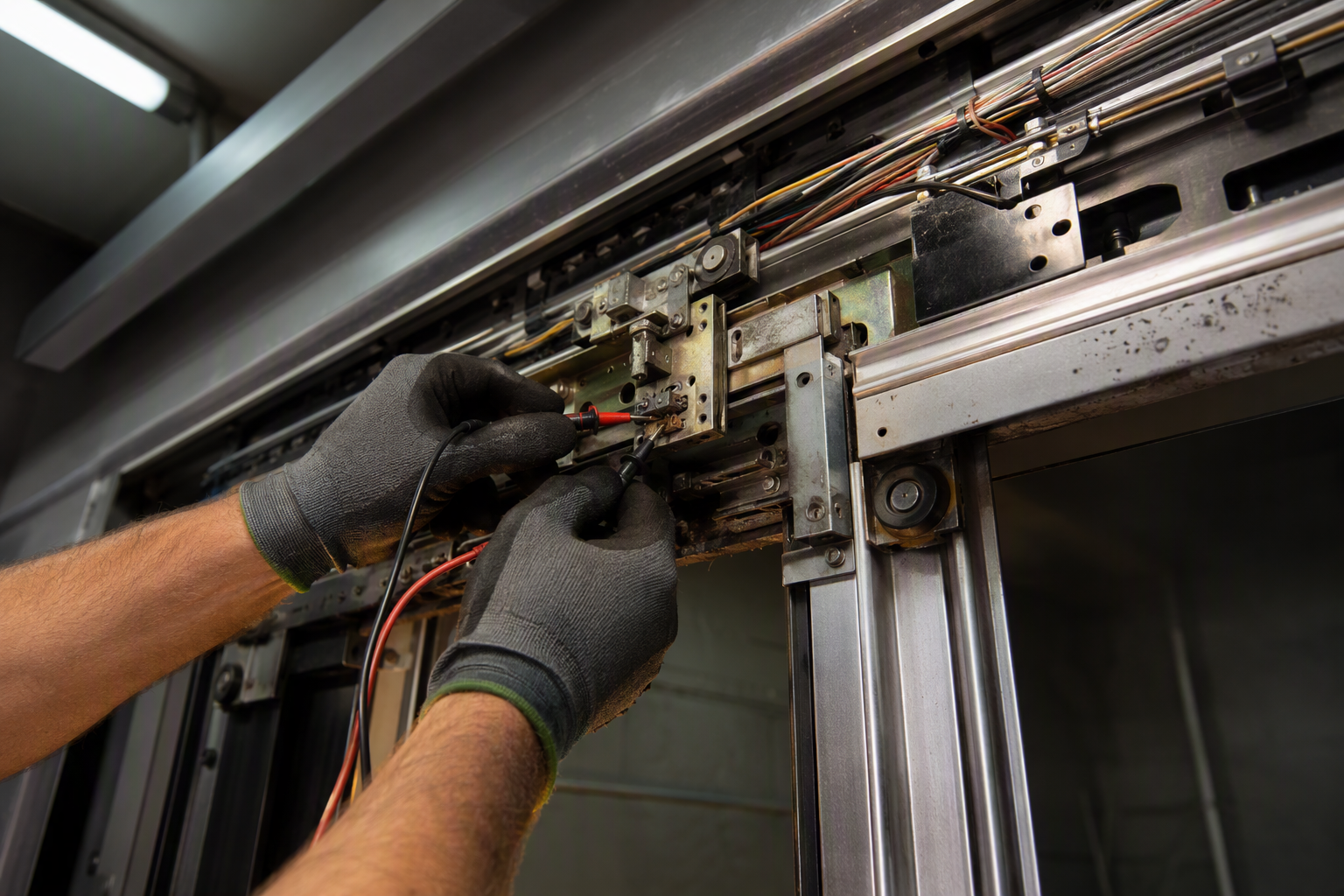
Elevator repair costs span an extremely wide range. A straightforward door sensor replacement or minor button panel repair sits at the low end of the cost spectrum. A hydraulic cylinder replacement, drive unit rebuild, or full modernization of an aging traction elevator represents a significantly higher expenditure — often comparable to a partial system replacement rather than routine maintenance.
The variability exists because “elevator repair” is not a single service. It encompasses dozens of distinct subsystems — doors, controls, hydraulics, traction motors, cables, safety devices, and more — each with its own parts cost, labor time, and compliance requirements. No single published figure accurately represents the “average” elevator repair, because the median of a door adjustment and a machine room overhaul is not a meaningful number.
What building owners consistently report is that deferred maintenance dramatically increases repair costs over time. A door interlock that is serviced early costs a fraction of what a complete door operator replacement costs after the problem has caused secondary damage to the sill, hanger, and control board.
What Are the Main Factors That Affect Elevator Repair Cost?

Several variables combine to determine the final cost of any elevator repair. Understanding these factors helps building owners evaluate quotes accurately and make informed decisions about timing and scope.
1. Type of Elevator System
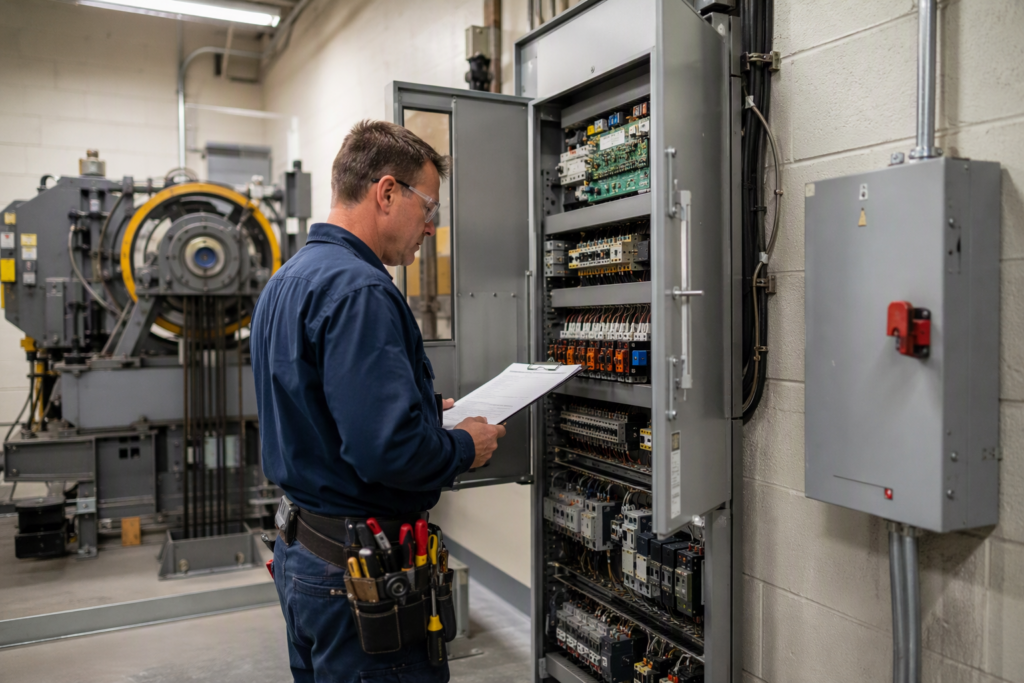
Hydraulic elevators and traction elevators have fundamentally different mechanical architectures, which means their repair profiles differ significantly. Hydraulic systems involve fluid, cylinders, and pumps; traction systems involve counterweights, ropes or belts, and machine room or machine-room-less (MRL) drive units. The parts and labor for each system type are not interchangeable, and specialty components for older models may require custom sourcing that adds both cost and lead time.
2. Age and Obsolescence of the Equipment
Elevators installed decades ago may rely on components that are no longer manufactured. When original parts are unavailable, technicians must source third-party alternatives, fabricate custom components, or recommend modernization as the more cost-effective path. Older relay logic control systems, for example, have largely been replaced by microprocessor-based controls in the industry, making relay board repairs increasingly difficult and expensive to source.
3. Labor Market and Local Rates
Elevator mechanics are a licensed, specialized trade. Labor rates reflect the technical training required, regional cost-of-living factors, and the prevailing union or non-union wage structure in a given market. In Arizona, as in most Sun Belt markets, construction and skilled trades demand has remained elevated, which influences service labor pricing.
4. Parts Availability and Lead Time
A repair that can be completed with in-stock parts costs less and resolves faster than one that requires a parts order from an OEM with a multi-week lead time. Emergency or expedited shipping for critical components adds cost. Building owners who need an elevator returned to service quickly to serve ADA-required access needs may face premium pricing for expedited parts.
5. Code Compliance Requirements
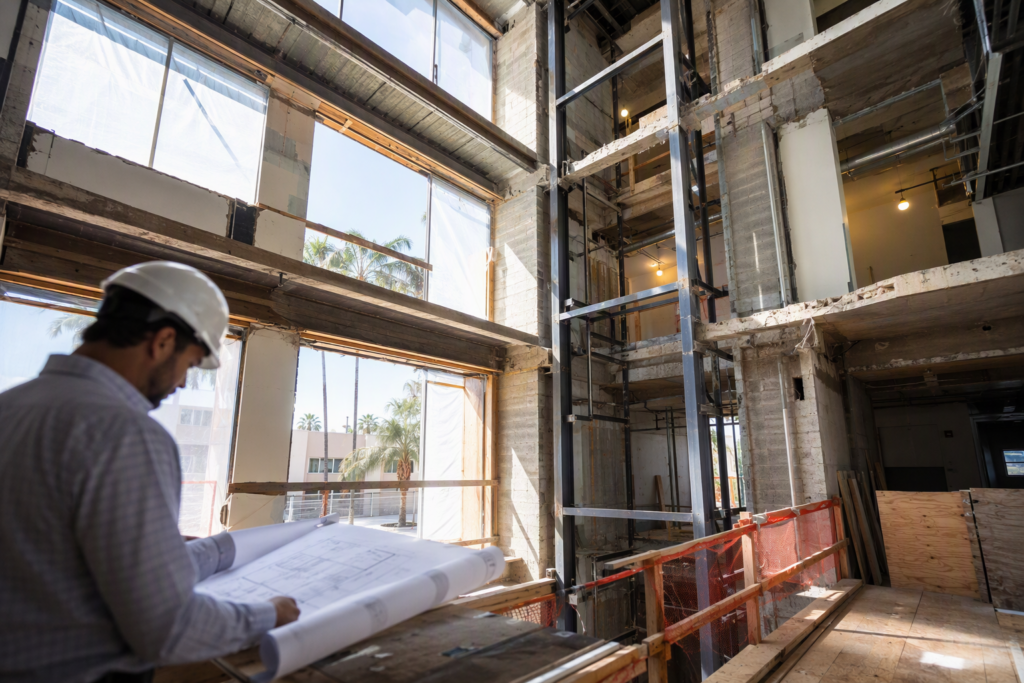
Many repairs trigger mandatory code upgrades. Under the ASME A17.1 Safety Code for Elevators and Escalators, certain repair scopes constitute “alterations” as defined by the code, which require the elevator to be brought into compliance with current safety requirements in the affected systems. This means a repair that opens up the control system may also require updated safety features — adding scope and cost that is not optional but legally required.
Similarly, the Americans with Disabilities Act (ADA) establishes accessibility standards that must be maintained. Repairs that involve cab interiors, control panels, or door systems may require verification that ADA-compliant dimensions, button heights, and audible/visual signals are maintained or restored.
6. Emergency vs. Scheduled Repairs
Emergency call-outs — particularly those outside of standard business hours — typically carry premium labor rates. A repair that is scheduled during a planned maintenance window will almost always cost less than the same repair performed as an emergency response at night or on a weekend. Building owners who invest in preventive maintenance programs experience fewer emergency calls, which has a meaningful impact on total annual repair expenditure.
7. Single Elevator vs. Multi-Unit Building
Buildings with multiple elevators of the same model benefit from economies of scale in parts and labor. A technician already on-site and familiar with one unit can often address a second unit more efficiently. Conversely, a building with a single, unique legacy unit may pay more simply because the technician must research that specific model before each service visit.
What Types of Elevator Repairs Are Most Common?
While every building’s repair history is different, certain failure categories appear across elevator service records industry-wide:
- Door system failures: Door operators, rollers, gibs, interlocks, and sensors are among the highest-frequency repair categories. Doors cycle thousands of times per year and experience significant mechanical wear.
- Control and electrical issues: Circuit boards, relay failures, wiring degradation, and selector/controller malfunctions are common in aging systems.
- Hydraulic system service: Seal replacements, pump motor repairs, valve adjustments, and — in underground cylinder units — cylinder corrosion issues requiring liner installation or full replacement.
- Rope and cable wear: Traction elevator hoist ropes have defined inspection and replacement cycles under ASME A17.1, and worn ropes are a non-negotiable safety replacement.
- Brake system service: Brake lining wear, solenoid failure, and brake adjustment are critical safety items that cannot be deferred.
- Safety device testing and replacement: Governor mechanisms, safeties, buffers, and other devices required by ASME A17.1 must be tested on defined intervals and replaced when they fail to meet specification.
How Do You Know When to Repair vs. Modernize an Elevator?
The repair-versus-modernize decision is one of the most consequential choices a building owner faces. Several qualitative factors weigh in favor of modernization over continued repair investment:
- The cost of a single repair approaches or exceeds a meaningful fraction of a full modernization budget.
- Replacement parts are no longer manufactured or have lead times measured in months.
- The elevator has experienced multiple failures within a short period, indicating systemic deterioration rather than isolated component failure.
- Compliance upgrades required by a repair scope are extensive enough that a full modernization is more cost-efficient.
- Energy consumption of an older hydraulic or traction system is significantly higher than modern equivalents, and lifecycle cost analysis favors the upgrade.
Conversely, repair is the appropriate choice when the system is mechanically sound, the failed component is isolated and available, and the remaining system has significant useful life remaining. A qualified elevator consultant or service provider can assess which path makes financial and operational sense for a specific installation.
What Does an Elevator Repair Quote Include?
A thorough elevator repair quote should itemize the following components so building owners can make accurate comparisons between competing proposals:
- Diagnosis or assessment fee (some providers charge for this separately; others include it)
- Parts cost by line item, including part numbers where available
- Labor hours and rate
- Any required permits or inspection fees
- Scope of code-compliance work triggered by the repair
- Warranty on parts and labor
- Timeline for completion
Quotes that bundle all costs into a single line item without itemization make it difficult to evaluate whether parts are being marked up significantly above market rates or whether labor hours are accurately estimated. Transparent, itemized proposals are a marker of a trustworthy service provider.
Are Elevator Repairs Required by Code?
Yes — certain elevator conditions create mandatory repair obligations, not discretionary ones. Under the ASME A17.1 Safety Code for Elevators and Escalators, an elevator that fails a required inspection or is found to have out-of-compliance safety devices must be taken out of service until the deficiency is corrected. Operating a tagged or condemned elevator exposes building owners to significant liability.
OSHA regulations also apply in commercial and multi-family settings where elevator access is relevant to workplace safety. Building owners and employers have an obligation to maintain equipment in safe working condition.
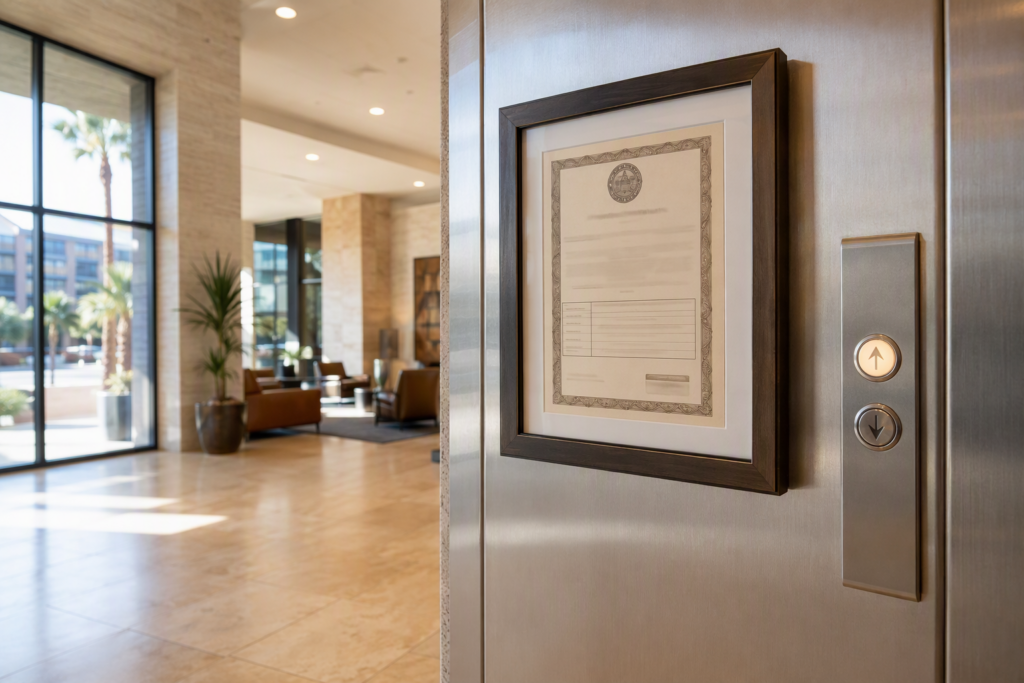
In Arizona, the Arizona Department of Occupational Safety and Health (ADOSH) administers elevator inspection programs in the state. Elevators must pass periodic inspections, and failed inspections result in mandatory repair timelines.
What Is the Process for Getting an Elevator Repaired?
- Document the problem: Record the symptoms, error codes displayed on the controller, any unusual sounds, the frequency of the problem, and whether the elevator is in or out of service. This information speeds up diagnosis.
- Contact a licensed elevator contractor: In Arizona, elevator work must be performed by licensed elevator mechanics. Confirm the contractor’s licensing status with the relevant state authority before authorizing work.
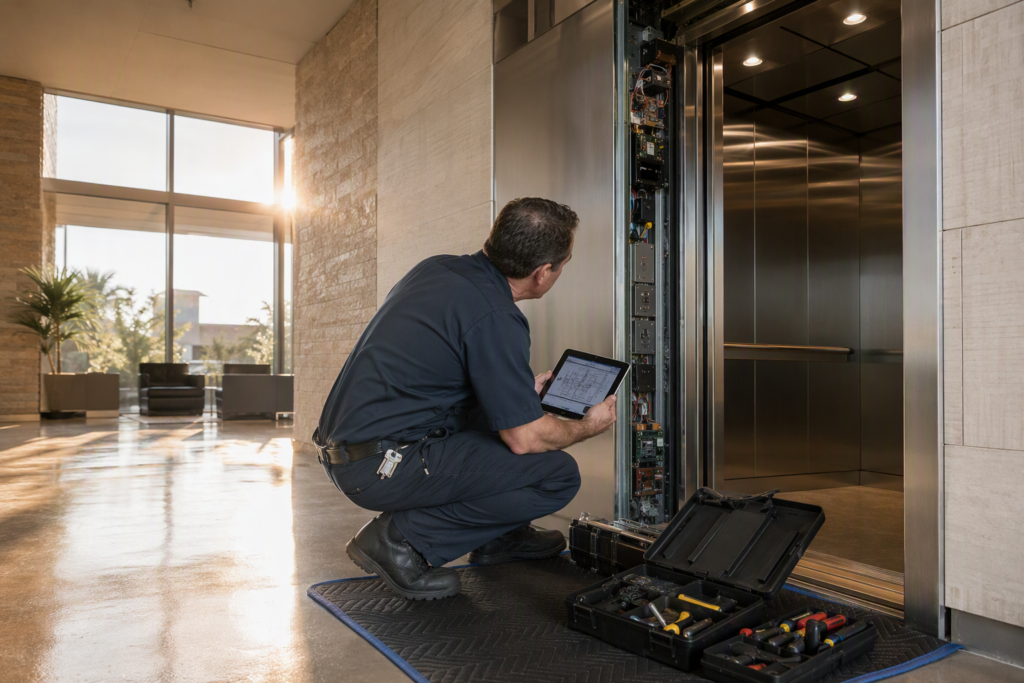
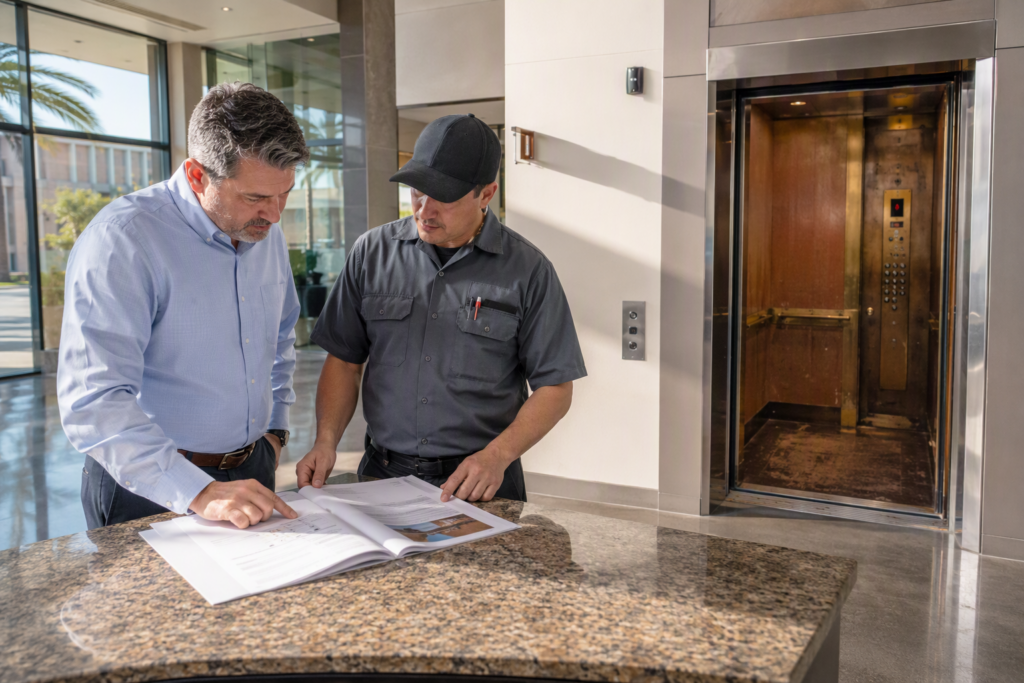
- Obtain a diagnostic assessment: A qualified technician should inspect the elevator before a repair quote is finalized. Remote quotes without inspection are often inaccurate.
- Review the itemized quote: Verify that parts, labor, permits, and any code-compliance scope are clearly separated and explained.
- Authorize the repair and confirm permit requirements: Determine whether the repair scope requires a permit from the state authority. Most significant repairs do; routine maintenance items typically do not.
- Schedule the repair with minimal disruption: Work with the contractor to schedule during low-traffic periods where possible, particularly for multi-story buildings where elevator downtime significantly impacts occupants.
- Verify inspection sign-off: After repair, ensure that any required state inspection has been completed and that the elevator is returned to service with proper documentation.
- Update maintenance records: Keep a complete maintenance and repair log for the elevator. This documentation supports future repair decisions, insurance claims, and due diligence in property transactions.
How Does Preventive Maintenance Affect Long-Term Repair Costs?
Preventive maintenance is consistently the most cost-effective strategy for managing elevator repair expenditure over time. Systems that are serviced on a regular, scheduled basis experience fewer emergency failures, experience slower wear on high-cycle components, and are more likely to catch developing problems before they become expensive failures.
A full-service maintenance contract that covers parts and labor for covered repairs provides predictable budgeting for facility managers. Time-and-materials arrangements may result in lower upfront cost but expose building owners to unpredictable emergency repair invoices. The appropriate contract structure depends on the age and condition of the equipment, the building’s operational profile, and the owner’s risk tolerance.
What Trends Are Shaping Elevator Repair Costs in 2025 and 2026?
Several qualitative trends are influencing elevator service and repair pricing in the current market environment:
- Supply chain normalization continues, but selectively: The parts supply chain disruptions of recent years have largely stabilized for common components, but specialty parts for legacy systems — particularly older hydraulic controls and relay-logic panels — remain difficult to source and command premium pricing.
- Skilled labor remains tight: The elevator mechanic workforce reflects a broader skilled trades shortage. Demand for licensed elevator technicians continues to outpace the supply entering the trade, which sustains upward pressure on labor rates.
- Remote monitoring and predictive maintenance adoption is growing: More building owners are investing in IoT-based monitoring systems that track elevator performance data and flag anomalies before they become failures. This technology does carry an upfront cost but has demonstrated potential to reduce emergency repair frequency for buildings that adopt it.
- Code cycle updates: The ASME A17.1 Safety Code for Elevators and Escalators is updated on a regular cycle, and each new edition may introduce requirements that affect the scope of work needed when an elevator undergoes repair or alteration. Building owners should confirm which edition has been adopted by Arizona’s elevator inspection authority when evaluating repair scope.
- Energy efficiency considerations: As utility costs remain elevated, the energy performance of older hydraulic and traction systems is receiving more scrutiny during repair decisions. Building owners are increasingly factoring operating cost into repair-versus-modernize analyses.
How Should Building Owners Compare Elevator Repair Contractors?
Evaluating elevator service providers involves more than comparing quoted prices. Key qualitative factors include:
- Licensing and insurance: Verify that the contractor holds current state licensing and adequate general liability and workers’ compensation coverage.
- Experience with the specific equipment type and brand in the building.
- Transparency of quoting: Does the contractor provide itemized proposals or bundled lump sums?
- Response capability: Can the contractor provide emergency service if the elevator fails unexpectedly?
- References and documented work history in comparable building types.
- Familiarity with Arizona’s inspection and permitting requirements, including ADOSH elevator program protocols.
Does Building Type Affect Elevator Repair Cost?
Building type influences repair costs in several indirect but meaningful ways. Commercial office buildings typically operate elevators during defined business hours, while residential multifamily buildings, hotels, and healthcare facilities may run elevators around the clock. Higher cycle counts accelerate wear on high-frequency components like doors, rollers, and buffers.
Healthcare and senior living facilities face additional urgency: elevator downtime in these settings can directly impact resident safety and ADA-required access obligations under the Americans with Disabilities Act. This urgency can translate into prioritized scheduling — and sometimes premium pricing — for emergency repairs in these environments.
What Questions Should Building Owners Ask Before Authorizing an Elevator Repair?
- Is this repair required by code, or is it a recommended improvement?
- Does this repair trigger any additional code-compliance upgrades?
- What is the warranty on parts and labor?
- Will the repair require a permit and state inspection?
- Are the required parts in stock, or will there be a lead time?
- What is the realistic completion timeline?
- Does this repair address the root cause, or is it addressing a symptom of a larger issue?
- At what point does modernization become more cost-effective than continued repair?
How Does Arizona Elevator Solutions Approach Elevator Repair Pricing?
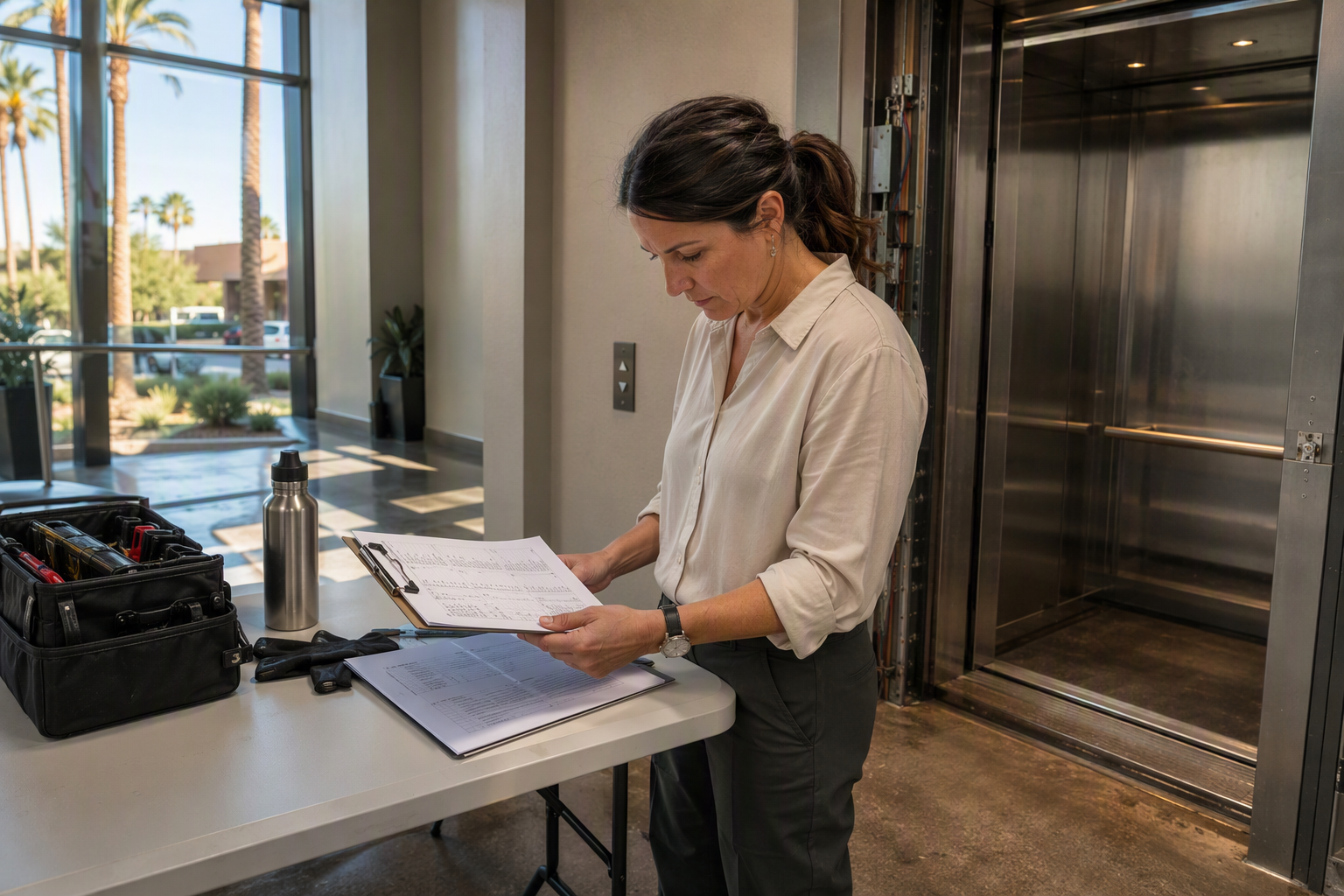
Arizona Elevator Solutions approaches elevator repair as a data-driven process. Rather than providing remote estimates or generic pricing, the team conducts on-site assessments to diagnose the specific failure, identify the root cause, and develop an accurate, itemized scope of work before any authorization is sought from the building owner.
This approach reflects the reality that elevator repair costs cannot be responsibly quoted without understanding the specific equipment, its condition, and the full scope of any code-compliance work the repair may trigger. Arizona Elevator Solutions serves building owners, facility managers, and property managers across Arizona who need transparent, code-compliant elevator service backed by a thorough understanding of ASME A17.1 requirements, ADA accessibility standards, and Arizona’s state inspection requirements.
Summary: Key Cost Factors at a Glance
| Cost Factor | Impact on Repair Cost |
|---|---|
| Type of elevator system (hydraulic vs. traction) | Determines parts profile and labor complexity |
| Age and parts obsolescence | Older systems often face higher parts costs or unavailability |
| Repair vs. code-compliance scope | Alterations under ASME A17.1 may require additional upgrades |
| Emergency vs. scheduled timing | After-hours emergency calls typically carry premium labor rates |
| Parts lead time | Expedited shipping for unavailable parts adds cost |
| Building type and operational profile | High-cycle buildings experience faster component wear |
| Local labor market | Licensed elevator mechanic rates reflect regional demand |
Note: This table summarizes qualitative cost drivers; no cost figures are presented because no attributable published source provides accurate universal repair cost benchmarks applicable to all elevator types, ages, and markets.
Get a Transparent, Data-Driven Elevator Repair Assessment
Elevator repair costs are impossible to determine accurately without a qualified on-site assessment of the specific system and failure. Building owners who rely on over-the-phone estimates or generic pricing guides often find that actual repair invoices differ significantly — in either direction — from what they expected.
Arizona Elevator Solutions provides thorough, code-informed elevator assessments for building owners and facility managers across Arizona. Every recommendation is grounded in an accurate diagnosis, a clear understanding of ASME A17.1 and ADA requirements, and a commitment to transparent, itemized proposals — so owners can make informed decisions about repair, maintenance, and modernization investments.
Contact Arizona Elevator Solutions for a free elevator assessment: 480-557-7600
Need elevator service you can rely on? Arizona Elevator Solutions is ready to help.