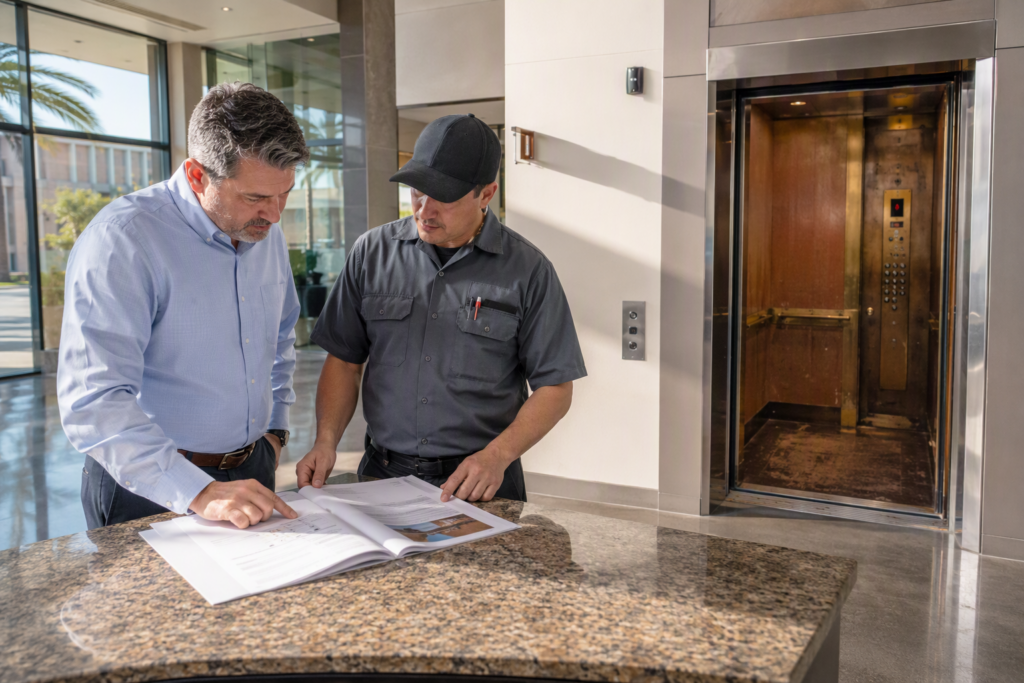
Elevator Maintenance and Inspection Requirements for Hotels in Arizona
Direct Answer: Hotels in Arizona must have their elevators inspected at least once every six months by a licensed elevator inspector under Arizona Administrative Code Title 4, Chapter 30, with maintenance performed in accordance with ASME A17.1 Safety Code for Elevators and Escalators — non-compliance can result in an elevator being placed out of service until violations are corrected.
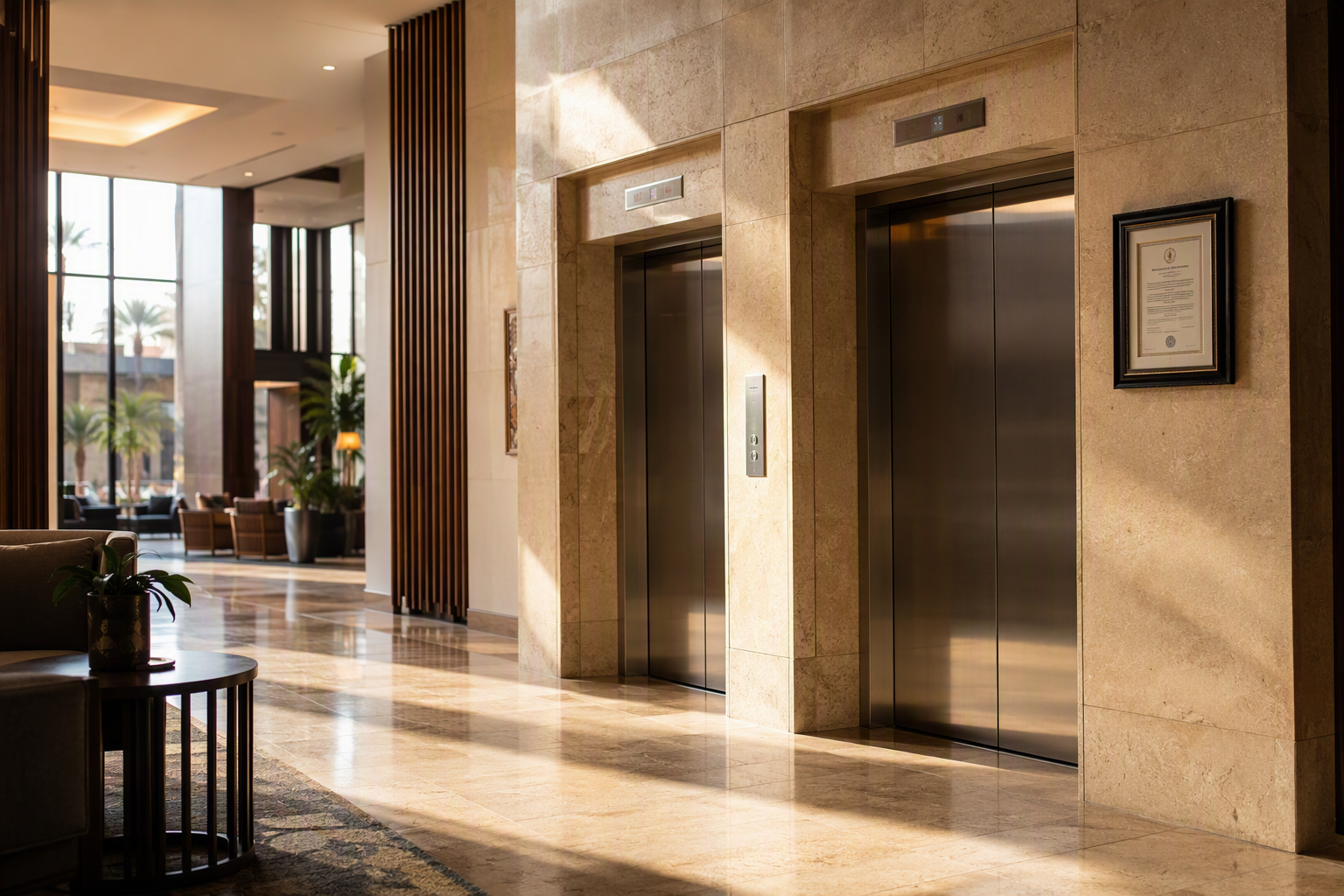
For hotel operators in Arizona, elevator compliance is not optional — it is a legal obligation that directly affects guest safety, liability exposure, and ongoing operating permits. This guide covers the full regulatory landscape, from state inspection cycles to federal accessibility standards, maintenance protocols, common violations, and what hotel owners and facility managers need to know to stay compliant in 2025 and 2026.
What Arizona State Law Requires for Hotel Elevator Inspections?
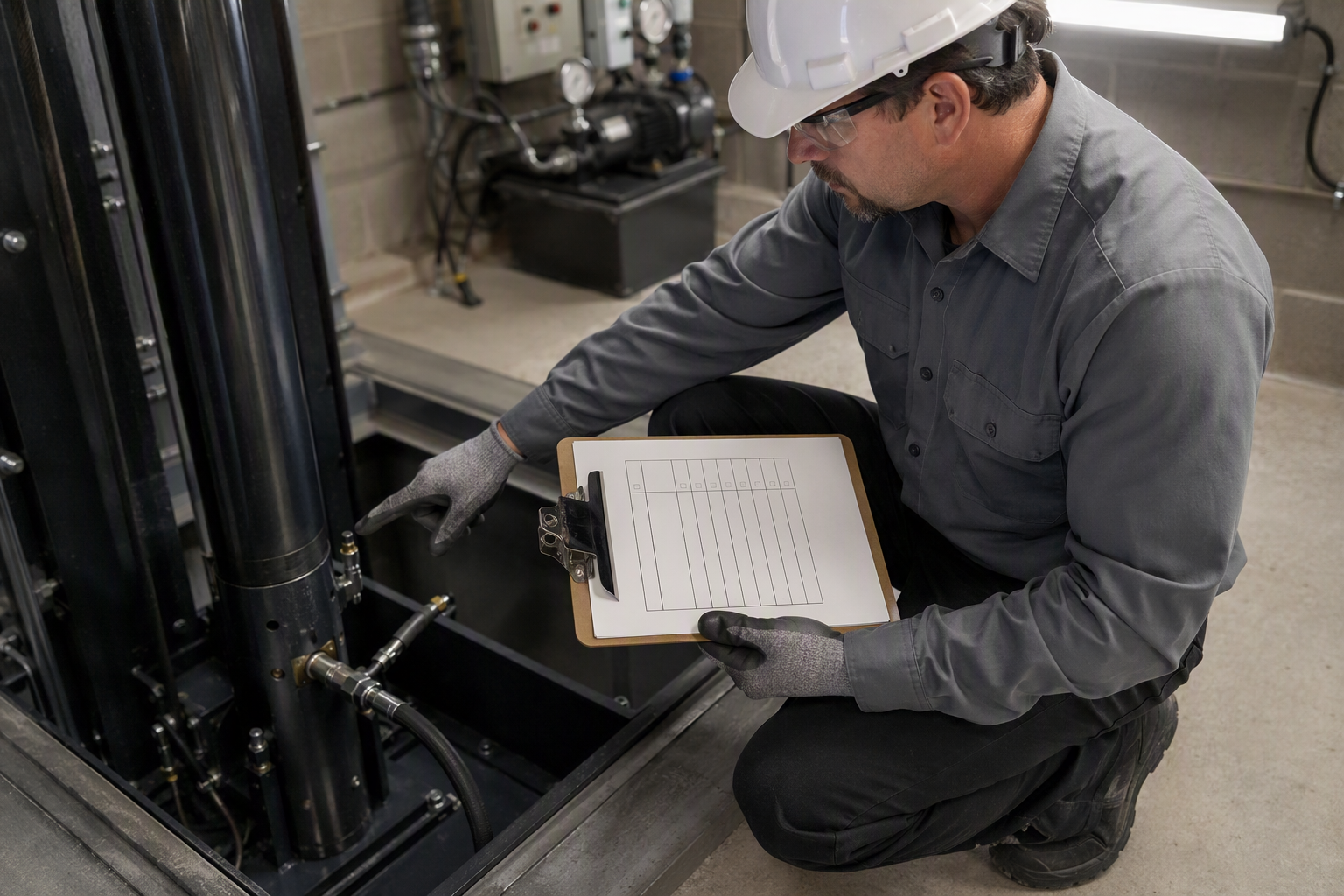
Arizona elevator safety is governed by the Arizona Department of Occupational Safety and Health (ADOSH), the state agency responsible for administering elevator safety regulations under Arizona Revised Statutes Title 23, Chapter 2, Article 10. ADOSH adopts and enforces the ASME A17.1 Safety Code for Elevators and Escalators as the technical standard governing elevator construction, alteration, and maintenance in Arizona.
Under Arizona rules, hotels with passenger elevators are subject to:
- Periodic inspections conducted at intervals not to exceed six months for passenger elevators in public-occupancy buildings, including hotels
- Witnessing of tests by a licensed elevator inspector for required safety tests, which occur on a schedule defined by the applicable ASME A17.1 edition
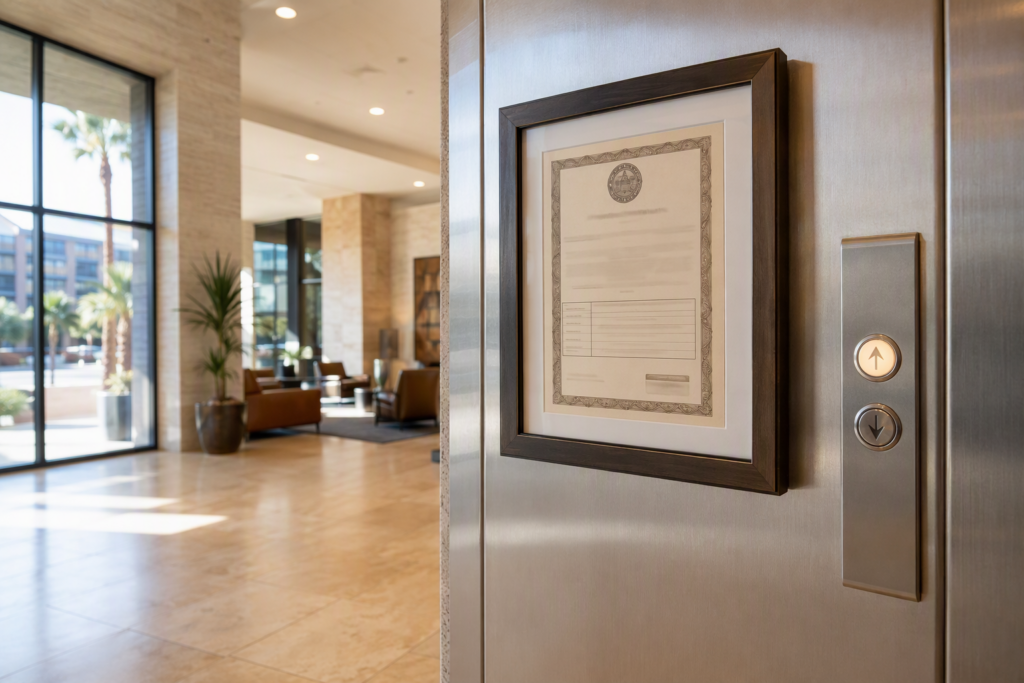
- Certificate of Operation — a valid certificate must be posted inside the elevator car; operating an elevator without a current certificate is a violation
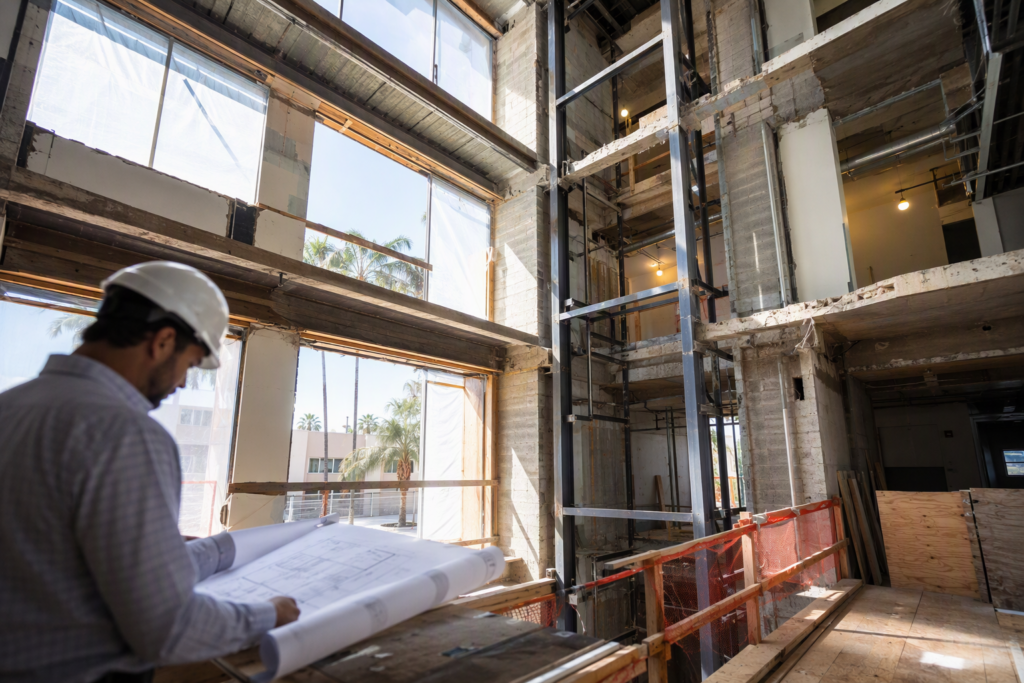
- Permit requirements for any new installation, alteration, or major repair before work begins
Hotels that operate hydraulic elevators, traction elevators, or platform lifts must each meet inspection and maintenance schedules appropriate to their equipment type as defined under ASME A17.1.
What Is the Required Inspection Frequency for Hotel Elevators in Arizona?
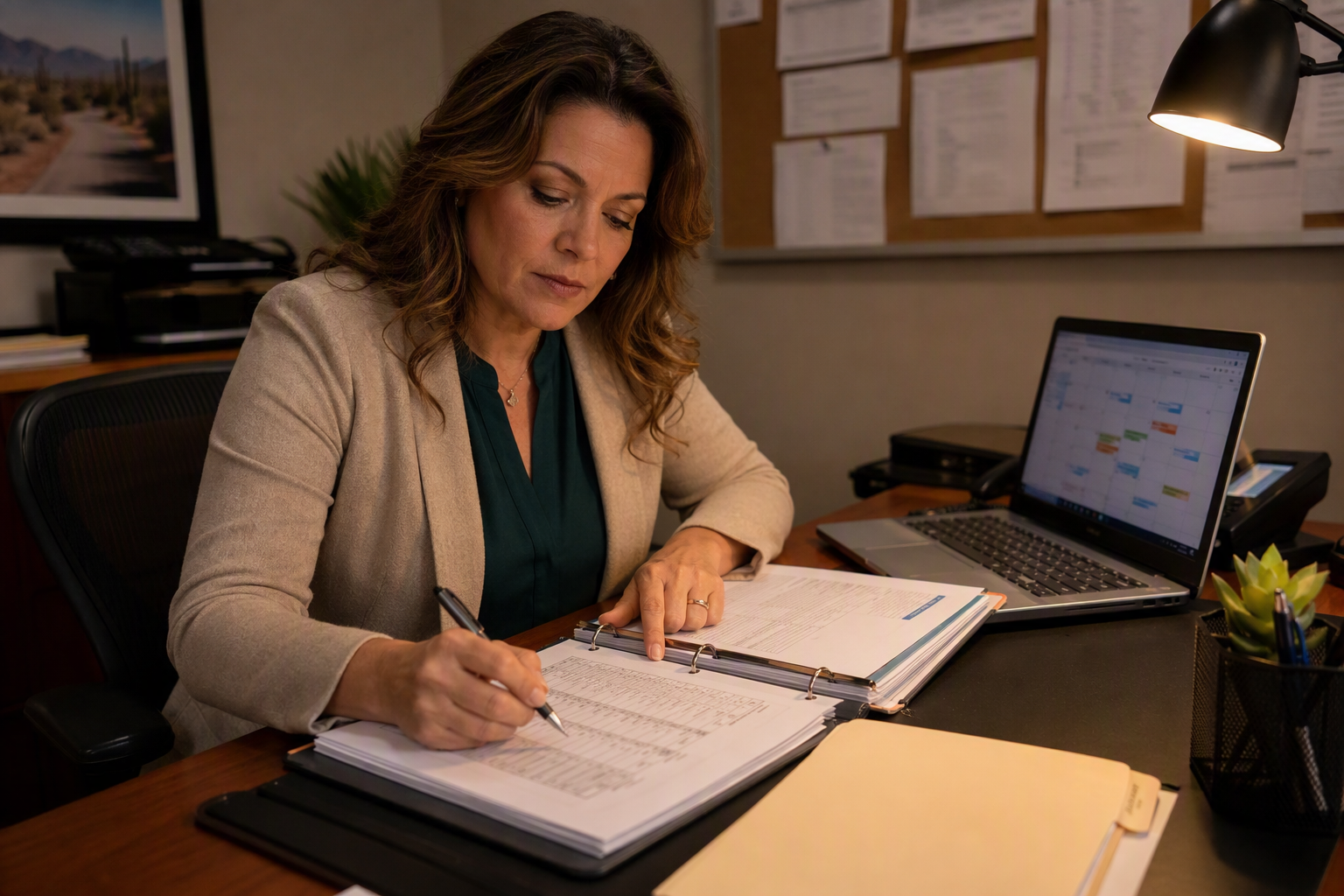
Passenger elevators in hotels are classified as public-use conveyances under Arizona’s elevator safety rules. The standard periodic inspection cycle for these units is every six months. This means a hotel with multiple elevator units must schedule and pass at least two inspections per elevator per year.
In addition to routine periodic inspections, certain safety tests must be performed on a longer cycle. The ASME A17.1 Safety Code for Elevators and Escalators specifies two primary categories of required tests for traction elevators:
- Category 1 tests — performed annually and include no-load safety tests and governor and buffer tests where applicable
- Category 5 tests — performed every five years and represent a comprehensive full-load safety test with all safety devices engaged; this test requires the elevator to be taken out of service for a period during the test procedure
Hydraulic elevators have their own test schedule under ASME A17.1, including pressure relief valve tests and periodic cylinder integrity testing, particularly relevant for older hydraulic systems common in mid-century hotel properties.
What Are the ASME A17.1 Maintenance Requirements That Apply to Hotels?
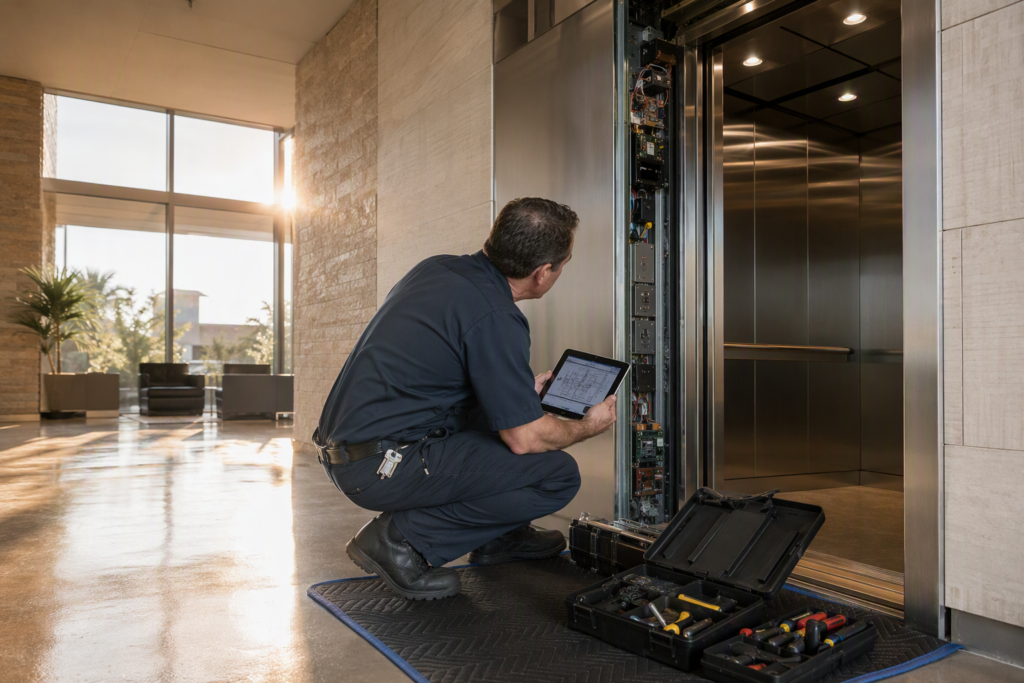
Maintenance obligations for hotel elevators are not left to the discretion of property management. The ASME A17.1 Safety Code for Elevators and Escalators includes Part 8, which addresses maintenance, repair, replacement, and testing. Key requirements include:
- Maintenance Control Program (MCP): Every elevator must have a written, documented maintenance control program. The MCP outlines the tasks, frequency, and procedures specific to the elevator’s components and is a mandatory document — not an optional best practice.
- Maintenance records: Logs of all maintenance tasks, repairs, and tests must be kept and made available for review by inspectors. These records must be retained for a period consistent with Arizona regulatory requirements.
- Qualified personnel: Maintenance work must be performed by individuals qualified under state licensing requirements. In Arizona, elevator mechanics must hold an appropriate license issued by ADOSH.
- Component-specific tasks: The MCP must address ropes/cables, brakes, safeties, buffers, door systems, lubrication points, and control systems on a defined schedule.
For hotel operators, the practical implication is that a verbal agreement with a maintenance vendor is insufficient. The MCP must be a written document maintained with the equipment, accessible during inspections.
What ADA Accessibility Requirements Apply to Hotel Elevators?
Beyond mechanical safety, hotel elevators must comply with the Americans with Disabilities Act (ADA). The ADA Standards for Accessible Design require that elevators serving multiple floors in hotels be accessible to guests with disabilities. Specific requirements include:
- Minimum inside car dimensions to accommodate wheelchair users
- Call buttons at accessible heights with raised and Braille characters
- Door reopening devices that respond to both object and infrared sensors
- Audible and visual floor indicators
- Handrails on at least one wall of the car
- Leveling accuracy sufficient to be flush with the floor landing (no more than one-half inch variation)
Hotels undergoing renovation must bring elevators into ADA compliance under the path-of-travel requirements, which trigger accessibility upgrades when the area served by the elevator is significantly renovated. Existing hotels that have never upgraded their elevators should conduct an accessibility audit to assess current exposure under ADA requirements.
What Are the Most Common Elevator Violations Found in Hotel Inspections?
Inspectors conducting periodic elevator examinations in hotel properties regularly encounter a consistent set of deficiencies. While individual inspection reports vary, the categories of violations that most frequently result in corrective orders include:
- Expired or missing Certificate of Operation — the certificate must be current and posted visibly inside the car
- Door safety device failures — door reversals that do not function properly represent a direct guest-entrapment risk
- Inadequate or missing Maintenance Control Program documentation — inspectors will ask to review the written MCP and maintenance logs
- Governor and safety gear deficiencies — components that have not been tested on schedule per ASME A17.1
- Hydraulic fluid leaks — particularly relevant for underground hydraulic cylinders in older hotel properties
- Lighting failures — car lighting, pit lighting, and machine room lighting must meet minimum illumination requirements
- Emergency communication failures — the two-way communication device in the car must function and connect to a monitored point; this is critical for guest safety and is frequently cited
- ADA non-compliance — particularly call button heights, Braille markings, and leveling accuracy
What Happens If a Hotel Elevator Fails an Inspection in Arizona?
When an elevator fails inspection or is found to present an imminent hazard, ADOSH has the authority to issue an out-of-service order. A hotel elevator placed out of service cannot legally be used until the violations are corrected and the elevator passes a follow-up inspection or the inspector clears the deficiency. The operational and reputational impact of an out-of-service elevator in a multi-story hotel — particularly during high-occupancy periods — can be significant.
The standard corrective process in Arizona follows this sequence:
- Inspector identifies violation(s) and issues a written inspection report with deficiency details
- Hotel operator or authorized elevator maintenance company receives the report and reviews the required corrective actions
- A licensed elevator mechanic performs the required repairs or adjustments
- The elevator company submits documentation of corrections to ADOSH or contacts the inspector to arrange a follow-up examination
- A follow-up inspection is conducted to verify corrections
- Upon passing, the Certificate of Operation is renewed or reissued
- The elevator is returned to service
For violations that are not classified as imminent hazards, ADOSH typically issues a correction order with a defined deadline. Missing that deadline can escalate the matter and result in the elevator being placed out of service regardless of whether the violation has worsened.
What OSHA Requirements Apply to Hotel Elevator Machine Rooms and Pits?
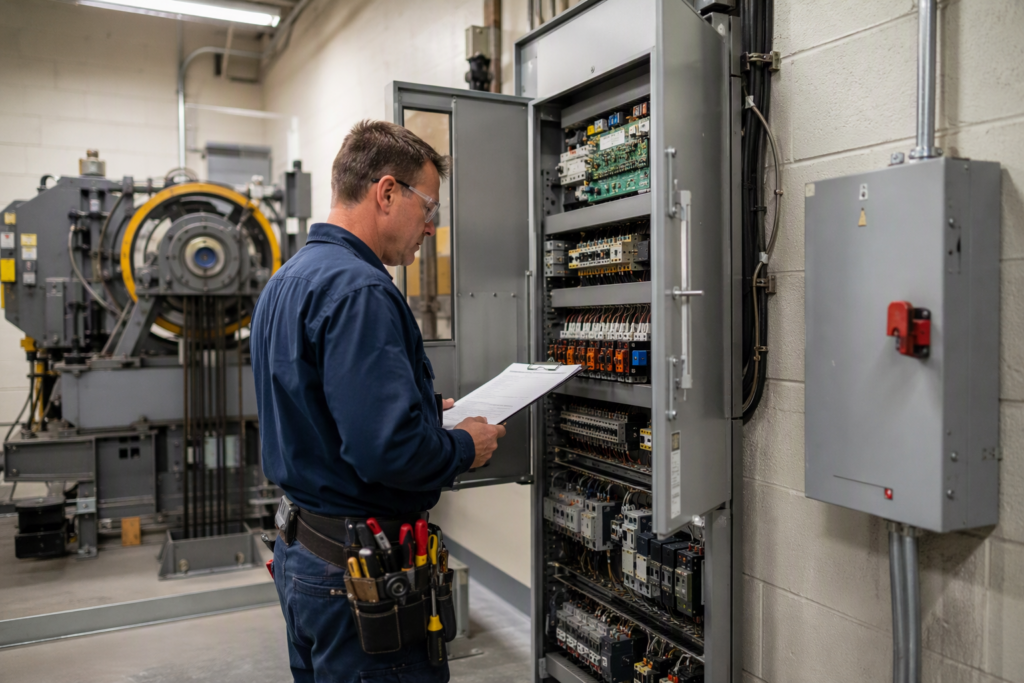
Beyond passenger safety, hotel facility maintenance teams must address workplace safety in elevator machine rooms and pits under OSHA standards. Elevator pits and machine rooms are considered confined or restricted spaces in many configurations and are subject to OSHA general industry standards. Key considerations include:
- Machine rooms must be kept clear of storage unrelated to elevator equipment
- Adequate lighting must be maintained in machine rooms and pits
- Ventilation requirements apply to machine rooms, particularly in Arizona’s high-temperature climate where machine room temperatures can reach levels that affect electronic control systems
- Access to elevator pits must be controlled, and pit ladders must meet dimensional requirements
- Emergency stop switches in pits must be functional and accessible
Hotel maintenance staff who access elevator pits for any reason — even briefly for inspection of pit conditions — should be aware of applicable OSHA confined space entry procedures.
What Should Hotels Include in a Preventive Maintenance Contract?
A well-structured preventive maintenance agreement is the primary mechanism through which hotel operators meet their ongoing obligations under ASME A17.1 and Arizona state rules. When evaluating or renewing a maintenance contract, hotel facility managers should confirm the agreement explicitly addresses:
- Preparation and maintenance of the written Maintenance Control Program (MCP)
- Maintenance log documentation and retention
- Scheduling and performance of Category 1 annual tests
- Coordination and performance of Category 5 five-year tests with required out-of-service scheduling
- Emergency callback service for entrapments and operational failures
- Parts coverage terms — full coverage versus labor-only versus exclusion lists
- Coordination with ADOSH for inspection scheduling and deficiency follow-up
- Specific coverage for hydraulic system components if applicable
Contracts that focus only on reactive repair without addressing the MCP documentation requirement leave hotels exposed during inspections, even if the elevator is mechanically functional.
How Does Arizona’s Climate Affect Hotel Elevator Maintenance?
Arizona’s desert climate creates maintenance conditions that are distinct from those in more temperate states. Hotel elevator systems in the Phoenix metro, Tucson, and other high-temperature Arizona markets are subject to environmental stressors that accelerate certain types of wear:
- Machine room heat: Prolonged extreme heat — Arizona regularly sees ambient temperatures exceeding 110°F during summer months — can stress electronic control boards, hydraulic fluid viscosity, and motor windings in machine rooms that lack adequate climate control
- Hydraulic fluid degradation: High ambient temperatures accelerate oxidation of hydraulic oil, making fluid analysis and more frequent fluid changes a relevant consideration for hydraulic elevators
- Dust and particulate intrusion: Arizona dust events (haboobs) can introduce particulates into elevator components, particularly in properties where door seals or equipment enclosures are not well maintained
- Monsoon season moisture: While Arizona is arid overall, the summer monsoon season can introduce brief but intense humidity conditions, particularly in pit areas where water intrusion can occur and must be addressed
A maintenance program designed for an Arizona hotel should account for these regional factors, including more frequent inspection of heat-sensitive components and seasonal checks of pit drainage systems during and after the monsoon season.
What Is the Difference Between an Elevator Inspection and an Elevator Audit for Hotels?
These two processes serve distinct purposes and are often confused by hotel operators:
An elevator inspection is a regulatory function performed by a licensed elevator inspector, either a state inspector employed by ADOSH or a third-party licensed inspector authorized to conduct inspections on behalf of the state. The outcome is a formal inspection report, and the Certificate of Operation is contingent on passing. This is the compliance-driven process.
An elevator audit is a voluntary assessment — typically performed by an elevator consulting firm or a qualified elevator company — that evaluates the overall condition, code compliance posture, remaining useful life of components, and potential modernization needs of an elevator system. Audits are particularly valuable when a hotel is being acquired, refinanced, or planning a renovation. They can identify deferred maintenance exposure and capital planning needs before they become emergency situations or inspection failures.
Arizona Elevator Solutions provides data-driven elevator assessments that help hotel operators understand where their equipment stands relative to current ASME A17.1 requirements, ADA standards, and Arizona state rules — giving facility teams the information needed to make informed maintenance and capital planning decisions.
What Are the 2025–2026 Trends Affecting Hotel Elevator Compliance in Arizona?
Several developments are shaping the elevator compliance landscape for Arizona hotel operators in 2025 and 2026:
- Increased enforcement activity: ADOSH has continued to prioritize elevator safety enforcement in public-occupancy buildings. Hotels, as high-traffic public facilities, remain a focus of periodic inspection programs.
- Remote monitoring adoption: More hotel elevator systems are being equipped with remote monitoring technology that tracks operational parameters, door cycle counts, and fault codes in real time. This data can support proactive maintenance and provide documentation of system health between formal inspections.
- Modernization demand: Arizona’s hotel inventory includes a significant number of properties built in the 1970s through 1990s with elevator systems that are reaching or exceeding typical design service life. Modernization projects are increasing as older relay-logic and solid-state control systems become difficult to maintain due to parts obsolescence.
- Energy efficiency focus: Some hotel ownership groups are incorporating elevator efficiency into broader building sustainability goals, evaluating regenerative drive systems and LED lighting upgrades as part of modernization scopes.
- Insurance and lender requirements: Commercial lenders and insurance underwriters are increasingly requesting elevator inspection reports and maintenance records as part of property due diligence, making current and complete documentation more important than ever for hotel assets.
What Records Should Hotel Management Keep for Elevator Compliance?
Maintaining organized elevator compliance documentation protects hotels during inspections, insurance audits, and property transactions. At minimum, hotel operators should maintain and have readily accessible:
- Current Certificate of Operation (required to be posted in the car)
- Most recent inspection reports from ADOSH or licensed inspector
- Written Maintenance Control Program (MCP) for each elevator unit
- Maintenance logs documenting all completed maintenance tasks with dates and technician identification
- Test records for Category 1 and Category 5 tests
- Repair records for any corrective work performed
- Equipment permits for any alterations
- ADA compliance documentation if modifications have been made
These records should be stored in a location accessible to facility management and to elevator technicians who may need to reference them during service visits or inspection witness events.
How Should Hotels Choose an Elevator Maintenance Provider in Arizona?
Selecting an elevator maintenance partner is a consequential decision for hotel operators. The criteria most relevant to Arizona hotel properties include:
- State licensing: Verify that the company and its technicians hold current Arizona elevator contractor and mechanic licenses as required by ADOSH
- MCP capability: The provider must be capable of preparing and maintaining a written Maintenance Control Program that meets ASME A17.1 requirements
- Multi-brand equipment experience: Hotel elevator fleets may include equipment from multiple manufacturers; ensure the provider has documented capability across relevant brands
- Test coordination experience: Category 5 tests require coordination, scheduling, and proper execution — confirm the provider has performed these tests on similar equipment
- Contract transparency: Review what is and is not covered before signing; understand exclusions for hydraulic cylinders, controllers, and major components
- Local market knowledge: An Arizona-based provider understands the regional climate factors, ADOSH inspection processes, and local logistics that affect service quality
Arizona Elevator Solutions serves hotel operators across the state with elevator maintenance, compliance assessments, and modernization consulting grounded in the specific requirements of Arizona regulatory standards and the ASME A17.1 Safety Code for Elevators and Escalators.
Sourced Reference Data
| Requirement | Standard / Authority | Source |
|---|---|---|
| Periodic inspection interval for passenger elevators in public buildings | Every 6 months — Arizona Administrative Code / ADOSH elevator safety program | ASME A17.1 (adopted by Arizona) |
| Category 1 safety test interval (traction elevators) | Annually | ASME A17.1 Safety Code |
| Category 5 full-load safety test interval (traction elevators) | Every 5 years | ASME A17.1 Safety Code |
| Maintenance Control Program (MCP) — written program requirement | Mandatory — Part 8 of ASME A17.1 | ASME A17.1 Safety Code |
| ADA accessibility requirements for hotel elevators | ADA Standards for Accessible Design — door reopening, car dimensions, call button height, floor indicators | ADA.gov |
| Machine room and pit workplace safety requirements | OSHA general industry standards — lighting, ventilation, access control | OSHA.gov |
Get Expert Elevator Compliance Support for Your Arizona Hotel
Hotel elevator compliance in Arizona involves intersecting obligations under state law, ASME A17.1, ADA accessibility standards, and OSHA workplace requirements. Missing any one of these areas can result in failed inspections, out-of-service orders, or liability exposure. Arizona Elevator Solutions works with hotel operators across Arizona to assess current compliance status, identify gaps before inspectors do, and build maintenance programs that keep elevator systems operational, documented, and code-compliant.
Contact Arizona Elevator Solutions for a free elevator assessment — call 480-557-7600 today.
Need elevator service you can rely on? Arizona Elevator Solutions is ready to help.