How to Compare Elevator Maintenance Contracts for Healthcare Facilities
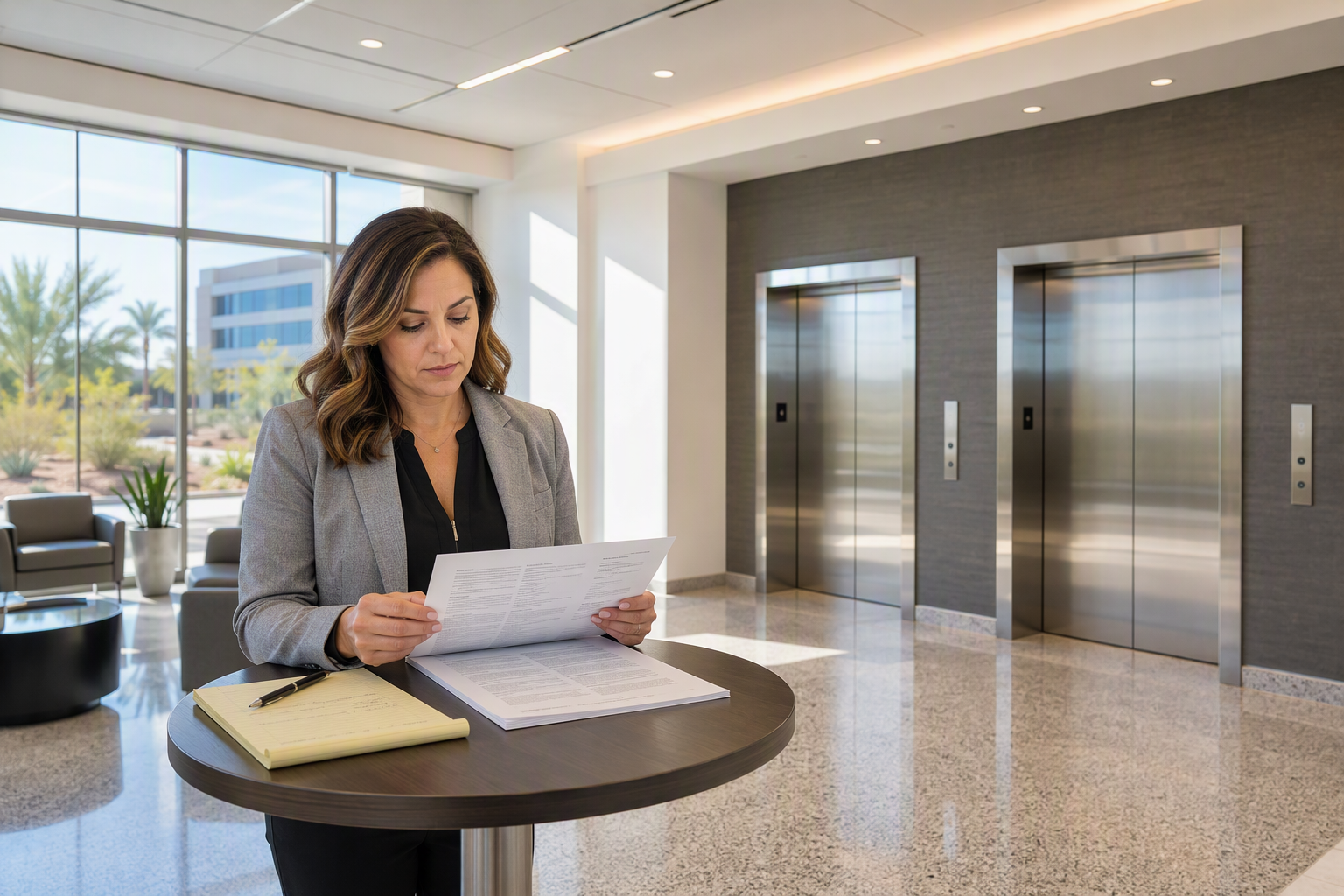
Hospitals, surgical centers, long-term care facilities, and medical office buildings in Phoenix, Tucson, Scottsdale, and Mesa depend on elevators to move patients, staff, medications, and equipment around the clock. A poorly written maintenance contract can leave a healthcare facility exposed to regulatory violations, unplanned downtime, and safety liability. This guide walks facility managers and procurement teams through every dimension of elevator maintenance contract comparison — from what must be included to the exclusions that quietly shift costs back to your organization.
What Should a Healthcare Elevator Maintenance Contract Always Include?
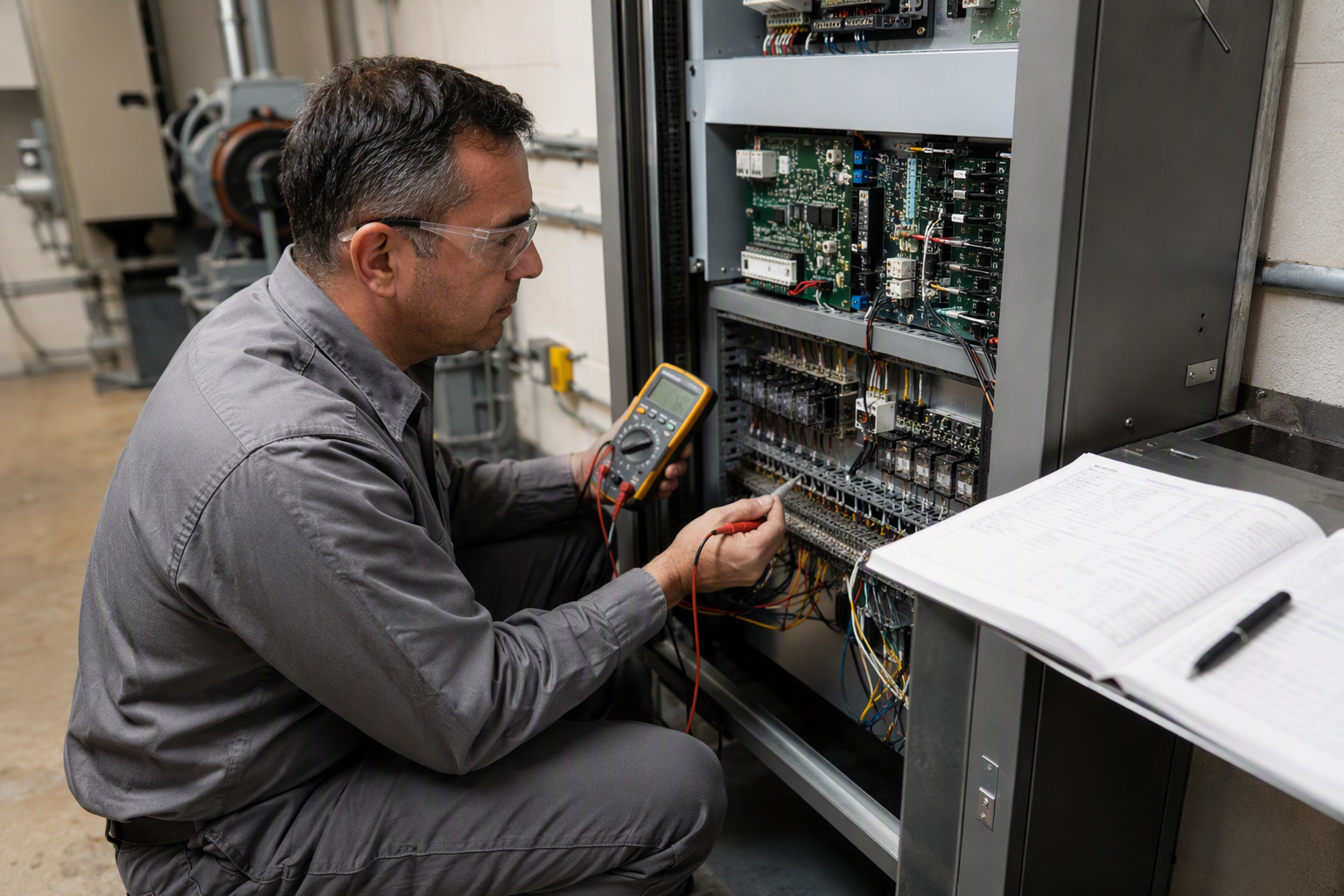
A complete elevator maintenance contract for a healthcare setting should cover the following at minimum:
- Scheduled preventive maintenance visits — regular lubrication, adjustment, and inspection of all mechanical and electrical components according to the manufacturer’s recommended intervals and ASME A17.1 Safety Code for Elevators and Escalators requirements.
- Callback and emergency response coverage — clear language defining what constitutes an emergency call and how it is handled, especially critical for units transporting patients or serving intensive care and surgical floors.
- Annual safety tests and inspections — Arizona requires periodic inspections under state-adopted ASME A17.1 provisions; the contract should specify who schedules, coordinates, and documents these inspections.
- Code compliance updates — responsibility for notifying the facility of any code changes affecting existing equipment under ASME A17.1 (2019 edition and any 2026-applicable amendments), ADA standards, and the OSHA general industry standards relevant to vertical transportation.
- Parts coverage scope — a clear inventory list or category description of which parts are included in the flat rate and which are billed additionally.
- Documentation and reporting — maintenance logs, inspection certificates, and corrective action records essential for Joint Commission surveys, CMS surveys, and state health department inspections.
- Entrapment response protocol — written procedures and response commitments for passenger entrapment events, which are especially high-stakes in a healthcare environment.
Arizona Elevator Solutions structures healthcare contracts to address all of these elements explicitly, so facility managers in Phoenix and Tucson are not left interpreting vague language during a regulatory survey.
What Is Typically Excluded From Elevator Maintenance Contracts?

Understanding exclusions is just as important as understanding inclusions. Common exclusions that add cost over the life of a contract include:
- Major component replacement — motors, controllers, sheaves, and hydraulic cylinders are frequently excluded from full-coverage contracts and classified as capital repairs billed at time-and-materials rates.
- Vandalism and misuse damage — damage caused by overloading, forced door operation, or intentional abuse is almost universally excluded.
- Modernization work — upgrades required to bring aging equipment into compliance with newer code editions are typically outside the scope of a maintenance contract.
- Third-party or owner-supplied parts — some contracts void labor coverage if the facility purchases parts independently.
- Work outside scheduled hours — some base-tier contracts limit coverage to standard business hours, which is a significant risk for a 24/7 healthcare environment.
- Hydraulic fluid and consumables — these may be charged separately even in agreements marketed as “full maintenance.”
Procurement teams should request a written exclusion list from every vendor before signing and compare those lists side by side rather than comparing only headline price.
How Do Healthcare Compliance Requirements Affect Contract Terms?
Healthcare facilities face overlapping regulatory frameworks that directly shape what an elevator maintenance contract must deliver.
ASME A17.1: The ASME A17.1 Safety Code for Elevators and Escalators is the foundational standard governing elevator design, installation, inspection, and maintenance across Arizona. Contracts should explicitly reference the adopted edition and assign responsibility for staying current with addenda.
ADA Compliance: Under the Americans with Disabilities Act, elevators serving the public in healthcare facilities must maintain specific door timing, leveling accuracy, cab dimensions, and signage. A maintenance contract should address how ADA-related deficiencies discovered during routine visits are reported and remediated.
The Joint Commission and CMS: Accredited hospitals and Medicare/Medicaid-certified facilities are subject to Environment of Care standards. Surveyors routinely review elevator maintenance logs and inspection certificates. The contract must produce documentation that satisfies these requirements on demand.
OSHA General Duty Clause: Under OSHA‘s general duty clause, employers must provide a workplace free from recognized hazards. An elevator that is out of regulatory compliance creates measurable employer liability in a healthcare setting.
Arizona Elevator Solutions is familiar with the documentation expectations of Joint Commission surveyors and can assist healthcare clients in Phoenix, Scottsdale, Mesa, and Tucson in structuring contract terms and maintenance records to meet those expectations.
What Contract Types Are Available and How Do They Differ?
Elevator maintenance contracts generally fall into three categories:
- Oil-and-Grease (Basic) Contracts — Cover only routine lubrication and adjustment. Parts and most labor are billed separately. Lowest upfront cost but highest exposure to unexpected expenses.
- Full Maintenance Contracts — Cover labor, most parts, and scheduled maintenance. The definition of “full” varies widely by vendor; always request the specific parts list.
- Comprehensive (All-Inclusive) Contracts — Cover parts, labor, callbacks, and sometimes modernization components. Best suited for high-traffic healthcare environments where downtime carries patient safety implications and where budget predictability matters.
For most hospitals and care facilities, a comprehensive contract or a carefully negotiated full-maintenance contract provides the best balance of risk management and cost predictability.
How Should Facility Managers Evaluate Vendor Qualifications?
Beyond contract language, the quality of the service provider directly determines outcomes. When evaluating vendors, healthcare facility managers should assess:
- Whether the company holds the appropriate Arizona contractor license for elevator work.
- Whether technicians are trained under recognized industry programs aligned with ASME A17.1.
- The vendor’s familiarity with the specific equipment brands installed in the facility — proprietary systems from some manufacturers may require OEM-trained technicians for warranty compliance.
- The vendor’s process for documenting and reporting deficiencies, not just completing maintenance visits.
- References from other healthcare clients in the same market.
What Questions Your Inspector Will Ask
During a state inspection, Joint Commission survey, or CMS review, facility managers can expect inspectors to request or ask about the following:
- Can you produce the current maintenance contract and confirm who is the responsible service provider?
- Are maintenance logs current, signed, and accessible on site?
- Has the annual safety test been completed and is the certificate posted in the elevator machine room?
- Have any deficiencies identified during the last inspection been corrected and documented?
- What is your documented protocol for passenger entrapment?
- Has any code-required modernization been identified and, if so, what is the remediation timeline?
- Are elevator door reopening devices and leveling accuracy within ADA-required tolerances?
- Has the facility received and retained all maintenance reports from the service contractor?
Facilities working with Arizona Elevator Solutions receive organized maintenance documentation specifically structured to answer these questions without scrambling during a survey.
How Do You Compare Contract Costs Accurately?
Contract price comparisons are only meaningful when all variables are normalized. To compare accurately:
- List every elevator unit by type (traction, hydraulic, MRL) and usage classification (patient transport, freight, public access).
- Request itemized scope of work from each vendor, not just a summary description.
- Ask each vendor to explicitly state which parts are included and which are excluded.
- Confirm whether callbacks outside business hours carry additional charges.
- Calculate the estimated total cost of ownership over the contract term, adding typical excluded-parts costs based on equipment age and condition.
- Assess documentation deliverables and confirm they satisfy your accreditation body’s requirements.
A contract that appears less expensive at the headline level may carry substantially higher total cost once parts, after-hours labor, and documentation gaps are factored in.
How Does Equipment Age Affect Contract Terms?
Older elevator equipment in healthcare facilities typically requires more nuanced contract negotiation. Vendors may cap parts coverage for equipment beyond a certain age or require a pre-contract inspection to establish baseline condition before agreeing to comprehensive coverage. Facilities should:
- Request a pre-contract condition assessment in writing before signing.
- Clarify whether any identified deficiencies must be remediated before the contract activates.
- Understand that aging hydraulic systems may face state-mandated modernization requirements independent of the maintenance contract.
- Factor modernization planning into long-term capital budgets alongside maintenance contract costs.
What Provisions Are Especially Important for 24/7 Healthcare Operations?
Healthcare facilities do not close. Contract provisions that matter most for continuous operations include:
- Entrapment response language — the contract should define the commitment for responding to a passenger trapped in a cab, given the potential for medical emergencies among patients.
- Priority classification for patient-transport units — some facilities negotiate tiered response priorities so that elevators serving ICU, surgery, or emergency departments receive first attention.
- Temporary-out-of-service communication — the contract should specify how and when the facility is notified if a unit must be taken out of service for repairs.
- Loaner or contingency planning support — while not all vendors offer this, facilities should at minimum document their own internal contingency plan for elevator outages.
Are There Arizona-Specific Requirements Healthcare Facilities Must Know?
Arizona adopts ASME A17.1 as the basis for state elevator safety regulation. Healthcare facilities in Phoenix, Tucson, Scottsdale, and Mesa should confirm:
- The current edition of ASME A17.1 adopted by the Arizona Department of Occupational Safety and Health.
- That their service contractor is licensed to perform elevator work in Arizona under applicable contractor licensing requirements.
- That certificates of inspection are kept current and posted as required by state code.
- That any alterations or modernizations trigger re-inspection and permit requirements under state law.
Arizona Elevator Solutions serves healthcare clients across the Phoenix metro, Tucson, Scottsdale, and Mesa markets and maintains familiarity with Arizona’s adopted code framework and inspection processes.
How Often Should Preventive Maintenance Visits Occur in a Healthcare Setting?
Visit frequency should align with the unit’s usage intensity and type. High-traffic patient-transport elevators in a hospital environment typically warrant more frequent scheduled visits than low-traffic units in a small medical office building. The maintenance contract should specify visit frequency by unit rather than applying a blanket facility-wide schedule. Frequency requirements may also be influenced by manufacturer recommendations and ASME A17.1 provisions for specific equipment categories.
What Should a Healthcare Facility Do Before Renewing an Existing Contract?
- Pull all maintenance logs from the current contract period and assess whether visits occurred on schedule.
- Review any deficiency reports and confirm that corrective actions were completed and documented.
- Request a condition assessment from the current or a competing provider to establish an objective equipment baseline.
- Compare the existing contract’s exclusion list against actual repair invoices paid during the contract term to identify coverage gaps.
- Solicit at least two competing proposals using a standardized scope-of-work document to ensure apples-to-apples comparison.
- Confirm that the renewing contract reflects any equipment changes, additions, or modernizations completed during the prior term.
Get a Free Elevator Assessment for Your Healthcare Facility
Understanding what your current or prospective maintenance contract actually covers — and where it leaves your facility exposed — requires a clear-eyed review of both the contract language and the physical condition of your equipment. Arizona Elevator Solutions provides free elevator assessments for healthcare facilities in Phoenix, Tucson, Scottsdale, and Mesa, giving procurement and facilities teams the objective information needed to make confident contract decisions.
Contact Arizona Elevator Solutions for a free elevator assessment: 480-319-7157
Need elevator service you can rely on? Arizona Elevator Solutions is ready to help.