Elevator Breakdown: What to Do to Minimize Tenant Complaints and Restore Service Fast
An elevator outage in a multi-tenant building is never a minor inconvenience. For property managers in Phoenix, Tucson, Scottsdale, and Mesa, a stopped elevator can trigger ADA compliance concerns, lease disputes, and a flood of tenant calls within the first hour. The protocol a property manager follows in the first thirty minutes determines how quickly the cab returns to service and how many formal complaints end up in the landlord’s inbox. This comprehensive FAQ covers every stage of an elevator breakdown — from the moment a tenant calls to the post-repair documentation that protects building owners from regulatory liability.
What should I do the moment an elevator breaks down?
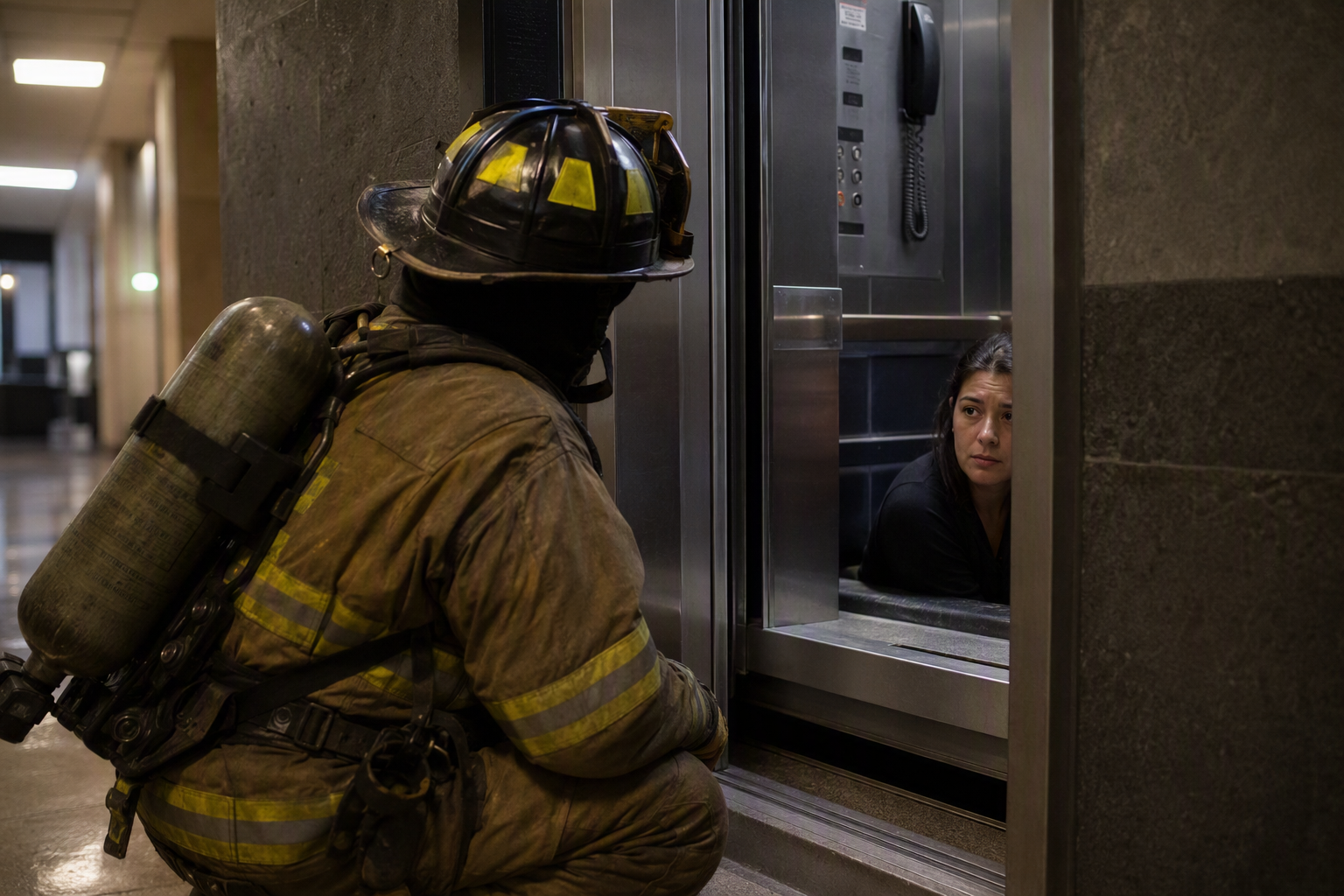
Secure the landing doors, assess whether anyone is trapped, call emergency services if needed, notify your elevator service company, and post clear out-of-service notices on every floor — all within the first fifteen minutes.
Speed and sequence matter enormously. If a passenger is trapped, Arizona building owners should call 911 before attempting any manual release, because improper cab leveling attempts can injure occupants. Once life safety is confirmed, the property manager should contact their elevator maintenance provider and begin the tenant communication process simultaneously. Every minute of silence after a visible outage increases complaint volume.
How do I safely communicate with passengers who are trapped inside the elevator?
Use the in-cab emergency phone or intercom to make voice contact immediately, reassure passengers that help is on the way, and instruct them not to attempt to pry doors open or exit through the top hatch.
Under ASME A17.1 Safety Code for Elevators and Escalators, every elevator cab is required to have a means of two-way communication with a monitored location. If that phone is not functioning, it is itself a code violation that should be documented and corrected during the repair visit. Until emergency responders arrive, keep communication open, provide periodic updates, and confirm the number of passengers and any medical needs to relay to arriving firefighters or EMTs.
What is the step-by-step protocol a property manager should follow during an elevator breakdown?
Following a documented, ordered protocol is the single most effective way to compress repair timelines and reduce formal tenant complaints.
- Confirm the situation. Determine whether the cab is stopped between floors, at a landing with doors open, or mid-travel with doors closed. Note the floor number and whether passengers are inside.
- Contact emergency services if passengers are trapped. Call 911 and provide the building address, elevator location, number of occupants, and any reported medical conditions.
- Disable the elevator at the main disconnect. Only qualified personnel should operate the machine room disconnect. If you are not trained, wait for emergency responders or the elevator technician — do not disable power if it could cause the cab to drop.
- Notify your elevator service company. Provide the unit ID, symptom description, error codes visible on the controller, and whether passengers are involved. Arizona Elevator Solutions serves Phoenix, Tucson, Scottsdale, and Mesa and can be reached at 480-557-7600.
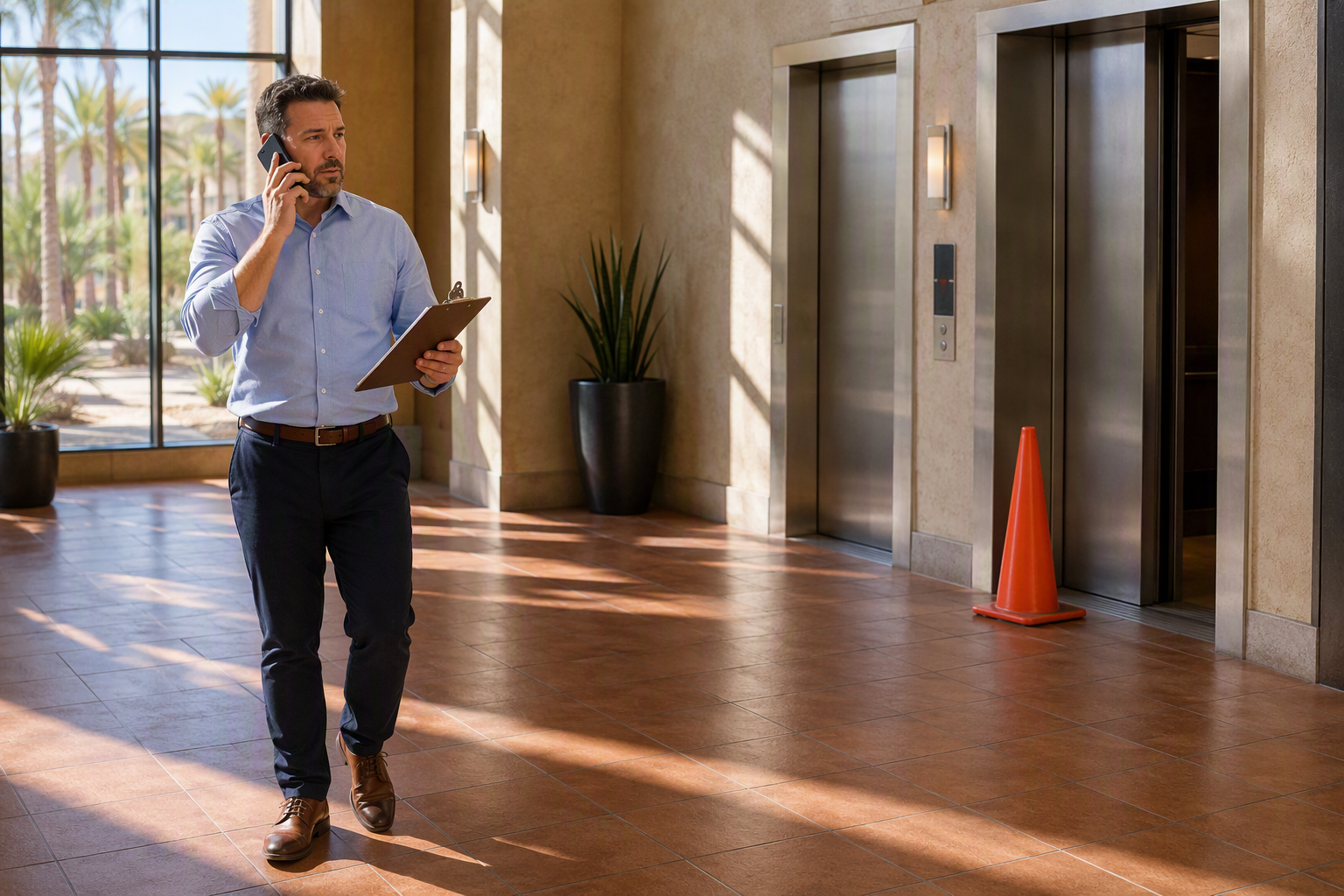
- Post out-of-service signage. Place clear notices at every floor landing and at all building entrances where elevator access is expected. Include an estimated repair timeline if one is available.
- Notify building management and ownership. Send a timestamped written notice (email is sufficient) to all supervisory stakeholders.
- Activate your ADA accommodation plan. Identify which tenants or visitors require elevator access for mobility reasons and arrange temporary accommodation — stair assistance, relocated services, or temporary ramp access where feasible.
- Document everything. Photograph signage placement, note the time of each call made, and save all communication records for the maintenance log and potential insurance purposes.
- Communicate with all tenants. Send a building-wide notice within one hour of the outage with a factual status update and an estimated restoration window.
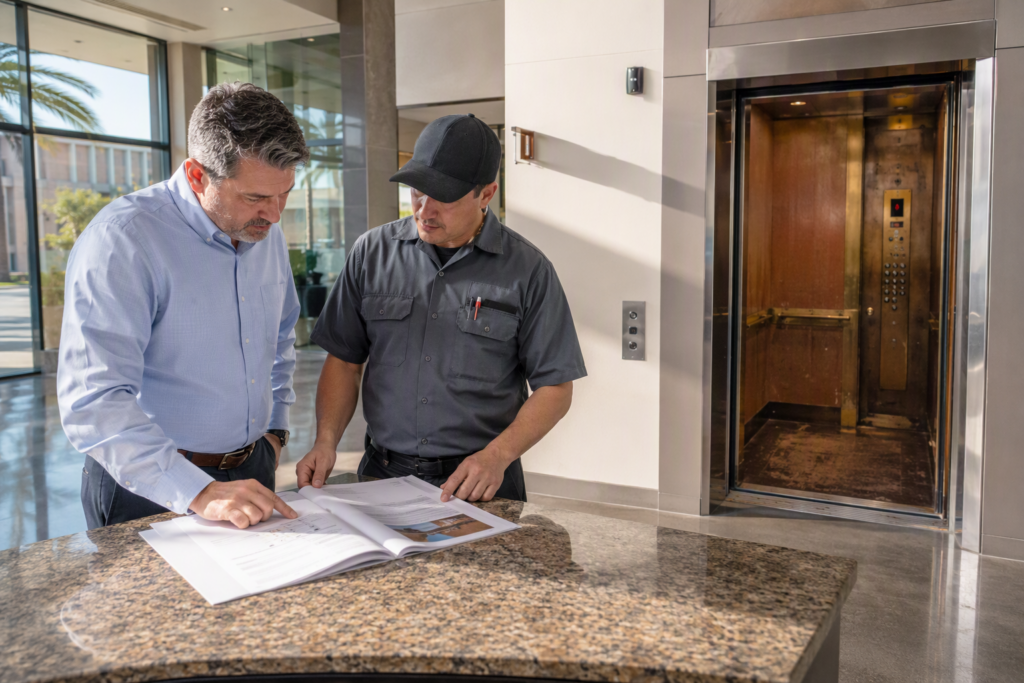
- Meet the technician on arrival. Provide access to the machine room, pit, and any relevant maintenance records. A complete history helps technicians diagnose root causes faster.
- Conduct a post-repair walkthrough. Before returning the elevator to service, ride the cab through the full range of travel and confirm door operation, leveling, and emergency phone function.
- Update tenants when service is restored. A short follow-up notice closes the communication loop and significantly reduces residual complaint volume.
What are the most common causes of elevator breakdowns in Arizona buildings?
The most frequent causes of elevator outages in Arizona include controller board failures, door operator malfunctions, hydraulic fluid issues, and safety device trips triggered by heat or power fluctuations.
Arizona’s desert climate introduces failure modes less common in other states. Sustained summer temperatures in Phoenix, Scottsdale, Mesa, and Tucson can push machine room temperatures to levels that stress electronic controllers and hydraulic fluid viscosity. Dust infiltration into door operator mechanisms is also a documented regional concern. Traction elevator systems can experience rope or sheave wear accelerated by thermal cycling, while hydraulic elevators may develop seal degradation from temperature swings between summer highs and cooler nights.
How does an elevator breakdown affect ADA compliance obligations?
A broken elevator in a multi-story building that serves as the primary accessible route creates an immediate ADA compliance concern, and building owners must take prompt action to provide equivalent access or face potential civil liability.
The ADA does not exempt buildings from accessibility requirements during elevator outages. If an elevator is the sole accessible means of reaching a service, an employer’s workspace, or a public accommodation on an upper floor, the building owner has an obligation to provide a reasonable alternative — such as temporarily relocating the service or activity to an accessible floor — for the duration of the outage. Documenting that alternative accommodations were offered is essential to demonstrating good-faith compliance. Prolonged outages with no accommodation plan are among the most commonly cited ADA complaint scenarios in commercial real estate.
What Arizona state regulations govern elevator outages and repairs?
In Arizona, elevator installation, maintenance, and repair fall under the jurisdiction of the Arizona Department of Occupational Safety and Health (ADOSH), which enforces standards aligned with ASME A17.1 and OSHA requirements.
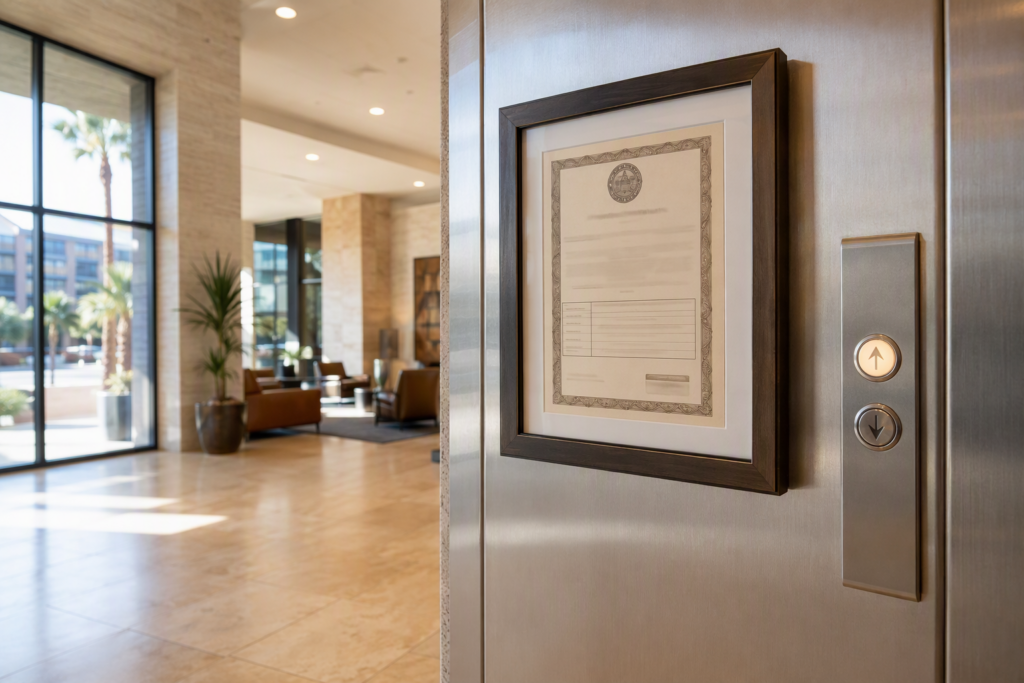
Arizona requires that elevator repairs involving safety-related components be performed by licensed elevator mechanics. Following certain categories of repair, the elevator must be inspected and approved before it is returned to public use. Property managers should confirm with their service provider which repairs trigger a re-inspection requirement and ensure the certificate of inspection is updated accordingly. Operating an elevator with a lapsed or failed inspection is a code violation that exposes building owners to regulatory penalties and increases liability exposure in the event of a future incident.
How should I communicate with tenants during an elevator outage to minimize complaints?
Proactive, factual, and frequent communication — beginning within the first hour of an outage — is the most effective strategy for preventing tenant complaints from escalating into formal grievances or lease disputes.
Tenant complaint volume correlates more closely with perceived indifference than with outage duration. A building where management communicates nothing for six hours generates more formal complaints than one where management sends three honest updates over the same period. Recommended communication channels include building-wide email, lobby posted notices, and direct outreach to known mobility-impaired tenants. Each communication should include: what happened, what is being done, who is handling it, and the best available estimate for restoration.
What information should I have ready when I call an elevator service company?
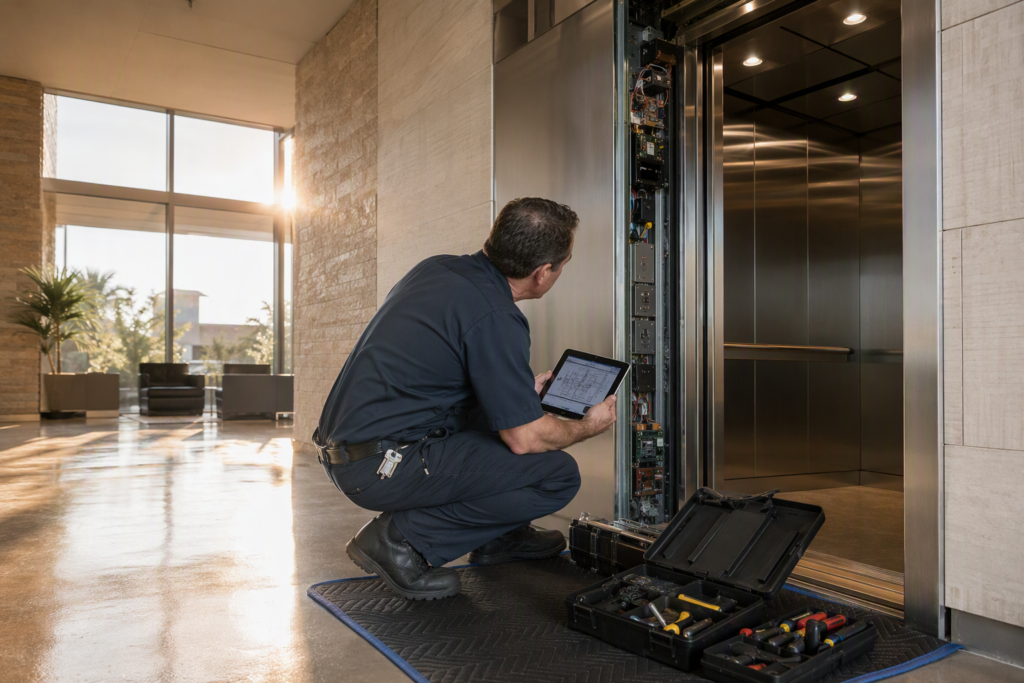
Having the elevator’s unit ID, controller model, fault codes displayed on the panel, the floor where the cab is stopped, and recent maintenance history ready will allow a technician to arrive better prepared and reduce diagnostic time on-site.
The more context a service company receives before dispatch, the better prepared the technician can be with the correct parts and tools. Property managers should maintain a quick-reference card in the building management office that includes the elevator unit number, the make and model of the controller, the last inspection date, the current maintenance contract holder, and the machine room location. Buildings served by Arizona Elevator Solutions have access to documented service histories that can support faster diagnosis during emergency calls.
What is the difference between a preventive maintenance contract and emergency repair service?
A preventive maintenance contract covers scheduled inspections and routine adjustments to reduce breakdown frequency, while emergency repair service addresses active failures — and buildings without a maintenance contract typically experience longer wait times and higher per-incident costs.
| Factor | Preventive Maintenance Contract | Emergency Repair (No Contract) |
|---|---|---|
| Service Scheduling | Planned, recurring visits | On-demand, unscheduled |
| Parts Availability | Technician familiar with unit; common parts may be stocked | Parts must be sourced reactively |
| Code Compliance Tracking | Inspection dates and deficiencies tracked proactively | Compliance gaps may not surface until failure |
| Documentation | Ongoing maintenance log maintained | Single-incident documentation only |
| Regulatory Risk | Lower — deficiencies caught before they become violations | Higher — failures may indicate unmaintained systems |
| Tenant Impact | Fewer unplanned outages over time | Outages are unplanned and unpredictable |
| ASME A17.1 Alignment | Maintenance intervals aligned with code requirements | No structured alignment with code intervals |
How often should elevators be inspected to reduce the risk of unexpected breakdowns?
ASME A17.1 establishes mandatory inspection intervals for elevators, and Arizona enforces these through ADOSH — routine annual inspections supplemented by ongoing maintenance visits are the baseline standard for code-compliant operation.
Inspection frequency alone does not prevent all breakdowns, but buildings with documented, current inspection records experience fewer regulatory complications when a failure does occur. ASME A17.1 also prescribes specific maintenance tasks that must be completed at defined intervals, separate from the annual inspection. Property managers who treat inspections as the entirety of their compliance obligation — rather than one component of an ongoing maintenance program — tend to face more frequent unplanned outages and greater regulatory exposure.
What should I do if the elevator keeps breaking down repeatedly?
Repeated breakdowns signal a systemic maintenance deficit, an aging component nearing end of life, or an underlying design or installation issue — and require a comprehensive diagnostic assessment rather than another reactive repair.
A pattern of repeat failures is one of the strongest indicators that a building needs a full elevator audit. An audit reviews controller health, mechanical wear, hydraulic system condition, door operator status, and compliance with the current edition of ASME A17.1. The audit findings determine whether the appropriate solution is targeted component replacement, a modernization of specific subsystems, or full cab and equipment replacement. Arizona Elevator Solutions provides comprehensive elevator assessments for buildings throughout Phoenix, Tucson, Scottsdale, and Mesa to identify root causes and develop a long-term reliability plan.
When does an elevator breakdown require a full modernization instead of repair?
Modernization becomes more cost-effective than continued repair when core components — controllers, hydraulic power units, door operators, or rope systems — are no longer manufactured, when parts availability is severely constrained, or when the system cannot be upgraded to meet current ASME A17.1 safety requirements through repair alone.
The decision between repair and modernization involves weighing the cost and frequency of recent repairs against the projected cost of modernization and the reliability improvement it would deliver. Buildings with elevators installed decades ago may find that individual component failures are becoming more frequent as the entire system approaches end of its service life. Modern controllers, solid-state drives, and updated door operators offer measurably improved reliability and are designed to meet current code requirements — reducing both breakdown frequency and regulatory risk over the long term.
How does heat affect elevator reliability in Arizona’s climate?
Arizona’s extreme summer heat is a documented stressor for elevator mechanical and electronic systems, particularly in machine rooms that lack adequate climate control, and properties in Phoenix, Scottsdale, Mesa, and Tucson should treat machine room temperature management as part of their preventive maintenance program.
Electronic elevator controllers contain components — capacitors, circuit boards, and solid-state drives — that are sensitive to sustained high temperatures. Hydraulic elevators are additionally affected by heat-induced changes in fluid viscosity, which can affect leveling accuracy and valve performance. Machine rooms in Arizona buildings that are not air-conditioned or are served only by passive ventilation may experience internal temperatures that exceed the operating specifications of installed equipment. A preventive maintenance program for Arizona buildings should include seasonal checks of machine room cooling systems, hydraulic fluid condition, and controller thermal management.
What documentation should I collect after an elevator breakdown for liability and compliance purposes?
Property managers should retain the technician’s written repair report, the pre- and post-repair inspection records, all tenant communications sent during the outage, and any updated certificate of inspection — this documentation package protects against regulatory penalties and civil liability claims.
In the event of a personal injury claim or regulatory audit following an elevator breakdown, documentation is the building owner’s primary defense. A complete post-incident file should include: the date and time of the reported failure, the nature of the malfunction, the names of any trapped passengers and documentation that they were safely released, all communication sent to tenants, the service company’s repair order and findings, and confirmation that the elevator passed post-repair testing before resuming service. Under OSHA standards, records related to equipment failures in the workplace carry defined retention requirements that building owners should confirm with their legal counsel.
How can I minimize elevator downtime during a major repair?
Minimizing downtime during major repairs requires pre-negotiating a repair timeline with the service company, sourcing parts in advance where possible, scheduling work during low-traffic periods, and maintaining a temporary accommodation plan for mobility-impaired building users throughout the repair window.
For repairs requiring specialty parts, lead time is often the dominant variable in total outage duration. Property managers can reduce this variable by working with a service company that maintains a parts inventory for the elevator models in their building. Clear communication about expected parts arrival dates allows tenants to plan accordingly and reduces the accumulation of frustration that drives complaint volume. When repairs extend over multiple days, daily status updates — even brief ones — demonstrate active management and measurably reduce formal complaint rates.
What role does the machine room play in diagnosing and repairing elevator breakdowns?
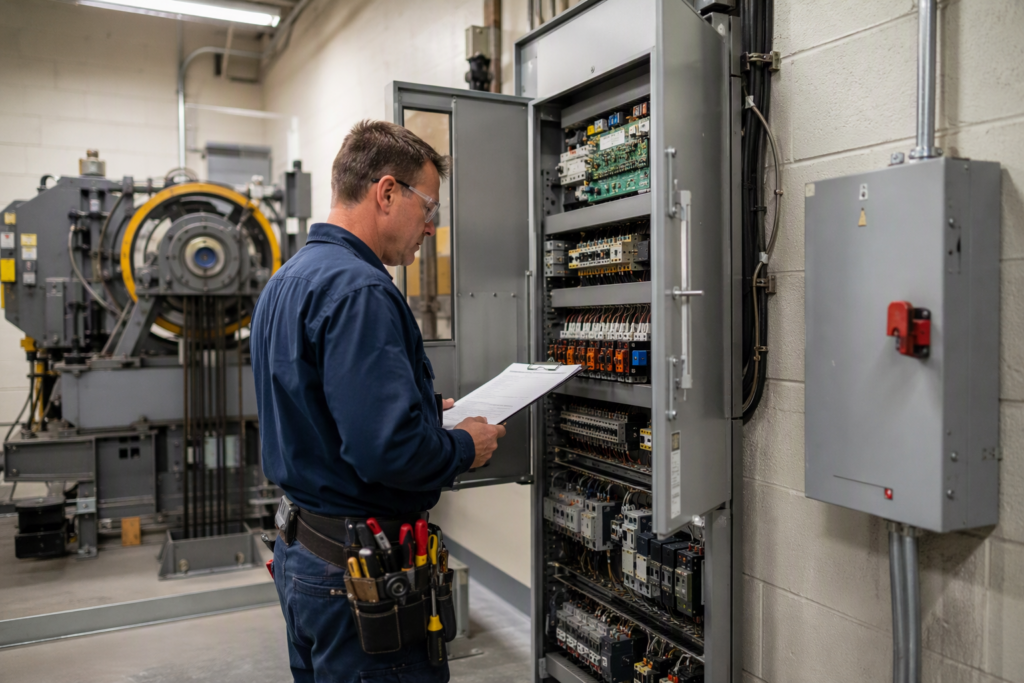
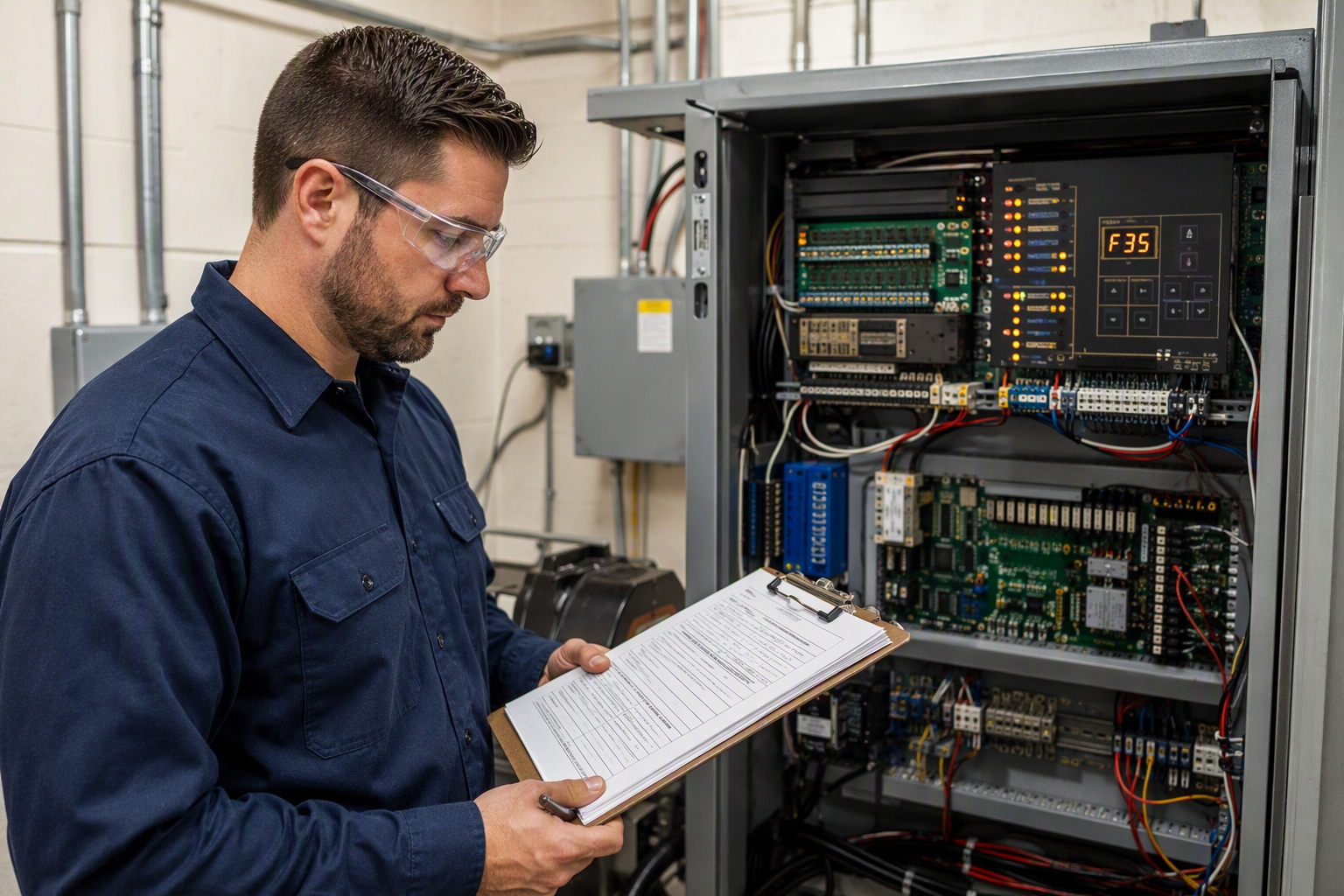
The machine room contains the elevator’s controller, drive system, motor, and — for hydraulic units — the power unit, making it the primary diagnostic starting point for most breakdown investigations and the reason that clear, unobstructed machine room access is a code requirement under ASME A17.1.
Machine rooms that are used for storage, that have compromised climate control, or that have unlocked or unsecured doors create both safety hazards and diagnostic delays. ASME A17.1 requires that machine rooms be kept clean, properly illuminated, and accessible only to authorized personnel. Property managers should conduct periodic checks to confirm that machine room access meets code requirements — cluttered or improperly maintained machine rooms are a common finding during elevator assessments and can contribute to both breakdown frequency and extended repair times.
What temporary accommodations are required for mobility-impaired tenants during an elevator outage?
Under the ADA, building owners and operators must make reasonable modifications to policies and procedures to ensure that people with disabilities retain access to the goods, services, and spaces they are entitled to use — which in practice means actively offering alternative arrangements rather than waiting for affected tenants to request them.
The specific accommodations required depend on the nature of the building and the tenants’ needs. In a commercial office building, this might mean temporarily relocating a ground-floor workspace for an employee who cannot use stairs. In a residential building, it might mean arranging meal delivery, package pickup at an accessible location, or coordination with home health service providers. Building owners should maintain a current list of known mobility-impaired tenants and contact them directly at the start of any elevator outage rather than relying on general notices that may not reach them in time.
How can I evaluate whether my current elevator service provider is performing adequately?
Key performance indicators for elevator service providers include documented maintenance visit completion rates, mean time to respond to emergency calls, parts availability for the specific equipment in your building, current technician licensing under Arizona ADOSH requirements, and a transparent maintenance log accessible to the building owner.
Buildings that experience frequent unplanned outages, receive minimal documentation after service visits, or struggle to get clear answers about the condition of their equipment may benefit from a second opinion from an independent elevator service company. Arizona Elevator Solutions offers elevator assessments for building owners and property managers in Phoenix, Tucson, Scottsdale, and Mesa who want an objective evaluation of their current elevator’s condition and maintenance program — without obligation to transition service contracts.
What should be included in a building’s elevator emergency response plan?
A complete elevator emergency response plan should include emergency contact numbers, a passenger entrapment protocol, a tenant notification template, an ADA accommodation list, machine room access instructions, and a post-incident documentation checklist — reviewed and updated at least annually.
Buildings that have documented emergency response plans in place before an outage occurs handle incidents more efficiently and generate fewer complaints than those where staff improvise responses in real time. The plan should be stored both digitally and in a physical binder accessible to all building management staff during a power outage. Staff responsible for executing the plan should receive periodic training so that the protocol is familiar when it is needed. Annual review ensures the plan reflects current equipment configurations, updated tenant lists, and any changes to Arizona regulatory requirements.
How does elevator modernization reduce future breakdown risk and tenant complaints?
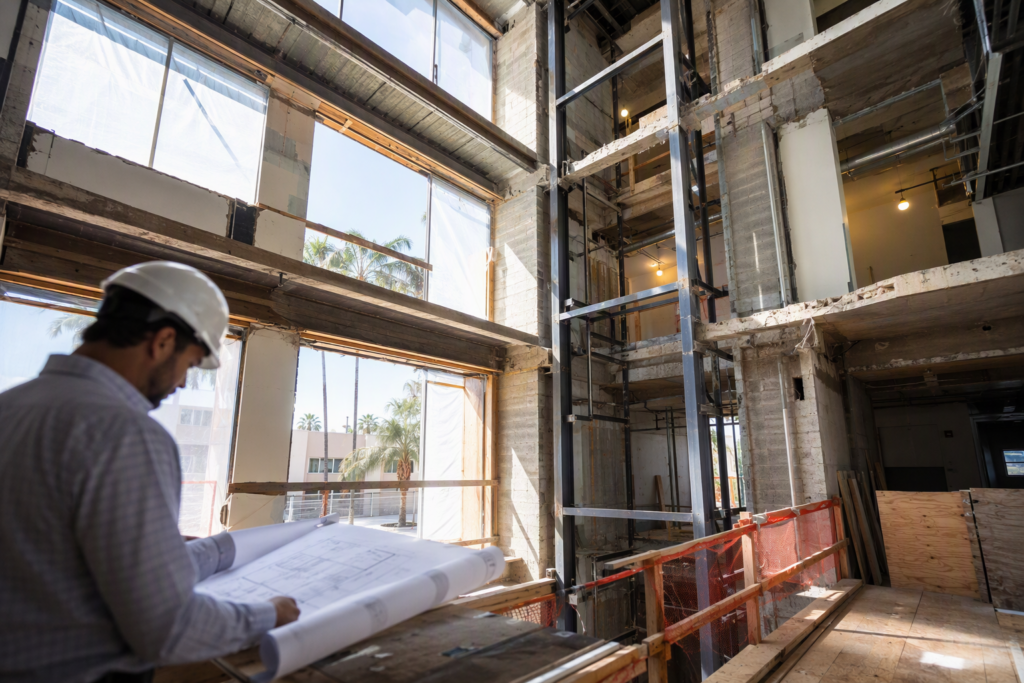
Elevator modernization replaces aging mechanical and electronic components with current-generation equipment designed to meet the 2025–2026 edition standards of ASME A17.1, delivering improved reliability, reduced failure frequency, and enhanced safety features that directly reduce the volume and intensity of tenant complaints related to elevator service.
Modern microprocessor-based controllers offer remote diagnostic capabilities that allow service technicians to identify developing faults before they result in in-service failures. Updated door operators — one of the most frequent sources of nuisance trips and entrapments — use sensor arrays and motor technology that are more tolerant of dust, temperature variation, and wear than older mechanical systems. For Arizona buildings where the elevator has become a recurring source of tenant dissatisfaction, modernization often represents a more cost-effective long-term solution than continued repair of aging infrastructure.
How do I choose the right elevator service company in Arizona?
The right elevator service company for an Arizona building holds current ADOSH licensure, demonstrates familiarity with the specific equipment installed, provides transparent maintenance documentation, and has a verifiable track record servicing properties in the local market — Phoenix, Tucson, Scottsdale, or Mesa depending on your building’s location.
When evaluating service providers, property managers should request evidence of current licensing, ask for a sample maintenance report to assess documentation quality, and inquire specifically about parts availability for the elevator models in their building. Service companies that cannot produce documentation of their licensing or that are vague about parts sourcing for less common equipment represent elevated risk. Arizona Elevator Solutions is a certified elevator service company serving commercial and residential properties throughout the Phoenix metro area and Tucson, with technicians licensed under Arizona ADOSH requirements.
Get Your Elevator Back in Service — and Keep It There
Whether a breakdown just happened or a pattern of recurring outages is affecting tenant satisfaction, the next step is a professional assessment from a licensed elevator service company that knows Arizona buildings. Contact Arizona Elevator Solutions for a free elevator assessment — serving Phoenix, Tucson, Scottsdale, and Mesa.
Call: 480-557-7600
Need elevator service you can rely on? Arizona Elevator Solutions is ready to help.