How Many Elevator Breakdowns Per Year Is Normal — And When Should You Be Concerned?
Elevator reliability is one of the most common concerns building owners, property managers, and facilities directors raise — yet “normal” is rarely defined clearly. This page explains what breakdown frequency actually means, what the relevant federal safety codes require in Arizona, and at what point a pattern of failures crosses from routine maintenance into a reliability crisis that demands urgent action.
What Does “Normal” Breakdown Frequency Actually Mean?
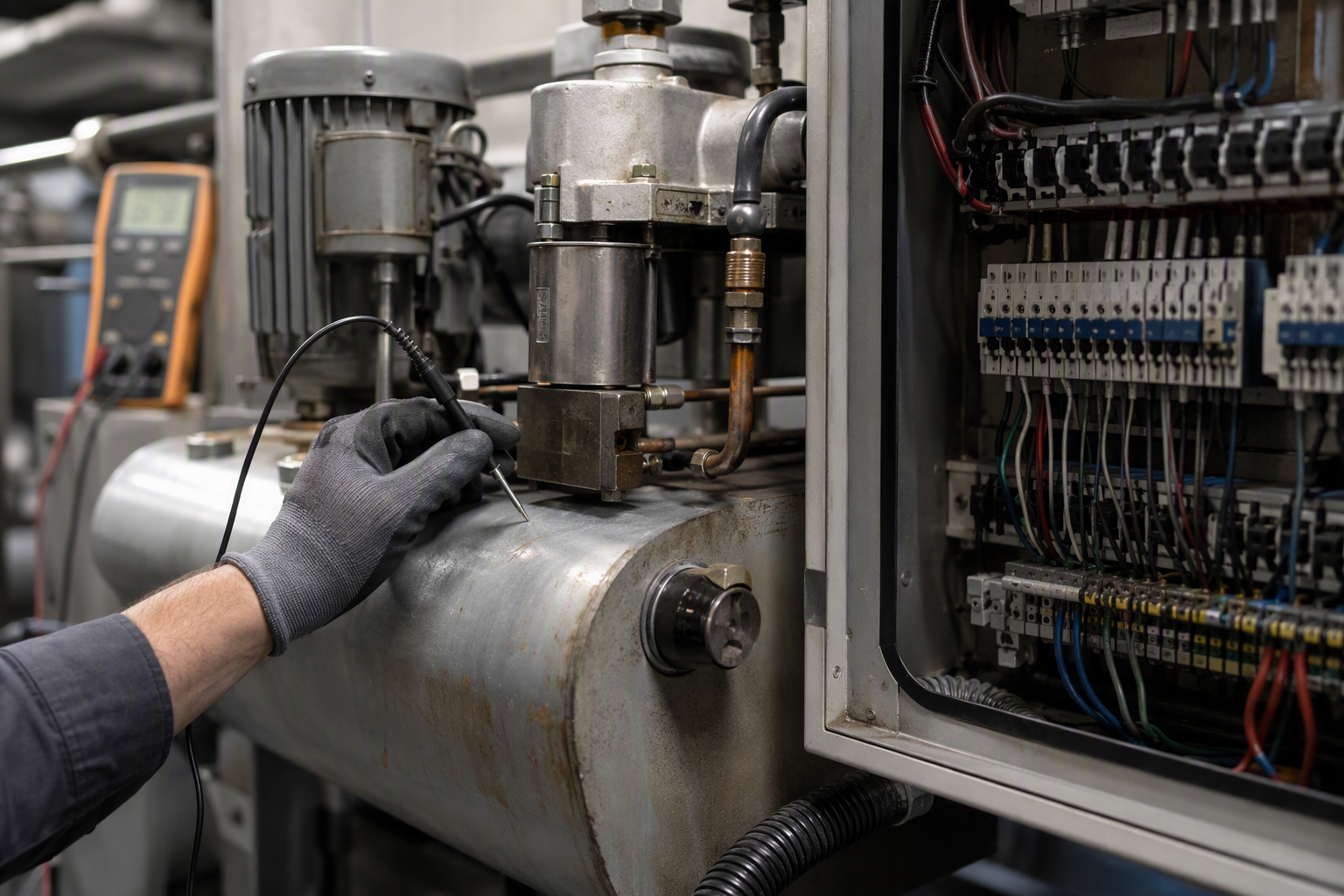
There is no single federal statute that defines an acceptable number of annual elevator breakdowns. What industry professionals use instead is a combination of maintenance benchmarking, callback rates, and code-compliance status. A well-maintained elevator in a commercial or residential building typically experiences minor service interruptions — door malfunctions, sensor trips, entrapments — at a low and predictable rate. When those calls begin to cluster, repeat within short windows, or involve the same component repeatedly, a reliability problem is developing.
Key factors that shape what is “normal” for any given unit include:
- Equipment age: Older hydraulic and traction elevators with original components accumulate wear that increases callback frequency over time.
- Maintenance contract type: Full-maintenance agreements that cover parts and callbacks typically correlate with lower breakdown rates than oil-and-grease-only contracts.
- Usage volume: A high-rise office elevator running hundreds of trips daily is subject to different stress than a low-traffic residential lift.
- Arizona’s climate: Extreme heat in the Phoenix metro and across the Sonoran Desert affects hydraulic fluid viscosity, motor cooling, and electronic control performance in ways not seen in cooler climates.
- Code compliance status: Elevators kept current with ASME A17.1 Safety Code for Elevators and Escalators and ASME A17.3 Safety Code for Existing Elevators and Escalators requirements tend to operate more reliably than units with deferred safety upgrades.
At What Point Should You Be Concerned About Elevator Reliability?
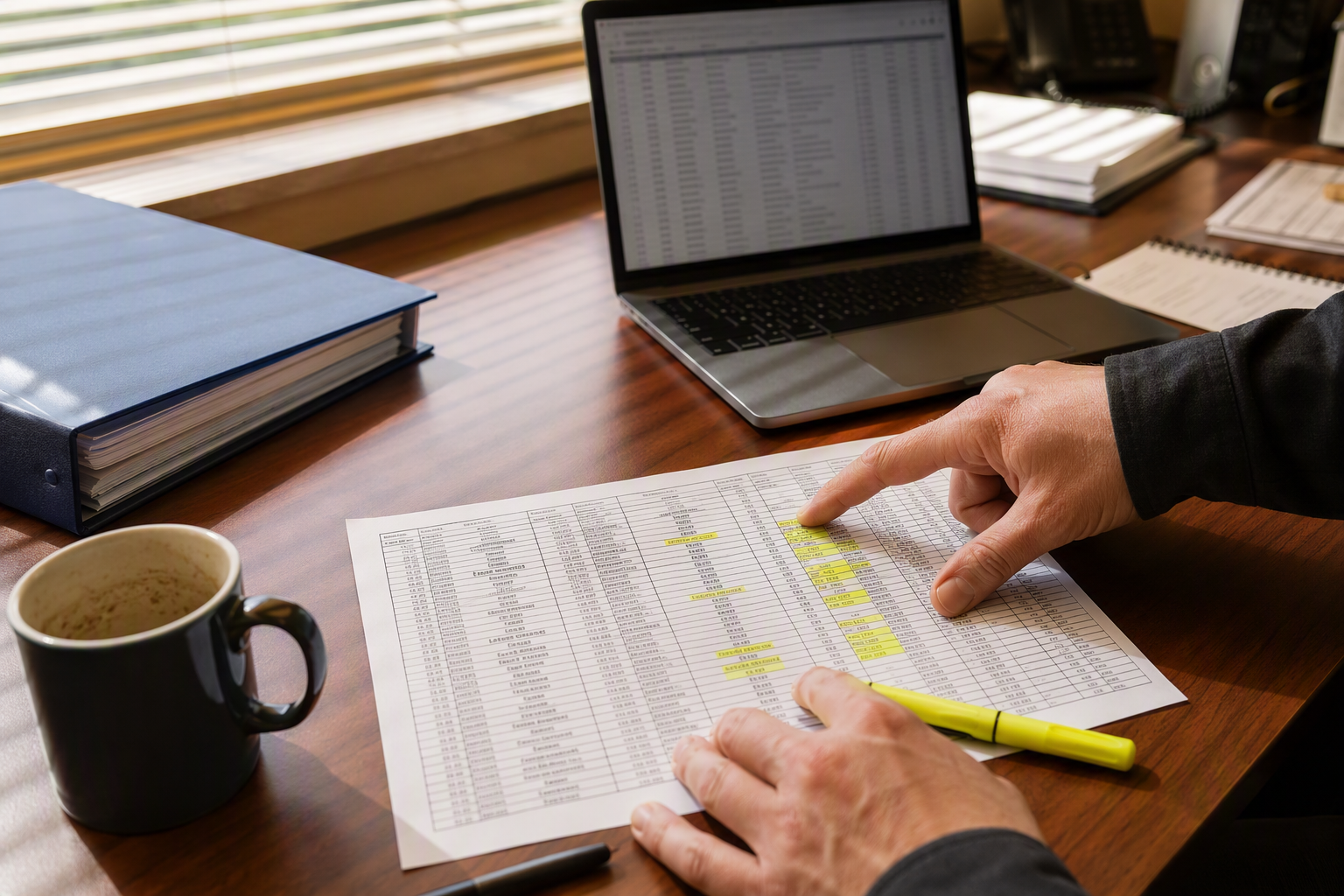
Concern is warranted when breakdowns shift from isolated incidents to patterns. Red flags that signal a systemic reliability problem include:
- The same component failing more than once within a 90-day period
- Multiple unplanned service calls within a single month
- Entrapments — passengers stuck between floors — occurring more than once per year
- Failures that trigger safety device shutdowns (safeties, buffers, or governor trips)
- Failed annual or periodic inspections reported to Arizona’s elevator inspection authority
- Callbacks that temporarily restore function without a root-cause repair
A pattern of surface-level repairs that mask an underlying mechanical or electrical degradation is a stronger warning sign than raw breakdown count alone. Arizona Elevator Solutions uses a data-driven maintenance review process to distinguish isolated callbacks from systemic equipment decline.
What Do ASME Codes Require for Arizona Elevators?
Arizona enforces elevator safety through the ASME A17.1 Safety Code for Elevators and Escalators for new installations and the ASME A17.3 Safety Code for Existing Elevators and Escalators for units already in service. These codes establish minimum performance and safety standards, including requirements for:
- Periodic inspections and tests at intervals set by the applicable code edition
- Functioning door reopening devices
- Governor and safety device performance
- Proper illumination, signaling, and emergency communication systems (the latter also addressed under ADA requirements)
- Firefighters’ emergency operation
When an elevator fails inspection in Arizona, it must be taken out of service until deficiencies are corrected and re-inspected. A building that continues operating a tagged-out elevator faces significant liability exposure under both state law and OSHA general duty clause obligations.
What Are the Most Common Causes of Elevator Breakdowns?
Understanding failure causes helps distinguish routine wear from premature component failure. The most frequently cited sources of elevator service calls include:
- Door system malfunctions: Door operators, clutches, rollers, and safety edges account for a large share of all service calls across elevator types. Doors experience more mechanical cycles than any other single subsystem.
- Control system faults: Aging relay-logic or early microprocessor controls develop intermittent faults that can be difficult to reproduce and diagnose.
- Hydraulic system issues: In Arizona’s heat, hydraulic fluid can thin, overheat, or develop seal degradation faster than in temperate climates, leading to slow travel, leveling errors, and oil contamination.
- Motor and drive failures: Variable-frequency drives and older motor-generator sets both accumulate wear; drive faults are a common cause of unplanned shutdowns in traction elevators.
- Safety device nuisance trips: Overspeed governors, buffer switches, and pit float switches can trigger false shutdowns when they drift out of calibration — particularly after temperature extremes.
- Leveling and positioning errors: Worn selector tapes, encoder drift, or damaged vanes cause the car to misalign with the floor, creating a trip hazard and an ADA accessibility concern.
How Does Elevator Age Affect Breakdown Frequency?
Equipment age is one of the strongest predictors of callback frequency. Elevators transition through identifiable life-cycle phases:
- New installation (0–5 years): Breakdowns are rare and typically involve commissioning adjustments or early component defects rather than systemic wear.
- Mature service (5–15 years): A well-maintained elevator in this phase should experience infrequent, predictable service needs. Callback rates that rise during this phase often point to inadequate maintenance contracts rather than the equipment itself.
- Mid-life (15–25 years): Drive systems, controllers, and hydraulic components begin reaching end-of-life. Modernization of specific subsystems often delivers a measurable drop in service calls and energy use.
- Aging equipment (25+ years): Units in this range frequently operate on obsolete controls with limited parts availability. Breakdown frequency tends to rise, repair costs increase, and downtime between repair and parts sourcing lengthens.
Under ASME A17.3, existing elevators must meet retroactive safety requirements as editions are adopted — meaning an aging unit may simultaneously face both increased mechanical failures and mandatory safety upgrades.
What Should You Do Immediately After an Elevator Breakdown?
- Confirm passenger safety first. If anyone is trapped, use the emergency intercom or phone in the cab to communicate with them. Keep them calm and in the car — do not attempt self-rescue through the hatch or doors.
- Contact your elevator service provider. Report the failure with as much detail as possible: floor position, any error codes displayed, whether doors are open or closed, and how many passengers (if any) are inside.
- If passengers are trapped, contact emergency services. Local fire departments in Arizona are trained in elevator entrapment rescue. Do not delay this call.
- Document the incident. Note the date, time, car number, floor, and a description of the failure mode. This record is essential for warranty claims, insurance, and maintenance tracking.
- Keep the elevator out of service until inspected. If a safety device triggered the shutdown, the elevator must not be returned to service by resetting it without a qualified technician identifying and correcting the root cause.
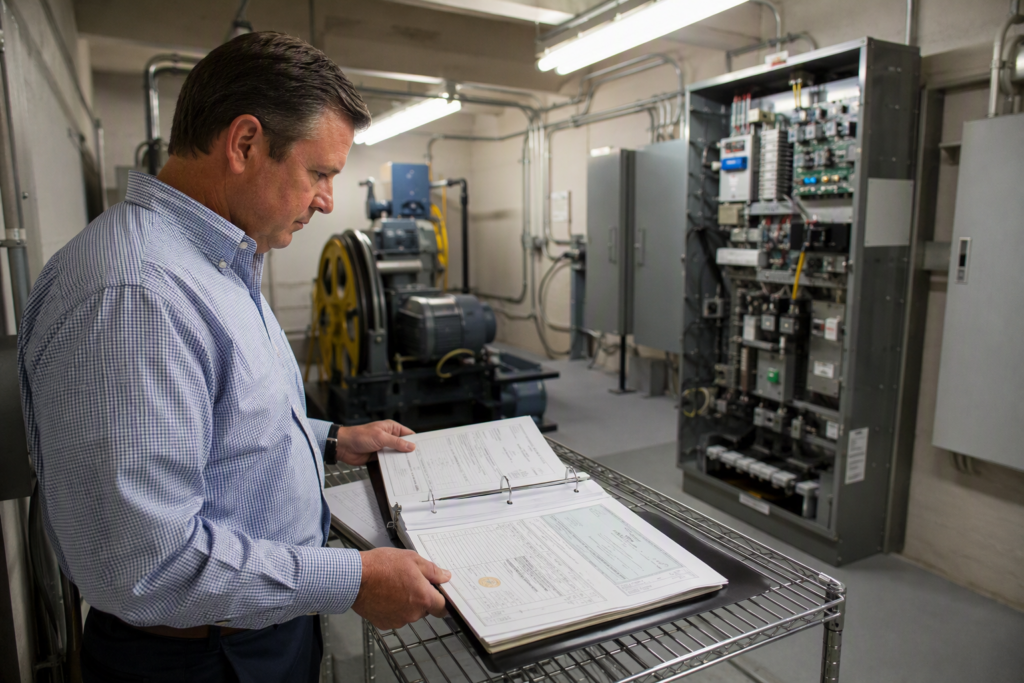
- Review your maintenance records. After the immediate response, pull the service history for that unit and look for prior calls on the same system or component.
- Request a root-cause report from your technician. A temporary fix that restores operation without addressing the underlying failure is not an acceptable resolution for a unit with a pattern of similar events.
How Do Maintenance Contracts Affect Breakdown Rates?
The structure of a maintenance agreement has a direct and measurable influence on how often an elevator breaks down. There are three broad contract types common in the Arizona market:
- Oil and grease (lubrication only): The lowest-cost option covers only routine lubrication and visual inspection. Parts and labor for repairs are billed separately. Buildings on this type of contract typically see higher callback rates because preventive parts replacement is not included.
- Comprehensive (parts and labor): Covers most or all replacement parts and repair labor. This structure incentivizes the service company to perform proactive maintenance because they bear the cost of reactive repairs.
- Full maintenance: Includes comprehensive coverage plus scheduled component testing, modernization planning, and detailed record-keeping. This is the contract structure most closely aligned with minimizing unplanned downtime.
Arizona Elevator Solutions provides maintenance programs structured around actual equipment condition and usage data — not a one-size-fits-all schedule — allowing building teams to make informed decisions about repair versus replacement before a breakdown forces the issue.
When Is It Time to Modernize Rather Than Repair?
A modernization decision is typically driven by a combination of factors rather than a single breakdown. Indicators that modernization is more cost-effective than continued repair include:
- Repair costs in a rolling 12-month period approaching a significant fraction of modernization cost
- Parts obsolescence — the manufacturer no longer stocks components for the existing controller or drive
- Repeated failures on the same subsystem within a short window
- Inability to achieve ASME A17.3 retroactive code compliance without replacing major components anyway
- Passenger complaints, tenant complaints, or documented ADA accessibility deficiencies under ADA Title III or Title II
- Energy consumption that is significantly above modern drive system baselines
Modernization — replacing the controller, drive, cab interior, or entire mechanical system — typically resets the breakdown frequency to near-new levels and often brings the unit into compliance with current code requirements at the same time.
What Role Does Arizona’s Climate Play in Elevator Reliability?
Arizona’s operating environment creates reliability challenges that are not present in most of the country. Summer temperatures in the Phoenix metro and other low-desert communities regularly exceed 110°F, which affects elevator equipment in specific ways:
- Hydraulic fluid viscosity drops in sustained heat, reducing lifting efficiency and accelerating seal wear
- Machine room temperatures — particularly in non-air-conditioned rooms — can exceed equipment thermal ratings, causing controller boards and drive components to throttle or shut down
- Monsoon humidity cycles stress electrical connections, accelerating corrosion on terminals and contactors
- Dust infiltration from desert storms (haboobs) can compromise door sensors, encoders, and ventilation in machine rooms
A maintenance schedule designed for a temperate climate building is not adequate for Arizona conditions. Qualified Arizona service providers adjust inspection intervals, fluid specifications, and machine room cooling assessments to account for these factors.
How Do Inspection Requirements Relate to Breakdown Risk?
Arizona requires periodic inspections of elevators by qualified inspectors. These inspections, structured around ASME A17.1 and A17.3 requirements, serve as an independent check on equipment condition that goes beyond what a maintenance technician’s regular visit covers. An elevator that passes inspection is not guaranteed to be free of future breakdowns — inspections test safety devices and operational performance at a point in time, not predictive wear rates.
However, failed inspections are a strong leading indicator of elevated breakdown risk. A unit that cannot pass a safety test is typically experiencing broader mechanical degradation that will manifest in callbacks if not addressed. Keeping an elevator current on inspections, and addressing deficiencies promptly, is one of the most reliable ways to maintain a low breakdown frequency.
What Is the Difference Between a Breakdown and a Safety Shutdown?
Not all elevator stoppages are equivalent. Understanding the distinction helps building teams assess severity accurately:
- Nuisance trips: The elevator stops due to a sensor trip, software fault, or minor electrical issue that clears when reset. These are often the highest-volume call type and the least severe.
- Component failures: A mechanical or electrical part has failed and must be replaced before the elevator can run. Severity depends on whether the component is safety-critical and how quickly parts are available.
- Safety device activation: The governor, buffer, pit switch, or other listed safety device has actuated. The elevator must not be returned to service until a qualified mechanic inspects the triggering condition. These events require documentation and, in some cases, notification to the Arizona inspection authority.
- Entrapments: Passengers are inside the car and cannot exit normally. Any entrapment — even one resolved quickly — must be treated as a serious event, investigated thoroughly, and documented.
Safety device activations and entrapments are categorically more serious than nuisance trips, regardless of frequency. A single entrapment that results from a known and unaddressed deficiency represents a far greater reliability and liability concern than three nuisance trips in a year caused by an aging door sensor.
What Industry Trends Are Shaping Elevator Reliability in 2025–2026?
Several qualitative shifts are influencing how elevator reliability is measured and managed in the current period:
- Remote monitoring adoption: Connected elevator systems that transmit fault codes and operational data in real time are becoming more common in new installations and modernizations. These systems allow service providers to respond before a fault becomes a full breakdown.
- Predictive maintenance models: Rather than scheduling maintenance by calendar interval alone, data-informed providers are beginning to correlate specific operating signatures — door cycle counts, motor temperature trends, leveling error frequency — with impending component failure.
- Parts supply chain awareness: Global supply disruptions have increased lead times for certain elevator components, making proactive parts management a more prominent part of reliability strategy. Buildings with aging equipment are most exposed to extended downtime when parts must be sourced from limited suppliers.
- Code edition adoption cycles: As Arizona adopts newer editions of ASME A17.1 and A17.3, retroactive requirements create decision points for existing equipment that intersect with modernization planning.
- Workforce and technician training: Modern elevator systems — particularly those with advanced drive electronics and software-based controls — require technicians with updated diagnostic skills. The quality of field diagnosis directly affects how quickly breakdowns are resolved and whether root causes are addressed.
How Can Arizona Elevator Solutions Help Assess My Elevator’s Reliability?
Arizona Elevator Solutions approaches elevator reliability as a data problem. By reviewing a unit’s service history, inspection records, component age, and operational environment — including the specific demands of Arizona’s climate — the team can identify whether a building’s breakdown frequency is within an acceptable range or signals equipment that needs intervention.
Services include maintenance program evaluation, breakdown pattern analysis, modernization planning aligned with current ASME code requirements, and assessments that consider ADA accessibility obligations alongside mechanical performance. Arizona Elevator Solutions operates exclusively in Arizona and understands the specific inspection, code-adoption, and climate conditions that affect elevator reliability across the state.
Get a Professional Elevator Reliability Assessment
If your elevator is experiencing repeated breakdowns, failed inspections, or a pattern of calls that is difficult to interpret, a professional assessment is the clearest path to answers. Arizona Elevator Solutions offers a free elevator assessment to help Arizona building owners and managers understand their equipment’s current condition and reliability trajectory.
Contact Arizona Elevator Solutions for a free elevator assessment: 480-319-7157
Need elevator service you can rely on? Arizona Elevator Solutions is ready to help.