How to Plan an Elevator Modernization or Major Repair in an Occupied Building Without Disrupting Tenants or Operations
Elevator modernization in an occupied building is one of the most logistically complex capital improvement projects a property owner or facilities manager will undertake. Unlike a roof replacement or HVAC upgrade, an elevator outage directly blocks access to floors — raising immediate ADA compliance concerns, disrupting tenants, and creating liability exposure. The guidance below covers every major question a building owner, property manager, or facilities director in Phoenix, Tucson, Scottsdale, or Mesa should ask before a single panel is removed.
What Is the First Step When Planning an Elevator Modernization in an Occupied Building?
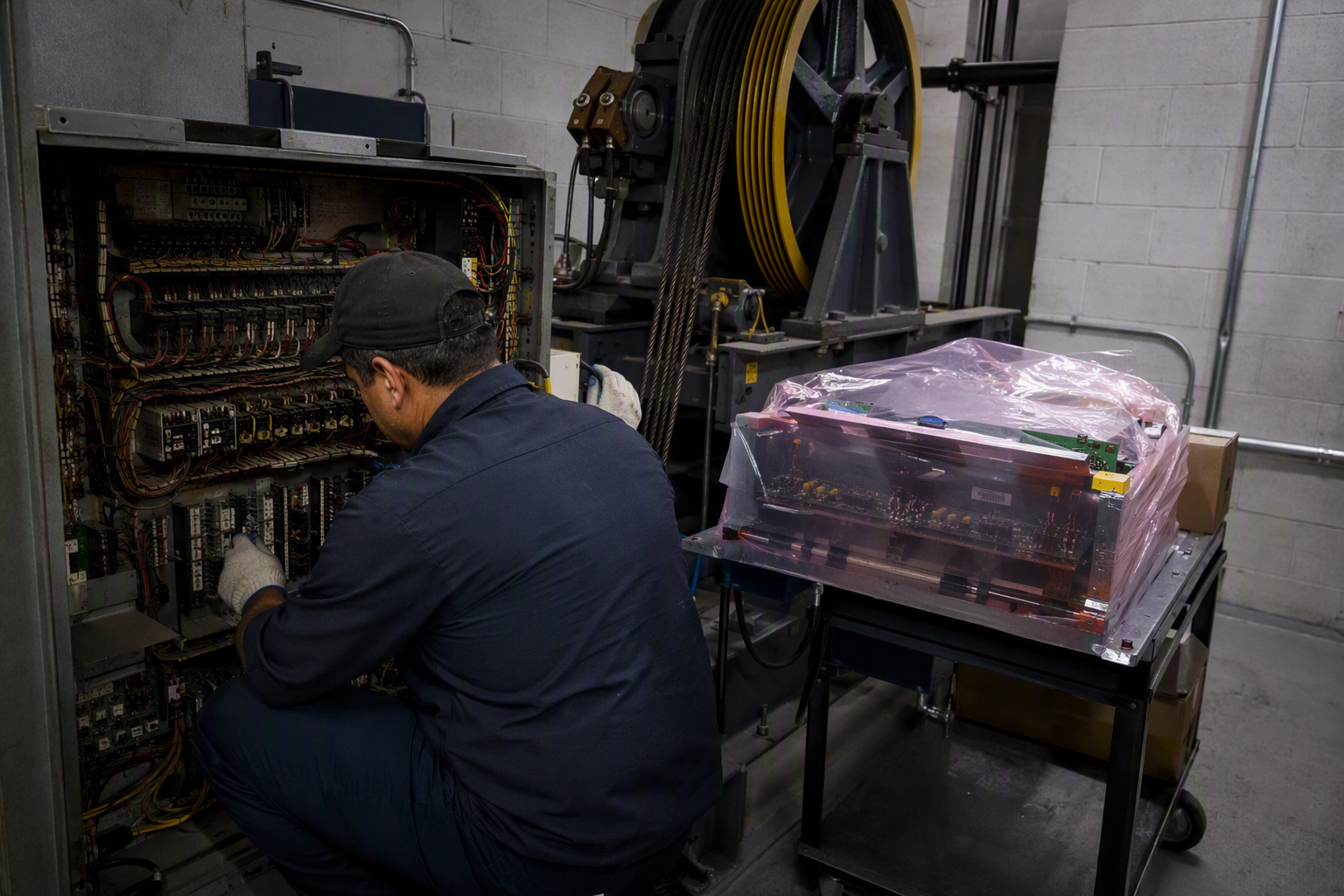
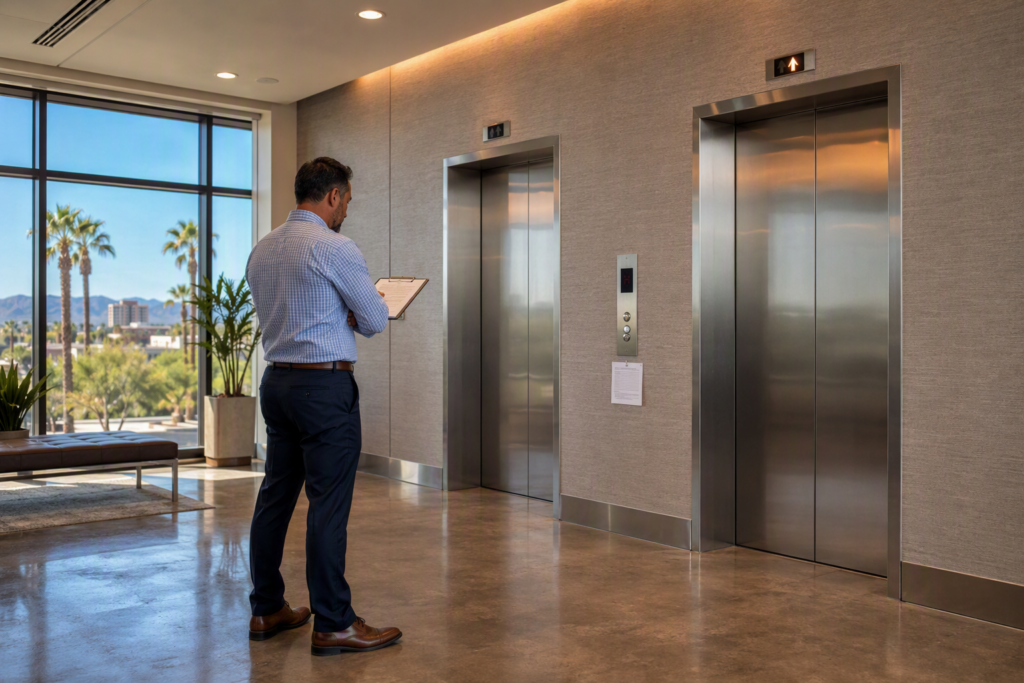
The first step is a thorough condition assessment of the existing equipment, followed by a written project scope that defines what will be replaced, when work will occur, and how tenant access will be maintained throughout.
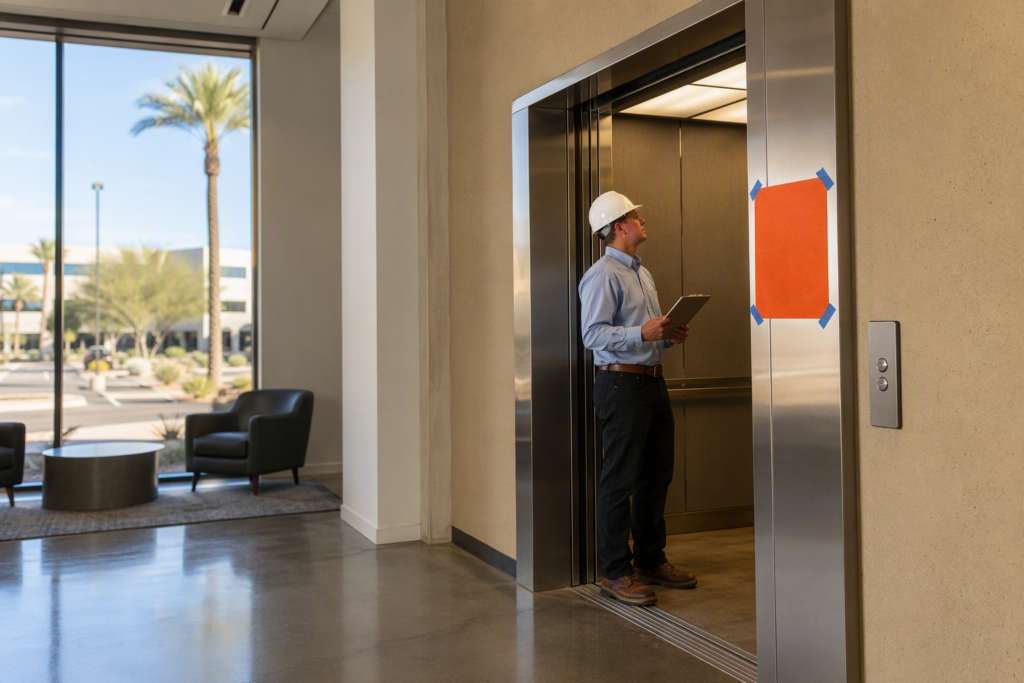
A condition assessment documents the age and operational status of every major subsystem: controller, drive, door operator, hoisting machine, safeties, buffers, and cab interior. This baseline determines whether a full modernization, partial modernization, or targeted repair is the right path. Buildings with multiple elevators should assess all cars simultaneously so the phasing plan accounts for the true condition of each unit, not just the one showing symptoms. Arizona Elevator Solutions performs these assessments across properties in Phoenix, Tucson, Scottsdale, and Mesa, providing written findings that become the foundation of a compliant project plan.
How Should a Multi-Car Building Phase Elevator Modernization to Maintain Service?
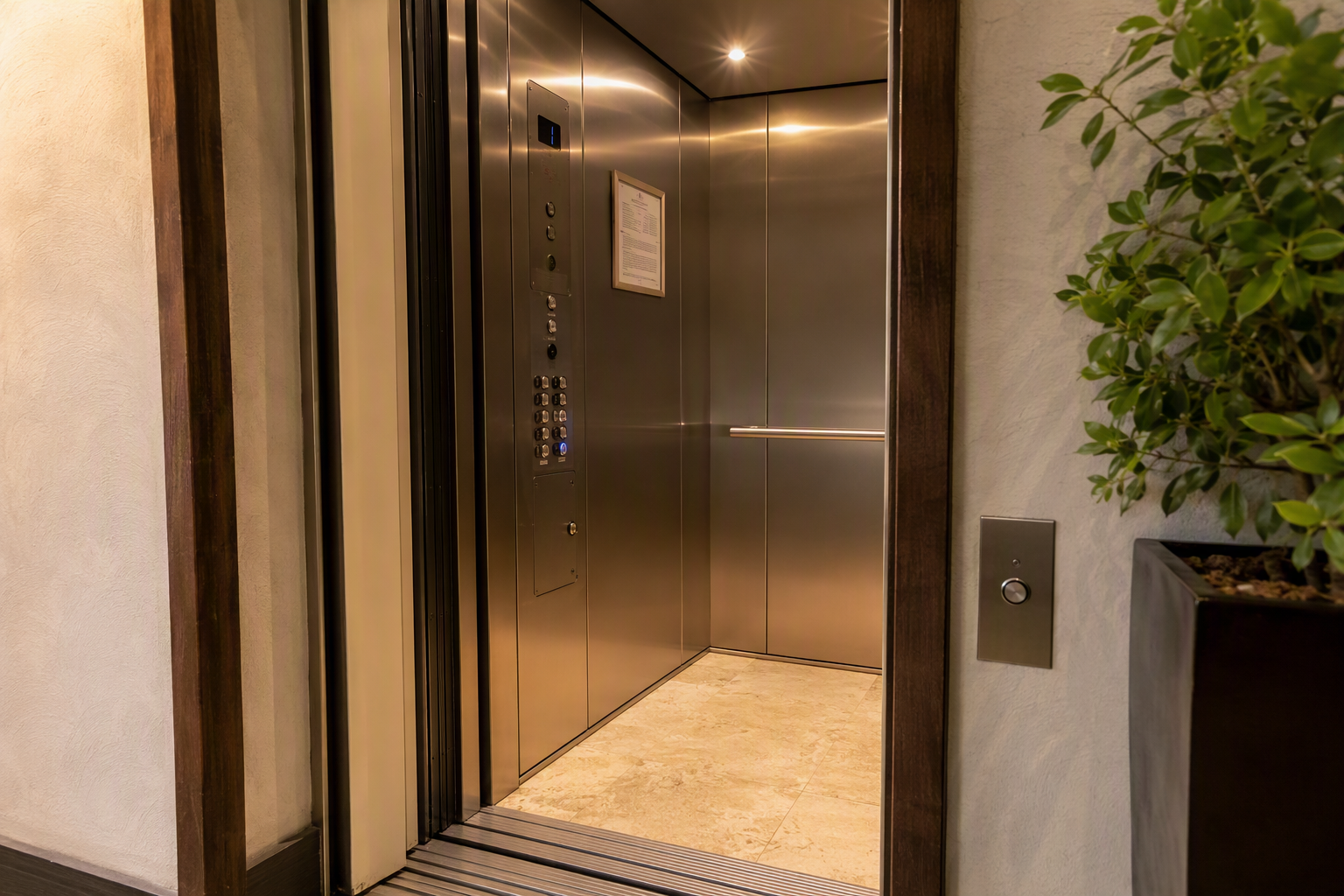
In a multi-car building, modernization should be phased one elevator at a time, keeping all remaining cars in full service while each unit is taken out of rotation.
The standard approach is to complete one car before beginning the next. The sequence should be determined by relative condition — the car in the poorest state goes first, because it carries the highest breakdown risk. During each phase, the remaining operational cars carry the full building load. Property managers should assess peak-traffic periods (typically morning arrival, midday, and late afternoon departure) and schedule the most disruptive work — controller replacement, machine room work, pit modifications — during nights or weekends when demand is lowest.
For buildings with only two cars, the planning burden is higher. Some scopes can be structured so that a two-car building keeps one fully functional elevator in constant service while the other is modernized, but this requires careful scheduling and written commitments from the elevator contractor about daily start and stop times.
What Does ASME A17.1 Require During a Modernization Project?
Under ASME A17.1 Safety Code for Elevators and Escalators, any alteration to an elevator must bring the altered components — and any components affected by the alteration — into conformance with the code edition adopted by the authority having jurisdiction (AHJ) at the time of the alteration.
In Arizona, the AHJ is typically the State Elevator Safety Program administered through the Arizona Department of Occupational Safety and Health (ADOSH). When a modernization triggers an alteration as defined in ASME A17.1, the contractor must pull the appropriate permits, and the completed work must pass a third-party inspection before the elevator is returned to service. Building owners should confirm with their contractor which specific components the alteration affects and which code edition the AHJ has adopted, because code adoption cycles mean the applicable edition can vary.
Additionally, ASME A17.3 Safety Code for Existing Elevators and Escalators applies to existing installations and may require retroactive upgrades when an alteration is performed — a factor that can expand project scope and cost beyond the initial estimate if not identified during the assessment phase.
How Do ADA Requirements Apply to Elevator Modernization?
Under the Americans with Disabilities Act, any alteration to an elevator that affects usability must comply with ADA Standards for Accessible Design, including requirements for cab size, control height, Braille and tactile signage, door timing, and leveling accuracy.
A modernization is an opportunity — and often a legal obligation — to bring an elevator into full ADA compliance. Specific elements to review include: door reopening devices, floor-level lighting, audible signals, visible floor indicators, emergency communication systems, and landing call button height. If a building is already subject to barrier removal obligations under Title III of the ADA, modernization removes any excuse for deferred compliance. Property owners in Phoenix, Tucson, Scottsdale, and Mesa should treat ADA conformance as a non-negotiable scope item, not an optional upgrade.
What Is a Realistic Timeline for an Elevator Modernization Project?
A full elevator modernization — covering controller, drive, door operator, and cab — typically takes several weeks per car, with the total project timeline depending on equipment lead times, permit processing, and the number of cars being modernized.
The table below provides general benchmark ranges for common modernization scopes. These are planning benchmarks only; actual timelines depend on equipment availability, permit processing by the AHJ, site conditions, and contractor scheduling.
| Modernization Scope | Typical Duration Per Car | Key Variables | Primary Code Driver |
|---|---|---|---|
| Controller & Drive Replacement Only | 1–3 weeks | Equipment lead time, permit processing | ASME A17.1 Alteration Rules |
| Door Operator & Safety Device Upgrade | 1–2 weeks | Parts availability, inspection scheduling | ASME A17.1 / A17.3 |
| Full Modernization (All Major Systems) | 4–8 weeks | Machine room access, cab lead time, ADA scope | ASME A17.1 + ADA |
| Hydraulic System Replacement (Cylinder, Power Unit) | 2–4 weeks | Pit excavation requirements, environmental rules | ASME A17.1 + OSHA excavation standards |
| Cab Interior Renovation Only | 3–7 days | Finishes lead time, ADA fixture compliance | ADA Standards for Accessible Design |
How Do You Communicate an Elevator Outage Plan to Tenants?
Tenant communication should begin no later than thirty days before work starts and should include written notice of affected cars, expected outage windows, alternative access routes, and a designated contact for questions.
Effective communication typically involves a layered approach: written notice delivered to each tenant, posted signage at elevator lobbies on every affected floor, and a building-wide email or portal update. For commercial properties with ADA-protected tenants or employees, property managers should proactively assess whether temporary accommodation plans — such as relocating a wheelchair user’s workspace to a lower floor — are necessary during the outage period. Failure to address this in advance creates ADA exposure regardless of the construction timeline.
The notice should clearly state which elevator is out of service, the anticipated return-to-service date, the contractor performing the work, and whom to contact if the timeline changes. Underpromising on completion dates is advisable, because permit delays and equipment shipping delays are common.
What OSHA Requirements Apply to Elevator Workers During a Modernization?
Elevator mechanics and contractors working on modernization projects are subject to OSHA standards covering confined spaces, fall protection, lockout/tagout procedures, and electrical safety.
The elevator pit and machine room present specific OSHA-regulated hazards. Lockout/tagout (LOTO) procedures must be implemented whenever energized components are accessed. Pit work may trigger permit-required confined space rules depending on pit dimensions and hazard classification. Building owners are not merely bystanders — they have a legal obligation under OSHA’s multi-employer worksite doctrine to ensure contractors are operating safely on the property. Prior to project start, property managers should request a site-specific safety plan from the elevator contractor.
How Do You Select the Right Elevator Contractor for an Occupied Building Project?
The right contractor for an occupied building modernization combines licensing compliance with Arizona’s elevator regulations, demonstrated experience with phased work in occupied facilities, and clear written project management protocols.
When evaluating contractors, property owners should request the following: proof of state licensing through the Arizona Registrar of Contractors and compliance with ADOSH elevator regulations, a written phasing and outage schedule, references from similar occupied-building projects, and a permit management plan that covers pulling permits, scheduling inspections, and returning the elevator to service with a valid inspection certificate. Arizona Elevator Solutions serves property owners across Phoenix, Tucson, Scottsdale, and Mesa with these project management capabilities built into every modernization engagement.
What Are the Most Common Equipment Components Replaced During a Full Elevator Modernization?
A full elevator modernization typically addresses the controller and logic board, drive system, hoisting machine or hydraulic power unit, door operators, safeties, buffers, and cab interior finishes.
Each component has implications for scope, cost, and code compliance:
- Controller: The central processing unit of the elevator. Replacing it constitutes a major alteration under ASME A17.1 and triggers a comprehensive code review.
- Drive System: Variable-frequency drives (VFDs) are the modern standard, offering improved energy efficiency and ride quality compared to older relay or SCR-based systems.
- Hoisting Machine: Older worm-gear machines may be replaced with gearless or permanent-magnet machine technology for higher efficiency.
- Door Operator: Upgraded door operators improve reliability and allow proper programming of door timing to meet ADA reopening device requirements.
- Safety Devices: Governors, safeties, and buffers must meet the code edition enforced by the AHJ at the time of alteration under ASME A17.1 and ASME A17.3.
- Cab Interior: Handrails, control panels, lighting, and flooring are addressed for ADA compliance and tenant experience.
How Do Permits and Inspections Work for an Elevator Modernization in Arizona?
In Arizona, elevator modernization work requires permits filed with ADOSH before work begins, and a state-licensed elevator inspector must perform a final inspection before the elevator is returned to public service.
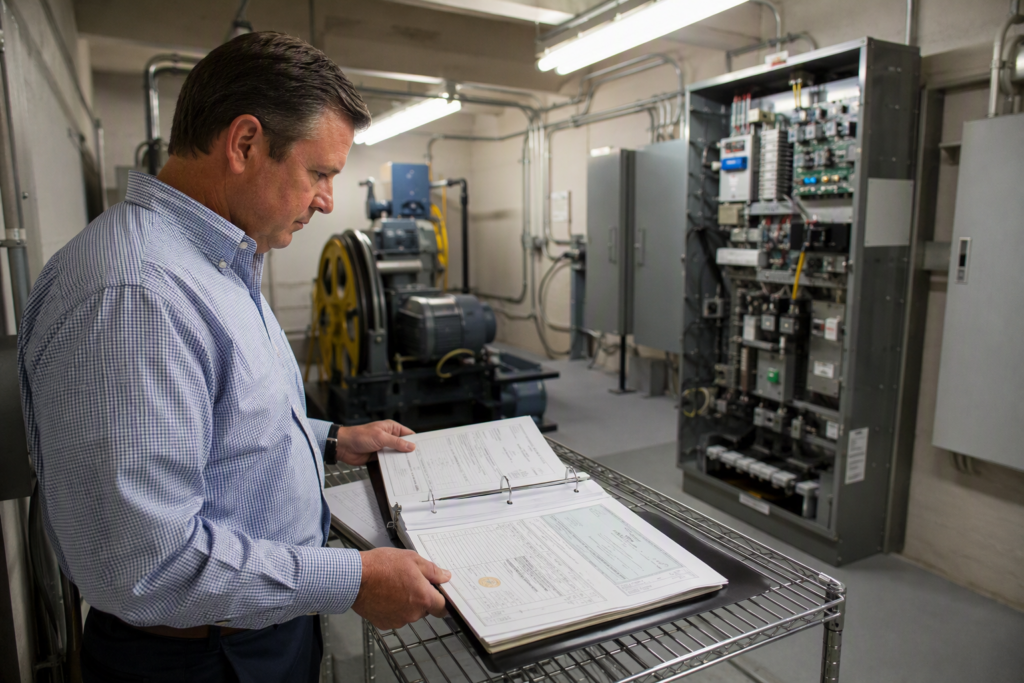
The permit application must describe the scope of alteration and identify the licensed elevator contractor performing the work. During the project, the contractor is responsible for maintaining the permit on site and ensuring the work matches the approved scope. When work is complete, the contractor requests an inspection, and the elevator cannot be legally placed back in service until the inspector issues a certificate of operation. Building owners should incorporate permit lead time — which varies — into their project timeline planning and confirm that their contractor tracks inspection scheduling proactively.
What Should Be in a Written Elevator Modernization Contract?
A modernization contract for an occupied building should include a detailed scope of work, a phased outage schedule with daily work windows, permit responsibility, inspection management, warranty terms, and a change order process for scope expansions triggered by code compliance findings.
Critical contract clauses for occupied buildings include:
- Specific hours during which the elevator will be out of service each day
- A guaranteed minimum return-to-partial-service milestone (e.g., temporary operation on manual run before final inspection)
- Responsibility for pulling and managing all permits and inspection scheduling
- Process for notifying building management if the timeline changes by more than a defined number of days
- Warranty duration for replaced components and labor
- Procedure for addressing ASME A17.3 retroactive compliance findings that expand scope
How Do You Handle ADA Compliance for Tenants with Disabilities During the Outage Period?
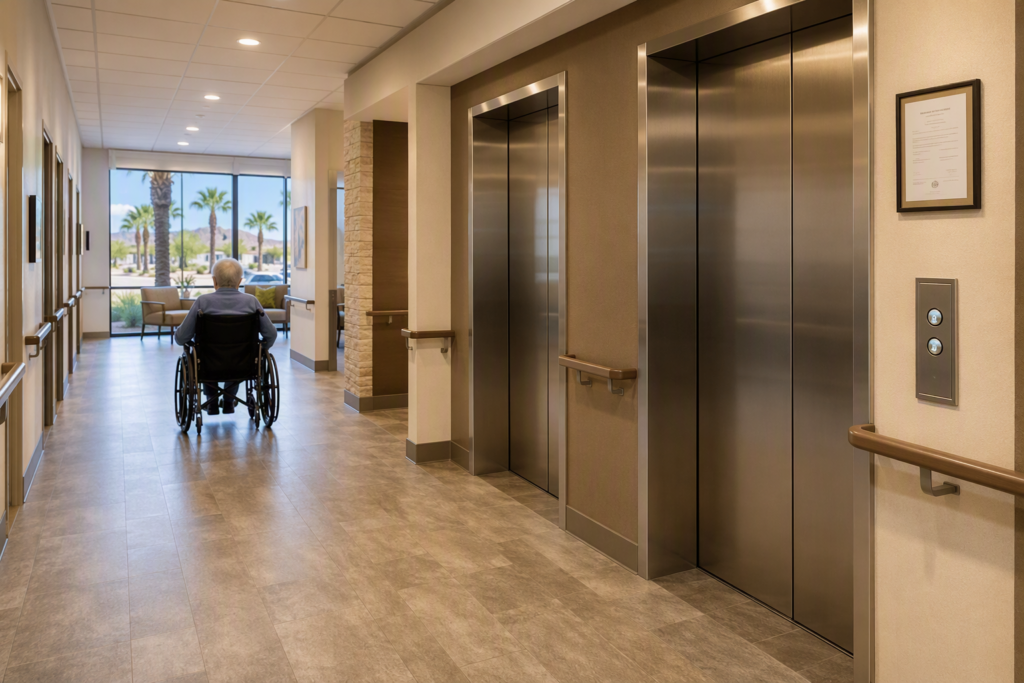
During an elevator outage, building owners must proactively assess whether any tenant or employee with a mobility disability will lose access to their work or residential space, and if so, implement a reasonable accommodation plan before the outage begins.
Under the ADA, the obligation to provide accessible access does not pause during construction. For commercial office buildings, this may mean temporarily relocating a tenant’s suite or a specific employee’s workstation to an accessible floor. For residential buildings, it may mean providing a comparable ground-floor unit. Property owners should document their accommodation efforts in writing and consult legal counsel if a tenant raises an ADA concern, because the cost of an accommodation almost always exceeds the cost of an ADA complaint or lawsuit.
What Are the Risks of Deferring Elevator Modernization in an Occupied Building?
Deferring a modernization that equipment condition warrants increases the probability of unplanned outages, elevates safety risk, and may expose the building owner to code enforcement action or liability if an equipment failure injures an occupant.
Aging elevator controllers, worn door operators, and degraded safeties are leading causes of entrapments and door-related injuries. An unplanned outage in an occupied building is far more disruptive than a planned modernization — there is no tenant notice, no phasing plan, and no alternative access arrangement in place. Additionally, when equipment fails catastrophically rather than being modernized proactively, the emergency repair scope is often more expensive and takes longer because it competes with all other emergency work in the contractor’s queue. The condition assessment that precedes a planned modernization is the most effective risk management tool available to a property owner.
How Does a Hydraulic Elevator Modernization Differ from a Traction Elevator Modernization?
Hydraulic elevator modernizations introduce additional complexity around the hydraulic cylinder, fluid containment, and environmental protection requirements, while traction elevator modernizations focus primarily on the machine, roping, and control systems.
For hydraulic elevators, a full modernization may include replacement of the hydraulic cylinder — which can require pit excavation — and replacement of the power unit and valve. Environmental regulations govern the handling and disposal of hydraulic fluid, and OSHA excavation standards apply if below-grade work is required. Single-bottom cylinders installed before certain code eras may also require secondary containment to address groundwater contamination risk under ASME A17.1 alteration requirements. For traction elevators, the key variables are machine room accessibility, overhead clearances, and whether the existing roping configuration is compatible with the new machine.
How Should a Building Manager Coordinate with an Elevator Contractor to Minimize Disruption?
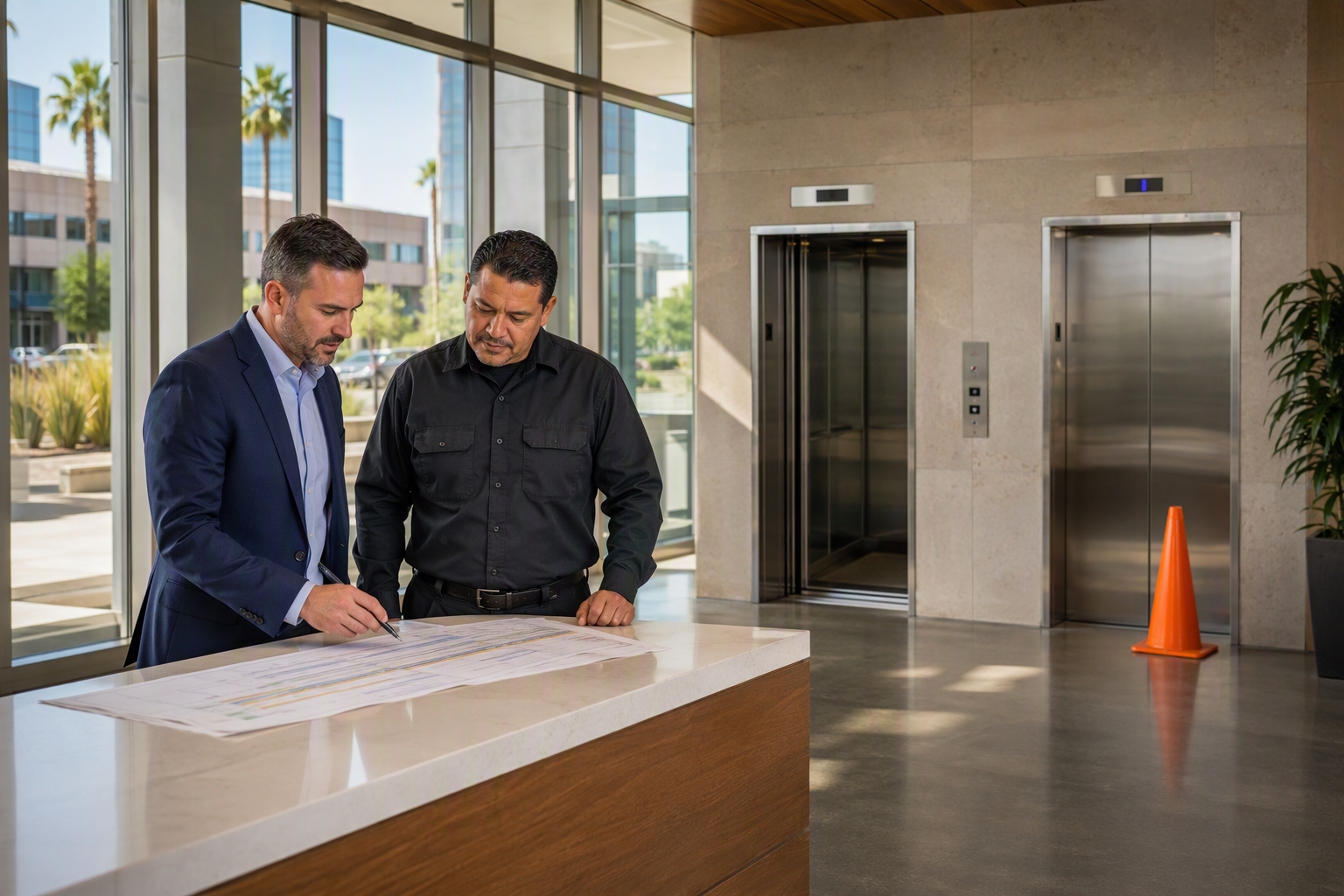
Effective coordination requires a dedicated point of contact on both sides, a shared project schedule updated weekly, and clear protocols for after-hours access, noise management, and daily site cleanup.
- Assign a single building-side project coordinator who has authority to make day-to-day decisions without escalating every question to ownership.
- Hold a pre-construction meeting with the contractor, property management, and building security to walk through site access routes, machine room keys, material staging areas, and noise restrictions.
- Establish a shared project schedule that lists every major milestone — permit approval, equipment delivery, installation phases, inspection request, return to service — with target dates and responsible parties.
- Set daily communication protocols: the contractor should report end-of-day status and flag any issues that could affect the next day’s outage window before the building management team leaves for the day.
- Define a change order approval process with a maximum response time, so the contractor is never waiting more than a defined period for approval on scope additions that could extend the outage.
- Conduct a midpoint project review to assess whether the timeline is on track and to adjust tenant communications if needed.
- Confirm inspection scheduling at least one week in advance and notify tenants of the expected return-to-service date as soon as the inspection appointment is confirmed.
What Is the Role of the Authority Having Jurisdiction (AHJ) in an Arizona Elevator Modernization?
The AHJ in Arizona — typically ADOSH for most commercial and multi-family buildings — reviews permit applications, enforces the adopted edition of ASME A17.1, and conducts or oversees the final inspection that authorizes the elevator to return to service.
Building owners and contractors should proactively communicate with the AHJ before the project begins to confirm which code edition applies, what the current permit processing timeline looks like, and whether any specific local amendments are in effect. Some Arizona municipalities may have adopted local amendments or may participate in the inspection process alongside ADOSH. Identifying the correct AHJ and understanding their process is a prerequisite for accurate project scheduling — permit delays are one of the most common causes of extended elevator outages in occupied buildings.
How Do You Manage Noise, Dust, and Debris During an Elevator Modernization?
Noise, dust, and debris management in an occupied building requires temporary barriers at hoistway openings, scheduled work windows that limit high-noise activities to off-hours, and daily site cleanup protocols.
The machine room and pit are typically the noisiest work zones. Grinding, drilling, and heavy component removal should be scheduled during evening or weekend hours whenever the building’s lease agreements or local ordinances restrict daytime construction noise. Hoistway openings at each floor must be properly barricaded during work to prevent dust migration into tenant spaces and to meet OSHA fall protection requirements at open shafts. Material staging — including old equipment removal — should use dedicated freight routes to avoid tenant elevator lobbies and common areas.
What Warranties and Post-Modernization Support Should a Property Owner Expect?
After modernization, property owners should expect manufacturer warranties on major components and a labor warranty from the elevator contractor, as well as a maintenance agreement that specifies inspection intervals aligned with ASME A17.1 requirements.
New controllers, drives, and machines typically carry manufacturer warranties. The elevator contractor should provide a separate labor warranty covering installation workmanship. More importantly, the post-modernization period is when a preventive maintenance agreement becomes critical — newly installed equipment must be properly maintained to perform at its design specification and to remain in compliance with periodic inspection requirements under Arizona’s elevator safety regulations. Property owners should negotiate the maintenance agreement as part of the modernization contract rather than as an afterthought after the project closes.
How Do Modernization Costs Compare to Continued Repair and Maintenance of Aging Equipment?
Over a multi-year horizon, continuing to repair aging elevator components typically results in increasing repair frequency, rising parts costs for obsolete components, and greater tenant disruption from unplanned outages — often making modernization the more cost-effective path when equipment reaches end of design life.
The financial comparison between repair-and-maintain and modernize-now should account for: current annual maintenance and repair expenditures, the trend line of those costs over recent years, parts availability for existing equipment, the cost and duration of unplanned outages (including tenant relations impact), and the code compliance improvements that modernization delivers. A qualified elevator contractor can provide a condition-based analysis that quantifies this comparison for a specific property. Arizona Elevator Solutions provides this type of assessment to property owners in Phoenix, Tucson, Scottsdale, and Mesa as a foundation for capital planning decisions.
What Questions Should a Property Owner Ask Before Signing an Elevator Modernization Proposal?
Before signing, a property owner should confirm the contractor’s licensing status, the specific code compliance basis for the scope, permit management responsibility, the phased outage schedule, and the process for handling scope changes driven by inspection findings.
The following questions should be answered in writing before any contract is executed:
- Is the contractor licensed under Arizona’s elevator contractor licensing requirements?
- Which edition of ASME A17.1 does the AHJ currently enforce, and is the proposed scope designed to that edition?
- What components does the alteration affect under ASME A17.3 retroactive compliance provisions?
- Who is responsible for pulling permits, scheduling inspections, and resolving any inspection deficiencies?
- What is the daily outage window for each phase, and what are the consequences if the contractor exceeds it?
- What is the change order process if the inspection reveals additional required upgrades?
- What warranties apply to installed components and labor?
- What is the maintenance plan for the newly modernized equipment?
Arizona Elevator Solutions works through each of these questions with property owners across its service markets before any project proposal is finalized, ensuring there are no surprises once work begins.
Ready to Plan Your Elevator Modernization Without Disrupting Your Building?
Elevator modernization in an occupied building requires precise planning, code expertise, and a contractor who treats tenant impact as a first-priority constraint — not an afterthought. Arizona Elevator Solutions provides comprehensive elevator assessments, phased modernization planning, full permit management, and post-modernization maintenance for commercial, multi-family, and institutional properties throughout Phoenix, Tucson, Scottsdale, and Mesa.
Contact Arizona Elevator Solutions for a free elevator assessment: 480-319-7157
Need elevator service you can rely on? Arizona Elevator Solutions is ready to help.