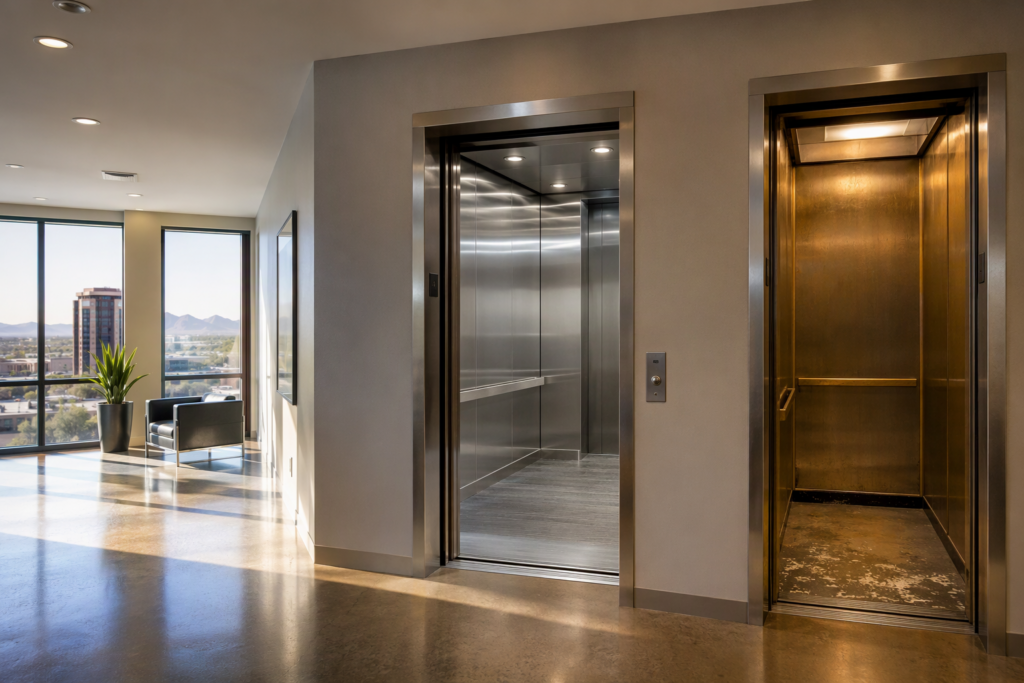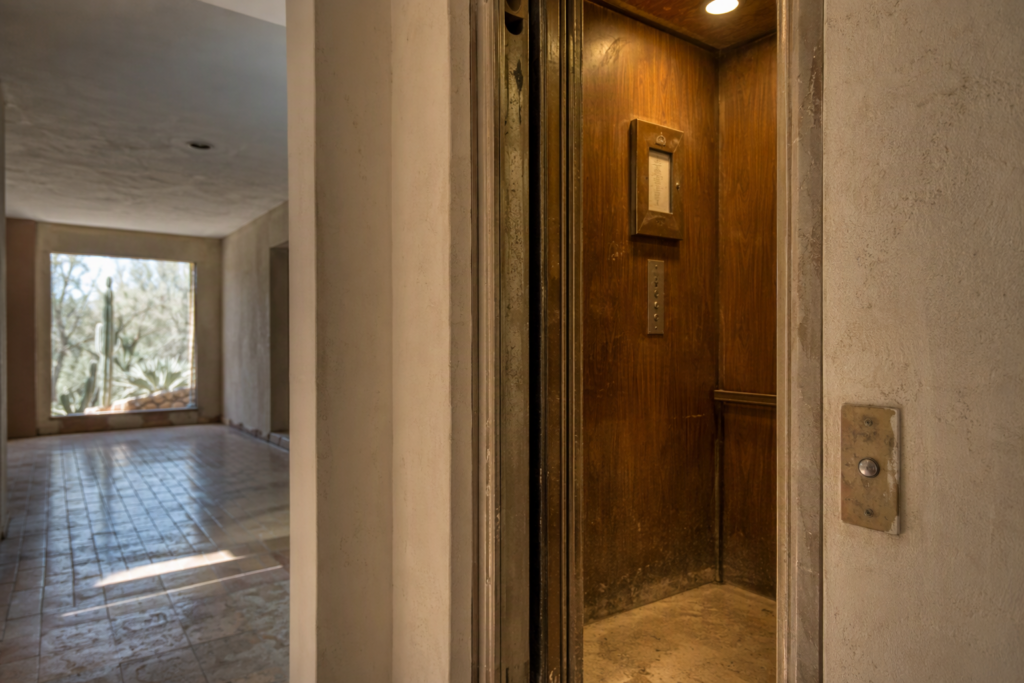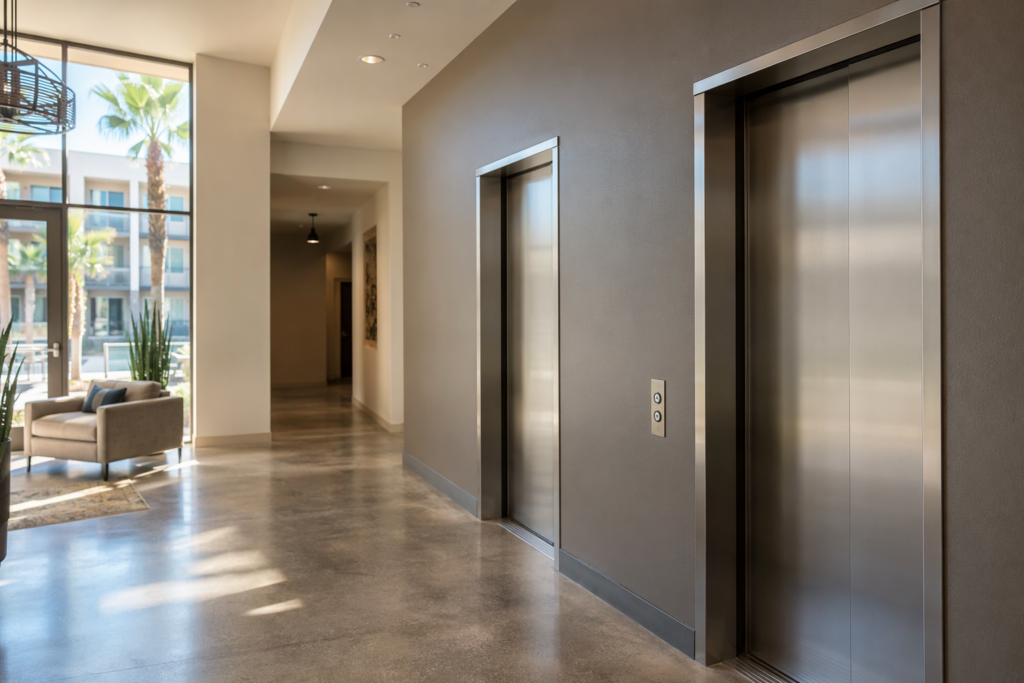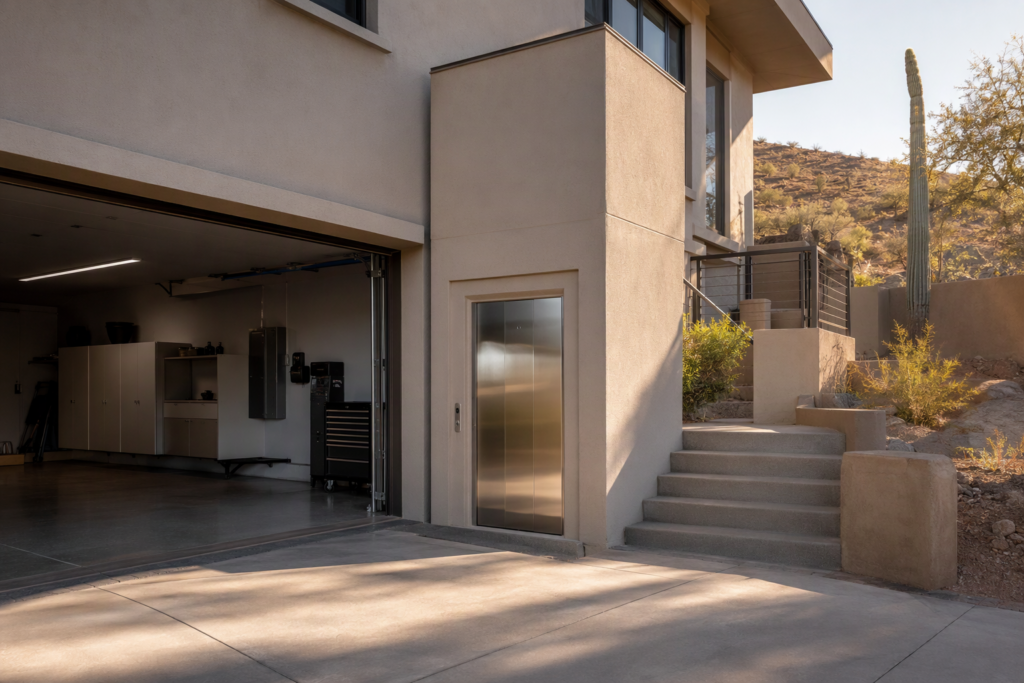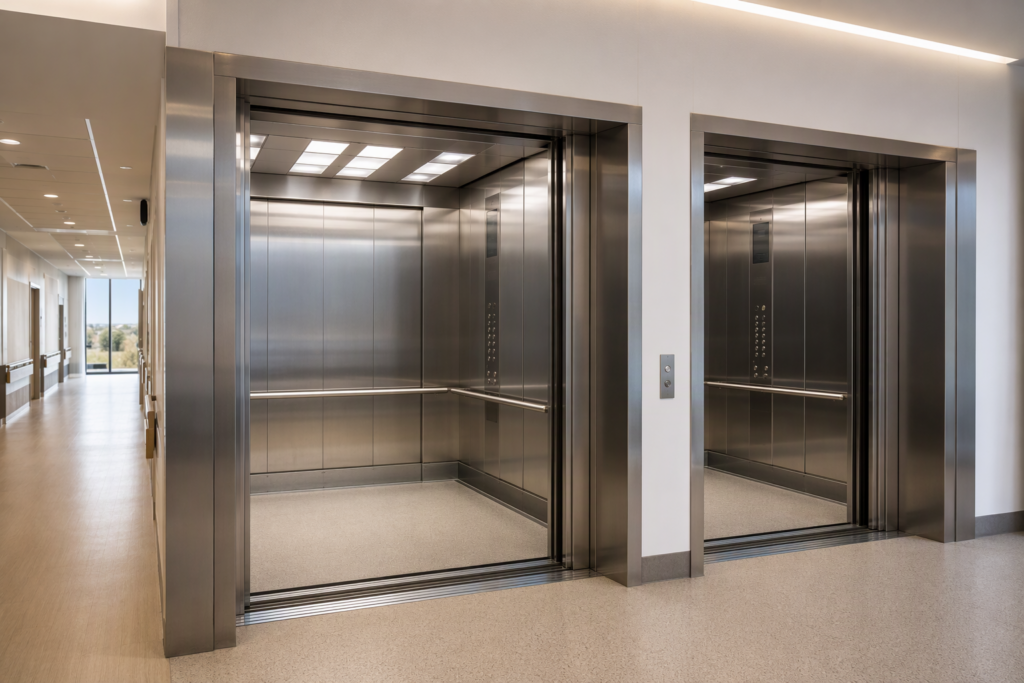
Yes, elevator companies perform elevator sill replacements, including sills that are embedded in or structurally integrated with the building. Elevator sills are regulated components under ASME A17.1 Safety Code for Elevators and Escalators, and licensed elevator contractors hold the authority and technical expertise to remove, replace, and restore them to code-compliant condition.
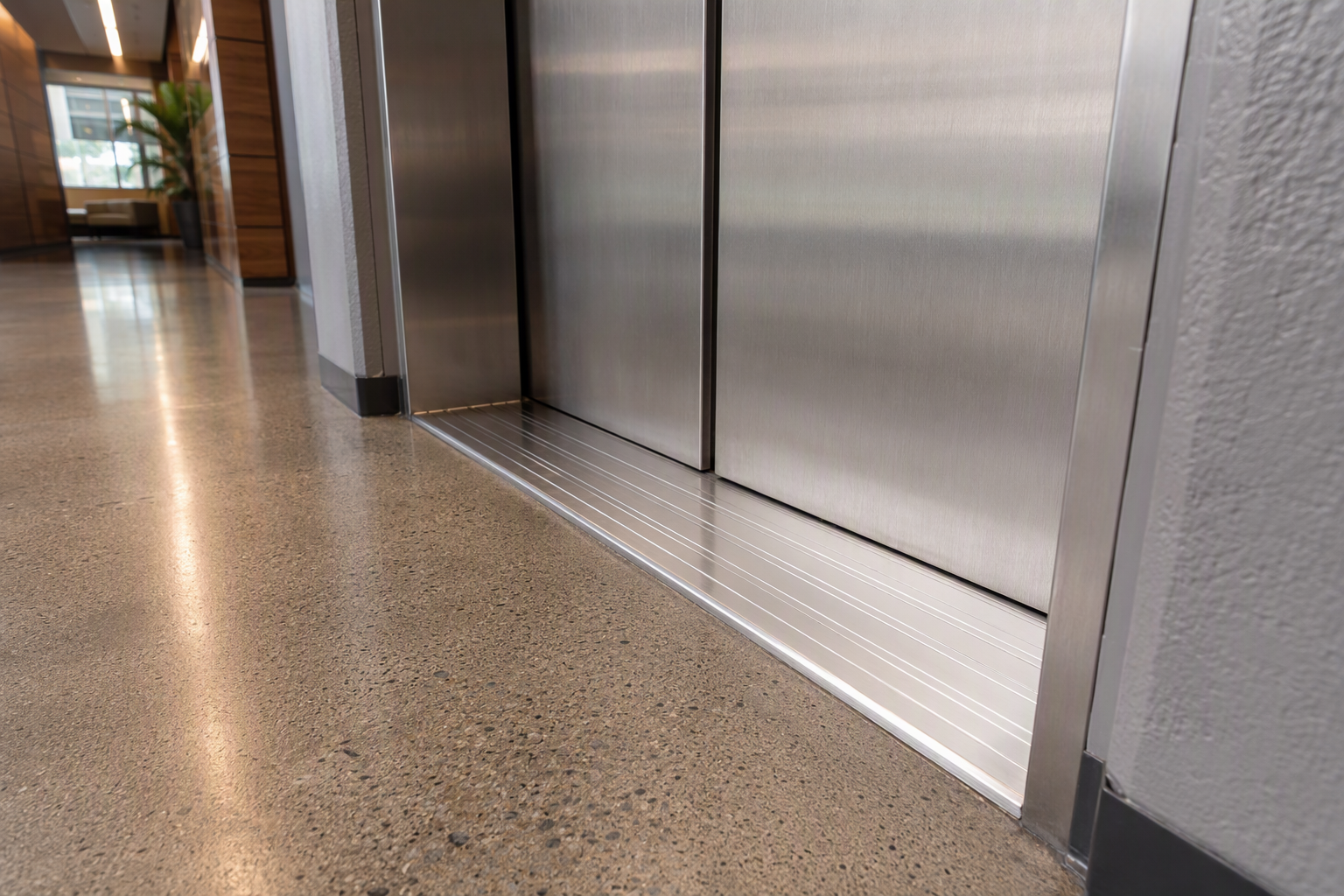
What Is an Elevator Sill and Why Does It Matter?
An elevator sill is the threshold plate at the base of every hoistway landing door and car door opening that guides passengers safely across the gap between the car and the landing.
Sills are precision-machined, grooved metal channels — most commonly extruded aluminum or bronze — that serve multiple functions simultaneously. The grooves accept the guide shoes of the landing door panels, keeping doors tracking straight during opening and closing. The flat bearing surface bridges the gap between the car floor and the building landing, eliminating trip hazards and preventing objects from falling into the pit. Under ASME A17.1 Safety Code for Elevators and Escalators, sills must be flush with the landing floor within tight tolerances, free of cracks or spalling, and firmly anchored so they cannot shift under passenger load.
Because sills sit directly at the door threshold, they endure more abrasive foot traffic than almost any other elevator component. In high-traffic commercial buildings in Phoenix, Scottsdale, Mesa, and Tucson, sill wear and concrete substrate deterioration are among the most common maintenance findings cited during annual inspections.
Does an Elevator Company Handle Sill Replacements That Involve the Building Structure?
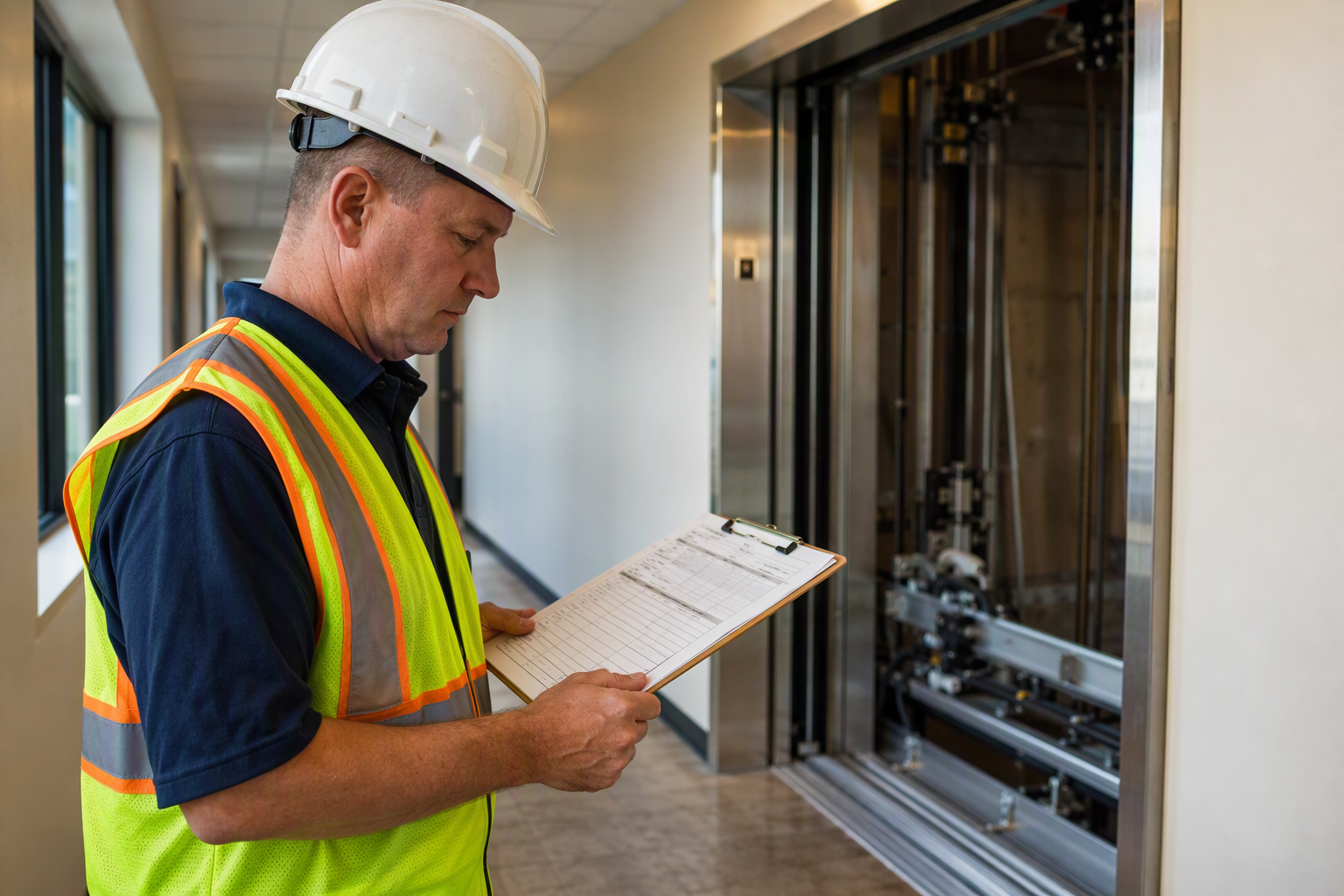
Yes — elevator contractors are specifically equipped and licensed to replace sills even when the replacement requires breaking out surrounding concrete, mortar, or other building materials.
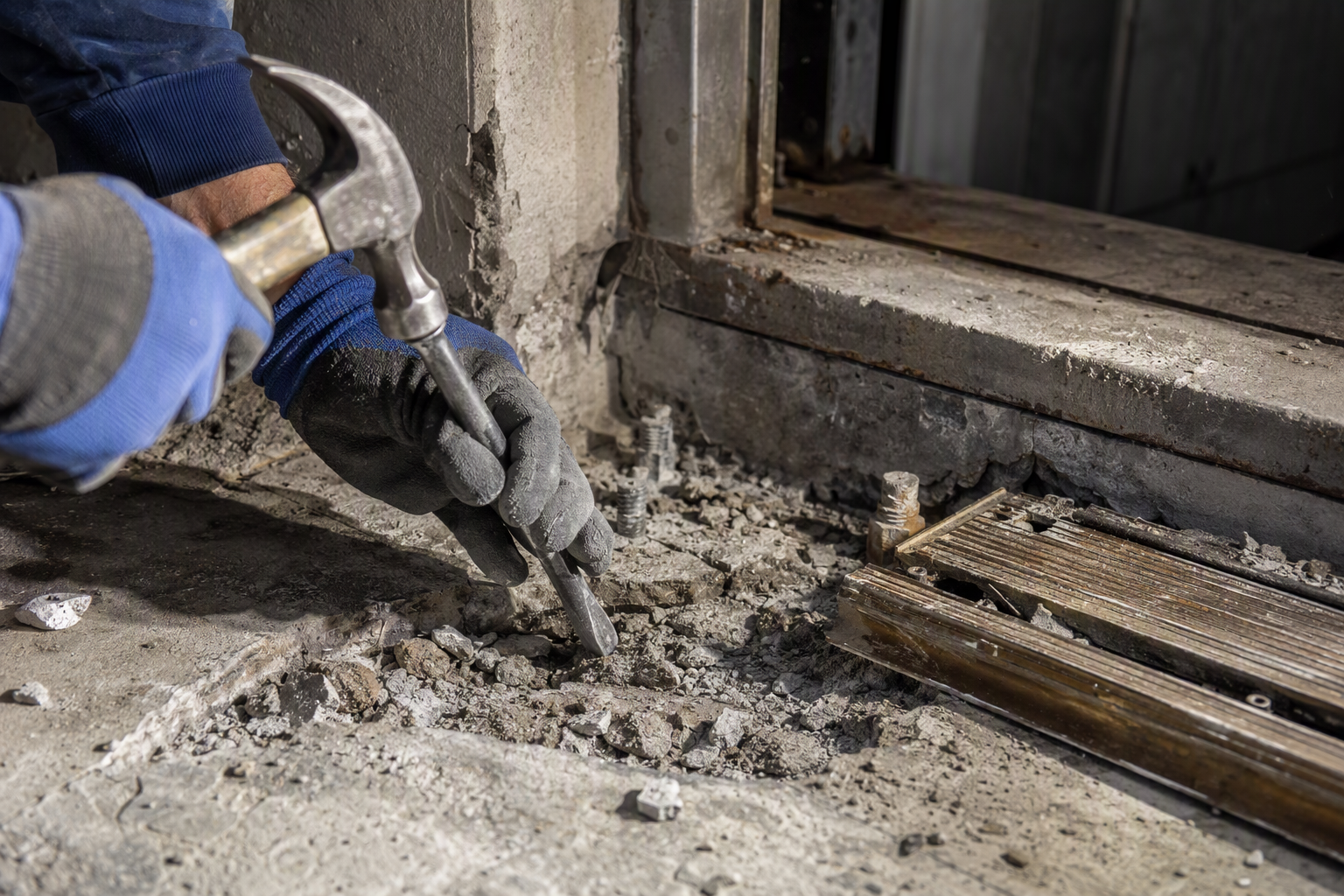
A landing sill is cast into or mechanically anchored to the building slab at every floor. When deterioration is severe, spalled concrete, cracked grout, or failed anchors must be removed before the new sill can be properly set. This demolition and reconstruction work is within the normal scope of elevator sill replacement because the sill and its substrate function as an integrated system. Separating the work between a general contractor and an elevator company would create coordination gaps, inspection problems, and potential code violations.
In Arizona, elevator sill replacement is classified as an alteration under A.R.S. §§ 23-491 through 23-491.16 and Arizona Administrative Code R20-5-502 through R20-5-515. Alterations require advance notification to the Industrial Commission of Arizona’s Elevator Division and a post-alteration inspection before the equipment returns to service. Only an elevator contractor holding the appropriate license classification may perform this regulated work, which is why a single qualified elevator company is the correct entity to coordinate the entire scope.
What Licenses Are Required to Replace an Elevator Sill in Arizona?
In Arizona, elevator sill replacement must be performed by a contractor holding an R-12 or C-12 elevator license classification issued by the Arizona Registrar of Contractors.
The Arizona Registrar of Contractors (ROC) issues R-12 (residential) and C-12 (commercial) elevator license classifications covering the installation and repair of elevators, dumbwaiters, escalators, and moving walks. Because elevator sill replacement constitutes a repair or alteration of a regulated conveyance, this work falls squarely within those license categories. General contractors, tile setters, or concrete subcontractors operating without an elevator license classification may not legally perform the sill and substrate work as a standalone elevator scope in Arizona.
Additionally, post-replacement inspection is required. Arizona owners must notify the Industrial Commission of Arizona’s Elevator Division at least 90 days before a qualifying alteration. After the work is complete, the elevator must pass inspection and receive an updated certificate of inspection before returning to service. Arizona elevator owners may engage an authorized private elevator inspector for this inspection, provided that inspector is not affiliated with the company that performed the work.
What Are the Steps in a Professional Elevator Sill Replacement?
A code-compliant sill replacement follows a defined sequence to protect the building, the elevator system, and the occupants throughout the process.
- Site assessment and measurement: The elevator technician measures the existing sill dimensions, door panel groove depth, floor-to-sill height differential, and substrate condition at each affected landing.
- Regulatory notification: The contractor or building owner notifies the Industrial Commission of Arizona’s Elevator Division as required under A.R.S. § 23-491 before alteration work begins.
- Elevator lock-out / tag-out: The car is secured out of service at the affected landing, and all energy sources are locked out in accordance with OSHA control of hazardous energy procedures.
- Removal of the existing sill: The worn sill is detached from its anchors and removed. If the sill is cast-in-place, surrounding concrete or grout is carefully broken out to expose the anchor system without damaging adjacent structure.
- Substrate preparation: Damaged concrete is removed, the bearing surface is cleaned, and the substrate is built back up to the correct elevation using structural grout or appropriate patching material so the new sill will sit flush with the finished floor.
- New sill installation: The replacement sill — matched to the original profile or upgraded to a compliant equivalent — is set, leveled, and anchored. Grooves are aligned with the door panel guide shoes and verified against ASME A17.1 dimensional requirements.
- Door system verification: Landing doors, interlock mechanisms, and car door operators are tested to confirm proper tracking, closing force, and interlock function with the new sill in place.
- Inspection and recertification: The work is submitted for inspection by the Industrial Commission of Arizona’s Elevator Division or an authorized private inspector. Upon passing, the updated certificate of inspection is issued and posted.
- Return to service: The elevator is returned to normal operation only after the certificate requirement is satisfied.
Which ASME Code Requirements Apply to Elevator Sills?
Elevator sills must comply with the ASME A17.1 Safety Code for Elevators and Escalators, specifically requirements governing hoistway door clearances, sill guarding, and landing dimensions.
Arizona adopted ASME A17.1-2019 (the 2019 edition) for equipment installed, repaired, or altered on or after January 1, 2023. This is the governing edition for any sill replacement performed in Arizona in 2026. The code addresses sill construction material, groove dimensions for door panel guidance, maximum allowable gaps between the car sill and landing sill, and the requirement that sills be rigidly supported and flush with the finished floor surface. Where existing installations predate the 2019 adoption, Arizona’s rules permit lawfully installed older conveyances to remain in service unless the Industrial Commission of Arizona’s elevator chief determines the condition poses a hazard to life, health, or property — but any new alteration work, including sill replacement, must meet the current adopted edition.
ADA requirements add an additional layer for public accommodations and commercial facilities: the floor surface at accessible elevator entrances must meet specific threshold and gap limitations to remain barrier-free. A sill replacement that brings a deteriorated threshold into ADA compliance simultaneously satisfies both the safety code and accessibility law.
How Do Building Owners Know When Elevator Sills Need Replacement?
Sills typically require replacement when visual inspection or routine maintenance reveals structural deterioration, measurable wear in the door guide grooves, cracking, or spalling that compromises function or creates a trip hazard.
Common indicators include:
- Visible cracks, chips, or spalling on the sill surface or surrounding concrete
- Grooves worn to the point where door panels wobble or skip during travel
- Measurable height differential between the sill and the finished landing floor
- Loose or missing sill anchors causing movement under foot traffic
- Corroded or mechanically damaged sill material in exterior or semi-exposed landings
- Annual inspection findings citing sill condition as a deficiency
Under Arizona law, each conveyance must be inspected annually, and the resulting certificate of inspection must be kept at the conveyance location. When an inspector cites a sill deficiency, the building owner is obligated to correct it. Ignoring the finding can lead to suspension of the operating certificate, which prohibits use of the elevator until the deficiency is resolved.
What Is the Difference Between a Car Sill and a Landing Sill Replacement?
A car sill is attached to the elevator car frame and travels with the car; a landing sill is embedded in the building structure at each floor and remains stationary — each involves different access methods, scope, and structural considerations.
Car sill replacement is generally less invasive from a structural standpoint because the sill is mounted to the car platform frame and does not interface with concrete or building substrate. The car is brought to a convenient access position, locked out, and the sill is unbolted and replaced. Alignment with the car door operator and the landing sills at each floor must then be verified across the full travel range.
Landing sill replacement is the more structurally complex work. Because landing sills are set into the building slab at each floor, replacement requires the substrate demolition and reconstruction described in the step-by-step section above. When multiple landings are affected, the project can involve substantial concrete work at each floor. Both types require the same licensed elevator contractor authority and the same regulatory notification and inspection process in Arizona.
Does Elevator Sill Work Require a Building Permit Separate from the Elevator Permit?
In most Arizona jurisdictions, the elevator permit covers sill replacement as part of the alteration scope, but owners of properties within the City of Phoenix should confirm with the City of Phoenix Elevator Section whether any additional building department coordination is required.
The City of Phoenix operates its own Elevator Section within the Planning and Development Department, which inspects elevators, escalators, moving walks, dumbwaiters, and chairlifts inside Phoenix city limits. For Phoenix properties, the elevator permit process runs through the city rather than the state. Outside Phoenix, the Industrial Commission of Arizona’s Elevator Division administers the permit and inspection process. In either case, the concrete or structural substrate work involved in a landing sill replacement is typically subsumed within the elevator alteration permit rather than requiring a separate building permit, but building owners should verify this with the applicable authority having jurisdiction (AHJ) before work begins.
How Long Does an Elevator Sill Replacement Typically Take?
The duration depends on the number of landings affected, substrate condition, sill material availability, and scheduling of the required post-alteration inspection.
A single-landing sill replacement on a building with readily accessible substrate and a pre-ordered sill can be completed within a single service day in straightforward cases. However, projects involving multiple landings, extensive concrete substrate reconstruction, or sills requiring custom fabrication to match original profiles extend the timeline. The regulatory notification requirement — owners must notify the Industrial Commission of Arizona’s Elevator Division at least 90 days before a qualifying alteration — means advance planning is essential. Owners who discover sill deterioration during an annual inspection should engage their elevator contractor promptly to start the notification clock and avoid extended downtime.
Does Elevator Sill Replacement Affect ADA Compliance?
Yes — sill replacement directly affects ADA compliance because the gap and height tolerances at the elevator entrance threshold are governed by ADA accessibility standards for public accommodations and commercial facilities.
ADA requirements specify maximum allowable vertical changes in level at accessible routes and maximum gaps at elevator door thresholds. A deteriorated sill with a raised edge, a cracked surface, or a widened gap between the car and the landing can create ADA non-compliance independent of the elevator code violation. Sill replacement is therefore an opportunity to achieve simultaneous compliance with both ASME A17.1 safety requirements and ADA accessibility obligations. Building owners who use sill replacement to upgrade to a current-code installation may eliminate exposure on both fronts in a single project.
What Materials Are Used for Replacement Elevator Sills?
Replacement sills are most commonly extruded aluminum or bronze, selected based on the original design, traffic volume, exposure conditions, and the manufacturer’s or engineer’s specifications for the installation.
| Material | Typical Application | Key Advantages | Considerations |
|---|---|---|---|
| Extruded Aluminum | Commercial and residential elevators; most common replacement material | Lightweight, corrosion-resistant, readily available in standard profiles, lower material cost | Softer than bronze; higher-traffic installations may show wear sooner |
| Bronze / Brass | High-traffic commercial, hotel, and historic building elevators | Extremely durable, resists heavy foot traffic, aesthetically appropriate for historic properties | Higher material cost; heavier; may require custom fabrication for non-standard profiles |
| Stainless Steel | Exterior or semi-exposed landings; industrial environments | Maximum corrosion resistance, high durability in outdoor or wet conditions | Highest material cost; requires precision fabrication to match groove profiles |
| Custom Composite / OEM | Specialty elevators with non-standard door systems | Engineered to exact OEM specifications; ensures door system compatibility | Longest lead time; must be sourced from or approved by the original equipment manufacturer |
The choice of material should be confirmed by the elevator contractor based on the door system manufacturer’s specifications, the ambient conditions of each landing (particularly for Arizona properties where outdoor-adjacent lobbies experience heat cycling), and the building owner’s long-term maintenance objectives.
Can Sill Replacement Be Deferred or Patched Rather Than Replaced?
Minor surface defects may be addressed through grinding or patching in limited circumstances, but structural deterioration, groove wear, or anchor failure generally cannot be permanently corrected without full sill replacement.
Some elevator maintenance contracts include sill groove refurbishment — cleaning, deburring, and lubricating grooves — as a preventive measure that extends sill life. Surface-level cosmetic defects that do not affect structural integrity or dimensional compliance may also be addressed through localized repair. However, when the sill body is cracked through, the grooves are worn beyond serviceable limits, the concrete substrate is spalled and failing to support the sill, or the assembly cannot be brought to ASME A17.1 tolerances through repair, replacement is the only code-compliant path. Patching a structurally compromised sill that then fails during passenger use creates significant liability for the building owner and may constitute operating an elevator in an unsafe condition in violation of Arizona law.
Who Is Responsible for Elevator Sill Maintenance — the Building Owner or the Elevator Company?
Under Arizona law, the building owner or operator bears ultimate responsibility for maintaining the conveyance in a safe and code-compliant condition, though day-to-day maintenance is typically delegated to a licensed elevator contractor through a service agreement.
A.R.S. §§ 23-491 through 23-491.16 place the obligation for safe operation squarely on the owner. A maintenance contract with a licensed elevator company is the practical mechanism through which owners satisfy that obligation, because the contractor provides the licensed personnel, code knowledge, and specialized tools that elevator maintenance requires. When sill deterioration is discovered during routine maintenance or an annual inspection, the contractor’s role is to document the condition, advise the owner of the regulatory implications, and execute the replacement under proper permit and inspection protocols. Arizona Elevator Solutions provides maintenance and alteration services across Phoenix, Scottsdale, Mesa, and Tucson to help building owners stay ahead of sill deterioration before it becomes an emergency.
What Happens If an Elevator Operates with a Defective Sill in Arizona?
Operating an elevator with a sill condition that fails ASME A17.1 standards or that has been cited as a deficiency by the Industrial Commission of Arizona’s Elevator Division can result in suspension of the operating certificate and prohibition of elevator use until the condition is corrected.
Arizona law prohibits operating any conveyance without a valid annual certificate of inspection. When an inspection identifies a sill deficiency serious enough to constitute a hazard, the inspector or the Industrial Commission of Arizona’s Elevator Division can require the elevator to be taken out of service immediately. Beyond the regulatory consequence, continued operation with a defective sill creates direct personal injury exposure: a passenger who trips on a raised or cracked sill, or who is injured when a door panel derails due to worn grooves, generates significant legal liability. Building owners who receive inspection findings related to sill condition should treat them as urgent rather than discretionary corrective actions.
How Does the Arizona Annual Inspection Cycle Relate to Sill Condition?
Arizona’s mandatory annual inspection is the primary regulatory mechanism through which sill deterioration is identified, documented, and required to be corrected within the state’s compliance framework.
Under A.R.S. §§ 23-491 through 23-491.16 and Arizona Administrative Code R20-5-502 through R20-5-515, every conveyance must be inspected before first use, after any modification or alteration, and annually thereafter. The annual certificate of inspection must be kept at the conveyance location and the state serial number must be posted in or near the elevator in an accessible location. Inspectors evaluate sill condition as part of the hoistway entrance assessment. When sill findings are noted, the record creates a compliance timeline: the owner must complete the corrective work, notify the Elevator Division, and pass a post-alteration inspection before the elevator continues in service with an updated certificate. Arizona Elevator Solutions assists building owners across its service markets in managing this compliance cycle, including coordinating the required pre-alteration notification and post-completion inspection scheduling.
What Should Building Owners in Phoenix Do Differently Compared to Other Arizona Markets?
Phoenix property owners should direct elevator alteration permits and inspection requests through the City of Phoenix Elevator Section rather than the state, because the city operates its own elevator inspection program within Phoenix city limits.
The City of Phoenix Elevator Section, within the Planning and Development Department, handles inspections of elevators, escalators, moving walks, dumbwaiters, and chairlifts located inside Phoenix. For sill replacement projects at Phoenix properties, the permit and inspection process runs through the city rather than the Industrial Commission of Arizona’s Elevator Division. Owners in Scottsdale, Mesa, Tucson, and other Arizona communities outside Phoenix direct their elevator alteration notifications and inspection coordination to the state. In all cases, the technical requirements — ASME A17.1-2019, licensed contractor involvement, and the notification obligation — are the same. Arizona Elevator Solutions is familiar with the procedural requirements in each of its service markets and can guide owners through the correct notification pathway for their specific location.
How Should Building Owners Prepare for an Elevator Sill Replacement Project?
Effective preparation involves early regulatory notification, tenant communication planning, substrate condition assessment, and sill material procurement well in advance of the scheduled work date.
- Engage a licensed elevator contractor early: The 90-day advance notification requirement under Arizona law means sill replacement projects cannot be initiated reactively. Contact a licensed elevator contractor as soon as deterioration is observed or cited.
- Complete the regulatory notification: The contractor or owner must notify the Industrial Commission of Arizona’s Elevator Division (or the City of Phoenix Elevator Section for Phoenix properties) at least 90 days before alteration work begins.
- Assess substrate condition at all affected landings: A thorough condition assessment before procurement prevents mid-project surprises when concrete removal reveals more extensive deterioration than was visible at the surface.
- Order replacement sills and materials: Standard extruded aluminum sill profiles for common door systems are typically available from elevator supply distributors. Custom profiles may require longer lead times.
- Notify building tenants and occupants: Coordinate downtime windows to minimize disruption, particularly in multi-tenant commercial buildings or healthcare facilities where elevator outages affect accessibility.
- Confirm inspection scheduling: Coordinate with the applicable AHJ or authorized private inspector to schedule the post-alteration inspection promptly after work completion so the elevator is not out of service longer than necessary.
Are There Situations Where a General Contractor Should Be Involved Alongside the Elevator Company?
In projects where sill replacement is part of a larger lobby renovation or where structural engineering input is required for floor slab repair, a general contractor or structural engineer may appropriately collaborate with the elevator contractor — but the elevator company must retain authority over all work directly affecting the regulated conveyance.
Scenarios where collaboration is practical include full lobby renovations where flooring, wall finishes, and elevator thresholds are being updated simultaneously, or where a structural engineer’s sign-off is required for slab repair above or around the elevator pit. In these cases, the general contractor coordinates the surrounding construction while the licensed elevator contractor controls the sill removal, substrate preparation to the elevator’s dimensional requirements, sill installation, and door system verification. The two scopes must be sequenced so that the elevator contractor performs final substrate work and sill setting — not the general contractor — to ensure ASME A17.1 tolerances are achieved and the regulatory inspection can be properly completed.
How Can Building Owners Extend the Life of New Elevator Sills After Replacement?
Post-replacement sill longevity is maximized through a combination of routine maintenance, groove lubrication, protective covering during adjacent construction activities, and prompt attention to minor damage before it progresses.
Elevator maintenance agreements typically include periodic sill groove cleaning and lubrication, which reduces wear on both the sill and the door panel guide shoes. Building managers should instruct cleaning staff not to use abrasive tools on sill surfaces and to avoid allowing water to pool at landing thresholds, which accelerates concrete substrate deterioration in outdoor-adjacent lobbies — a particularly relevant concern in Arizona’s monsoon season. Any observable chipping, cracking, or loosening should be reported to the elevator maintenance contractor immediately rather than deferred to the next scheduled visit. During lobby renovation or adjacent construction, sills should be protected with rigid covers or plates to prevent impact damage from material handling equipment. Arizona Elevator Solutions recommends that building owners in Phoenix, Scottsdale, Mesa, and Tucson include sill condition review as a standing agenda item during scheduled maintenance visits so that deterioration trends are identified early.
What Should Building Owners Ask When Evaluating Elevator Contractors for Sill Replacement?
Building owners should verify Arizona ROC license classification, confirm familiarity with the regulatory notification process for their specific jurisdiction, and request a written scope that clearly delineates substrate work, sill installation, door system verification, and inspection coordination.
Key questions to ask a prospective contractor include:
- Does the company hold an active R-12 or C-12 elevator license from the Arizona Registrar of Contractors?
- Who handles the 90-day advance notification to the Industrial Commission of Arizona’s Elevator Division (or City of Phoenix Elevator Section for Phoenix properties)?
- Does the written scope include concrete substrate demolition and reconstruction, or is that expected to be handled separately?
- What sill profile will be used, and is it compatible with the existing door system manufacturer’s specifications?
- How is the post-alteration inspection coordinated, and does the contractor work with authorized private inspectors to minimize scheduling delays?
- What is the warranty on the installed sill and the substrate work?
A contractor who cannot answer these questions clearly or who proposes to perform elevator sill work without regulatory notification and post-alteration inspection is not operating within Arizona’s legal framework for elevator alterations.
Contact Arizona Elevator Solutions for a free elevator assessment at 480-557-7600.
Need elevator service you can rely on? Arizona Elevator Solutions is ready to help.