Before an elevator opens its doors to patients, staff, or visitors in a healthcare facility, it must hold a valid certificate of inspection issued by the state. In Arizona, no conveyance may operate without that certificate in hand. For hospitals, surgical centers, skilled nursing facilities, and medical office buildings across Phoenix, Tucson, Scottsdale, and Mesa, the certification pathway involves federal safety codes, accessibility law, state statute, and local authority requirements that all apply simultaneously. The sections below walk through every layer of that process.
What Is the Required Operational Certificate for an Arizona Elevator?
Arizona law — specifically A.R.S. §§ 23-491 through 23-491.16 (Safety Conditions for Elevators and Similar Conveyances), as amended by Laws 2026, Ch. 73 — requires that every conveyance receive a pre-service inspection before it is placed into operation for the first time. Once the conveyance passes that inspection, the Industrial Commission of Arizona’s Elevator Division issues a certificate of inspection. That certificate is the operational credential the elevator must carry. After initial issuance, the certificate must be renewed annually through a follow-up inspection. Healthcare facility owners are required to keep the certificate at the same location as the conveyance and to make it available for inspection on request. The state serial number or the certificate itself must be posted in or close to the elevator in an easily accessible location.
Which Safety Code Governs Elevator Certification in Arizona?
Arizona adopted the ASME A17.1/CSA B44, 2019 edition (ASME A17.1-2019), Safety Code for Elevators and Escalators, effective January 9, 2023, for all equipment installed, repaired, or altered on or after January 1, 2023. That code establishes the baseline construction, installation, and inspection requirements an elevator must satisfy before the state will issue its certificate. The governing administrative rules are Arizona Administrative Code R20-5-502 through R20-5-515 (Elevator and Conveyance Safety). Platform lifts and stairway chairlifts installed, repaired, or altered on or after January 1, 2023 must additionally comply with ASME A18.1-2020, which is relevant in healthcare settings that rely on platform lifts for patient transport between grade-level differences.
How Does ADA Compliance Factor Into Healthcare Elevator Certification?
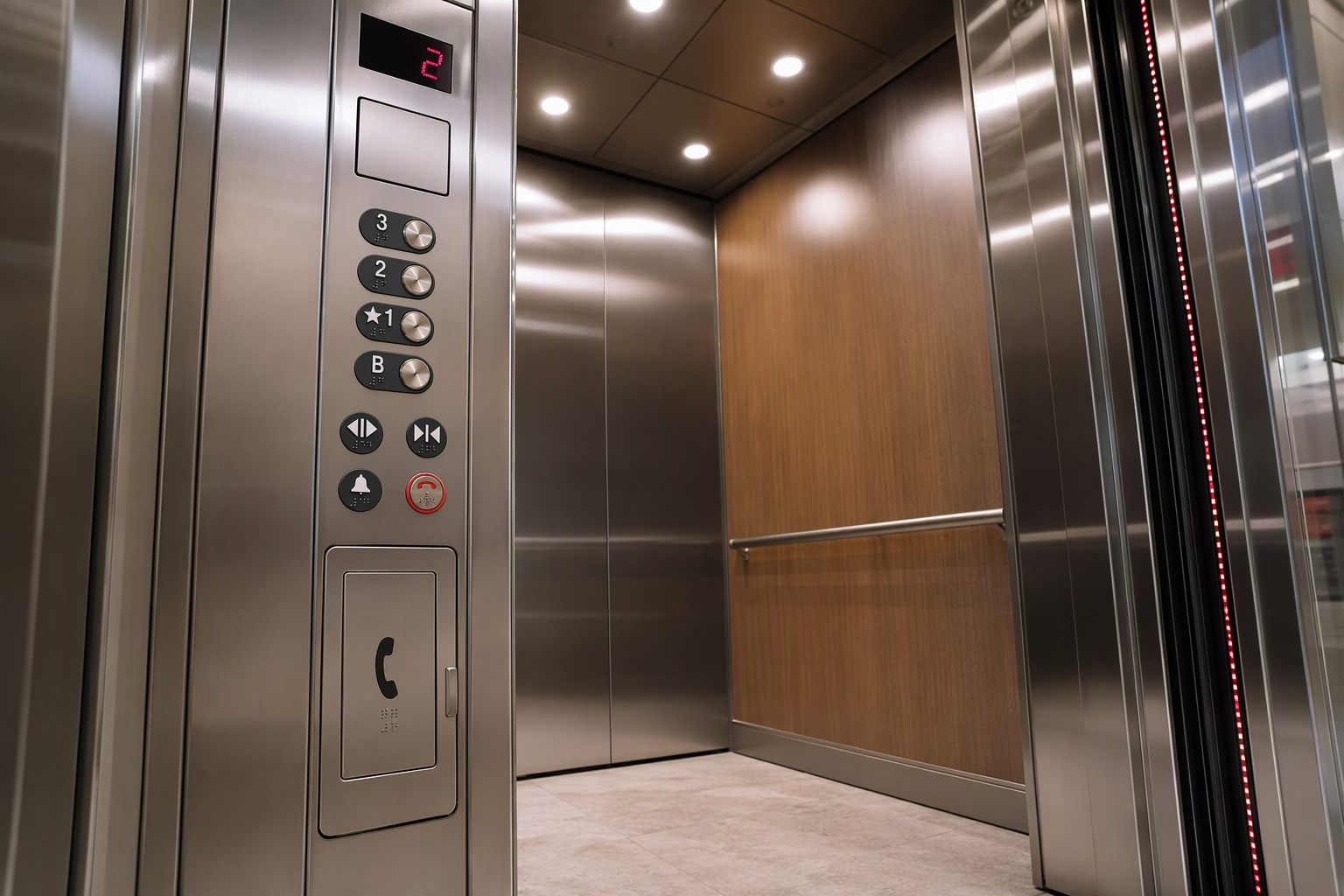
The Americans with Disabilities Act (ADA) imposes accessibility requirements that apply independently of state certification. Healthcare facilities are places of public accommodation and, when operated by government entities, are also subject to Title II. ADA Standards for Accessible Design specify elevator cab dimensions, door timing, control reach ranges, audible signals, and Braille markings. An elevator that does not satisfy ADA requirements creates legal exposure even if the state certificate has been issued, because the ADA is enforced by the U.S. Department of Justice and through private litigation — not through the Arizona inspection process. Healthcare owners should confirm ADA compliance as a parallel obligation, not a substitute for state certification. Arizona Elevator Solutions routinely reviews accessibility compliance as part of its pre-inspection preparation services for healthcare clients in Phoenix, Tucson, Scottsdale, and Mesa.
What Is the Step-by-Step Process to Certify a New Healthcare Elevator in Arizona?
- Submit advance notice to the state. Arizona owners must notify the Industrial Commission of Arizona’s Elevator Division at least 90 days before installing, relocating, or altering a conveyance. This notification starts the regulatory clock and allows the Division to assign a state serial number.
- Engage a licensed elevator contractor. All installation work must be performed by a contractor holding an R-12 or C-12 elevator license from the Arizona Registrar of Contractors, which authorizes the licensee to install elevators, dumbwaiters, escalators, and moving walks.
- Complete installation to ASME A17.1-2019 standards. Every component — machine room, hoistway, cab, controls, safeties, and firefighters’ emergency operation system — must be installed per the adopted code edition.
- Install the Arizona Firefighters Service (AZFS) key system. Arizona conveyances with firefighters’ emergency operation are required to use the Arizona Firefighters Service (AZFS) key, which is a state-specific requirement distinct from the generic ASME Phase I/Phase II provisions. This is especially critical in multi-story healthcare buildings.
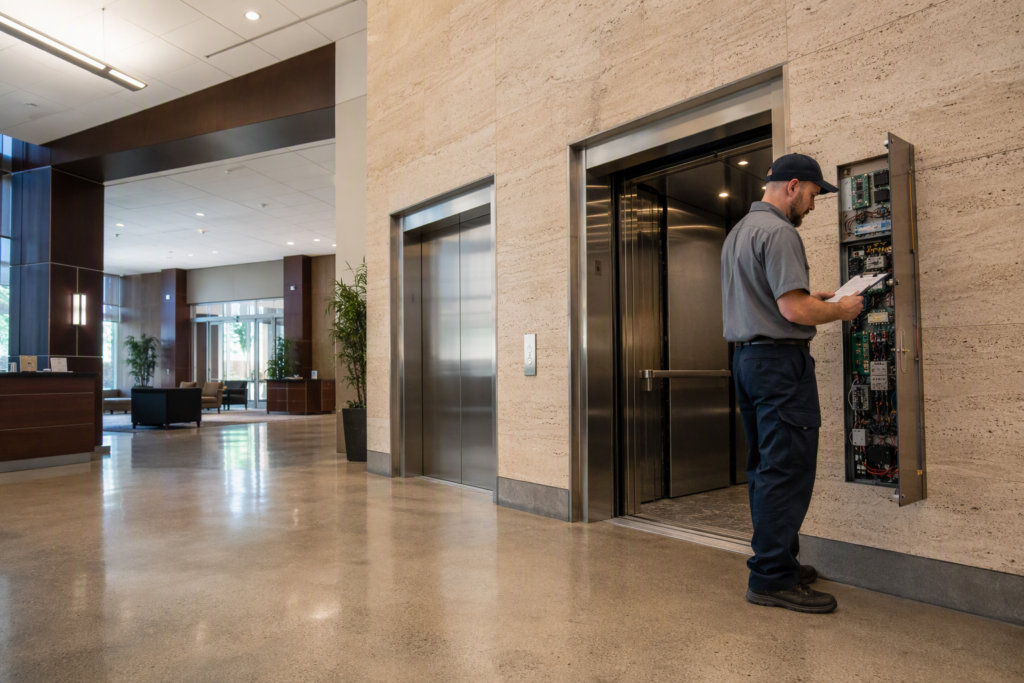
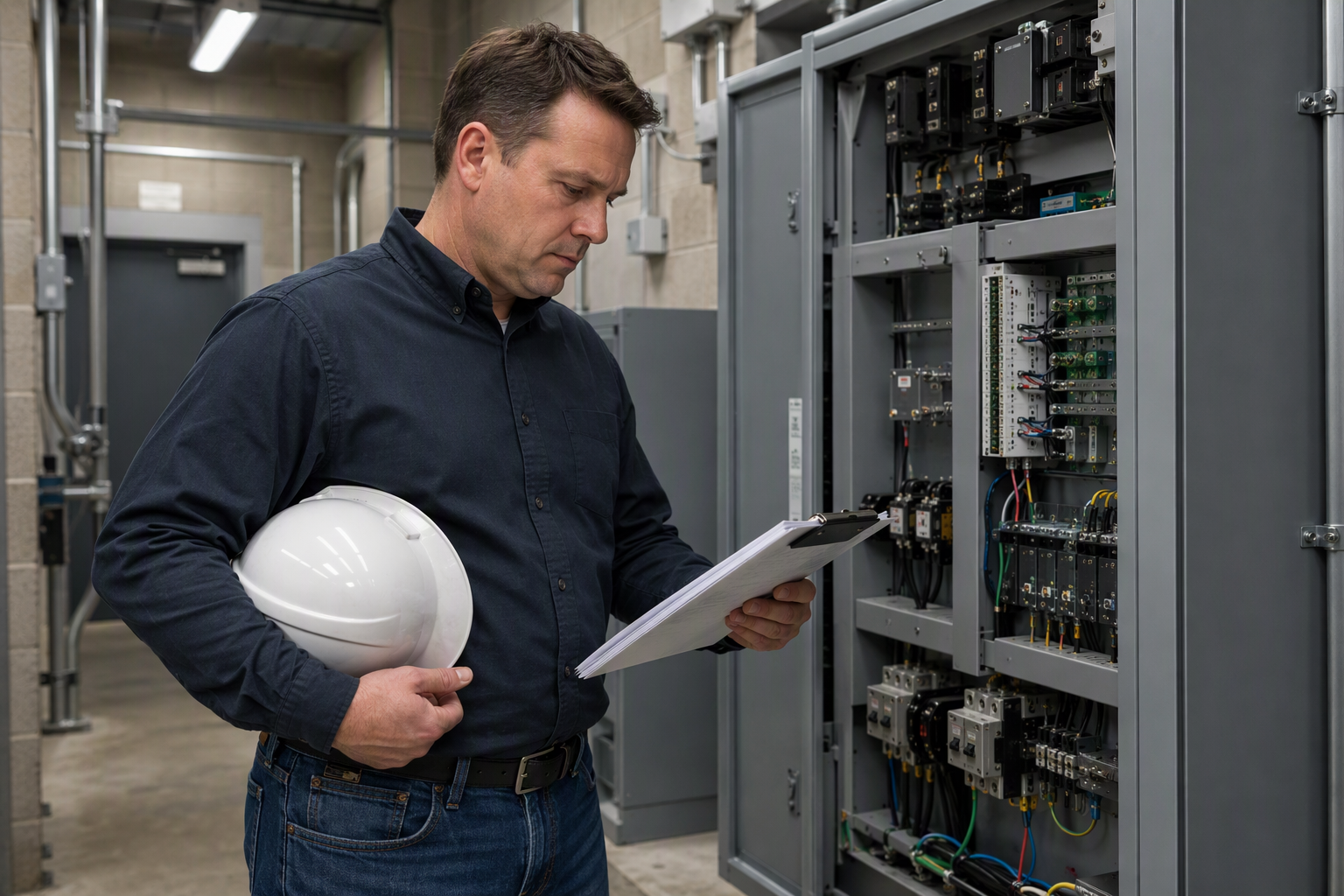
- Schedule a pre-service inspection. The owner may request an inspection through the ICA Elevator Division directly or may hire a private elevator inspector authorized by the Industrial Commission of Arizona. The private inspector must be registered with the commission and must not have a conflict of interest — meaning the inspector cannot inspect a conveyance owned, operated, or last serviced by the inspector, a company the inspector owns, or the inspector’s employer.
- Pass the pre-service inspection. The inspector verifies compliance with ASME A17.1-2019, state administrative rules, and all applicable safety requirements. Any deficiencies must be corrected before the certificate is issued.
- Receive and post the certificate. Once the elevator passes, the ICA Elevator Division issues the certificate of inspection. The owner must post the state serial number or certificate in or near the elevator cab in an easily accessible location.
- Schedule annual inspections going forward. Arizona owners must have each conveyance inspected annually. No conveyance may operate without a current annual certificate of inspection.
Who Is Authorized to Inspect Elevators for Certification in Arizona?
Inspections may be conducted by the Industrial Commission of Arizona’s Elevator Division directly or by a private elevator inspector authorized by the commission. Private inspectors must register with the commission every year and demonstrate at least eight hours of approved continuing education. Importantly, using a private inspector does not relieve the owner or operator of their legal obligations under Arizona statute. In the City of Phoenix, the City of Phoenix Elevator Section within the Planning and Development Department inspects elevators, escalators, moving walks, dumbwaiters, and chairlifts located inside city limits; the state handles equipment outside Phoenix. Healthcare facility managers in Phoenix should coordinate with both the city section and the ICA Elevator Division to confirm which authority has jurisdiction over their specific property.
Does an Existing Healthcare Elevator Need Re-Certification After Renovation?
Yes. Arizona requires a new inspection before an elevator returns to service after any modification or alteration. For healthcare facilities that undergo patient wing expansions, emergency department renovations, or equipment upgrades, any scope of work touching the elevator system triggers the re-inspection requirement. Owners must again provide at least 90-day advance notice to the ICA Elevator Division before the alteration begins. Lawfully installed older conveyances may remain in use under Arizona law unless the state’s elevator chief determines the continued operation poses a hazard to life, health, or property — a standard that existing healthcare elevators can meet through proactive maintenance and timely code-compliance upgrades.
What Happens If a Healthcare Facility Operates an Elevator Without a Valid Certificate?
Operating a conveyance without a current certificate of inspection is a violation of A.R.S. §§ 23-491 through 23-491.16. The Industrial Commission of Arizona’s Elevator Division has authority to order a non-compliant elevator out of service. For a hospital or long-term care facility, an elevator taken out of service disrupts patient transport, surgical scheduling, and emergency response — creating immediate operational and patient-safety consequences beyond any regulatory penalty. Healthcare risk managers in Phoenix, Tucson, Scottsdale, and Mesa are advised to treat certificate renewal as a non-negotiable operational obligation rather than an administrative checkbox.
What Are Specific Healthcare Industry Considerations Beyond Standard Certification?
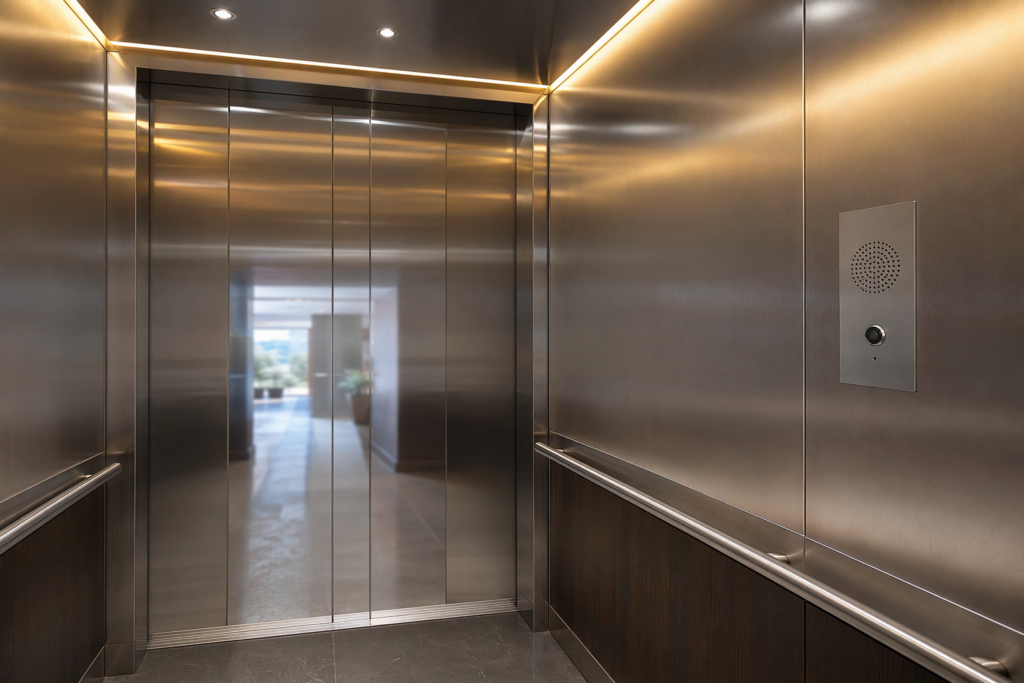
Hospitals and healthcare campuses face elevator demands that exceed typical commercial building requirements. Stretcher-sized cabs, bariatric load ratings, infection-control surface specifications, and uninterrupted power supply connections for emergency power circuits are all common in healthcare design. While OSHA sets workplace safety requirements that apply to hospital staff who work around elevator equipment, compliance with ASME A17.1-2019 and the state certificate process remains the primary certification gateway. Healthcare facility managers should also confirm that elevator cab interiors, handrails, and threshold surfaces comply with facility infection-control standards and that any renovation of those surfaces does not inadvertently trigger a reportable alteration under Arizona administrative code. Arizona Elevator Solutions assists healthcare clients in evaluating whether planned interior modifications rise to the level of an alteration requiring re-inspection.
How Often Must a Healthcare Elevator Be Inspected After Initial Certification?
Arizona statute requires annual inspections for every conveyance. The certificate of inspection must be current at all times for the elevator to operate legally. Healthcare facilities that rely on multiple elevator banks — as is typical in hospital towers and medical office complexes — must track renewal dates for each individual conveyance, because each elevator carries its own state serial number and its own certificate. A single lapsed certificate on one cab is a compliance violation regardless of the status of adjacent units. Arizona Elevator Solutions supports healthcare clients with multi-unit certificate tracking across their Phoenix, Tucson, Scottsdale, and Mesa properties.
What Must Be Posted Inside or Near a Certified Arizona Elevator?
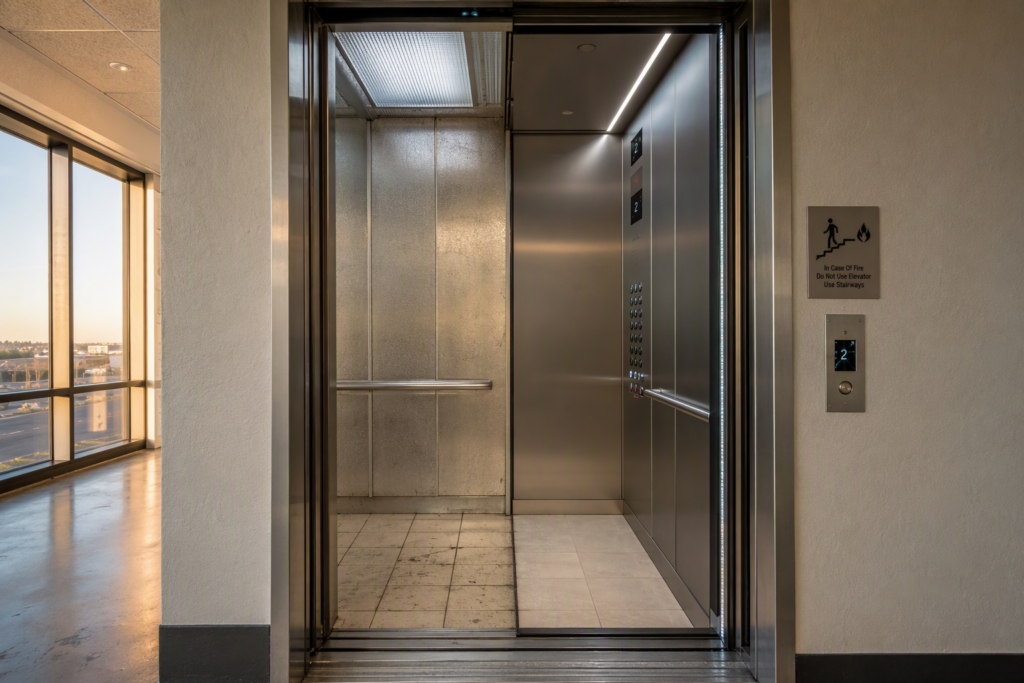
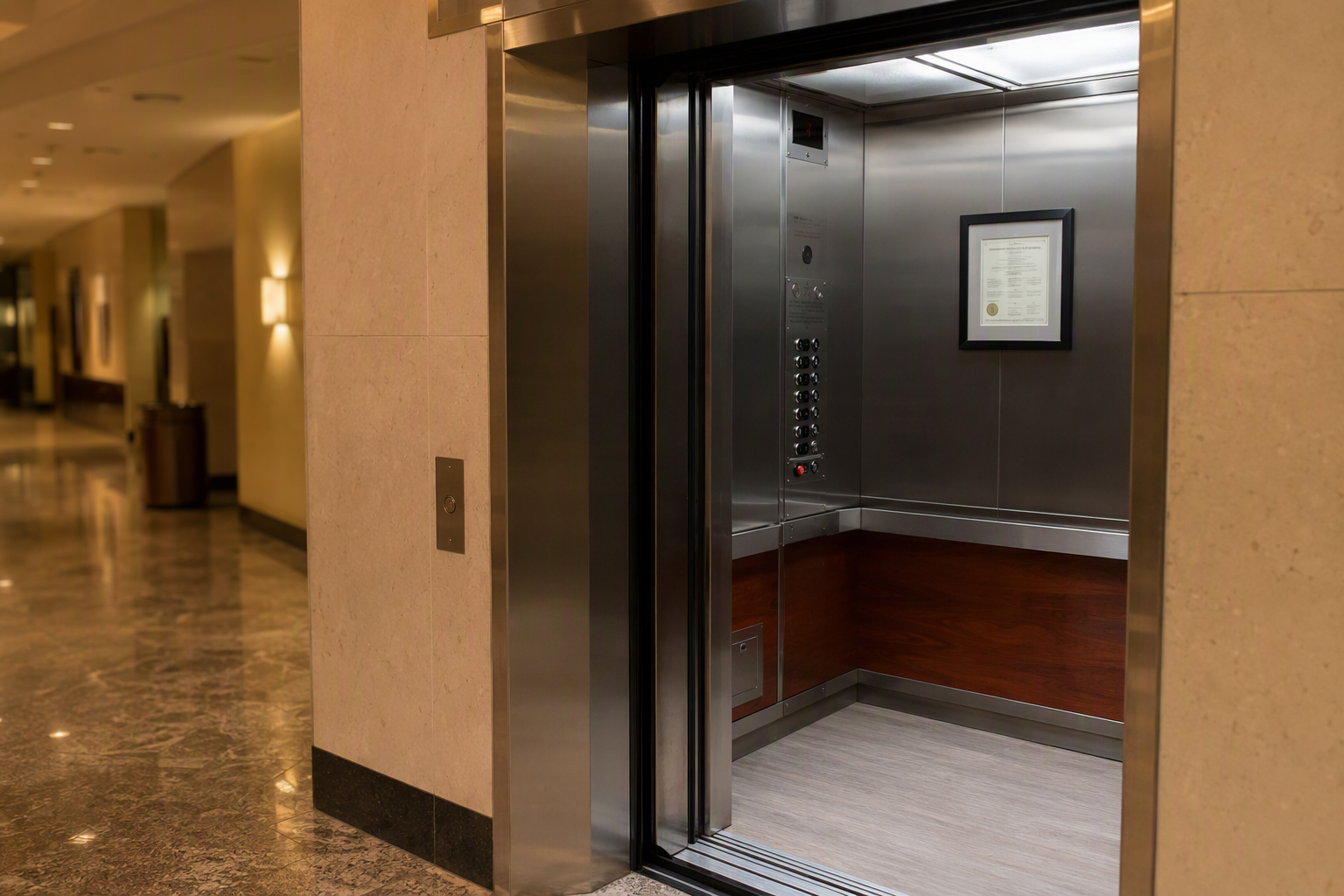
The state serial number or the certificate of inspection must be posted in or close to the conveyance in an easily accessible location. In healthcare settings, this is commonly accomplished by displaying the certificate in a frame inside the cab or in the elevator lobby adjacent to the call button. The state serial number is assigned when the ICA Elevator Division tags the controller or mainline disconnect. Healthcare facility managers should verify during routine safety walks that posting requirements are met, because an inspector who finds an uncertified cab or a missing posting will note the deficiency regardless of whether the underlying inspection was passed.
What Should Healthcare Owners Do Immediately After an Elevator Accident?
- Secure the elevator and prevent further passenger use.
- Provide immediate medical assistance to any injured person.
- Notify the Industrial Commission of Arizona’s Elevator Division within 24 hours of any accident that injures a person or disables a conveyance — this is a mandatory reporting requirement under Arizona statute.
- Preserve all maintenance records, inspection certificates, and incident documentation for regulatory review.
- Do not return the elevator to service until the ICA Elevator Division authorizes resumption following any required follow-up inspection.
- Consult legal counsel and the facility’s risk management team in parallel with regulatory notification.
Questions Your Inspector Will Ask
Whether the inspection is conducted by the ICA Elevator Division or a private inspector authorized by the commission, healthcare facility managers should be prepared to answer the following:
- Is the current certificate of inspection posted in an accessible location near or inside the elevator? The inspector will look for this before any other check.
- What is the date of the last full maintenance service, and are those records available on site? Maintenance logs support the inspection and may be reviewed for compliance with ASME A17.1-2019 maintenance requirements.
- Has any modification or alteration been made to this conveyance since the last certificate was issued? Undisclosed alterations are a serious compliance concern and may require a supplemental inspection.
- Is the AZFS (Arizona Firefighters Service) key on site and functional? The inspector will test Phase I and Phase II firefighters’ emergency operation.
- Are all safety devices — governors, safeties, buffers, and door interlocks — in proper working order? ASME A17.1-2019 specifies testing procedures for each.
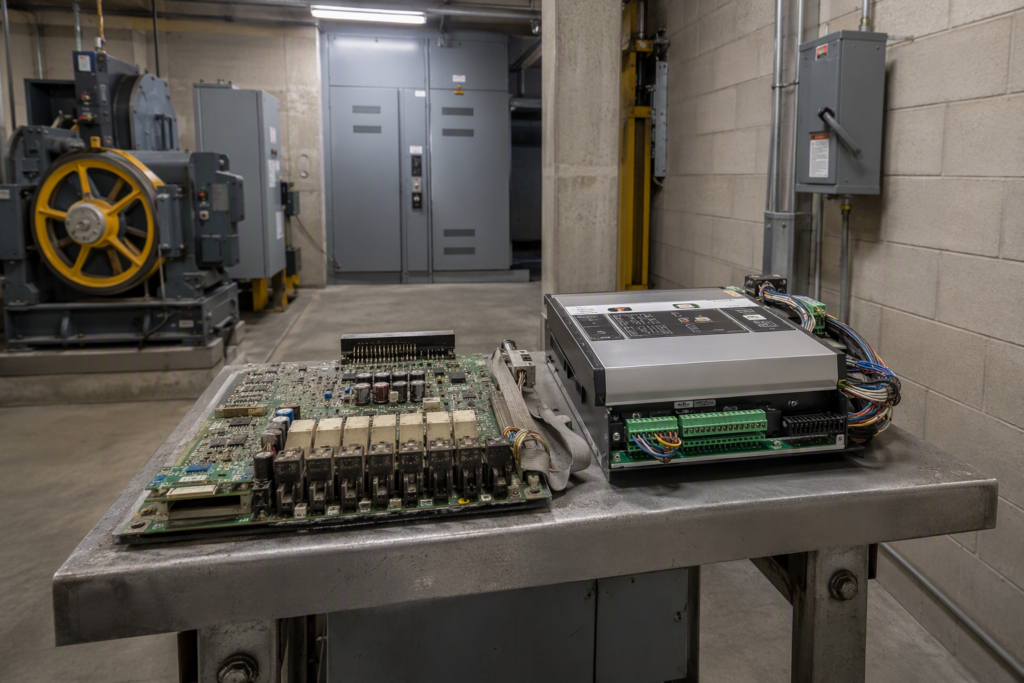
- Is the machine room secured, properly ventilated, and free of non-elevator storage? Machine room conditions are a standard inspection item.
- Have all prior inspection deficiencies been corrected? Outstanding items from the previous certificate cycle must be resolved before a new certificate can be issued.
- What is the rated load capacity, and is the cab operating within that capacity in daily use? Healthcare facilities with bariatric transport needs must confirm load ratings match operational demands.
- Is emergency lighting and communication functional? Two-way communication systems and emergency lighting are required under ASME A17.1-2019 and are tested during inspection.
- Is the 90-day pre-installation notice on file with the state for this equipment? For newly installed elevators, the inspector may verify that the advance notification requirement was satisfied.
Preparing thorough answers and documentation for each of these questions before the inspector arrives reduces the likelihood of deficiency findings that delay certification. Arizona Elevator Solutions provides pre-inspection readiness reviews for healthcare facilities to help ownership teams walk into every inspection fully prepared.
Contact Arizona Elevator Solutions for a free elevator assessment at 480-557-7600.
Need elevator service you can rely on? Arizona Elevator Solutions is ready to help.