How to Prepare Your Building’s Elevator for Arizona Summer Heat: A Complete FAQ for August Readiness
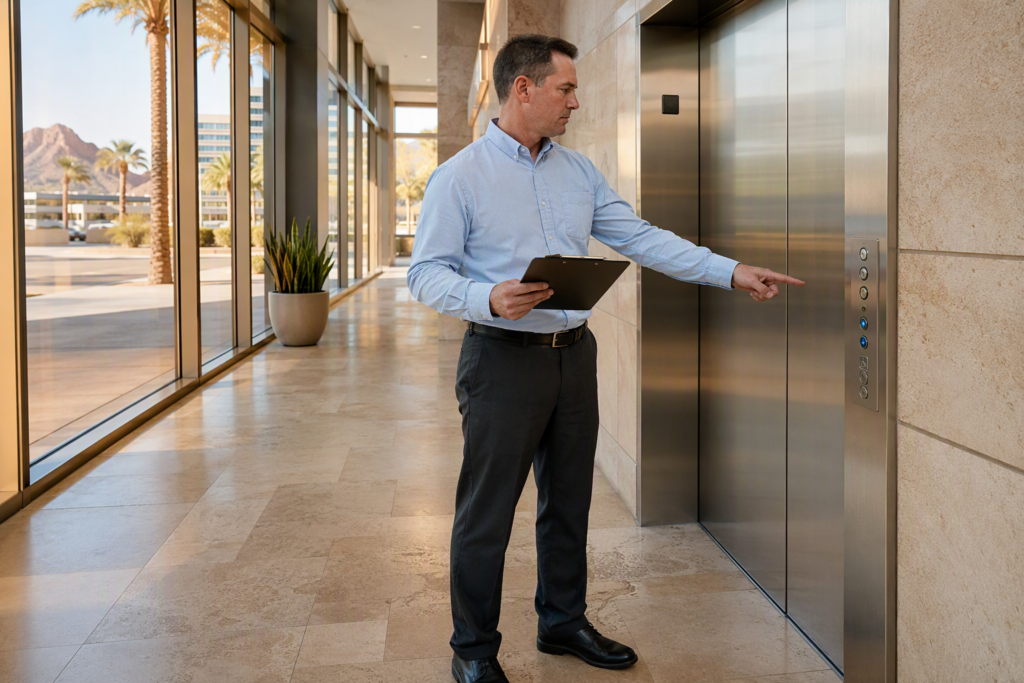
Arizona summers are among the most demanding operating environments for vertical transportation equipment anywhere in the United States. Ambient temperatures in Phoenix, Tucson, Scottsdale, and Mesa regularly exceed 110°F in July and August, placing sustained thermal stress on hydraulic systems, electrical controls, motors, and safety devices that were engineered to operate within specific temperature bands. Building owners and facility managers who treat elevator maintenance as a year-round, climate-aware practice significantly reduce the risk of heat-related shutdowns during the season when occupant demand is highest. The twenty questions below cover everything from pre-season preparation and code compliance to real-time troubleshooting and vendor selection.
1. Why does extreme heat affect elevator performance in Arizona so severely?
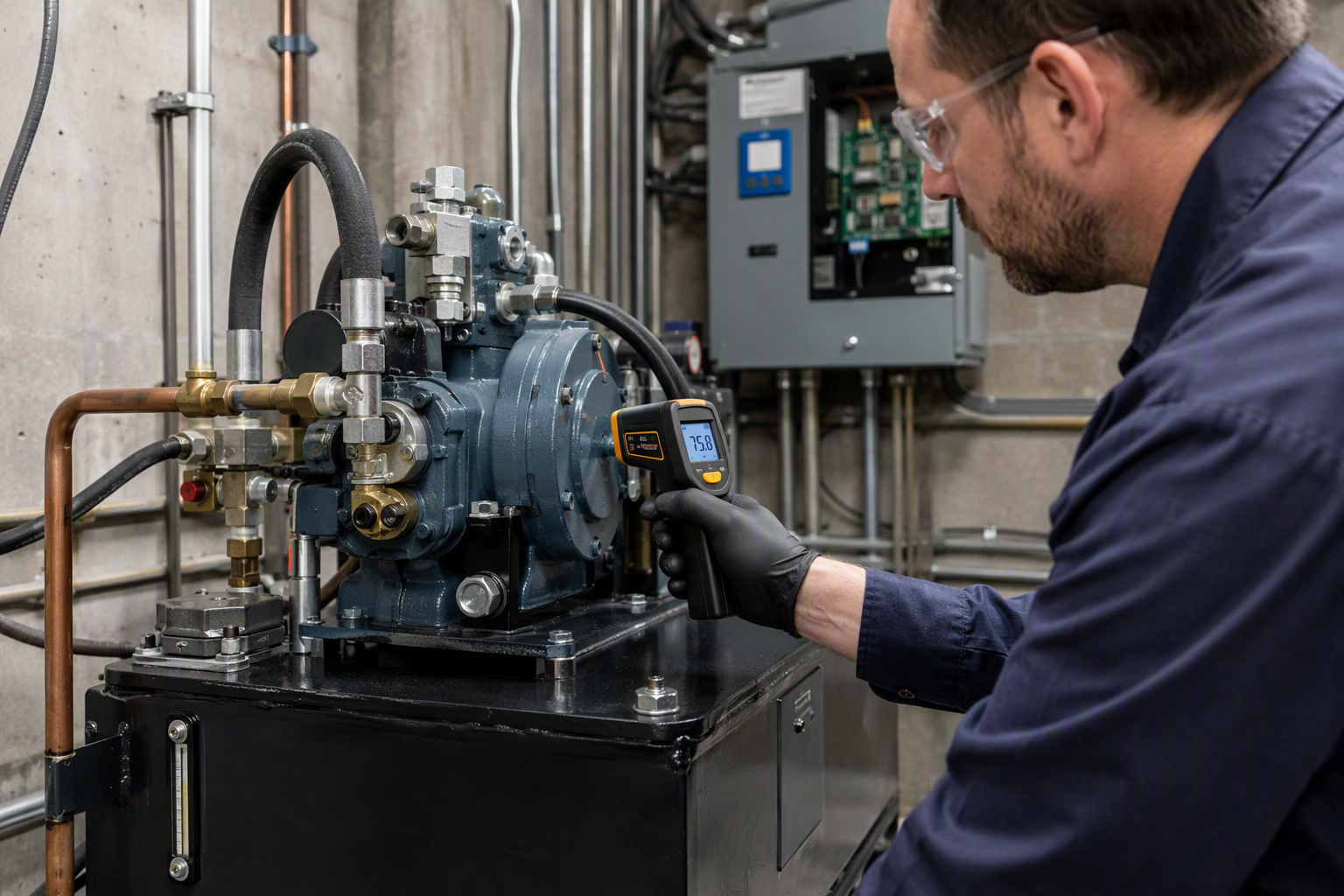
Extreme heat degrades elevator performance because nearly every core system — hydraulics, electronics, motors, and safety circuits — has a maximum operating temperature above which efficiency drops and failure risk rises sharply.
When ambient temperatures in Phoenix or Tucson routinely reach 115°F, the thermal load on an elevator’s machine room can push internal equipment temperatures far beyond design tolerances if cooling is inadequate. Hydraulic oil thins as it heats, reducing lift capacity and response precision. Variable-frequency drives (VFDs) and solid-state controllers generate significant internal heat and rely on ambient air temperature staying within their rated range. Electric motors run hotter, drawing more current and wearing insulation faster. Even the lubricants on guide rails and door tracks behave differently at extreme temperatures. The cumulative effect is accelerated wear, increased call-back frequency, and a higher probability of safety-circuit trips that shut the elevator down entirely — often during peak occupancy hours.
2. When should building owners schedule a pre-summer elevator inspection?
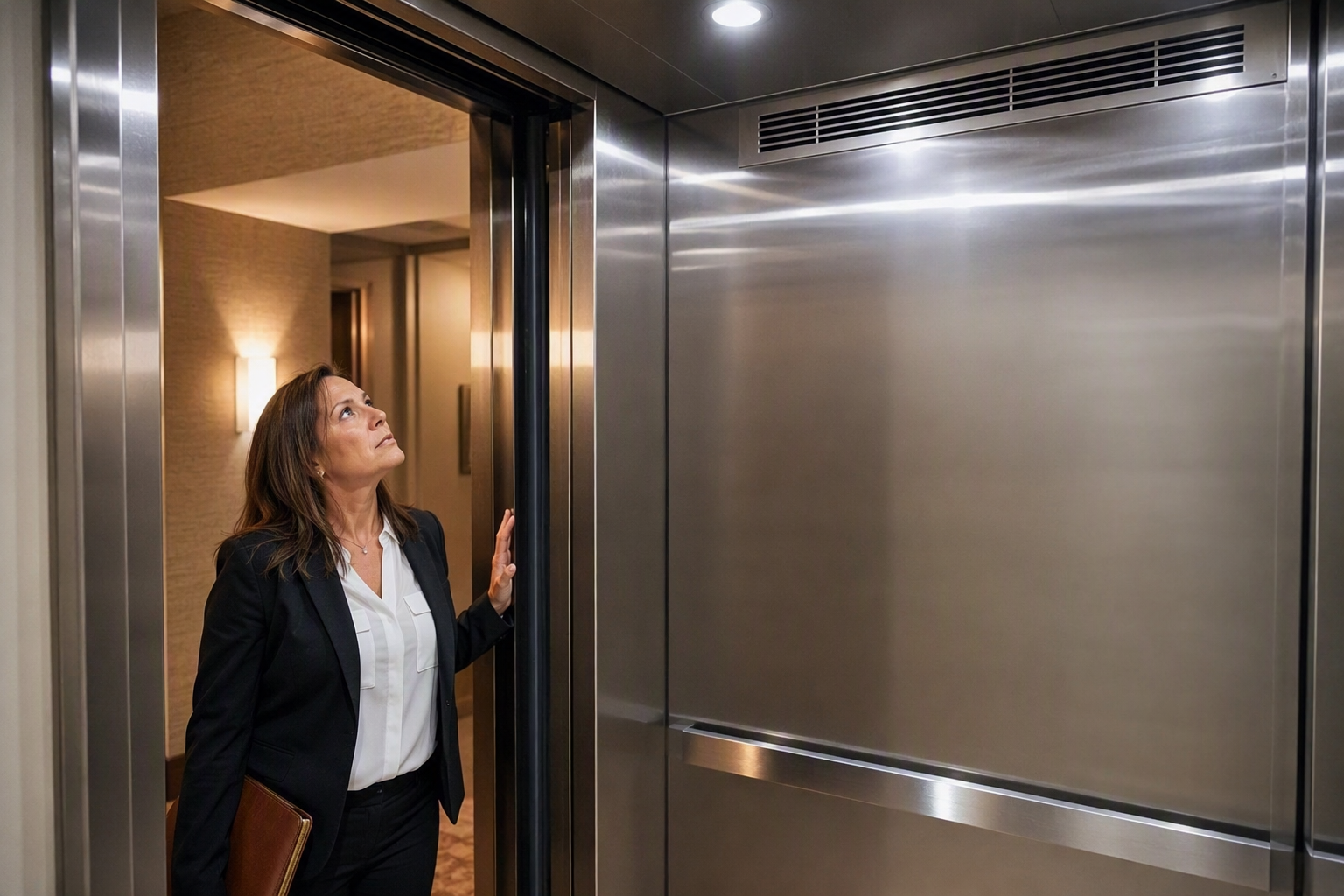
A pre-summer elevator inspection should be completed no later than May, so any deficiencies can be corrected before sustained high temperatures arrive in June.
Arizona’s heat season effectively begins in late May and intensifies through June, July, and August. Scheduling an inspection in April or early May provides the longest runway for ordering replacement parts, completing repairs, and re-testing systems before the thermal stress peak. Waiting until July to discover a failing hydraulic pump seal or a degraded machine room air conditioner means ordering parts during peak demand — often with extended lead times — while the elevator is already compromised. Facility managers in Scottsdale and Mesa who schedule pre-summer assessments consistently experience fewer emergency service calls in the August heat peak.
3. What does ASME A17.1 require for elevator inspections, and how does summer heat factor in?
The ASME A17.1 Safety Code for Elevators and Escalators sets minimum inspection intervals and safety device testing requirements, but it does not override the practical need for more frequent inspections in extreme climate environments.
ASME A17.1 is the foundational safety standard governing elevator design, installation, operation, and maintenance across North America. Arizona adopts and enforces these requirements through the state’s elevator safety program. The code mandates periodic inspections by a qualified elevator inspector and sets intervals for testing safety devices such as buffers, safeties, and pressure-relief valves. However, ASME A17.1 represents a minimum baseline — not a ceiling. In Arizona’s climate, best practice calls for supplemental maintenance visits timed to the pre-summer and mid-summer windows, specifically targeting heat-sensitive components. Building owners should review their current maintenance contract to confirm whether it includes climate-specific service protocols or simply meets the statutory minimum.
4. What are the most critical components to inspect before August?
The highest-priority components for pre-August inspection are the machine room cooling system, hydraulic fluid condition, motor insulation, VFD thermal management, guide rail lubrication, and all safety-device circuits.
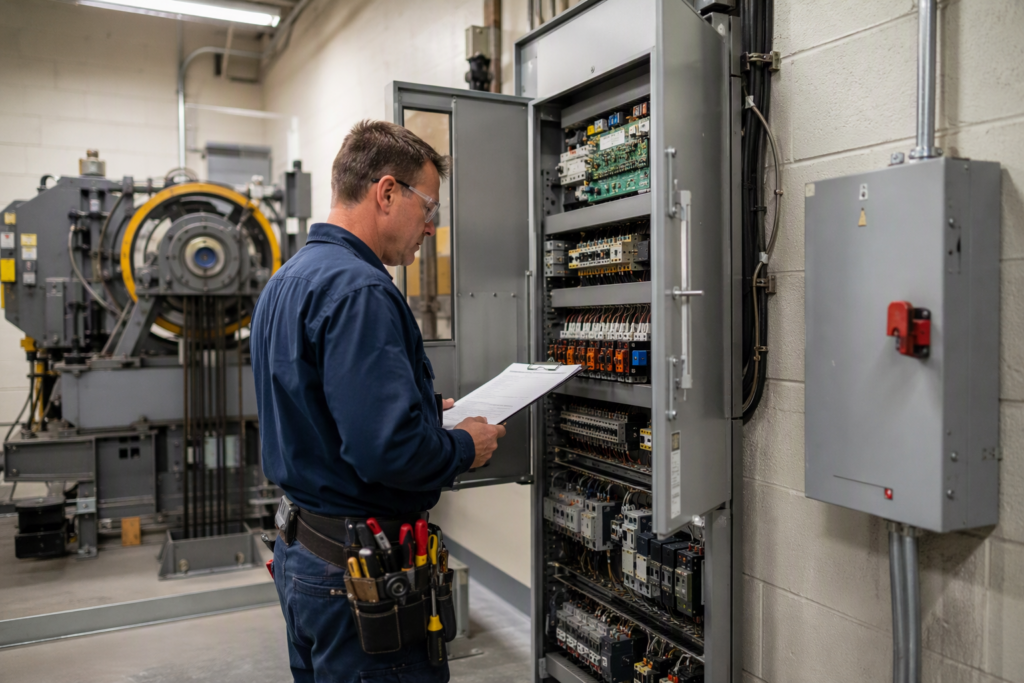
Each of these systems degrades under sustained heat in specific ways. The machine room HVAC or dedicated air conditioner is the single most important item: a failed machine room cooler can render an otherwise healthy elevator inoperable within hours on a Phoenix summer afternoon. Hydraulic fluid should be tested for viscosity, contamination, and fluid level — heat accelerates oxidation and breakdown of hydraulic oil. Motor windings and insulation should be checked for signs of heat damage or moisture intrusion from the monsoon season, which overlaps with August’s heat peak. VFDs should have their cooling fans confirmed operational and heat sinks inspected for dust accumulation that insulates and raises temperatures. Guide rails need fresh, heat-stable lubricant because thin-viscosity oils migrate and evaporate faster in extreme heat, increasing friction on rollers and shoes. Finally, every safety circuit — overspeed governors, buffer switches, pit stop switches, and door safety edges — must be confirmed functional, because any nuisance fault that trips a safety circuit during August heat will require a service call to reset.
5. How should machine room temperature be managed during Arizona summers?
Machine room temperature should be maintained within the equipment manufacturer’s specified operating range at all times, which typically means keeping the space actively cooled well below outdoor ambient temperatures.
Most elevator control systems and VFDs are rated for operation up to approximately 104°F (40°C) internally, though manufacturer specifications vary. In Arizona, a machine room without dedicated mechanical cooling can easily exceed this threshold when outdoor temperatures reach 110°F or higher. Dedicated split-system air conditioners sized for the heat load of the equipment in the room are the standard solution. Before August, facility teams should verify the machine room A/C unit is serviced, refrigerant levels are correct, filters are clean, and thermostat setpoints are appropriate. Backup strategies — such as a second smaller unit or a high-capacity ventilation fan with filtration — are worth considering for critical-use buildings. Arizona Elevator Solutions recommends that building owners document machine room temperature logs during extreme heat events to establish a performance baseline and identify cooling degradation early.
6. What problems specifically peak in August for Arizona elevators?
August combines Arizona’s hottest temperatures with the monsoon season’s humidity and dust, making it the highest-risk month for hydraulic failures, control board faults, door malfunctions, and nuisance safety trips.
The monsoon pattern introduces additional failure modes beyond pure heat: rapid temperature swings between outdoor storms and cooled interiors create condensation inside control panels, which can cause short circuits and corrosion on circuit boards. Windblown dust infiltrates machine rooms and pit areas, clogging cooling vents and contaminating lubricants. Hydraulic systems experience their greatest stress in August because the combination of sustained heat and high operating demand keeps fluid temperatures elevated throughout the day. Door systems are also particularly vulnerable: heat causes door tracks to expand, door panels to warp slightly, and operator clutch mechanisms to drag — all of which generate door-fault error codes that strand passengers. Building managers should increase the frequency of their walkthroughs during August specifically to catch early-warning symptoms before they escalate to outages.
7. What are the warning signs that an elevator is overheating?
Key warning signs of elevator overheating include sluggish or erratic car movement, repeated door errors, control panel fault codes, thermal-overload indicator lights, unusual motor noise, and the elevator parking itself at a landing and refusing to respond.
Building staff should be trained to recognize these symptoms and report them promptly. A hydraulic elevator that slows noticeably when traveling upward — particularly in the afternoon heat peak — is showing classic signs of hydraulic fluid thermal degradation or pump strain. Traction elevators may display fault codes on the controller indicating motor temperature or drive overtemperature. An elevator that suddenly goes out of service and displays “out of service” or simply does not respond to hall calls may have tripped a thermal-overload relay or an overheat shutdown built into the controller. These shutdowns are safety features, not failures in themselves — but they indicate that the root cause (inadequate cooling, degraded fluid, failing HVAC) must be addressed rather than simply resetting the equipment and resuming operation.
8. How does Arizona heat affect hydraulic elevator systems differently from traction systems?
Hydraulic elevators are more directly vulnerable to ambient heat because their performance depends on maintaining hydraulic fluid within a stable viscosity range, while traction elevators are primarily affected through motor, drive, and lubrication systems.
In a hydraulic elevator, heat causes fluid viscosity to drop, which reduces the fluid’s ability to maintain consistent pressure and results in slower, less precise car movement. Seals and O-rings also degrade faster at high temperatures, increasing the risk of fluid leaks. The hydraulic power unit — pump, motor, valve assembly, and fluid reservoir — is the focal point for summer maintenance on these systems. Traction elevators rely on sheaves, ropes, counterweights, and an electric drive system. Their summer vulnerabilities center on motor winding temperature, VFD thermal management, and the lubrication of wire ropes and guide rails. Both system types require machine room cooling, but the failure modes and diagnostic procedures differ, which is why technicians need to apply type-specific inspection protocols to each installation.
9. What hydraulic fluid specifications are appropriate for Arizona’s climate?
For Arizona conditions, hydraulic elevator systems should use fire-resistant, high-viscosity-index hydraulic fluid rated for broad operating temperature ranges, selected in accordance with the equipment manufacturer’s specifications and any applicable environmental regulations.
Standard hydraulic elevator fluids are assigned an ISO viscosity grade; higher viscosity-index (VI) fluids maintain more consistent viscosity across wide temperature swings. In Arizona, where a machine room may be cool in the morning and very warm by mid-afternoon before the A/C stabilizes, high-VI fluids provide more consistent system behavior throughout the operating day. Environmental regulations in some Arizona jurisdictions also influence fluid selection, particularly for installations near groundwater-sensitive areas, where biodegradable or fire-resistant fluids may be required. Building owners should confirm with their elevator service provider that the fluid currently in their system is appropriate for Arizona operating conditions and is changed at intervals appropriate for high-heat use.
10. What does ADA compliance require, and can heat-related elevator outages create ADA liability?
The Americans with Disabilities Act (ADA) requires that elevators in covered buildings remain accessible to individuals with disabilities, and extended heat-related outages in multi-story buildings can expose building owners to accessibility complaints if no equivalent alternative access is available.
Under the ADA, buildings that are required to have accessible vertical access must maintain that access in working order. While the ADA does not impose a specific repair timeline for elevator outages, it does require that building owners make reasonable efforts to restore service and notify building users of the outage and alternative accessible routes. In a multi-story commercial building in Phoenix or Scottsdale where elevator access is the only accessible means of reaching upper floors, an extended summer outage due to deferred maintenance is particularly problematic. Proactive summer maintenance is therefore not only an operational best practice but also a risk-management measure under federal accessibility law.
11. What OSHA regulations apply to elevator maintenance personnel working in Arizona summer conditions?
OSHA heat illness prevention standards require that employers protect workers — including elevator technicians — from heat hazards when working in environments with high ambient temperatures, including machine rooms and pit areas.
Elevator pits and machine rooms in Arizona during summer can reach temperatures that qualify as heat hazard environments under OSHA guidance. Technicians performing maintenance or repairs in these spaces during August must be provided with water, rest breaks, shade or cooling access, and heat illness prevention training. Building owners hosting elevator maintenance work during summer months should ensure that contractors are following OSHA heat safety protocols and that machine room and pit access areas allow safe working conditions. This is particularly relevant when scheduling extended maintenance procedures — such as hydraulic unit replacements or major controller upgrades — during the summer months.
12. How often should elevator maintenance visits occur during July and August?
During Arizona’s peak heat months, elevators in high-use or high-risk buildings benefit from maintenance visit frequency that exceeds the statutory minimum, with at least one dedicated mid-summer check specifically targeting heat-sensitive systems.
Standard maintenance contracts typically include monthly visits for most commercial elevators, which satisfies code minimums. However, in Arizona’s summer operating environment, a monthly visit may leave a three-to-four-week gap during which heat-related degradation accelerates unchecked. For hospitals, assisted-living facilities, high-rise office buildings, and any building where elevator outage creates significant safety or accessibility risk, a mid-month supplemental visit during July and August focused on hydraulic fluid temperature, machine room cooling performance, and door operation provides meaningful risk reduction. Arizona Elevator Solutions structures its maintenance programs to account for climate-specific service needs across its Phoenix, Tucson, Scottsdale, and Mesa service areas.
13. What immediate steps should building staff take when an elevator stops working in extreme heat?
When an elevator stops operating during an Arizona heat event, building staff should follow a specific protocol to ensure passenger safety and protect equipment from further damage.
- Verify no passengers are trapped. Check the cab visually if possible or use the intercom system. If anyone is inside, call 911 immediately — do not attempt a self-rescue.
- Place the elevator out of service. Post clear signage at all landings informing building users the elevator is temporarily out of service.
- Check machine room temperature. If the machine room is accessible, note whether the cooling system is running. If the room is extremely hot, confirm the A/C unit is operational and contact HVAC maintenance if it is not.
- Do not repeatedly attempt to restart the elevator. Repeatedly cycling a thermally overloaded elevator can cause additional damage to the motor, drive, or controller.
- Contact your elevator service provider. Report the symptoms observed — fault codes, any unusual sounds prior to shutdown, approximate time of day the issue began, and the machine room temperature if known.
- Document the event. Record the time, any fault codes displayed, and environmental conditions for your maintenance log and any regulatory reporting requirements.
- Activate your accessibility contingency plan for any building users who require vertical access, in accordance with your ADA compliance obligations.
14. How does the Arizona monsoon season interact with summer elevator maintenance?
Arizona’s monsoon season, which overlaps with the August heat peak, introduces moisture, dust, and electrical storm hazards that compound heat-related elevator risks and require specific additional precautions.
Monsoon storms arrive rapidly and can deliver intense but brief rainfall accompanied by haboobs — massive dust storms — that infiltrate building envelopes more than many facility managers anticipate. Elevator pits can accumulate water if building waterproofing or drainage is inadequate, creating electrical hazard and triggering pit-flooding safety switches. Dust infiltration into machine rooms degrades cooling efficiency by clogging filters and coating heat sinks on VFDs and control panels. Lightning associated with monsoon storms can introduce voltage spikes into building electrical systems that damage elevator controllers and drive systems — surge protection on elevator power feeds is a worthwhile investment in Arizona. After significant monsoon events, a brief inspection of the pit for water accumulation and the machine room for dust infiltration is a sound practice.
15. What is the cost of deferred summer maintenance compared to emergency repair?
Deferred summer maintenance consistently results in higher total costs than proactive service because heat-accelerated component failures typically cause collateral damage to adjacent systems and require emergency service premiums.
While specific pricing varies by market, equipment type, and failure complexity, the general pattern is consistent: a hydraulic power unit that fails due to neglected fluid maintenance may require not just new fluid but a rebuilt or replaced pump, contaminated-fluid disposal, and seal replacement — in addition to any emergency call charges. A VFD that overheats due to a clogged cooling fan may suffer irreparable damage to its power electronics, resulting in a full drive replacement rather than a simple cleaning and filter swap. The indirect costs — tenant complaints, ADA compliance exposure, business interruption, and reputational damage — are additional considerations that rarely appear in a maintenance budget but are very real for building owners and managers. Investing in pre-summer and mid-summer preventive maintenance is economically sound risk management.
16. What should building owners look for when evaluating an elevator service provider for summer maintenance?
When evaluating elevator service providers for Arizona summer maintenance, building owners should assess whether the provider has documented experience with desert climate elevator maintenance, offers climate-specific service protocols, and can respond to heat-related emergencies in the markets where the building is located.
Key questions to ask any prospective service provider include: Does your maintenance program include specific protocols for Arizona heat season preparation? Can you demonstrate familiarity with the failure modes common to hydraulic and traction elevators in desert climates? Do your technicians carry common heat-season replacement parts — hydraulic fluid, cooling fans, thermal relays — in their service vehicles? Does your service coverage include Phoenix, Tucson, Scottsdale, and Mesa with local technician presence? Arizona Elevator Solutions is a certified elevator service company specifically structured to serve Arizona’s unique climate and regulatory environment across these markets.
17. Are there any Arizona state-specific regulations building owners should be aware of?
Arizona enforces elevator safety through a state regulatory program that incorporates ASME A17.1 Safety Code for Elevators and Escalators requirements and requires periodic inspections by a qualified inspector, with certificates of inspection that must be kept current.
Building owners in Phoenix, Tucson, Scottsdale, and Mesa are responsible for ensuring their elevators hold a current certificate of inspection as required by Arizona’s elevator safety program. An elevator operating with an expired inspection certificate creates both regulatory and liability exposure. Summer heat events do not pause compliance obligations — if a heat-related failure triggers an inspection by a regulatory authority, an expired certificate compounds the building’s regulatory risk. Owners should maintain a compliance calendar that tracks inspection certificate expiration dates and ensures renewals are scheduled well in advance of expiration, with additional buffer time built in during the summer months when scheduling lead times may be longer.
18. What is a heat-readiness checklist building managers can use before August?
A practical pre-August heat-readiness checklist covers machine room cooling, hydraulic systems, electrical components, safety devices, door systems, and documentation — providing a structured approach to summer preparation.
| System / Component | What to Verify | Risk if Neglected | Recommended Action Timing |
|---|---|---|---|
| Machine Room Cooling (A/C) | Unit operational, correct setpoint, clean filters, adequate refrigerant | Controller/VFD overtemperature shutdown | April–May service; verify again in July |
| Hydraulic Fluid | Correct level, viscosity grade appropriate for heat, not contaminated | Sluggish lift, seal failure, pump damage | Pre-summer fluid analysis; change if indicated |
| Hydraulic Seals & Hoses | No visible leaks, hoses not cracked or heat-hardened | Fluid leak, loss of pressure, shutdown | Pre-summer visual inspection |
| Motor & Windings | Insulation integrity, no signs of heat damage or moisture | Motor failure, tripped overload relay | Annual + pre-summer check |
| VFD / Controller | Cooling fans operational, heat sinks clean, no fault history | Drive overtemperature, controller fault | Clean and inspect pre-summer |
| Guide Rail Lubrication | Fresh high-VI lubricant applied, no dry sections | Increased friction, roller/shoe wear | Apply heat-stable lubricant pre-summer |
| Door Operator & Tracks | Track alignment, clutch adjustment, no binding | Door faults, passenger entrapment risk | Adjust and lubricate pre-summer |
| Safety Devices | Governor, buffers, safeties, pit stop switch all functional | Regulatory non-compliance; injury risk | As required by ASME A17.1 schedule |
| Pit Drainage & Waterproofing | No standing water, sump functional (if installed) | Electrical hazard, pit flooding switch trip | Inspect before monsoon season (June) |
| Surge Protection | Surge protection devices on elevator power feed confirmed functional | Controller/drive damage from lightning | Inspect pre-monsoon season |
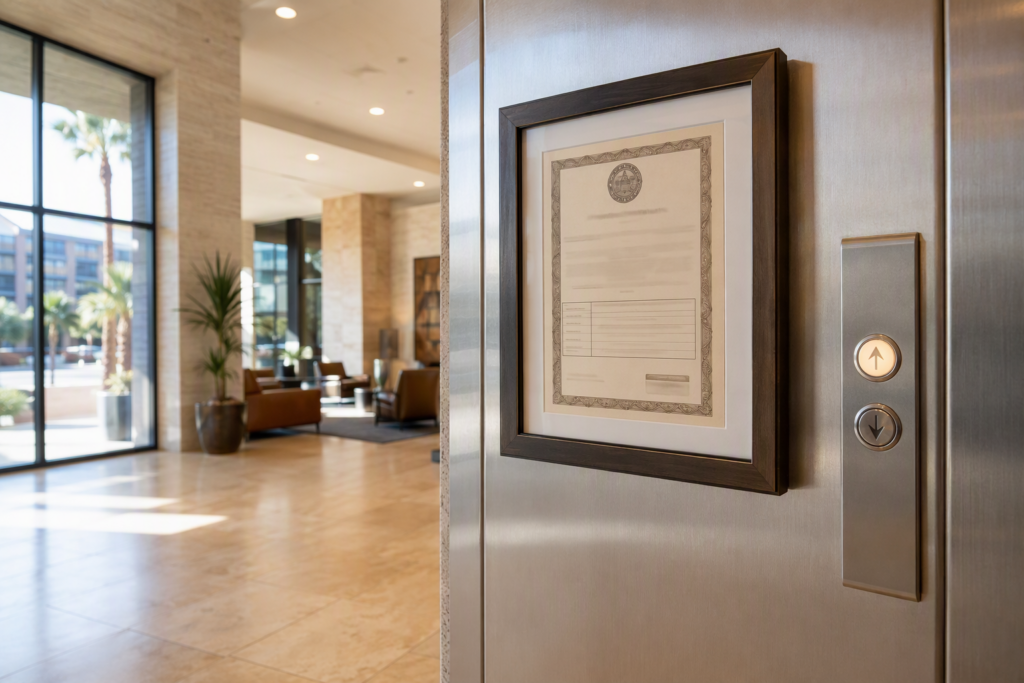
| Inspection Certificate | Current, posted in cab, not expiring during summer months | Regulatory violation, liability exposure | Check dates in April; renew if needed |
19. How can building owners distinguish between a heat-related elevator fault and a mechanical failure requiring major repair?
Heat-related faults typically resolve when the elevator cools down and the root cause (inadequate cooling, degraded fluid) is addressed, while mechanical failures produce persistent symptoms, unusual sounds, or physical damage that does not resolve with temperature normalization.
A technician can often distinguish between these two categories through a structured diagnostic process. If an elevator trips off on a thermal overload relay during peak afternoon heat and returns to normal operation after the machine room cools overnight, the root cause is thermal — inadequate cooling or degraded fluid. If the elevator displays fault codes related to motor current draw, drive output faults, or safety circuit opens that persist regardless of temperature, the issue is likely a component failure. Physical signs — unusual grinding sounds from the machine, visible fluid leaks, rope slippage marks on the sheave, or inconsistent leveling — point to mechanical or hydraulic system failures requiring parts replacement. Accurate diagnosis requires a trained elevator technician with diagnostic equipment; building staff should not attempt to reset safety faults without understanding the underlying cause, as some safety trips indicate conditions that are genuinely unsafe to override.
20. How do I get a professional summer heat assessment for my building’s elevator?
Building owners in Phoenix, Tucson, Scottsdale, and Mesa can contact a certified elevator service company to schedule a comprehensive heat-readiness assessment that covers all systems identified in this guide.
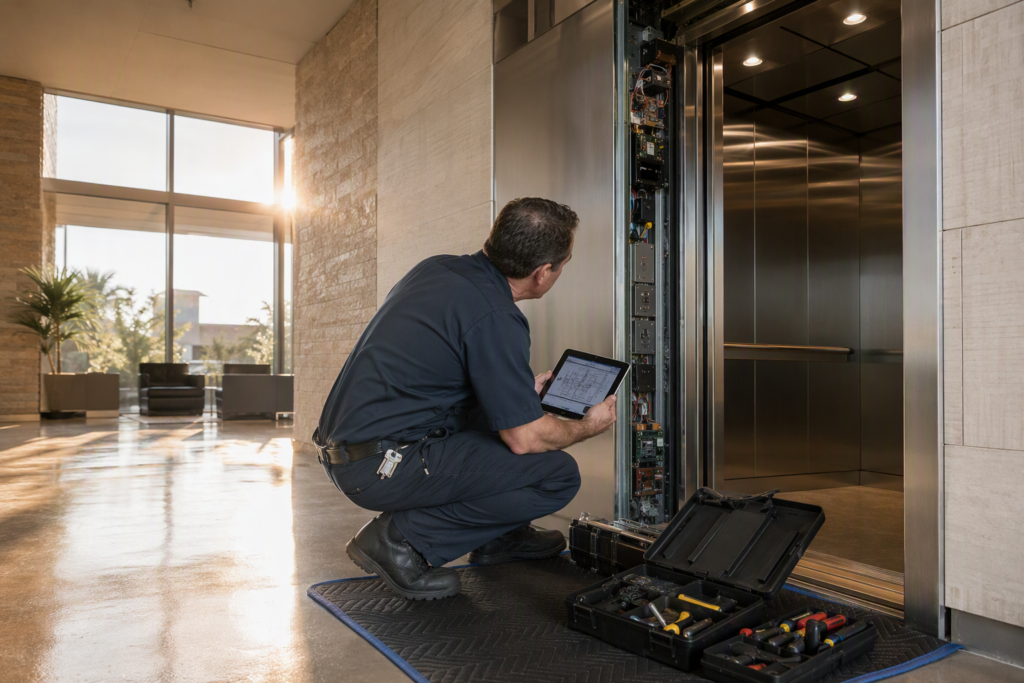
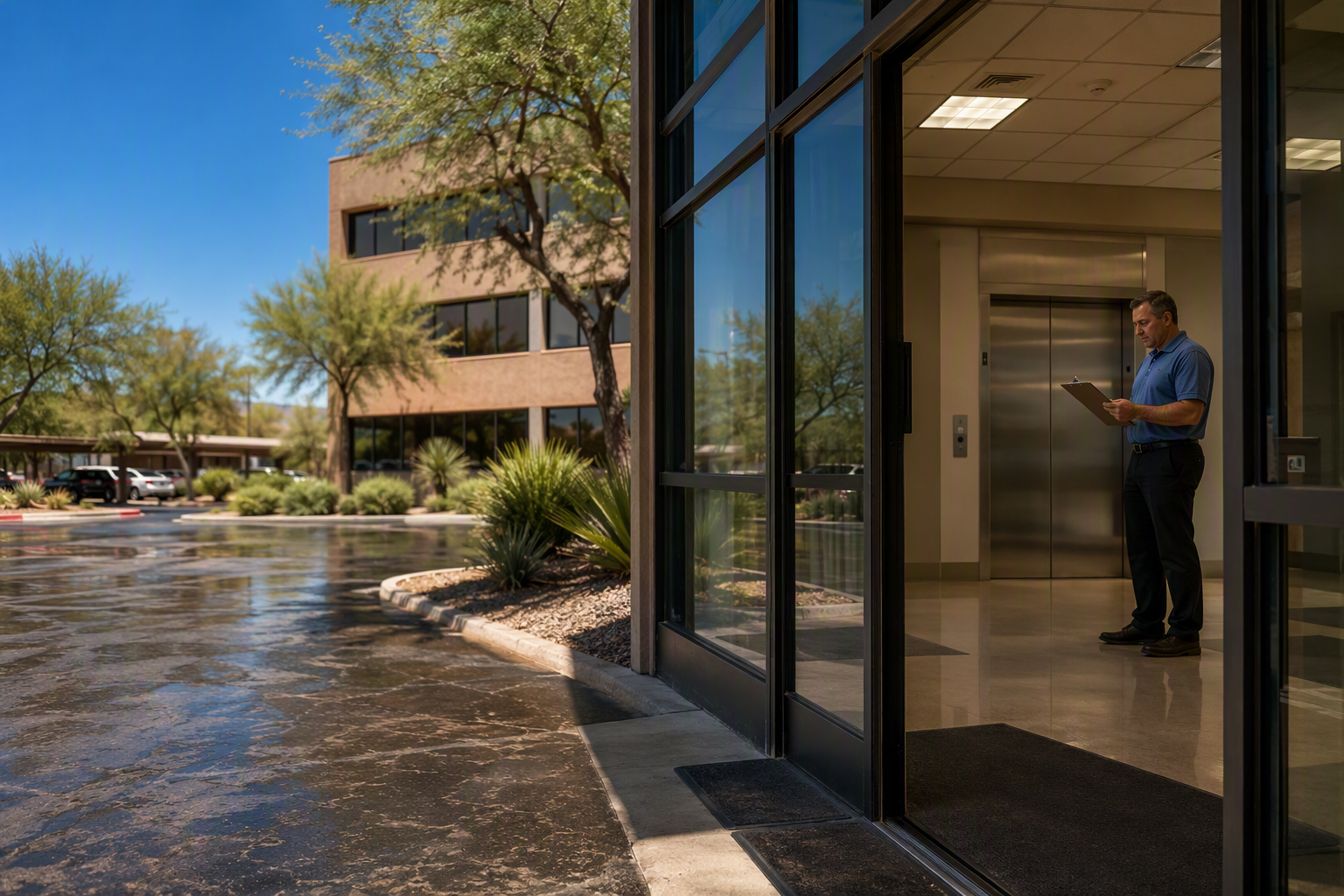
A professional assessment conducted by a qualified elevator technician should include a physical inspection of the machine room and its cooling system, hydraulic system evaluation, electrical component inspection, door system check, safety device verification, and a review of current inspection certificates and maintenance records. The output should be a written report identifying any deficiencies, recommended corrective actions, and a prioritized timeline for completion before peak summer heat. Arizona Elevator Solutions provides heat-readiness assessments for commercial, residential, and industrial elevator installations across its service markets, applying maintenance protocols specifically developed for Arizona’s desert climate and monsoon conditions. Proactive summer preparation — completed before August’s heat peak — is consistently the most effective strategy for maintaining reliable, compliant elevator operation through Arizona’s most demanding operating season.
Need elevator service you can rely on? Arizona Elevator Solutions is ready to help.