
Understanding what elevator maintenance should cost — and what drives that cost up or down — is one of the most practical tools a building owner or property manager can have. This page presents a structured breakdown of elevator maintenance cost benchmarks, contract options, compliance considerations, and vendor evaluation criteria to help Arizona building owners make financially sound decisions. Arizona Elevator Solutions provides data-driven assessments to help clients benchmark their current maintenance spend against industry norms.
What Are the Main Factors That Drive Elevator Maintenance Costs?
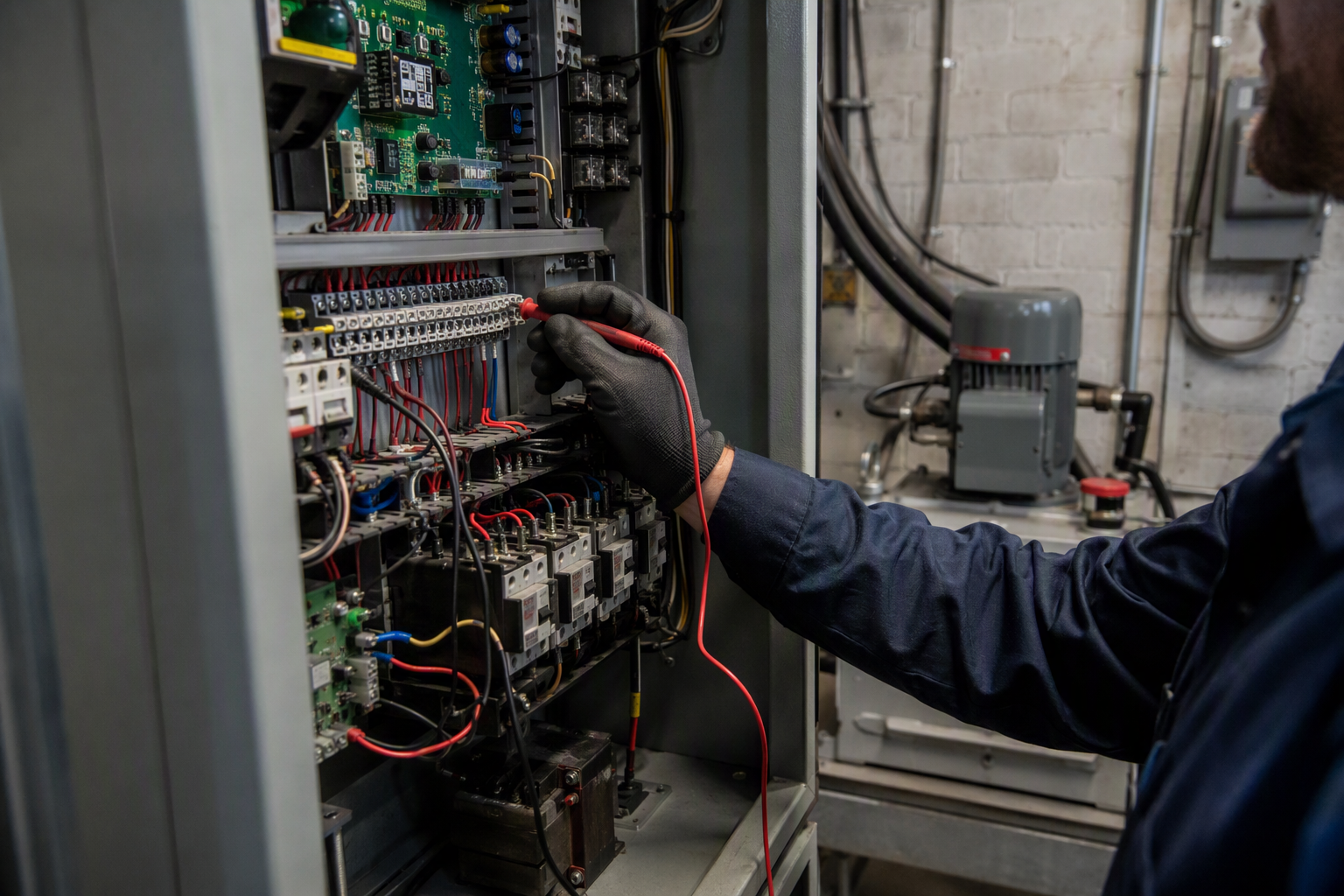
Elevator maintenance costs are not a single flat figure. They are determined by a combination of equipment, usage, regulatory, and contractual variables. Understanding these drivers is the first step toward identifying affordable options.
- Elevator type: Hydraulic elevators, traction (cable-driven) elevators, and machine-room-less (MRL) systems each carry different maintenance profiles. Hydraulic systems typically require fluid management and jack inspection; traction systems require rope and sheave inspection.
- Equipment age: Older equipment with obsolete components often requires more labor-intensive maintenance and harder-to-source parts, raising the total cost of ownership.
- Number of stops and floors served: More stops mean more mechanical complexity, more door cycles per day, and greater wear on components like door operators, buffers, and guide shoes.
- Usage volume: A residential elevator making a few trips daily experiences far less wear than a hospital elevator operating continuously around the clock.
- Contract type selected: The structure of the maintenance agreement is one of the most controllable cost variables available to a building owner.
- Code compliance status: Elevators that are not in compliance with current codes may require corrective work that is billed outside of a standard maintenance contract.
- Local labor market: Regional labor rates for licensed elevator mechanics affect the base cost of any maintenance agreement.
What Types of Elevator Maintenance Contracts Are Available?
Choosing the right maintenance contract structure is the single most impactful decision a building owner can make to control costs. There are three primary contract types, each representing a different balance between predictable budgeting and risk allocation.
Full-Service (Comprehensive) Contracts
Full-service contracts cover routine maintenance visits, parts replacement, and most repair labor for a fixed monthly or annual fee. These contracts shift financial risk to the service provider. They are generally the highest-cost option on a per-month basis but deliver the most predictable annual budget and protect against unexpected repair bills. This structure is often most cost-effective for high-usage elevators or aging equipment where repair frequency is unpredictable.
Parts-and-Labor (Partial) Contracts
Partial contracts cover labor for routine maintenance visits and some parts, but exclude major components such as controllers, motors, and door operators. Building owners retain responsibility for those repair costs. Monthly fees are lower, but owners carry more financial exposure. This structure works well for newer equipment still under manufacturer warranty or for low-usage residential elevators.
Oil-and-Grease (Lubrication-Only) Contracts
These are the most affordable contract option on a monthly basis. The contractor performs periodic lubrication and basic safety checks but does not cover parts or repair labor. All corrective work is billed at time-and-materials rates. This structure is appropriate only for very new equipment in excellent condition, or for sophisticated owners with in-house maintenance staff who can perform additional monitoring.
Time-and-Materials (No Contract)
Some building owners choose to operate without a service contract and call for service as needed. While this eliminates monthly fees, it exposes owners to premium emergency labor rates, potential extended downtime, and reduced priority scheduling. Over the life of the equipment, this approach frequently results in higher total costs than a structured contract.
How Do Compliance Requirements Affect Elevator Maintenance Budgets?
Regulatory compliance is a non-negotiable cost driver that every building owner must account for in their maintenance budget. Failing to budget for compliance can result in elevator shutdowns, fines, and costly emergency corrective work.
The primary safety standard governing elevator maintenance and inspection in the United States is the ASME A17.1 Safety Code for Elevators and Escalators. This code establishes the minimum requirements for inspection intervals, safety device testing, and maintenance procedures. Arizona adopts editions of ASME A17.1 through its state and local authority having jurisdiction (AHJ), and building owners are responsible for ensuring their maintenance programs align with the currently adopted edition.
Key compliance cost considerations include:
- Periodic inspections: ASME A17.1 requires periodic inspections and tests at defined intervals. These inspections must be performed by a qualified inspector and may be separate from the routine maintenance contract. Inspection fees should be budgeted as a distinct line item.
- Category 1 and Category 5 tests: ASME A17.1 classifies safety tests by category. Category 1 tests are typically annual; Category 5 tests, which include full-load safety tests, are required on a longer cycle and are more labor-intensive and costly.
- Modernization mandates: Local AHJs may mandate safety upgrades — such as door restrictors, car gate switches, or updated emergency lighting — on a compliance timeline. These capital costs are separate from routine maintenance but must be planned for.
- ADA accessibility compliance: The Americans with Disabilities Act (ADA) requires that elevators in public accommodations meet specific accessibility standards. Ongoing maintenance must preserve ADA-required features such as door timing, floor leveling accuracy, and control panel specifications.
- OSHA regulations: Technicians servicing elevators are subject to OSHA workplace safety standards. Building owners should verify that their service provider operates in full compliance, as violations can result in work stoppages affecting the building.
What Is Included in a Routine Elevator Maintenance Visit?
Understanding what is actually performed during a maintenance visit helps building owners evaluate whether they are receiving full value from their contract. A properly structured maintenance program under ASME A17.1 typically addresses the following during scheduled visits:
- Inspection and lubrication of guide rails, guide shoes, and rollers
- Inspection and adjustment of door operators, door contacts, and safety edges
- Testing of safety devices including governor, safeties, and buffers as required by the applicable ASME A17.1 test category
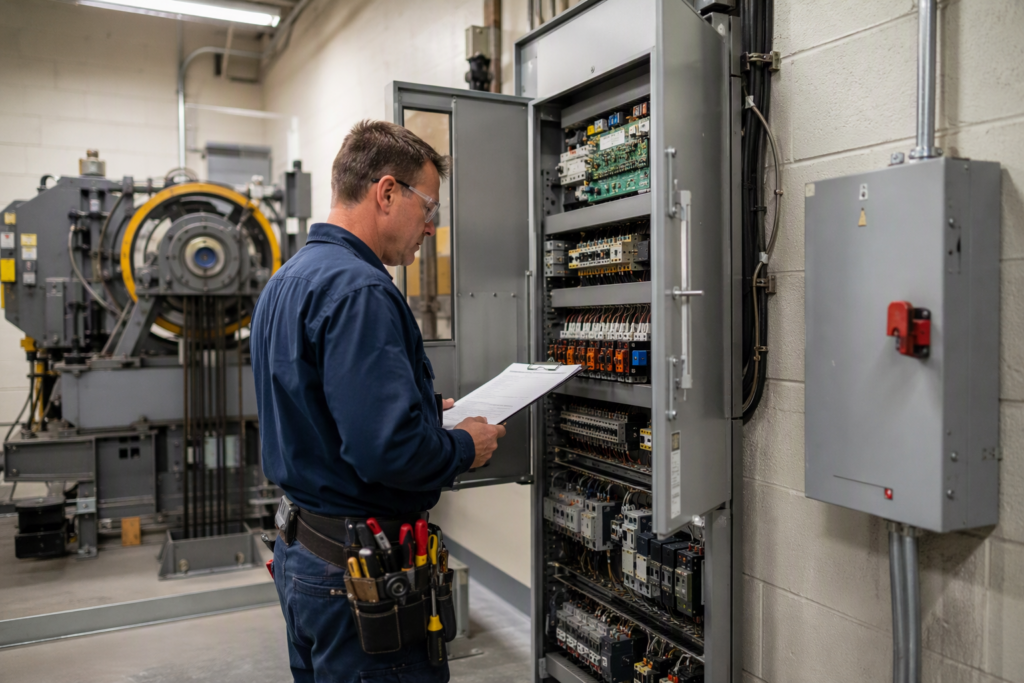
- Inspection of the machine room or drive unit, including motor, brake, and drive sheave condition
- Verification of proper leveling at all landings
- Inspection of pit equipment including pit ladder, lighting, stop switch, and sump pump where present
- Inspection of hydraulic fluid levels and hydraulic jack condition (for hydraulic elevators)
- Review of controller and electrical components for signs of wear or overheating
- Testing of emergency lighting, communication systems, and alarm devices
- Documentation of findings and any recommended corrective work
Building owners should request a written report after every maintenance visit. This documentation is essential for compliance records and for benchmarking maintenance quality over time.
How Should Building Owners Compare Elevator Maintenance Vendors?
Price is only one dimension of vendor evaluation. A low-cost contract that excludes critical components or uses under-qualified technicians can result in total costs far exceeding a higher-priced comprehensive agreement. The following criteria provide a structured framework for comparison:
- Scope of coverage: Obtain a detailed list of what is included and excluded in each contract type. Ambiguous contract language around “normal wear and tear” exclusions is a common source of billing disputes.
- Technician qualifications: Confirm that technicians are licensed elevator mechanics under Arizona state requirements and that the company operates with all required contractor licenses.
- Parts sourcing: Ask whether the contractor uses original equipment manufacturer (OEM) parts or aftermarket alternatives, and whether parts markups are disclosed.
- Inspection coordination: Determine whether the contractor coordinates third-party state inspections and assists with AHJ compliance or whether the building owner must manage this separately.
- Documentation practices: Request sample maintenance reports. Contractors who provide detailed written documentation after every visit support compliance recordkeeping more effectively than those offering only verbal updates.
- Emergency response provisions: Understand the contract terms for after-hours service calls, entrapment response, and callback procedures — and whether these are included in the contract or billed separately.
- Contract term and exit clauses: Multi-year contracts may offer lower monthly rates but review termination provisions carefully. Some long-term contracts include proprietary parts lock-in provisions that limit future vendor flexibility.
Arizona Elevator Solutions approaches vendor comparison as a structured process, providing building owners with contract review support and maintenance scope evaluation to ensure the agreement they select delivers genuine value.
What Are the Most Affordable Ways to Reduce Elevator Maintenance Costs Without Sacrificing Safety?
Cost reduction in elevator maintenance is achievable without compromising safety when approached strategically. The following qualitative approaches are widely recognized in the industry:
- Preventive maintenance discipline: Consistent adherence to a preventive maintenance schedule reduces emergency repairs, which are almost always more expensive than planned maintenance on a per-incident basis.
- Modernization of aging components: Proactively replacing high-wear components before failure — particularly door operators, controllers, and hydraulic systems approaching end of life — avoids costly emergency shutdowns and premium repair billing.
- Bundling multiple units: Buildings with more than one elevator often negotiate more favorable per-unit rates by bundling all units under a single service agreement with one provider.
- Annual contract review: Maintenance needs evolve as equipment ages or usage patterns change. Reviewing contract scope annually ensures the agreement still reflects actual needs rather than over- or under-coverage.
- Educating building staff: Simple staff training on recognizing early warning signs — unusual noises, door hesitation, leveling issues — enables faster reporting and intervention before minor issues escalate.
- Competitive rebidding: Obtaining competitive proposals from qualified contractors every three to five years keeps pricing aligned with the market and maintains vendor accountability.
What Industry Trends Are Shaping Elevator Maintenance Costs in 2025–2026?
Several qualitative trends are influencing elevator maintenance cost structures heading into 2026. Building owners who understand these trends are better positioned to make forward-looking contract decisions.
Remote monitoring technology: Internet of Things (IoT) sensors and remote diagnostic platforms are increasingly being integrated into elevator maintenance programs. These systems can detect anomalies in motor performance, door cycle counts, and leveling accuracy between visits, enabling more targeted maintenance and reducing unnecessary routine calls. Some service providers include remote monitoring as part of premium contract tiers; others offer it as an add-on.
Parts supply chain considerations: Global supply chain conditions continue to affect availability and lead times for certain elevator components. Building owners with older equipment that uses discontinued parts may experience longer repair timelines and should discuss parts availability with their service provider as part of contract negotiations.
Regulatory updates: ASME A17.1 is revised periodically, and state AHJs adopt new editions on their own timelines. Building owners should monitor which edition their local AHJ has adopted and budget for any new compliance requirements that accompany updated editions.
Labor market dynamics: The elevator industry, like many skilled trades, continues to navigate workforce dynamics. Labor availability in specific markets can affect service response and pricing. Working with an established local provider helps mitigate scheduling volatility.
Sustainability and energy efficiency: Building owners are increasingly evaluating elevator modernization through an energy efficiency lens. Drive system upgrades, LED cab lighting conversions, and standby mode programming can reduce operating costs and are increasingly part of long-range maintenance planning conversations.
How Do Hydraulic and Traction Elevator Maintenance Costs Compare?
Hydraulic and traction elevators have distinct maintenance profiles that affect long-term cost benchmarks. While exact figures depend on local market conditions, equipment age, and contract structure, the qualitative differences are well-established in the industry.
Hydraulic elevators tend to have lower initial installation costs but can carry higher long-term maintenance considerations related to fluid management, jack condition monitoring, and environmental compliance around underground hydraulic cylinders. Older single-bottom hydraulic jacks may require periodic pull-and-inspect procedures that represent a significant maintenance event.
Traction elevators — both geared and gearless — have different wear patterns centered on wire ropes, sheaves, guide rails, and braking systems. Machine-room-less traction systems introduce additional complexity in accessing drive components for maintenance and repair.
Building owners selecting a maintenance contract should ensure the scope explicitly addresses the maintenance requirements specific to their elevator type rather than accepting generic contract language.
What Questions Should a Building Owner Ask Before Signing an Elevator Maintenance Contract?
- What specific components and repairs are excluded from this contract?
- How are parts priced, and is there a markup above your cost?
- Does this contract include coordination of state-required periodic inspections?
- How are after-hours and emergency service calls handled, and are they included in the contract price?
- Will the same technicians service this equipment consistently, or will assignments rotate?
- What documentation is provided after each maintenance visit?
- What are the conditions under which the contract price can be adjusted during the term?
- Does the contract include any proprietary lock-in provisions that would restrict me from switching vendors?
- How does the contract address compliance with the currently adopted edition of ASME A17.1 Safety Code for Elevators and Escalators?
- What is the process for addressing recurring or unresolved equipment issues?
How Does Equipment Age Affect Long-Term Maintenance Cost Benchmarks?
Equipment age is one of the most reliable predictors of maintenance cost trajectory. As elevators age past their initial design life — typically measured in decades depending on usage intensity and maintenance quality — the frequency of component failures increases and the cost per repair event tends to rise due to parts obsolescence.
A practical benchmark approach accounts for this aging curve by distinguishing between three phases: the early service phase where warranty and OEM support reduce costs, the mid-life phase where a well-maintained elevator operates at relatively stable maintenance cost, and the late-life phase where modernization economics begin to compete with repair-in-place decisions.
Building owners with aging equipment should request a condition assessment from a qualified elevator contractor — not just a sales quote — to understand where their equipment sits on that curve and what the realistic five-year maintenance cost trajectory looks like under current conditions versus after targeted modernization.
Is It Worth Modernizing an Elevator to Reduce Ongoing Maintenance Costs?
Modernization decisions involve weighing capital expenditure against projected maintenance savings and compliance costs. While specific payback periods depend heavily on local labor rates, equipment condition, and parts availability, the qualitative case for modernization strengthens when any of the following conditions apply:
- The elevator requires an increasing frequency of repair calls between scheduled maintenance visits
- Key components such as the controller, hydraulic jack, or door operator are approaching or past end of life
- The cost of a single major repair event represents a significant fraction of a full modernization budget
- The current equipment cannot be brought into compliance with current code requirements without major corrective work
- Downtime from equipment failures is creating tenant, resident, or building operations disruptions
A structured modernization feasibility assessment, comparing projected maintenance costs under the current equipment against the annualized cost of modernization, is the most reliable basis for this decision. Arizona Elevator Solutions supports building owners through this evaluation process with objective, data-driven assessments rather than one-size-fits-all recommendations.
What Role Does Local Arizona Regulation Play in Elevator Maintenance Costs?
Arizona building owners are subject to state and local authority requirements that layer on top of the baseline standards established by ASME A17.1 Safety Code for Elevators and Escalators. The Arizona Department of Occupational Safety and Health (ADOSH), operating in coordination with federal OSHA standards, oversees elevator safety in Arizona workplaces.
Local municipalities may have additional inspection and permitting requirements. In jurisdictions such as Phoenix and Tucson, the local building department or AHJ may have specific requirements for inspection frequency, inspector qualifications, and documentation retention. Building owners should confirm which edition of ASME A17.1 their AHJ has adopted and ensure their maintenance program is structured accordingly.
The ADA imposes ongoing obligations for elevators in public accommodations, commercial facilities, and multi-family housing above threshold heights. Maintenance programs must preserve ADA-required functionality, including door dwell times, leveling accuracy, and cab signage and controls. Failure to maintain ADA compliance can result in civil complaints and required corrective work.
How Can Building Owners Benchmark Their Current Elevator Maintenance Spend?
Benchmarking maintenance spend requires comparing the current contract against several reference points: the contract type and scope, the number of elevators covered, the usage profile, and the equipment age and type. A meaningful benchmark is not simply comparing monthly fees across providers — it requires normalizing for what is actually covered.
A practical benchmarking approach involves the following steps:
- Obtain the current maintenance contract and create an itemized list of what is included and excluded.
- Document all additional expenditures over the past 12–24 months for repairs, parts, and inspections not covered by the contract.
- Calculate total annual elevator maintenance spend inclusive of contract fees and add-on costs.
- Request proposals from two to three additional qualified contractors using identical scope specifications.
- Compare total annual cost across proposals, not monthly base fees, to account for differences in included scope.
- Evaluate each proposal against the compliance and documentation criteria identified in the vendor comparison section above.
- Engage a neutral elevator consultant or assessment provider — such as Arizona Elevator Solutions — to review findings and provide market context.
This structured approach produces a genuine benchmark rather than a misleading price comparison based on dissimilar scope.
Summary: Key Takeaways for Affordable Elevator Maintenance Benchmarking
- Elevator maintenance costs are driven by equipment type, age, usage, contract structure, and compliance requirements — understanding each driver enables more effective cost control.
- Contract type selection is the most controllable cost variable; the right structure depends on equipment age, usage intensity, and risk tolerance.
- Compliance with ASME A17.1, ADA, and OSHA standards is a non-negotiable budget line, not an optional expense.
- Vendor comparison must be based on total annual cost and scope completeness, not monthly base fee alone.
- Preventive maintenance discipline, staff education, and periodic competitive rebidding are proven qualitative strategies for reducing total maintenance cost.
- Aging equipment warrants a formal modernization feasibility assessment to compare repair-in-place costs against modernization economics.
- Arizona Elevator Solutions provides structured maintenance assessments and contract evaluation support to help building owners benchmark accurately and make informed decisions.
Need elevator service you can rely on? Arizona Elevator Solutions is ready to help.