Elevator Modernization vs. Full Replacement: Which Is Better?
Building owners, property managers, and facilities directors across Arizona face this decision regularly: spend on modernizing an aging elevator, or commit to a full replacement? Both paths have genuine merit, and neither is universally correct. This guide breaks down costs, timelines, compliance factors, equipment considerations, and the questions to ask any vendor — so the right decision becomes clear before a contract is signed.
What Is Elevator Modernization?
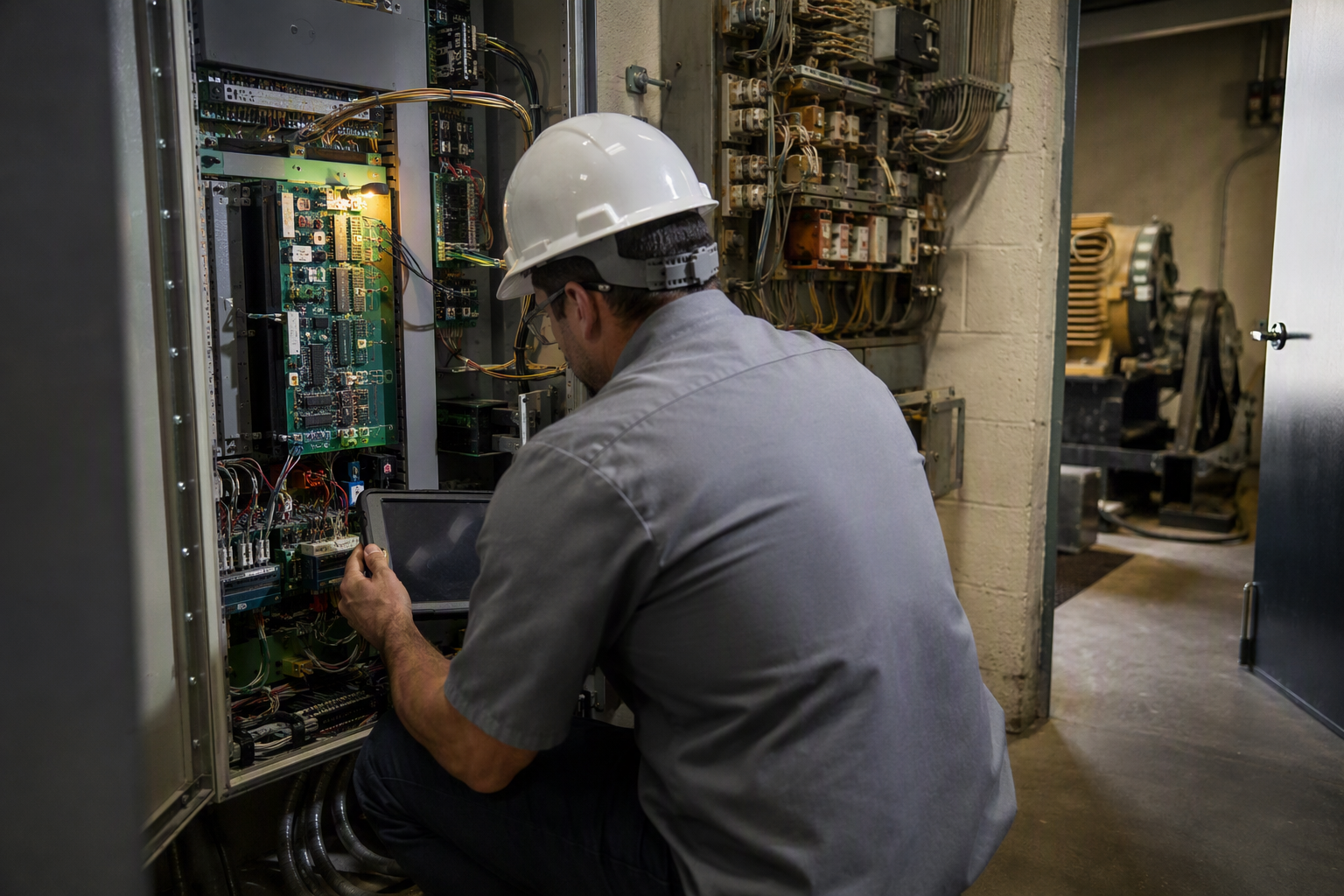
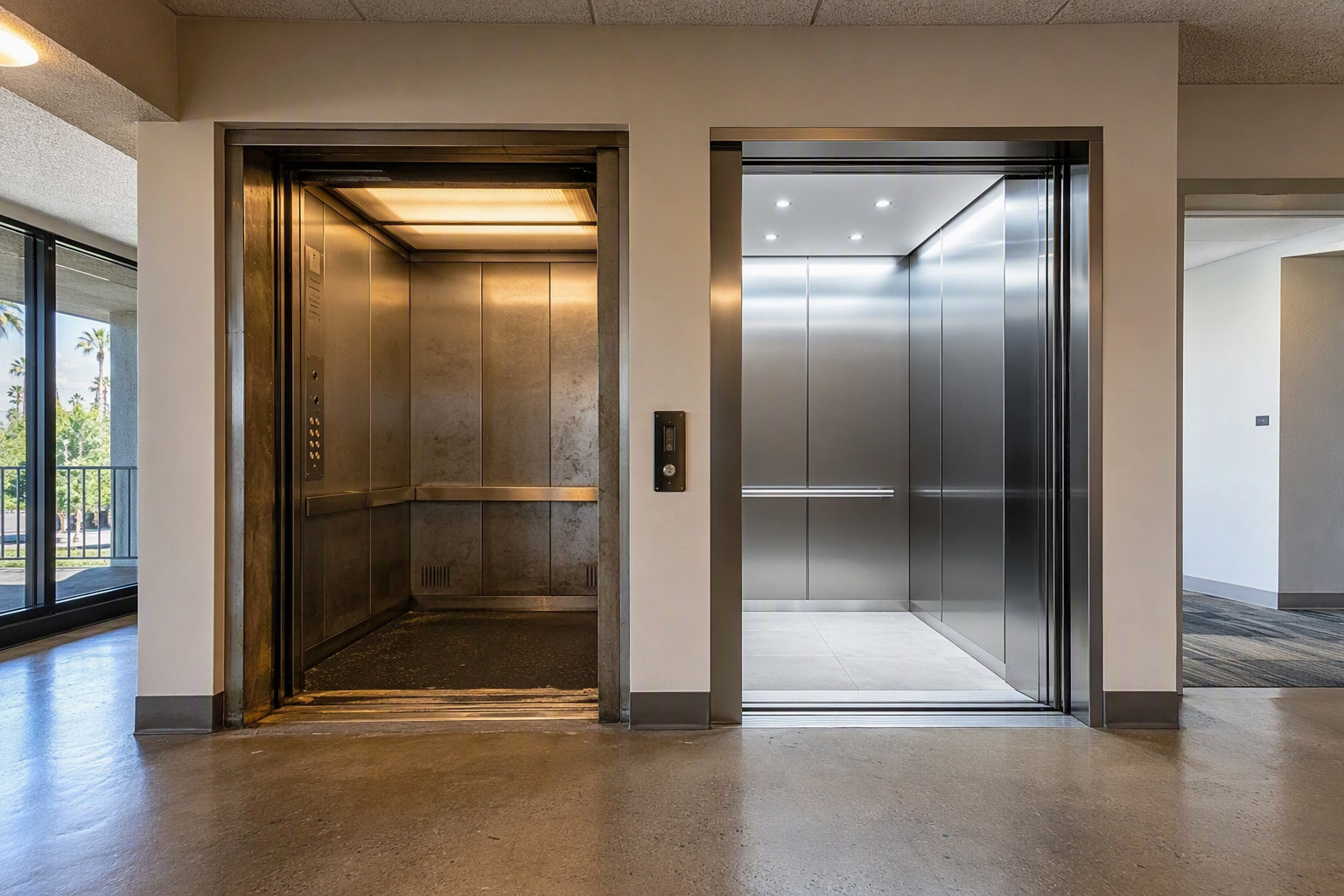
Elevator modernization — sometimes called a “mod” in the industry — refers to upgrading specific components of an existing elevator without removing the entire system. A modernization project can be narrow (replacing only the controller) or comprehensive (replacing the controller, drive, door operator, fixtures, cab interior, and safety systems while retaining the original hoistway, machine room equipment, and cab structure).
Common modernization scopes include:
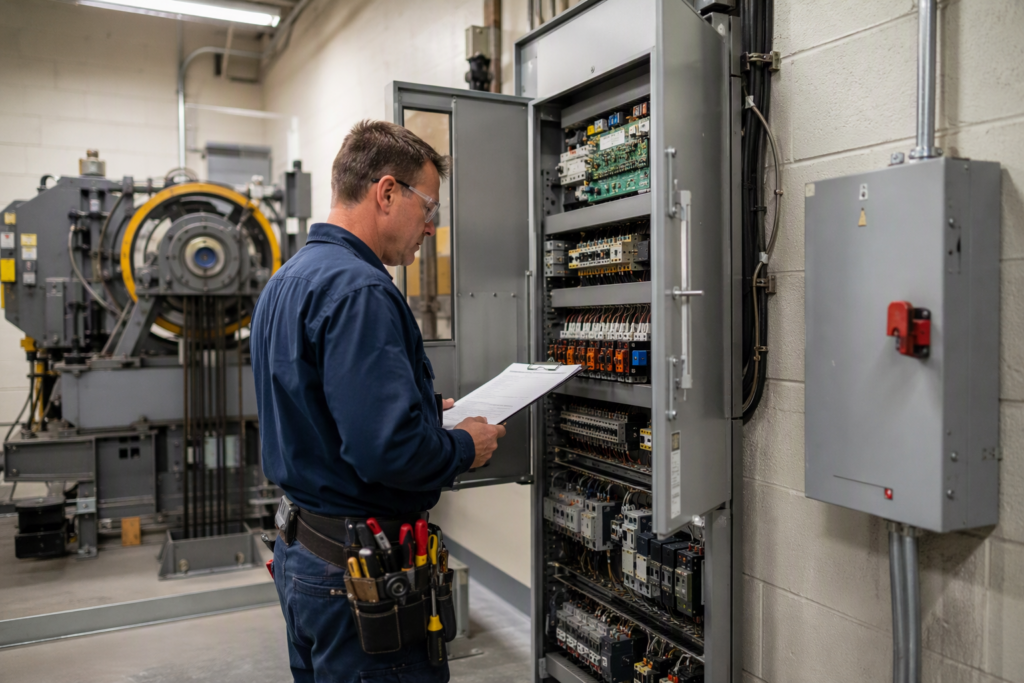
- Controller and relay logic replacement with solid-state or microprocessor-based controls
- Drive system upgrades (e.g., DC to AC variable-frequency drive)
- Door operator and door hardware replacement
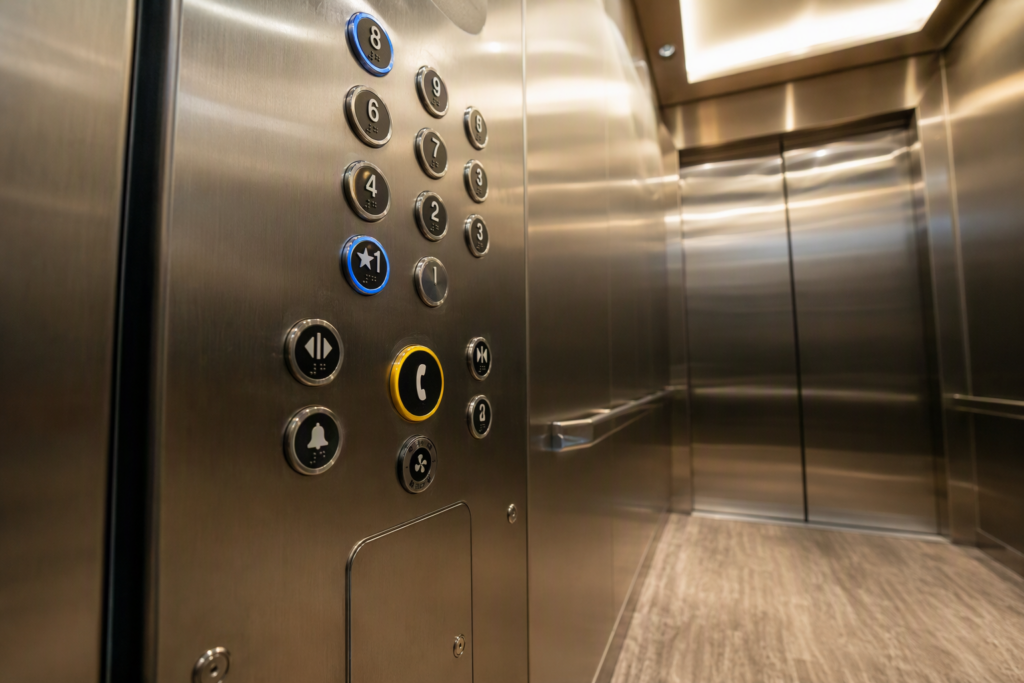
- Cab interior refurbishment (flooring, walls, lighting, fixtures)
- Safety device updates to meet current editions of the ASME A17.1 Safety Code for Elevators and Escalators
- Accessibility upgrades to satisfy ADA requirements
- Energy-efficiency improvements
Arizona Elevator Solutions provides thorough assessment services to determine which components genuinely need replacement versus which still have serviceable life — a distinction that directly affects modernization cost and scope.
What Is Full Elevator Replacement?

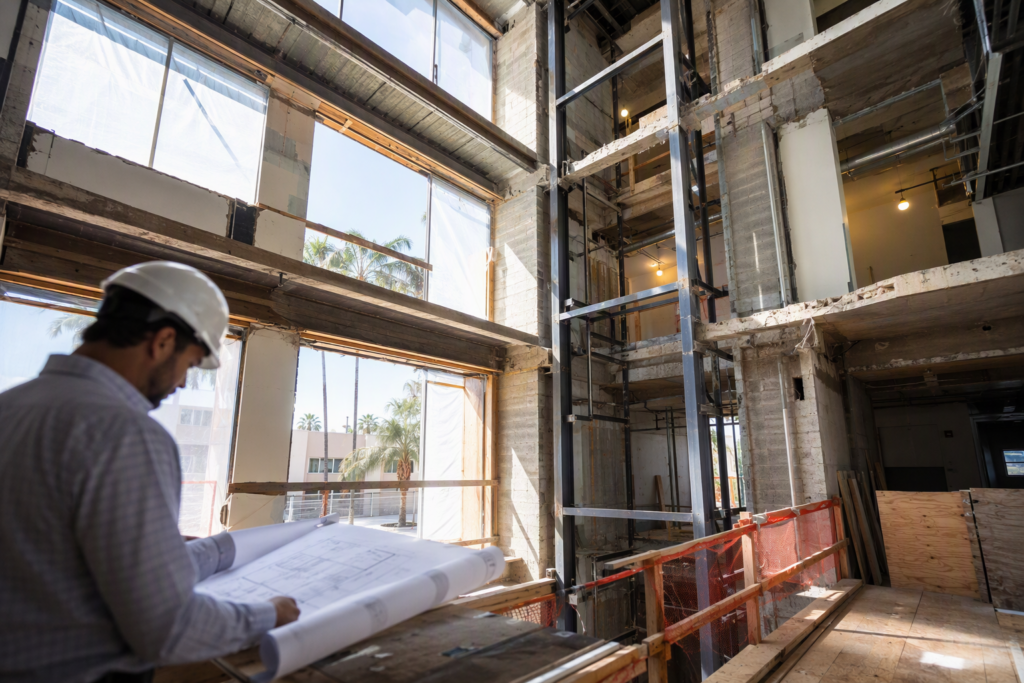
Full replacement involves removing the existing elevator system entirely — including the cab, hoistway equipment, machine room machinery, and structural components — and installing a new system from the ground up. This is the more disruptive and expensive option, but it can be the only viable path when structural deterioration, hoistway damage, or obsolete equipment makes piecemeal modernization impractical or unsafe.
How Do Costs Compare Between Modernization and Full Replacement?
Cost is typically the primary decision driver. While exact figures vary significantly by equipment type, building configuration, local labor rates, and project scope, the general cost relationship between these two options is well-established in the industry.
| Cost Factor | Modernization | Full Replacement |
|---|---|---|
| Relative upfront investment | Lower — typically a fraction of full replacement | Higher — new equipment, installation labor, and extended downtime |
| Hoistway structural work | Usually not required | Often required; may involve construction permits |
| Permitting complexity | Moderate — component-specific permits | High — new installation permits, full code compliance review |
| Downtime cost to building | Shorter out-of-service period | Longer out-of-service period; may require temporary lift solutions |
| Long-term maintenance | Reduced if core components are updated | Lowest for new warranty period |
| Useful life extension | Moderate — adds years to existing infrastructure | Maximum — full lifecycle reset |
Note: Specific cost figures are omitted because they vary widely by project. Arizona Elevator Solutions recommends requesting itemized quotes for both options before making a financial commitment.
How Do Modernization and Replacement Timelines Compare?
| Timeline Factor | Modernization | Full Replacement |
|---|---|---|
| Planning and design phase | Shorter — existing structure informs scope quickly | Longer — full engineering drawings often required |
| Permitting lead time | Moderate | Extended; depends on jurisdiction |
| Active construction/installation | Days to several weeks depending on scope | Weeks to months |
| Inspection and acceptance | Component-level inspections required | Full acceptance inspection required |
| Total elevator downtime | Lower impact on building operations | Higher impact; multi-unit buildings may need phased scheduling |
What Are the Pros and Cons of Each Option?
| Factor | Modernization — Pros | Modernization — Cons |
|---|---|---|
| Cost | Lower upfront investment | Older structural components may still require future repair |
| Compliance | Can target specific code deficiencies | May not achieve full current-code compliance if hoistway dimensions are non-conforming |
| Disruption | Less building disruption | Phased mods can mean recurring short outages |
| Equipment life | Extends useful life of existing structure | Does not reset full equipment lifecycle |
| Technology | Modern controls and drives can dramatically improve ride quality and reliability | Legacy structural limits may cap performance gains |
| Factor | Full Replacement — Pros | Full Replacement — Cons |
|---|---|---|
| Cost | Full warranty; lowest maintenance costs near-term | Highest upfront capital expenditure |
| Compliance | Achieves full compliance with current ASME A17.1 and ADA standards | Compliance process is more complex and time-consuming |
| Disruption | One extended outage rather than recurring events | Significant building disruption during installation |
| Equipment life | Full lifecycle reset; decades of reliable service ahead | Maximum capital required upfront |
| Technology | Access to latest drive, destination dispatch, and IoT monitoring systems | More complex integration with existing building infrastructure |
Which Situations Favor Modernization?
Modernization is typically the stronger choice when one or more of the following conditions apply:
- The hoistway, pit, and machine room are structurally sound and meet dimensional requirements
- The elevator is between roughly 15 and 30 years old and the primary failures are in controls, drives, or door systems
- The building owner wants to extend the equipment’s useful life without a full capital commitment
- Specific safety or code deficiencies have been identified that can be resolved with targeted component upgrades
- ADA accessibility improvements are needed (e.g., new fixture heights, braille, audible signals) without structural changes
- Energy efficiency improvements are a priority — modern variable-frequency drives can significantly reduce electrical consumption compared to older relay-controlled systems
- Budget constraints make full replacement impractical in the near term
Which Situations Favor Full Replacement?
Full replacement becomes the more defensible choice when:
- The elevator system is old enough that most major components are approaching end of life simultaneously
- The hoistway, pit, or structural elements have deteriorated beyond practical repair
- Parts for legacy equipment are no longer manufactured or are prohibitively difficult to source
- The building is undergoing a major renovation that already requires significant construction disruption
- The hoistway dimensions do not meet current ADA clearance requirements and structural changes are unavoidable
- The long-term ownership plan justifies the higher upfront capital in exchange for a full lifecycle reset
- Insurance, liability, or OSHA concerns make continued operation of the existing system difficult to justify
What Compliance Factors Should Influence This Decision?
Compliance is non-negotiable in both paths. In Arizona, elevators must meet the requirements of the ASME A17.1 Safety Code for Elevators and Escalators, the applicable edition of which governs safety device requirements, inspection intervals, and equipment standards. Code editions are updated periodically; the 2026 guidance cycle should be consulted for current applicable editions in Arizona.
Key compliance considerations include:
- Safety devices: Both modernization and replacement projects trigger full safety device review. Certain ASME A17.1 requirements apply retroactively when alterations are made.
- ADA accessibility: The ADA requires accessible elevator features in most commercial and multi-family residential buildings. Either path should be used as an opportunity to audit and correct ADA deficiencies.
- Workplace safety: Elevator mechanic work on both modernization and replacement projects must comply with OSHA standards for construction and general industry.
- State and local jurisdiction: Arizona has its own elevator safety program. Any alteration or new installation requires permitting and inspection by the appropriate authority having jurisdiction (AHJ).
Arizona Elevator Solutions works within Arizona’s regulatory framework and coordinates permit applications and inspections as part of its project management process.
How Should a Building Owner Evaluate Vendor Proposals for Either Option?
Whether receiving proposals for modernization or full replacement, building owners and property managers should evaluate vendors using the following criteria:
- Request an itemized scope of work. Every component to be replaced, retained, or refurbished should be listed explicitly. Vague proposals make cost comparisons impossible.
- Verify that the proposal addresses code compliance. Ask the vendor to identify specifically which ASME A17.1 and ADA requirements the proposed scope will satisfy.
- Ask for a written assessment of components not included in the scope. If a modernization proposal replaces the controller but not the drive, ask what the expected remaining life of the drive is.
- Confirm permit responsibility. Clarify which party pulls permits and coordinates with the AHJ — this affects both timeline and liability.
- Request a downtime schedule. Understand exactly how long the elevator will be out of service and whether a phased approach is available.
- Ask about parts availability. For modernization proposals that retain legacy components, ask how long parts will remain available from manufacturers.
- Evaluate post-project maintenance terms. Whether a system is modernized or replaced, ongoing maintenance is essential — understand what the vendor offers for long-term service.
- Compare total cost of ownership, not just upfront price. A lower modernization bid may carry higher maintenance costs over five years; a higher replacement cost may yield lower long-term expense.
Arizona Elevator Solutions operates as an independent service provider, which means assessments are not tied to equipment sales or manufacturer relationships — a structural advantage when seeking unbiased guidance on modernization versus replacement decisions.
What Is the Typical Return on Investment for Each Path?
ROI for elevator projects is multidimensional and building-specific. The variables that most directly affect it include:
- Reduced service calls and emergency repairs: Modernized or new equipment typically produces fewer breakdowns, reducing maintenance expense and tenant disruption.
- Energy consumption: Modern variable-frequency drive systems and LED cab lighting reduce electricity costs compared to older technologies.
- Tenant retention and property value: Elevator reliability and appearance affect tenant satisfaction in commercial and residential buildings, which has downstream effects on occupancy and rent.
- Insurance and liability exposure: Reducing compliance gaps can lower risk exposure, which may affect insurance costs over time.
- Avoided emergency replacement: A planned modernization that extends equipment life by several years allows capital to be deployed strategically rather than reactively.
Neither path delivers guaranteed ROI on a fixed timeline — outcomes depend on building type, usage intensity, and quality of ongoing maintenance. A qualified independent provider can help model scenarios based on current equipment condition.
What Steps Should a Building Owner Take to Make This Decision?
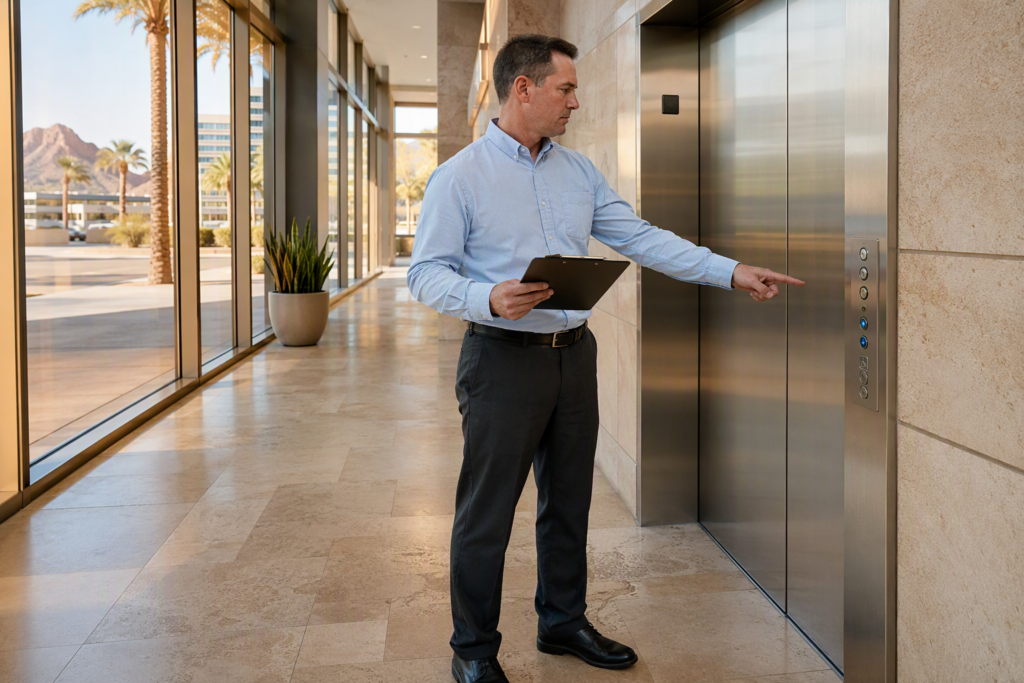
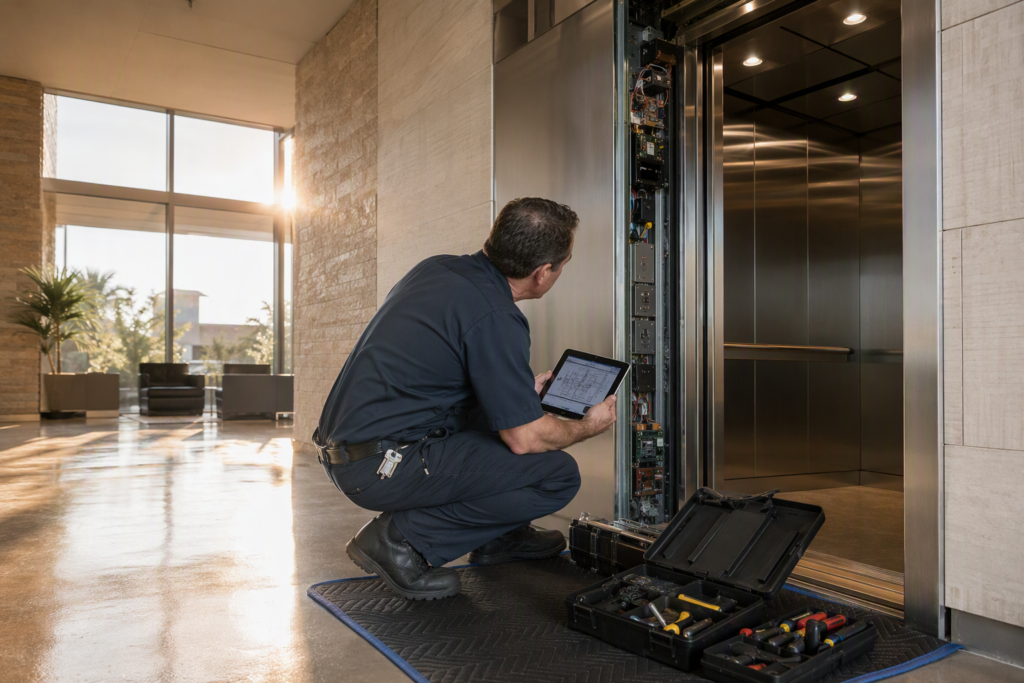
- Commission a professional equipment assessment. A qualified elevator technician should inspect all major systems — controller, drive, hoistway, pit, cab, door operators, and safety devices — and document condition with written findings.
- Obtain a compliance gap analysis. Identify all current deficiencies relative to the applicable edition of ASME A17.1, ADA requirements, and Arizona state regulations.
- Request parallel proposals. Ask at least one vendor to price both a comprehensive modernization and a full replacement for direct comparison.
- Evaluate total cost of ownership over a ten-year horizon. Include projected maintenance costs, expected downtime, and any anticipated future upgrades in the comparison.
- Consider building context. Planned renovations, lease timelines, and capital budget cycles should all inform timing.
- Verify vendor qualifications. Confirm that any contractor performing the work is authorized to operate in Arizona and will pull the required permits.
- Make a decision in writing with documented rationale. This protects the building owner and creates a record for future capital planning.
Can Modernization Be Done in Phases?
Yes. Phased modernization is a common approach for buildings with budget constraints or high elevator dependency. In a phased approach, the most critical components — typically safety devices and controls — are addressed first, with cab interiors, door operators, or fixtures scheduled in subsequent budget cycles. This strategy allows compliance gaps to be closed incrementally while spreading capital expenditure over multiple years. The tradeoff is that the elevator may experience multiple shorter outages rather than one consolidated downtime event, and coordination between phases requires careful planning to ensure each phase leaves the system in a compliant and operable state.
Is There a General Age Threshold for Choosing Replacement Over Modernization?
No universal age threshold applies to all elevator systems, because equipment condition, maintenance history, and usage intensity vary widely. However, the age of the equipment is a relevant factor when combined with parts availability, compliance status, and structural condition. An elevator that has been well-maintained and has a structurally sound hoistway may be an excellent modernization candidate regardless of age, while a younger elevator in poor condition due to neglect may require more extensive intervention. The right framework is a condition-based assessment, not an age-based rule.
Why Work With an Independent Elevator Service Provider?
Independent elevator service companies, such as Arizona Elevator Solutions, are not affiliated with specific equipment manufacturers or tied to selling particular product lines. This independence has practical consequences for building owners evaluating modernization versus replacement:
- Assessments focus on the building’s actual needs rather than on moving specific inventory
- Proposals can incorporate components from multiple manufacturers to optimize performance and price
- Ongoing maintenance is not contingent on purchasing a specific system type
- Advice on timing — when to modernize, when to replace, when to defer — is not influenced by sales incentives
Arizona Elevator Solutions serves commercial, residential, and institutional clients throughout Arizona, providing assessments, modernization project management, and ongoing maintenance services.
Get a Free Elevator Assessment from Arizona Elevator Solutions
The modernization versus replacement decision is too consequential to make without a professional equipment assessment. Arizona Elevator Solutions offers free elevator assessments to help building owners understand their current equipment condition, compliance status, and the realistic costs of both paths — before any commitment is made.
Contact Arizona Elevator Solutions for a free elevator assessment: 480-557-7600
Need elevator service you can rely on? Arizona Elevator Solutions is ready to help.