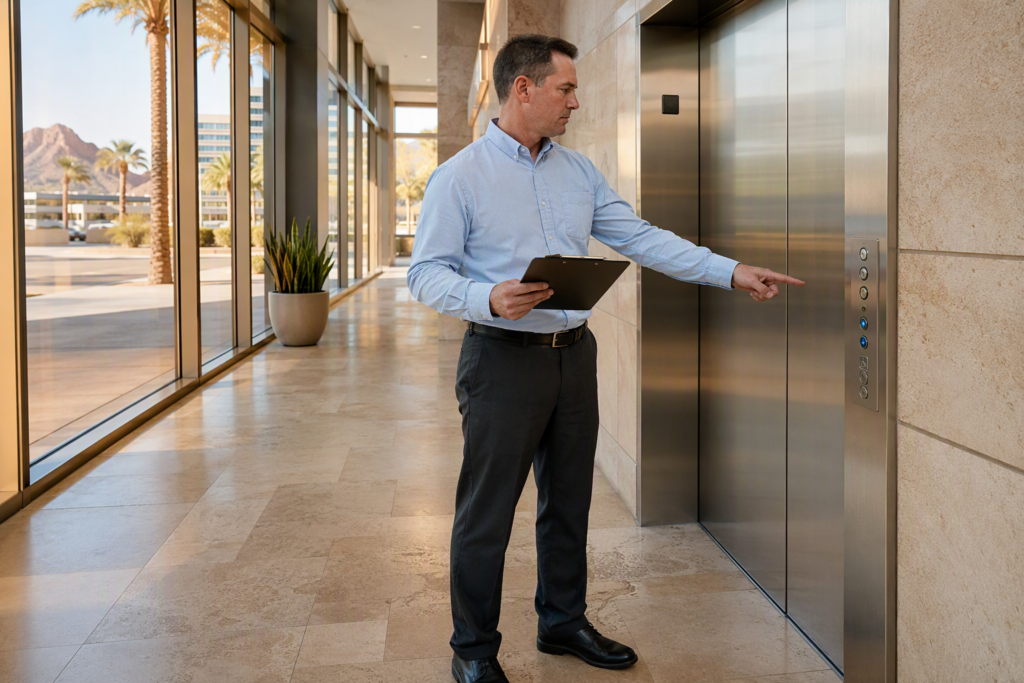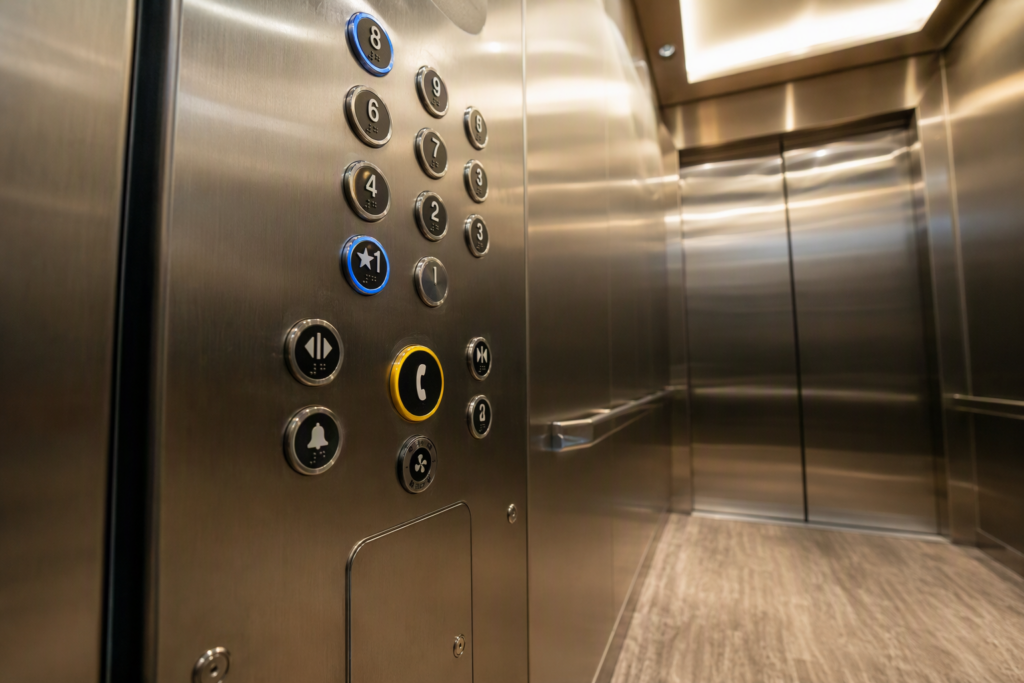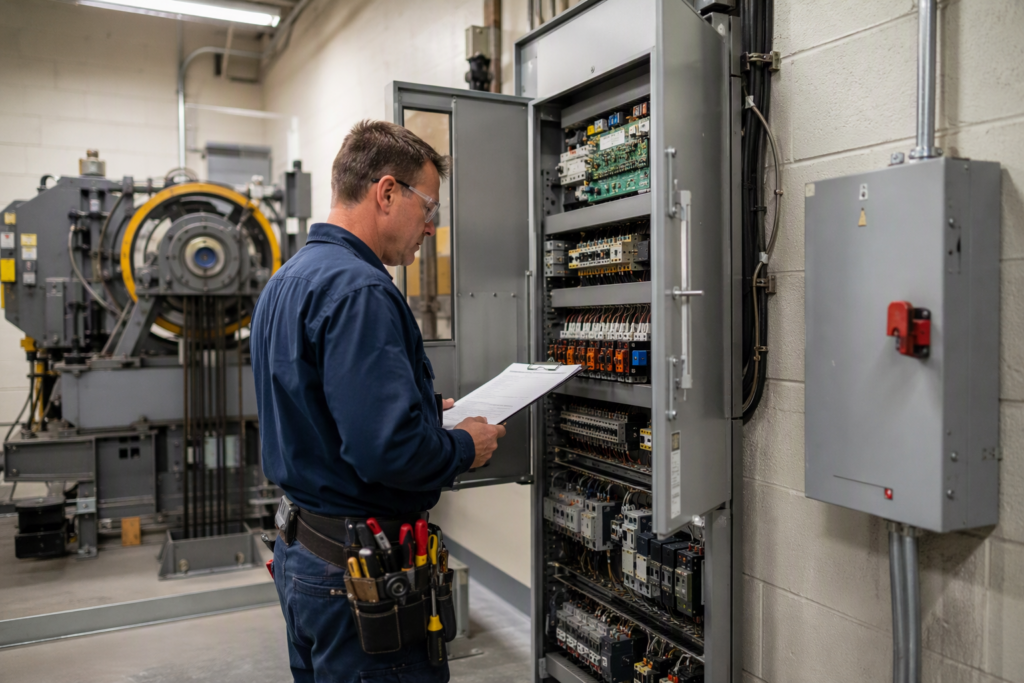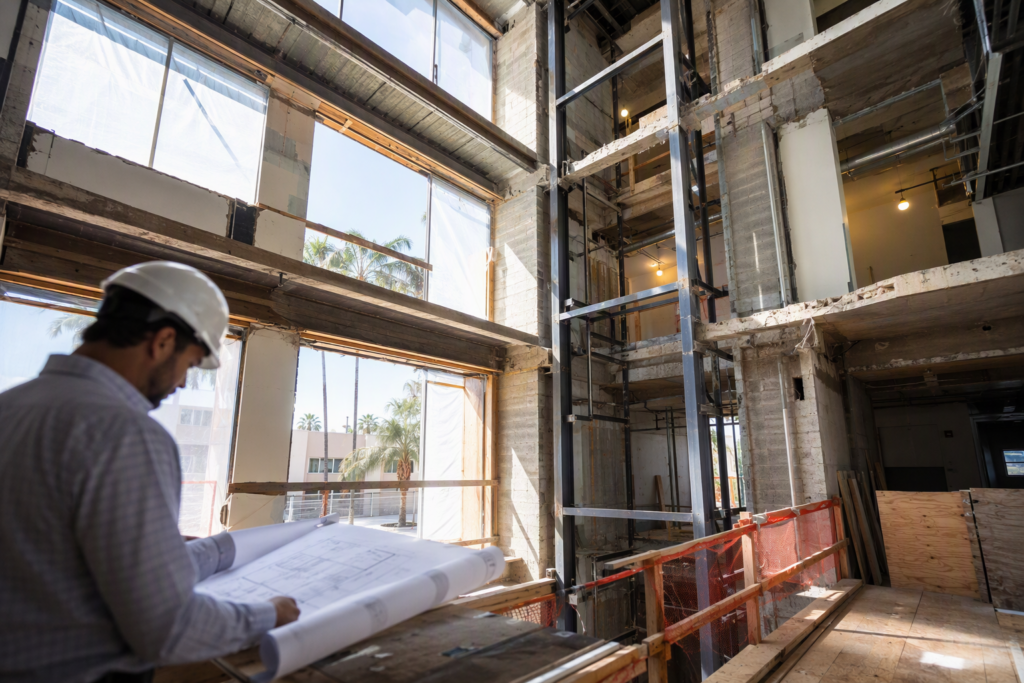
If your building’s elevator is aging, unreliable, or out of compliance with current safety codes, modernization is likely on the table. But before a property manager or building owner can commit to a project, two questions tend to dominate every early conversation: How long will this take? and Will my tenants and residents be stranded? This guide answers both in detail — covering scope types, timeline variables, compliance requirements, and proven strategies for managing downtime.
—
What Is Elevator Modernization, and Why Does It Matter?
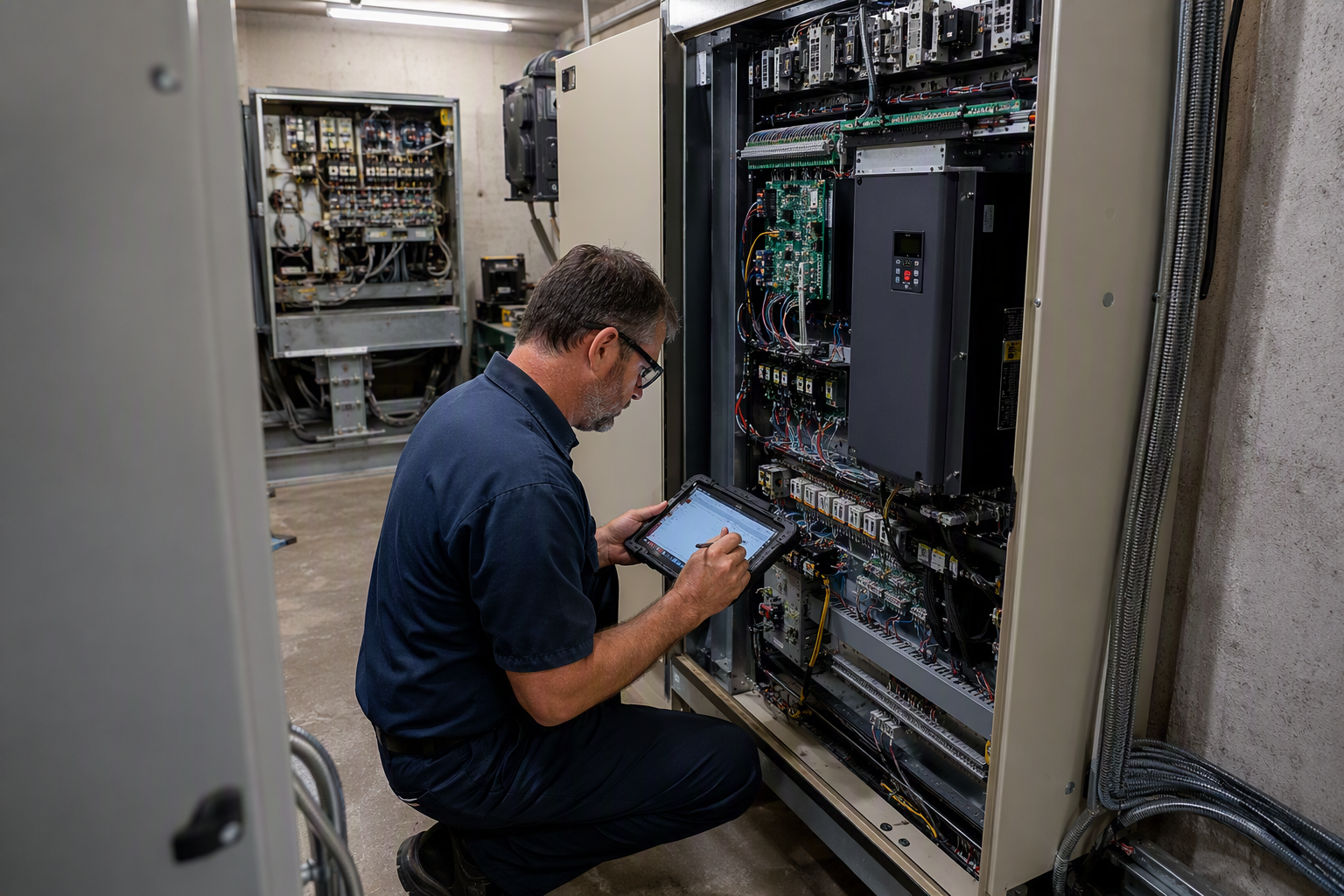
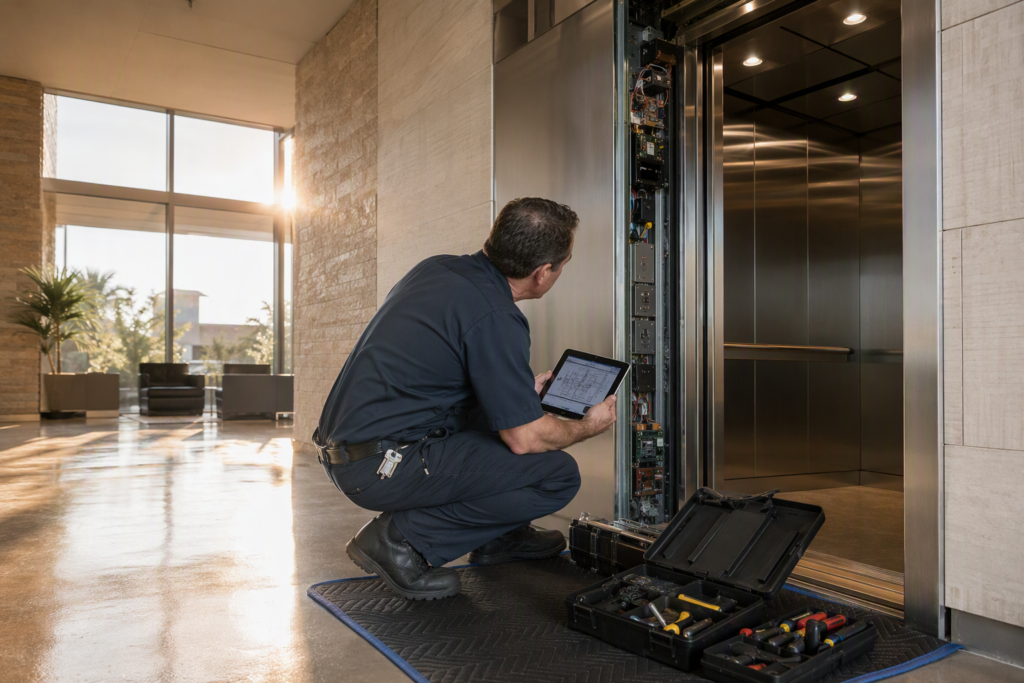
Elevator modernization is the partial or complete replacement of an elevator’s mechanical, electrical, or cosmetic systems — without necessarily removing the entire hoistway or structure. Modernization projects can range from replacing outdated controls and drive systems to full cab refurbishment, door operator upgrades, machine room improvements, and safety system overhauls.
Unlike routine maintenance, modernization typically addresses components that have reached the end of their useful service life or that no longer meet current code requirements. In 2026, compliance with the ASME A17.1 Safety Code for Elevators and Escalators and relevant state and local amendments continues to be a primary driver of modernization projects across the country, including in Arizona.
Modernization also intersects with accessibility law. Buildings subject to ADA (Americans with Disabilities Act) requirements must ensure that elevator systems provide accessible service, and a modernization project is often the right opportunity to bring older equipment into full compliance.
—
How Long Does Elevator Modernization Actually Take?
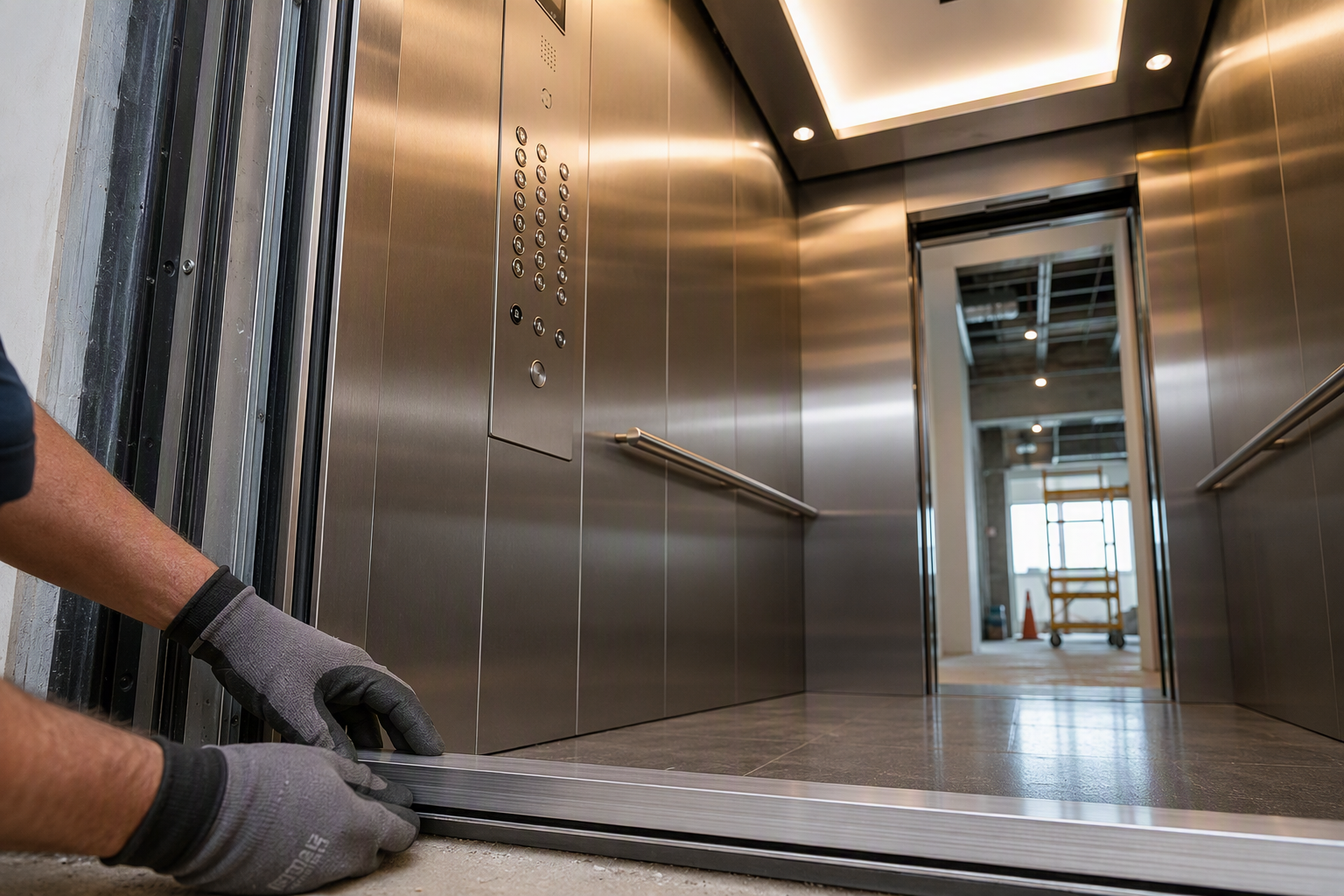
There is no single universal answer — timeline depends heavily on the scope of work, equipment lead times, local permitting, and building-specific conditions. That said, modernization projects generally fall into three broad categories:
| Modernization Scope | Typical Duration | Elevator Downtime | Primary Drivers |
|---|---|---|---|
| Controls & Drive System Only | Several days to a few weeks | Moderate — elevator out of service during active work phases | Aging controller, outdated relay logic, drive efficiency |
| Partial Modernization (doors, cab, safety devices) | A few weeks to two months | Significant — extended out-of-service periods | Door operator failure, cab wear, safety code compliance |
| Full Modernization (machine, controls, cab, doors, safety) | Two to six months or longer | Extended — may require complete shutdown for the project duration | End-of-life equipment, major code violations, complete system failure risk |
These ranges reflect general industry practice. Actual duration at any specific building will vary based on equipment availability, contractor scheduling, permit processing times in the local jurisdiction, and unforeseen conditions discovered once work begins.
—
What Factors Most Affect the Modernization Timeline?
Several variables can extend or compress a modernization schedule:
- Equipment Lead Times: Custom or legacy-compatible components may have long lead times from manufacturers. Supply chain conditions in 2026 continue to affect delivery windows for specialty parts.
- Permit Processing: Most jurisdictions require permits before modernization work begins and an inspection before the elevator returns to service. Arizona’s local permitting timelines vary by municipality.
- Number of Elevators in the Building: A multi-elevator building has more scheduling flexibility — one unit can be taken offline while others remain operational.
- Scope Discoveries: Once equipment is disassembled, contractors often identify additional code deficiencies or wear that must be addressed before the elevator can pass inspection.
- Contractor Availability: Experienced, certified modernization teams have booked schedules. Starting the vendor selection process early improves scheduling flexibility.
- ADA and Code Compliance Requirements: If the project triggers a full accessibility review under ADA or requires conformance to the latest edition of the ASME A17.1 Safety Code, additional scope may be added mid-project.
—
Will My Building Be Without an Elevator During Modernization?
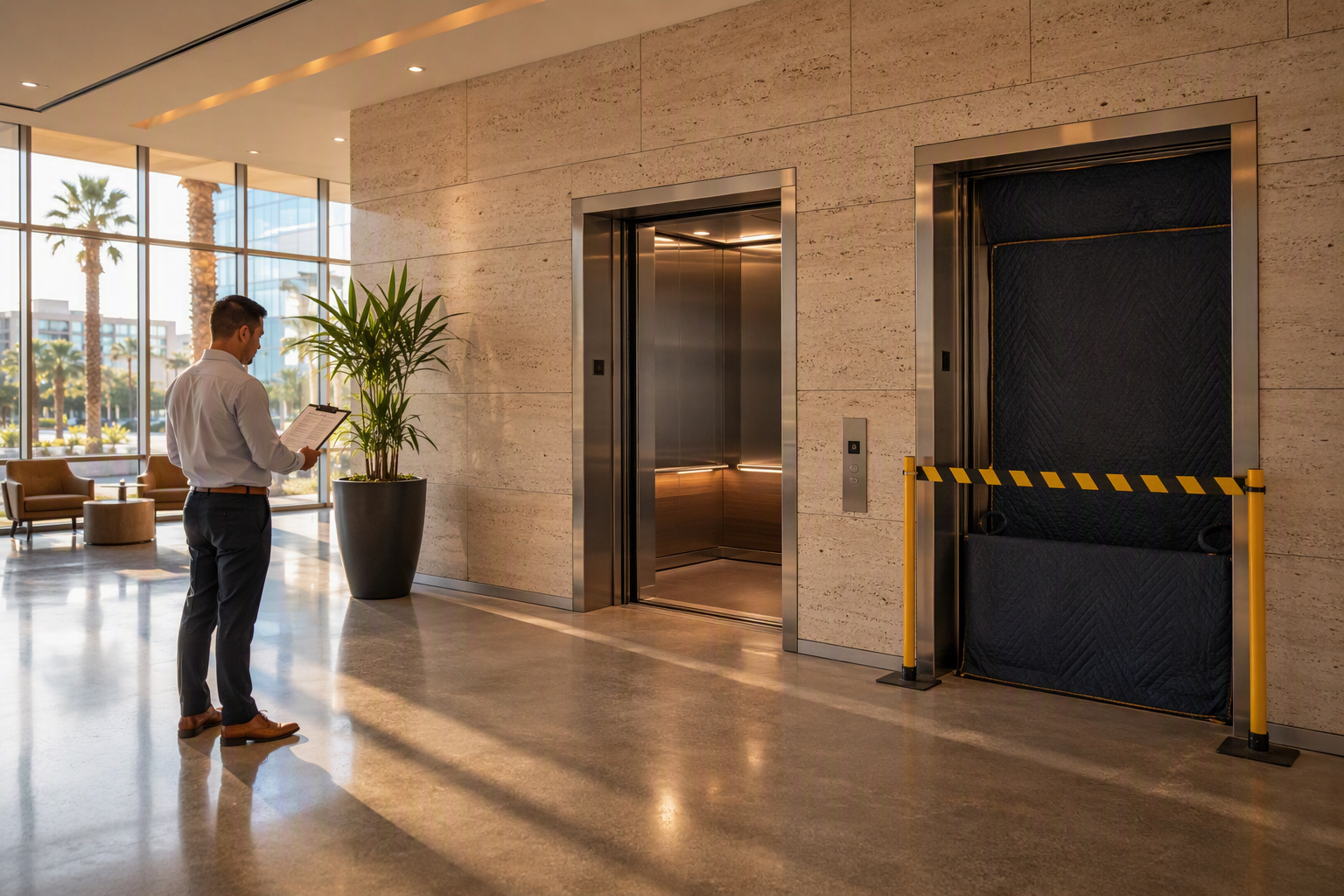
In most cases, yes — at least for some portion of the project. The extent of downtime depends on scope and building configuration:
| Building Type | Single Elevator | Multiple Elevators |
|---|---|---|
| Impact of Full Modernization | Complete loss of elevator service for the project duration | Reduced service capacity; phased work can keep at least one unit running |
| ADA Concern | High — accessible route may be temporarily interrupted; consult ADA requirements | Manageable — accessible service can often be maintained on alternate unit |
| Tenant Communication Urgency | Critical — early, detailed notice required | Important — notice still required; less crisis-level urgency |
For single-elevator buildings — which are common in smaller commercial properties and residential mid-rises across Arizona — complete downtime during modernization is often unavoidable. In these situations, proactive communication and logistical accommodations become the most important tools a property manager has.
—
How Should Building Managers Prepare Tenants for Elevator Downtime?
Managing tenant and resident disruption is as important as managing the technical project itself. The following steps represent best practice for preparing occupants before and during elevator modernization:
- Notify in writing as early as possible. Provide written notice to all tenants and residents — including accessible format versions — well in advance of the project start date. Include anticipated start date, expected duration, and contact information for questions.
- Identify vulnerable occupants. Determine which residents or tenants require elevator access due to mobility limitations, medical equipment, or other needs. Develop individual accommodation plans where appropriate.
- Coordinate with local emergency services. Notify fire, EMS, and building security of the elevator outage period so they can plan access routes accordingly.
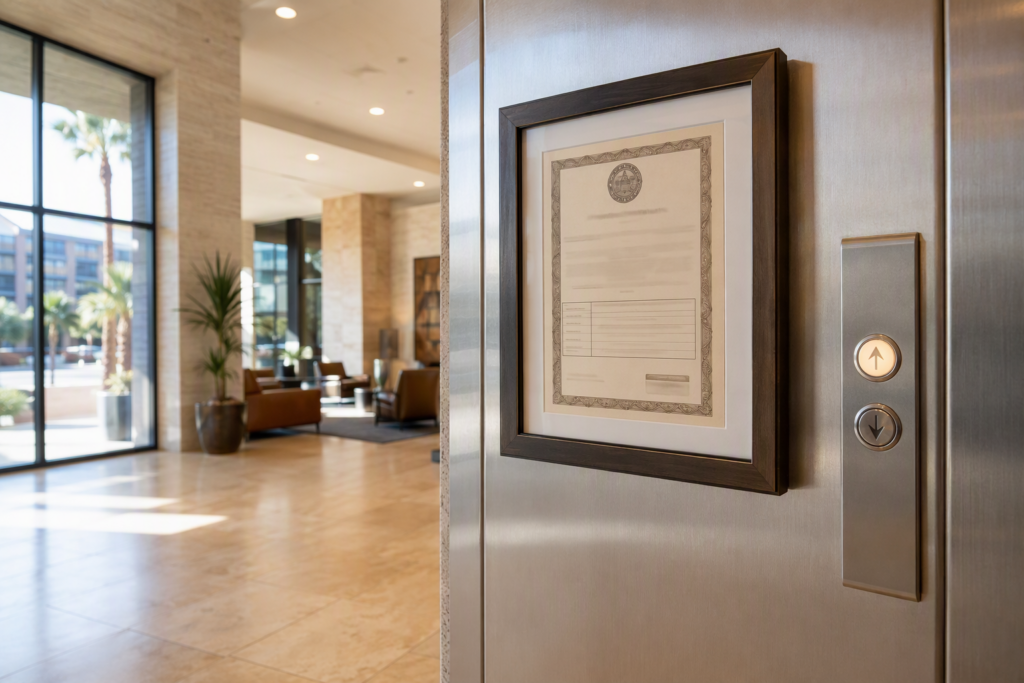
- Post physical notices throughout the building. Place notices at elevator doors on every floor, at building entrances, and in mail areas to ensure all occupants are informed.
- Establish a dedicated information channel. Provide a phone number, email address, or building management portal where occupants can ask questions and receive project updates.
- Schedule high-impact work strategically. Work with your modernization contractor to schedule the noisiest or most disruptive phases of work during standard business hours and avoid peak move-in/move-out periods.
- Arrange temporary accommodations where feasible. For residential buildings, this may include temporary ground-floor unit assignments for residents who cannot use stairs.
- Provide a project timeline and update it regularly. Share weekly or bi-weekly updates on project progress, any delays, and revised estimated completion dates.
—
What Are the Pros and Cons of Full Versus Partial Elevator Modernization?
| Factor | Full Modernization | Partial Modernization |
|---|---|---|
| Upfront Cost | Higher | Lower |
| Downtime Duration | Longer | Shorter per project phase |
| Long-Term Reliability | Highest — all systems renewed | Moderate — older components may still fail |
| Code Compliance | Comprehensive — addresses all current requirements | May require follow-up work as codes evolve |
| Future Maintenance Cost | Lower — modern parts are more available | Potentially higher — legacy components remain |
| Disruption Frequency | One-time major disruption | Risk of repeated disruption as remaining components age |
| Property Value Impact | Strong positive impact | Moderate positive impact |
| Best For | Elevators with multiple aging systems; buildings planning long-term holds | Newer equipment with isolated failure; budget-constrained projects |
—
What Codes and Regulations Govern Elevator Modernization in Arizona?
Elevator modernization in Arizona must comply with applicable editions of the ASME A17.1 Safety Code for Elevators and Escalators, which is the foundational safety standard governing elevator design, construction, installation, operation, inspection, testing, maintenance, alteration, and repair in the United States. Arizona adopts this code at the state level, and local jurisdictions may apply additional requirements.
Any alteration to an elevator — which is how modernization work is typically classified — triggers a fresh compliance review. This means modernization can require a building to bring previously grandfathered equipment into conformance with current code provisions, which sometimes expands the scope of work beyond what was originally planned.
Accessibility requirements under the ADA must also be evaluated, particularly for public accommodations and commercial facilities. During the construction period, building owners should consult with their legal counsel regarding ADA obligations when elevator service is temporarily unavailable.
Worksites involving elevator contractors also fall under OSHA regulations governing construction safety, confined space work, and hazardous energy control (lockout/tagout). Building owners should confirm that any contractor performing modernization work demonstrates full OSHA compliance.
—
How Does the Permitting and Inspection Process Affect the Timeline?
Permitting is one of the most commonly underestimated factors in elevator modernization timelines. Most Arizona jurisdictions require:
- A permit application before modernization work begins, often including engineering drawings and equipment specifications
- Inspections at defined stages of the work
- A final inspection and approval before the elevator is returned to service
Permit processing times vary significantly by municipality and current workload. A project that is mechanically complete may still be out of service for additional days or weeks while waiting for the final inspection appointment. Experienced modernization contractors who work regularly in Arizona jurisdictions are familiar with local processes and can help anticipate and navigate these timelines.
—
Should a Building Owner Choose an Independent Service Provider or a Manufacturer-Affiliated Contractor?
| Factor | Independent Provider | Manufacturer-Affiliated Contractor |
|---|---|---|
| Equipment Flexibility | Can source from multiple manufacturers; broader options | May be limited to proprietary brand equipment |
| Pricing Transparency | Typically more competitive; no captive service obligation | Can include proprietary lock-in for ongoing service |
| Scope of Brands Serviced | Wide — can work on most major elevator brands | Narrow — optimized for own brand |
| Ongoing Service Relationship | Independent ongoing maintenance with owner’s choice | May require proprietary service contract post-modernization |
| Local Market Knowledge | Strong in local permitting and inspection processes | Varies by region |
For Arizona building owners, Arizona Elevator Solutions is an independent, certified elevator service provider offering modernization assessments and project planning across the state. As an independent provider, Arizona Elevator Solutions is not tied to a single equipment manufacturer, allowing the team to evaluate and recommend the solution that best fits each building’s needs, budget, and timeline — rather than a solution driven by brand affiliation.
—
What Questions Should Building Owners Ask Before Signing a Modernization Contract?
Before committing to any modernization project, building owners and property managers should ask prospective contractors the following:
- What specific scope of work is included, and what is explicitly excluded?
- What is the estimated project timeline, and what factors could extend it?
- How will the contractor communicate delays or scope changes?
- Who is responsible for pulling permits and scheduling inspections?
- What equipment brands and components will be used?
- Does the contract include a warranty on parts and labor, and for how long?
- Will the building be required to use the same contractor for ongoing maintenance after modernization?
- How does the contractor handle OSHA compliance and worksite safety?
—
What Is the Return on Investment for Elevator Modernization?
Modernization investments deliver value across several dimensions, even if the exact return varies by building and market:
- Reduced Emergency Repair Costs: Aging elevator systems tend to require increasingly frequent and expensive emergency repairs. Modernization replaces the components most likely to fail.
- Energy Efficiency: Modern drive systems and controls typically consume less energy than legacy equipment, contributing to lower operating costs over time.
- Reduced Liability Exposure: Elevators that do not meet current ASME A17.1 requirements or ADA standards present liability risk. Bringing equipment into compliance reduces that exposure.
- Tenant Retention and Attraction: Reliable, modern elevator service is a quality-of-life factor for residential tenants and an operational expectation for commercial ones.
- Property Valuation: Updated building systems are a positive factor in property appraisals and due diligence for financing or sale.
—
How Can Arizona Elevator Solutions Help With Modernization Planning?
Arizona Elevator Solutions provides elevator modernization consultation and project management services for commercial, residential, and mixed-use buildings throughout Arizona. The team assists building owners and property managers in evaluating the current condition of their elevator systems, understanding code compliance requirements, and developing a modernization scope and timeline that minimizes tenant disruption.
As a certified, independent elevator service company, Arizona Elevator Solutions brings familiarity with Arizona’s permitting landscape, local inspection processes, and the specific challenges of managing elevator downtime in occupied buildings. The company works with equipment from multiple manufacturers, giving building owners access to a broader range of modernization options.
—
Ready to Plan Your Elevator Modernization?
Don’t let aging elevator equipment put your building at risk or leave tenants without service unexpectedly. A proactive modernization plan — developed with the right team — minimizes downtime, manages compliance, and protects your investment.
Contact Arizona Elevator Solutions for a free elevator assessment: 480-557-7600
Need elevator service you can rely on? Arizona Elevator Solutions is ready to help.