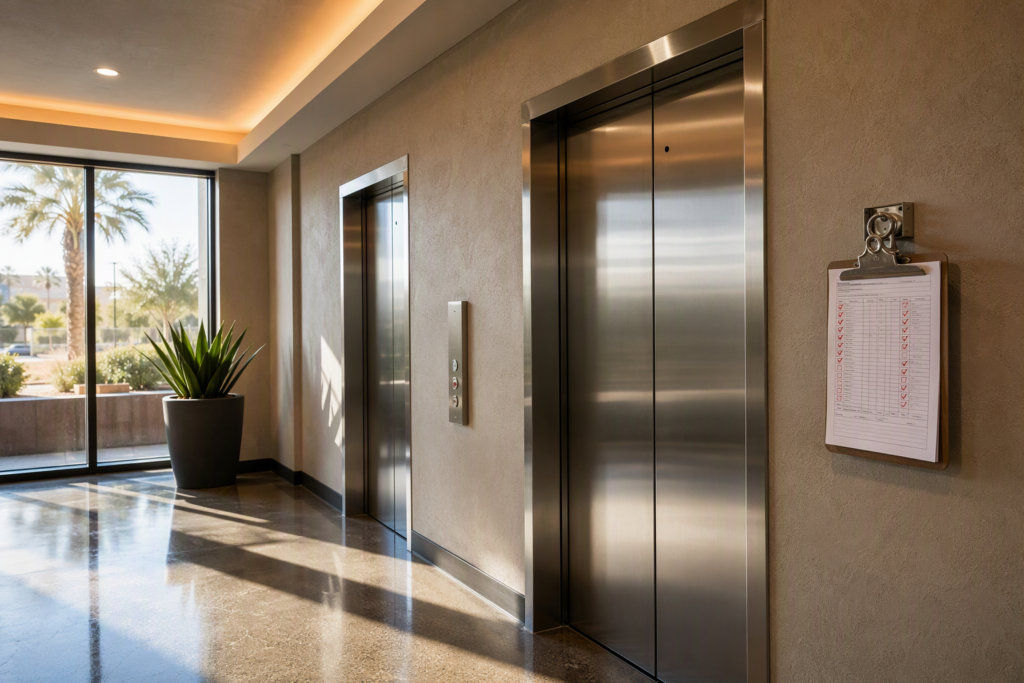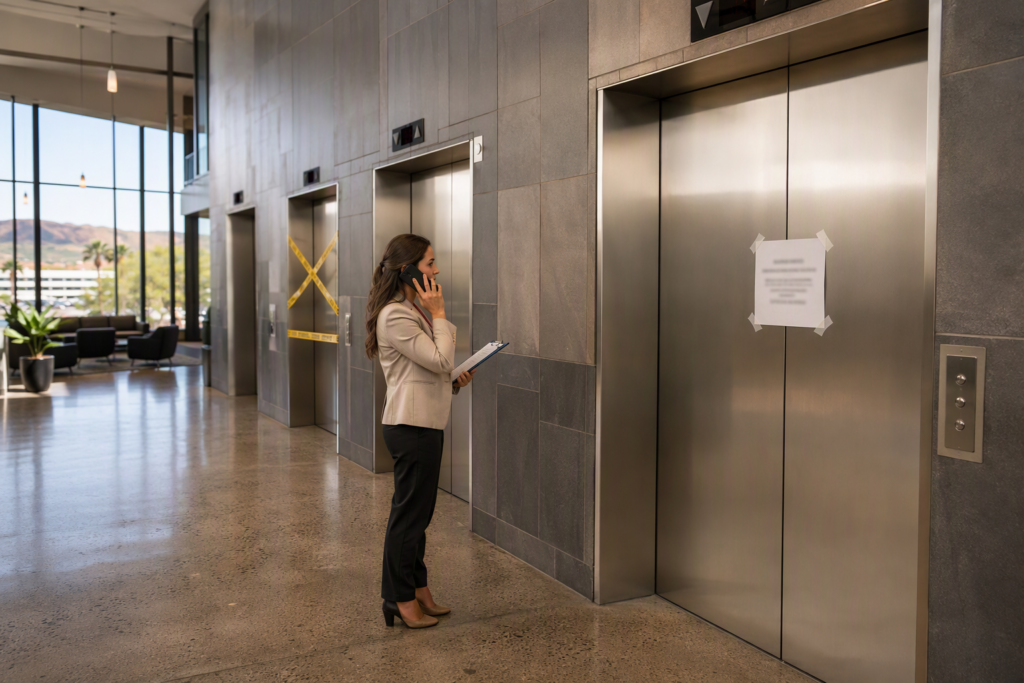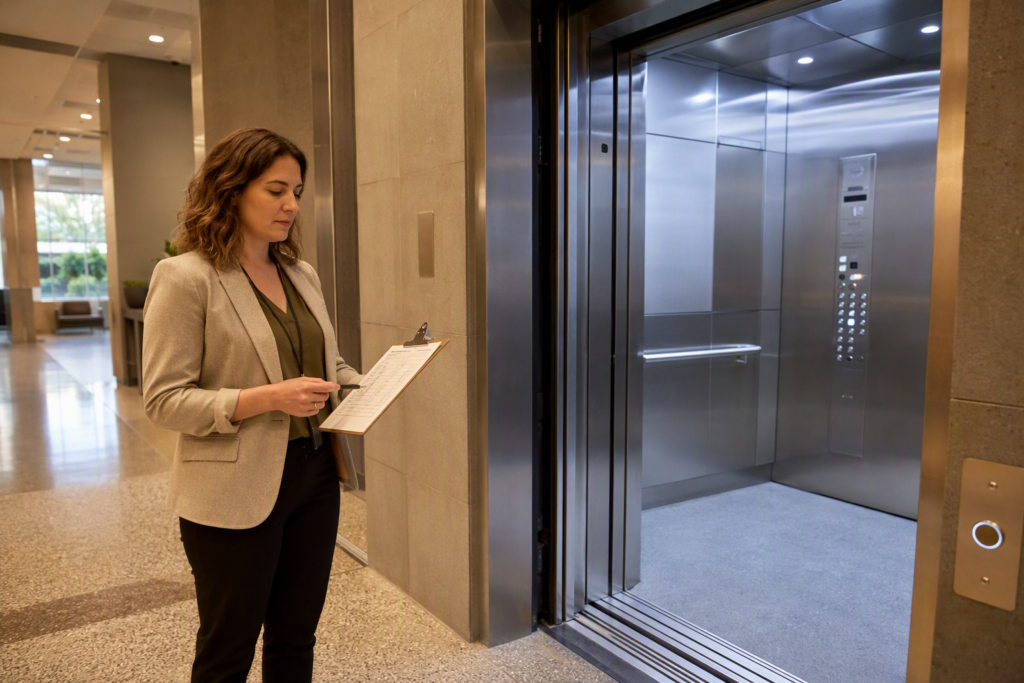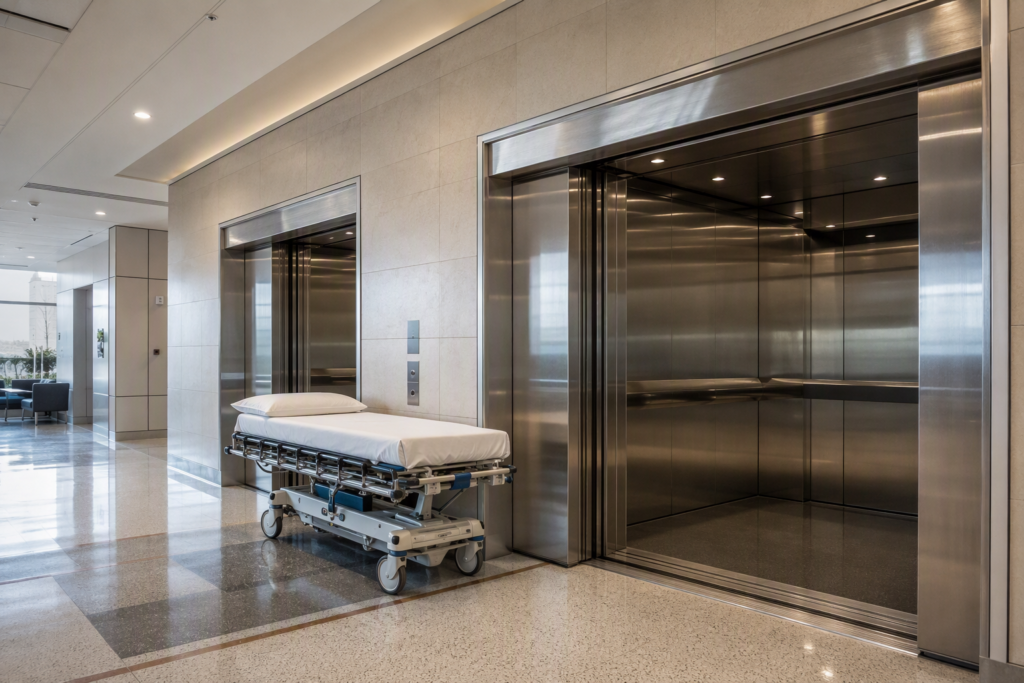
Military installations in Arizona rely on elevators, platform lifts, and other conveyances just as any commercial or government facility does — often under heavier daily use, in demanding desert heat, and with strict facility compliance requirements. Preventative maintenance keeps those vertical transportation systems safe, operational, and legally compliant with both federal safety codes and Arizona state statute. The sections below answer the most commonly asked questions about elevator preventative maintenance programs at military bases in Arizona.
What Does Preventative Maintenance for Military Base Elevators Actually Include?
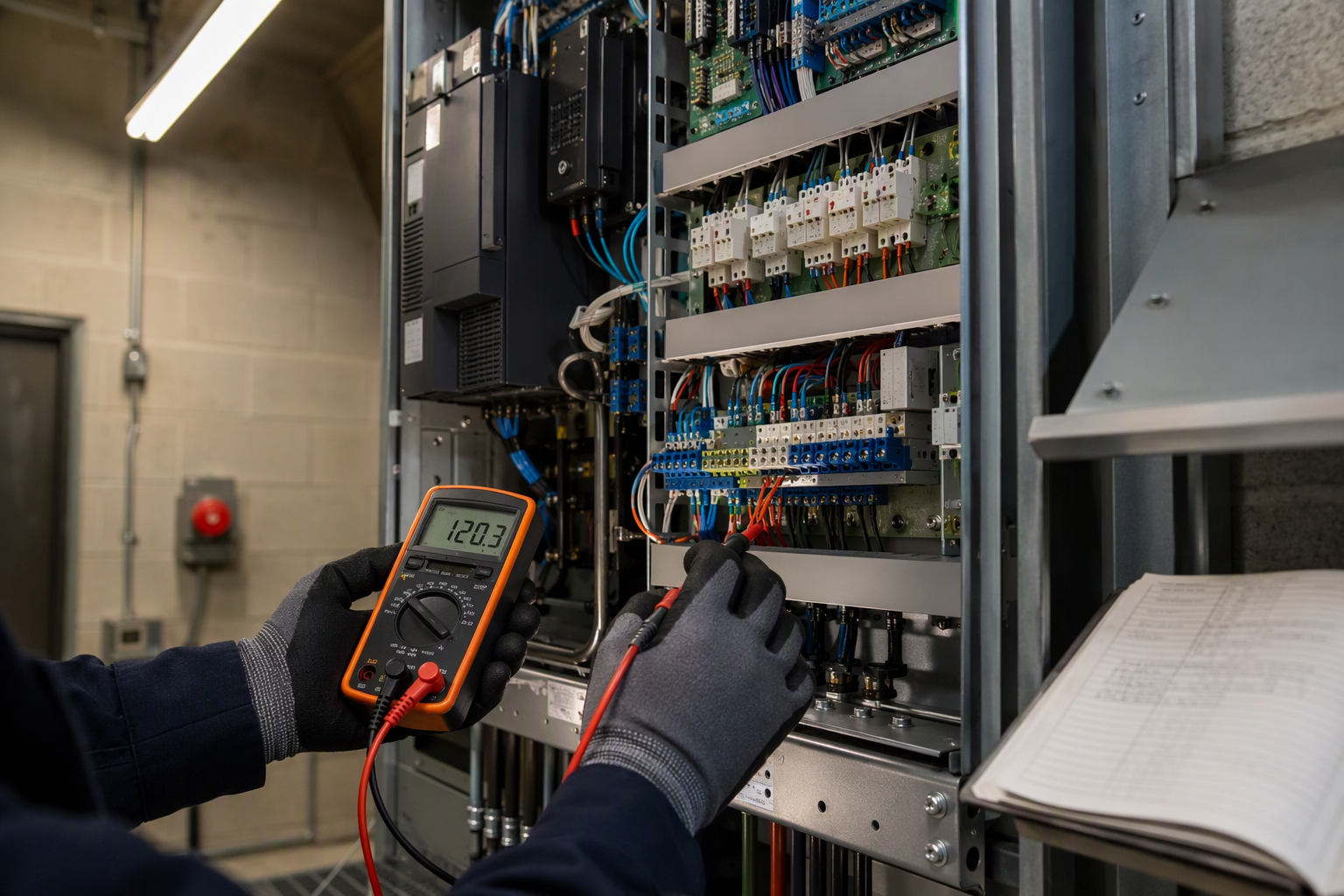
Preventative maintenance (PM) for military base elevators is a structured, recurring service program that inspects, tests, lubricates, adjusts, and documents every major component of a conveyance before a failure occurs.
A comprehensive PM visit covers door operator mechanisms, hoist ropes or hydraulic cylinders, buffers, safeties, governor systems, controller circuitry, machine room environments, cab interiors, emergency lighting, and communication devices. On a military installation, PM programs also address emergency evacuation features, firefighters’ service operation, and any mission-critical redundancy requirements specified by the facility manager. Technicians record findings on standardized maintenance logs that become part of the conveyance’s regulatory documentation trail required under Arizona Administrative Code R20-5-502 through R20-5-515.
Are Elevators at Military Bases Subject to Arizona State Elevator Law?
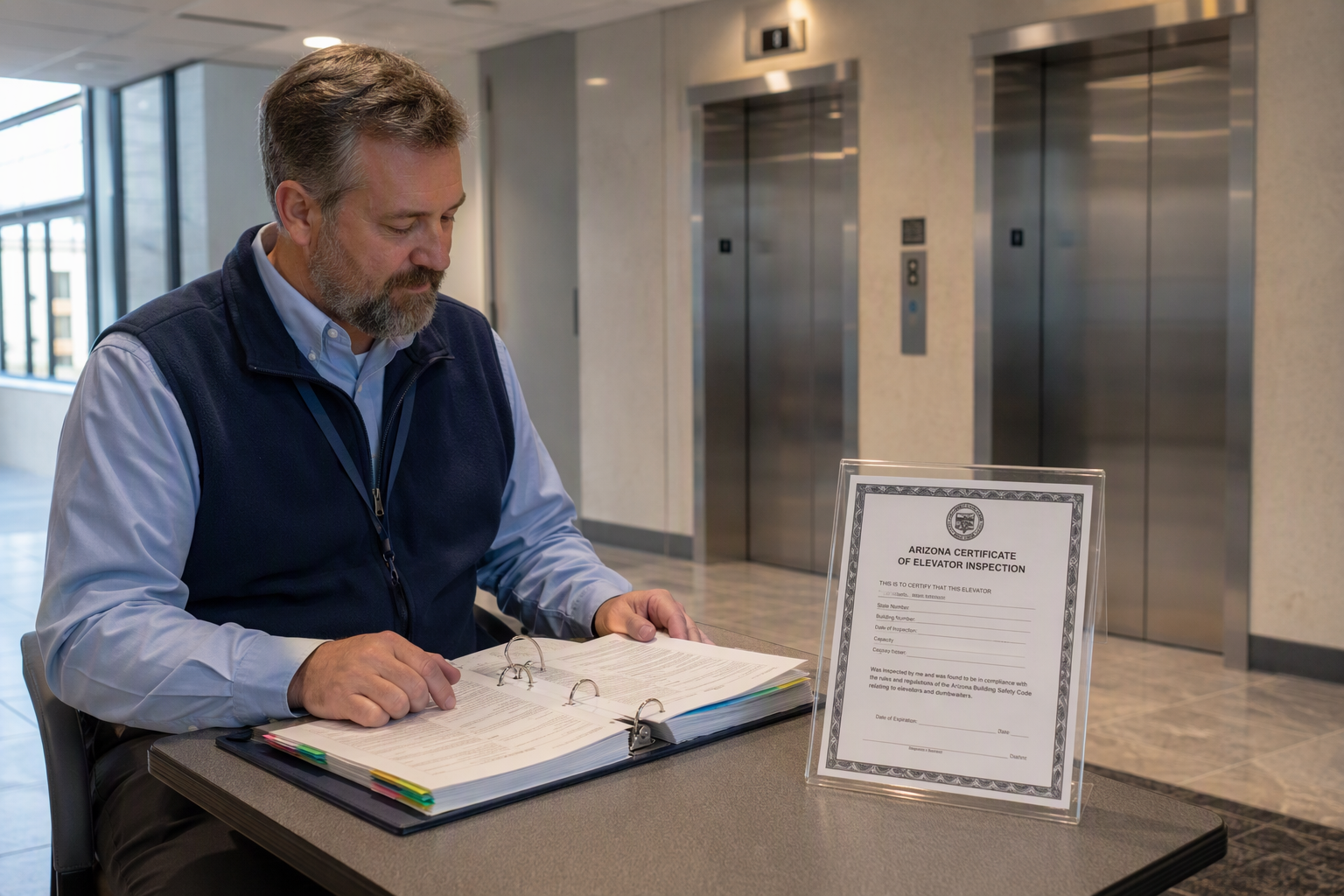
Yes — elevators on military installations located within Arizona’s borders are generally subject to Arizona elevator safety statute unless federal law expressly preempts state jurisdiction for a specific installation or structure.
Under A.R.S. §§ 23-491 through 23-491.16, every conveyance operating in Arizona must hold a current annual certificate of inspection issued by the state. The Industrial Commission of Arizona (ICA) Elevator Division — which took over administration of elevator safety from the former ADOSH Elevator Safety Section on September 12, 2026, pursuant to Laws 2026, Ch. 73 — is the authority having jurisdiction (AHJ) for conveyances outside the City of Phoenix. Within Phoenix city limits, the City of Phoenix Elevator Section of the Planning and Development Department performs inspections. Military facility managers should verify with their installation’s legal and facilities offices whether any specific federal preemption applies to their conveyances, but in practice most installations work within state compliance frameworks.
Which Elevator Safety Code Applies to Military Base Elevators in Arizona in 2026?
Arizona has adopted the ASME A17.1/CSA B44, 2019 edition as the governing safety code for elevators installed, repaired, or altered on or after January 1, 2023.
The ASME A17.1 Safety Code for Elevators and Escalators establishes design, installation, operation, inspection, testing, and maintenance requirements. Equipment installed before January 1, 2023 continues to operate under the edition in force at the time of installation, subject to Arizona Administrative Code R20-5-502 through R20-5-515. Lawfully installed older conveyances may remain in service unless the ICA Elevator Division’s elevator chief determines the continued use presents a hazard to life, health, or property. PM programs should account for both the current adopted code and the retroactive standards applicable to each unit on a given installation.
How Often Must Elevators at a Military Base Be Inspected in Arizona?
Arizona law requires that every conveyance be inspected before it first enters service, after any modification or alteration, and at least annually thereafter.
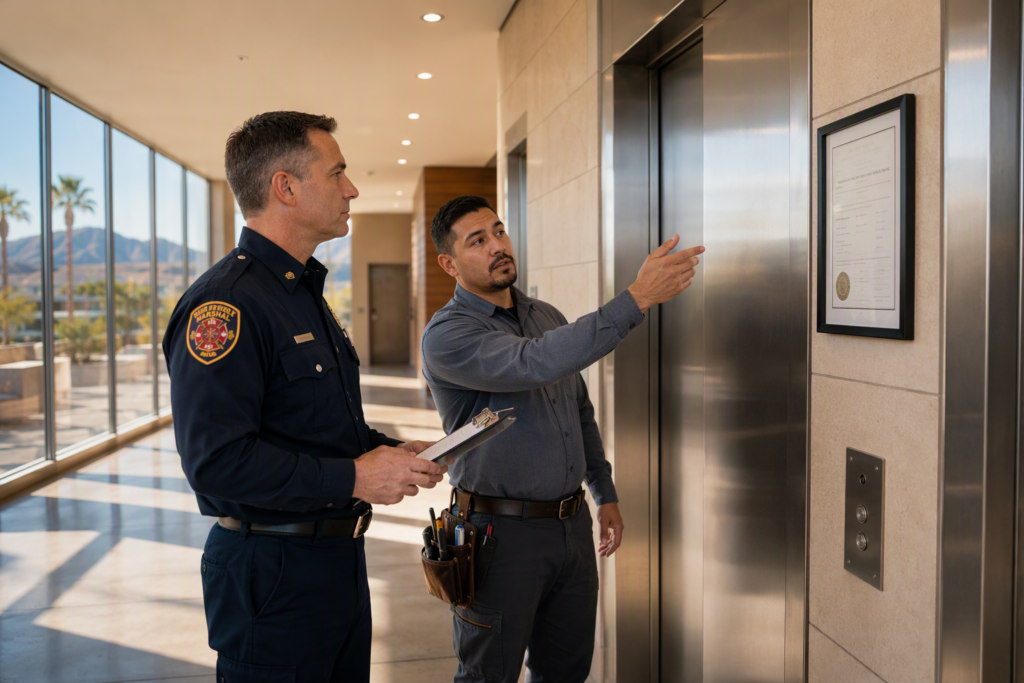
The annual inspection results in a certificate of inspection that the owner must keep at the same location as the conveyance and make available on request. The state serial number or certificate must also be posted in or near the conveyance in an easily accessible location. A preventative maintenance program designed around a 12-month inspection cycle — with scheduled quarterly or semi-annual PM visits between annual inspections — keeps all mechanical components within tolerance and reduces the likelihood of a failed state inspection or an unplanned shutdown.
Who Is Authorized to Inspect Elevators on a Military Installation in Arizona?
Inspections may be performed by Industrial Commission of Arizona Elevator Division inspectors or by private elevator inspectors authorized by the ICA who meet Arizona’s registration and continuing-education requirements.
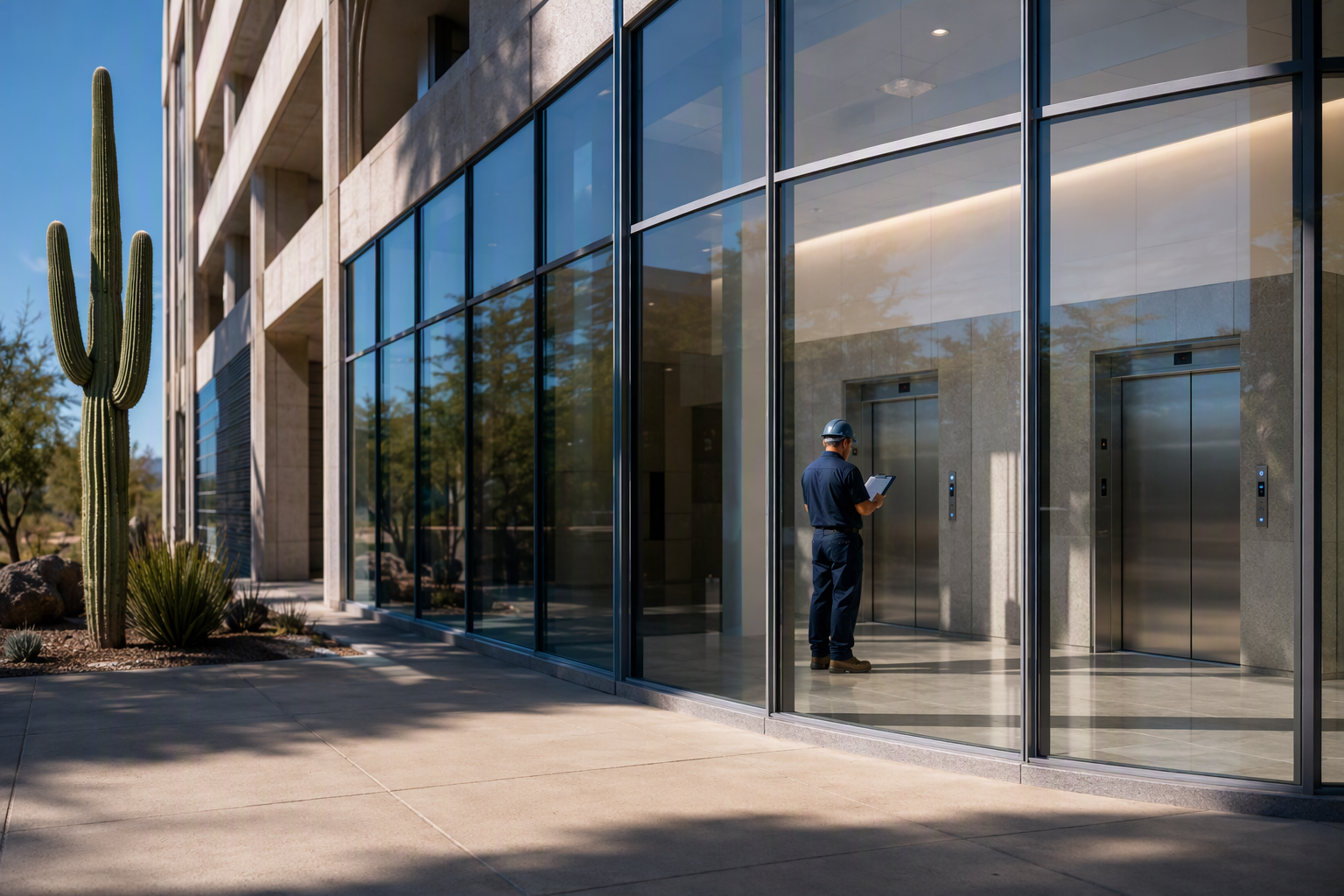
Arizona allows owners to hire a private elevator inspector registered with the ICA to conduct initial or annual inspections. That inspector must re-register with the commission every year and demonstrate at least eight hours of approved continuing education. Critically, a private inspector may not inspect any conveyance that was owned, operated, or last serviced by the inspector, a company the inspector owns, or the inspector’s employer. Military facility managers should confirm that any inspection arrangement maintains this independence. Using a private inspector does not relieve the owner or operator of their legal obligations under Arizona statute.
What Are the Elevator Contractor Licensing Requirements in Arizona?
Contractors who install or repair elevators, dumbwaiters, escalators, and moving walks in Arizona must hold an R-12 (residential) or C-12 (commercial) elevator license classification issued by the Arizona Registrar of Contractors (ROC).
The ROC licenses the contracting entity; it does not issue the annual certificate of inspection — that responsibility remains with the ICA Elevator Division. Military facility managers procuring preventative maintenance services should verify that any prospective elevator service contractor holds a valid R-12 or C-12 classification before executing a service agreement. Failure to use a licensed contractor can expose the installation owner to liability under Arizona law and jeopardize the conveyance’s certificate of inspection.
What Is the Arizona Firefighters Service (AZFS) Key Requirement, and Why Does It Matter for Military Facilities?
Any Arizona conveyance equipped with firefighters’ emergency operation must use the Arizona Firefighters Service (AZFS) key — a standardized key required statewide to ensure first responders can operate elevators during an emergency.
Military installations with multi-story buildings, hospitals, barracks, or administrative towers must ensure that elevators with firefighters’ service features are keyed to the AZFS standard. A PM program should include verification that firefighters’ service switches function correctly, that the AZFS key cylinder is properly installed, and that Phase I and Phase II emergency operations meet the requirements of the adopted ASME A17.1-2019 code. This is particularly important on installations that have undergone alteration or equipment modernization, where key compatibility and relay logic can unintentionally be disrupted.
What Should a Military Base Do If an Elevator Is Involved in an Accident or Becomes Disabled?
- Immediately secure the affected conveyance and prevent further passenger use until the cause is assessed.
- Ensure any injured persons receive prompt medical attention and that the scene is preserved for investigation.
- Notify the Industrial Commission of Arizona Elevator Division within 24 hours of any accident that injures a person or disables a conveyance, as required under A.R.S. §§ 23-491 through 23-491.16.
- Contact the installation’s licensed elevator service contractor to assess the equipment and determine the cause.
- Document all findings, witness accounts, and maintenance records in writing.
- Do not return the conveyance to service until authorized by the AHJ or until an inspection confirms safe operating condition.
- File any required internal military facility incident reports alongside the state notification.
A robust preventative maintenance program is the most reliable way to reduce the probability of reaching this sequence of events. Documented PM records also demonstrate due diligence during any post-incident review.
What Notifications Are Required Before Altering or Installing New Elevators on a Military Base in Arizona?
Arizona owners must notify the ICA Elevator Division at least 90 days before installing, relocating, or altering any conveyance.
Military facility managers planning a building renovation, equipment modernization, or new vertical transportation installation must submit advance notification to the ICA Elevator Division before work begins. Any alteration also triggers a requirement for a new inspection before the conveyance returns to service. This notification requirement applies even when the work is performed under a federally funded construction contract — the 90-day advance notice is a state statutory obligation tied to the conveyance, not the funding source. Every conveyance in Arizona receives a state serial number on a tag fixed to the controller or mainline disconnect; this number follows the unit through its operational life and must be referenced in all state filings.
Does ADA Apply to Elevator Accessibility at Military Installations?
Yes — the Americans with Disabilities Act requires that elevators in covered facilities meet accessibility standards, and military-connected facilities open to the public or to employees with disabilities must comply with ADA elevator provisions.
ADA accessibility requirements address cab dimensions, door timing, floor leveling accuracy, Braille and raised-character buttons, audible signals, and two-way emergency communications. Preventative maintenance directly supports ADA compliance: a cab that drifts off level, a door that closes too quickly, or a communications device that fails puts the facility in violation. PM protocols should include specific ADA functional checks as part of every service visit, and deficiencies should be documented and corrected promptly. Military facility managers should also keep an eye on OSHA standards at OSHA.gov for workplace safety obligations related to elevator machine rooms and pit environments.
How Are Preventative Maintenance Intervals Structured for High-Use Military Elevators?
PM intervals should be calibrated to the specific duty cycle, equipment type, age, and environmental conditions of each conveyance — not applied uniformly across an entire installation.
A heavily used passenger elevator in a barracks or administrative building on a large installation may warrant more frequent PM visits than a low-traffic freight elevator in a storage facility. The ASME A17.1-2019 code establishes maintenance requirements as a baseline; service providers and facility managers should work together to determine visit frequency based on observed wear patterns, manufacturer recommendations, and the consequences of an unplanned outage in a mission-critical location. The table below provides a general benchmark framework for structuring PM programs by equipment type and duty profile.
| Equipment Type | Duty Profile | Suggested PM Frequency | Key Focus Areas |
|---|---|---|---|
| Traction passenger elevator | High use (150+ trips/day) | Monthly | Ropes, brakes, door operators, controllers |
| Traction passenger elevator | Moderate use (50–149 trips/day) | Quarterly | Ropes, safeties, governor, leveling |
| Hydraulic passenger elevator | High use | Monthly to quarterly | Cylinder, fluid levels, valve, pit condition |
| Hydraulic freight elevator | Low to moderate use | Semi-annual | Fluid integrity, door interlocks, capacity labels |
| Platform lift (ASME A18.1) | Variable | Semi-annual to annual | Drive system, safety switches, ADA controls |
| Stairway chairlift (ASME A18.1) | Low use | Annual | Rail, drive belt/chain, safety sensors |
Note: These are suggested benchmarks for planning purposes. Actual intervals should be determined by the licensed elevator contractor based on site-specific conditions and equipment manufacturer specifications. Arizona platform lifts and stairway chairlifts installed, repaired, or altered on or after January 1, 2023 must comply with ASME A18.1-2020.
What Documentation Should a Military Facility Maintain for Its Elevator PM Program?
A military facility should maintain a complete, current documentation package for every conveyance, including the state certificate of inspection, the state serial number tag reference, maintenance logs, test records, and any notifications filed with the ICA Elevator Division.
Arizona law requires the owner to keep the certificate of inspection at the location of the conveyance and make it available on request. Beyond this legal minimum, best practice for a military installation includes maintaining a logbook or electronic service record for each unit showing the date, scope, and technician of every PM visit; parts replaced; and any deficiencies identified along with corrective actions taken. This documentation is essential during state inspections, post-incident reviews, and federal facility audits. Arizona Elevator Solutions structures its PM programs to generate and deliver these records to facility managers after every service visit.
Can a Military Facility Use a Single Elevator Service Provider for Multiple Building Types?
Yes — a licensed elevator contractor can service all conveyance types across a military installation, including passenger elevators, freight elevators, platform lifts, dumbwaiters, and escalators, under a single PM agreement.
Consolidating elevator maintenance under one licensed provider simplifies documentation, ensures consistent service quality, and gives facility managers a single point of contact for compliance questions. The Arizona Registrar of Contractors’ R-12 and C-12 classifications cover elevators, dumbwaiters, escalators, and moving walks — meaning one properly licensed contractor can address the full range of vertical transportation equipment found on a large installation. Arizona Elevator Solutions serves facilities in Phoenix, Tucson, Scottsdale, and Mesa and can structure multi-unit, multi-building PM programs to meet the specific operational and compliance needs of a military installation.
What Should a Military Facility Look for When Evaluating an Elevator PM Contractor?
A qualified elevator PM contractor for a military facility should hold a valid Arizona ROC R-12 or C-12 license, demonstrate familiarity with ASME A17.1-2019 and A18.1-2020 requirements, and have direct experience servicing government and institutional facilities.
Additional evaluation criteria include the ability to provide written PM scopes of work tied to the specific equipment on site, structured documentation packages that satisfy Arizona’s certificate and record-keeping requirements, and clear procedures for 24-hour accident notification to the ICA Elevator Division. Military facilities may also have access control requirements that contractors must accommodate. Reviewing a contractor’s compliance history with the Arizona Registrar of Contractors and the ICA Elevator Division provides an objective basis for comparison before a contract is awarded.
How Does Desert Heat in Arizona Affect Elevator Maintenance Requirements at Military Bases?
Arizona’s extreme summer heat places additional thermal stress on elevator machine rooms, hydraulic fluid, electrical components, and door operators, making climate-related PM checks an essential part of any service program in the Phoenix, Tucson, Scottsdale, and Mesa markets.
Hydraulic elevators are particularly susceptible to fluid viscosity changes at high temperatures, which can affect valve response and piston speed. Machine rooms without adequate ventilation or air conditioning can cause controller overheating and nuisance trips. Exposed outdoor lift equipment may experience accelerated wear on seals and rubber components. A PM program in Arizona should include seasonal checks before peak summer months — verifying machine room temperature management, hydraulic fluid condition, and the integrity of any outdoor or semi-outdoor equipment — to reduce the probability of heat-related failures during the periods of highest use.
What Happens If a Conveyance at a Military Base Operates Without a Valid Arizona Certificate of Inspection?
Operating a conveyance in Arizona without a valid annual certificate of inspection is a violation of A.R.S. §§ 23-491 through 23-491.16 and can result in the ICA Elevator Division ordering the equipment taken out of service.
No conveyance may legally operate in Arizona without this certificate. For a military installation, an out-of-service elevator in a critical location — a hospital wing, a multi-story headquarters building, or an accessible-route structure — can create both a safety risk and an ADA compliance exposure. A preventative maintenance program that tracks certificate expiration dates and coordinates inspection scheduling in advance of the renewal deadline is the most reliable way to ensure continuous legal operation. Facility managers should treat certificate renewal as a hard deadline in their facility management calendar.
Are Platform Lifts and Stairway Chairlifts on Military Bases Covered by the Same Rules?
Yes — Arizona platform lifts and stairway chairlifts installed, repaired, or altered on or after January 1, 2023 must comply with ASME A18.1-2020 and are subject to the same ICA Elevator Division oversight, inspection, and certificate requirements as full-size elevators.
Military facilities often use platform lifts to provide accessible routes in structures where full elevator installation is not practical. These units are subject to the same annual inspection cycle, certificate posting requirements, and owner notification obligations as passenger elevators under Arizona law. PM programs should include ASME A18.1-2020-compliant inspection and maintenance procedures for every platform lift and chairlift on the installation, not just the passenger elevators.
How Should a Military Facility Handle Elevator Equipment That Predates Current Code Editions?
Lawfully installed older conveyances may continue to operate in Arizona unless the ICA Elevator Division’s elevator chief determines that continued use poses a hazard to life, health, or property.
Many military installations have buildings and elevator equipment that predate Arizona’s adoption of ASME A17.1-2019. The existing installation standard applicable at the time of installation governs those units. However, when any repair, alteration, or modification is made on or after January 1, 2023, the work must comply with ASME A17.1-2019. A PM provider experienced in servicing legacy equipment can help facility managers track which components have been altered — and therefore brought under the current code — versus which remain under their original installation standard. Arizona Elevator Solutions is familiar with this code transition and helps clients navigate their compliance obligations accurately.
How Does a Military Base Initiate a Preventative Maintenance Agreement with Arizona Elevator Solutions?
Initiating a PM agreement begins with an on-site assessment of every conveyance on the installation, followed by a documented scope of work that maps each unit’s service needs to Arizona code requirements and the facility’s operational priorities.
- Contact Arizona Elevator Solutions to schedule a free elevator assessment for the installation.
- During the assessment, a technician inventories every conveyance — type, age, current certificate status, state serial number, and observed condition.
- The service provider prepares a written PM scope identifying inspection intervals, maintenance tasks, documentation deliverables, and any immediate deficiencies requiring repair before PM commencement.
- The facility manager reviews the scope, confirms it aligns with installation operational requirements and any applicable procurement rules, and executes the service agreement.
- Scheduled PM visits begin according to the agreed calendar, with written reports delivered to the facility manager after each visit.
- The contractor coordinates with the appropriate AHJ — the ICA Elevator Division or, within Phoenix, the City of Phoenix Elevator Section — to schedule and facilitate annual state inspections.
- All certificates, logs, and notifications are maintained in a current compliance file accessible to the facility manager and available to inspectors on request.
Why Is Proactive Elevator Maintenance Especially Important at a Military Installation?
Elevator failures at a military installation can disrupt mission-critical operations, compromise accessibility for personnel with disabilities, and create safety and legal compliance exposures that are far more difficult to resolve after the fact than before.
Military facilities frequently operate elevators at higher-than-average duty cycles, in environments with dust, heat, and vibration that accelerate component wear. A single unplanned outage in a building without alternative vertical access can strand personnel, interrupt logistics, and require emergency service that is more disruptive and more costly than routine PM. Beyond operational continuity, Arizona state law places the legal obligation for safe, certified elevator operation on the owner — regardless of who occupies the building or what function it serves. Arizona Elevator Solutions provides PM programs structured specifically for demanding institutional environments in Phoenix, Tucson, Scottsdale, and Mesa, helping military facility managers stay ahead of both equipment wear and compliance deadlines.
Contact Arizona Elevator Solutions for a free elevator assessment at 480-557-7600.
Need elevator service you can rely on? Arizona Elevator Solutions is ready to help.