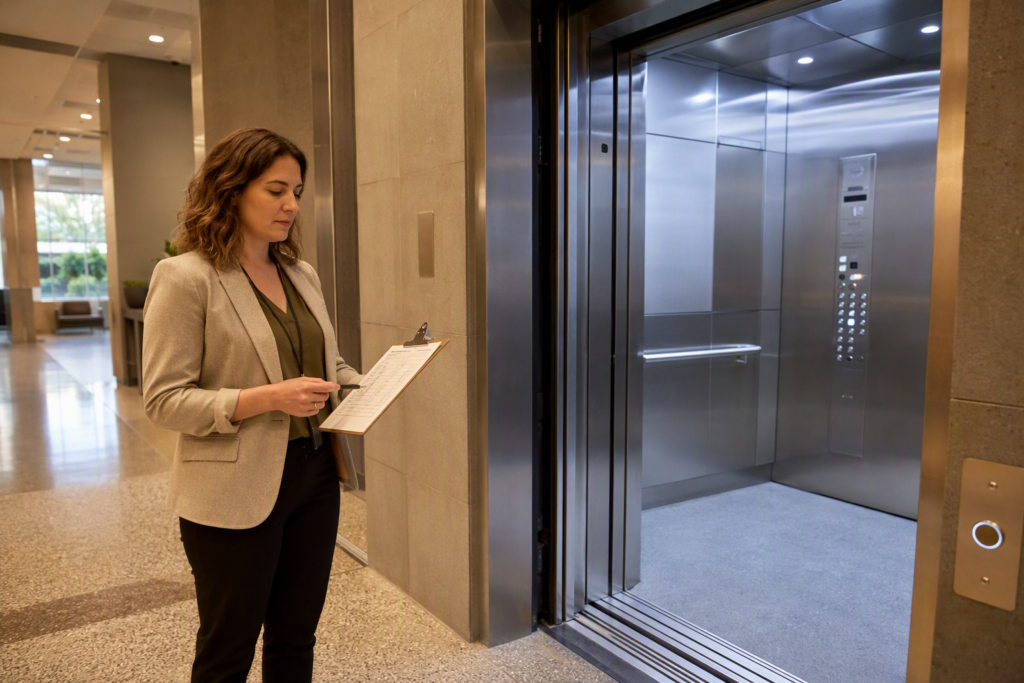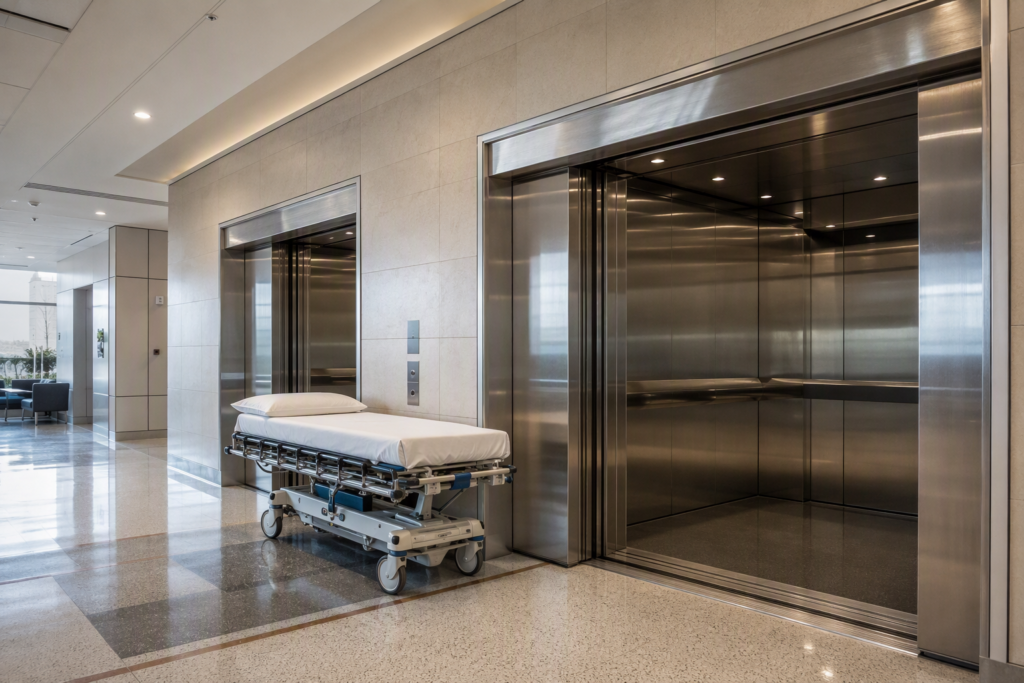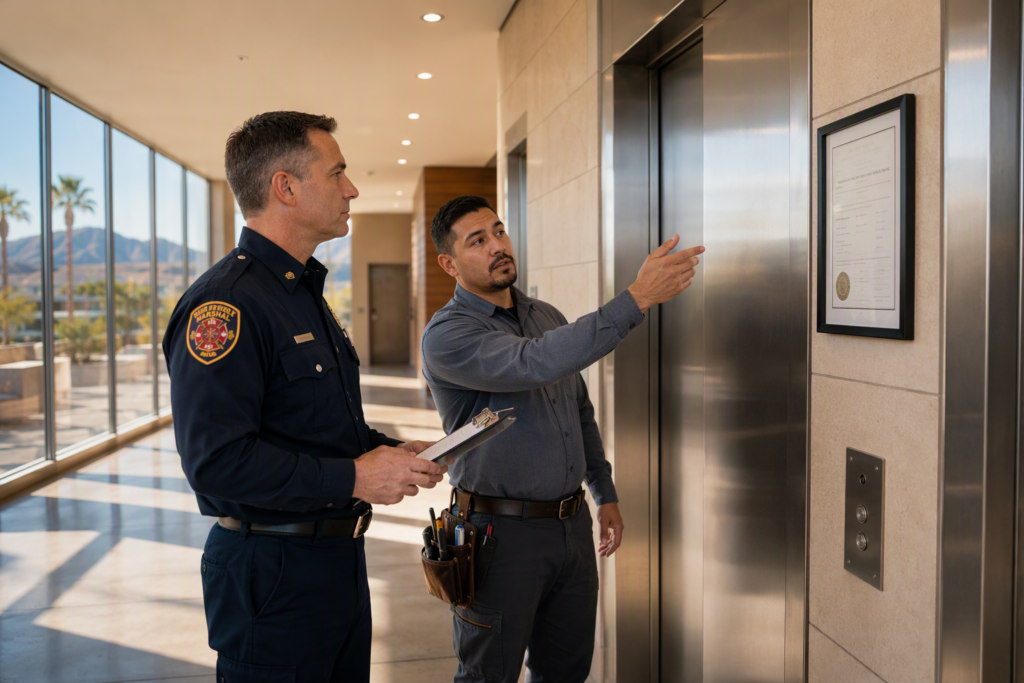

When a technician does not arrive during a scheduled service window, building owners and property managers in Phoenix, Tucson, Scottsdale, and Mesa are right to question whether after-hours billing is appropriate. Understanding how after-hours fees are defined, when they legitimately apply, and what your service agreement actually obligates you to pay is essential to protecting your budget and keeping your elevator program compliant under Arizona law.
Will I be charged an after-hours fee if a technician doesn’t arrive during the originally scheduled time?

No — a well-structured service contract should clearly distinguish between after-hours work you request and rescheduled visits caused by the service provider’s own scheduling failure, and you should never be billed at a premium rate for an appointment the provider missed.
After-hours fees are designed to compensate technicians and companies for labor performed outside standard business hours — typically evenings, weekends, and holidays — at the client’s request or due to an emergency. When a provider fails to appear during an agreed daytime window and then returns in the evening to complete the same job, the reason the work is happening after hours is the provider’s scheduling failure, not the client’s choice. Reputable elevator service companies treat these situations differently in their billing, crediting or waiving the premium rather than passing it to the property owner.
That said, the outcome in any real dispute comes down to contract language. If your agreement does not specify who bears responsibility for after-hours costs when a provider misses a scheduled window, you may face a billing disagreement with no clear written standard to fall back on. Reviewing service contract terms before signing — and asking specific questions about after-hours billing triggers — is the most effective protection available.
What exactly qualifies as “after-hours” in elevator service contracts?
After-hours is a billing classification defined in each individual service contract, but it commonly refers to any labor performed outside standard weekday business hours, typically before 7:00 a.m. or after 5:00 p.m. on weekdays, and any time on weekends or recognized holidays.
There is no federal elevator code or Arizona statute that mandates a universal definition of after-hours for billing purposes. The ASME A17.1 Safety Code for Elevators and Escalators governs technical and safety requirements for elevator equipment and maintenance intervals, but it does not regulate how service companies structure their billing windows. Similarly, A.R.S. §§ 23-491 through 23-491.16 — Arizona’s elevator safety statute — addresses inspection, certification, and safety obligations, not commercial service pricing.
Because definitions vary by provider, property managers should request a written definition of “standard hours” and “after-hours” before executing any maintenance agreement. Some contracts also include a separate “emergency” tier with rates even higher than standard after-hours, triggered by entrapments or safety failures outside business hours.
What should my elevator service contract say about missed appointments?
A thorough service contract should include a missed-appointment clause that specifies who bears additional costs — including any after-hours premium — when a scheduled visit is not completed within the agreed window due to provider delay or cancellation.
Contract language to look for includes provisions addressing: (1) how much advance notice the provider must give when rescheduling; (2) whether the provider absorbs any cost premium incurred by the delay; (3) how quickly a follow-up visit will be scheduled; and (4) how the client is compensated, if at all, for downtime caused by the missed appointment.
Arizona property owners should also confirm that the service contractor holds the appropriate Arizona Registrar of Contractors R-12 or C-12 elevator license classification, which authorizes the licensee to install and repair elevators, dumbwaiters, escalators, and moving walks. Verifying licensure before signing a contract adds a layer of accountability that complements strong written terms.
Are after-hours fees regulated by any Arizona law or state agency?
No Arizona statute or rule directly regulates after-hours pricing for elevator service companies — pricing terms are a matter of private contract, not public regulation.
The Industrial Commission of Arizona’s Elevator Division administers elevator safety in Arizona under A.R.S. §§ 23-491 through 23-491.16 and Arizona Administrative Code R20-5-502 through R20-5-515. The Elevator Division’s authority covers equipment safety standards, annual inspection certificates, and conveyance registration — not the commercial terms between building owners and service contractors.
Within the City of Phoenix, the City of Phoenix Elevator Section (Planning and Development Department) handles inspections for equipment inside city limits, while the state’s Elevator Division covers conveyances outside Phoenix. Neither body sets pricing floors, ceilings, or billing rules for private elevator maintenance contracts.
When is an after-hours fee genuinely justified?
An after-hours fee is legitimately justified when a property owner or manager requests service outside standard hours — particularly for emergency entrapments, safety failures, or urgent repairs that the client needs addressed before the next business day.
Common scenarios where after-hours billing is appropriate and expected include: a passenger entrapment after business hours requiring immediate technician dispatch; a building owner who specifically schedules a maintenance visit at night or on a weekend to avoid disrupting tenants; and emergency repairs to safety-critical systems that cannot wait until the next scheduled appointment window.
What separates a justified after-hours charge from an unjustified one is the origin of the timing. If the client drives the after-hours timing, the premium is appropriate. If the service provider’s missed daytime appointment drives it, the cost should remain with the provider.
What are the compliance consequences if a missed appointment delays required maintenance?
In Arizona, delayed maintenance that causes a conveyance to operate outside safe conditions can result in regulatory consequences, because no conveyance may legally operate without an annual certificate of inspection issued by the state.
Under A.R.S. §§ 23-491 through 23-491.16, Arizona building owners must ensure each conveyance is inspected before it first enters service, after any modification or alteration, and annually thereafter. Operating without a valid annual certificate exposes the property owner to regulatory action. The Industrial Commission of Arizona’s Elevator Division has authority to require a conveyance be taken out of service if it presents a hazard to life, health, or property.
A missed maintenance appointment that pushes a system past its certificate expiration is not simply a billing inconvenience — it is a compliance risk. Property managers should track certificate expiration dates independently and escalate with their service provider well before a missed visit becomes a regulatory problem.
What technical maintenance tasks typically trigger after-hours scheduling requests?
Tasks that commonly require after-hours scheduling include full modernizations, major component replacements, and any work that requires prolonged elevator downtime in high-traffic buildings.
Under the ASME A17.1 Safety Code for Elevators and Escalators — adopted in Arizona as the ASME A17.1-2019 edition for equipment installed, repaired, or altered on or after January 1, 2023 — certain maintenance and testing procedures require the elevator to be taken out of service entirely. In busy commercial buildings, hotels, or hospitals, taking an elevator offline during peak hours is disruptive, prompting property managers to schedule these tasks overnight or on weekends.
Examples of work that may justify after-hours scheduling include: annual load tests and safety device tests; door operator replacements; controller upgrades; rope or belt replacement on traction units; and oil changes or cylinder work on hydraulic systems. Because these jobs are chosen to be after-hours by the client, the associated premium is expected and appropriate.
How does ADA compliance factor into elevator service scheduling?
When elevator downtime caused by a missed service appointment leaves passengers without accessible vertical transportation, it may create Americans with Disabilities Act (ADA) compliance exposure for the building owner.
The ADA requires that buildings subject to its accessibility provisions maintain accessible routes, including elevator access. Planned maintenance downtime is generally defensible when properly communicated and minimized, but extended outages caused by a service provider failing to appear as scheduled — and then taking additional time to reschedule — can leave wheelchair users and others without access far longer than necessary. Property owners should document every missed appointment and the resulting downtime as part of their ADA risk management records.
What should a building owner do immediately when a technician misses a scheduled appointment?
Document the missed appointment in writing, contact the service provider immediately to confirm the reason and a new arrival time, and assess whether the elevator must be taken out of service pending the rescheduled visit.
- Record the scheduled arrival window — note the exact time the window closed without a technician arrival, and log it with a timestamp.
- Contact the service provider’s dispatch — call and send a written message (email or text) requesting confirmation of the missed appointment and an estimated rescheduled arrival time. Written records are essential if a billing dispute arises.
- Assess elevator safety status — if the missed visit was for a known safety issue or a repair that was already in progress, evaluate whether the conveyance should be taken out of service until the technician arrives.
- Notify building occupants — if the elevator will be unavailable or its status is uncertain, post clear signage and notify tenants or guests, particularly those with mobility needs.
- Review your service contract — locate the missed-appointment and after-hours billing provisions so you know your rights before the rescheduled visit occurs.
- Request written confirmation of any after-hours billing intent — before authorizing a rescheduled visit that falls outside standard hours, ask the provider in writing whether after-hours rates will apply and on what contractual basis.
- Document all communication — keep a file of all calls, texts, and emails related to the missed appointment. This record protects you in any future billing dispute or regulatory inquiry.
How do different service contract structures handle after-hours billing?
Elevator service contracts generally fall into full-maintenance, oil-and-grease, and time-and-materials structures, each of which handles after-hours billing differently.
| Contract Type | What Is Covered | Typical After-Hours Treatment | Missed Appointment Risk |
|---|---|---|---|
| Full Maintenance (Comprehensive) | Parts, labor, routine and emergency service | Emergency callbacks often included; elective after-hours may carry a premium | Lower — provider has financial incentive to keep equipment running |
| Oil and Grease (Lubrication Only) | Routine lubrication and minor adjustments only | After-hours labor billed separately at premium rates | Higher — major repairs and callbacks are all extra |
| Time and Materials (T&M) | All labor and parts billed as used | After-hours labor billed at a multiplier (e.g., 1.5× or 2×) | High — every visit, including make-up visits, is billable |
| Modernization/Project Contract | Specific scope of work (installation or upgrade) | After-hours work billed at agreed project rate or change order | Medium — scope and schedule defined upfront; delays may trigger change orders |
Understanding which contract type governs your elevator program is the first step in evaluating whether a specific after-hours charge is legitimate. Arizona Elevator Solutions works with property owners across Phoenix, Tucson, Scottsdale, and Mesa to review existing contract structures and identify gaps in after-hours billing language before disputes arise.
Can I dispute an after-hours fee I believe was wrongly charged?
Yes — if your service contract does not authorize an after-hours charge in the circumstances billed, you have grounds to dispute it in writing, and the service provider bears the burden of pointing to specific contract language that justifies the charge.
A written dispute should cite the specific contract clause you believe the provider has misapplied, include your documentation of the missed original appointment (timestamps, communications), and state clearly what amount you are disputing and why. Sending the dispute via certified mail or a tracked email creates a defensible record.
If the provider cannot cite a contract clause that authorizes the charge, the dispute is often resolved in the property owner’s favor without escalation. If it is not, Arizona’s civil small claims process or, for larger amounts, the Superior Court provides a legal avenue. The Arizona Registrar of Contractors also accepts complaints against licensed R-12 and C-12 elevator contractors for work or billing practices that violate the terms of their license.
What is the role of the Industrial Commission of Arizona’s Elevator Division in service disputes?
The Industrial Commission of Arizona’s Elevator Division regulates safety compliance, not commercial billing disputes — but safety violations uncovered during a dispute may be reported to the Division for investigation.
The Elevator Division, which administers Arizona elevator safety under A.R.S. §§ 23-491 through 23-491.16, has authority over inspection certificates, equipment safety standards, and conveyance registration. It does not arbitrate billing or contract disputes between property owners and service companies.
However, if a missed appointment or inadequate service has resulted in a safety deficiency — such as a conveyance operating without a current annual certificate of inspection, or a known hazard left unaddressed — that condition can and should be reported to the Elevator Division. Arizona law requires owners to notify the state within 24 hours of any accident that injures a person or disables a conveyance.
What certificate and posting requirements must Arizona elevator owners maintain regardless of service disputes?
Arizona law requires that a valid annual certificate of inspection be kept at the same location as the conveyance, and that the state serial number or the certificate be posted in or close to the conveyance in an easily accessible location — these obligations fall on the owner, not the service company.
Under Arizona’s elevator safety statute and Arizona Administrative Code R20-5-502 through R20-5-515, the building owner carries the ultimate compliance burden. A service provider dispute does not suspend these requirements. Every Arizona conveyance is assigned a state serial number on a tag fixed to the controller or mainline disconnect, and that tag must remain in place. The certificate itself must be available for inspection on request by the state or by an authorized inspector.
Arizona owners also have the option to hire a private elevator inspector authorized by the Industrial Commission of Arizona to perform initial or annual inspections. Private inspectors must register with the commission every year and show at least eight hours of approved continuing education. Importantly, a private inspector may not inspect a conveyance owned, operated, or last serviced by the inspector, a company the inspector owns, or the inspector’s employer — a conflict-of-interest rule that protects the integrity of inspection results.
How do firefighters’ emergency operation requirements affect elevator service scheduling in Arizona?
Arizona conveyances equipped with firefighters’ emergency operation must use the Arizona Firefighters Service (AZFS) key, and any service or repair affecting this system requires careful coordination to avoid disrupting life-safety functionality.
When scheduling maintenance that involves the firefighters’ emergency operation panel or related wiring, building owners and service companies must ensure that the system is tested and fully functional before the elevator is returned to service. A missed or delayed appointment that leaves firefighters’ emergency operation in an incomplete state raises significant life-safety concerns and may require the elevator to be taken out of service until the work is completed properly.
The ASME A17.1 Safety Code for Elevators and Escalators specifies requirements for firefighters’ emergency operation. Arizona has adopted ASME A17.1-2019 for equipment installed, repaired, or altered on or after January 1, 2023. Technicians performing work on firefighters’ emergency operation systems should be familiar with both the code requirements and Arizona’s AZFS key standard.
Does the type of elevator equipment affect after-hours billing norms?
Yes — the complexity, age, and type of conveyance can influence how after-hours billing is structured, because some equipment requires more specialized technicians whose availability outside standard hours is more limited and therefore more costly.
Older hydraulic elevators, for example, may require technicians with specific experience in legacy systems that are less common in the current market. Escalators and moving walks in commercial settings — also regulated under Arizona’s conveyance safety framework — have their own maintenance demands. Platform lifts and stairway chairlifts installed, repaired, or altered on or after January 1, 2023 in Arizona must comply with ASME A18.1-2020, a separate standard from the A17.1 elevator code, and technicians servicing these units may carry different labor rate structures.
Property owners with mixed conveyance portfolios — elevators, escalators, platform lifts, and stairway chairlifts on the same property — benefit from consolidating service under a provider that covers all equipment types under a single agreement with clearly defined after-hours terms for each category.
How should property managers in Phoenix, Tucson, Scottsdale, and Mesa track service appointments to avoid billing disputes?
Property managers should maintain a written service log for every conveyance on the property that records the scheduled appointment, the actual arrival time, the work performed, and any billing discrepancy noted at the time of the visit.
A systematic approach to service documentation protects against after-hours billing disputes, supports annual inspection scheduling, and provides evidence of due diligence if a regulatory inquiry occurs. The log should also track certificate expiration dates, state serial number assignments, and any written notices sent to or received from the service provider.
For properties with multiple elevators — common in the high-rise corridors of Phoenix and Scottsdale or the large commercial campuses in Mesa — a spreadsheet or property management software module dedicated to conveyance records significantly reduces the risk of a missed certificate renewal or an undocumented missed appointment becoming a costly problem.
What questions should I ask a new elevator service provider about after-hours billing before signing a contract?
Before signing, property owners should ask six specific questions that reveal exactly how after-hours billing is triggered, calculated, and assigned when appointments are missed.
- How do you define “standard hours” and “after-hours” in your contract, and are those definitions fixed or subject to change?
- If your technician does not arrive during the scheduled window and the callback occurs after standard hours, who pays the after-hours premium?
- What written notice will you provide before rescheduling an appointment, and is there a response time commitment in the contract?
- Does your after-hours rate apply the same way to emergency entrapments as it does to rescheduled routine maintenance?
- How is “after-hours” labor documented on the invoice — is the time-in and time-out clearly stated alongside the applicable rate?
- Does the contract include a provision for billing disputes, and what is the resolution process if I believe an after-hours charge was improperly applied?
Arizona Elevator Solutions encourages property owners across Phoenix, Tucson, Scottsdale, and Mesa to bring these questions to any provider review — including their own team — because transparent answers are the foundation of a trustworthy service relationship.
How does notification timing affect after-hours billing when an elevator problem arises unexpectedly?
The time at which a building owner or manager notifies the service provider of a problem affects whether the resulting dispatch is classified as a scheduled callback or an emergency, and that classification directly determines which billing rate applies.
If a building manager discovers an elevator malfunction at 4:45 p.m. and calls for service, a technician dispatched at 5:30 p.m. may fall into an after-hours billing window depending on the contract terms — even though the notification was made during business hours. Some contracts include a “notification cutoff” provision that determines the billing classification based on when the problem was reported rather than when the technician arrives. Understanding this distinction can save property owners significant costs in situations where the timing of dispatch is outside their direct control.
Arizona owners must also remember that they are required to notify the Industrial Commission of Arizona’s Elevator Division within 24 hours of any accident that injures a person or disables a conveyance — a regulatory obligation that exists independently of any service billing classification.
What role does OSHA play in elevator service after-hours safety?
The Occupational Safety and Health Administration (OSHA) sets workplace safety standards for elevator technicians performing service work, including after-hours work, and those standards apply regardless of the time of day or billing rate in effect.
Elevator technicians working after hours in vacant or partially occupied buildings face specific hazards — reduced lighting, fewer people available to assist in an emergency, and potential communication challenges. OSHA requirements for lockout/tagout procedures, confined space awareness, and fall protection apply equally during a late-night repair as they do during a standard business-hours visit. Property owners authorizing after-hours work should confirm that the service provider maintains full OSHA compliance during off-peak visits and does not reduce safety protocols because the building is quieter or less occupied.
How can Arizona Elevator Solutions help resolve after-hours billing confusion?
Arizona Elevator Solutions provides property owners in Phoenix, Tucson, Scottsdale, and Mesa with clear contract language, transparent after-hours billing definitions, and a structured process for addressing missed appointments — before a billing dispute becomes a financial or compliance problem.
The team at Arizona Elevator Solutions is available to review existing service agreements and identify provisions that leave property owners exposed to unexpected after-hours charges. For owners transitioning from another provider following a billing dispute, Arizona Elevator Solutions can help assess the current compliance status of each conveyance — including certificate validity and posting requirements under Arizona law — so the transition does not create a gap in the mandatory annual inspection cycle.
Elevator service agreements are long-term commitments that affect building safety, regulatory compliance under A.R.S. §§ 23-491 through 23-491.16, and tenant experience. Getting the contract terms right from the beginning — including clear, fair after-hours billing provisions — is the most cost-effective approach for any Arizona property owner or manager.
Ready to Eliminate After-Hours Billing Surprises?
Contact Arizona Elevator Solutions for a free elevator assessment. Whether you manage a single elevator in Tucson or a multi-unit portfolio across Phoenix, Scottsdale, and Mesa, the team can review your current service contract, verify your compliance status with the Industrial Commission of Arizona’s Elevator Division, and ensure your elevator program is protected by clear, fair service terms.
Call Arizona Elevator Solutions today: 480-557-7600