Elevator reliability in senior living and assisted living communities is not a luxury — it is a life-safety and regulatory necessity. Residents who rely on mobility aids, use wheelchairs, or have limited stamina depend on elevators as their primary means of vertical access. A failed or non-compliant elevator can trigger regulatory action, interrupt care delivery, and create significant liability exposure for facility operators. This guide covers every layer of compliance that senior living facilities must address, from federal accessibility law to state inspection cycles to day-to-day maintenance protocols.
What Federal Laws Govern Elevator Accessibility in Senior Living Facilities?
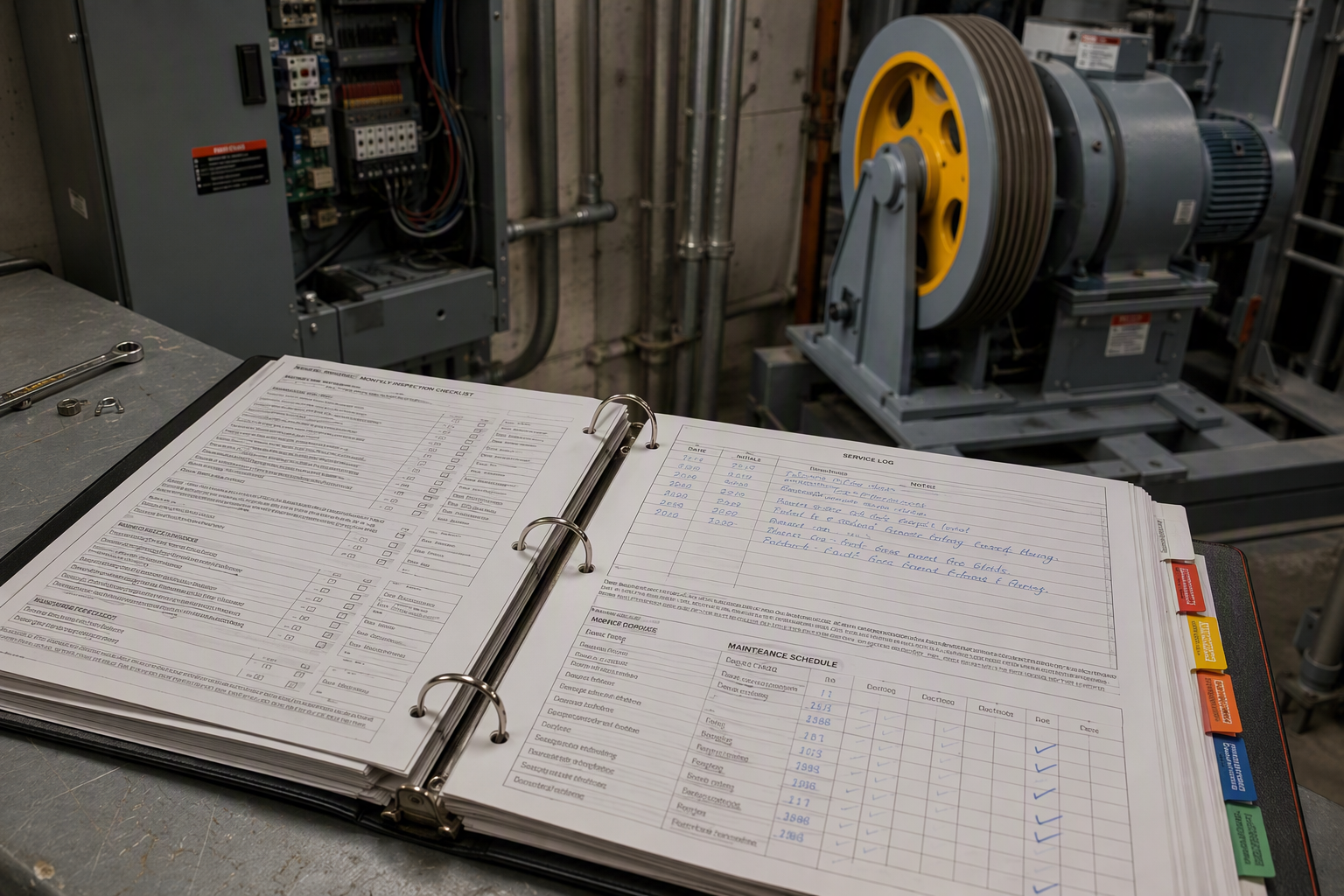
Senior living and assisted living facilities are subject to federal accessibility mandates under the Americans with Disabilities Act (ADA). The ADA requires that places of public accommodation and commercial facilities provide accessible routes throughout a building. For multi-story facilities, this typically means that elevators must be provided and must meet specific dimensional, control, and signage standards.
Key ADA elevator requirements that affect senior living facilities include:
- Car dimensions: Elevator cars must be large enough to accommodate wheelchairs and mobility devices, with interior dimensions and door clearances defined in ADA Standards for Accessible Design.
- Door timing: Doors must remain open long enough for residents with mobility limitations to enter and exit safely.
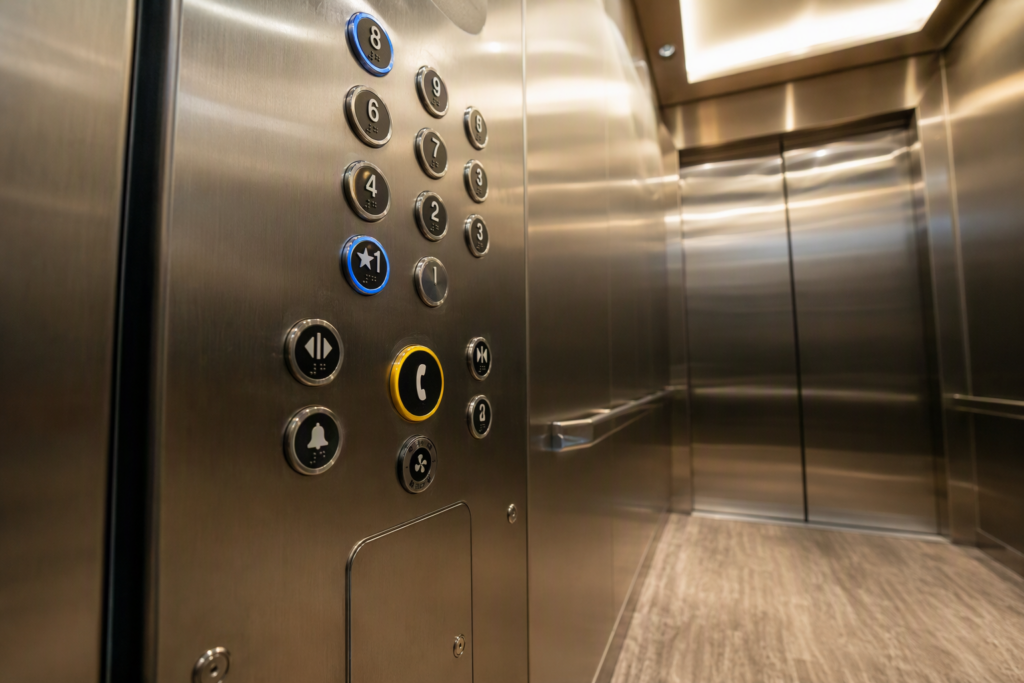
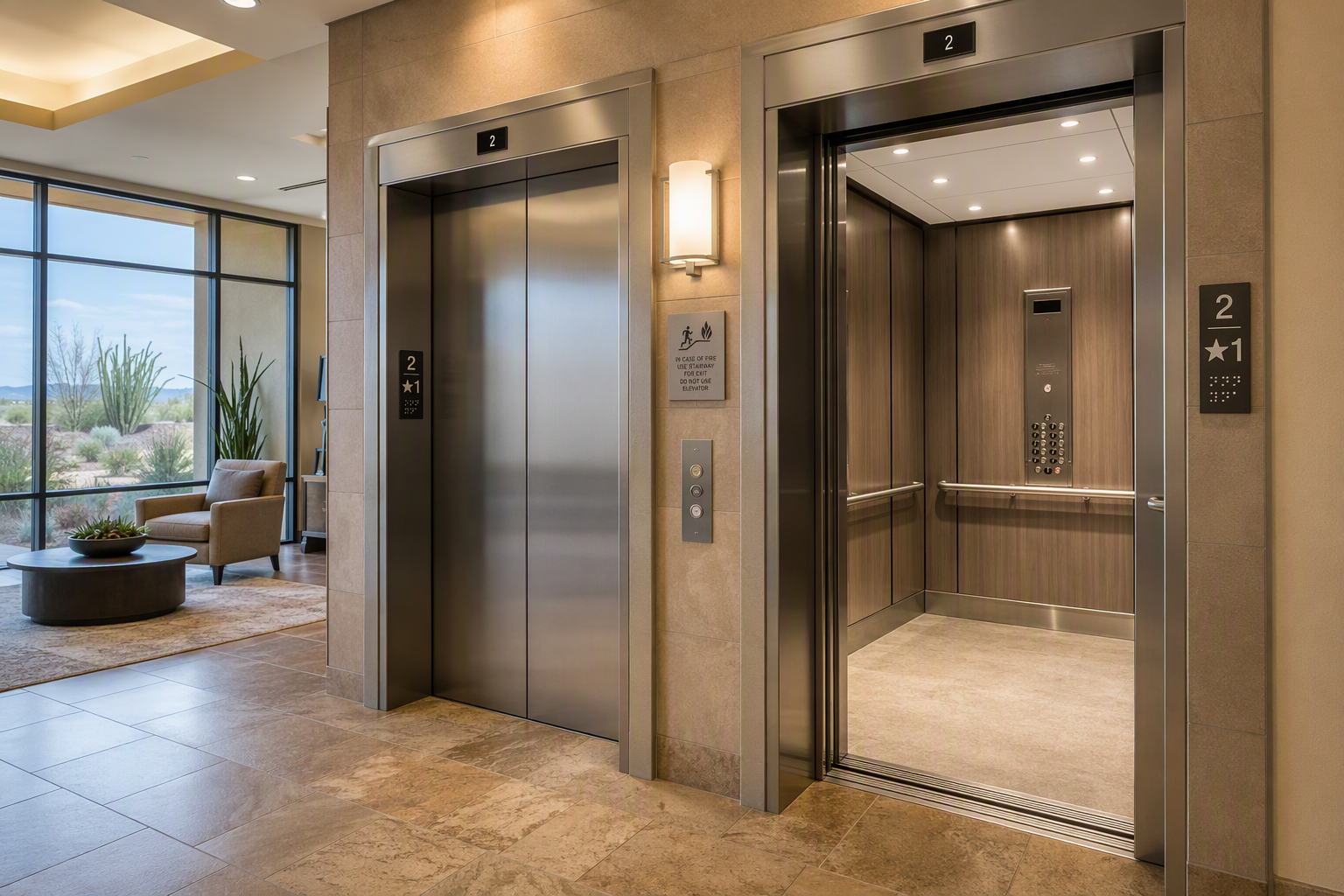
- Controls: Call buttons and car controls must be at accessible heights, with raised characters and Braille markings.
- Audible and visual signals: Hall and car signals must communicate floor arrivals in both audible and visual formats to assist residents with sensory impairments.
- Floor designation: Raised and Braille floor designations must appear on both jambs of each hoistway entrance.
The Fair Housing Act also applies to residential-style assisted living buildings with four or more units, requiring accessible common areas and adaptive features in certain unit types. Facilities should consult legal counsel to determine which federal frameworks apply to their specific operational classification.
What Does ASME A17.1 Require for Elevator Maintenance in Care Facilities?
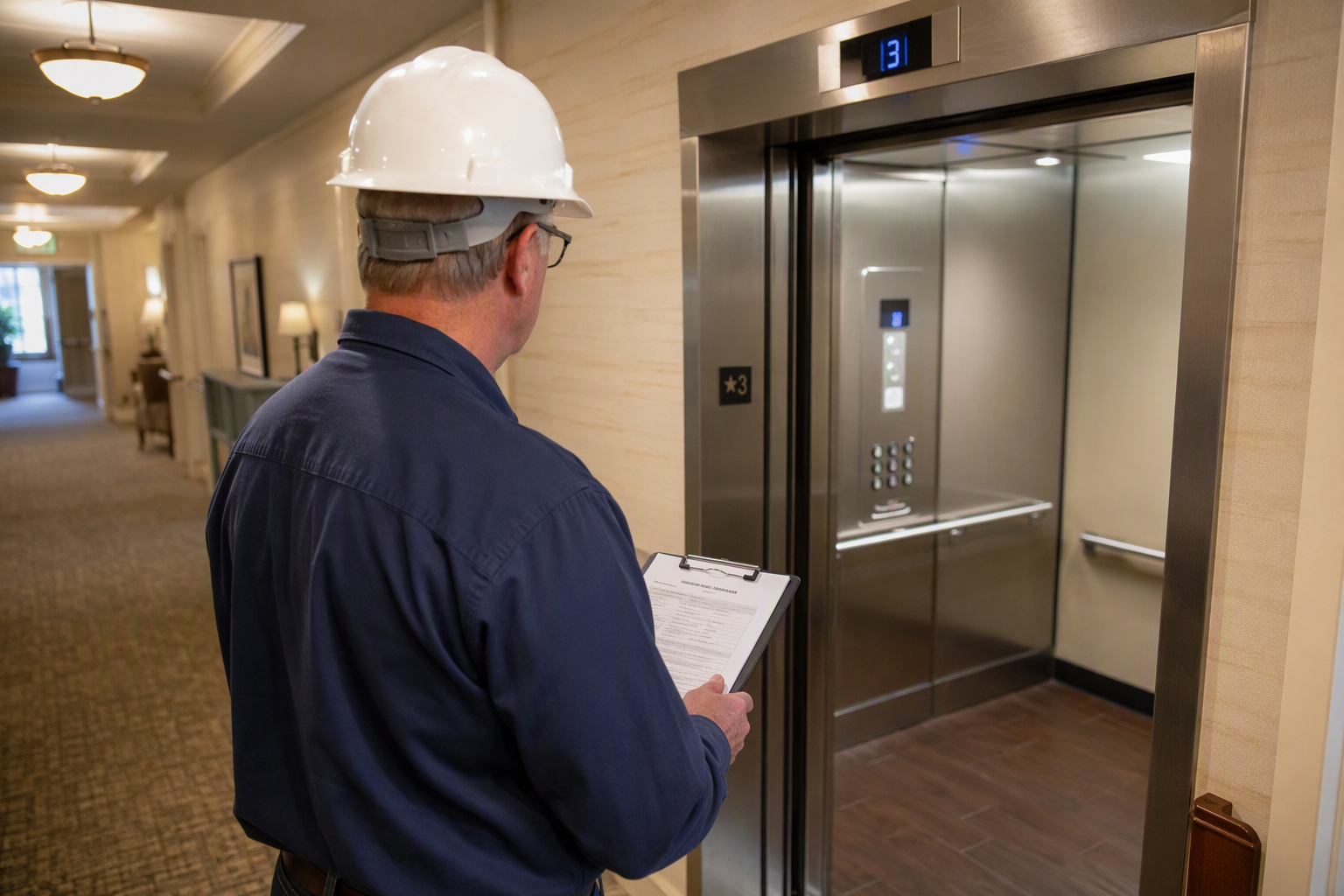
The ASME A17.1 Safety Code for Elevators and Escalators is the foundational technical standard governing elevator design, installation, and maintenance across North America. Most U.S. states, including Arizona, adopt ASME A17.1 by reference in their elevator safety regulations.
Under ASME A17.1, senior living facilities are required to:
- Maintain a current, written maintenance control program (MCP) that documents all required maintenance tasks, intervals, and responsible parties.
- Retain maintenance records that can be presented to inspectors on demand.
- Ensure that all maintenance is performed by qualified elevator mechanics or technicians working under appropriate authorization.
- Conduct periodic inspections and tests at intervals specified by the code — including routine inspections and full load tests at prescribed intervals.
- Address safety deficiencies discovered during maintenance or inspection before returning the elevator to service.
The maintenance control program requirement is particularly important for senior living operators because it creates a documented chain of accountability. Facilities without an MCP on file are exposed to violations even if the elevator itself is mechanically sound.
What Are the Arizona-Specific Inspection Requirements for Senior Living Elevators?
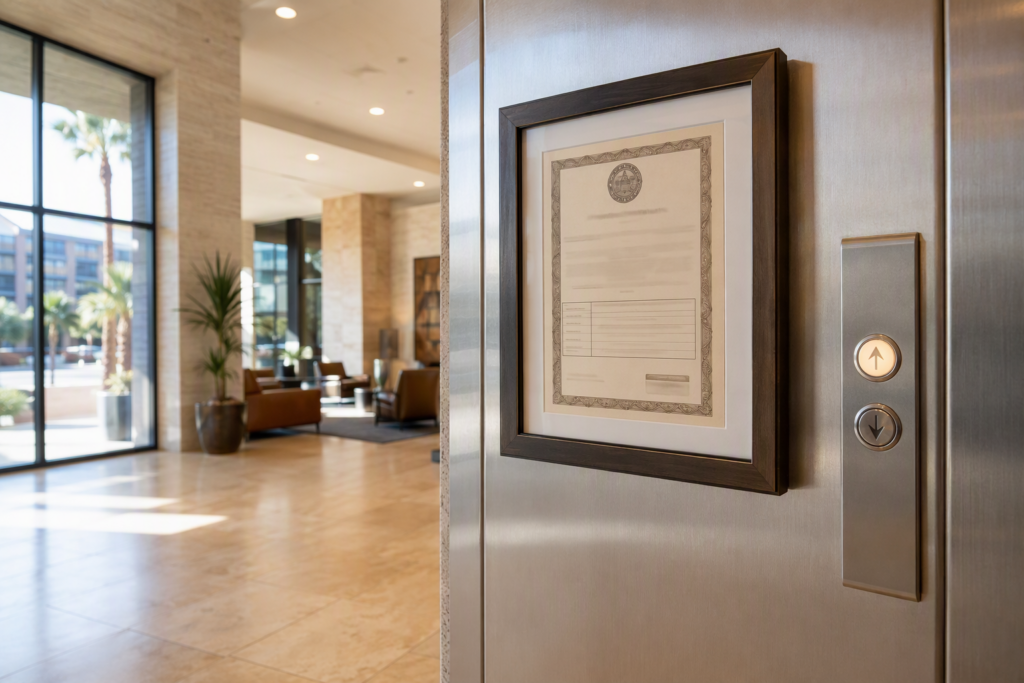
Arizona regulates elevator safety through the Arizona Department of Occupational Safety and Health (ADOSH), which operates under OSHA standards and adopts the ASME A17.1 code. Elevators in Arizona senior living facilities must be inspected and certified on a periodic basis by a licensed elevator inspector. Certificates of inspection must be posted in the elevator car and renewed before expiration.
Facilities that allow an inspection certificate to lapse risk being ordered to take the elevator out of service — an outcome that can be severely disruptive in a care environment where residents may have no alternative means of floor-to-floor access. Proactive maintenance scheduling that accounts for inspection renewal timelines is therefore a core operational responsibility.
What Types of Maintenance Does a Senior Living Elevator Require?
Elevator maintenance in senior living facilities spans several distinct categories, each with different frequencies and technical requirements:
Preventive Maintenance
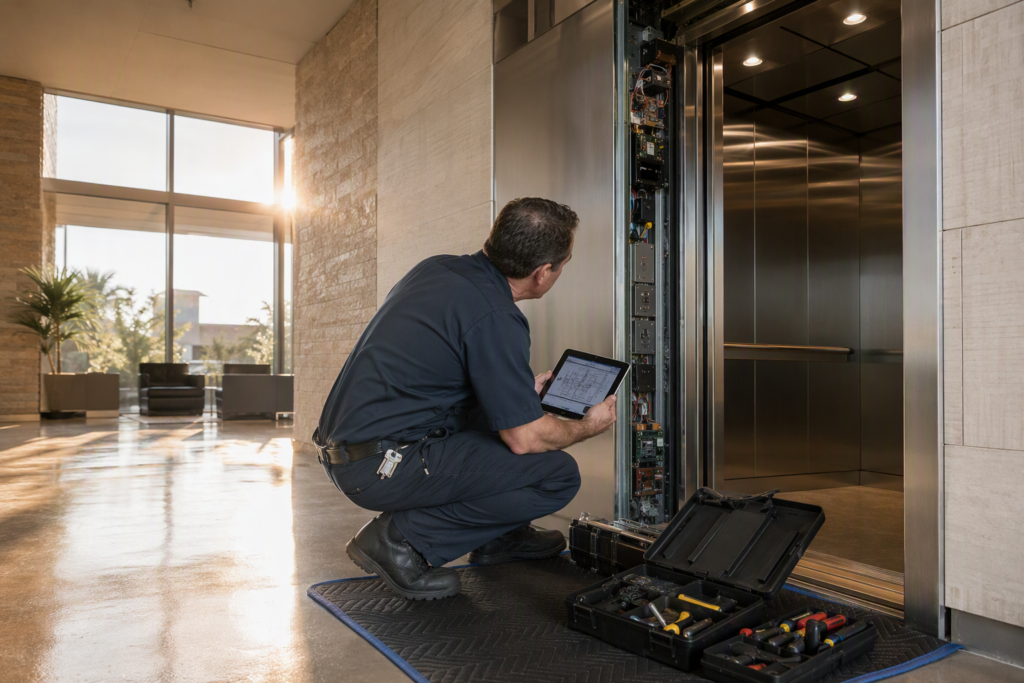
Scheduled tasks performed at regular intervals — monthly, quarterly, and annually — to keep elevator components within manufacturer tolerances and code specifications. This includes lubrication of guide rails, inspection and adjustment of door operators, testing of safety devices, and verification of leveling accuracy.
Corrective Maintenance
Repairs performed in response to identified deficiencies or component failures. In a senior living environment, response urgency is elevated because residents may depend on the elevator for access to dining, medical care, or emergency egress.
Periodic Testing
ASME A17.1 requires periodic testing of safety-critical components including governor systems, safeties, oil buffers, and pressure relief valves on hydraulic units. These tests must be documented and available for inspection review.
Modernization and Code Compliance Updates
As code editions are updated and as elevator equipment ages, facilities may need to retrofit components to maintain compliance. Common senior living upgrades include door reopening devices, emergency communication systems compliant with current ADA and ASME standards, and cab environment improvements for resident comfort.
Elevator Maintenance Comparison: In-House vs. Independent Service Provider vs. OEM Contract
| Factor | In-House Maintenance | Independent Service Provider | OEM / Major Brand Contract |
|---|---|---|---|
| Code Compliance Expertise | Variable — depends on staff qualifications | High — certified mechanics with multi-brand expertise | High — but typically limited to their own equipment |
| Documentation / MCP Support | Facility must develop and maintain independently | Provider typically assists with MCP documentation | Varies by contract terms |
| Multi-Brand Equipment Coverage | Limited unless staff is broadly trained | Strong — independent providers service multiple brands | Typically limited to proprietary equipment |
| Contract Flexibility | Full control but full responsibility | Flexible contract terms available | Often long-term contracts with escalation clauses |
| ADA Compliance Guidance | Facility must source separately | Available from experienced providers | Available but may incur additional fees |
| Regulatory Risk Management | High risk if compliance gaps exist | Lower risk with proactive compliance tracking | Lower risk within their equipment scope |
| Best Suited For | Large campuses with dedicated facilities teams | Most senior living facilities seeking full-service coverage | Facilities with single-brand, newer equipment |
Recommendation: For most Arizona senior living and assisted living facilities, an independent certified service provider offers the strongest combination of multi-brand expertise, documentation support, and flexible contract terms. Arizona Elevator Solutions provides independent elevator maintenance and compliance services specifically suited to the demands of care environments.
What Are the Consequences of Non-Compliance for Senior Living Facilities?
The stakes of elevator non-compliance in senior living are higher than in most commercial settings because regulatory oversight intersects with healthcare licensing, life-safety codes, and resident rights law. Potential consequences include:
- Mandatory out-of-service orders: An elevator with a lapsed certificate or unresolved safety violation can be ordered out of service by state inspectors, cutting off floor access for residents.
- State licensing impact: Assisted living facilities licensed through Arizona’s Department of Health Services may face licensing reviews if elevator compliance deficiencies are documented.
- Liability exposure: An elevator-related injury in a non-compliant facility significantly increases legal and financial risk for operators.
- CMS survey findings: Skilled nursing facilities and Medicare/Medicaid-certified providers can receive deficiency citations during CMS surveys if elevator safety and accessibility are not maintained.
- ADA complaints: Residents, families, or advocacy organizations can file ADA complaints with the Department of Justice if accessible elevator service is not reliably maintained.
What Is a Maintenance Control Program and Why Does It Matter for Senior Living?
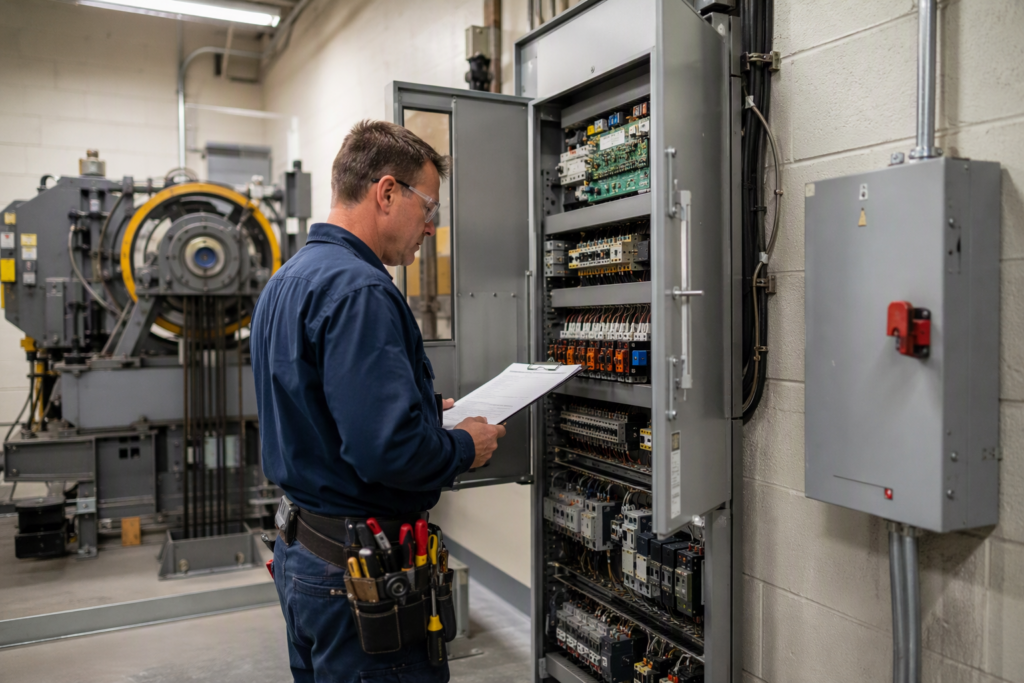
A Maintenance Control Program (MCP) is a written document required under ASME A17.1 that specifies every maintenance task required for a given elevator installation, the interval at which each task must be performed, and the qualifications required to perform it. The MCP must be kept current and available in the machine room or at an accessible location approved by the authority having jurisdiction.
For senior living operators, the MCP serves several practical functions beyond code compliance:
- It creates a defensible maintenance record that can be produced in the event of an incident investigation or regulatory audit.
- It establishes clear expectations when changing service providers, so no maintenance tasks fall through the transition gap.
- It allows facility directors and administrators to verify that their service provider is meeting all required obligations under the contract.
Facilities that cannot produce an MCP on inspector request are subject to citation regardless of the physical condition of the elevator. Arizona Elevator Solutions assists senior living clients in establishing and maintaining compliant MCPs tailored to their specific equipment.
What Accessibility Features Should Senior Living Elevators Have Beyond ADA Minimums?
Meeting ADA minimums is a legal floor, not a design ceiling. Senior living facilities serve populations with a higher concentration of mobility, vision, and hearing impairments than the general public, and best-practice facility design goes beyond what the ADA strictly requires. Recommended accessibility enhancements include:
- Extended door hold times: Adjusting door dwell time to allow residents with slower gaits or rollators to board without door-related incidents.
- Larger cab interiors: Accommodating power wheelchairs and accompanying caregivers simultaneously.
- Low-mount and duplicate controls: Control panels accessible from seated positions and for residents of shorter stature.
- High-contrast visual markings: Floor numbers and controls in high-contrast formats beneficial for residents with low vision.
- Handrails in the cab: Three-wall handrail configurations to assist residents maintaining balance during travel.
- Emergency two-way communication: ADA and ASME both require emergency communication, but senior living facilities should verify that monitoring is staffed and that responses accommodate hearing-impaired residents.
- Smooth leveling: Precise floor leveling calibration to eliminate threshold gaps that can catch wheelchair wheels or walker feet.
How Often Should Senior Living Elevators Be Inspected?
Inspection frequency is governed by a combination of ASME A17.1 requirements and the rules of the authority having jurisdiction (AHJ) in Arizona. Inspections fall into two categories:
- Periodic inspections: Required at intervals set by the AHJ, typically annually for most elevator types. The inspection must be conducted by a licensed inspector, and a certificate must be issued and posted in the elevator car.
- Periodic tests: Certain safety-critical components — including safeties, governors, and buffers — must be tested at longer intervals defined in ASME A17.1 (for example, five-year tests for certain hydraulic and traction components). These tests require advance planning and may temporarily take the elevator out of service.
In addition to state-mandated inspections, senior living facilities benefit from scheduling independent maintenance inspections between regulatory visits to identify and address emerging issues before they become violations or failures.
What Should Facilities Do Immediately When an Elevator Fails or Is Out of Service?
Step-by-Step Protocol for Elevator Outage in a Senior Living Facility
- Secure the elevator: If the elevator stops unexpectedly with passengers inside, contact emergency services if anyone is trapped. Do not attempt to force doors open manually.
- Post out-of-service notices: Immediately post clear signage at all elevator landings on all floors to prevent residents from attempting to call or board the elevator.
- Notify your elevator service provider: Contact your certified elevator maintenance company to dispatch a qualified mechanic. Document the time and nature of the failure.
- Activate your continuity plan: Notify nursing, care, and facilities staff of the outage. Identify residents who require floor-to-floor access for meals, medications, therapy, or medical appointments and arrange interim solutions.
- Notify residents and families: Communicate the outage and expected resolution timeline clearly and promptly, in accordance with your facility’s resident communication policies.
- Notify the AHJ if required: Certain types of failures or unsafe conditions may require notification to the Arizona elevator inspection authority. Confirm obligations with your service provider.
- Document everything: Record the failure event, notifications made, actions taken, and the mechanic’s findings and repairs in your maintenance log and MCP records.
- Verify return to service: Before resuming normal operation, confirm with the service mechanic that the elevator has been tested and is safe for occupant use. Do not return the elevator to service based on assumption alone.
How Should Senior Living Facilities Choose an Elevator Service Provider?
Selecting an elevator service provider for a senior living or assisted living facility involves criteria beyond price alone. Facilities should evaluate candidates on the following factors:
| Evaluation Criterion | Why It Matters for Senior Living |
|---|---|
| Licensure and certification | Arizona requires elevator work to be performed by licensed contractors. Verify current licensure with the state. |
| Code knowledge (ASME A17.1 and ADA) | Providers must understand both the mechanical and accessibility requirements applicable to care facilities. |
| MCP documentation support | Provider should be able to develop, maintain, and produce compliant MCP documentation. |
| Multi-brand capability | Facilities with mixed or legacy equipment need providers who are not limited to a single manufacturer’s systems. |
| Emergency service protocols | Verify that the provider has defined protocols for urgent care-facility situations. |
| References from care settings | Experience with senior living, assisted living, or skilled nursing environments demonstrates familiarity with the unique operational demands. |
| Transparent contract terms | Contracts should clearly define what is included, what triggers additional charges, and what happens at renewal. |
Arizona Elevator Solutions is an independent, certified elevator service company serving senior living and assisted living facilities across Arizona. As an independent provider, Arizona Elevator Solutions is not limited by manufacturer-specific parts or proprietary service restrictions, allowing comprehensive service coverage for virtually any elevator equipment a facility may operate.
What Are Common Elevator Compliance Gaps Found in Senior Living Facilities?
During compliance assessments, senior living elevators frequently present the following deficiencies:
- Expired or missing inspection certificates: Certificates posted in the cab are outdated or absent entirely.
- Incomplete or absent MCP documentation: No written maintenance control program on file, or records that do not reflect the current maintenance schedule.
- Door timing issues: Doors closing too quickly for residents with mobility aids — a code violation under both ASME A17.1 and an ADA accessibility barrier.
- Worn leveling mechanisms: Elevator floors not aligning precisely with landing floors, creating trip hazards for residents using walkers or wheelchairs.
- Inadequate emergency communication: Emergency phones not functioning, not monitored, or not accessible to hearing-impaired residents.
- Missing or damaged Braille and tactile signage: Required by ADA but frequently damaged or never installed on older equipment.
- Overdue periodic tests: Five-year or other interval-based safety tests not completed on schedule and not documented.
A proactive compliance assessment by a qualified provider can identify these gaps before they become violations, outages, or the basis for regulatory action.
How Does Elevator Modernization Affect Compliance in Older Senior Living Buildings?
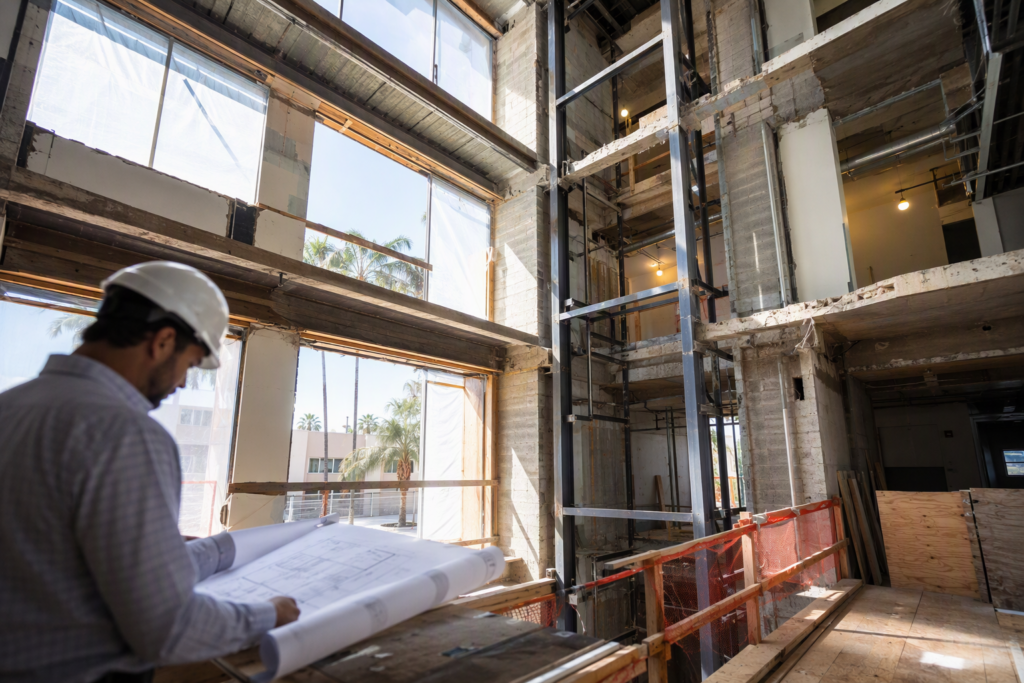
Many senior living facilities operate in buildings constructed decades ago with elevator equipment that predates current code editions. When that equipment is modernized — whether through a full replacement or a component-level upgrade — the modernization itself triggers compliance review under the current edition of ASME A17.1 and applicable ADA standards.
Modernization decisions for senior living elevators should account for:
- Whether existing cab dimensions meet current ADA accessibility standards or whether an alteration triggers a requirement to upgrade to current dimensions.
- Whether the drive system, controls, and safety components will be compatible with current code inspection and testing requirements after modernization.
- The timeline and phasing of modernization work to minimize service disruption to residents, particularly in single-elevator buildings.
- The impact on the maintenance control program — modernization requires an updated MCP reflecting new components and their maintenance requirements.
Arizona Elevator Solutions provides modernization planning and execution services and can assist senior living facility operators in navigating the compliance implications of equipment upgrades.
Senior Living Elevator Compliance: Key Takeaways
- Federal ADA requirements set minimum accessibility standards for elevator dimensions, controls, signage, and communication systems.
- ASME A17.1 governs the technical maintenance, inspection, and testing standards that Arizona adopts by reference.
- A written Maintenance Control Program is mandatory and must be current, complete, and available for inspection.
- Periodic inspections and category tests must be completed on schedule and documented — lapsed certificates can trigger out-of-service orders.
- Independent service providers offer multi-brand coverage, documentation support, and flexibility that OEM contracts and in-house programs often cannot match.
- Compliance gaps in senior living elevators carry compounded consequences: regulatory, legal, licensing, and resident safety risks all converge.
Need elevator service you can rely on? Arizona Elevator Solutions is ready to help.