Who Should I Contact for Elevator Inspection Requirements in Arizona?
Navigating elevator inspection requirements in Arizona involves understanding a layered regulatory structure — state enforcement, nationally recognized safety codes, and property-specific obligations. The sections below identify every contact point, explain what each party does, and outline the compliance steps building owners and facilities managers need to take in 2026.
What State Agency Oversees Elevator Inspections in Arizona?
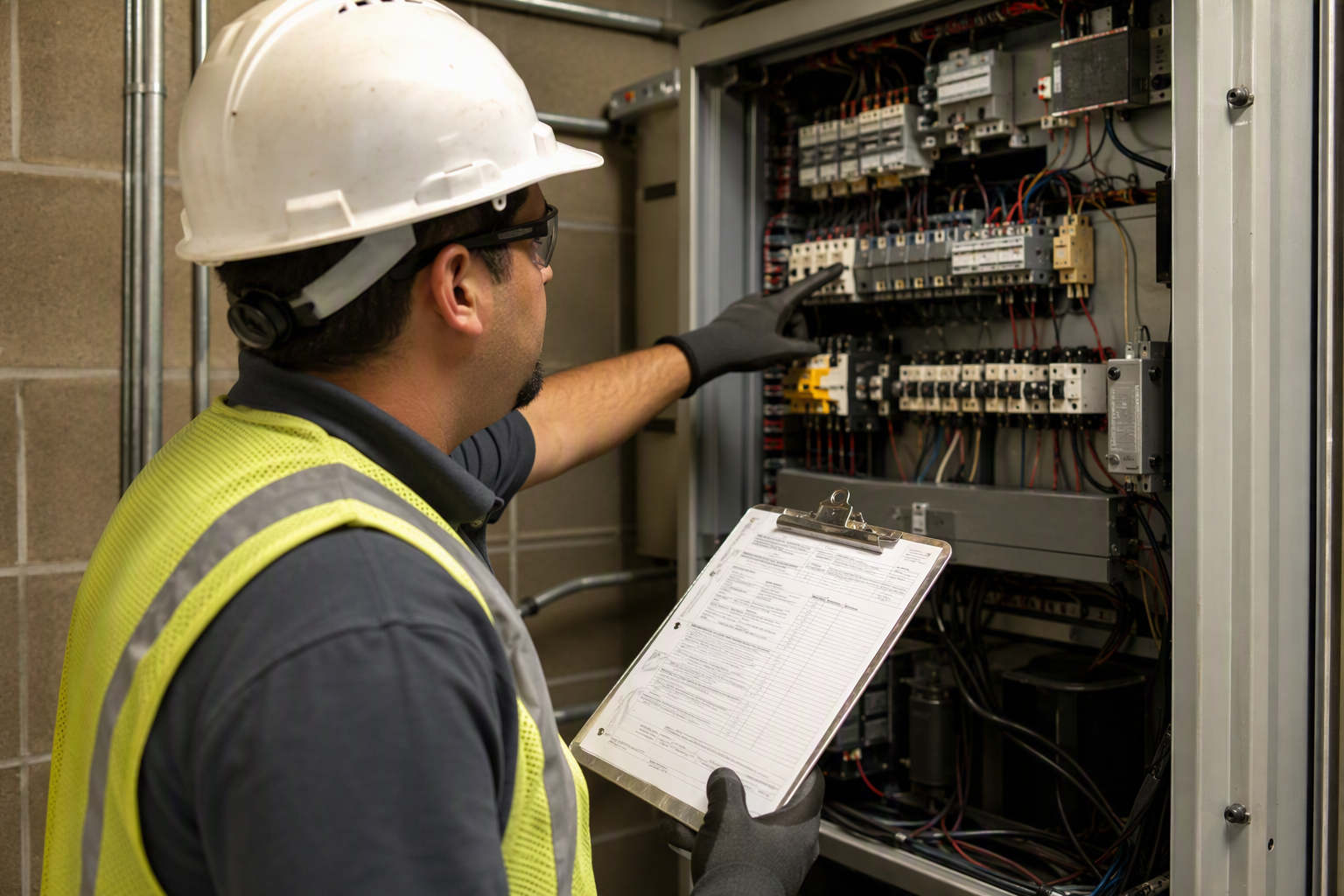
The primary government contact for elevator inspection requirements in Arizona is the Arizona Division of Occupational Safety and Health (ADOSH), operating under the Arizona Industrial Commission. ADOSH administers the state’s boiler and elevator safety program, which sets inspection frequency requirements, issues permits, and enforces safety standards for conveyances including passenger elevators, freight elevators, escalators, moving walks, and platform lifts.
ADOSH inspectors conduct periodic safety inspections and can be reached through the Arizona Industrial Commission. Building owners who need to register a new elevator, schedule a required inspection, or address a compliance notice should begin by contacting ADOSH directly.
Beyond ADOSH, the following parties are typically part of an elevator compliance conversation in Arizona:
- Licensed Elevator Inspection Companies: Private, third-party inspectors qualified to perform inspections on behalf of or in addition to state oversight
- Elevator Service and Maintenance Contractors: Companies such as Arizona Elevator Solutions that perform maintenance, repairs, and prepare elevators to meet inspection standards
- Local Building Departments: Some Arizona municipalities have their own permitting requirements that run parallel to state requirements
- Your Elevator Manufacturer or Modernization Contractor: Required for new installations and major alterations
What Safety Code Governs Elevator Inspections in Arizona?

Arizona elevator inspections are conducted in accordance with the ASME A17.1 Safety Code for Elevators and Escalators, the nationally recognized standard that defines design, construction, operation, inspection, testing, and maintenance requirements for elevators and related conveyances. ADOSH references and enforces this standard as part of its regulatory framework.
The ASME A17.2 Guide for Inspection of Elevators, Escalators, and Moving Walks accompanies A17.1 and provides the procedural guidance inspectors follow when performing required examinations. Building owners and facilities managers benefit from understanding both documents so they know what an inspector will evaluate.
For properties serving the public or housing tenants with disabilities, ADA accessibility requirements also apply to elevator design and operation, adding another compliance dimension beyond mechanical safety.
How Often Are Elevators Required to Be Inspected in Arizona?
Under the framework established by ASME A17.1 and enforced by ADOSH, most elevators in Arizona are subject to periodic inspections at intervals defined by the state’s adopted code edition. The inspection cycle typically includes:
- Annual routine inspections that assess general safety and operational compliance
- Periodic full-load tests conducted at intervals specified in the applicable code edition to verify braking, safety devices, and mechanical performance
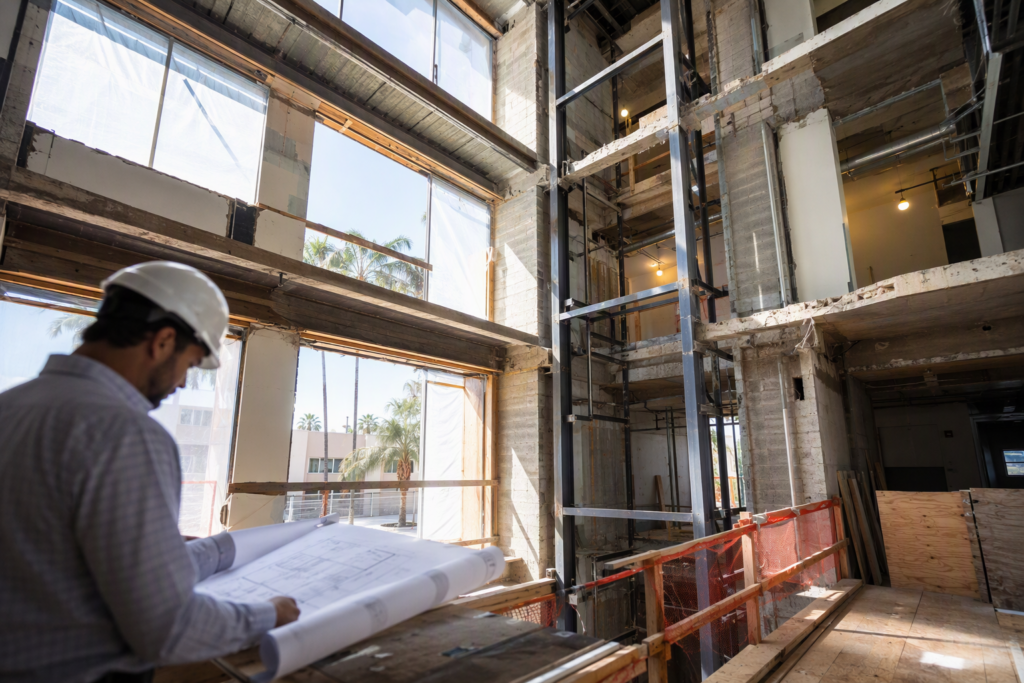
- Post-alteration inspections required whenever significant modifications are made to an elevator system
- Category tests (Categories 1 and 5 under ASME A17.1) at defined intervals that test specific safety components under controlled conditions
The exact interval for each category test depends on the equipment type and the edition of ASME A17.1 that Arizona has adopted. Building owners should confirm the current applicable edition with ADOSH or a qualified elevator contractor to ensure they are operating on the correct testing schedule.
What Is the Step-by-Step Process for Scheduling an Elevator Inspection in Arizona?
- Verify your registration status with ADOSH. Every elevator operating in Arizona must be registered with the Arizona Industrial Commission’s Boiler and Elevator Safety unit. Confirm your conveyance has a current, valid certificate of operation.
- Identify which inspection category is due. Review your maintenance records and prior inspection reports to determine whether a routine annual inspection, a Category 1 test, a Category 5 test, or another periodic examination is coming due.
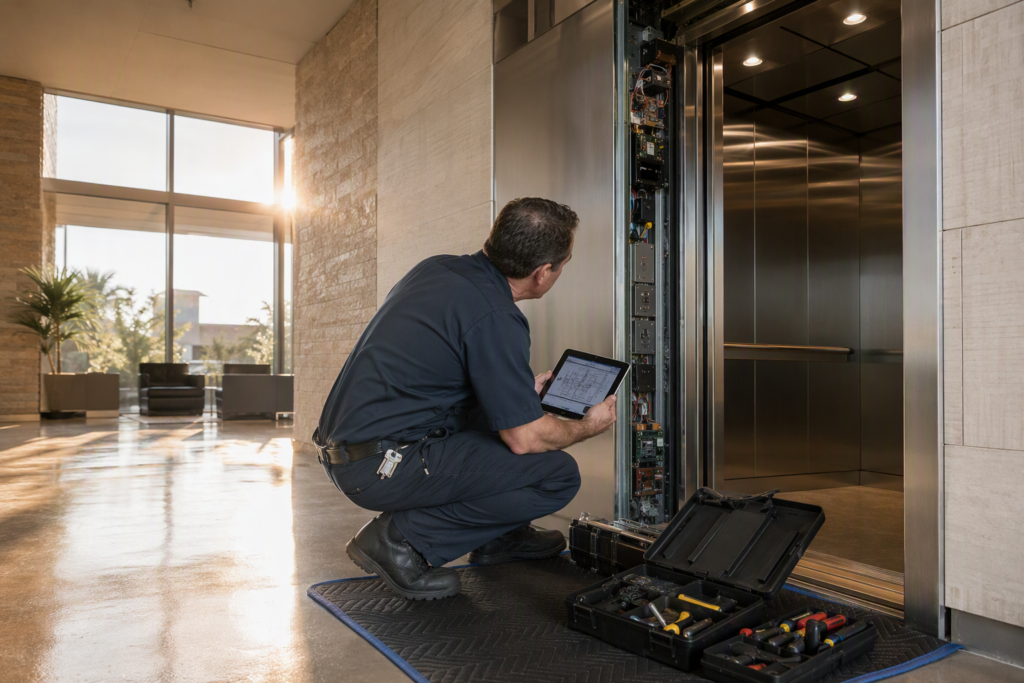
- Engage a qualified elevator contractor for pre-inspection maintenance. Before the state inspection, have a licensed elevator company perform any deferred maintenance, address outstanding deficiencies, and verify that all safety components meet current code standards. Arizona Elevator Solutions provides pre-inspection assessments as part of its data-driven service approach.
- Schedule the inspection with ADOSH or an approved third-party inspector. Contact ADOSH to arrange a state inspection, or coordinate with a qualified third-party inspection entity if applicable under Arizona’s current program structure.
- Prepare your documentation package. Assemble maintenance logs, previous inspection certificates, test records, and any alteration permits. Inspectors will review these documents as part of the inspection process.
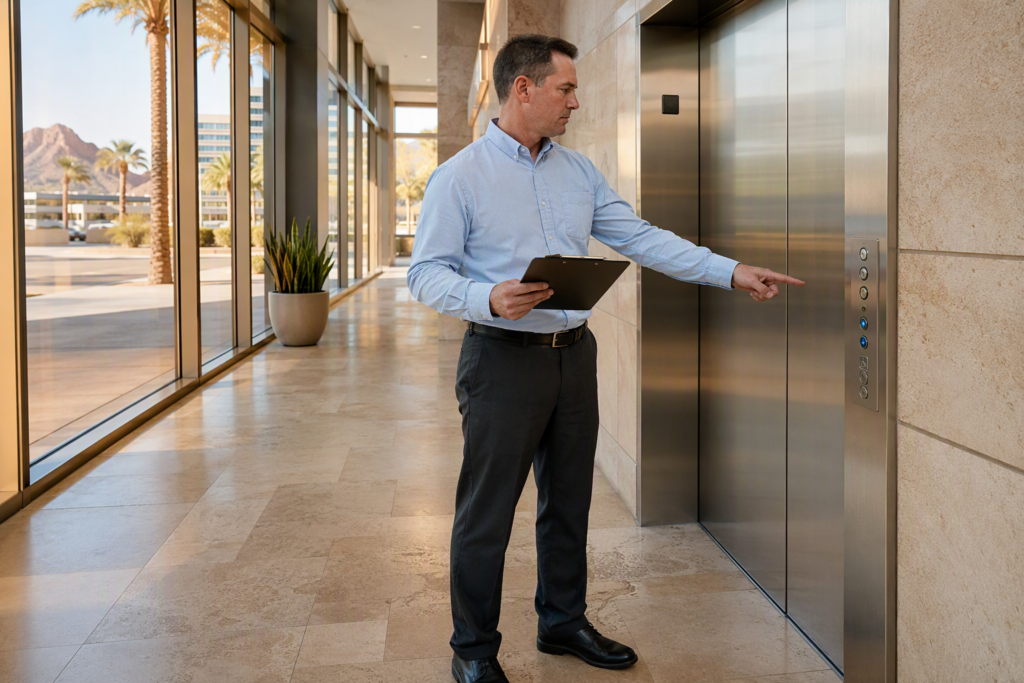
- Be present or have a qualified representative on-site during the inspection. A competent person familiar with the equipment should accompany the inspector and have access to the machine room and all related equipment spaces.
- Address any deficiencies in writing immediately after the inspection. If the inspector identifies items that require correction, obtain written scope from your elevator contractor, establish a timeline, and submit the completion documentation to ADOSH as required.
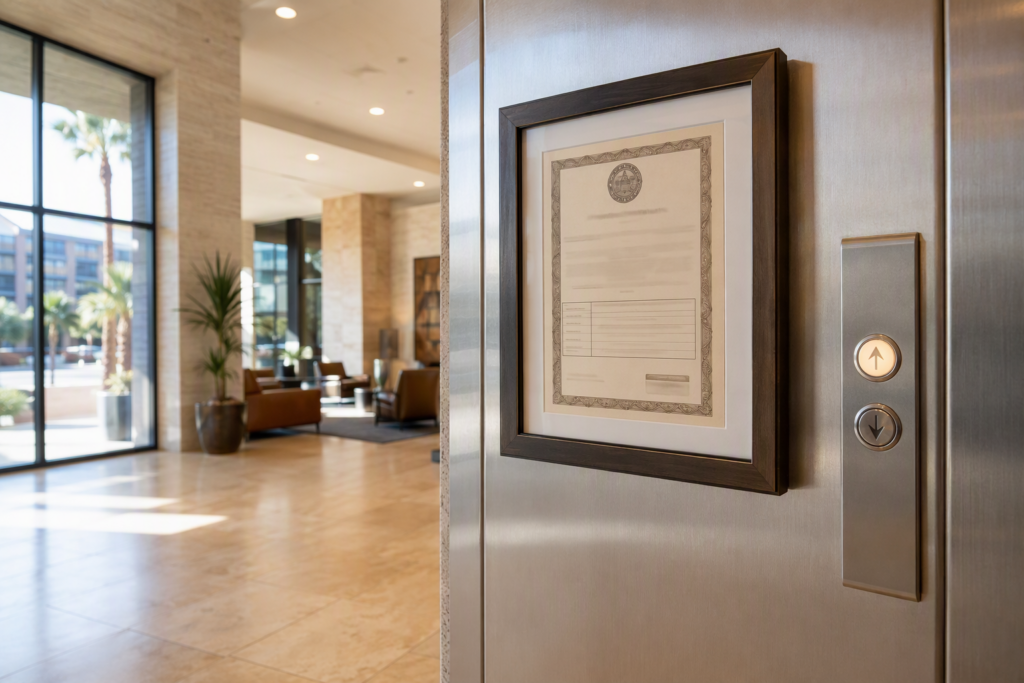
- Obtain and post your new certificate of operation. Once the inspection is passed, ensure the updated certificate is displayed in or adjacent to the elevator as required by Arizona regulations.
What Happens If an Elevator Fails Inspection in Arizona?
When an elevator fails an ADOSH inspection in Arizona, the consequences depend on the severity of the deficiency. Inspectors can issue orders requiring:
- Immediate shutdown if a condition presents imminent danger to users — the elevator must remain out of service until the deficiency is corrected and re-inspected
- A compliance deadline for less critical items, allowing the elevator to remain in service while repairs are completed within a defined timeframe
- A follow-up inspection to verify that all noted corrections have been properly addressed
Operating a conveyance under an out-of-service order or failing to correct cited deficiencies within the required timeframe can expose property owners to significant liability and potential civil penalties. Engaging a proactive elevator service partner helps building owners address deficiencies before they become inspection failures.
Does OSHA Play a Role in Arizona Elevator Inspections?
Arizona operates its own OSHA-approved State Plan, meaning ADOSH has jurisdiction over workplace safety — including elevator safety in occupational settings — rather than federal OSHA. This matters for commercial and industrial property owners: compliance obligations flow through ADOSH, not directly through federal OSHA’s Washington programs.
However, federal OSHA standards and guidelines from OSHA remain relevant as a reference baseline, particularly for construction elevators, personnel hoists, and temporary conveyances used during building projects. Facilities managers overseeing construction activity should evaluate both ADOSH requirements and applicable OSHA construction safety standards.
What ADA Requirements Apply to Elevators in Arizona?
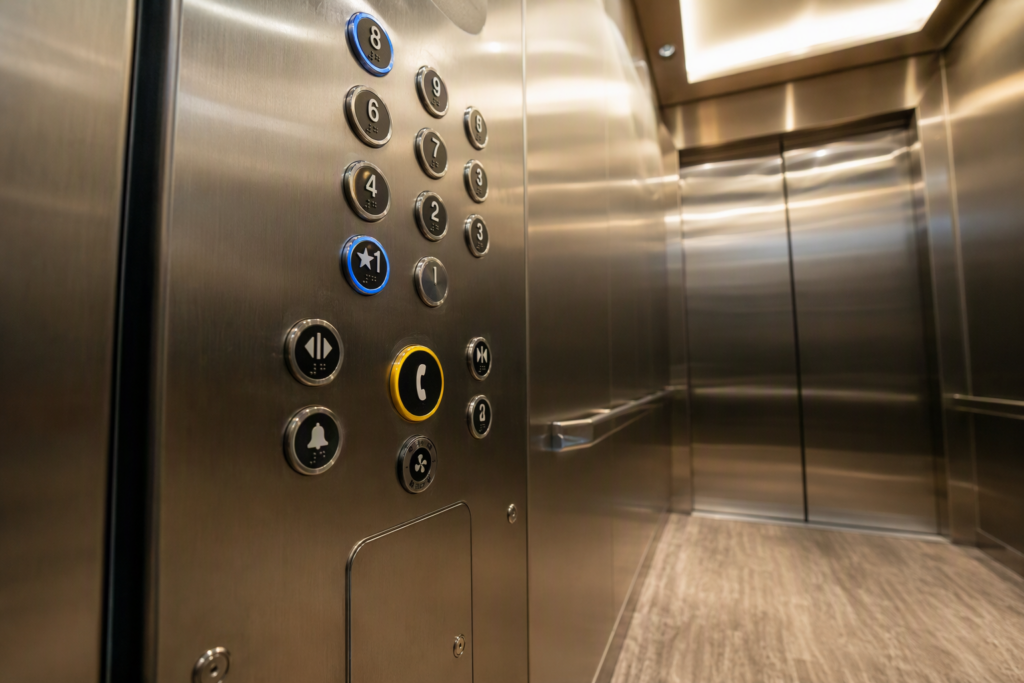
Any elevator serving a building that is open to the public, houses commercial tenants, or is subject to the Americans with Disabilities Act must comply with ADA accessibility standards. These requirements govern:
- Cab dimensions and floor space
- Door width, timing, and reopening devices
- Control panel height and reach range
- Audible and visual signals
- Braille and raised character labeling
- Emergency communication systems
ADA compliance is a separate track from ADOSH mechanical safety inspections, but both must be satisfied. An elevator that passes its ADOSH safety inspection but fails to meet ADA standards still exposes its owner to legal and regulatory risk. Arizona Elevator Solutions evaluates ADA compliance alongside mechanical safety during its assessments.
What Does an Elevator Inspection in Arizona Actually Examine?
An inspection conducted under the ASME A17.1 and A17.2 framework covers the full mechanical and safety system of the elevator. Key areas examined typically include:
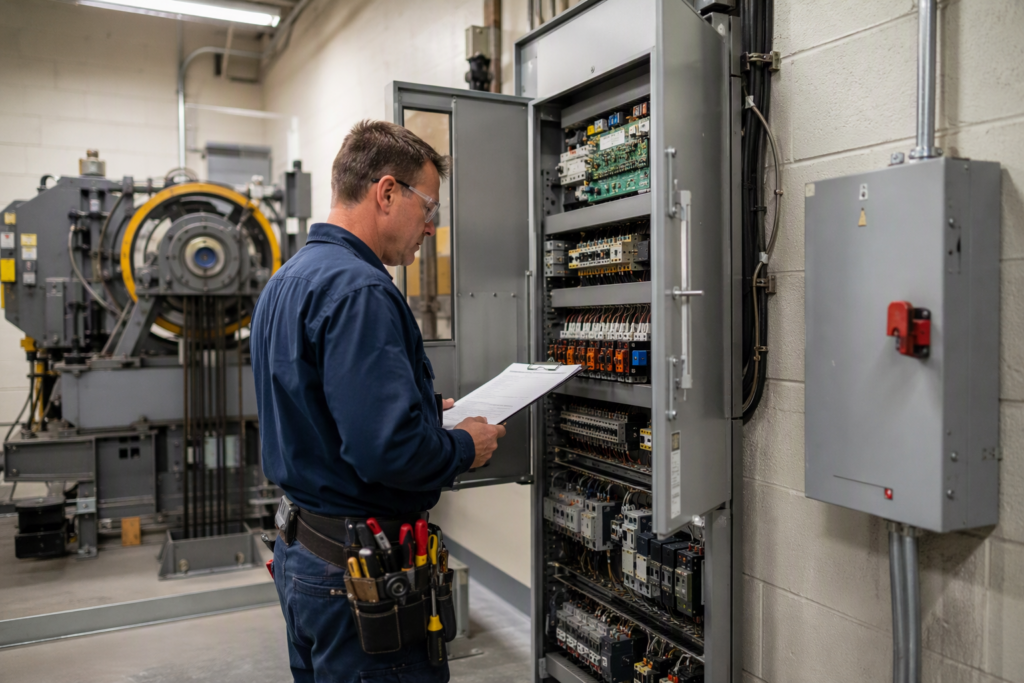
- Machine room and machinery: Drive machinery condition, hydraulic system integrity (for hydraulic elevators), lubrication, and clearances
- Hoistway: Guiderails, counterweights, buffers, pit conditions, and clearances
- Car and platform: Car frame, platform, flooring, lighting, ventilation, and emergency lighting
- Doors and gates: Landing doors, car doors, interlocks, closing force, and reopening devices
- Controls and safeties: Operating controls, safety circuits, governor, safety device, leveling accuracy, and emergency stop
- Emergency features: Two-way communication, emergency lighting, and alarm systems
- Maintenance records: Documentation that required maintenance has been performed at code-required intervals
How Should Building Owners Compare Elevator Service Providers in Arizona?
When evaluating elevator service and maintenance companies in Arizona, building owners and property managers should assess providers on the following qualitative factors:
- Familiarity with ADOSH requirements: The provider should demonstrate working knowledge of Arizona’s specific enforcement environment, not just generic national standards
- Documentation practices: A data-driven approach to maintenance logging helps property owners prepare for inspections and defend against liability claims
- Range of conveyance types serviced: Verify the company services your specific equipment — traction, hydraulic, MRL (machine room less), platform lifts, escalators, or dumbwaiters
- Transparency on code applicability: Providers should be able to explain which edition of ASME A17.1 applies to your equipment and what it requires
- Pre-inspection readiness services: Proactive maintenance and pre-inspection evaluations reduce the likelihood of costly failures
- ADA and accessibility expertise: A full-service partner should address both mechanical and accessibility compliance
Arizona Elevator Solutions takes a data-driven approach to elevator maintenance and compliance, helping property managers track inspection timelines, maintain documentation, and address deficiencies before they escalate.
What Are the Industry Trends Affecting Elevator Inspection Requirements in 2025–2026?
Several meaningful trends are shaping elevator inspection and compliance requirements in Arizona heading into 2026:
- Ongoing ASME A17.1 code updates: ASME continues to revise and update its elevator safety code on a regular cycle. As Arizona adopts newer code editions, inspection and testing requirements can shift, and building owners with older equipment may face modernization obligations.
- Remote monitoring and predictive maintenance: The elevator industry is moving toward IoT-enabled monitoring systems that can identify developing faults before they cause failures or inspection violations. This technology is increasingly relevant for property managers who want to stay ahead of compliance requirements.
- Aging elevator infrastructure: A significant portion of the installed elevator base in commercial and multi-family residential buildings is aging, which drives more frequent maintenance needs and heightened scrutiny during inspections.
- ADA enforcement activity: Accessibility compliance enforcement has remained active, and elevator accessibility features are a common focus of ADA complaints and investigations.
- Workforce and parts supply chain considerations: The elevator service industry continues to experience skilled labor constraints, which reinforces the value of planned maintenance over reactive repair approaches.
What Records Should Property Owners Keep for Elevator Compliance in Arizona?
Strong documentation practices are not just good business — in many cases they are required by the ASME A17.1 code and ADOSH regulations. Property owners should maintain:
- Current certificate of operation (must be posted as required by state law)
- All prior inspection reports and ADOSH correspondence
- Maintenance records showing dates, tasks performed, and technician identification
- Test records for each Category test (Category 1, Category 5, and others as applicable)
- Alteration permits and post-alteration inspection records
- Emergency recall and firefighters’ operation test logs
- Any corrective action documentation tied to past inspection findings
These records should be accessible in the machine room or a designated location and retained for the period specified by ADOSH and the applicable code edition.
What Types of Elevators and Conveyances Require Inspection in Arizona?
Arizona’s inspection requirements under ADOSH and the adopted ASME A17.1 framework typically apply to a broad range of conveyances, including but not limited to:
- Passenger elevators (traction and hydraulic)
- Freight elevators
- Escalators
- Moving walks
- Inclined lifts
- Private residence elevators (subject to applicable rules)
- Platform lifts and wheelchair lifts used for accessibility
- Dumbwaiters
- Material lifts and limited-use/limited-application elevators
The specific testing categories and intervals vary by conveyance type. Building managers with mixed portfolios — including escalators or platform lifts alongside passenger elevators — should confirm the inspection requirements for each type separately.
Summary: Your Elevator Inspection Contact Checklist for Arizona
To remain compliant with elevator inspection requirements in Arizona, building owners and facilities managers should maintain active relationships with the following parties:
| Contact | Role in Elevator Compliance |
|---|---|
| ADOSH (Arizona Industrial Commission – Boiler and Elevator Safety) | State enforcement agency; issues permits, conducts inspections, enforces ASME A17.1 |
| Licensed Elevator Maintenance Company | Performs required maintenance, pre-inspection preparation, repairs, and Category tests |
| Qualified Third-Party Inspector | Conducts independent inspections where permitted or required |
| Local Building Department | Issues permits for new installations and alterations; may have local requirements |
| ADA Compliance Consultant or Elevator Service Provider | Evaluates and addresses accessibility compliance under ADA standards |
Note: This table reflects the regulatory structure described in publicly available ADOSH and ASME framework documentation. Always confirm current requirements directly with ADOSH, as state program structures can change.
Get Expert Guidance on Arizona Elevator Inspection Requirements
Understanding who to contact and what to prepare can be the difference between a smooth inspection and a costly shutdown order. Arizona Elevator Solutions provides comprehensive, data-driven elevator assessments that help property owners and facilities managers identify compliance gaps, prepare documentation, and maintain elevators to the standards required by ADOSH and ASME A17.1 — before an inspector finds them first.
Contact Arizona Elevator Solutions for a free elevator assessment: 480-557-7600
Need elevator service you can rely on? Arizona Elevator Solutions is ready to help.