Hotel Elevator Maintenance Top Rated Practices for Healthcare Facilities in Arizona
Healthcare and hospitality facilities in Phoenix, Tucson, Scottsdale, and Mesa, AZ share a common operational demand: elevators must perform reliably every hour of every day. A malfunctioning elevator in a hospital or hotel does not simply inconvenience passengers — it can delay critical care, compromise ADA compliance, and expose property owners to significant liability. This guide outlines the top-rated elevator maintenance practices that meet the intersection of healthcare and hospitality vertical requirements under current 2026 code guidance.
What Does a Top-Rated Elevator Maintenance Program Include?
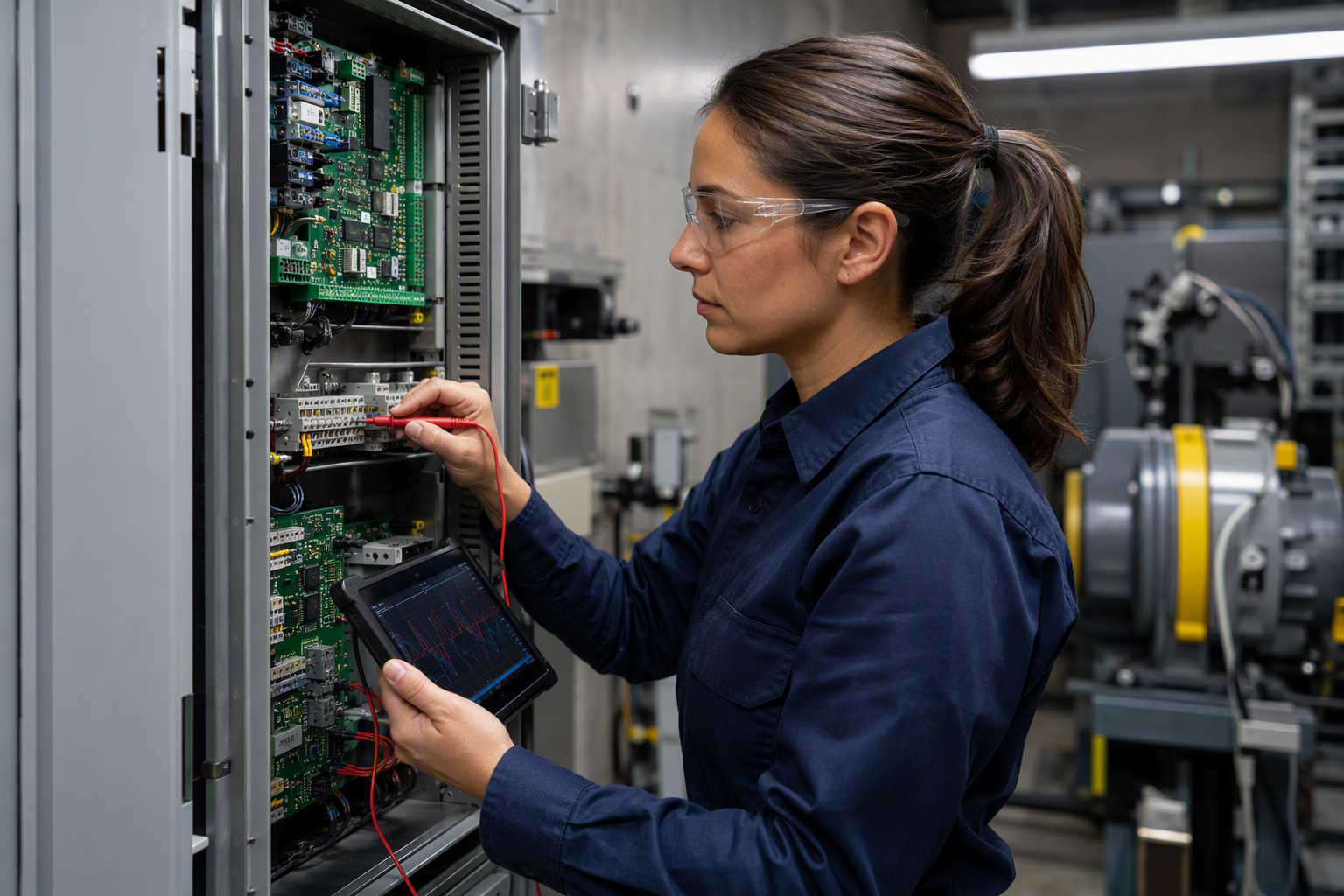
A comprehensive elevator maintenance program for healthcare and hotel environments goes well beyond periodic oiling and basic inspections. The following elements are considered industry best practice:
- Preventive Maintenance Scheduling: Regular, documented service intervals that align with manufacturer recommendations and state-mandated inspection cycles.
- Full Compliance Audits: Verification against ASME A17.1 Safety Code for Elevators and Escalators and applicable Arizona state elevator safety statutes.
- ADA Compliance Checks: Verification of door timing, cab dimensions, control panel heights, and audible signals per ADA Standards for Accessible Design.
- Modernization Assessment: Evaluation of aging components — drives, controllers, door operators — that may create safety or compliance gaps.
- Detailed Service Records: Logs documenting every service visit, part replacement, and test result for inspector review and liability protection.
- Emergency Protocols: Verified emergency lighting, phone communication, and entrapment procedures tested at each visit.
Arizona Elevator Solutions provides structured maintenance programs designed specifically for the elevated compliance demands of healthcare and hospitality properties across the Phoenix metro, Tucson, Scottsdale, and Mesa markets.
Why Is Elevator Compliance Critical in Healthcare Settings?
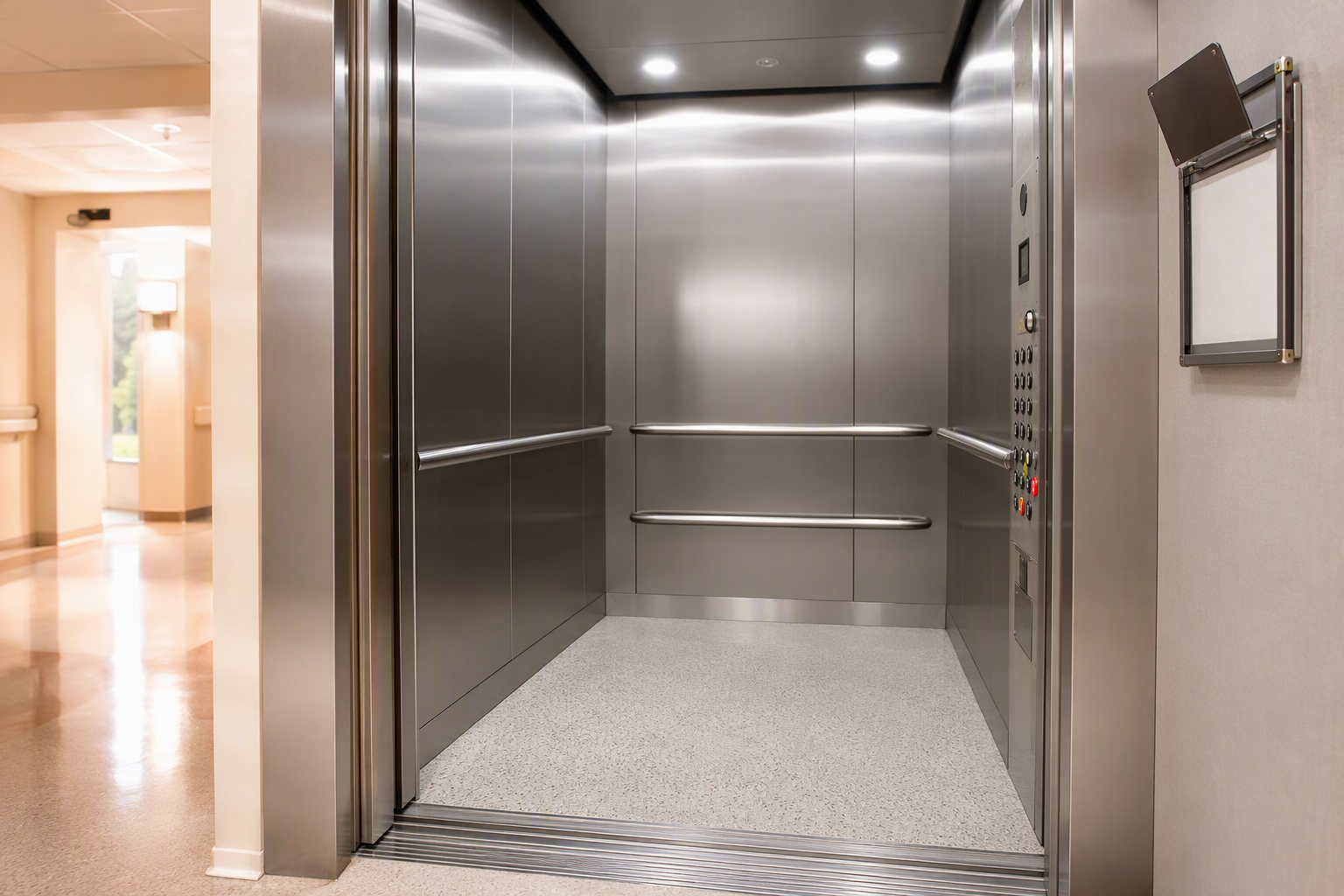
Hospitals, medical office buildings, outpatient surgery centers, and skilled nursing facilities face a layered compliance environment that goes beyond what a standard commercial elevator program addresses. Elevators in these settings may transport patients on gurneys, powered wheelchairs, medical carts, and life-support equipment, placing unique demands on door dwell times, cab capacity, and floor leveling precision.
Key compliance frameworks applicable in 2026 include:
- ASME A17.1 Safety Code for Elevators and Escalators: The foundational national standard governing elevator design, installation, inspection, testing, and maintenance. Arizona adopts this code as the basis for state elevator safety requirements.
- ADA Standards for Accessible Design: Federal law requires elevators serving multiple floors in healthcare facilities to meet specific dimensional, signage, and operational criteria to remain accessible to patients and visitors with disabilities.
- The Joint Commission (TJC) Environment of Care Standards: Healthcare facilities seeking Joint Commission accreditation must demonstrate that vertical transportation equipment is maintained to prevent patient harm and operational disruption.
- CMS Conditions of Participation: Facilities receiving Medicare or Medicaid reimbursement are subject to federal life-safety provisions that include elevator maintenance and emergency operation requirements.
- OSHA General Industry Standards: Elevator maintenance technicians and facility staff must follow applicable OSHA lockout/tagout and confined-space procedures during service work.
How Often Should Elevators in Hotels and Healthcare Facilities Be Inspected?
Inspection frequency is not discretionary — it is code-mandated. Under Arizona’s adoption of ASME A17.1, conveyances are subject to periodic inspections and tests at intervals defined by the code and enforced by the Arizona Department of Occupational Safety and Health (ADOSH). Facilities that operate elevators without a current certificate of inspection are in violation of state law.
Beyond mandatory state inspections, high-traffic healthcare and hotel elevators benefit from more frequent preventive maintenance visits — the specific interval should be determined based on call volume, car age, and the criticality of the application. A hospital elevator carrying ICU patients requires a more aggressive maintenance schedule than a low-rise office elevator.
What Are the Top Causes of Elevator Failures in Healthcare and Hotel Buildings?
Understanding failure modes helps facilities prioritize maintenance resources. Common causes of unplanned elevator downtime in healthcare and hospitality settings include:
- Door system failures: Door operators, clutches, gibs, and safety edges are subject to high wear in facilities with heavy foot traffic and wide, frequent door cycles.
- Hydraulic system degradation: Older hydraulic elevators may develop seal leaks, cylinder corrosion, and oil contamination — concerns that also carry environmental compliance implications.
- Control system obsolescence: Legacy relay-based or early microprocessor controllers are increasingly difficult to source parts for, extending downtime when failures occur.
- Leveling errors: Imprecise floor leveling creates trip hazards — a critical patient safety and ADA compliance issue in healthcare environments.
- Deferred maintenance accumulation: Skipped preventive visits allow minor wear to compound into major component failures.
What Should a Preventive Maintenance Visit Cover Step by Step?
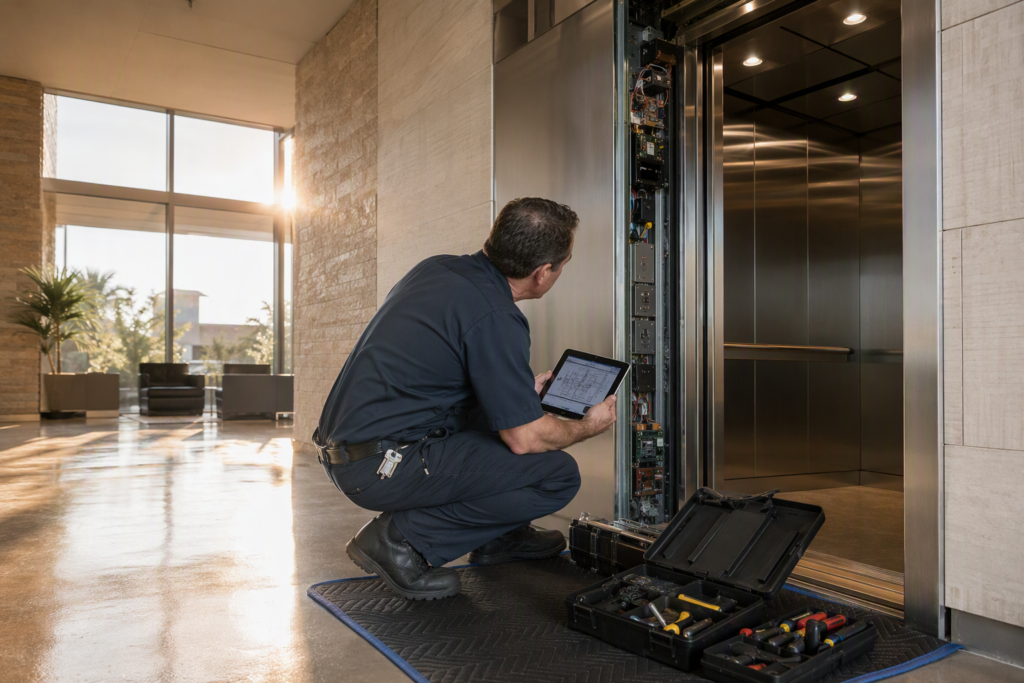
A thorough preventive maintenance visit for a hotel or healthcare elevator should follow a structured protocol. The following steps represent accepted best practice:
- Pre-visit coordination: Notify facility management of service window to minimize impact on patient transport or guest operations.
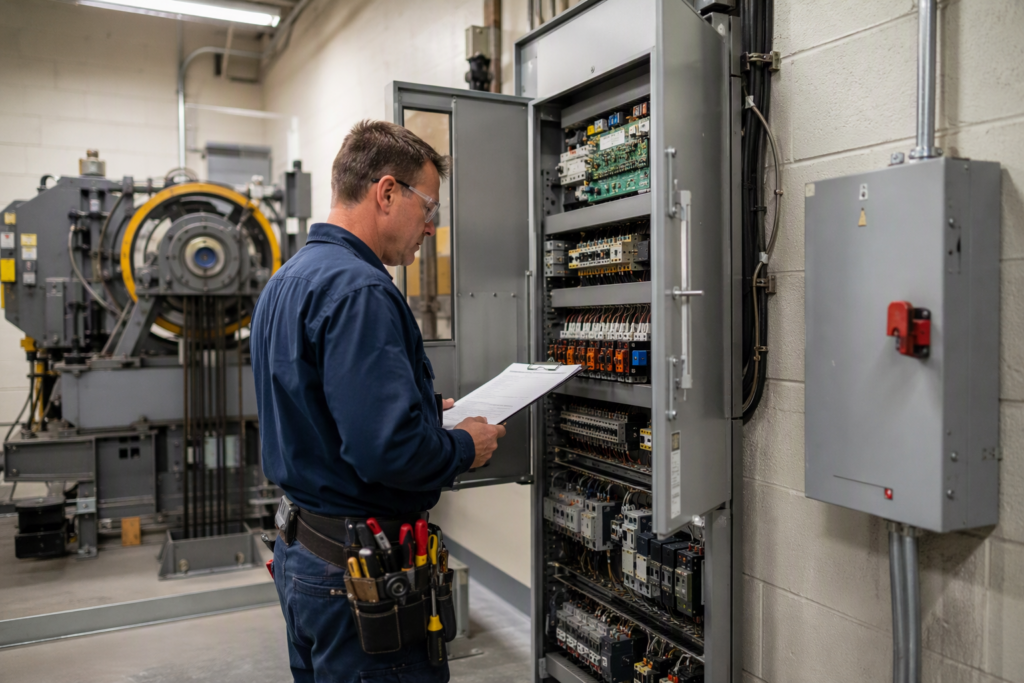
- Machine room inspection: Check controller, drive unit, oil levels, motor, brake, ropes or hydraulic fluid lines, and ventilation for any abnormalities.
- Hoistway and pit inspection: Inspect pit for water intrusion, debris, or oil leaks; verify pit lighting, stop switch, and ladder condition per ASME A17.1.
- Door system service: Lubricate and adjust door operators, clutch rollers, sills, and gibs; test door timing and reversal force against ADA thresholds.
- Safety device testing: Test safeties, buffers, governor, and overspeed device per applicable ASME test intervals.
- Leveling verification: Confirm floor-to-cab leveling accuracy to eliminate trip hazard risk, particularly critical in healthcare settings.
- Emergency systems check: Test emergency lighting battery, two-way communication phone, and alarm bell operation.
- Cab interior inspection: Verify lighting levels, handrail security, floor condition, ADA-compliant signage, and Braille markings on control panels.
- Documentation: Record all findings, adjustments, parts replaced, and any deferred items requiring follow-up in the facility’s maintenance log.
How Does ADA Compliance Affect Hotel and Healthcare Elevator Maintenance?
The ADA Standards for Accessible Design establish specific operational requirements that must be maintained — not just installed. Door reopening devices must remain functional, door dwell time must allow passengers using mobility aids to enter and exit safely, control button heights must remain within reachable range, and audible floor announcements must be operative.
In healthcare facilities, these requirements take on heightened importance because a significant proportion of elevator users may be patients or visitors with mobility impairments. Routine maintenance must include ADA functional checks, not solely mechanical performance checks. Arizona Elevator Solutions incorporates ADA compliance verification into every scheduled service visit for healthcare and hotel clients.
What Is the Role of Elevator Modernization in Healthcare Facilities?
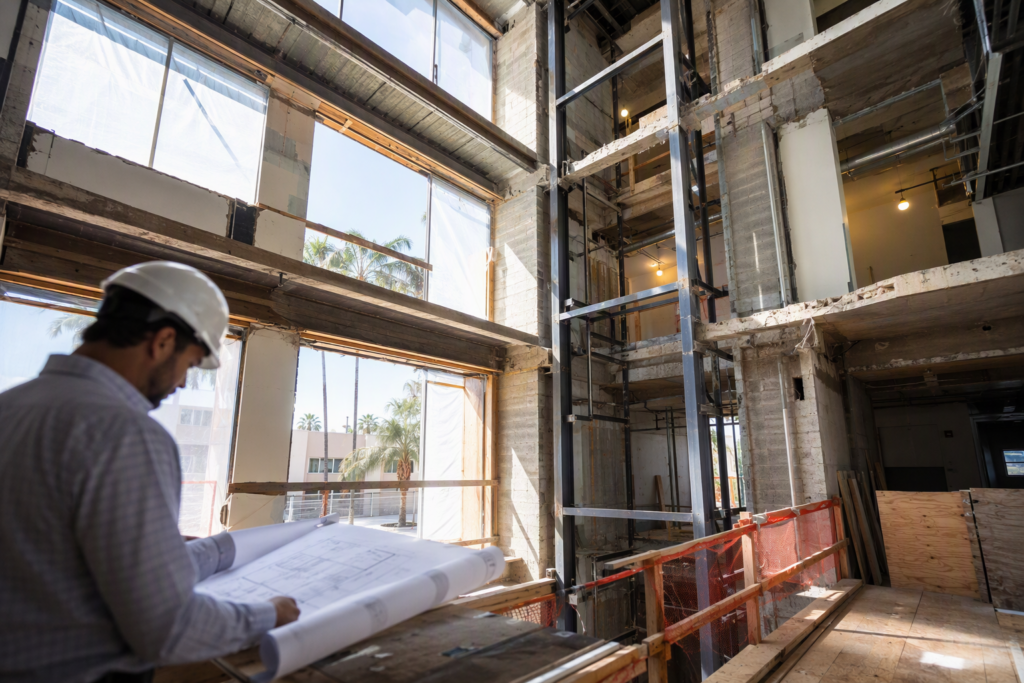
Older elevator equipment eventually reaches a point where maintenance alone cannot sustain reliable, code-compliant performance. Modernization — replacing drives, controllers, door operators, and cab interiors while retaining the existing hoistway structure — is often more cost-effective than full replacement and can bring legacy equipment into alignment with current ASME A17.1 and ADA requirements.
For healthcare facilities, modernization also presents an opportunity to upgrade to destination dispatch systems, improve energy efficiency, and install enhanced cab environments suited to infection control — features increasingly relevant in hospital and outpatient settings.
How Should Healthcare Facilities Choose an Elevator Maintenance Vendor?
Vendor selection for healthcare and hospitality elevator maintenance should consider the following criteria:
- State certification and licensing: Confirm the service provider holds applicable Arizona elevator contractor certifications.
- Code knowledge: Verify familiarity with current ASME A17.1 editions and ADA requirements as applied in Arizona.
- Healthcare experience: Look for demonstrated experience servicing elevators in hospitals, medical office buildings, and skilled nursing facilities where infection control, patient safety, and 24/7 operational continuity matter.
- Documentation practices: A reputable vendor provides thorough written service records that satisfy Joint Commission and CMS audit requirements.
- Local presence: A provider with established presence in Phoenix, Tucson, Scottsdale, and Mesa understands local inspection authority expectations and can coordinate with Arizona ADOSH on compliance matters.
Arizona Elevator Solutions serves healthcare and hospitality clients across the greater Phoenix area, Tucson, Scottsdale, and Mesa with maintenance programs built around these criteria.
Questions Your Inspector Will Ask
When an Arizona state elevator inspector or a Joint Commission surveyor reviews your healthcare or hotel elevator program, expect questions such as:
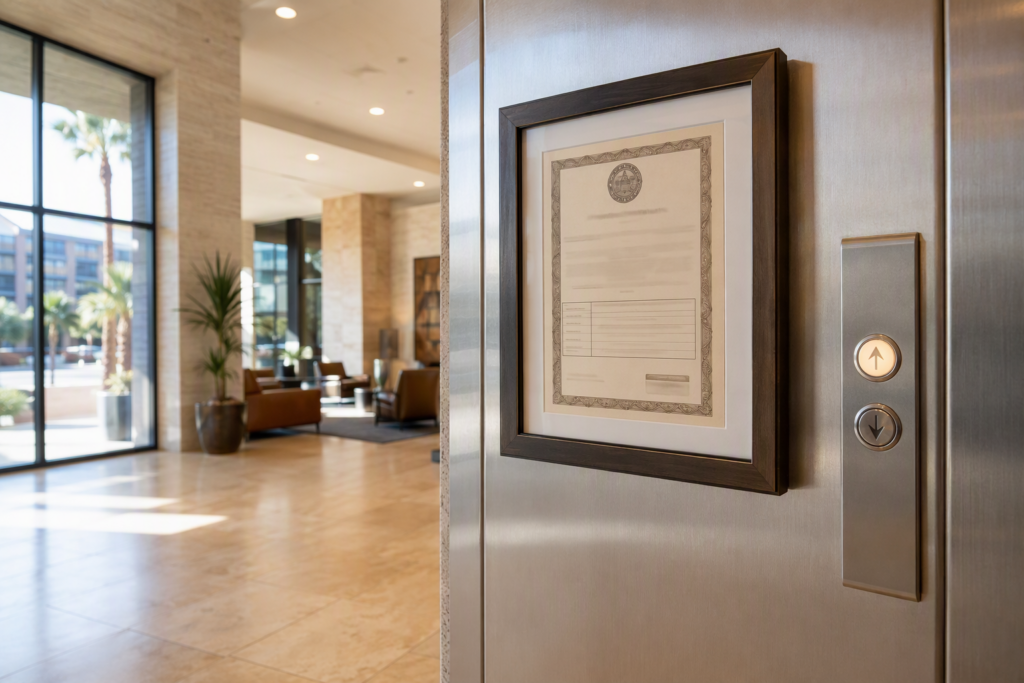
- “Can you produce the current certificate of inspection for each conveyance?” — Inspectors will verify currency and posting compliance.
- “What is your documented preventive maintenance schedule and interval?” — Inspectors want written evidence of a consistent program, not verbal assurances.
- “When was the last full periodic test performed, and by whom?” — ASME A17.1 mandates specific periodic tests; inspectors verify dates and credentials.
- “Are your maintenance logs current and available for review?” — Logs must show dates, technician identification, work performed, and any deficiencies noted.
- “Has any safety device been found defective and what corrective action was taken?” — Inspectors look for documented deficiency resolution, not just initial discovery.
- “Is the emergency communication system functional and tested?” — Two-way phone testing records must be current.
- “Have any ADA-related complaints or deficiencies been identified and corrected?” — Healthcare facilities are expected to proactively address accessibility issues.
- “Is the pit free of water, debris, and oil accumulation?” — Pit condition is a primary inspection point and a life-safety issue.
- “Is the machine room secured, ventilated, and free of unauthorized storage?” — ASME A17.1 prohibits storage of non-elevator materials in machine rooms.
What Immediate Steps Should a Facility Take If an Elevator Malfunctions?
- Take the elevator out of service immediately by placing it on independent service or posting clear “Out of Service” signage to prevent passenger use.
- If a passenger is entrapped, contact emergency services and the elevator service provider simultaneously. Do not attempt to extract passengers without trained personnel.
- Document the malfunction with date, time, reported symptoms, and any witness observations before service begins.
- Notify facility management and risk management in accordance with internal incident reporting protocols.
- Contact your certified elevator service provider to dispatch a qualified technician for diagnosis and repair.
- Do not return the elevator to service until the root cause has been identified, corrected, and verified by a qualified technician.
- Update the maintenance log with the full account of the malfunction, the corrective action taken, and the date the unit was returned to service.
Why Do Phoenix, Tucson, Scottsdale, and Mesa Healthcare Facilities Need Local Elevator Expertise?
Arizona’s climate presents unique challenges for elevator equipment — extreme heat affects hydraulic fluid viscosity, machine room temperatures, and electronic controller performance in ways not encountered in cooler climates. A maintenance provider with local Arizona experience understands how to calibrate preventive maintenance programs to account for these regional conditions.
Additionally, navigating Arizona ADOSH inspection scheduling, local permit requirements, and coordination with Arizona-based authorities having jurisdiction (AHJs) is more efficient with a provider embedded in the Phoenix, Tucson, Scottsdale, and Mesa markets. Arizona Elevator Solutions brings that regional familiarity to every client engagement.
What Records Should Healthcare Facilities Retain for Elevator Compliance?
Comprehensive record retention is a non-negotiable component of a defensible elevator compliance program. Healthcare facilities should maintain:
- Current and prior certificates of inspection posted in or near the elevator cab as required by Arizona law.
- Preventive maintenance logs for a minimum period consistent with Joint Commission and state record retention requirements.
- Periodic test reports completed by a qualified elevator inspector.
- Records of any deficiencies identified and documentation of corrective actions taken.
- Modernization or alteration permits and inspection sign-offs for any work performed.
- Emergency evacuation and entrapment procedure records, including staff training documentation.
Get a Free Elevator Assessment for Your Healthcare or Hotel Facility
Proactive maintenance is always less costly — in time, money, and patient or guest safety risk — than reactive emergency repairs. Whether your facility is a Phoenix hospital, a Tucson medical office building, a Scottsdale resort hotel, or a Mesa senior living community, Arizona Elevator Solutions is ready to evaluate your current elevator program against 2026 ASME A17.1, ADA, and Arizona state compliance requirements.
Contact Arizona Elevator Solutions for a free elevator assessment: 480-557-7600
Need elevator service you can rely on? Arizona Elevator Solutions is ready to help.