Hospital Elevator Requirements and Maintenance: Who to Contact in Arizona
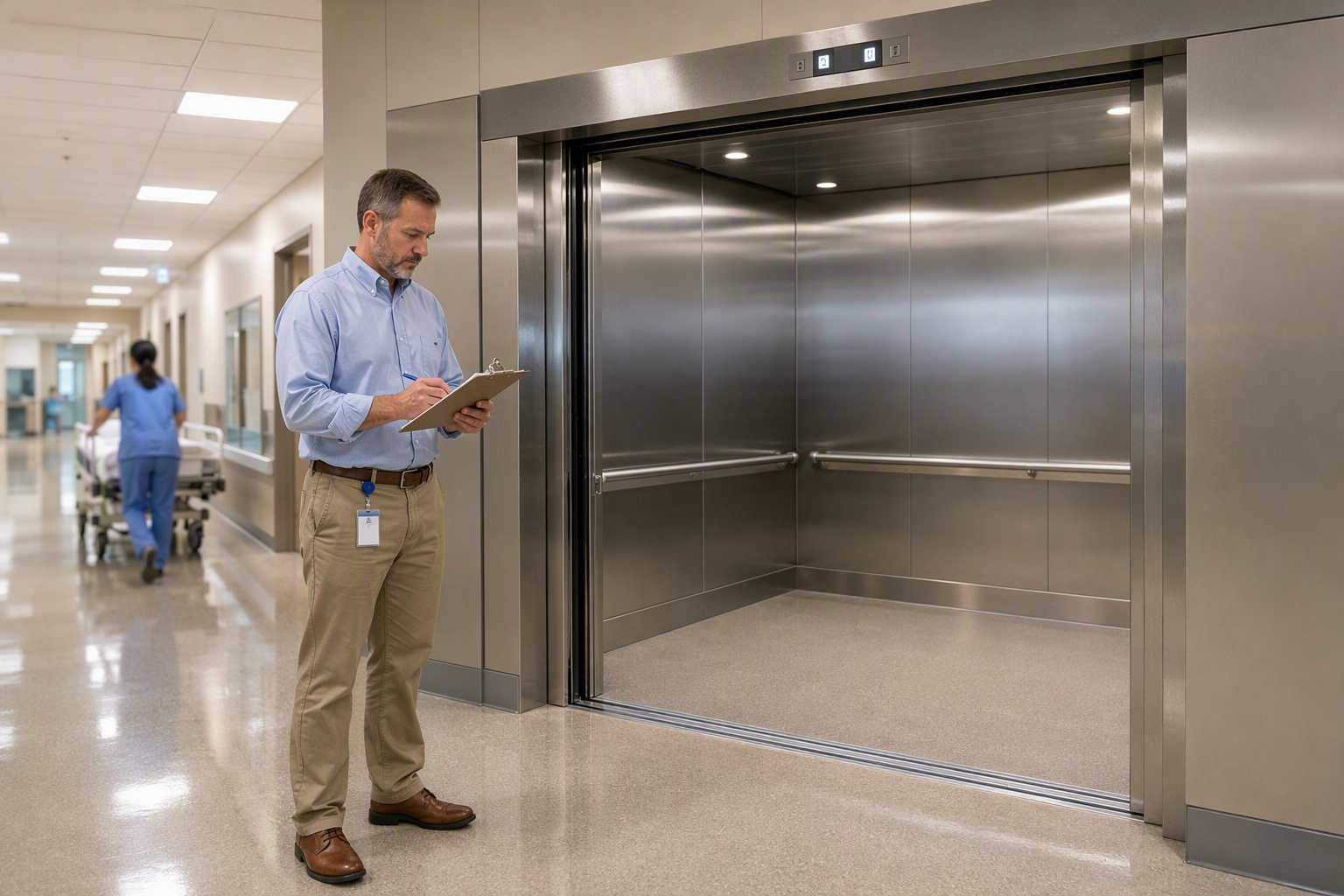
Hospitals, medical centers, and outpatient clinics depend on elevators not just for convenience, but for patient transport, emergency response, and the safe movement of medical equipment. When an elevator fails in a healthcare setting, the consequences extend far beyond inconvenience. This guide explains who to contact, what compliance requirements apply, and what hospital facilities managers in Phoenix, Tucson, Scottsdale, and Mesa need to know to keep vertical transportation running safely and legally in 2026.
—
Who Is Responsible for Hospital Elevator Maintenance?

Hospital elevator maintenance falls under the responsibility of the facility’s engineering or plant operations department, typically overseen by a Director of Facilities or Chief Engineer. That internal team coordinates with a licensed elevator service company to fulfill all inspection, maintenance, and repair obligations required by Arizona state law and applicable building codes.
In Arizona, elevator equipment is regulated by ADOSH under the authority of the Arizona Revised Statutes. Any company performing elevator work in a hospital must hold the appropriate state licensing. Arizona Elevator Solutions is a certified elevator service provider operating across the Phoenix metro, Tucson, Scottsdale, and Mesa markets, equipped to serve the specific demands of healthcare facilities.
—
What Compliance Standards Apply to Hospital Elevators?
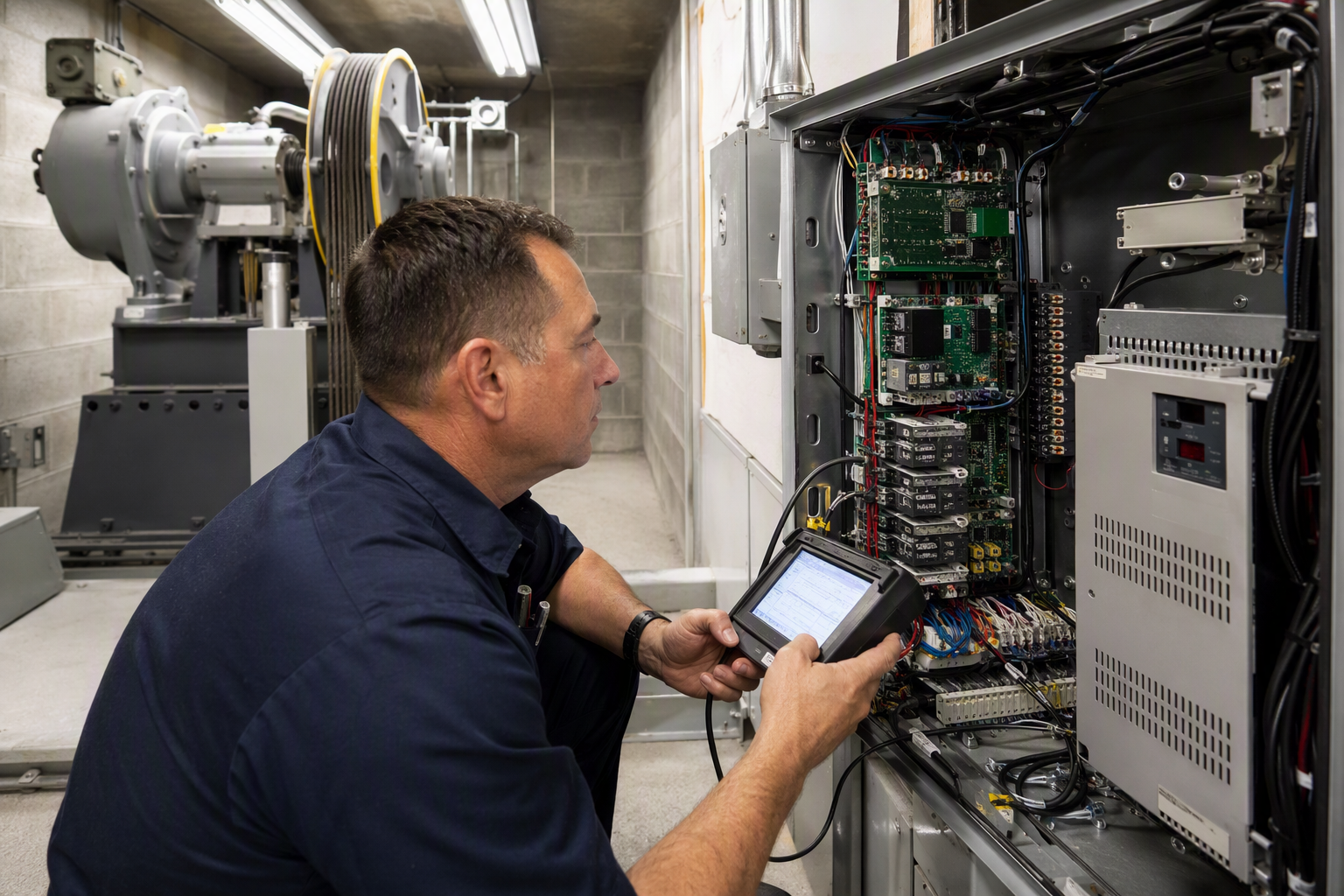
Healthcare facilities face a layered set of requirements that go beyond standard commercial elevator codes. Key standards include:
- ASME A17.1 Safety Code for Elevators and Escalators: The foundational national standard governing elevator design, installation, inspection, testing, and maintenance. Arizona adopts this code through ADOSH regulations. The current edition (referenced through 2026) includes specific provisions for car dimensions, door timing, and emergency operations relevant to hospital use.
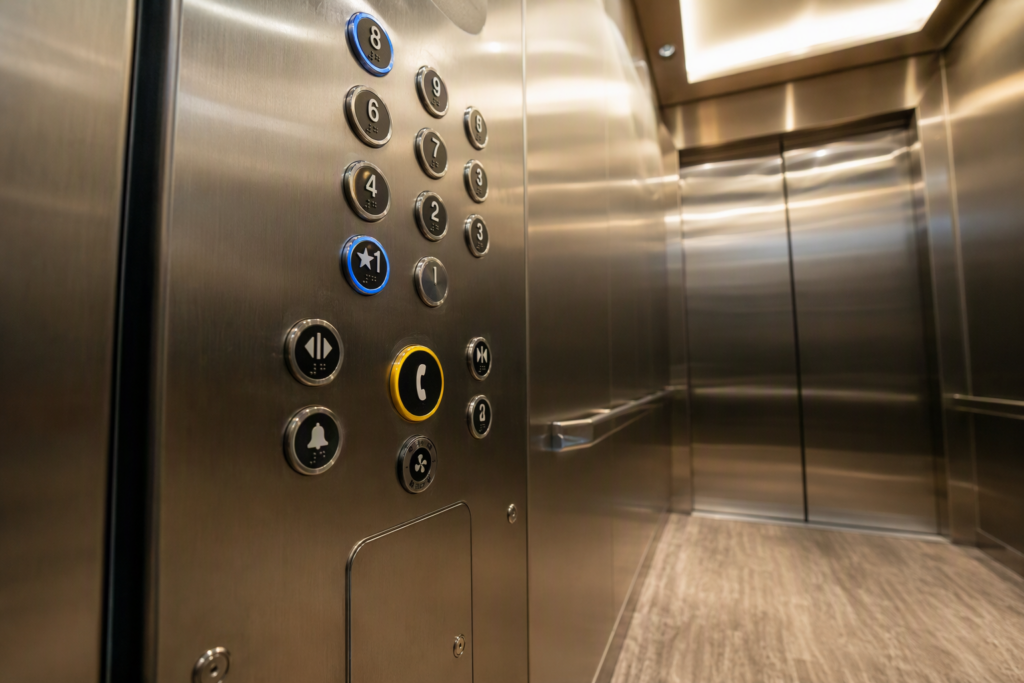
- Americans with Disabilities Act (ADA): Hospitals are places of public accommodation and must meet ADA accessibility requirements, including elevator cab dimensions, door dwell times, braille and raised-character controls, and audible signals.
- NFPA 99 – Health Care Facilities Code: This standard addresses fire and life safety systems that intersect with elevator operations, including firefighter emergency service and recall requirements.
- The Joint Commission Standards: Accredited hospitals must demonstrate that their vertical transportation equipment is maintained, inspected, and documented in accordance with The Joint Commission’s Environment of Care standards.
- FGI Guidelines for Design and Construction of Hospitals: These guidelines specify minimum elevator quantities, dimensions, and load capacities for new hospital construction and major renovations — including requirements for dedicated hospital-bed-sized elevator cars.
- OSHA General Industry Standards: Maintenance technicians working on elevator equipment in healthcare settings must comply with OSHA lockout/tagout and fall protection requirements.
—
What Are the Unique Elevator Requirements for Hospitals?
Hospital elevators are not standard commercial lifts. They must accommodate stretchers, hospital beds, and large medical equipment such as imaging carts and IV stands. The FGI Guidelines prescribe minimum interior cab dimensions for patient-use elevators, and ASME A17.1 sets performance requirements that affect door timing, load capacity ratings, and leveling accuracy — all critical in a healthcare setting where a misleveled cab can cause a patient gurney to tip.
Hospitals also require elevators to be designated for separate uses: passenger elevators, service elevators, and, in larger facilities, dedicated surgical or ICU transport elevators. Each designation may carry different maintenance and inspection obligations that a qualified elevator service provider must track and document separately.
—
How Often Must Hospital Elevators Be Inspected in Arizona?
Under Arizona ADOSH regulations, which adopt ASME A17.1 requirements, elevators are subject to periodic inspections and tests. The code distinguishes between routine periodic inspections and less-frequent category tests (such as Category 1 and Category 5 tests for hydraulic and traction systems). Hospitals must maintain current certificates of inspection for each elevator unit on premises — a requirement that Joint Commission surveyors and state inspectors verify during site visits.
Arizona Elevator Solutions helps healthcare clients maintain an up-to-date inspection schedule, coordinates with state-approved inspectors, and retains documentation in a format that satisfies both ADOSH and accreditation surveyors.
—
What Should a Hospital Look for When Choosing an Elevator Service Company?
Not every elevator company has experience with the regulatory and operational complexity of a healthcare environment. Facilities managers should evaluate vendors on the following criteria:
- Valid ADOSH licensing to perform elevator work in Arizona
- Demonstrated experience servicing hospital-grade traction and hydraulic elevator systems
- Familiarity with Joint Commission Environment of Care documentation requirements
- Ability to provide maintenance logs and inspection records in a hospital-compatible format
- Knowledge of healthcare-specific emergency protocols, including firefighter service (Phase I and Phase II) and hospital evacuation procedures
- Capacity to serve multiple facilities across the Phoenix, Scottsdale, Mesa, and Tucson regions
—
What Is Included in a Hospital Elevator Maintenance Contract?
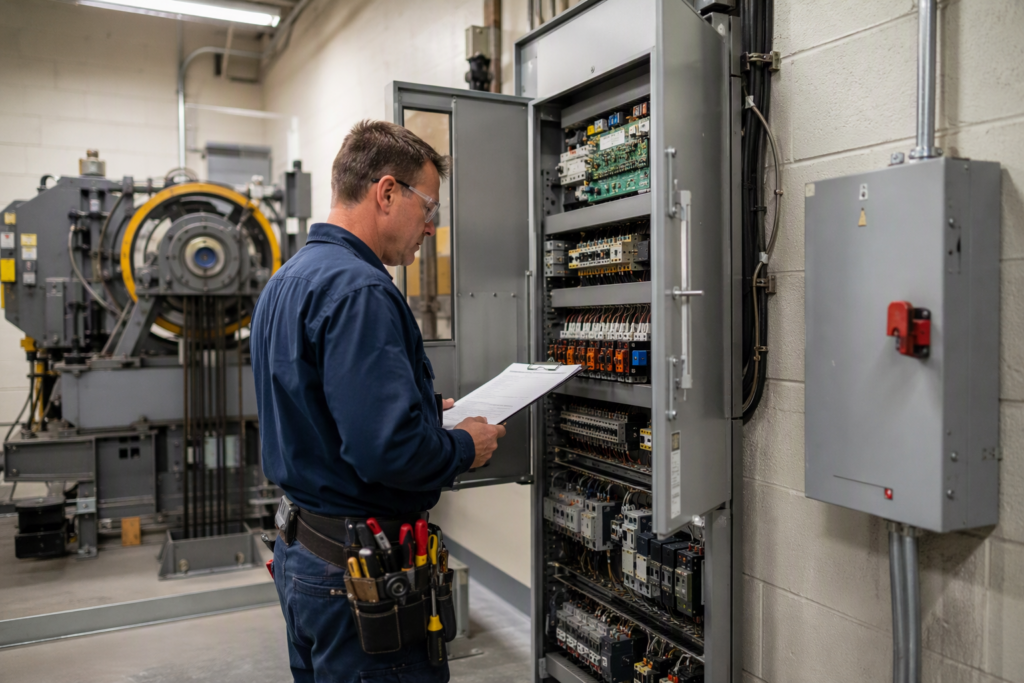
A comprehensive hospital elevator maintenance agreement should cover preventive maintenance visits on a defined schedule, lubrication and adjustment of mechanical components, safety device testing, door operator inspection and adjustment, controller diagnostics, callback service for unplanned outages, and full documentation of all work performed. Maintenance contracts for healthcare facilities typically require more detailed record-keeping than standard commercial agreements due to accreditation requirements.
When evaluating proposals, facilities managers should confirm that the contract explicitly addresses the inspection categories required under ASME A17.1 and includes provisions for emergency recall testing and ADA compliance verification.
—
How Does ADA Compliance Affect Hospital Elevator Operations?
Hospitals are legally required to maintain elevators in ADA-compliant operating condition. This means that tactile controls must remain functional and legible, audible announcements must work properly, door dwell times must meet minimum standards to allow wheelchair and mobility device users to enter and exit safely, and cab leveling must be maintained within the tolerances specified by ADA guidelines.
Deferred maintenance that causes ADA non-compliance can expose a hospital to federal complaint investigations and civil litigation. Routine maintenance visits by a qualified provider should include ADA compliance checks as a standard line item — not an afterthought.
—
What Happens When a Hospital Elevator Fails or Is Taken Out of Service?
When a hospital elevator is removed from service — whether for emergency repair or scheduled modernization — the facility must implement a patient transport contingency plan. Facilities managers should coordinate elevator downtime with nursing and patient transport teams to minimize impact on care delivery. The following steps outline a standard protocol for managing planned or unplanned elevator outages:
- Immediately notify the plant operations team and nursing leadership of the outage scope and estimated duration.
- Post clear out-of-service signage at each affected landing and program the elevator control panel to prevent passenger entrapment.
- Activate the facility’s vertical transport contingency plan, designating alternative elevators for patient movement and identifying stairwell routes for ambulatory staff and visitors.
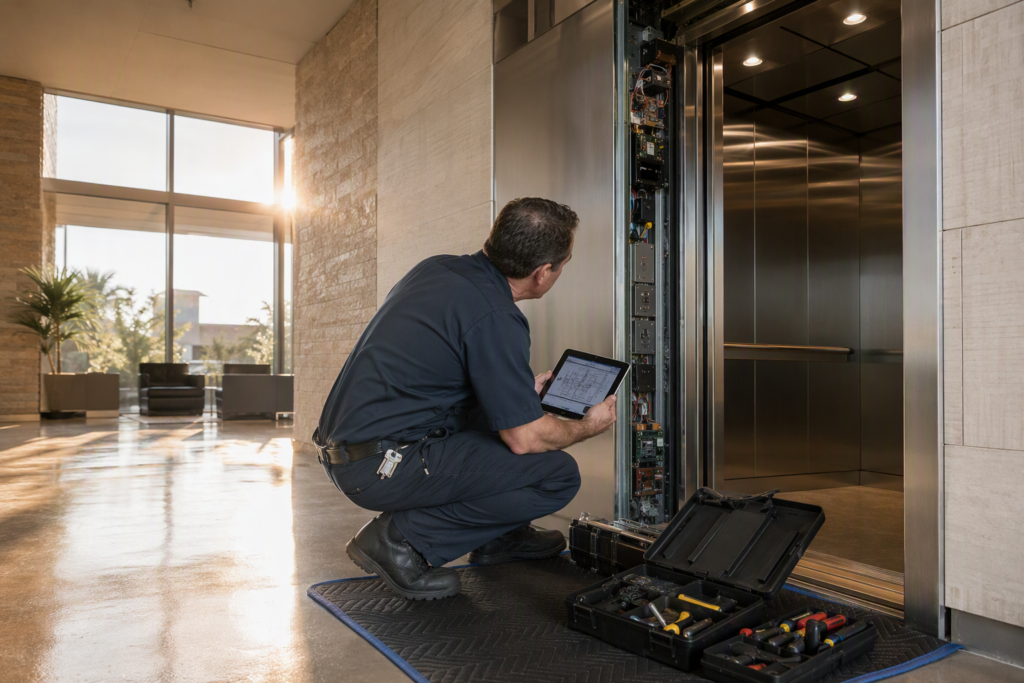
- Contact the licensed elevator service provider to dispatch a qualified technician for diagnosis and repair.
- Document the outage, cause, and resolution in the maintenance log for Joint Commission and ADOSH record-keeping purposes.
- Upon return to service, conduct a functional test and verify ADA compliance before reopening the elevator to patients and visitors.
- File any required incident or equipment failure reports with ADOSH if the outage involved a safety-related event.
—
What Does Hospital Elevator Modernization Involve?
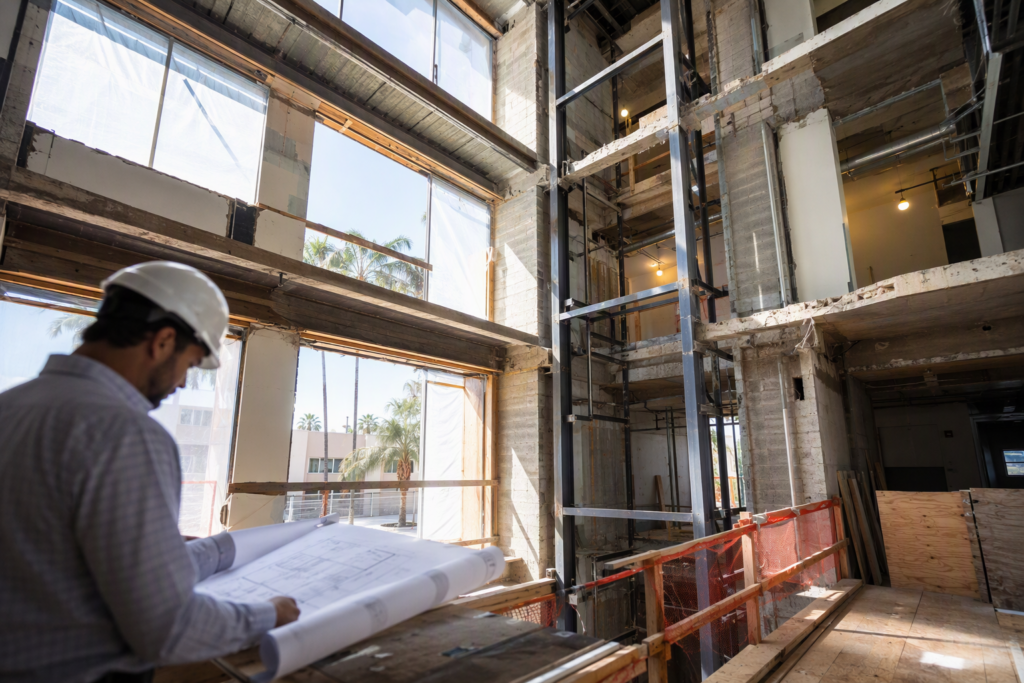
Older hospital elevators may require modernization to meet current code requirements, improve reliability, or accommodate heavier patient transport equipment. Modernization projects typically involve upgrading the elevator controller and drive system, replacing door operators and safety devices, installing updated cab interiors with ADA-compliant controls, and integrating with the hospital’s building management or fire alarm systems.
Modernization in an occupied hospital requires careful phasing to keep at least one elevator in service at all times on any given bank. Arizona Elevator Solutions works with healthcare facilities teams to plan modernization projects around patient care schedules, minimizing disruption to hospital operations across its service areas in Phoenix, Scottsdale, Mesa, and Tucson.
—
How Do Emergency Recall and Firefighter Service Requirements Apply to Hospitals?
All hospital elevators must be equipped with Phase I Emergency Recall and Phase II Firefighter Service as required by ASME A17.1. Phase I automatically returns elevators to a designated floor upon activation of the building’s fire alarm system. Phase II allows trained firefighters to manually operate the elevator from inside the cab during emergency response.
These systems must be tested periodically and documented. Hospitals that fail to maintain functional firefighter service recall face code violations that can affect their operating license and accreditation status.
—
Questions Your Inspector Will Ask
Whether the inspector is from ADOSH, The Joint Commission, or a third-party accreditation body, the following questions are commonly raised during a healthcare facility elevator review. Facilities managers should be prepared to answer each with supporting documentation:
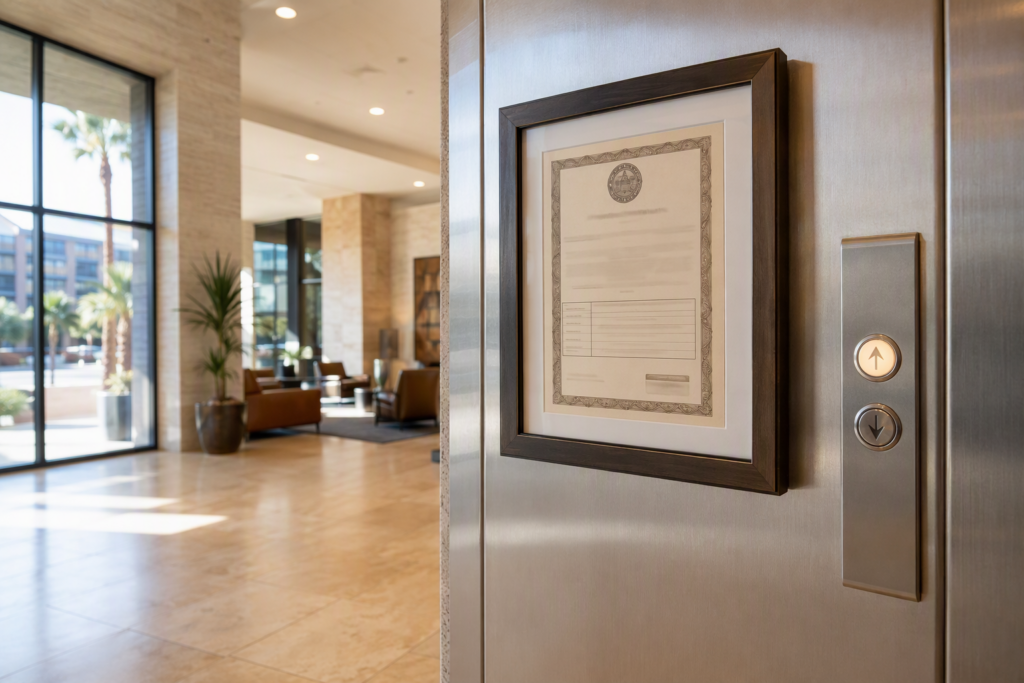
- Is the current certificate of inspection posted in or adjacent to each elevator cab, and is it within the valid inspection period?
- When was the most recent Category 1 or Category 5 test performed, and is documentation on file?
- Are maintenance logs available for each elevator unit, including dates of service, work performed, and technician credentials?
- Have Phase I and Phase II firefighter service recall systems been tested, and is documentation current?
- Are all ADA-required features — tactile controls, audible signals, door timing — currently functional?
- Is there a written procedure for managing elevator outages, including patient transport contingencies?
- Has the facility experienced any entrapments, safety events, or equipment failures since the last inspection, and were they reported to ADOSH as required?
- Are elevator weight capacity placards posted and accurate for the current equipment configuration?
—
Are There Special Considerations for Outpatient Clinics and Medical Office Buildings?
Outpatient clinics, surgery centers, and medical office buildings face many of the same elevator compliance obligations as hospitals, though the specific accreditation framework may differ. Facilities operating under AAAHC, DNV, or CMS certification have their own elevator-related Environment of Care requirements. ADA obligations apply equally regardless of facility type. Any Arizona medical facility that serves patients with mobility limitations and has vertical floors must maintain ADA-compliant elevator access.
—
How Can a Hospital Prepare for a State Elevator Inspection?
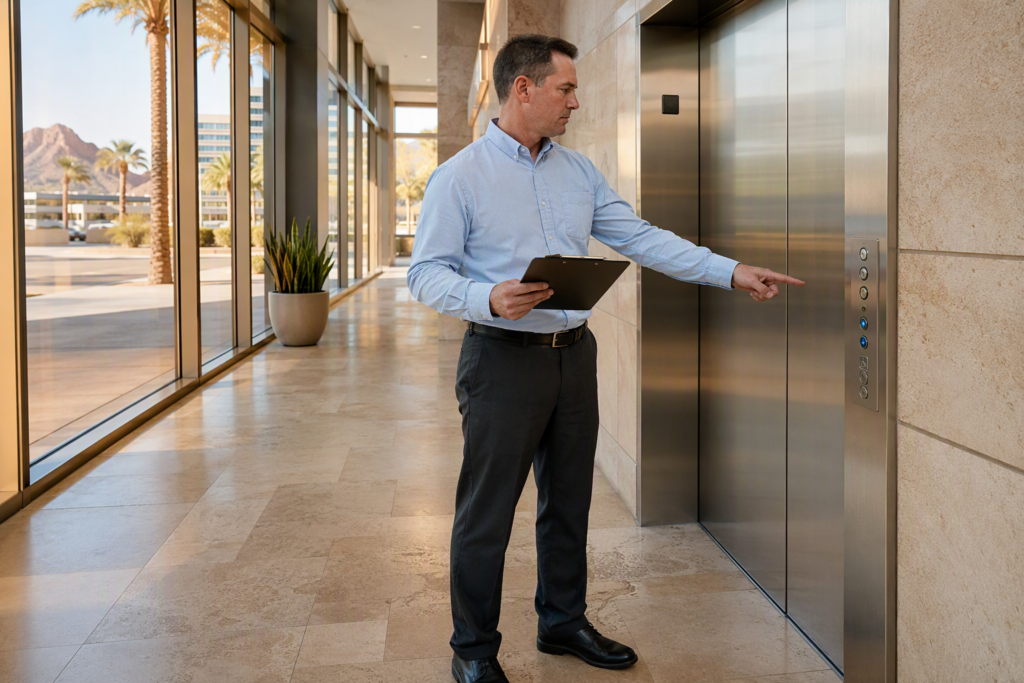
Preparation for an ADOSH elevator inspection should be an ongoing process rather than a reactive scramble. Best practices include maintaining a rolling maintenance log that is current to the date of inspection, scheduling category tests well in advance of their due dates, conducting internal walk-throughs of each elevator to verify posted certificates, ADA feature functionality, and cab condition, and ensuring that facilities staff can immediately locate all elevator equipment records upon request.
Working with a service provider like Arizona Elevator Solutions, which understands the documentation expectations of both ADOSH and healthcare accreditation bodies, simplifies inspection readiness across a multi-elevator hospital campus.
—
Contact Arizona Elevator Solutions for a Free Elevator Assessment
Hospital and healthcare facility managers throughout Phoenix, Tucson, Scottsdale, and Mesa rely on qualified, licensed elevator service companies to meet the complex compliance demands of patient-care environments. From routine maintenance and ADA compliance checks to modernization planning and inspection preparation, the right service partner makes a measurable difference in uptime, safety, and regulatory standing.
Contact Arizona Elevator Solutions for a free elevator assessment: 480-557-7600
A qualified representative will review your facility’s current elevator inventory, inspection status, and maintenance program to identify any compliance gaps and recommend a service plan aligned with healthcare industry requirements.
Need elevator service you can rely on? Arizona Elevator Solutions is ready to help.