
Planning an accurate elevator budget requires more than guessing at last year’s invoices. Elevators are life-safety equipment governed by the ASME A17.1 Safety Code for Elevators and Escalators and subject to ADA accessibility requirements. Deferred maintenance and poor financial planning can expose building owners to regulatory penalties, liability, and costly emergency repairs. The guide below breaks down every major cost category, compares vendor types, and provides a framework for building a defensible, accurate elevator budget for fiscal year 2026 and beyond.
What Are the Core Budget Categories for Elevator Expenses?
Every elevator budget should be organized around four distinct cost buckets. Mixing these categories leads to underbudgeting in critical areas and surprise expenditures mid-year.
| Budget Category | Frequency | Planning Priority | Notes |
|---|---|---|---|
| Preventive Maintenance Contract | Monthly / Quarterly | High — recurring, predictable | Covers scheduled lubrication, inspection, adjustments, minor parts |
| Code-Required Inspections & Testing | Annual / Periodic | High — legally required | Governed by ASME A17.1; required by state/municipal authority |
| Reactive Repairs | As needed | Medium — variable, must be reserved | Callbacks, parts failures, entrapments; hardest to predict |
| Modernization / Capital Reserve | Long-term (10–30 year horizon) | High — often underfunded | Controls, cab interiors, motors, door operators, ADA upgrades |
How Do Preventive Maintenance Contracts Differ From Full-Coverage Contracts?
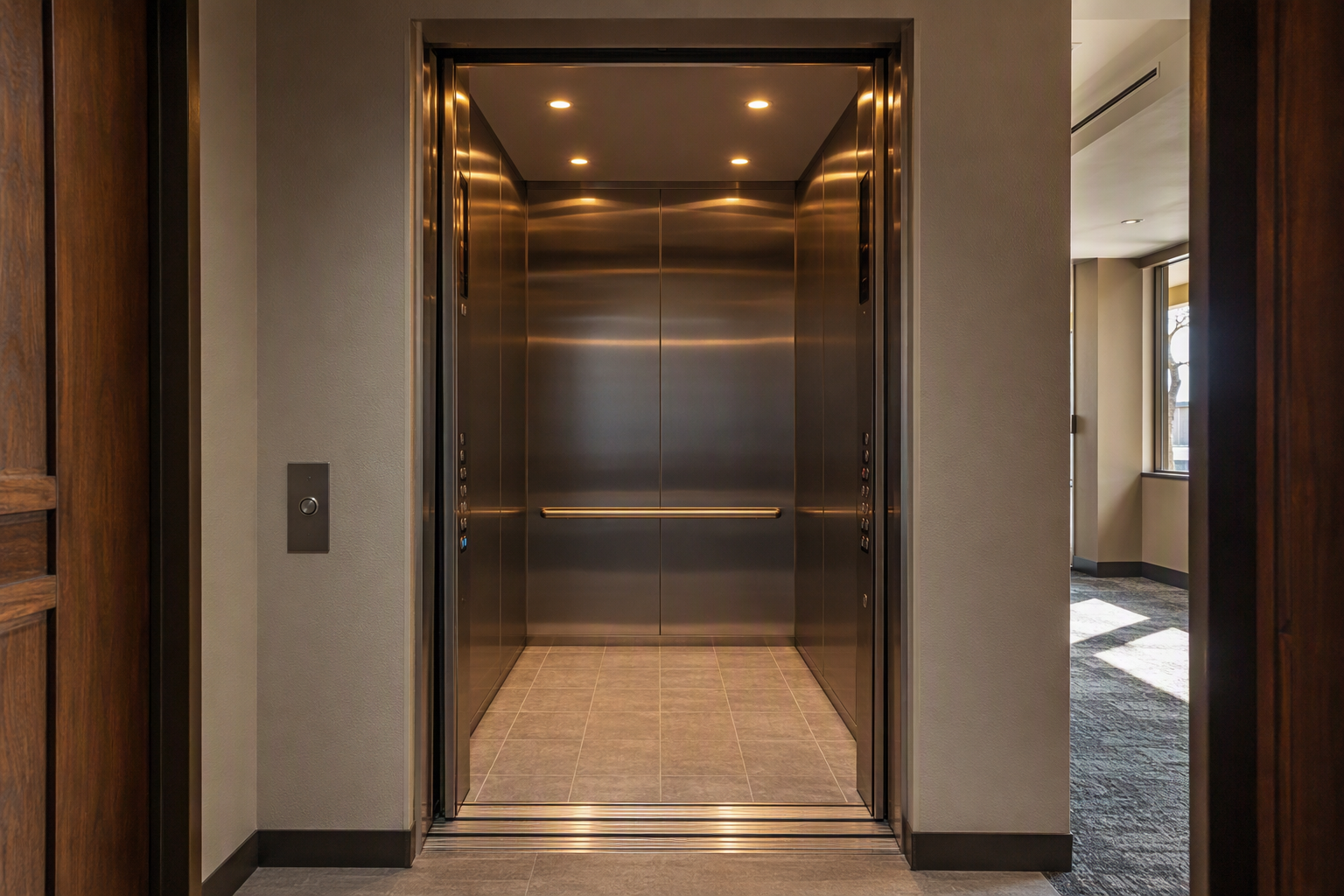
The type of service contract a building owner selects is the single largest determinant of budget predictability. Understanding what is and is not included in each contract tier prevents costly surprises.
| Contract Type | What’s Typically Included | What’s Excluded | Budget Predictability | Best For |
|---|---|---|---|---|
| Oil & Grease (Basic) | Lubrication, visual inspection, minor adjustments | All parts, all labor beyond basic visits | Low — high repair exposure | New equipment still under warranty |
| Parts & Labor (Mid-Tier) | Lubrication, labor, most standard parts | Major components (motors, controllers, hydraulic units) | Medium — moderate repair exposure | Equipment aged 5–15 years |
| Full-Coverage (Comprehensive) | All of the above plus major components | Cosmetic damage, code upgrades, vandalism | High — most predictable annual spend | Older equipment, high-traffic buildings |
| Inspection-Only | Code-required periodic inspections | All maintenance and repair labor/parts | Very low — maximum repair exposure | Owner-maintained with in-house staff (rare) |
Building owners should read every contract exclusion clause carefully. Terms like “obsolete parts,” “proprietary components,” and “code-mandated upgrades” represent common exclusions that can generate significant unbudgeted expenditures, particularly with older equipment.
What Compliance Costs Must Be Built Into Every Elevator Budget?
Compliance is non-negotiable. The ASME A17.1 Safety Code for Elevators and Escalators sets the baseline for inspection intervals, safety device testing, and equipment standards. State authorities having jurisdiction (AHJs) adopt editions of this code and may impose additional requirements.
In Arizona, elevator inspections are overseen by the Industrial Commission of Arizona. Budget line items that touch compliance include:
- Annual operational inspections — Required by state code; a passed inspection is required to maintain an operating permit.
- Periodic safety tests — The ASME A17.1 code mandates specific tests (such as governor and safety device tests, and pressure tests for hydraulic units) on defined multi-year cycles.
- ADA compliance reviews — The ADA requires accessible elevator features including appropriate door timing, control height, and audible signals. Buildings undergoing renovation may trigger compliance upgrades.
- Firefighters’ Emergency Operation (FEO) testing — Required under ASME A17.1 and verified at inspection.
- Seismic compliance (where applicable) — Arizona buildings in higher seismic zones may face requirements under adopted code editions.
Failure to maintain a valid operating certificate can result in an elevator being taken out of service, impacting building operations, tenant satisfaction, and lease compliance. Budget for inspection fees, any correction orders, and the labor cost of retesting.
How Should Building Owners Reserve for Reactive Repairs?
Reactive repairs are the most difficult line item to forecast precisely, but leaving a repair reserve out of the budget entirely is a common and costly mistake. The appropriate reserve size depends on equipment age, usage level, and the tier of maintenance contract in place.
General planning logic (qualitative, not a guaranteed figure):
- Newer equipment (under warranty or under 10 years old) with a strong preventive maintenance contract typically carries the lowest repair reserve requirement.
- Mid-age equipment (10–20 years) begins to experience component wear in door operators, traveling cables, and control systems. A meaningful reserve is prudent.
- Older equipment (20+ years), particularly equipment running on obsolete controllers or proprietary parts, carries the highest repair risk and should have the largest reserve — or should trigger a modernization assessment.
Building managers can reduce reactive repair frequency by ensuring the preventive maintenance provider performs genuine, thorough visits — not just a signature on a logbook. Request written service reports after every maintenance visit.
What Is a Modernization Reserve and When Does It Apply?
Modernization is a planned, partial or complete upgrade of elevator components — not a full replacement of the hoistway structure. Common modernization scopes include:
| Modernization Component | Driver | Planning Timeline | Benefit |
|---|---|---|---|
| Controller / Drive Replacement | Parts obsolescence, reliability | 20–30 years typical lifecycle | Reduced repair costs, improved reliability, modern diagnostics |
| Door Operator Upgrade | High callback rate, worn components | 15–25 years typical lifecycle | Reduced entrapments, improved passenger safety |
| Hydraulic Unit / Pump Replacement | Leaks, efficiency loss, environmental compliance | 20–30 years typical lifecycle | Energy savings, reduced leak liability |
| Cab Interior Renovation | Aesthetics, ADA upgrades, tenant expectations | 10–20 years depending on wear | Tenant satisfaction, code compliance |
| Traveling Cable Replacement | Wear, insulation degradation | 15–25 years typical lifecycle | Prevents electrical faults and outages |
| Safety Device Upgrades | Code adoption, new ASME edition requirements | Code-cycle driven | Maintains inspection compliance, reduces liability |
A capital reserve study specific to elevator assets — completed every three to five years — is the most reliable way to forecast modernization timing and cost. Arizona Elevator Solutions recommends that building owners with equipment over fifteen years old prioritize a formal condition assessment before finalizing any multi-year capital plan.
How Does Vendor Type Affect Budget Predictability?
Building owners in Arizona typically choose between three vendor categories. The choice affects pricing transparency, contract flexibility, and long-term budget control.
| Vendor Type | Pros | Cons | Budget Impact |
|---|---|---|---|
| OEM / Manufacturer Service Arm | Proprietary parts access, factory training | Higher contract rates, limited price competition, proprietary lock-in | Higher predictable baseline; parts monopoly can spike repair costs |
| Large National Independent | Broad coverage, established processes | Variable local technician quality, corporate pricing structures | Moderate baseline; contract terms vary widely |
| Certified Local Independent | Competitive pricing, responsive service, no proprietary markup, direct accountability | Coverage may be limited to specific metro areas | Often lower baseline contract cost; transparent repair billing |
Arizona Elevator Solutions is an independent, certified elevator service company serving building owners across Arizona. As an independent provider, Arizona Elevator Solutions is not restricted to proprietary parts sourcing, which allows for more competitive repair and modernization pricing — a meaningful budget advantage for owners of multi-elevator buildings or aging equipment.
What Steps Should a Building Owner Follow to Build an Elevator Budget?
- Inventory all elevator assets. Document each unit: equipment type (traction vs. hydraulic), installation year, last modernization date, current contract type, and number of stops.
- Review the prior two to three years of service records and invoices. Identify recurring repair categories, callback frequency, and any pattern failures.
- Obtain a current equipment condition assessment. A qualified elevator service company should inspect each unit and provide a written assessment of component wear and projected replacement timelines.
- Confirm upcoming inspection and testing obligations. Contact the Industrial Commission of Arizona or your service provider to identify which mandatory tests (e.g., governor test, hydraulic pressure test) fall within the next fiscal year.
- Solicit competitive bids for the maintenance contract. Compare contract scope, exclusions, and callback response terms — not just headline price.
- Set a repair reserve based on equipment age and contract coverage tier. Older equipment or basic-coverage contracts require a larger reserve.
- Build a modernization line in the capital plan for any unit over fifteen years old. Even if modernization is three to five years away, beginning to reserve now reduces budget shock.
- Document all budget assumptions in writing. When handing off budget rationale to finance or ownership, documented assumptions prevent mid-year disputes over scope.
How Does Equipment Age Affect Budget Complexity?
Equipment age is the most reliable proxy for total elevator cost of ownership. Younger equipment under active warranty and strong preventive maintenance programs carries modest, predictable annual costs. As equipment ages past manufacturer support windows, parts availability narrows, repair lead times can lengthen, and the probability of a major component failure increases.
Additionally, each new edition of the ASME A17.1 Safety Code for Elevators and Escalators introduces updated safety requirements that may be applied retroactively to existing equipment under certain trigger conditions — such as a major alteration or a jurisdiction’s adoption of a new code edition. Building owners should ask their service provider which code edition is currently enforced by the local AHJ in 2026 and whether any pending upgrades will be required.
What Is the ROI of Preventive Maintenance vs. Reactive-Only Service?
Building owners sometimes consider reducing or eliminating preventive maintenance contracts to cut expenses. The practical outcome is typically higher total spend due to increased reactive repair frequency, emergency service premiums, and accelerated component wear.
| Approach | Short-Term Cost | Long-Term Risk | Compliance Risk | Recommended? |
|---|---|---|---|---|
| Comprehensive Preventive Maintenance | Higher predictable monthly cost | Low — systematic wear prevention | Low — inspection readiness maintained | Yes — best total cost of ownership |
| Basic Preventive Maintenance | Lower monthly cost | Medium — parts and major components unprotected | Medium — depends on inspection history | Conditionally — appropriate for newer equipment |
| Reactive-Only (No Contract) | Zero ongoing contract cost | High — no systematic wear detection | High — inspection failures more likely | No — false economy for most building types |
Are There Budget Differences Between Hydraulic and Traction Elevators?
Yes. Equipment type affects both routine maintenance scope and major repair categories. Building owners operating both types in a single portfolio should budget for them separately.
- Hydraulic elevators require periodic oil sampling, seal inspection, and hydraulic unit maintenance. Older single-bottom cylinders may also face environmental liability related to underground leaks — a cost factor that should be assessed during a condition review. Pit flooding and oil spills can involve OSHA and environmental agency notification requirements.
- Traction elevators (geared and gearless) involve different wear categories: machine room equipment, wire ropes, brakes, and drive systems. Gearless machine room-less (MRL) traction units have different access and servicing requirements that affect labor time per visit.
What Are Common Budgeting Mistakes Building Owners Make?
- Carrying over last year’s budget without a condition review. Equipment ages, and last year’s numbers may not reflect current risk levels.
- Budgeting maintenance only, not inspections. Inspection fees, permit renewals, and correction order repairs are separate from the maintenance contract in most cases.
- Ignoring the modernization reserve. No elevator lasts forever. Omitting a long-term capital reserve creates a budget crisis when modernization becomes unavoidable.
- Selecting a contract based on price alone. A low-price contract with broad exclusions often results in higher total annual spend than a more comprehensive contract.
- Failing to document contract exclusions. Finance teams and boards need to understand what is and is not covered to approve appropriate reserves.
- Not accounting for downtime costs. In occupied residential or commercial buildings, elevator outages carry indirect costs — tenant complaints, ADA violations, lease disputes — that should factor into the risk calculus of deferred maintenance.
How Can Arizona Elevator Solutions Help With Budget Planning?
Arizona Elevator Solutions provides building owners across Arizona with independent elevator assessments designed to support accurate, defensible budget development. As a certified independent service company, Arizona Elevator Solutions offers:
- Equipment condition assessments that document current component wear and project upcoming maintenance needs
- Transparent maintenance contract options scaled to equipment age and building type
- Compliance support aligned with current ASME A17.1 requirements and Arizona regulatory expectations
- Modernization planning guidance for building owners with aging equipment
- Competitive, non-proprietary parts sourcing for repairs and upgrades
Because Arizona Elevator Solutions operates independently — not as a manufacturer’s service arm — building owners benefit from competitive pricing and unbiased recommendations based on equipment condition rather than brand affiliation.
Get a Free Elevator Assessment for Your 2026 Budget
An accurate elevator budget starts with an accurate picture of your equipment. Contact Arizona Elevator Solutions for a free elevator assessment and receive the information needed to build a defensible, code-compliant maintenance and capital plan for the coming fiscal year.
Call Arizona Elevator Solutions: 480-557-7600
Need elevator service you can rely on? Arizona Elevator Solutions is ready to help.