Independent Elevator Service vs OEM: Data, Costs & Compliance Guide
Building owners, facility managers, and property developers across Arizona face a recurring procurement decision: continue with the elevator’s original manufacturer for ongoing maintenance, or transition to an independent elevator service company. This guide examines every dimension of that decision — regulatory requirements, equipment considerations, contract structures, vendor comparison factors, and emerging industry trends — so decision-makers can choose with confidence.
What Is the Core Difference Between Independent Elevator Service and OEM Service?
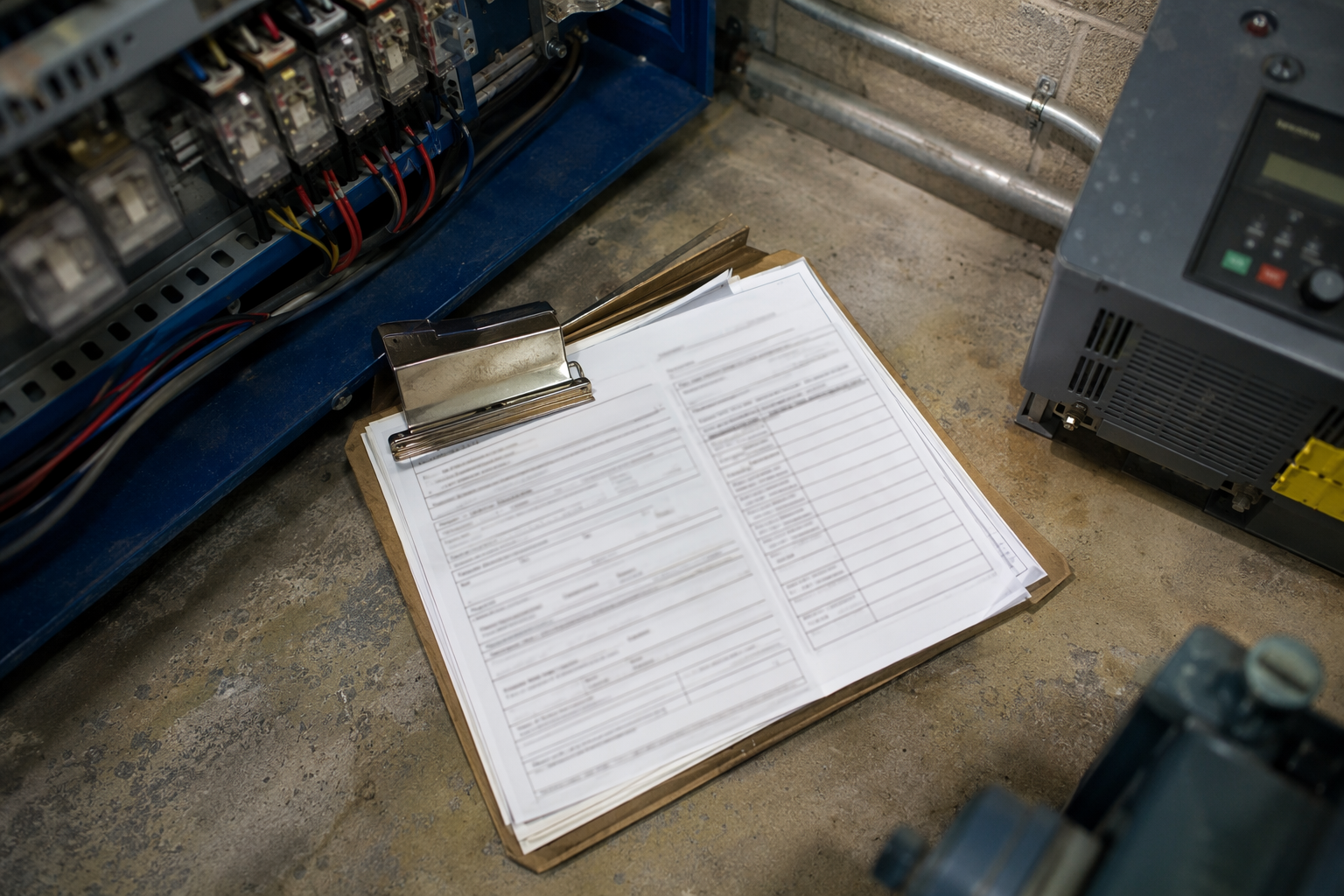
An OEM elevator service provider is the company that manufactured the elevator system — brands such as Otis, KONE, Schindler, and Thyssenkrupp. Their service divisions maintain proprietary knowledge of their own equipment architecture and, in some cases, control access to certain diagnostic software and replacement parts.
An independent elevator service company is a licensed, third-party contractor not affiliated with any single manufacturer. Independents are trained and certified to work across multiple equipment brands. They source parts from original manufacturers, approved aftermarket suppliers, or both, and they operate under the same mandatory safety codes that apply to OEM providers.
The critical regulatory baseline: regardless of who performs the work, all elevator service in the United States must comply with the ASME A17.1 Safety Code for Elevators and Escalators. State and local jurisdictions adopt specific editions of A17.1 and layer on additional requirements through their own elevator safety acts. Neither category of provider — OEM or independent — is exempt from these obligations.
Does Regulatory Compliance Differ Between Independent and OEM Providers?

No. Both independent and OEM service providers are held to the same statutory and code-based compliance obligations. The ASME A17.1/CSA B44 Safety Code for Elevators and Escalators establishes inspection intervals, maintenance protocols, and safety device testing requirements that apply to every licensed elevator contractor, regardless of brand affiliation.
Additionally, any elevator serving the public must meet accessibility standards under the Americans with Disabilities Act (ADA), which governs cab dimensions, door timing, control placement, and audible signals. ADA compliance obligations fall on the building owner — not solely the service provider — making it important to ensure any elevator contractor documents ADA-related conditions during routine inspections.
Worker safety during elevator maintenance and repair is governed by OSHA standards, specifically those covering confined spaces, lockout/tagout procedures, and vertical transportation equipment. These obligations apply equally to OEM technicians and independent contractors.
In Arizona, the Arizona Registrar of Contractors and the Arizona Department of Occupational Safety and Health (ADOSH) oversee elevator contractor licensing. A compliant independent provider carries the same state licensing as an OEM service division.
What Are the Equipment and Parts Considerations When Choosing a Provider?
One of the most frequently cited concerns about independent elevator service involves parts access. Historically, some OEMs restricted access to proprietary components or diagnostic tools — a practice sometimes called parts exclusivity. The practical implications depend heavily on the age, model, and brand of the elevator in question.
Key factors affecting parts access:
- Proprietary control systems: Some OEMs build controllers with software that requires manufacturer-specific diagnostic interfaces. Independent technicians may use licensed third-party diagnostic platforms or approved controller upgrades to address this.
- Aftermarket part quality: The elevator industry has an established aftermarket supply chain for mechanical components — cables, sheaves, buffers, door operators, and safety devices — sourced from manufacturers that meet ASME code specifications. Many of these components are identical to OEM-installed parts.
- Older equipment: For elevators that are 20 or more years old, independents often have broader access to legacy parts than the original OEM, whose supply chain may have moved on to current product lines.
- Newer proprietary systems: For elevators installed within the past five to ten years, the OEM’s proprietary diagnostic software can be a meaningful advantage during complex troubleshooting.
Building owners should request documentation from any service provider — OEM or independent — specifying the source and specification compliance of all replacement parts used.
How Do Contract Structures Compare Between OEM and Independent Providers?
Contract structure is one of the most consequential differences between OEM and independent elevator service — often more impactful to a property’s total cost of ownership than any single repair event.
OEM service contracts typically feature:
- Multi-year terms with automatic renewal clauses
- Proprietary service agreements that restrict third-party access to equipment data
- Escalation clauses tied to labor indexes, which can increase annual costs significantly over a contract term
- Comprehensive coverage tiers that bundle parts, labor, and callbacks — often at premium pricing
Independent service contracts typically feature:
- More flexible term lengths, including month-to-month or annual agreements
- Customizable coverage tiers — from basic maintenance to full comprehensive plans
- Greater price negotiability, particularly for multi-unit properties
- Transparent parts billing where owners can review and verify component costs
Facility managers evaluating contracts should review exclusion clauses carefully. Both OEM and independent contracts may exclude coverage for vandalism, misuse, or code-required upgrades. The specific items excluded — and the labor billing rate for excluded repairs — vary substantially between providers.
What Factors Drive Cost Differences Between OEM and Independent Elevator Service?
While specific pricing cannot be stated without knowing a given property’s elevator inventory, age, and location, the structural cost drivers between OEM and independent service are well understood in the industry:
- Overhead structure: Large OEM service organizations maintain national dispatch centers, proprietary inventory systems, and significant corporate overhead. Independent companies often operate with leaner structures, which can translate into more competitive labor rates.
- Parts markup: OEMs may mark up parts sold under a service contract. Independent providers that source from multiple suppliers may pass lower parts costs to clients.
- Multi-elevator discounts: Both OEM and independent providers typically offer volume pricing for properties with multiple elevator units, but independents may have more flexibility in structuring portfolio discounts.
- Emergency callback rates: After-hours and emergency rates vary by provider type and contract tier. Owners should compare callback billing structures explicitly.
- Modernization upsell pressure: OEM providers occasionally recommend modernizations to proprietary systems that happen to lock equipment into their service ecosystem. Independent providers can offer modernization assessments without brand-driven incentives.
How Does Response Time and Local Coverage Factor Into the Decision?
Geographic coverage is a practical consideration that affects both routine maintenance scheduling and emergency response. In metropolitan areas such as Phoenix and Tucson, both large OEM service divisions and established independents typically maintain local technician pools.
In smaller Arizona markets — rural communities, resort areas, or emerging suburban corridors — local independent elevator companies may provide more consistent on-site presence than national OEM service organizations, whose nearest technician may be dispatched from a distant hub.
Building owners with strict uptime requirements — hospitals, airports, high-rise residential properties — should evaluate each prospective provider’s actual technician footprint in their specific geography, not national coverage claims.
What Are the Industry Trends Shaping This Decision in 2025–2026?
Several trends are reshaping the OEM versus independent service landscape heading into 2026:
- Remote monitoring and IoT integration: Both OEM and independent providers are increasingly deploying remote monitoring systems that capture real-time performance data from elevator controllers. OEMs have an advantage in proprietary telemetry integration for their own equipment, while independent companies are deploying brand-agnostic monitoring platforms that can serve mixed-brand portfolios.
- Workforce dynamics: The licensed elevator mechanic workforce is experiencing a generational transition. Both OEM and independent service organizations are investing in apprenticeship and training pipelines. The quality of a specific local technician pool matters as much as the brand affiliation of the company.
- Code update cycles: The ASME A17.1 Safety Code for Elevators and Escalators is updated on a regular cycle. Jurisdictions in Arizona that adopt newer code editions may trigger retrofit requirements — hydraulic system upgrades, emergency lighting, or communication device updates — that affect the cost calculations for both OEM and independent service agreements.
- Energy efficiency mandates: State and local energy codes are increasingly influencing elevator specifications, particularly for variable frequency drives (VFDs) and LED cab lighting. Both provider types serve this market, but independents with multi-brand expertise can often evaluate efficiency options across equipment lines without a brand preference.
- Contract transparency advocacy: Building owners’ associations and property management groups are increasingly demanding greater transparency in elevator service contracts — itemized parts billing, open-book maintenance logs, and clear escalation caps. This trend benefits independent providers who can offer more customized contract terms.
How Should a Building Owner Evaluate and Switch Elevator Service Providers?
Transitioning from an OEM service contract to an independent provider — or vice versa — requires a structured approach to avoid lapses in compliance or equipment condition knowledge. The following steps represent industry best practice for evaluating and transitioning elevator service:
- Review the existing contract: Identify termination notice requirements, auto-renewal dates, and any equipment data ownership provisions before initiating contact with alternative providers.
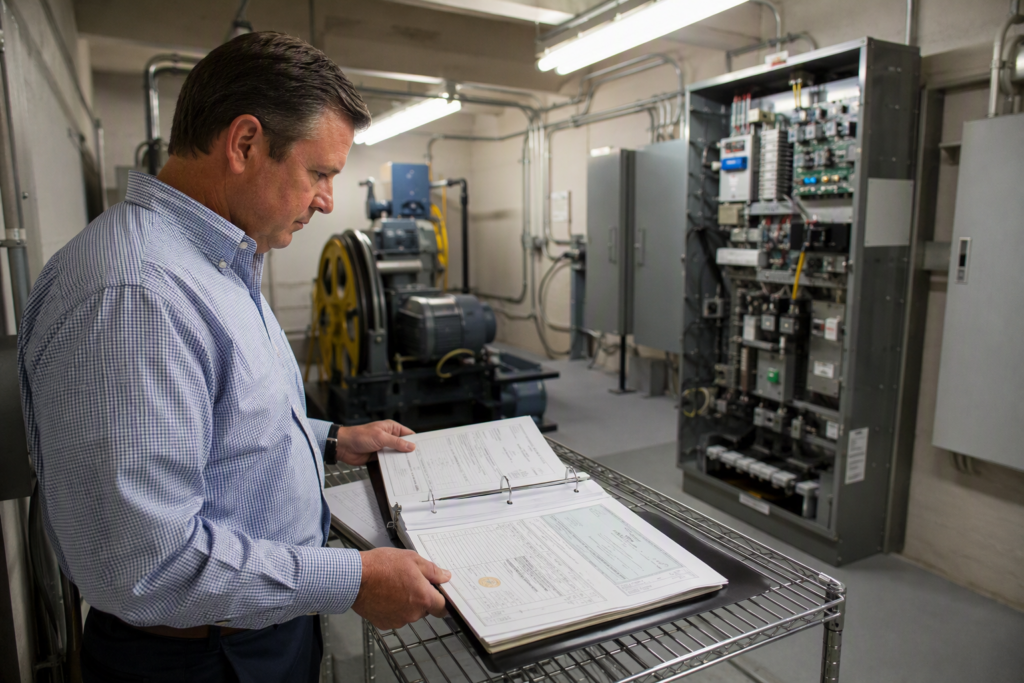
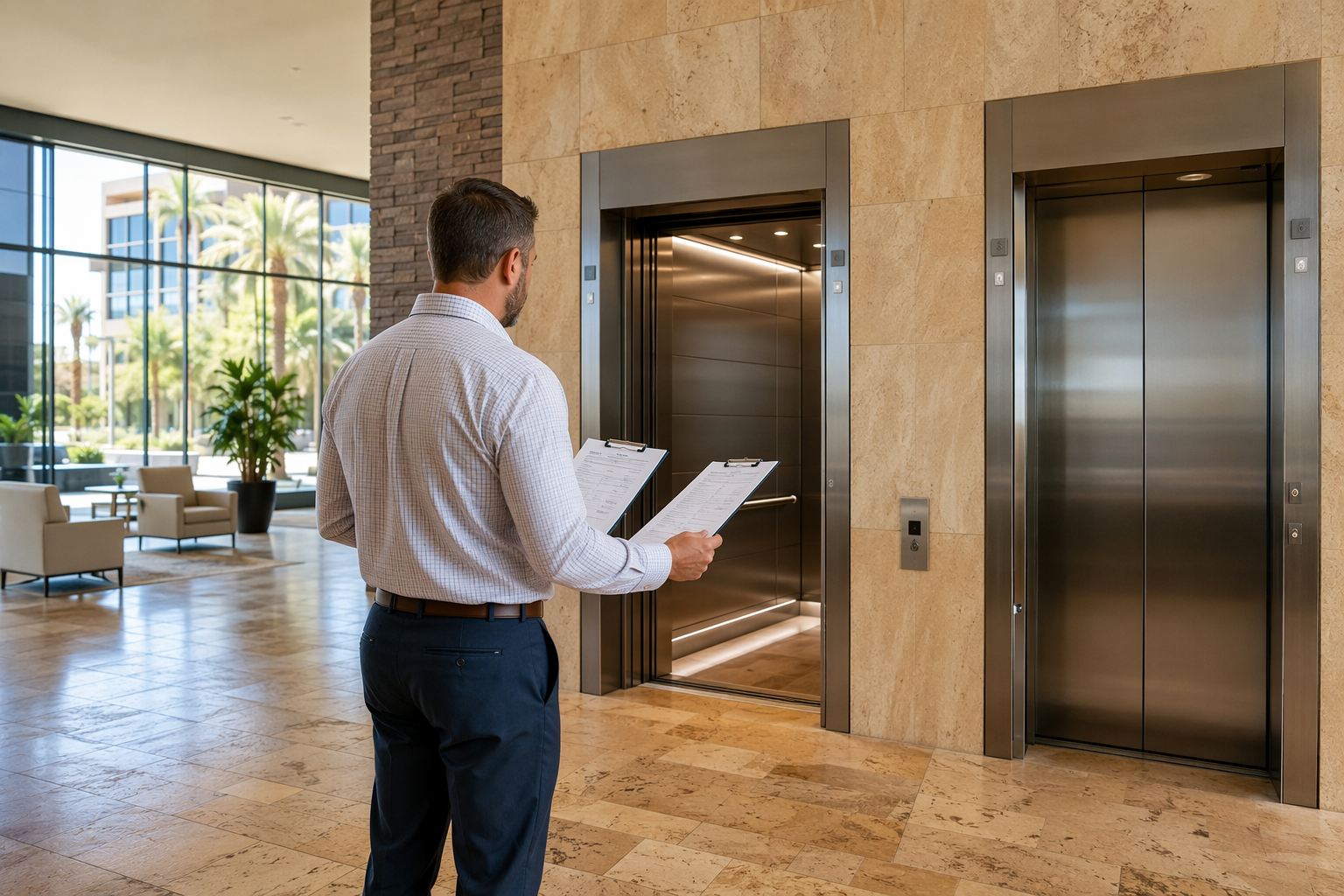
- Conduct a third-party condition assessment: Commission an independent elevator inspection before the transition. This documents the equipment’s current condition, outstanding deficiencies, and any pending code compliance items — protecting both parties from disputed pre-existing conditions.
- Verify prospective provider licensing: Confirm that any candidate provider holds current state contractor licensing in Arizona and employs licensed elevator mechanics as required by state law.
- Request a detailed scope of work: Obtain written documentation of what maintenance tasks are included, how often they are performed, which parts are covered, and what constitutes an excluded repair.
- Compare callback response commitments in writing: Ensure any response time commitments are documented in the service agreement, not stated verbally.
- Evaluate parts sourcing policy: Ask each prospective provider to describe their parts sourcing process, including how they verify that replacement components meet ASME code specifications.
- Assess the provider’s familiarity with your specific equipment brand and model: Request references from clients with similar elevator systems in your geography.
- Clarify data and documentation ownership: Confirm that maintenance logs, inspection records, and equipment data generated during the contract term belong to the building owner — not the service provider.
What Questions Should Be Asked Before Signing an Elevator Service Contract?
Whether considering an OEM or independent provider, building owners should obtain clear written answers to the following before executing any service agreement:
- What edition of ASME A17.1 does your maintenance protocol reference, and how do you track jurisdiction-specific amendments in Arizona?
- Are your technicians licensed in the state of Arizona?
- Who owns the maintenance records and equipment data generated under this contract?
- What is your parts sourcing process, and how do you document that replacement parts meet applicable code specifications?
- What is excluded from coverage, and what is the labor billing rate for excluded work?
- Does this contract include an escalation clause, and if so, what index governs it and is there a cap?
- How are ADA-related conditions documented and reported during routine inspections?
- What is your process for notifying the building owner of code-required upgrades or deficiencies?
Is Independent Elevator Service Appropriate for High-Rise or Mission-Critical Buildings?
Yes — provided the independent provider demonstrates the equipment expertise, technician certification, and response infrastructure appropriate to the property’s operational demands. High-rise residential buildings, hospitals, data centers, and other facilities with stringent uptime requirements are served by independent elevator companies throughout the United States.
The key differentiator is not the OEM versus independent label — it is the specific technician qualifications, local coverage capability, contract terms, and documented maintenance protocols offered by the individual provider. Facility managers in mission-critical environments should weight these operational factors heavily in their evaluation.
How Does the ADA Interact With Ongoing Elevator Service Decisions?
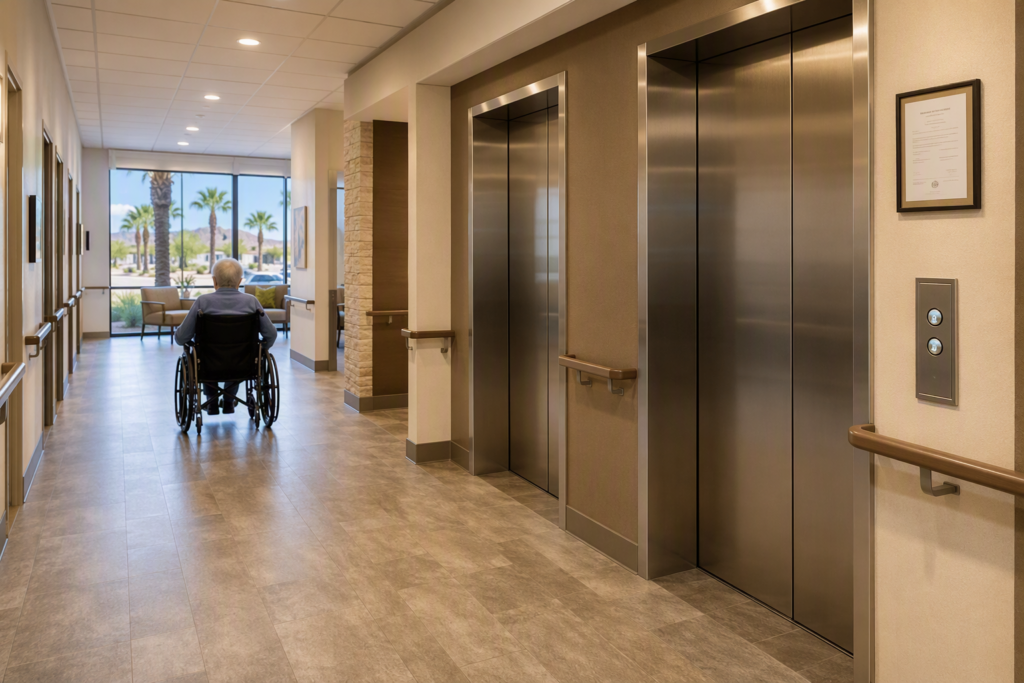
The Americans with Disabilities Act places ongoing obligations on building owners to maintain elevators in operable condition when they are the means of accessible access. An elevator that is routinely out of service due to inadequate maintenance can create ADA exposure for the property owner, regardless of which provider type holds the service contract.
Routine maintenance agreements — whether with an OEM or independent provider — should explicitly address ADA-relevant components: door open times, leveling accuracy, control panel condition, and audible/visual floor indicators. Building owners should retain documentation showing that ADA-sensitive components are inspected and tested on a regular schedule.
What Role Does OSHA Play in Elevator Service Provider Selection?
Building owners who permit elevator maintenance work on their property have obligations under OSHA regulations as the controlling employer in some contexts. Selecting a service provider with documented OSHA-compliant safety programs — lockout/tagout, confined space entry, fall protection — reduces risk exposure for the property owner.
When evaluating providers, request their written safety program documentation and their OSHA recordable incident rate history. Both OEM service divisions and independent companies should be able to supply this information. A provider’s safety record is an indicator of operational discipline that correlates with maintenance quality.
How Does Arizona Elevator Solutions Approach the OEM vs Independent Question?
Arizona Elevator Solutions operates as a data-driven, independent elevator service provider serving commercial, residential, and institutional properties throughout Arizona. The company’s approach centers on equipment-specific expertise across multiple brands, transparent contract structures, and documented compliance with the ASME A17.1 Safety Code for Elevators and Escalators as adopted in Arizona.
Rather than advocating categorically for independent service over OEM providers, Arizona Elevator Solutions focuses on helping building owners understand the specific factors — equipment age, brand, contract terms, and local coverage — that should drive the decision for their individual property. A property-specific assessment provides the factual baseline for that analysis.
Summary: Independent Elevator Service vs OEM — Key Decision Factors
| Factor | OEM Service | Independent Service |
|---|---|---|
| ASME A17.1 Compliance Obligation | Required | Required (same standard) |
| ADA Compliance Documentation | Provider dependent | Provider dependent |
| OSHA Safety Program Requirement | Required | Required (same standard) |
| Proprietary Diagnostic Access | Full (own equipment) | Varies by brand/age |
| Contract Term Flexibility | Typically multi-year, less flexible | Typically more customizable |
| Multi-Brand Portfolio Capability | Limited to own brand | Multi-brand capable |
| Parts Sourcing Transparency | Varies by contract type | Varies; often more open-book |
| Legacy Equipment Support | May be limited for older models | Often broader for legacy systems |
Note: This table reflects qualitative industry characteristics. Individual providers within each category vary significantly. All compliance obligations are drawn from the sources linked above.
Get a Property-Specific Elevator Service Assessment
The OEM versus independent decision depends on the specific equipment, contract terms, and operational requirements of each property. Arizona Elevator Solutions provides objective, data-informed evaluations that help building owners make this decision based on facts — not provider marketing.
Contact Arizona Elevator Solutions for a free elevator assessment: 480-319-7157
Need elevator service you can rely on? Arizona Elevator Solutions is ready to help.